Cigar store figure attributed to the shop of Samuel Robb or Thomas Brooks, New York city, circa 1880.

Cigar store figure attributed to the shop of Samuel Robb or Thomas Brooks, New York city, circa 1880.

Cigar store figure attributed to the shop of Samuel Robb or Thomas Brooks, New York city, circa 1880.:

Feathered headdress, holding a bundle of cigars in the left hand and a gathering of tobacco leaves in the right. Right foot is elevated at the heal, the dress is decorated with carved tobacco leaves painted in the same color palette as the headdress. Legs
Condition
Red lead primer with bold colors of mostly red, yellow, green and blue covered by a coat of varnish that has crazed over the years. The blue dress appears a dark green as the yellowing of the varnish has changed the appearance over time. Age cracks are pr

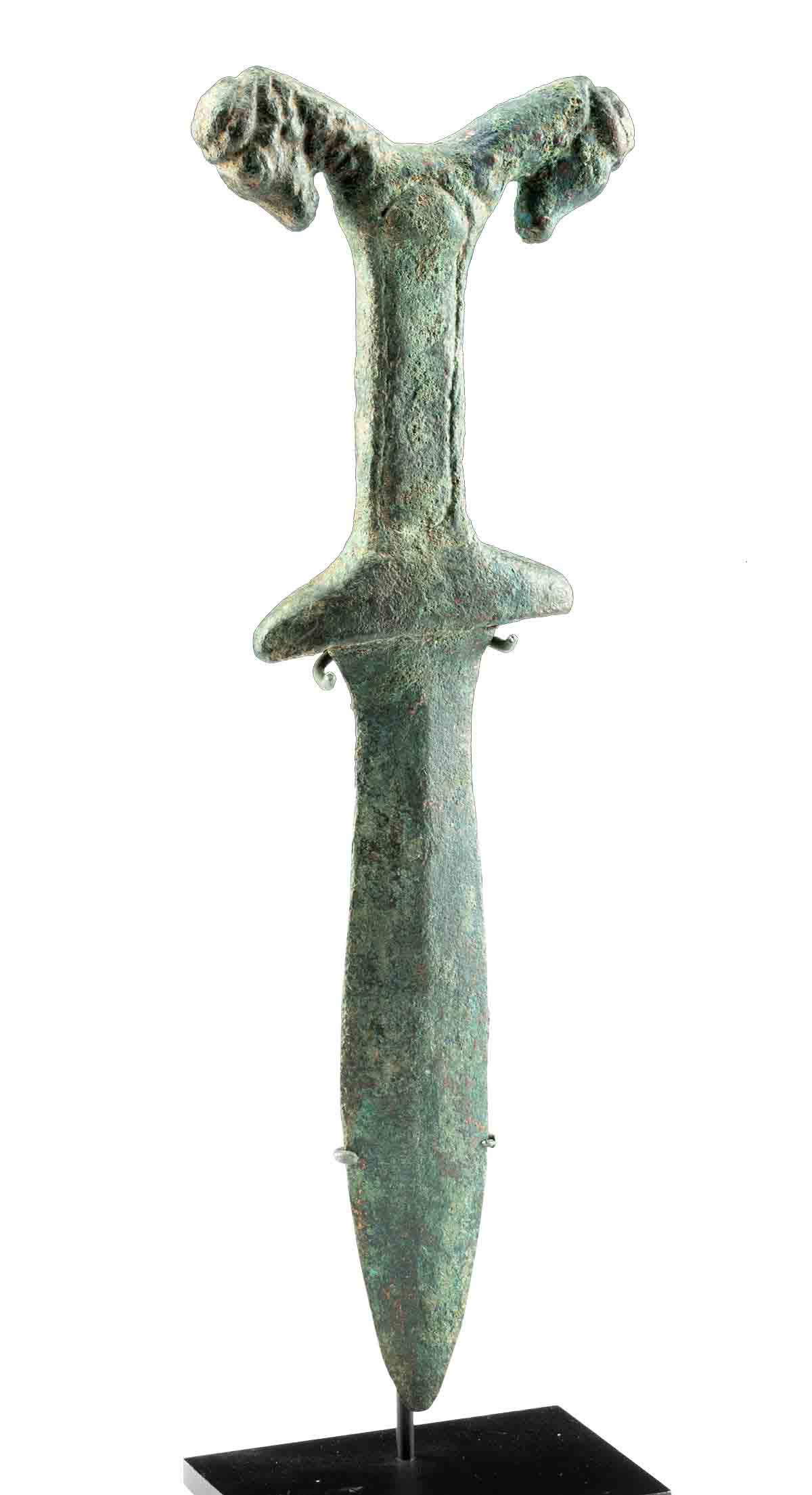
Amlash Copper Dagger with Animal Heads

Amlash Copper Dagger with Animal Heads

Amlash Copper Dagger with Animal Heads:

Ancient Near East, northwestern Iran, Amlash, ca. 1200 to 800 BCE. A striking copper dagger presenting a double-edged, petaloid blade with a vertical mid-rib, a wide guard, a flat hilt that rises near the back, and a flared back quillon. The back quillon parts into 2 zoomorphic heads, each resembling that of a lamb, ram, or horse. Each head exhibits a thick neck and a flat-topped head with a protruding, rounded snout, and back-pointing ears or horns. An elongated pentagon is incised on each face of the hilt, while a textured pattern embellishes each animal head, possibly representing fur. This weapon and others like it were made in multiple pieces using the lost wax casting technique with the hilt then cast-on to the blade. Size: 3.9″ W x 11.4″ H (9.9 cm x 29 cm); 12.3″ H (31.2 cm) on included custom stand.

Amlash weapons were buried with the dead in large megalithic tombs, built by part of the Marlik culture. Despite its proximity to large Mesopotamian cultures, the geographical barrier of the high Zagros and Elburz Mountains kept this culture relatively isolated, and it developed a very unique tradition. This is an elegant example of a grave good that, based on how few graves have been found in the Amlash assemblage and the impressive size of their tombs, seems to have been reserved only for high status individuals.

Provenance: East Coast collection, New York Gallery, New York City, New York, USA, acquired before 2010

All items legal to buy/sell under U.S. Statute covering cultural patrimony Code 2600, CHAPTER 14, and are guaranteed to be as described or your money back.

A Certificate of Authenticity will accompany all winning bids.

PLEASE NOTE: Due to recent increases of shipments being seized by Australian & German customs (even for items with pre-UNESCO provenance), we will no longer ship most antiquities and ancient Chinese art to Australia & Germany. For categories of items that are acceptable to ship to Australia or Germany, please contact us directly or work with your local customs brokerage firm.

Display stands not described as included/custom in the item description are for photography purposes only and will not be included with the item upon shipping.

#137593
CONDITION
Expected softening of detail and sharpness of edges, as well as nicks and abrasions, commensurate with age. Otherwise, intact and excellent with rich patina.

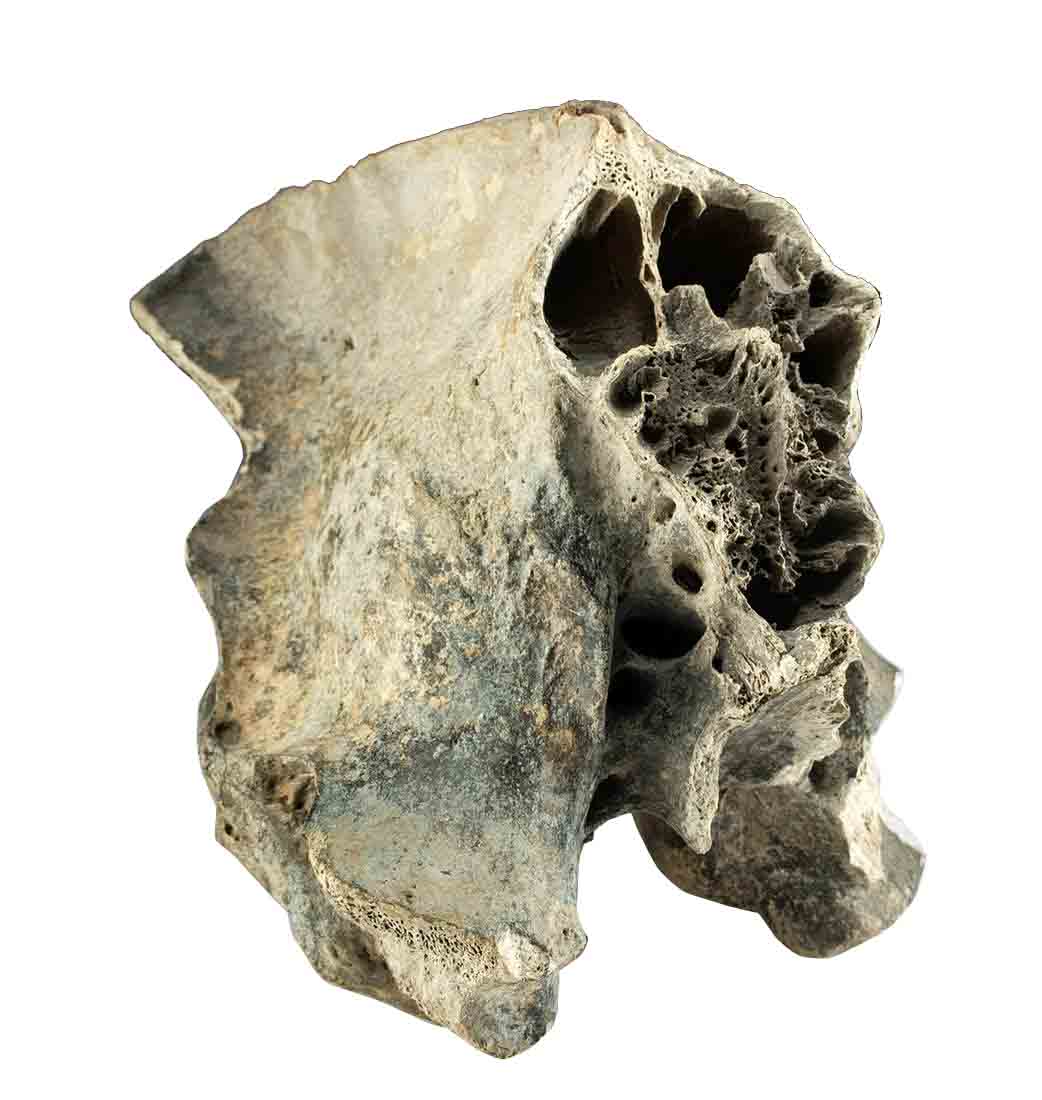
Fossilized Sabertooth Smilodon Populator Skull Fragment

Fossilized Sabertooth Smilodon Populator Skull Fragment

Fossilized Sabertooth Smilodon Populator Skull Fragment:

South America, Uruguay, Pleistocene (Ice Age), ca. 1 million to 10,000 years ago. Wow! This is a partial skull from the largest Smilodon genus, Smilodon populator, a prehistoric predator with saber teeth – more commonly known as the saber tooth tiger! This skull is 100% original material from the back half of the cranium, with a prominent sagittal crest, and great coloration throughout – the interior cavities are a fascinating look at the fossilized bone structures. The rareness of any Smilodon make for a highly coveted collector piece and is simply amazing to behold. Populator genus is not readily found, and this is a rare chance to acquire the largest species of Smilodon, the king of megafauna carnivores! This cat could have 12 inch (30 cm) canine teeth and was 4.5 feet (1.3 meters) tall, weighing at approximately 220 to 470 kg (490 to 1,040 lb.)! Holding this half skull gives a wonderful impression of the size of these cats! Size: 8.5″ L x 6″ W x 7″ H (21.6 cm x 15.2 cm x 17.8 cm)

We cannot stress enough what a rare chance this is to have a skull that is 100% original material from such a coveted animal! Smilodons are an extinct saber tooth cat, that roamed the Americas. This was a muscular cat, with huge canine teeth with were the most iconic and memorable part of these creatures. They lived in forests and grasslands, ambushing prey such as camelids, horses, deer, ground sloths, and even mastodons. Smilodons certainly filled the niche of mega-carnivore with teeth adapted for killing megafauna much larger than itself. Because these kings of cats are so famous and popular, their fossilized remains are highly desired.

This piece has been searched against the Art Loss Register database and has been cleared. The Art Loss Register maintains the world’s largest database of stolen art, collectibles, and antiques.

Provenance: private Rome, Georgia, USA collection

All items legal to buy/sell under U.S. Statute covering cultural patrimony Code 2600, CHAPTER 14, and are guaranteed to be as described or your money back.

A Certificate of Authenticity will accompany all winning bids.

PLEASE NOTE: Due to recent increases of shipments being seized by Australian & German customs (even for items with pre-UNESCO provenance), we will no longer ship most antiquities and ancient Chinese art to Australia & Germany. For categories of items that are acceptable to ship to Australia or Germany, please contact us directly or work with your local customs brokerage firm.

Display stands not described as included/custom in the item description are for photography purposes only and will not be included with the item upon shipping.

#167089
CONDITION
Professionally prepared, 100% natural material and no restoration or repairs! Partial skull as shown, back half. This is a rare piece.

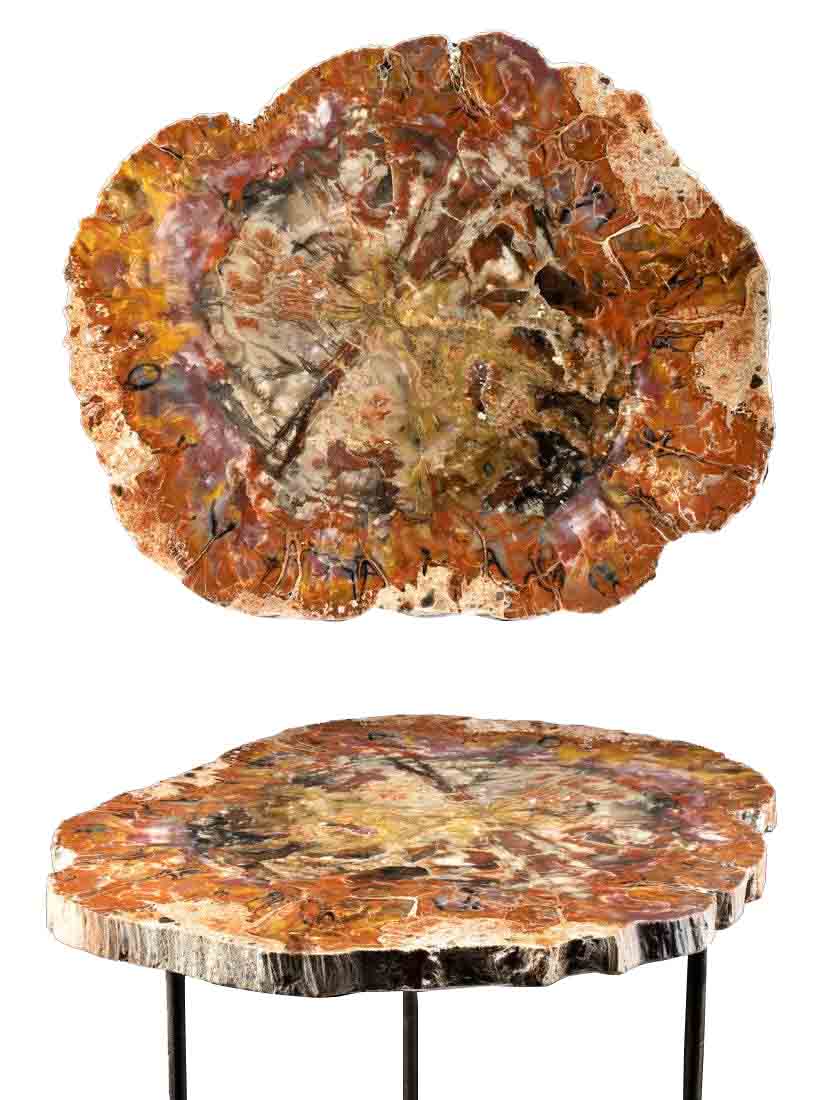
Triassic Arizonan Petrified Wood Table w/ Iron Legs

Triassic Arizonan Petrified Wood Table w/ Iron Legs

Triassic Arizonan Petrified Wood Table w/ Iron Legs:

North America, Southwestern United States, Arizona, Late Triassic, ca. 225 million years ago. A massive and gorgeous slab of fossilized, petrified tree trunk mounted on iron legs as a stunning table! The tree is sliced crossways and highly polished on one of its planar sides to showcase the broad interior rings of the tree – not only beautiful but providing invaluable information to researchers. The exterior bark is fossilized, replaced by rough stone, while the smooth interior features incredible, colorful quartz, agate, and translucent crystalline structures. The colors are mesmerizing – dominated by warm hues of red and maroon with creamy white, gray-blue, ochre, green, purple, and orange swirls and striations – reminiscent of an interstellar nebula! The polished surface is pleasantly tactile and perfectly flat for using as a place to rest coffee cups or books. A stunning piece of furniture, perfect as a coffee table or nightstand! Size of petrified slab: 22.5″ Diameter x 1.25″ W (57.2 cm x 3.2 cm); height on legs: 27″ H (68.6 cm)

Fossilized trees from this time period come from the Chinle Formation of the southwestern USA, and the beautiful colors found in this formation – exemplified by the colors of this fossilized tree – give the Painted Desert of Arizona its name. Due to plate tectonics, this area was near the equator on the supercontinent Pangaea during the Late Triassic, which gave it a humid, sub-tropical climate. It was a floodplain below mountains to its south and a sea to its west; as a result, massive trees washed down from the mountains and came to rest in sediments that preserved them and fossilized them. The petrification process involves the rapid burial of the tree or pieces under sediment which prevents the usual decay. Flooding and volcanic activity are usually responsible for creating the layers of sand, silt, and ash needed to create the right types and amount of sediment. Mineralized water can then permeate through the wood, coating cell walls and filling the intercellular cavities which then fossilizes into stone. The detailed preservation of the wood, including knots, rings, and bark, are possible because the organic wood molecules become coated and surrounded with smaller silica molecules. Nine different species of tree have been identified in the fossilized deposits in the region; this example may be Araucarioxylon arizonicum, an extinct conifer tree (and the state fossil of Arizona). Fascinatingly, the Ancestral Puebloan people who lived in the region approximately 1000 years ago used petrified wood for making tools and even building houses!

Provenance: private Berthoud, Colorado, USA collection

All items legal to buy/sell under U.S. Statute covering cultural patrimony Code 2600, CHAPTER 14, and are guaranteed to be as described or your money back.

A Certificate of Authenticity will accompany all winning bids.

PLEASE NOTE: Due to recent increases of shipments being seized by Australian & German customs (even for items with pre-UNESCO provenance), we will no longer ship most antiquities and ancient Chinese art to Australia & Germany. For categories of items that are acceptable to ship to Australia or Germany, please contact us directly or work with your local customs brokerage firm.

Display stands not described as included/custom in the item description are for photography purposes only and will not be included with the item upon shipping.

#167929
CONDITION
Choice with amazing colors! Professionally cut and polished on one planar face. Small, shallow cavity near outer edge from the fossilization process. Protective fiber glass sealant on other planar face. Mounted with adhesive to modern black legs and sturdy / usable as a table!

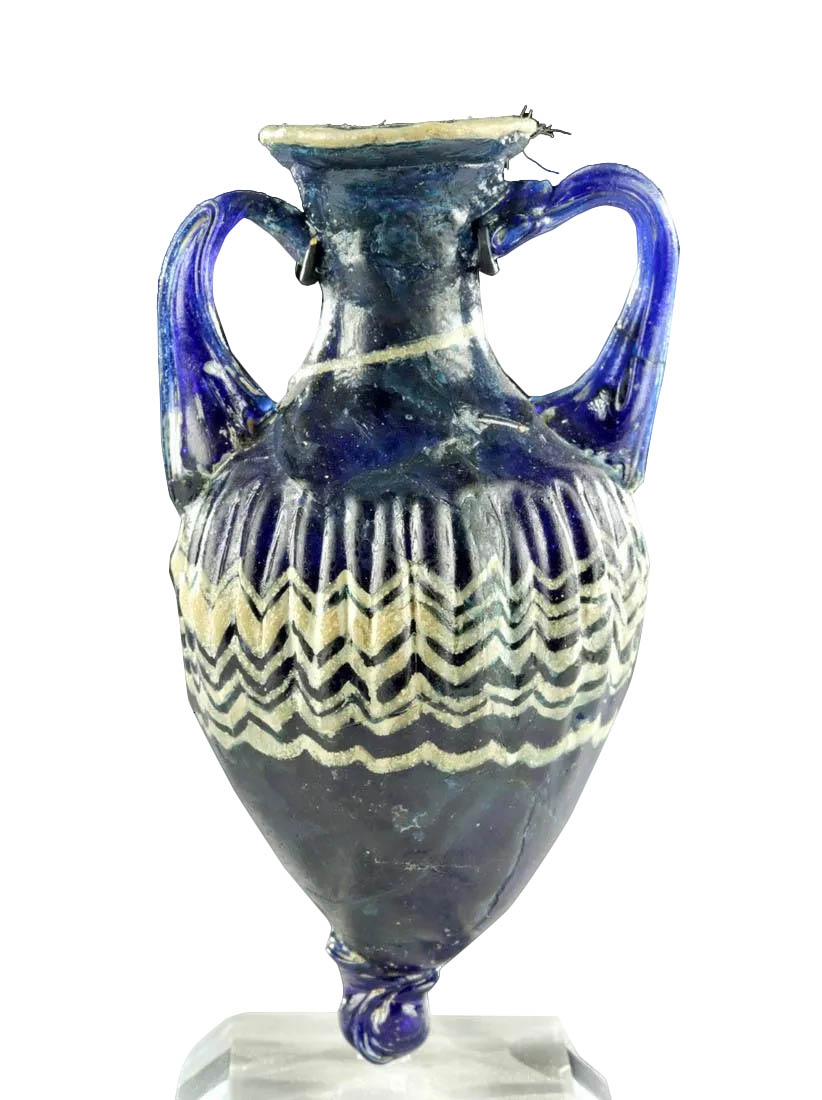
Greek Core-Formed Glass Amphoriskos

Greek Core-Formed Glass Amphoriskos

Greek Core-Formed Glass Amphoriskos:

Ancient Greece, ca. 6th to 4th century BCE. A beautiful example of a core-formed glass amphoriskos once used to hold aromatic oils. The vessel boasts an elegant form with a piriform body that is subtly contoured with vertical ribs, twin trail handles that gracefully join shoulder to neck, and a gently flaring rim, all upon a small circular trailed base knob. The decoration of this piece is simply gorgeous, with the cobalt blue body wound with tangerine yellow-orange and white trails – some threadlike and some bolder – applied in a close-knit feathered pattern. A white trail encircles the rim. An opulent example of glass-working to be treasured for its sumptuous form, lustrous sheen, fabulous hues, and sophisticated technique. Size: 1.875″ W handlespan x 3.375″ H (4.8 cm x 8.6 cm); 4″ H (10.2 cm) on included custom stand.

A vessel like this would have been made for the elites of ancient society. Its owner would have used a stopper to keep the contents inside, and a glass rod to dip into the vessel’s perfumed oils and dab on the throat or wrists. The little handles made it possible to suspend the vessel, and we know from Athenian vase paintings that vessels like these could be linked to a belt at the waist or suspended from the wrist.

The Greeks created core-formed or sandcore vessels by trailing threads of molten glass over a “core” of sand or clay to form the vessel. These threads were oftentimes feathered or dragged to create intriguing decorative patterns. The term amphoriskos literally means “little amphora” and this example is indeed a miniature amphora. This shape was quite popular as it was ideal to store precious oils, perfumes, or cosmetics.

According to the Corning Museum of Glass, core forming is “the technique of forming a vessel by winding or gathering molten glass around a core supported by a rod. After forming, the object is removed from the rod and annealed. After annealing, the core is removed by scraping.” (https://www.cmog.org/glass-dictionary/core-forming). This process of glass making was begun in the late 16th century BCE by glassmakers of Mesopotamia, and then adopted by Egyptian glassmakers in the 15th century BCE. The technique almost came to an end in the so-called Dark Ages of Mediterranean civilization (1200 to 900 BCE); however, by the 9th century BCE a new generation of glassmakers took up the technique once again, and between the 6th and 4th century BCE core-forming spread throughout the Mediterranean.

Cf. Nina Kunina. Ancient Glass in the Hermitage Collection. St. Petersburg, 1997, no. 29, p. 251; Susan B. Matheson. Ancient Glass in the Yale University Art Gallery. New Haven, 1980, nos. 13-15, 17, pp. 6-7.

Provenance: East Coast collection, New York Gallery, New York City, New York, USA, acquired before 2010

All items legal to buy/sell under U.S. Statute covering cultural patrimony Code 2600, CHAPTER 14, and are guaranteed to be as described or your money back.

A Certificate of Authenticity will accompany all winning bids.

PLEASE NOTE: Due to recent increases of shipments being seized by Australian & German customs (even for items with pre-UNESCO provenance), we will no longer ship most antiquities and ancient Chinese art to Australia & Germany. For categories of items that are acceptable to ship to Australia or Germany, please contact us directly or work with your local customs brokerage firm.

Display stands not described as included/custom in the item description are for photography purposes only and will not be included with the item upon shipping.

#147858
CONDITION
Professionally repaired from multiple pieces, but very well executed so as tp preserve that original silhouette perfectly.

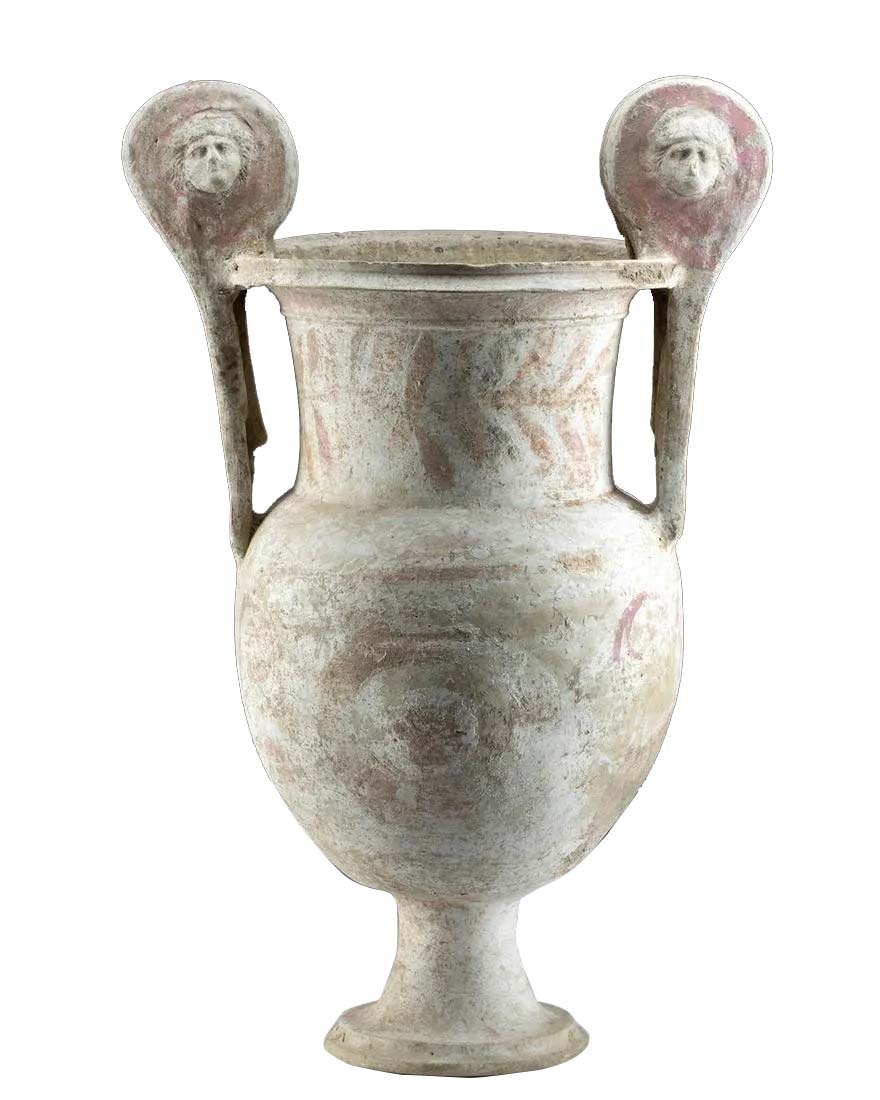
Canosan Polychrome Volute Krater w/ Medusa Handles

Canosan Polychrome Volute Krater w/ Medusa Handles

Canosan Polychrome Volute Krater w/ Medusa Handles:

Magna Graecia, South Italy, Canosan, ca. 4th to 3rd century BCE. Among the most impressive Canosan volute kraters we have had the honor of handling, this vessel exhibits a classic form with a round base, a bulbous body, a thick neck, and a flared rim, all sitting upon a raised, pedestal foot. Twin handles flank the rim, each presenting Medusa mask termini, known as gorgoneia, modeled in relief on both the obverse and reverse. The exterior boasts a finely painted decorative program – overall with a white slip ground that is meticulously embellished with pink, white, and blue imagery. Adorning the neck is a fish scale motif on one side and a vegetal motif on the other. The body of the vessel is additionally embellished by target designs and scrolling patterns, as well as perhaps the remains of 2 figures with shields. Size: 11.5″ in diameter x 17.3″ H (29.2 cm x 43.9 cm)

Canosa – Canusion, in antiquity – was a major center of the ceramics and pottery trade when it was a Greek polis. It produced truly unique pottery, completely different in decoration style (although not in shape) from earlier and neighboring traditions. The clay is buff, with the decoration applied directly to it without the use of slip; the pink, blue, and red here are among the coveted colors found on these vessels. The hole in the bottom of the vase signifies that this was made solely for funerary purposes (and it’s rather interesting to look inside and see the clay that was pushed up through the bottom to form a hole). In ancient Greek practice, a bottomless vase like this was placed over a grave and offerings like wine were poured straight through it. Others, like this one, were never used but were buried in the tomb beside the deceased to evoke this custom. The funerary theme of the piece also indicates that it was made solely for burial purposes.

This piece has been searched against the Art Loss Register database and has been cleared. The Art Loss Register maintains the world’s largest database of stolen art, collectibles, and antiques.

Provenance: private New York, New York, USA collection; ex-T.G. collection, Williston, Florida, USA, acquired 2001

All items legal to buy/sell under U.S. Statute covering cultural patrimony Code 2600, CHAPTER 14, and are guaranteed to be as described or your money back.

A Certificate of Authenticity will accompany all winning bids.

PLEASE NOTE: Due to recent increases of shipments being seized by Australian & German customs (even for items with pre-UNESCO provenance), we will no longer ship most antiquities and ancient Chinese art to Australia & Germany. For categories of items that are acceptable to ship to Australia or Germany, please contact us directly or work with your local customs brokerage firm.

Display stands not described as included/custom in the item description are for photography purposes only and will not be included with the item upon shipping.

#167954
CONDITION
Expected surface wear with nicks to rim and stable fissures to lower handle. Chipping and fading to paint, but nice remaining pigments. Otherwise, excellent with rich earthen deposits throughout.

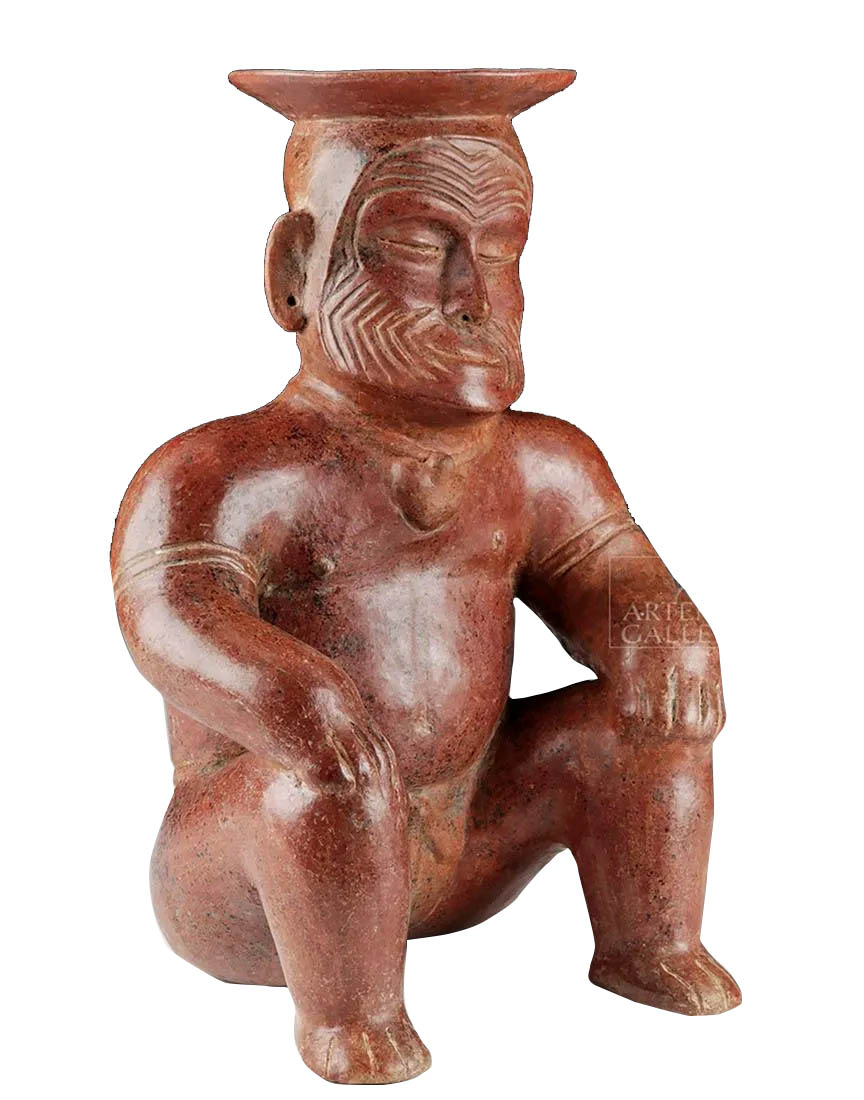
Colima Terracotta Cacique Elder Vessel, Ex-Hollywood

Colima Terracotta Cacique Elder Vessel, Ex-Hollywood

Colima Terracotta Cacique Elder Vessel, Ex-Hollywood:

Pre-Columbian, West Mexico, Colima, ca. 300 BCE to 300 CE. A fantastic and large ceramic vessel in the form of a seated cacique (leader) elder, his eyes closed as if he is in a serene, trance-like state. His face is amazingly sculpted to have deep lines, especially on the forehead and the cheeks; the eyes are sunken, and the man depicted also has a bent nose and prominent chin that give this figure a more individualized, lifelike appearance than most from this culture. He is seated with his hands on his knees, which are bent upwards, exposing his belt, tied tightly around his waist, below a large, drum-like belly. His ears are pierced (and probably once had earrings made from precious metal or feathers), and armlets are incised into his upper arms. A heavy pendant rises in relief from his chest, hanging from a cord sculpted around his neck. Size: 9″ W x 13″ H (22.9 cm x 33 cm)

Colima, located on Mexico’s southwestern coast, was during this time part of the shaft tomb culture, along with neighbors to the north in Jalisco and Nayarit. In this culture, the dead were buried down shafts – 3 to 20 meters deep – that were dug vertically or near vertically through the volcanic tuff that makes up the geology of the region. The base of the shaft would open into one or more horizontal chambers with a low ceiling. These shafts were almost always dug beneath a dwelling, probably a family home, and seem to have been used as family mausoleums, housing the remains of many related individuals. Colima vessels such as this one were buried in shaft tombs to protect the deceased and provide sustenance for eternity.

Provenance: private Hawaii, USA collection, before 2010; ex-private T. Misenhimer collection, Hollywood, California, USA, famous Hollywood film producer, collected 1970 to 2008

All items legal to buy/sell under U.S. Statute covering cultural patrimony Code 2600, CHAPTER 14, and are guaranteed to be as described or your money back.

A Certificate of Authenticity will accompany all winning bids.

PLEASE NOTE: Due to recent increases of shipments being seized by Australian & German customs (even for items with pre-UNESCO provenance), we will no longer ship most antiquities and ancient Chinese art to Australia & Germany. For categories of items that are acceptable to ship to Australia or Germany, please contact us directly or work with your local customs brokerage firm.

Display stands not described as included/custom in the item description are for photography purposes only and will not be included with the item upon shipping.

#133795
CONDITION
Repair at neck and on one arm from its upper part to where it meets the knee. Overpainting along restored areas. Repairs are excellently done and almost impossible to see. Nice manganese deposits over the body.

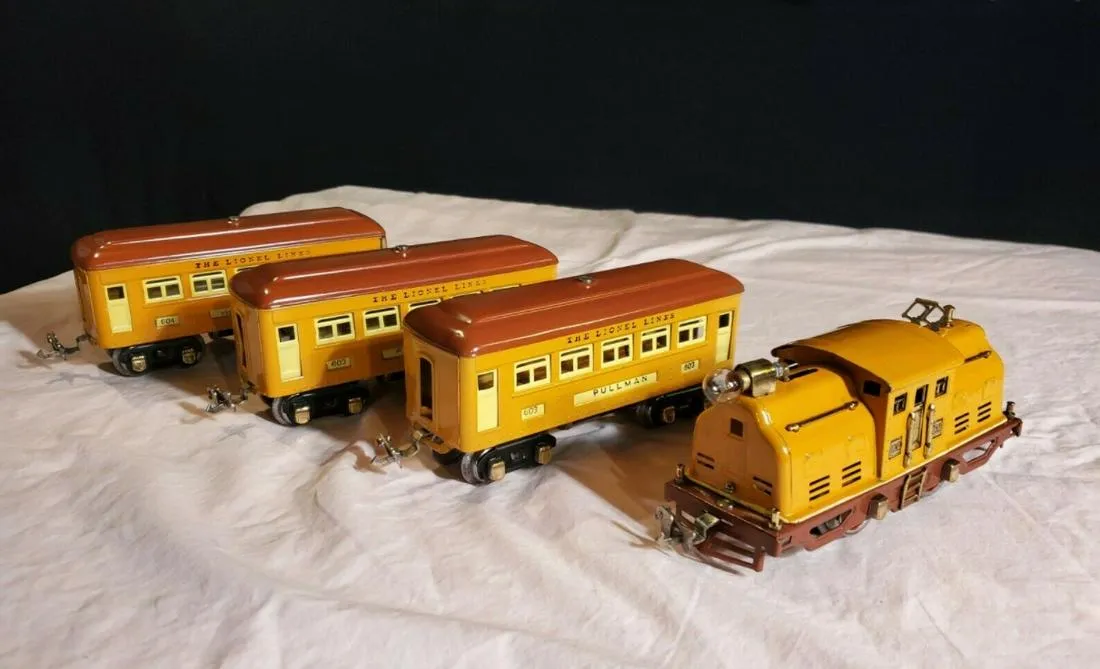
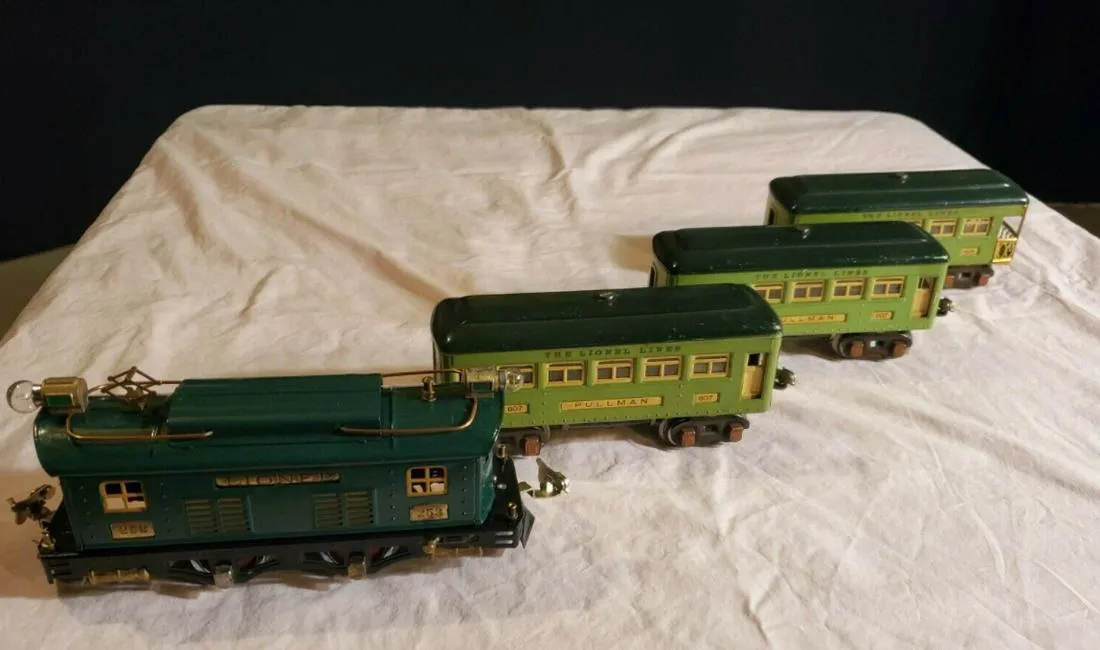
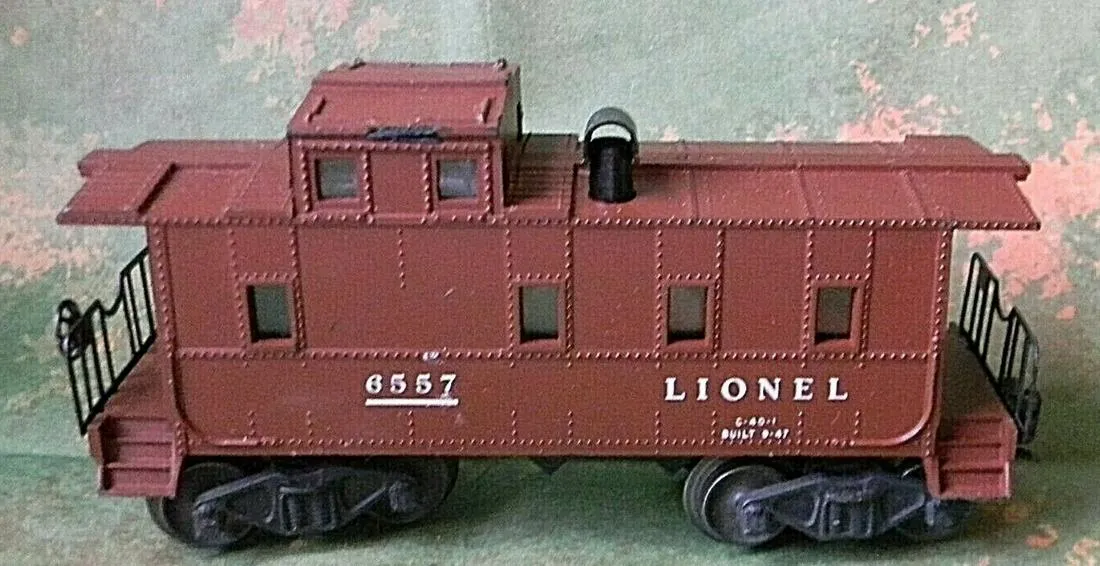
LIONEL TRAIN 1947 6557 Rare! Caboose Smoke & light

LIONEL TRAIN 1947 #6557 Rare! Caboose Smoke & light

LIONEL TRAIN 1947 #6557 Rare! Caboose Smoke & light:

1947 Limited edition Tuscan red painted Lionel Postwar Caboose -6557 Smoke & light – Guage O grading C-7wanted collectible for those train hobbyist may have slight chips from normal wear
CONDITION
good