A Collection Of Political Pin Back Buttons

A Collection Of Political Pin Back Buttons

A Collection Of Political Pin Back Buttons:

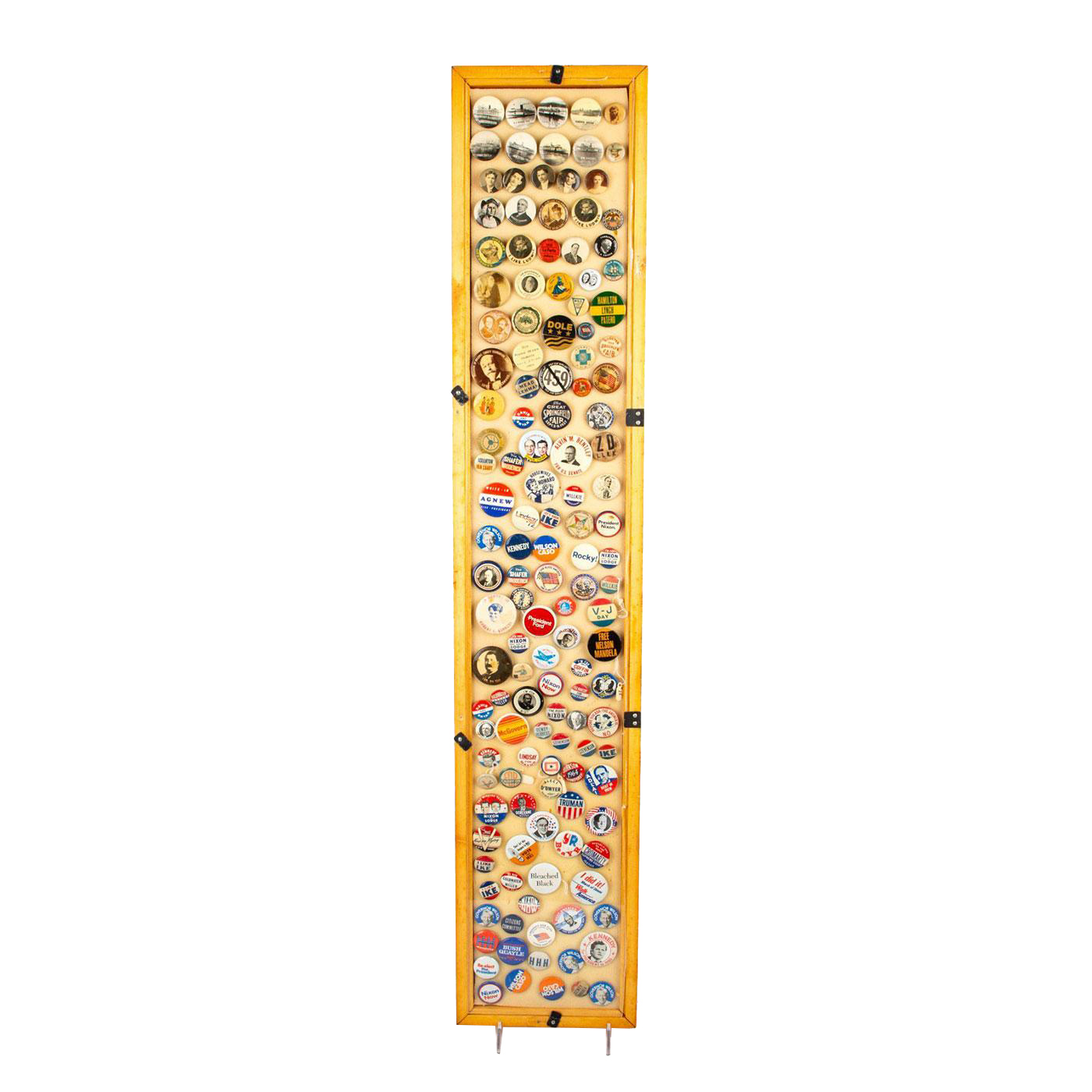
138 Pinback buttons including political and others.
In this lot you will find an impressive display in a wood case under plexiglass of mostly political pin back buttons. Included are campaign buttons from Teddy Roosevelt to Nixon to Bush 41 and anything in between. This is part of a larger collection found in other lots in this auction so be sure and take a look at the entire collection that was amassed by this collector of many years. Be sure and look closely at all the pictures as there are many rare or hard to find examples. Also included in this lot is a small collection of black and white pin backs depicting various cruise ships. Political Memorabilia

Dimensions: DISPLAY IS 41″ BY 8″

Framed, On Vellum, Very Rare 1200 AD Monk Music Sheet

Framed, On Vellum, Very Rare 1200 Ad Monk Music Sheet

Framed, On Vellum, Very Rare 1200 Ad Monk Music Sheet:

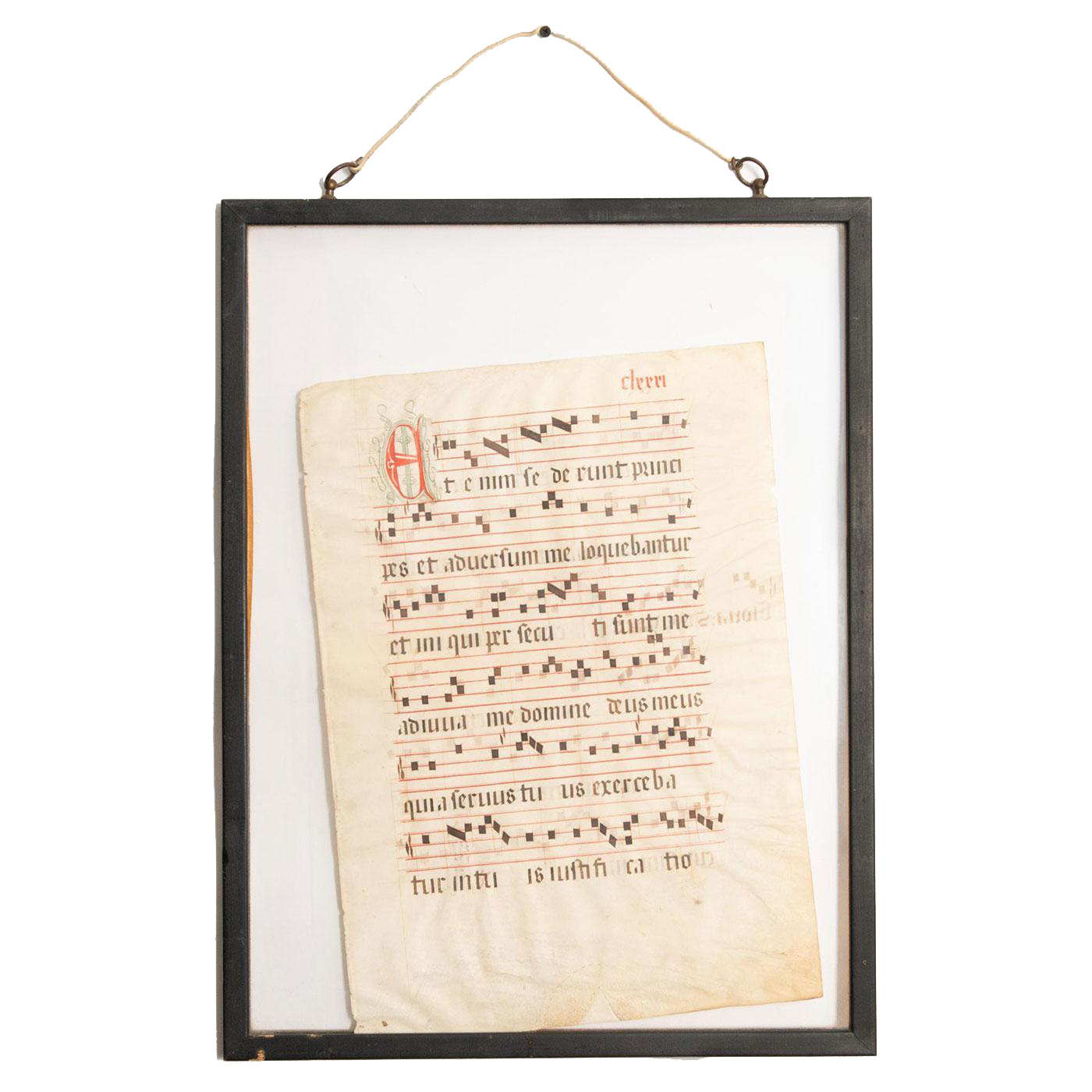
Not too many of these have survived in such great condition. Framed in a more modern 2 piece glass with brass frame border.
The red and black pigments used in making this rare piece have retained a lot of its color vibrancy. It is said that the red pigment used came from crushed cinnabar. A manuscript page in the same manner was sold at Sotheby’s in the mid 1970’s for a record price of over $100,000.00. There are certainly not many comparable to this very rare piece of history.

Dimensions: 22″ X 24″

Howard Miller Focal Point Chiming Wall Clock 62779

Howard Miller Focal Point Chiming Wall Clock 62779

Howard Miller Focal Point Chiming Wall Clock 62779:

Stunning design and incredibly detailed, features a magnificent oversized polished brass wall clock with pendulum and high precision chime movement. Weight: 100 lbs.
Founded in 1926 and still family-owned in its third generation, Howard Miller is the world�s leading clock company and a respected brand name in fine specialty furnishings. The Focal Point features a polished brass-finished bezel, and an off-white ring accents the dial. Polished brass-finished weights and pendulum are complemented by nine chrome-plated chime tubes. Visible movement with a thick clear acrylic dial, a separate second-hand track, black hands and polished-brass hour markers. A high-precision chime movement features 36 bushings�24 bronze and 12 jeweled�and plays a choice of Westminster, St. Michael, or Whittington chimes. This extraordinary wall clock also features an automatic night-time chime shut-off option and was designed by Arthur Umanoff Associates. Marked Howard Miller. Batteries not included. Assembly required. Clock is in good working order, may need adjusting, no guarantees.

Issued: 20th c.
Dimensions: 27.5″W x 65.25″H
Manufacturer: Howard Miller
Country of Origin: United States

Swarovski Crystal Figurine, The Unicorn

Swarovski Crystal Figurine, The Unicorn

Swarovski Crystal Figurine, The Unicorn:

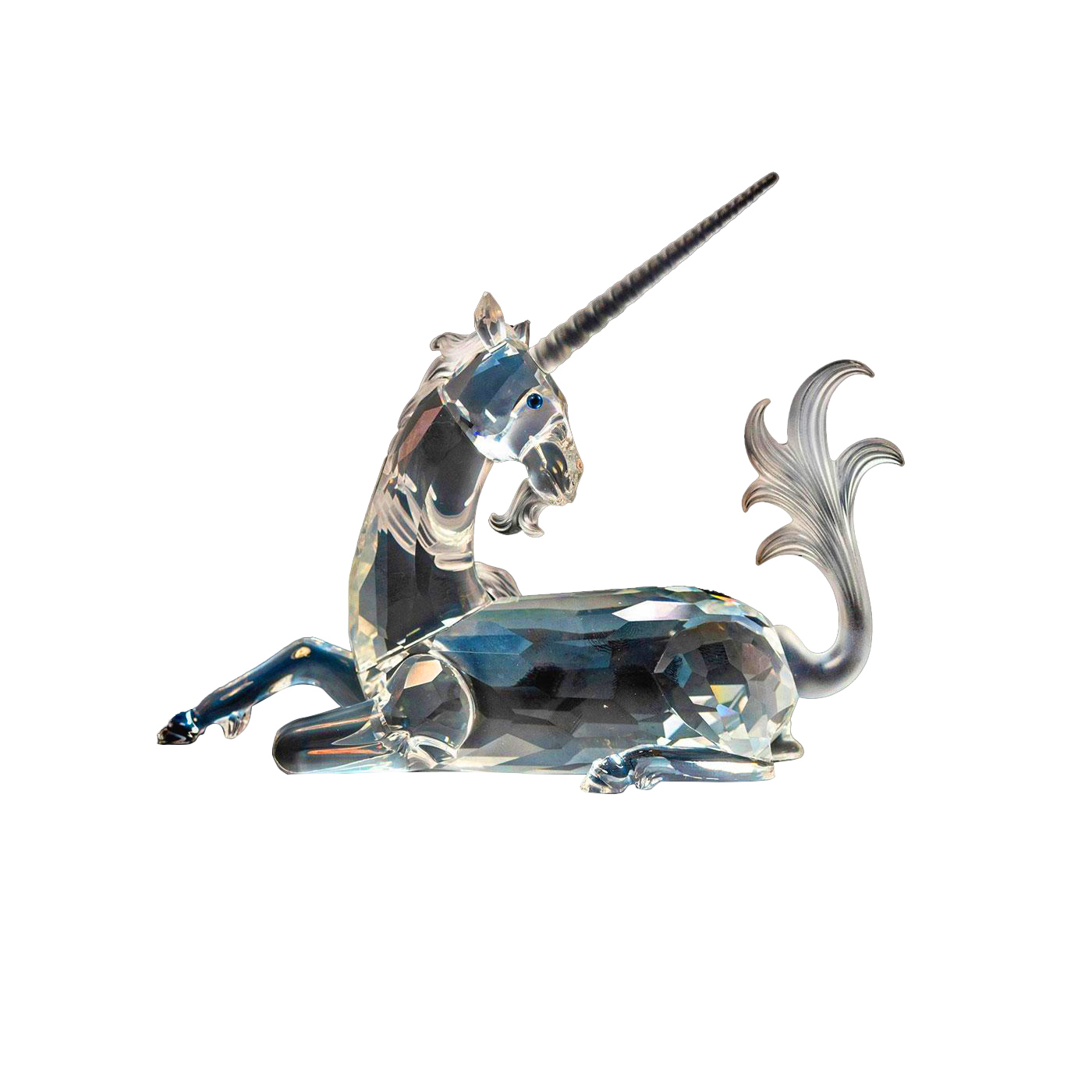
Beautiful, glass animal figure. Frosted tail. With original box and certificate.
Swarovski backstamp.

Issued: 1996
Dimensions: 4.5″L x 5.5″W
Manufacturer: Swarovski
Country of Origin: Austria

Meissen Porcelain Figurine, Robbery Of The Sabinerin 1919

Meissen Porcelain Figurine, Robbery Of The Sabinerin 1919

Meissen Porcelain Figurine, Robbery Of The Sabinerin 1919:

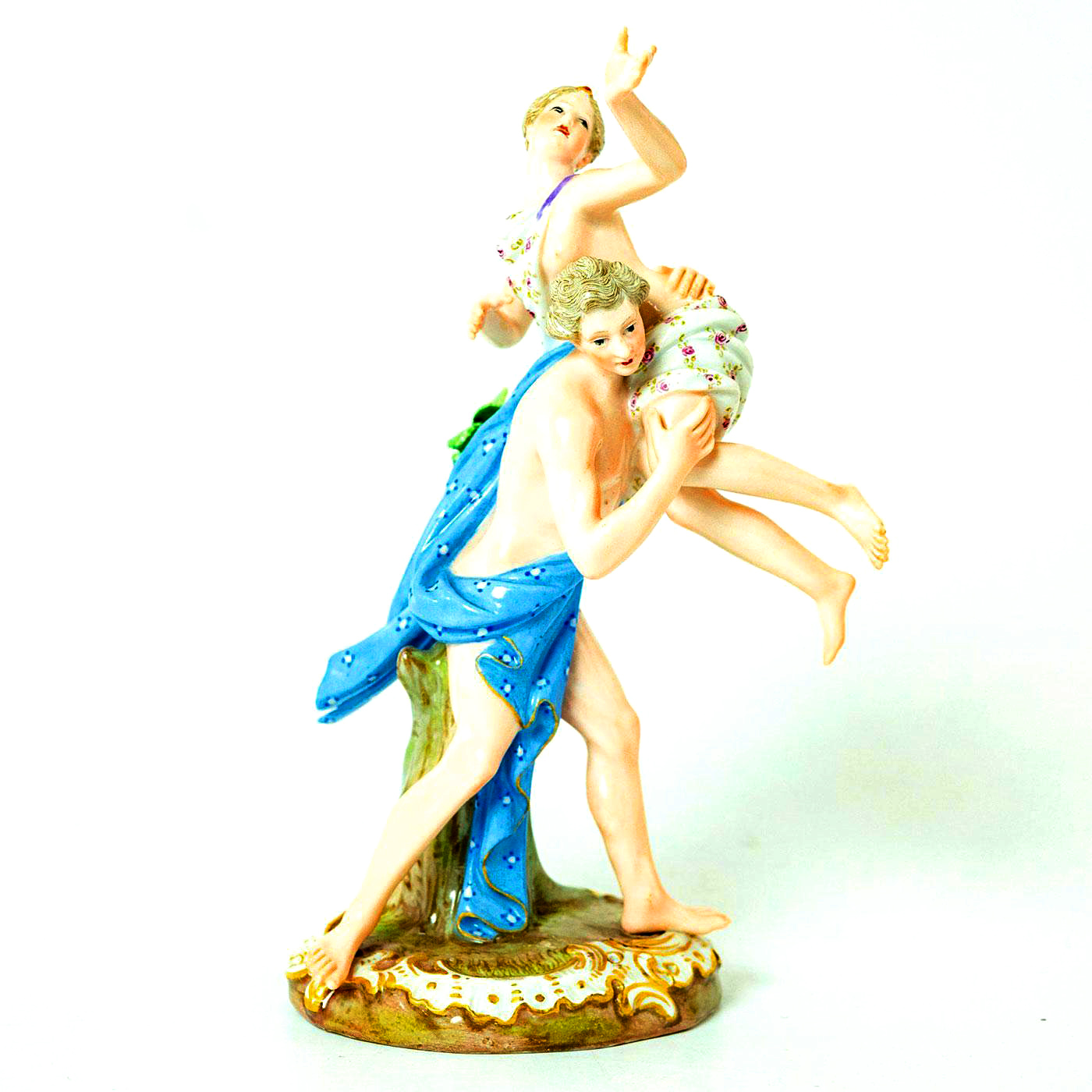
Rare colorway of the man holding up a woman over his shoulders. He is nude wrapped with a blue drape and she is draped in white floral with purple drape.
Meissen backstamp and impressed 1919 and 43 on base. Broken leaves on tree.

Issued: 19th c.
Dimensions: 7.5″H
Manufacturer: Meissen
Country of Origin: Germany

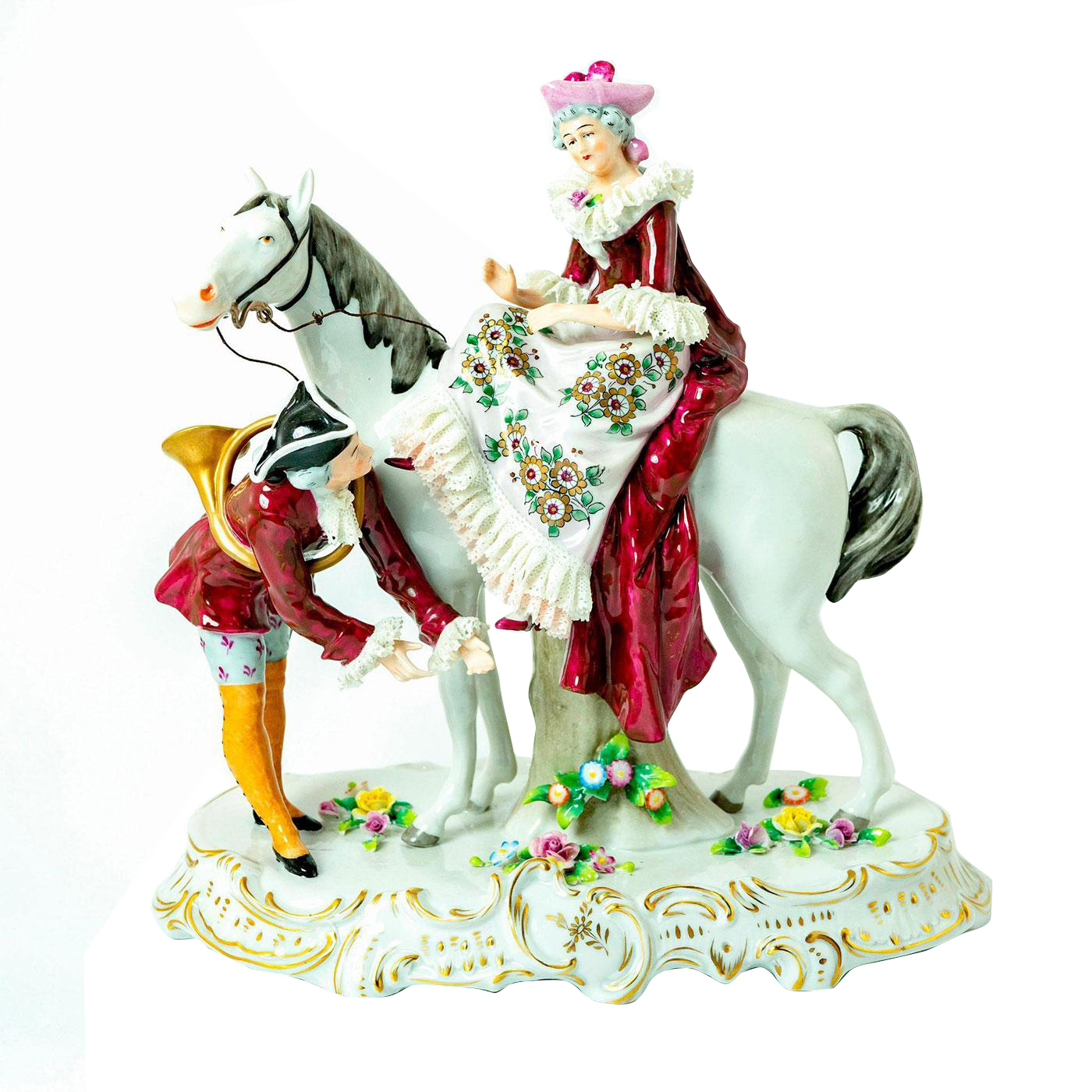
Sitzendorf Porcelain Lace Figurine

Sitzendorf Porcelain Lace Figurine

Sitzendorf Porcelain Lace Figurine:

Elegant woman sitting sideways on a white and gray horse wearing a mahogany colored dress with flowers. A man is helping her also wearing mahogany colored suit with a fox hunting bugle wrapped around him.
Sitzendorf backstamp. Small damage to lace on dress collar.

Issued: 20th c.
Dimensions: 11″H
Manufacturer: Sitzendorf Porcelain
Country of Origin: Germany

Walter Ufer (1876–1936) — Greasewood and Sage

Walter Ufer (1876–1936) — Greasewood and Sage

Walter Ufer (1876–1936) — Greasewood and Sage:

Oil on canvas
25 × 25 inches
signed lower right

VERSO
Label, Grand Central Art Galleries, New York, New York
Label, J. N. Bartfield Galleries, New York, New York
Label, Museum of Fine Arts, St. Petersburg, Florida
Label, Orlando Museum of Art, Orlando, Florida

Art historian Mary Carroll Nelson wrote, “The landscape, the Indians, and the ambience of Taos captured Ufer as it had other members of the Taos Society of Artists. He joined the Society in 1915, its seventh member.

“Taos vitally affected Ufer’s academic approach to painting. He lightened his palette in response to the brilliance of Taos skies, and he moved out into the landscape with his easel. Many of Ufer’s Indian pictures are of figures in landscape. He once wrote, ‘This country will never be painted out for it has an infinite variety of moods and types.… I choose my motifs and take my models to my motifs. I design the painting there. I do not make small sketches of my models first but put my full vitality and enthusiasm into the one and original painting. Studio work dulls the mind and the artist’s palette. I do not use the camera, in fact I know nothing of photography. A large painting must have the same strength and freshness that a small sketch has, and to make a large painting you must go at it just the same way as if you were making a small one.’”

PROVENANCE
Grand Central Art Galleries, New York, New York, 1926
J. N. Bartfield Galleries, New York, New York
Samuel and Marion Lawrence, Winter Park, Florida
Biltmore Galleries, Scottsdale, Arizona
Private collection, Scottsdale, Arizona
John and Toni Bloomberg, La Jolla, California

EXHIBITED
Hidden Treasures: American Paintings from Florida Private Collections, Orlando Museum of Art, Orlando, Florida, 1992
The American Spirit: Realism and Impressionism from the Lawrence Collection, Museum of Fine Arts, St. Petersburg, Florida, 1999
Bierstadt to Warhol: American Indians in the West, Utah Museum of Fine Arts, Salt Lake City, Utah, 2013
Visions of the West: Highlights from the Bloomberg Collection, San Diego Museum of Art, San Diego, California, 2020-21

View more information
Condition
Surface condition is excellent. Several specks of inpainting in lower-right quadrant.

Oscar Berninghaus (1874–1952) — The Domain of Their Ancestors (1925)

Oscar Berninghaus (1874–1952) — The Domain of Their Ancestors (1925)

Oscar Berninghaus (1874–1952) — The Domain of Their Ancestors (1925):

Oil on canvas
25 × 30 inches
signed lower right

VERSO
Label, Mongerson Wunderlich, Chicago, Illinois
Label, Wunderlich & Co., New York, New York
Label, The Taft Museum, Cincinnati, Ohio

Western art historian Dr. Larry Len Peterson writes, “For over a century, artists have answered the call of the mountains, yet one painting stands at the pinnacle, The Domain of Their Ancestors. The incomparable setting showcases Mt. Grinnell on the left and Mt. Wilbur in the center, located in the Many Glacier region of the ‘Crown of the Continent,’ Glacier National Park in northwestern Montana. Mt. Grinnell was named after George Bird Grinnell (1849-1938), the father of Glacier National Park; editor of Forest and Stream; prolific author; and along with his close friend Theodore Roosevelt, founder in 1887 of the Boone and Crockett Club. At the altar of the snow-covered massifs are Swift Current Lake and Falls. To the left of the falls is where Many Glacier Hotel – at the time the largest Hotel in Montana – was built in 1915 by Louis Hill’s Great Northern Railway (GNR).

“The noble, mounted chief donning a peace medal in the center foreground is Blackfeet Two Guns White Calf (1872-1934). After the death of Chief Joseph in 1904 and Geronimo in 1909, he was the most famous Native American in the nation for decades. Chief Two Guns is the Indian most closely associated with the buffalo nickel, designed by James Earle Fraser (1876-1953) and minted from 1913 to 1938. The GNR touted him as the model, and tourists couldn’t wait to catch a glimpse of him as they disembarked at the East Glacier Park train station. In addition, he traveled the country for the GNR, promoting the ‘Alps of North America’ and appeared on the front page of almost every major newspaper in the country. The railway also showcased Winold Reiss (1866-1953) paintings of him on tens of thousands of their Brown & Bigelow calendars. Two Guns was a national celebrity. Born near Fort Benton, Montana, he was the son of White Calf, a famed Blackfeet chief. His father was a leading representative for the Blackfeet when they negotiated the 1895 treaty with the United States. After White Calf died in 1902, Two Guns became a tribal chief and spokesman. He was the head of an organization called the Mad Dog Society whose goal was to preserve Blackfeet heritage, which included the Sundance and Ghost Dance ceremonies. Two Guns lobbied in Washington, D.C., demanding additional payments for the land ceded in 1895 that became the eastern portion of Glacier National Park – the domain of his Blackfeet ancestors. One reporter in admiration called him the ‘William Jennings Bryan of the red race.’

“Still, it took Oscar E. Berninghaus and his grand imagination to create one of the greatest tributes to Two Guns and Glacier National Park. Born in St. Louis, Missouri on October 2, 1874, he fell in love with art from time spent at his father’s lithography business. He wrote, ‘The painter must first see his picture as paint-as color-as form-and not as a landscape or figure.’ In 1915 Berninghaus along with five other celebrated artists founded the Taos Society of Artists (TSA), which disbanded twelve years later, but only after making an indelible mark on Western art. An example of his tireless devotion to the promotion of the TSA was writing over 125 letters during his tenure as secretary to art patrons in St. Louis where he once exhibited with Charles M. Russell. Russell owned Bull Head Lodge in Glacier National Park, and surely he touted the unparalleled vistas of Glacier country to his artist friend. Below the artist’s signature in his hand writing is ‘after photo.’ Most likely the painting was inspired by a collage of photographs taken by Roland Reed (1864-1934), one of the most renowned pictorialist photographers of his generation. After a long, illustrious career, Berninghaus died of a heart attack on April 27, 1952 in Taos, New Mexico. There is no finer example of The American West Reimagined than this masterpiece. As legendary Bob Drummond – the most important force in the history of the Western art auction – wrote, The Domain of Their Ancestors is ‘the best Berninghaus painting ever painted.’”

PROVENANCE
Mongerson-Wunderlich Galleries, Chicago, Illinois
William J. Williams, Cincinnati, Ohio, 1987
Private collection, 2013

EXHIBITED
Frontier Memories: 19th & 20th Century Art of the American West, Cincinnati, Ohio, The Taft Museum of Art, 2004-05

LITERATURE
Larry Len Peterson, The Call of the Mountains: The Artists of Glacier National Park, Settlers West Galleries, 2002, p. 141, illustrated
Larry Len Peterson, John Fery: Artist of Glacier National Park and the American West, Coeur d’Alene Art Auction and Settlers West Galleries, 2015, p. 117, illustrated
Larry Len Peterson, Blackfeet John L. “Cutapuis” Clarke and the Silent Call of Glacier National Park: America’s Wood Sculptor, Sweetgrass Books, 2019, p. 205, illustrated
Gordon E. Sanders, Oscar Berninghaus, Taos, New Mexico: Master Painter of American Indians and the Frontier West, Taos Heritage Publishing Company, 1985, p. 123, listed

View more information
Condition
Surface condition is excellent. No signs of restoration.

Charles M. Russell (1864–1926) — Roping a Wolf (1904)

https://www.bidsquare.com/auctions/coeur-dalene/fine-western-american-art-7138

Charles M. Russell (1864–1926) — Roping a Wolf (1904):

Oil on canvas
15 × 20 inches
signed and dated lower left

VERSO
Label, Gerald Peters Gallery, Santa Fe, New Mexico

Roping a Wolf is recorded in the C. M. Russell Catalogue Raisonné as reference number CR.ACM.128.

It is of great note that Frederic G. Renner included Roping a Wolf in his landmark publication Charles M. Russell: Paintings, Drawings and Sculptures in the Amon Carter Museum featuring Russell’s finest works in the Amon Carter’s collection.

Visiting New York City for the first time in December 1903, Russell’s extended trip greatly influenced the artist and he returned to Montana in 1904 with a new sense of confidence in his artistic abilities. This watershed moment marks what many scholars believe to be the beginning of the period where he created his greatest works. Highly sought after, works by Russell from this period are the highlight of many museum and private collections

Considered to be one of Russell’s finest oils, his mastery of high action and coloration are on full display in Roping a Wolf.

In discussing this painting Frederic G. Renner wrote, “With the destruction of their natural prey, the buffalo, wolves turned to the white man’s cattle and these pests soon became a serious problem to early Montana cowmen. Various means for their destruction were tried. Some ranchers employed ‘wolfers’ to trap and poison the animals during the winter. John Harris, a prominent stockman of Fort Benton, imported a pack of hounds, but one winter the wolves got so hungry and bold they turned on the dogs and ran them all back to the safety of the ranch. Cowboys, encouraged by the bounty nearly equal to a week’s wages, roped them for the fun of it.

“Both kinds of chaps typical of Montana are shown in this painting. Most Montana cowboys owned two pair – plain leather ones for summer use, and a pair of ‘woolies,’ which were worn for their added warmth in the fall and winter. Forty-below weather required something more than cowhide to keep the cowboys from freezing and they resorted first to covering their chaps with bear skin with the fur left on. As this fur became hard to come by, long-haired goat skin from Texas was substituted and such chaps also became known as ‘angoras.’”

PROVENANCE
The artist
John A. Sleicher, Albany, New York
Mary Sleicher, Albany, New York
Amon Carter Museum of American Art, Fort Worth, Texas
Private collection

LITERATURE
Larry Len Peterson, Charles M. Russell, Legacy: Printed and Published Works of Montana’s Cowboy Artist, Falcon Publishing, 1999, p. 134
Frederic G. Renner, Charles M. Russell: Paintings, Drawings and Sculptures in the Amon Carter Museum, Harry N. Abrams, Inc., 1984, p. 170, illustrated

View more information
Condition
Surface condition is excellent. Thin line of inpainting in sky, above lead cowboy’s head.

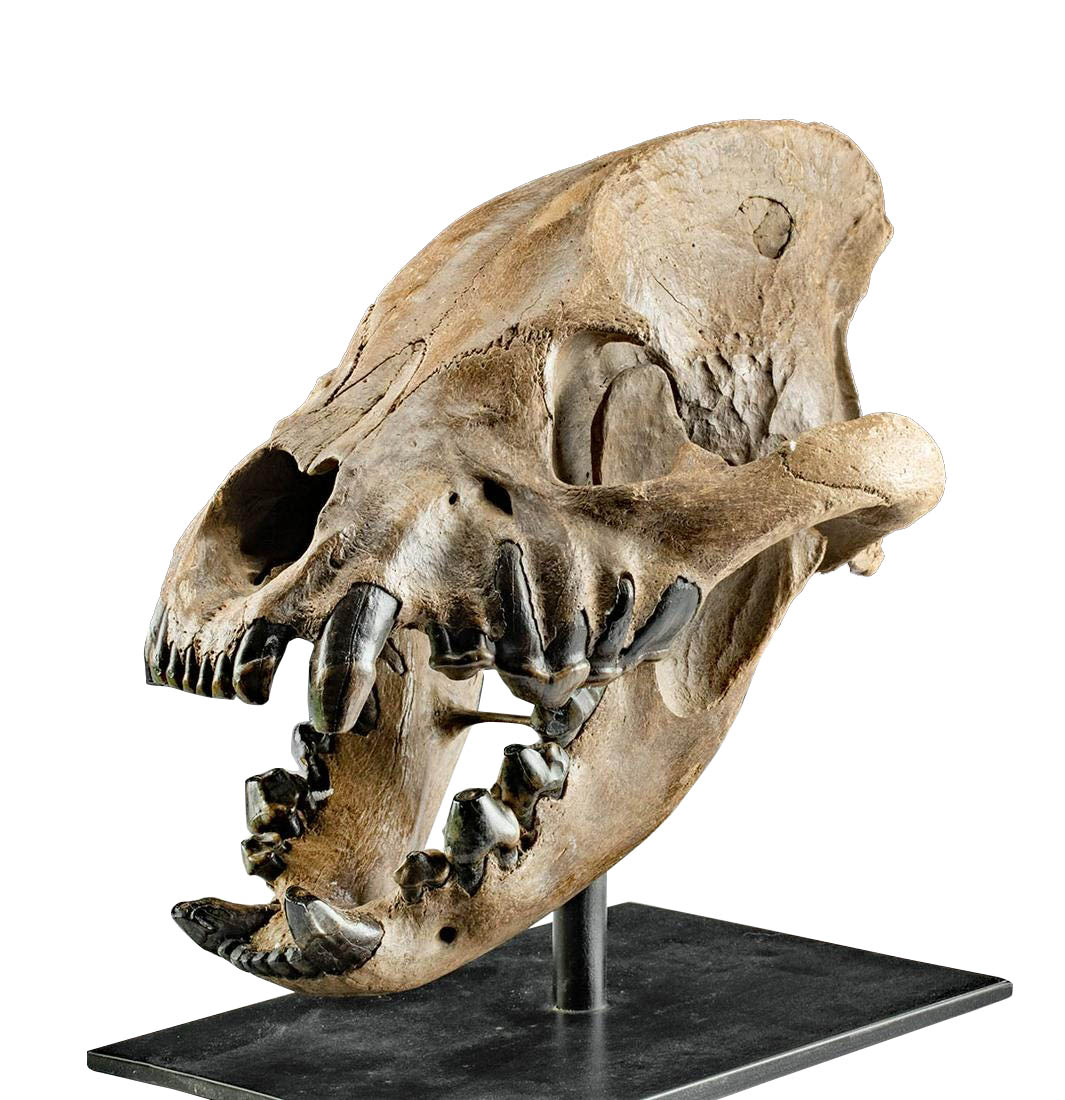
Rare Fossilized Cave Hyena Skull – Choice!

Rare Fossilized Cave Hyena Skull - Choice!

Rare Fossilized Cave Hyena Skull – Choice!:

Central Asia, Eastern Kazakhstan, Altai Mountains, Pleistocene epoch, ca. 2 Million to 10,000 years ago. A fascinating fossilized skull from the extinct cave hyena, also known as the Ice Age spotted hyena (Crocuta crocuta spelaea). This skull has been shockingly preserved to near perfection – due to the location in which it was found – protected within a cave from the elements. It is displayed to show off the teeth within the incredibly powerful jaws – these animals ate everything from reindeer and horses to woolly rhinos, accumulating their bones and horns in their cave dens. In Siberia, there is evidence they also ate cave bears! Note the heavy nature of the skull, reinforced for the hyena’s rough life of hunting animals larger than itself and contending with neighboring predators – notably wolves. Although their DNA is not significantly different from modern hyenas, cave hyenas were considerably larger than their modern ancestor. The fossilization process has left the bones a rich brown umber color, and the teeth are a pretty black and mottled brown. This is a very rare specimen due to its near perfect condition. It is not common to come across such an amazing fossilized hyena skull! Size: 13.5″ L x 8″ W (34.3 cm x 20.3 cm); 10″ H (25.4 cm) on included custom stand.

These cave hyenas were subspecies the spotted hyena, which is the only modern living member of the Crocuta family. Cave hyenas, also known as the Ice Age Spotted Hyena, were encountered by prehistoric humans and depicted them in cave art, including the Chauvet Cave and Lascaux. Archaeologists also found an atlatl weight carved of mammoth ivory in the form of a crouched hyena, perhaps meant to depict the animal stalking its prey, in the La Madeleine rock shelter, dating ca. 12000-17000 years old. This species once ranged from Iberian Peninsula to Russia. This hyena was a highly specialized animal. These weighed approximately 230 pounds (104 kg), hunted in packs, and ate wild horses, steppe bison, and wooly rhinoceros. Like many prehistoric animals, the cause of extinction is not fully understood, but likely due to climate change, and an inability to compete with other predators.

This piece has been searched against the Art Loss Register database and has been cleared. The Art Loss Register maintains the world’s largest database of stolen art, collectibles, and antiques.

Provenance: private Rome, Georgia, USA collection

All items legal to buy/sell under U.S. Statute covering cultural patrimony Code 2600, CHAPTER 14, and are guaranteed to be as described or your money back.

A Certificate of Authenticity will accompany all winning bids.