Hand crafted bronze with tigers, dragon, and peacock design.
Dimensions: 3.5″H

Hand crafted bronze with tigers, dragon, and peacock design.
Dimensions: 3.5″H

Palatial and fabulous antique American Victorian era stained glass landing window having an architectural form, the upper portion centered with lion mask with berried laurel cartouche, the base with columns further decorated with heraldic symbols, the center with family crest headed with Mercury wings flanked by flambeau torches. The window painted and fired and layered with plates of stained glass. Approx. height width depth

Louis XV commode, with grey marble top, 18th century, (marble probably replaced), height 33 in., top 26 x 40in.
Condition
All lots are sold “AS IS” The condition of lots can vary widely and are unlikely to be in a perfect condition. *No credit card payments will be accepted for silver, gold, or jewelry from buyers that have not purchased from our gallery in the past.

Pre-Columbian gold Sinu large bird finial on tube, with an open beak, bead eyes, a crest of curled feathers, talons grasping a snake entwined around a cylindrical tube, decorated with open scroll and braid-work. 7.5″ H x 1.75″ W x 1.375″ D. Comprised of approx 46.09% gold (equivalent to 11K+ gold). Approx 84.2 dwt = 130.94 grams. This piece has been tested via Niton XL3t / XRF Analyzer: Gold: Au 46.09 / Silver: Ag 22.26 / Copper: Cu 31.65 and Gold: Au 50.94 / Silver: Ag 30.68 / Copper: Cu 18.38, photo in images. From a 485 Park Avenue private collection.

Berlin mint, KM306.1, Dav-2586. A gorgeous palette of gold, teals, and olive greens make this example very eye appealing. Superb, satiny luster with the cartwheel being effortless as you rotate this piece under the light.

Pre-Columbian, North Coast Peru, Moche, ca. 100 to 300 CE. A striking gold roundel (83% gold, equivalent to ~20K) featuring a skillfully executed openwork relief depicting Ai Apaec as a Jaguar Deity Decapitator holding a human head in one hand and a tumi knife in the other, this composition surrounded by a ring of attached circular gold danglers that would have reflected the sun and shimmered with dappling light. Size: 2″ in diameter (5.1 cm); 4.25″ H (10.8 cm) on included custom stand. Gold quality: 83% gold or equivalent to ~20K.
The Moche Decapitator God was one of the most important guises of Ai Apaec – the primary deity of the Moche. Here he is depicted as a ferocious half-human, half-jaguar mythological being with a bloodthirsty open mouth presenting sharp fangs, flaring nostrils, fur or a plumed headdress upon his head, and large, boldly delineated eyes projecting a fierce countenance. He holds a tumi or ritual sacrificial knife in his right hand and the head of his latest victim in his left.
At the peak of the Moche societal heirarchy warrior-priests reigned supreme. These men presided over sacrificial rituals in which prisoners of war were decapitated and dismembered. Following this ceremony the victim’s blood was voraciously imbibed. Although the Moche were an illiterate culture, their art provides valuable information about this society that existed prior to Inca expansion, including not only its advanced pottery techniques and metalwork, but also its intriguing political and cultural practices as we see revealed in this piece. A fabulous example of an early Moche goldwork with one of the fiercest representations of Ai Apaec as The Decapitator God we have ever seen!
Provenance: private Hawaii, USA collection; ex-Everson Museum of Art, Syracuse, New York, USA
All items legal to buy/sell under U.S. Statute covering cultural patrimony Code 2600, CHAPTER 14, and are guaranteed to be as described or your money back.
A Certificate of Authenticity will accompany all winning bids.
We ship worldwide and handle all shipping in-house for your convenience.
#148438
Condition
Missing one dangler; others show minor indentations. Otherwise the form is excellent, and the gold has developed a lovely warm patina. Not able to weigh, since attached to custom, museum-quality stand.

The coal wagon (recto); Study of a horse, with a second study of a horse (verso)
graphite, pen and gray ink, watercolor (recto), graphite (verso)
7 3/4 x 10 3/4 in. (19.6 x 27.3 cm)
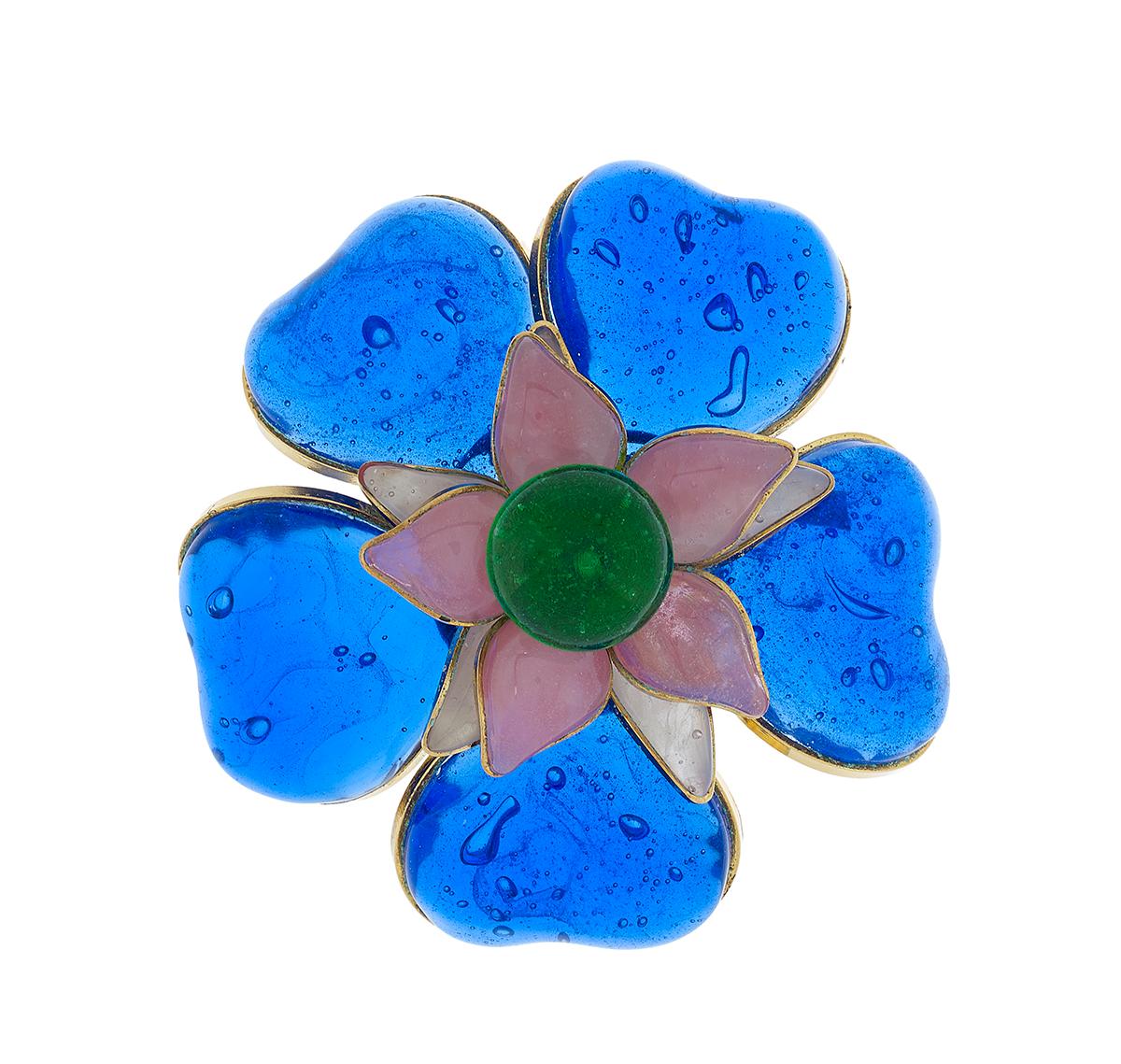
ca. 1991, stamped “Chanel” and “Made in France”. l. 3-1/2″

Oil on cotton canvas, 1970. 1270×1067 mm; 50×42 inches. Signed and dated in oil, lower right recto. Signed and titled in pencil, upper left verso.
Provenance: the Johnson Publishing Company, Inc., Chicago.
The Last Farewell is a significant painting by Dindga McCannon, made when she began to define her aesthetic in the early 1970s. Born and raised in Harlem, Dindga McCannon is a truly versatile artist; she is a painter, printmaker, fashion and jewelry designer, quilter/textile artist, author and illustrator. McCannon knew she wanted to be an artist from an early age, learning to sew from her mother and grandmother as a child. McCannon chose not to attend college to study art – instead she studied independently. She learned printmaking at Bob Blackburn’s Printmaking Workshop, and painting privately with artists Richard Mayhew, Al Hollingsworth and Charles Alston.
McCannon became a member of the Weusi Artist Collective in the late 1960s, and then was a founding member of “Where We At”, Black Women Artists, Inc. (WWA), a collective of black women artists affiliated with the Black Arts Movement. McCannon, Faith Ringgold and Kay Brown held the first WWA meeting in early 1971 in McCannon’s Brooklyn home. McCannon has also illustrated several books by Edgar White, and wrote and illustrated two books of her own, Peaches and Wilhemina Jones, Future Star. Her paintings and prints are in the collection of the Brooklyn Museum and the Schomburg Center for Research in Black Culture. Two of her paintings were exhibited in the 2017 traveling museum exhibition We Wanted a Revolution: Black Radical Women, 1965–85. hooks/King-Hammond p. 157.
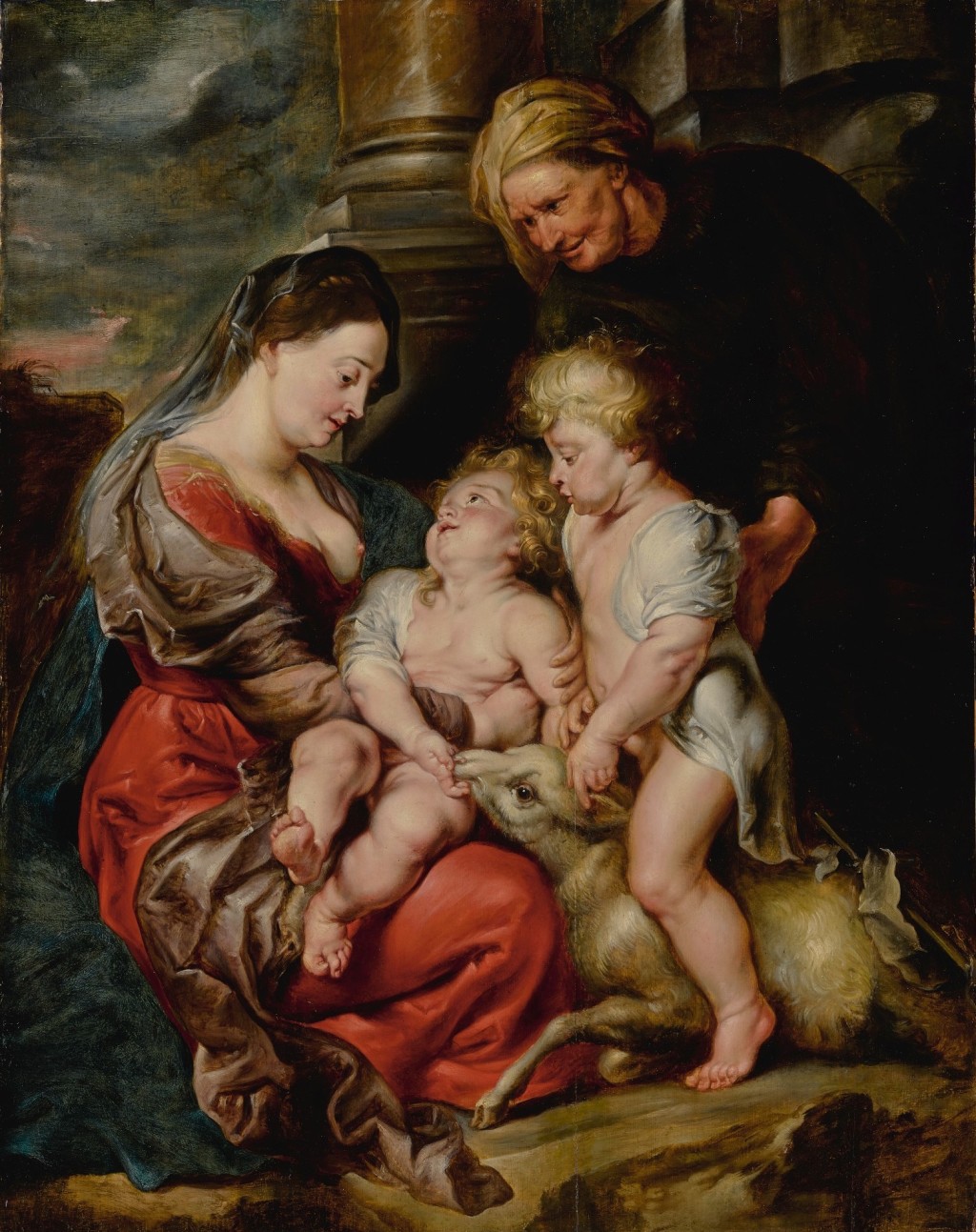
Property from a Private Collection, New York
SIR PETER PAUL RUBENS
Siegen 1577 – 1640 Antwerp
THE VIRGIN AND CHRIST CHILD, WITH SAINTS ELIZABETH AND JOHN THE BAPTIST
oil on panel
47⅞ by 37⅝ in.; 121.6 by 95.5 cm.