(North Carolina, 1934-2004)Straw Field Spring, 2001, signed and inscribed verso, “rain coming/staccato painting/Gatewood 01”, acrylic on canvas, 60 x 96 in.; unframed, Provenance: A Corporate Collection
Condition
surface condition is very good, minor abrasions
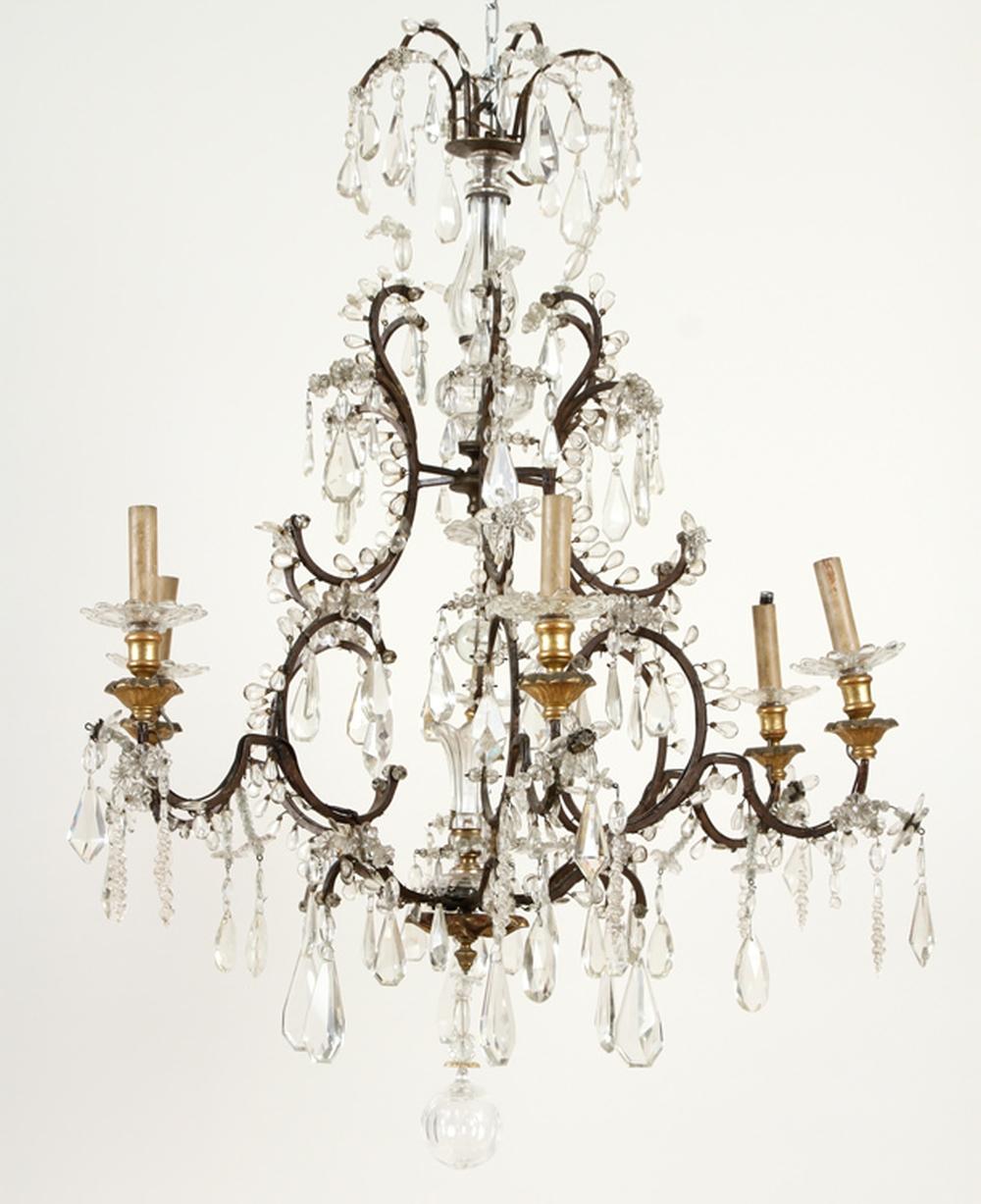
An elegant Italian six arm iron and crystal chandelier circa 1880.
Dimensions
Ht: 42″ Wd: 33″
Paul Evans Studio for Directional
USA, 1972
welded aluminum, enameled steel, slate
30¾ h × 50 w × 22 d in
78 × 127 × 56 cm
Cabinet features two doors concealing storage and one adjustable shelf. Welded signature and date to edge ‘Paul Evans 72 JL’.
literature: Paul Evans: Designer & Sculptor, Head, ppg. 98-99 illustrates related design
Louis XVI style gilt bronze mtd. Cylinder Desk
The superstructure with drawers and a breech d’leap marble top, above the cylinder opening to an interior with small drawers and a leather-inset slide, the sides also with slides, on square tapered fluted legs, the whole with gilt bronze mounts.
Height 43 in.,
Width 40 in.,
Depth 23 in.
Condition Report
Good condition, with no chips or cracks.
H 110.49 cm. x W 102.87 cm. x D 55.24
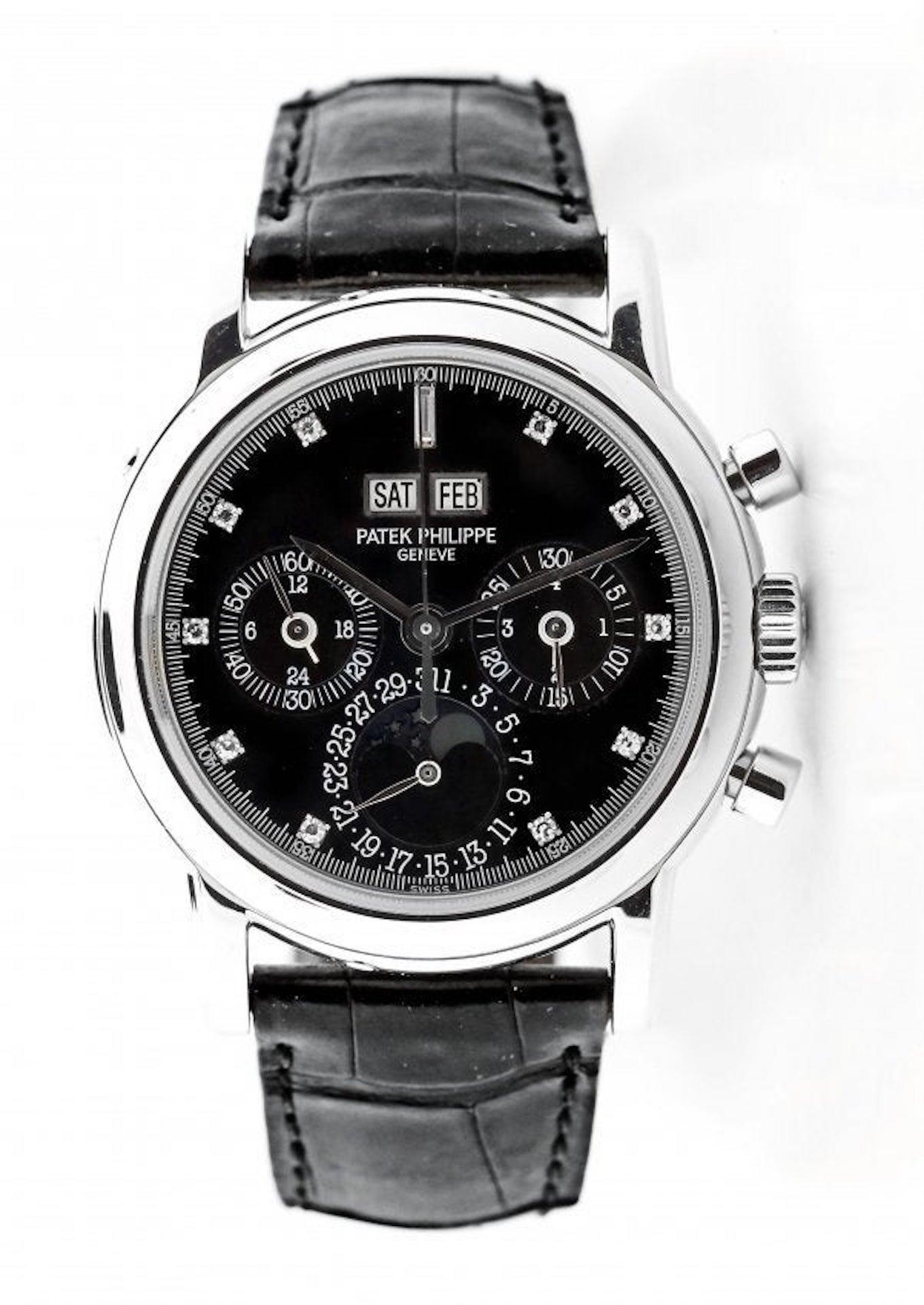
Patek Philippe
REF 3970EP-019
A Platinum and Diamond set Perpetual Calendar Chronograph Wristwatch
with Moon Phases and Leap Year Indication
circa 2000
three subsidiary dials for 30-minute register combined with leap year, date combined with moon phases, and constant seconds combined with 24-hours, apertures for day and month
platinum case, concave bezel, round chronograph buttons,case, dial, and movement signed
platinum Patek Philippe buckle
diameter 36 mm, thickness 12.5 mm
3970EP-019
Dial: black, diamond-set
Caliber: cal. CH 27-70Q manual winding, 24 jewels
Movement number: 3046553
Case:
platinum, screw-down sapphire crystal display back
catalogue note
Ref. 3970 was created following the success of the exceptional and iconic Ref. 2499 . The design of the case of Ref. 3970, with its downturned fluted lugs, is clearly influenced by the form of the Ref. 2499. One main difference between the two models is the addition of the leap year indicator to the 3 o’clock subsidiary dial and 24-hour indicator to the 9 o’clock subsidiary dial. Patek Philippe first launched the Ref. 3970 in 1986 with a snap-on case back.
Two years later into production, Patek modified the design to a screw-down water resistant type case back.
The Ref. 3970E (for Etanche or water-resistant) was produced in yellow, white, and rose gold, and platinum.
Today, the Ref. 3970 holds an important place within the canon of complicated wristwatches by Patek Philippe, along with its iconic predecessors, the 2499 and 1518.
In 2004, Ref. 3970 was replaced by Ref. 5970.
This newer model reverted back to the rectangular chronograph buttons last seen on the first series 2499 models, as well as angular lugs. In 2011, Ref.
5970 was replaced by 5270.
Ref. 3970 is illustrated in Huber, M. & Banbery, A. Patek Philippe, Vol. II, Second Edition, p. 305.
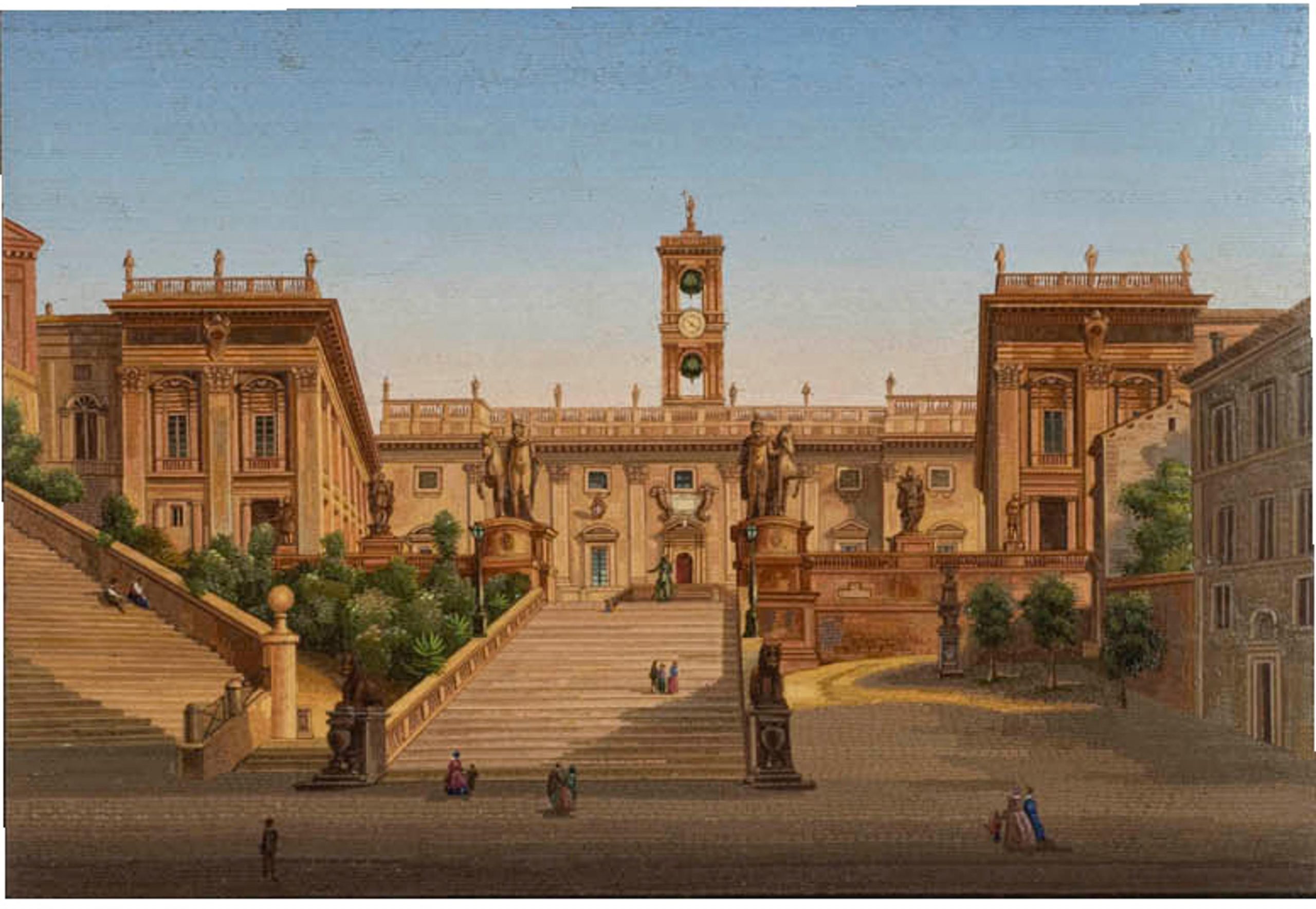
A Micromosaic Picture, Mid 19th Century
A view of the Campidoglio with the Palazzo dei Conservatori in a marble slip
Size with Frame
Height 29.5 in. (74.93 cm.)
Width 33.5 in. (83.75 cm.)
Sight Size
Height 11.87 in. (30.16 cm.)
Width 16.87 in. (42.86 cm.)
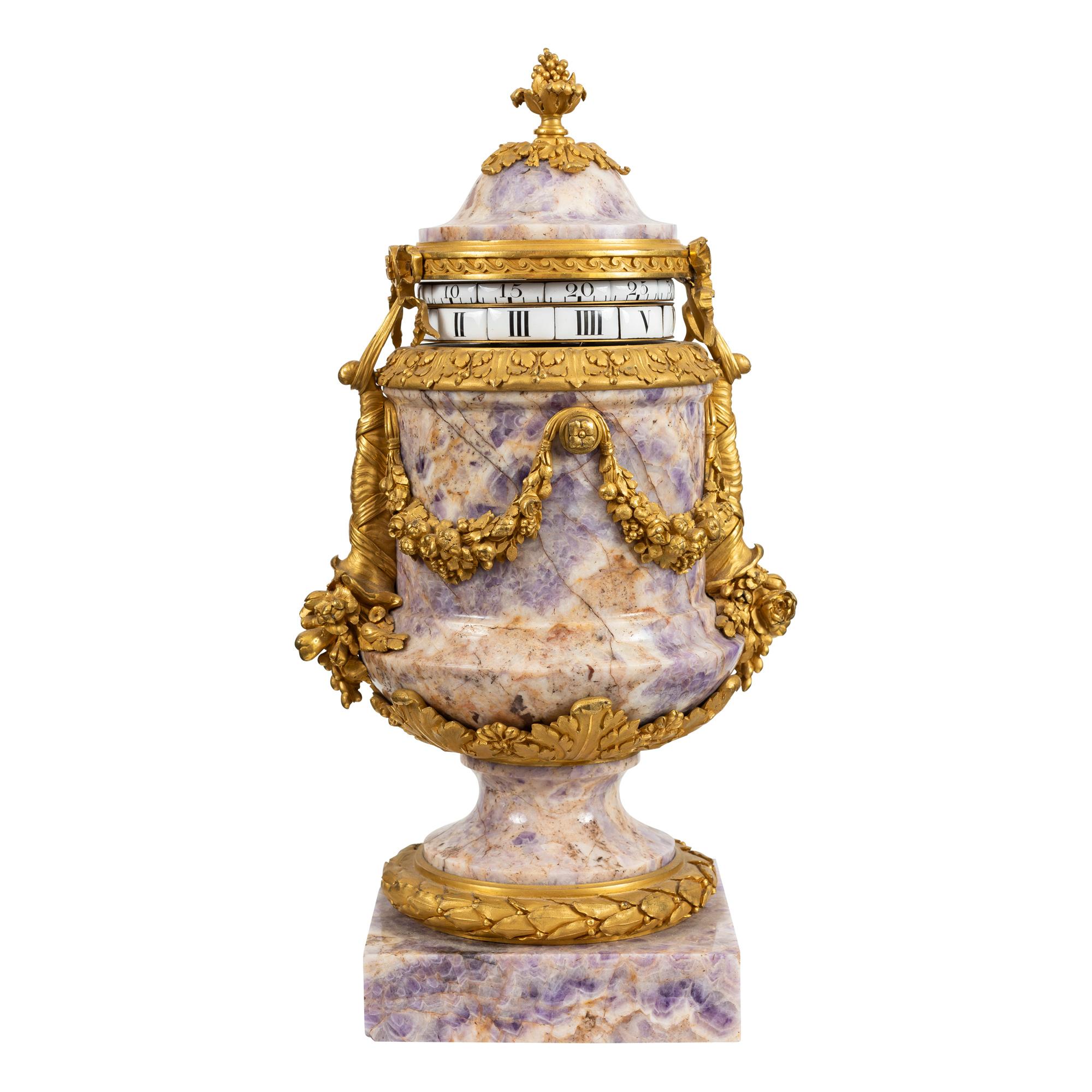
French Gilt-Bronze Amethyst Clock, Circa 1870
The movement attributed to Edward Minart.
Height 13 1/4 inches.(33.65 mm.)
Provenance:
Sotheby’s New York lot 150 April 19, 2007
A PRIVATE COLLECTION: VOLUME 2, IMPORTANT FURNITURE AND DECORATION INSPIRED BY XVIII CENTURY MODELS
horloge à poser
French, circa 1870
Estimate 15,000 — 20,000 USD
LOT SOLD.24,000 USD
**Originally Listed At $6000**
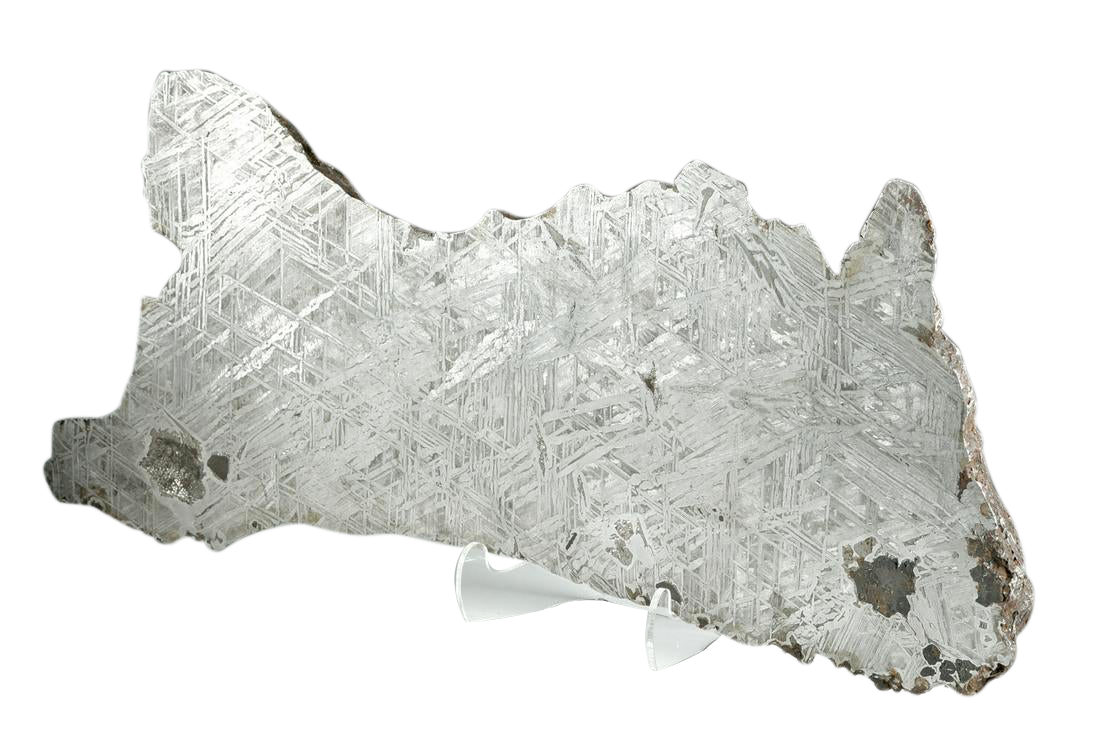
Eastern Europe, eastern Russia, Magadan region, Seymchan, found ca. 1967 CE. An enormous slice of the highly stable and rest resistant Seymchan meteorite. The rough verso exhibits the original bumpy texture of the exterior, and the Widmanstatten patterns (Thomson structures) on the sliced obverse face are composed of coarse octahedrite crystals consistent with pallasite meteorites which have an incredible luster. Fragments of this meteorite were found in 1967 around various areas of the Yasachnaya River. In 2004, a substantial amount of additional material was recovered from the same site. A fine example of this famous meteorite. Size: 19″ W x 8.625″ H (48.3 cm x 21.9 cm); total weight: 14514.94 grams.
Provenance: ex-private Los Angeles, California, USA collection
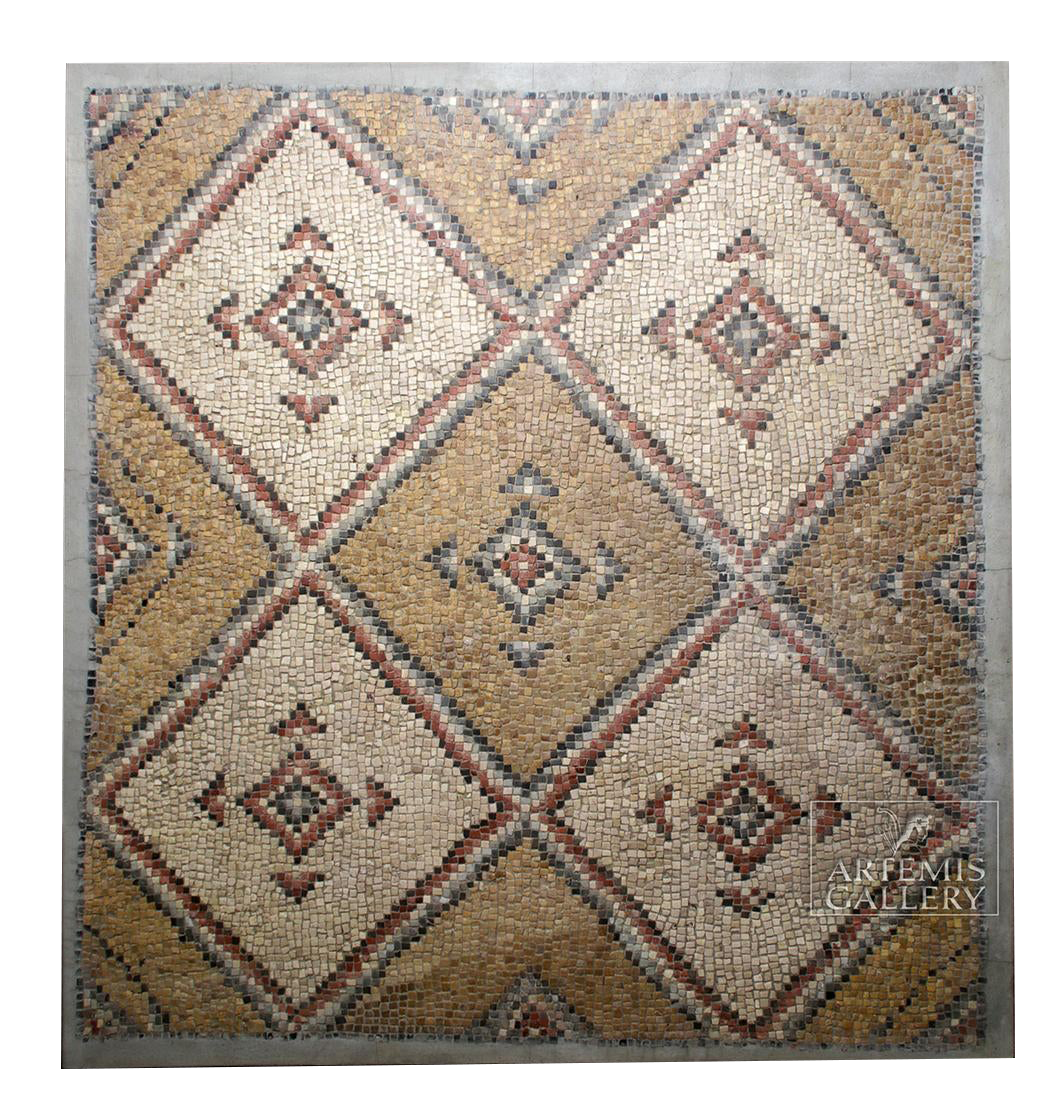
Roman, the Levant, late Imperial Period, ca. 3rd to 5th century CE. A spectacular mosaic presenting an abstract quilt-like pattern of repeated diamond-shaped motifs – each form comprised of central nested diamond shapes with radiating arrowhead motifs from each side – these details in green, grey, white, orange, and peach hues against alternating golden yellow ochre and white backgrounds – all outlined by striated borders of forest green, sage green, white, russet, and olive green. A beautiful design in a warm color palette. Size: mosaic measures 42.75″ W x 45.875″ H (108.6 cm x 116.5 cm); 48″ W x 48.375″ H (121.9 cm x 122.9 cm) including plaster matrix and metal frame
Mosaics (opus tesellatum) are some of our most enduring images from the Roman world, exciting not only for their aesthetic beauty, but also because they reveal what Romans chose to depict and see every day decorating their private and public spaces. This example demonstrates the ancients’ fascination with design as well as geometry.
In the Roman province of Syria, which encompassed most of the ancient Near East/Levant, mosaics developed as a common art form relatively late, with most finds coming from the 3rd century CE or later. Syria was one of Rome’s wealthiest provinces, but it was also far removed from Rome itself and Roman culture was overlaid on enduring cultural traditions from Hellenistic Greece and the great civilizations that came before it. Antioch-on-the-Orontes (modern day Antakya, Turkey), was the capital of northern Roman Syria, and its excavations in the 1930s revealed more than three hundred mosaic pavements – of which many embellished public baths. Popular mosaic themes from this region were often mythological or religious scenes, depicting gods and goddesses; however, sometimes mosaics were simply created to fit the theme or design of a building or room.
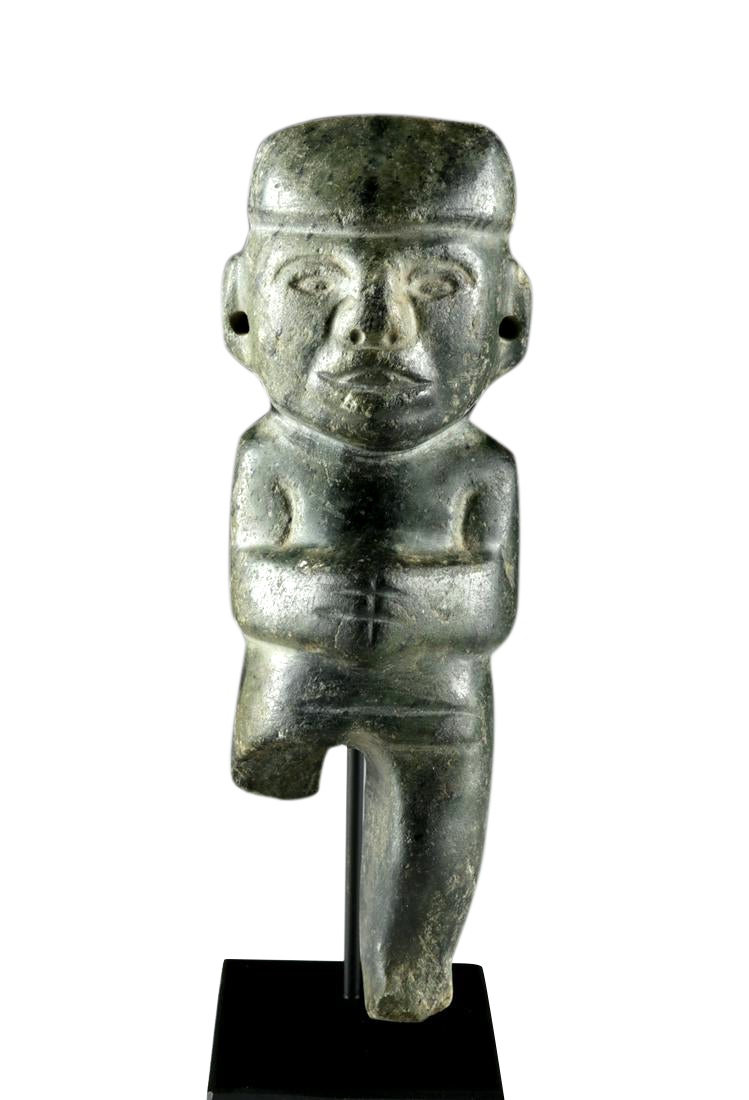
**Originally Listed At $800**
Pre-Columbian, central Mexico, Guerrero region, Chontal, ca. 500 to 300 BCE. An intriguing depiction of a standing anthropomorphic effigy, hand-carved from mottled forest-green stone with beige and dark-grey inclusions. The composition exhibits a host of noteworthy Olmecoid features such as the delineation gap between the legs, the stocky arms, and the veristic facial features in contrast to the abstract stylization of classic Chontal sculpture. Almond-shaped eyes beneath incised brows, a bulbous nose with flared nostrils, and puffy lips surrounding a protruding tongue form the almost pensive countenance, all flanked by two pierced, tab-shaped ears, and topped with an incised groove beneath the angled coiffure. Custom museum-quality display stand included. Size: 2.2″ W x 6.375″ H (5.6 cm x 16.2 cm); 7″ H (17.8 cm) on included custom stand.
Provenance: private Los Angeles County, California, USA collection, acquired by descent from the owner’s father, collection amassed between 1950-1990