Not Guilty, 2016
Screenprint, stencil, spray paint and acrylic on wove paper
30 × 22 1/2 in
76.2 × 57.2 cm
Mr. Brainwash

Not Guilty, 2016
Screenprint, stencil, spray paint and acrylic on wove paper
30 × 22 1/2 in
76.2 × 57.2 cm
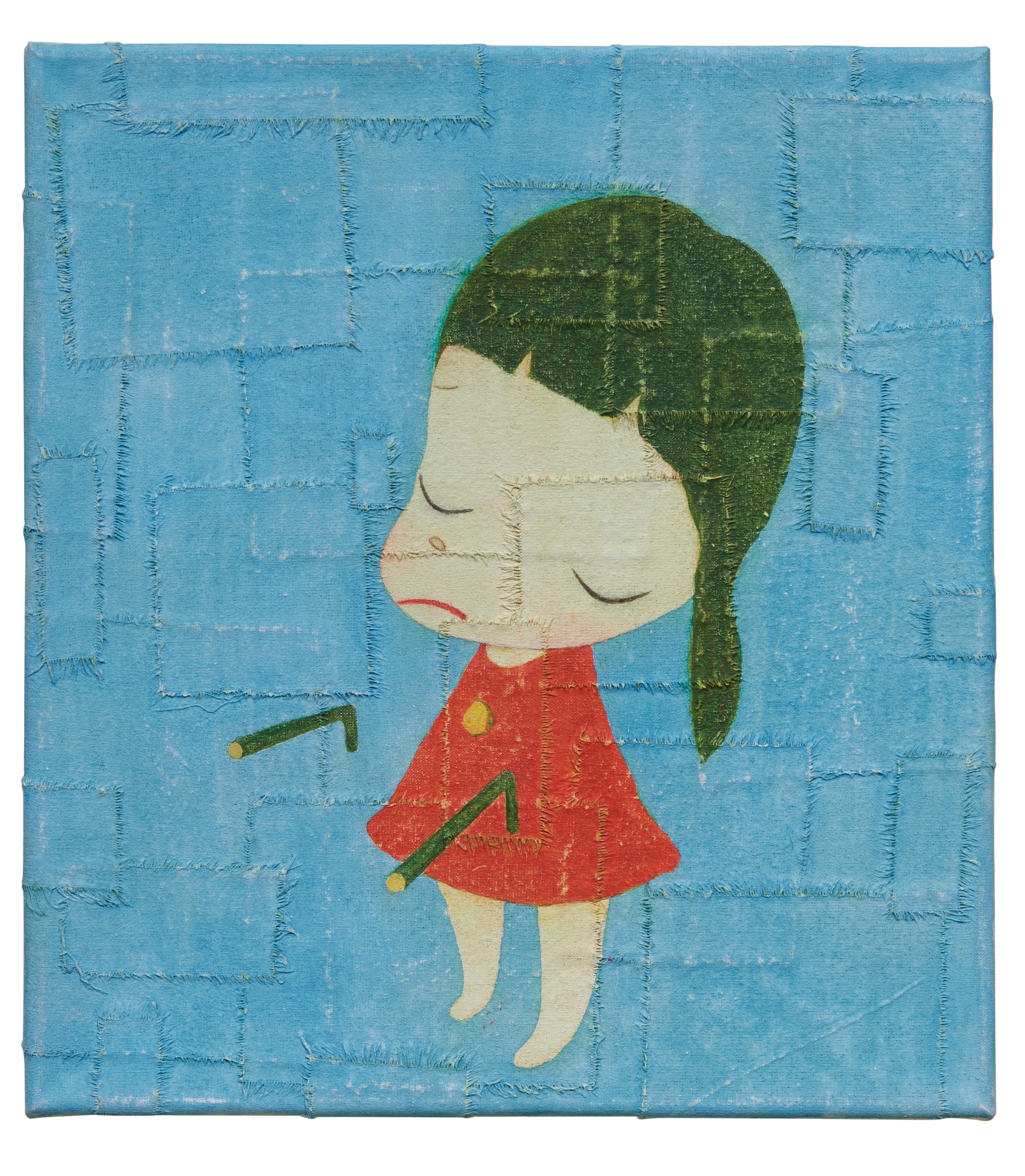
signed, titled and dated ’99 on the reverse
acrylic on cotton mounted on canvas
painting: 12¼ by 11 in. 31 by 28 cm.
framed: 23¼ by 22¼ in. 59.1 by 56.5 cm.

Hand painted bone china, inspired by the Raymond Briggs book.
A beautiful glazed and hand painted bone china figural group, inspired by characters in the 1978 British holiday children’s book The Snowman by Raymond Briggs. COALPORT THE SNOWMAN SOFT LANDING backstamp.
Issued: 2002
Dimensions: 4.5″H x 5″W
Manufacturer: Coalport
Country of Origin: England

Golden silver, 2.3″ (6 cm). Disc with Prehispanic ornamental motifs, with an eagle in the center, attached to a golden yellow sash, 32.6 x 3.7″ (83 x 9.5 cm). in original wooden case lined with leather. Pieces: 2.
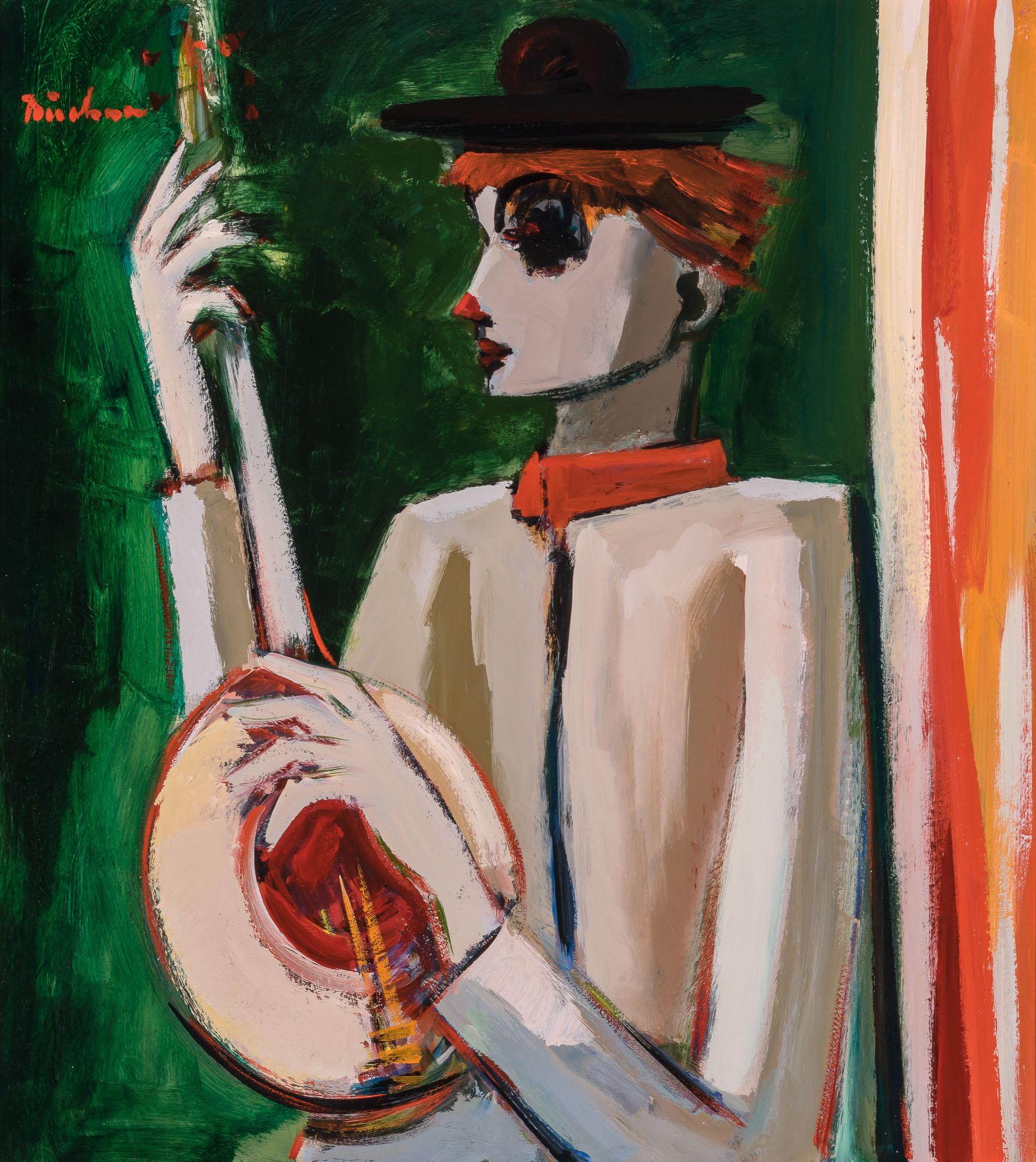
Carl Adolph Buchner
South African, 1921-2003
Untitled (Musician)
Signed Buchner (ul)
Oil on Masonite
40 x 36 inches (101.6 x 91.44 cm)

Chanel Grey Tweed Medium Boy Bag, ruthenium tone hardware, lambskin leather with woven tweed
25 w x 15 h x 8 d cm
Includes serial sticker (23291038),authenticity card and dust bag
Condition Grade A
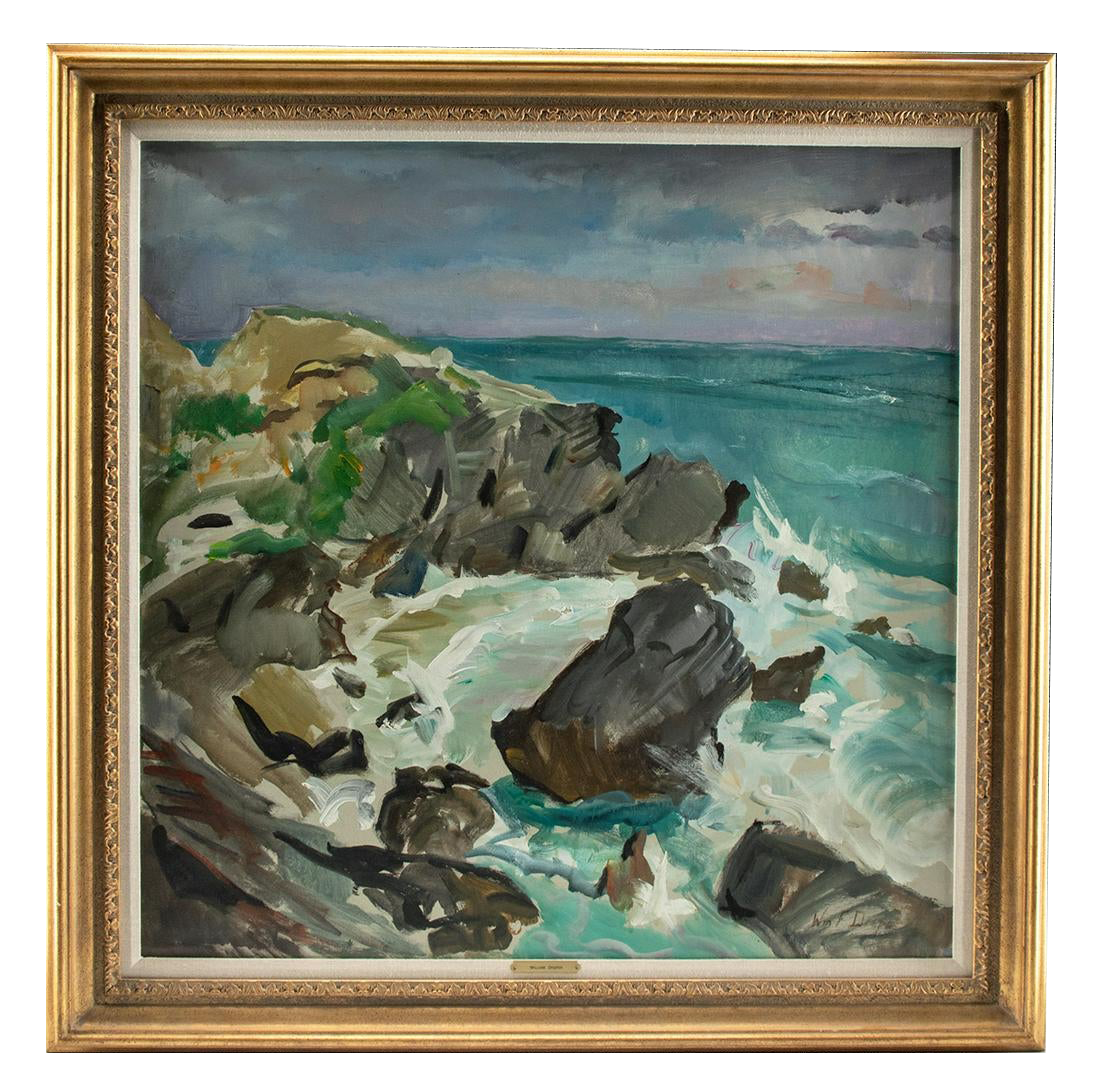
William Franklin Draper (American, 1912-2003). “Bermuda Surf” oil on canvas, 1968. Signed “Wm. F. Draper” on lower right. Painted in an expressive style, a view of Bermuda, perhaps capturing the rocky coastline of Horseshoe Bay or Elbow Beach. A longtime favorite subject among international artists including Winslow Homer and Georgia O’ Keefe, Bermuda was one of William Draper’s favorite places to paint, and the artist enjoyed capturing its beauty and vibrant color during his sojourns. In addition to Bermuda’s simultaneously dramatic and picturesque natural environment, Draper got a kick out of traversing the island on motorbike in the 1950s and 1960s. A fabulous painting, signed by the artist on the lower right, and set in a custom frame with a brass plaque inscribed with the artist’s name. Size: 36″ L x 36″ W (91.4 cm x 91.4 cm); 43.5″ L x 43.5″ W (110.5 cm x 110.5 cm) framed.
William Draper’s career spanned seven decades and his subjects included a portrait of John F. Kennedy that hangs in the National Portrait Gallery in Washington D.C. based upon an oil sketch for which the president sat in 1962. Draper was actually the only artist who painted JFK from life. Draper showed at Knoedler, the Graham Gallery, Portraits, Inc., the Far Gallery, The Findlay Galleries (New York, NY) and the Robert C. Vose Galleries (Boston, MA). His work has been included in shows at the National Portrait Gallery and the Corcoran Gallery of Art (Washington, D.C.), The National Academy of Design (New York, NY), The Boston Museum of Fine Arts, (Boston, MA) the Fogg Art Museum, (one of the Harvard Art Museums, Cambridge, MA), the National Gallery, (London), Salon de la Marine (Paris) and in museums in Australia. He also taught at the Art Students League of New York, and received a lifetime achievement award from the Portrait Society of America in 1999.
More on the artist’s background: William Franklin Draper was born in Hopedale, Massachusetts on December 24, 1912. A child prodigy, he studied classical piano at Harvard University. He later changed his focus to fine art and studied with Charles Webster Hawthorne and Henry Hensche in Provincetown, Rhode Island. Draper also attended the National Academy of Design in New York and the Cape Cod School of Art in Massachusetts. Then he traveled to Spain and studied with Harry Zimmerman, moved on to France and attended the Academie de la Grande Chaumiere. In 1937, he moved to Boston to study sculpture with George Demetrius and also studied with Jon Corbino in beautiful Rockport, Massachusetts. In 1942, Draper joined the Navy and served as a combat artist when stationed on the Aleutian Islands and in the South Pacific. He observed and painted battle scenes on Bougainville, Guam, Saipan, and other locations, as well as genre scenes of soldiers who were not engaged in combat but rather at work and at play. National Geographic magazine reproduced 25 of his war images in four issues in 1944. In 1945, the Corcoran Gallery of Art in Washington D.C. organized a group exhibition of works by five official war artists, including Draper. That same year the Metropolitan Museum of Art included Draper in an exhibition entitled, ”The War Against Japan.” Draper was also featured in a PBS television show about combat artists entitled, “They Drew Fire” in May of 2000. After the war, Draper opened a studio on Park Avenue in New York City and continued to not only paint, but also play classical and jazz piano.
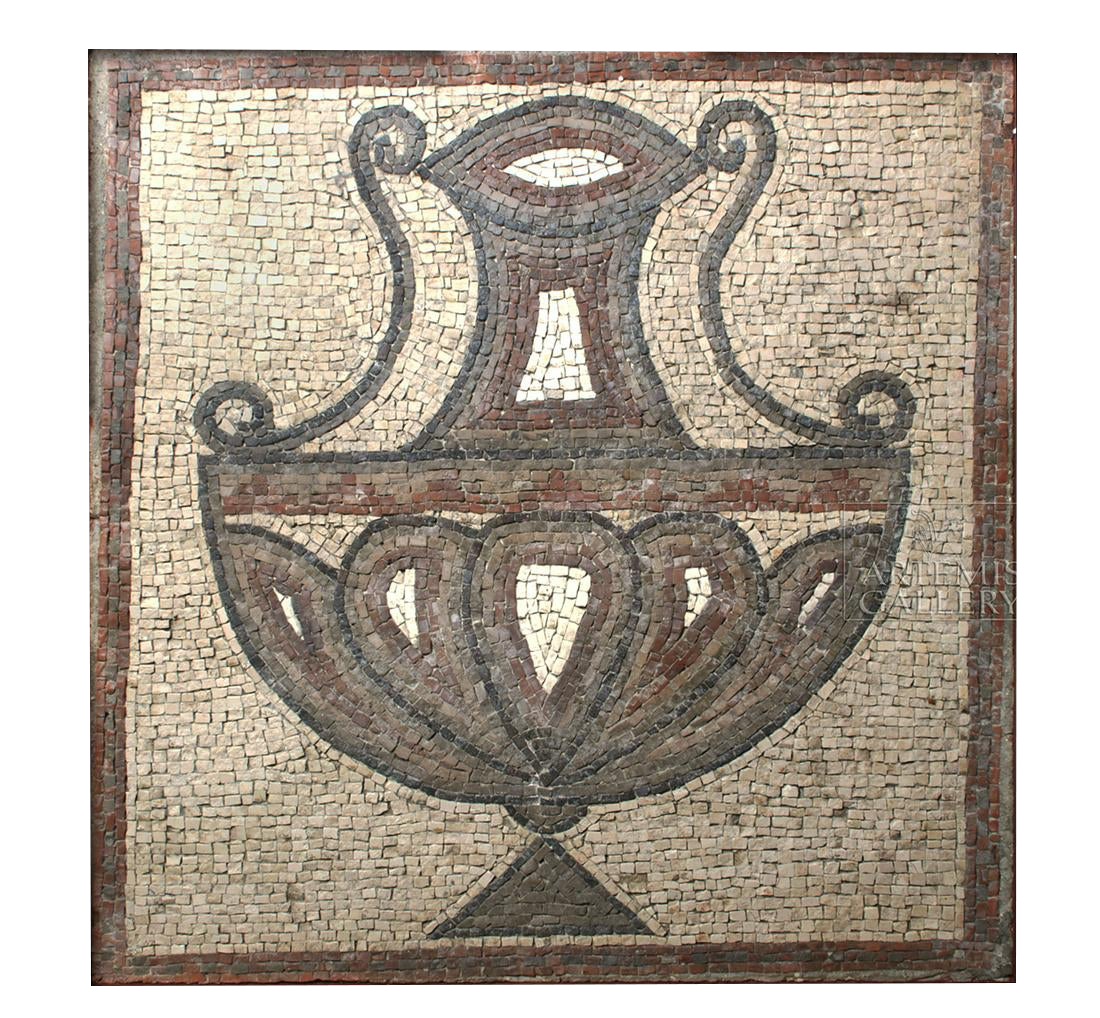
Roman, the Levant, late Imperial Period, ca. 3rd to 5th century CE. A veritable marvel of balance and symmetry, this stone mosaic depicts an elegant amphora in a lovely color palette of wine red, taupe, sienna, jet black, dove grey, and milky white – all against a creamy beige ground with a russet and slate grey border. Size: mosaic measures ~ 25.125″ W x 25.125″ H (63.8 cm x 63.8 cm); 26.625″ W x 26.625″ H (67.6 cm x 67.6 cm) with matrix and metal frame
Mosaics (opus tesellatum) are some of our most enduring images from the Roman world, exciting not only for their aesthetic beauty, but also because they reveal what Romans chose to depict and see every day decorating their private and public spaces. Amphorae were used to store and transport wine, olive oil, and other foodstuffs or precious liquids. They were created in two basic forms – the belly amphora with continuous curves from neck to foot and the neck amphora with a shoulder that joins the neck at a sharp angle, as we see depicted in this example.
In the Roman province of Syria, which encompassed most of the ancient Near East/Levant, mosaics developed as a popular art form relatively late, with most finds coming from the 3rd century CE or later. Syria was one of Rome’s wealthiest provinces, but it was also far removed from Rome itself and Roman culture was overlaid on enduring cultural traditions from Hellenistic Greece and the great civilizations that came before it. Antioch-on-the-Orontes (modern day Antakya, Turkey), was the capital of northern Roman Syria, and its excavations in the 1930s revealed more than three hundred mosaic pavements – of which many embellished public baths. Popular mosaic themes from this region were often mythological or religious scenes, depicting gods and goddesses; however, sometimes mosaics were created to fit the theme of a building or room. This example may have been intended for the triclinium – an ancient dining room – or the kitchen known as a culina.

Dino Rosin (Italian, 1948-), Art Glass, Murano Glass Fish, Circa 1990s. Measures 28” tall. Excellent condition. Solid glass sculpture of a fish in swirling reds and blues. Etch signed. Gallery label present.
Condition
This item will need to be shipped by a packing company of your choice. We maintain a list of reliable shippers, or you may choose your own.

Ming Dynasty, 15th Century.
The boat-shaped body divided into sections by raised ribs, terminating to rosette tips, set to the centre with a cylindrical neck with a garlic mouth decorated with bands of lotus petals and lappets, a short spout to one end, painted with stylised blossoms and foliage above a scrolling band, and stylised waves crashing against a rock, all supported on four ruyi-shaped feet, 21cm long, 17cm H, 10cm W.