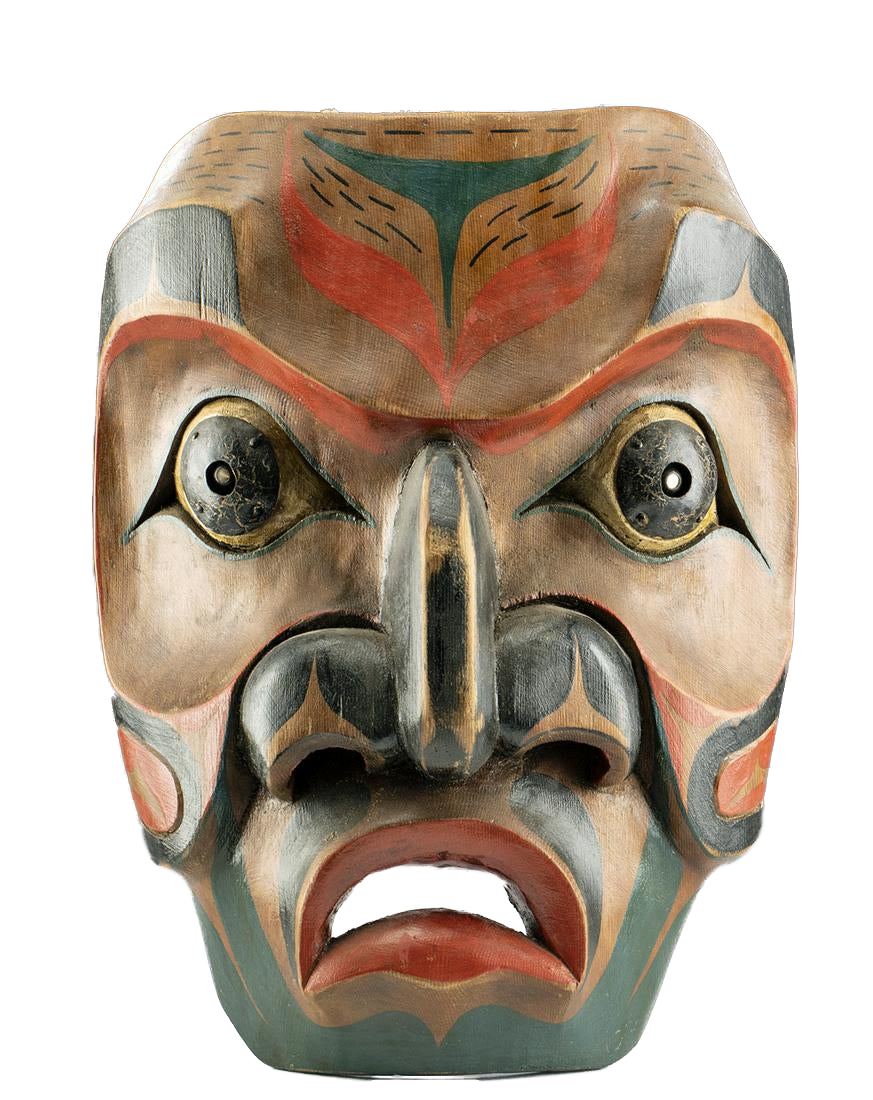
Northwest Coast , Nanaimo, British Colombia, Salish, John Gibson (b. 1950), signed “Stomish, KUL-KA-LEETH” ca. third quarter of 20th century. A hand-carved and beautifully painted wooden (either cedar or alder) mask with copper eyes and a very expressive visage overall by John Gibson who signs his masks with the name “Stomish” which means warrior. Gibson has been carving since the late 1960s. Gibson learned to carve as a child. His father taught him canoe carving techniques at the tender age of seven. As a teen, Gibson worked on totem poles with his uncle Spencer. During his twenties, the family of Jack James adopted him, and since then, he has continued to carve masks and totem poles. Size: 7.75″ W x 11.7″ H (19.7 cm x 29.7 cm)

1952 Topps Mickey Mantle #311 PSA NM-MT 8. In the simplest terms, Mickey Mantle was a man of his age. Just as Babe Ruth had personified the decadence of the Roaring Twenties, Mantle was emblematic of the American optimism that gave the world Elvis Presley and brightly colored automobiles with tail fins fit for a blue whale. We had won the war, rescued western civilization from genocidal totalitarianism, and we felt as if there was no stopping us. America was going big.
The ownership at Topps Chewing Gum felt it–the name itself was an expression of that infectious confidence. Though the company had dipped its toe into the trading card waters with its Hopalong Cassidy issue of 1950, Sy Berger–widely considered “the father of the modern baseball card”–set about constructing something both unprecedented and unequivocal the next fall. Rarely is any venture immune to a stumble or two, and this brings us to the offered lot.
The upper-pantheon significance of the man himself is only half the story, the other half inhabiting a much lower altitude, the briny deep. Mantle’s #311 representation launched the “high-number series” of the 1952 Topps issue, a portion of the set that fell victim to unrealistic deadlines and thus failed to meet its expected distribution quotas. Only small quantities made it to counter displays at the local five and dime, the balance ultimately towed several miles off the New Jersey shore and dumped to clear space on the warehouse floor for newer models.
Graded PSA NM-MT 8. One of thirty-five graded NM-MT with a mere fourteen rated higher from a total population that is approaching 1,700 submissions. Condition is remarkably fine, with strong centering, flawless registration and a gloss that supplies a pack-fresh sheen to the uncompromising visual aesthetics. Like Mantle, this card has become larger than hobby life. If there is any card to make a serious threat to the supremacy of the T206 Wagner as the hobby’s standard bearer – it is this card.
Sight- 22″ x 28″ Overall- 32″ x 37″ THIRD PARTY SHIPPING ONLY
ARTHUR SASSE (1908–1975) Albert Einstein, The Princeton Club in New York, March 14, 1951 Vintage silver print 15,8 x 14,5 cm Newspaper clip reading “Einstein’s Fun. Albert Einstein, famous scientist, gave this response when a photographer asked for his picture on his seventy-second birthday celebration at Princeton, N.J. He immediately followed up with a laugh, but the alert cameraman captured the initial pose” on the reverse, comes with a vintage silver print (1952) showing Arthur Sasse receiving the very first W. R. Hearst Memorial Award by William Randolph Hearst Jr. PROVENANCE Private Collection, USA, through Alexander Bitar History Gallery (comes with a letter of authenticity)
Condition
For condition reports please contact the auction house.
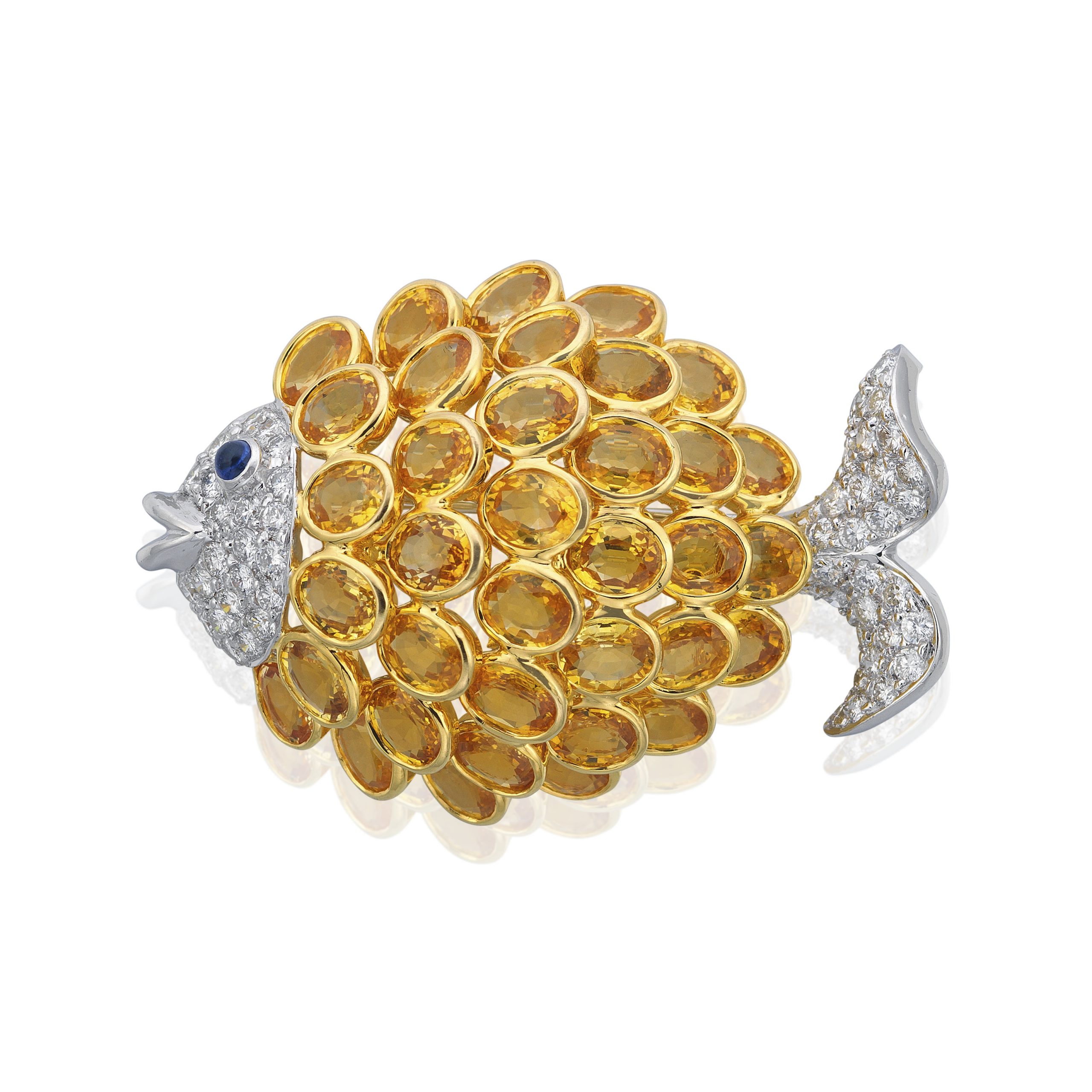
Metal: 18k yellow gold and white gold
Diamonds: Approximately 54 round diamonds with approximate total weights of 0.90 – 1.00 carats
Stones: 36 oval-shaped citrines and 1 cabochon sapphire
Size/Dimensions: 4.3 x 3.0 cm
Marks: 18k, 750
Gross Weight: 18.8 grams
Europe, Italy, ca. late 16th to 17th century CE; Spain, ca. 18th century CE; North America, Mexico, ca. 18th to early 19th century CE. A fine gathering that showcases the stylistic variations of Euro-Hispanic armaments. First is a domed Italian helmet known as a morion formed from hammered steel with sloped semicircular brims, a register of decorative rivets along the lower dome exterior, and a dramatic central crest with dozens of lateral incisions along the ridge. Second is a Spanish cuirass with a vertical central ridge, flared peripheries around the neck, arm slots, and abdominal brims, and a rounded backplate secured with a leather belt as well as a pair of leather shoulder straps. Third is a Mexican steel saber with etched patterns on the blade shoulder and a resin-lined handle with deep finger wells. Size (cuirass): 13.25″ W x 17″ H (33.7 cm x 43.2 cm); (sword): 3.5″ W x 38.75″ H (8.9 cm x 98.4 cm); 32.3″ blade length (82 cm); (helmet): 12.3″ L x 9.25″ W x 8.3″ H (31.2 cm x 23.5 cm x 21.1 cm); 28.4″ H (72.1 cm) on included custom stand.
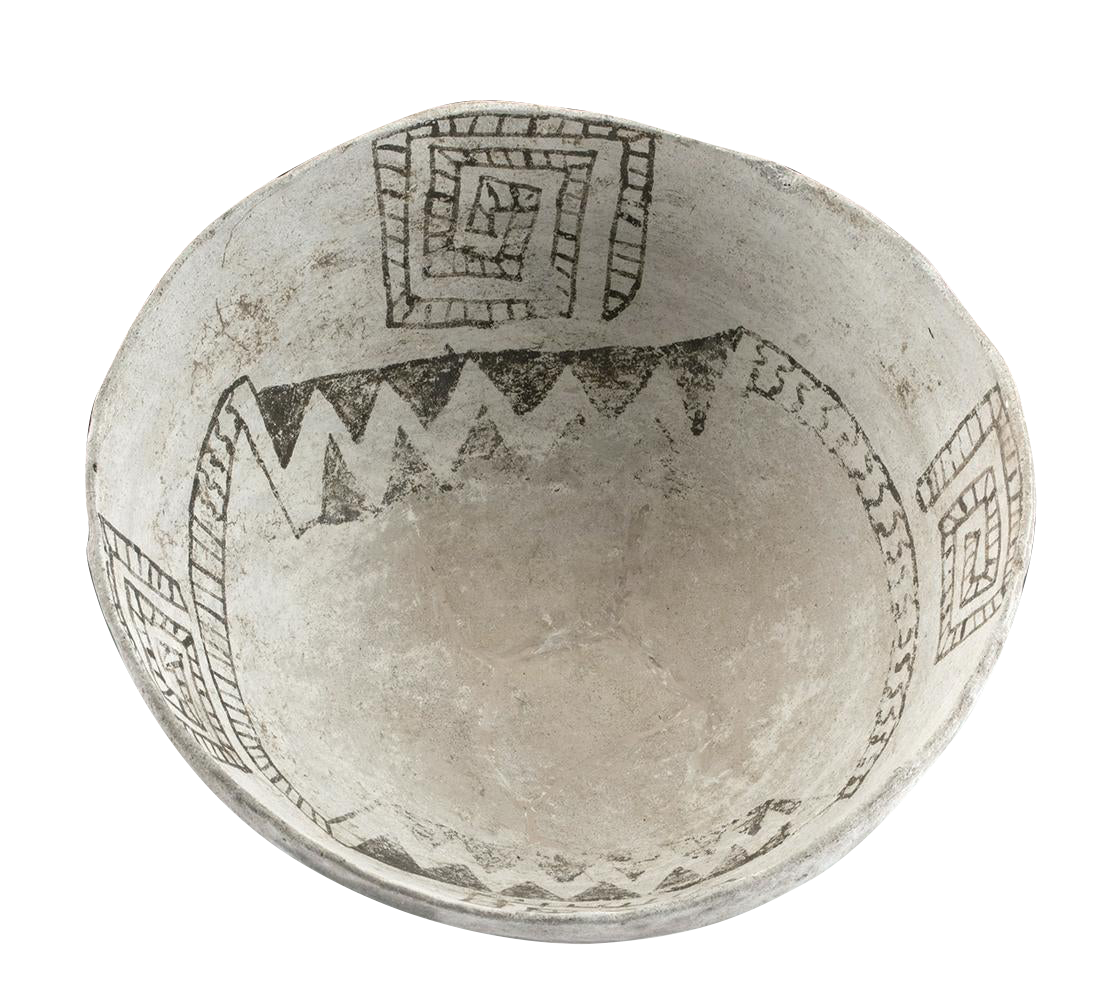
North America, Southwest, Anasazi, Kiathuthlanna, ca. 850 to 950 CE. A very rare type of Anasazi pottery originally found near Silver City, New Mexico, this Kiathuthlanna Black-on-White features fascinating iconography painted on its interior from rim to tondo: snake-like beings below four labyrinth forms with ticked interiors. These labyrinths may be geometric or may also represent snakes. Size: 8.45″ in diameter x 3.95″ H (21.5 cm x 10 cm)
According to C. Dean Wilson’s article for the Office of Archaeological Studies Pottery Typology Project (2012), “Kiathuthlanna Black-on-white was defined by Gladwin and Gladwin (1934) and Gladwin described in detail by (1945). This type can be quite difficult distinguish from other Cibola white ware types, but seems to refer to white ware pottery exhibiting traits transitional between White Mound Black-on-white and Red Mesa Black-on-white as usually defined (Hays-Gilpin and van Hartesveldt 1998; Reed and others 1998; Sullivan 1984; Windes and McKenna 1998). Given the transitional nature of this type, it appear to date from the late Pueblo I to early Pueblo II period or from the late ninth to early tenth century.”
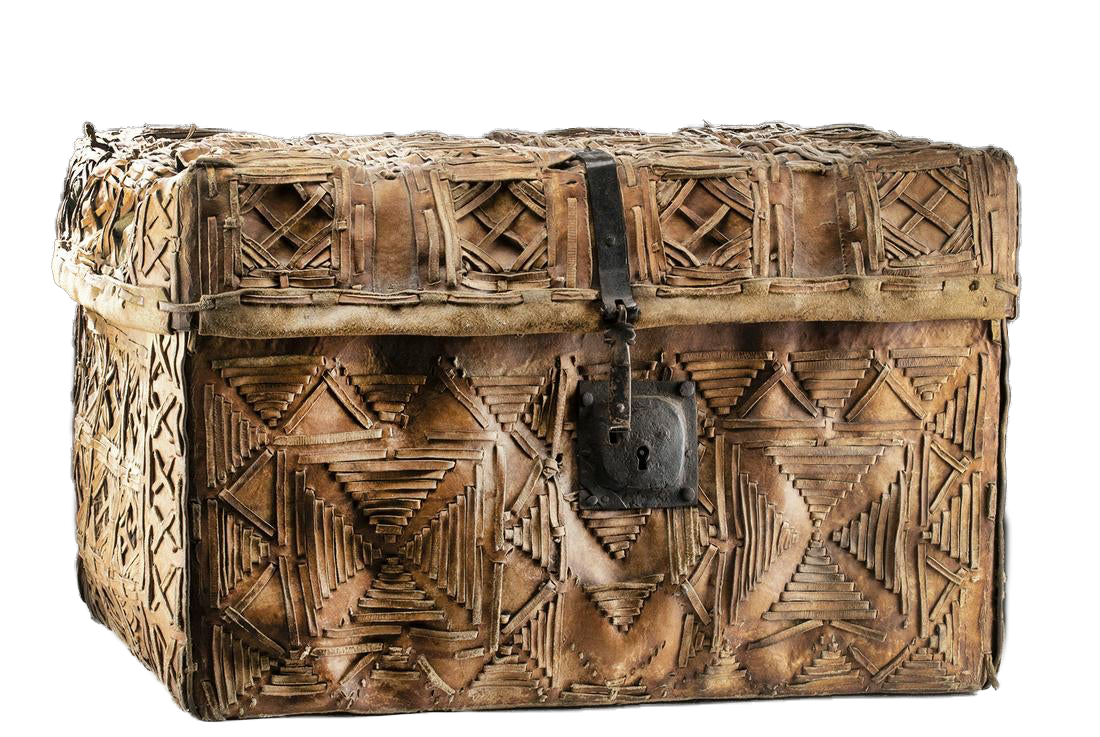
North America, New Mexico, Spanish Colonial period, ca. 1770 to 1820 CE. A beautifully preserved example of a New Mexican petaca (traveling trunk), made of rawhide leather with a cotton cloth lined interior. It features iron hinges and a large iron lock on the front. The leather has a fabulous repeated geometric decoration on all sides, made by overlaying leather bands in a style that was inspired by the Aztecs. Petacas like this one were used throughout the Spanish Empire with some regional stylistic variations. Size: 17″ L x 25.5″ W x 14.75″ H (43.2 cm x 64.8 cm x 37.5 cm)
Mary Caroline Montano, in her book “Tradiciones Nuevomexicanas: Hispano Arts and Culture of New Mexico”, writes, “Some New Mexican chests were made with leather overlay, an influence of Mexico’s Aztec Indians, who called their leather chests “petacas” (derived from the Nahuatl term “petlacalli”, indicating the pre-Columbian interwoven strips of cane or palm fiber, and later, cloth and leather). The term is still used in New Mexico and southern Colorado.” (pg . 103).
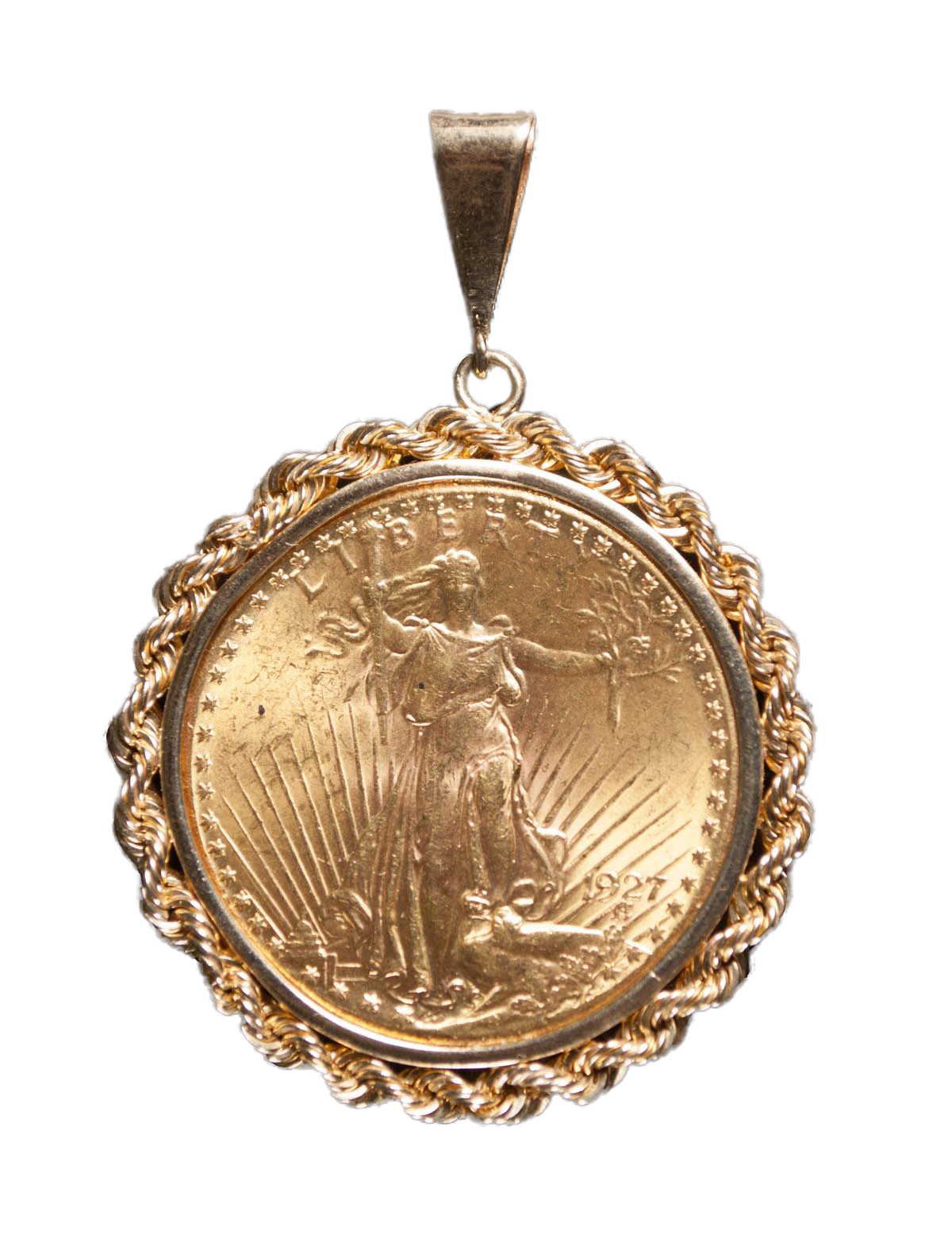
U.S. TWENTY DOLLAR GOLD COIN PENDANT, St. Gaudens variety, type 3 with motto, 90% gold, 34.0 mm diameter, 33.4 gram coin, 1927-P, in removeable 14K gold rope chain pendant setting. Total gross weight: 42.5 grams.
Bakshaish Carpet, northwestern Iran, c. 1880, 7 ft. x 6 ft.
Estimate $15,000-18,000
Very good condition: Very good color, pile, design, weave, and wool quality.
Items may have wear and tear, imperfections, or the effects of aging. Any condition statement given, as a courtesy to a client, is only an opinion and should not be treated as a statement of fact. Skinner shall have no responsibility for any error or omission.