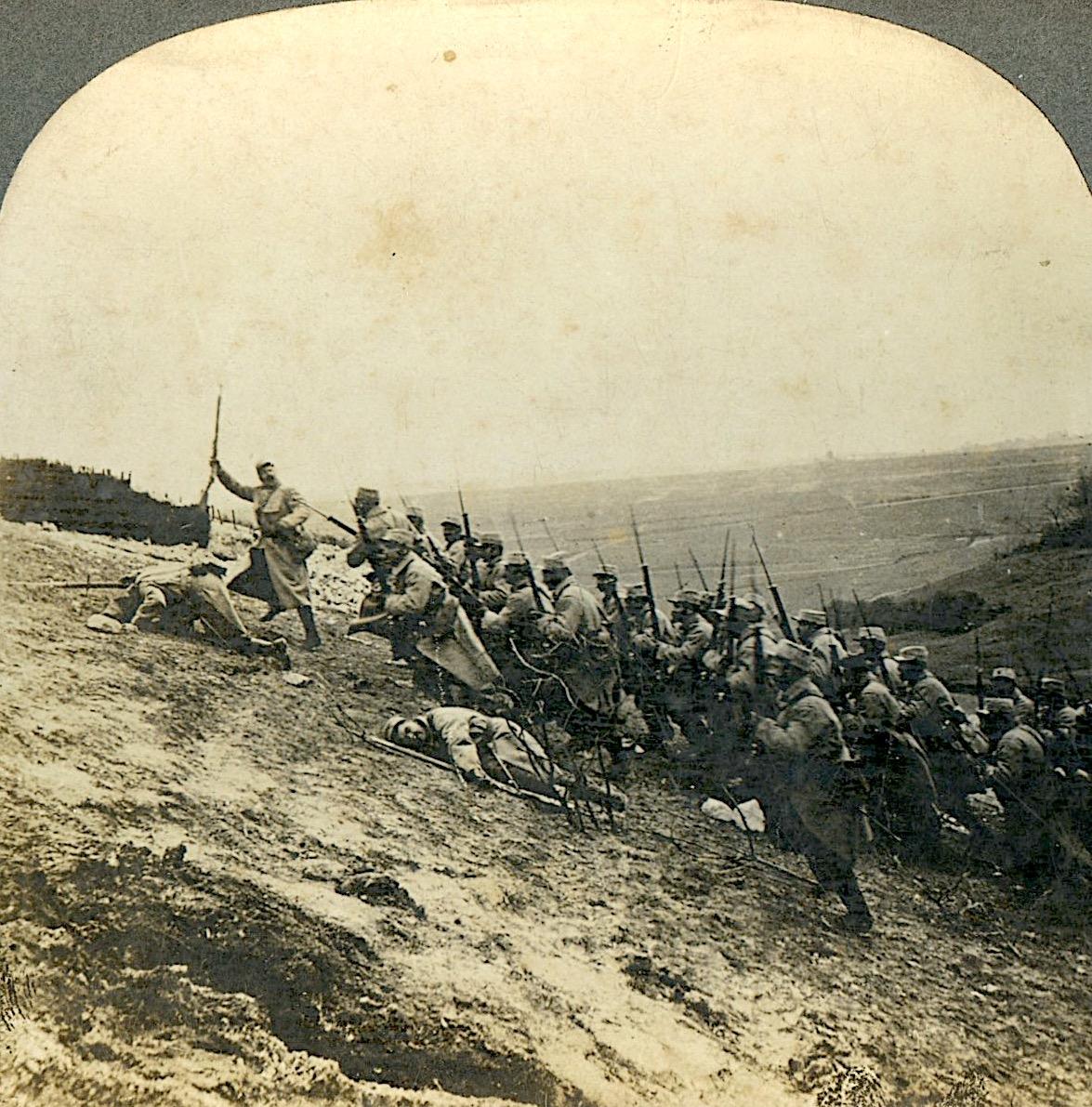
Antique Real Photo Stereoview Military WWI

Antique Real Photo Stereoview Military WWI

“This collection of stereoviews are originals from the epoch . They come mainly from collectors in the U.S.A. and constitute wonderful testimonies of past time that tend to be unique. Their scarcity, condition and the identity of the subject and if possible the identity of the photographer all play a role in determining the value of antique stereoviews. These stereoviews are important material for serious collectors, galleries and museums. The dimensions of a stereoview are Approx. 3.5″” x 7″” (sometimes 4″” x 7″”).

The following is from Collectors Weekly:
The idea for stereoview photographs (also known as stereoscopic photographs, stereographs, or, simply, views) was hatched long before their invention, and even well prior to the first photographs. In the early 17th century, three separate men, Giovanni Battista della Porta, Jacopo Chimenti da Empoli, and Francois d’Aguillion, made drawings, or allusions to, what would eventually become the stereoscope or stereo viewer.

What these men envisioned essentially became a reality when the stereoscope was finally introduced in the early 19th century. Stereoscopes use two nearly-identical images, each taken a few inches to the side of the other. When viewed through two lenses set 2.5 inches apart, approximately the space between the eyes, the result is the illusion of a three-dimensional picture. In fact, stereoscopes are seen as the precursors to 3D entertainment. Much of the three-dimensional technology of today is based on the simple principles that allow the stereoscope to function.

Sir David Brewster often gets the credit for inventing stereoscopes, but he first designed the box-shaped viewer. The first stereoscope was actually introduced in 1833 by Sir Charles Wheatstone in Great Britain. At that time, photographs did not exist, so drawings were used instead. By the 1850s, photography was possible so stereoscopes began featuring this new technology.

Because the stereoscope preceded the publication of photographs in newspapers and magazines, stereo viewers were seen as forms of entertainment. People would pass around the stereoscope and see all sorts of beautiful scenes that they otherwise might never have been introduced to.

In 1859 Oliver Wendell Holmes, Sr. (his son was the Supreme Court judge) invented a handheld stereograph viewer which was later manufactured by Joseph L. Bates in Massachusetts. These antique stereographs are highly sought-after today.

Before stereoviews caught on in the United States, however, they were popular in the United Kingdom and other parts of Europe. Roger Fenton was an early stereoview photographer, as was Jules Duboscq, who made daguerreotype stereographs popular. At the same time tintype and albumen photographs were being used in stereoscopes.

In fact, the vintage photographs that were placed inside stereoscopes are even more collectible than the devices themselves. The list of themes for these pictures is limitless, and they provide a wonderful window into late-19th and early-20th-century culture.

One of the most popular genres was railroad photos. Rail transportation was developing alongside photographic innovation, so many people that never rode the rails could at least see them through a stereoscope. One of the leading railroad and Western stereoview photographers was Carleton Watkins. Other views included mines, landscapes, automobiles, and, of course, nudes. In the United States, stereoviews allowed people living on the East Coast to see the West Coast, and vice versa.

By the latter half of the 19th century, many towns had their own resident stereoview photographer, which means there were plenty of local subjects available for people with stereoscopes to go with the images of far-off lands. Several companies emerged as publishers and distributors of stereoviews on every imaginable subject, the biggest and most successful in the United States being the Keystone View Company of Meadville, Pennsylvania.

The most prolific maker of views, however, was probably the London Stereoscope Company, founded in the early 1850s. It produced hundreds of thousands of views, as well as some portraits. Its peak was the 1850s, which was the height of the stereoscope craze in the United Kingdom. The company remained strong through the next few decades before fizzling in the 1920s. It has since reopened, with its new owners making an attempt to reintroduce the popularity of stereoscopes into today’s digital world.

This lot is located in Boca Raton, Fl and its shipment will be made directly by Artelisted. Shipping insurance is the responsibility of the buyer. Ask us if you want to add insurance cost. Note that if there is loss or damage due to bad handling by the transporter, this loss will be assumed only by the buyer. Enquires are welcome, do not hesitate to contact us at your convenience, we are looking to providing you with an excellent service.”
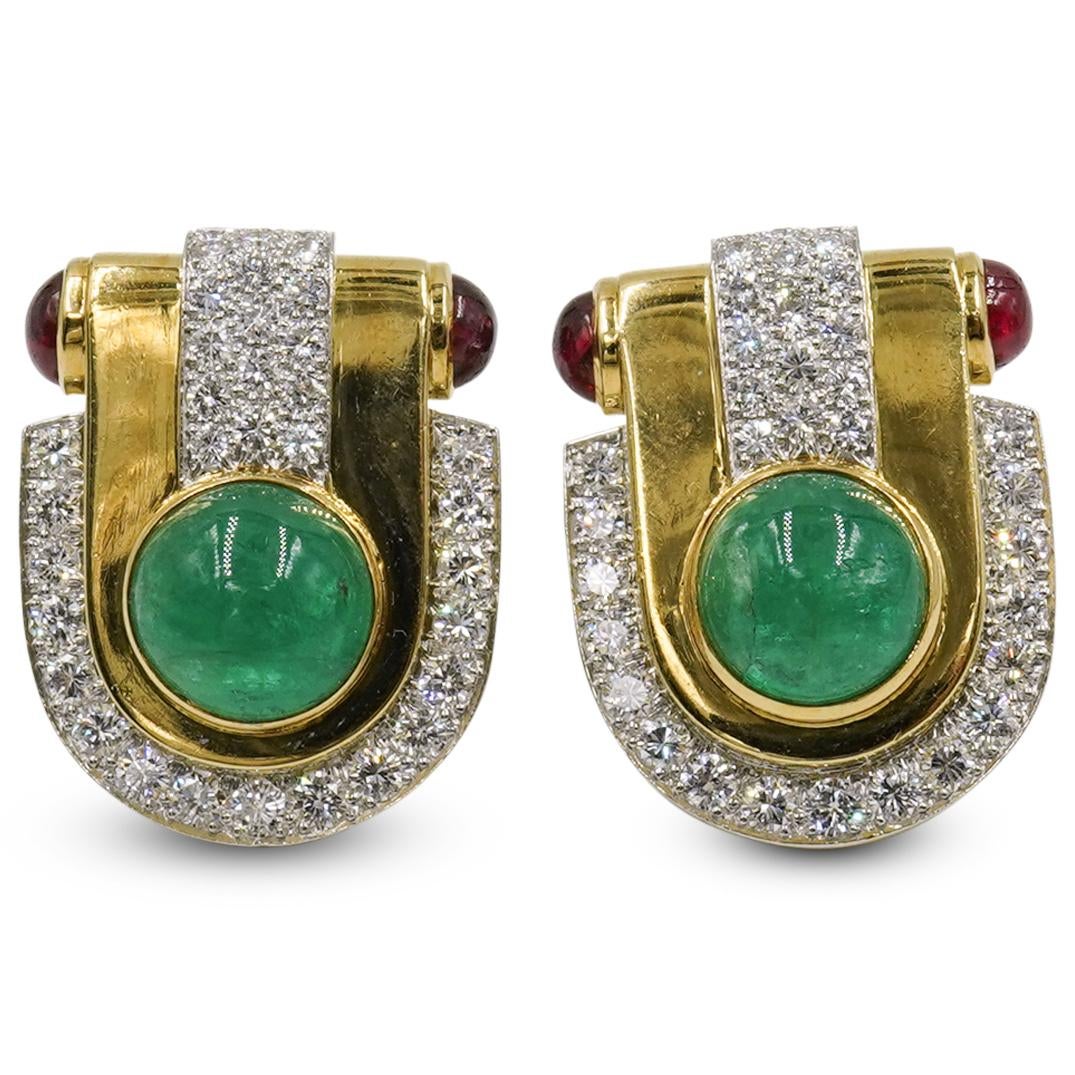
David Webb Platinum & 18K Gold Cabochon Ruby, Emerald

David Webb Platinum & 18K Gold Cabochon Ruby, Emerald

A Pair of David Webb earrings composed of a 18k yellow gold and a Platinum foundation, centered by a round Emerald Cabochon approx. 4.5ct, further decorated along the top and bottom with round cut VS quality Diamonds amounting to approx. 1.8cts each earring. Accented by two Ruby cabochons flanking the top of each earring, completed with clip on closures, marked “Plat” and “Web 18k”. Total Weight: 29.8 Grams (19.1 dwt)
CIRCA: Mid-Late 20th Cent.
ORIGIN: USA
DIMENSIONS: 30mm x 24mm

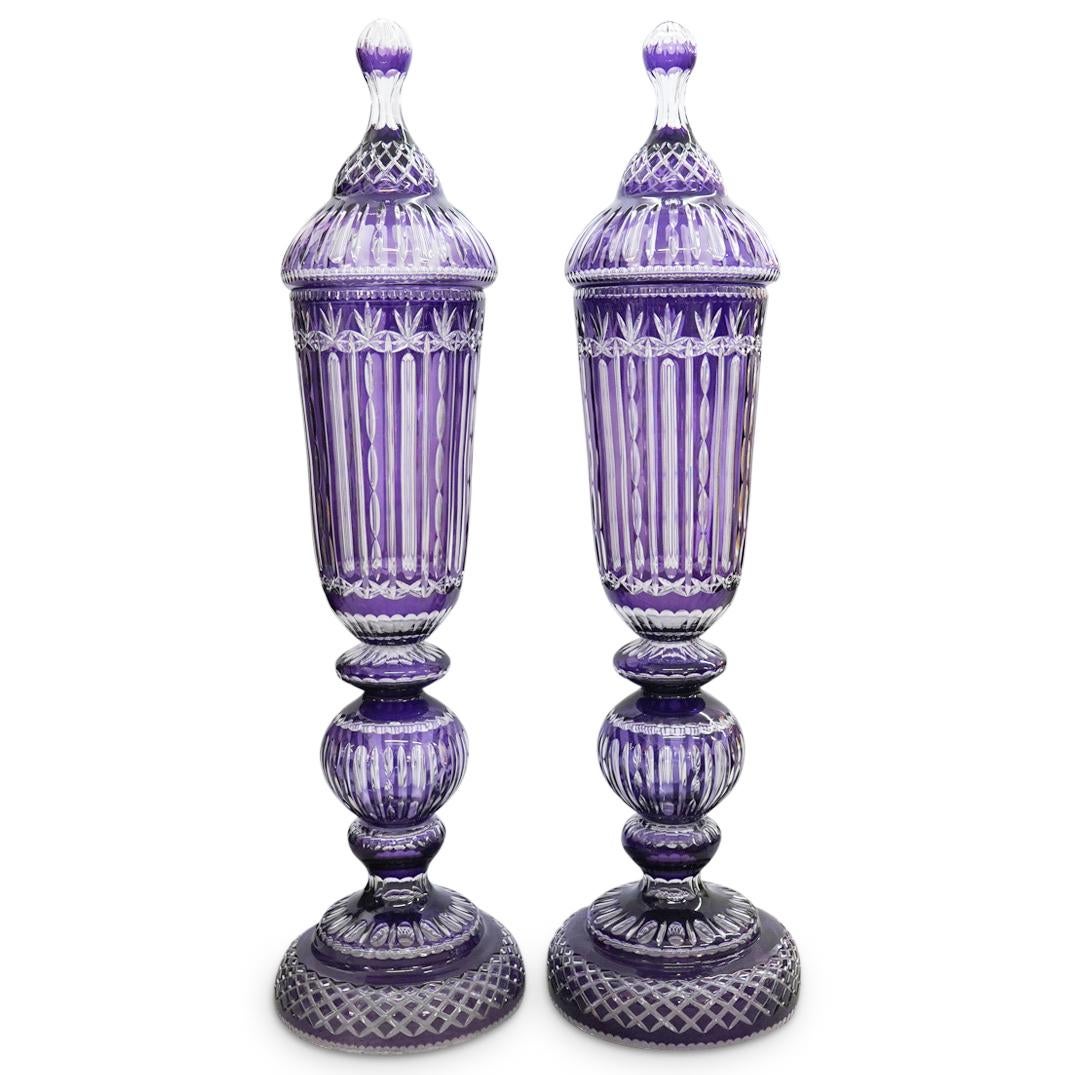
Monumental Amethyst Crystal Cut Urns

Monumental Amethyst Crystal Cut Urns

A Pair of Monumental Bohemian crystal cut urns featuring in a Amethyst hued body, decorated with striated and vertical incision patterns throughout. Completed with two lidded finial tops.
CIRCA: Early-Mid 20th Cent.
ORIGIN: Continental
DIMENSIONS: H: 57″ W: 12″

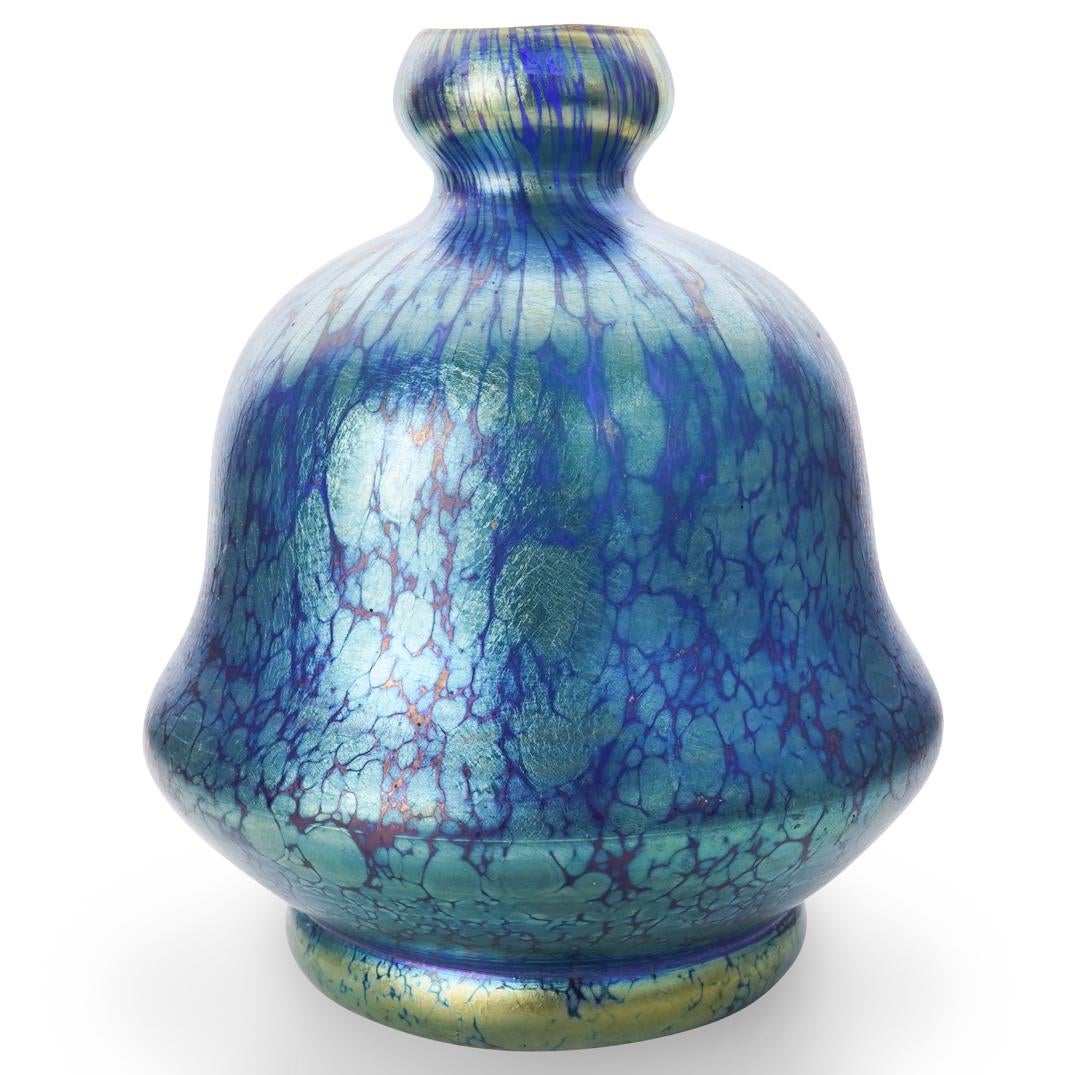
Loetz Iridescent Blue Glass Vase

Loetz Iridescent Blue Glass Vase

A Loetz vase features in a bulbous design, decorated with a blue oil spotted pattern and accented with iridescent hues. Unmarked.
CIRCA: Mid 20th Cent.
ORIGIN: Czech Slovakia
DIMENSIONS: H: 7.5″ W: 6″
CONDITION: Great condition. See lot description for details on item condition. More detailed condition requests can be obtained via email ([email protected]) or SMS (305) 333-4134. Any condition statement given, as a courtesy to a client, is only an opinion and should not be treated as a statement of fact. Akiba Antiques shall have no responsibility for any error or omission.

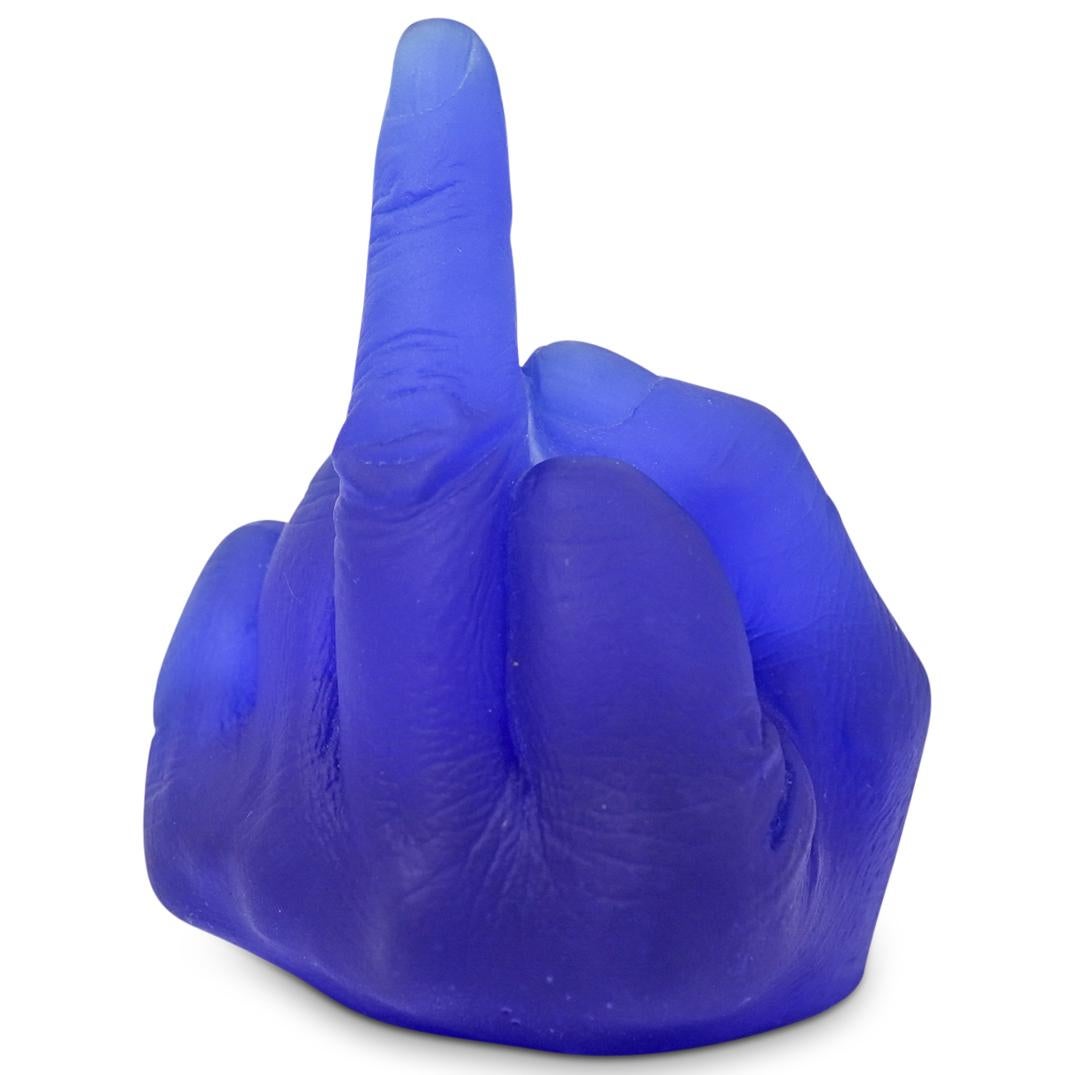
Ai Weiwei, Study of Perspective in Glass

Ai Weiwei, Study of Perspective in Glass

Ai Weiwei “Study of Perspective in Glass” sculpture, depicting the middle finger in cobalt blue hue. Limited edition, numbered “25/100”. Signed “Wei”. Comes with original box
CIRCA: 21st Century
ORIGIN: China
DIMENSIONS: H 4.0″ x W 4.5″
CONDITION: Great condition. See lot description for details on item condition. More detailed condition requests can be obtained via email ([email protected]) or SMS (305) 333-4134. Any condition statement given, as a courtesy to a client, is only an opinion and should not be treated as a statement of fact. Akiba Antiques shall have no responsibility for any error or omission.

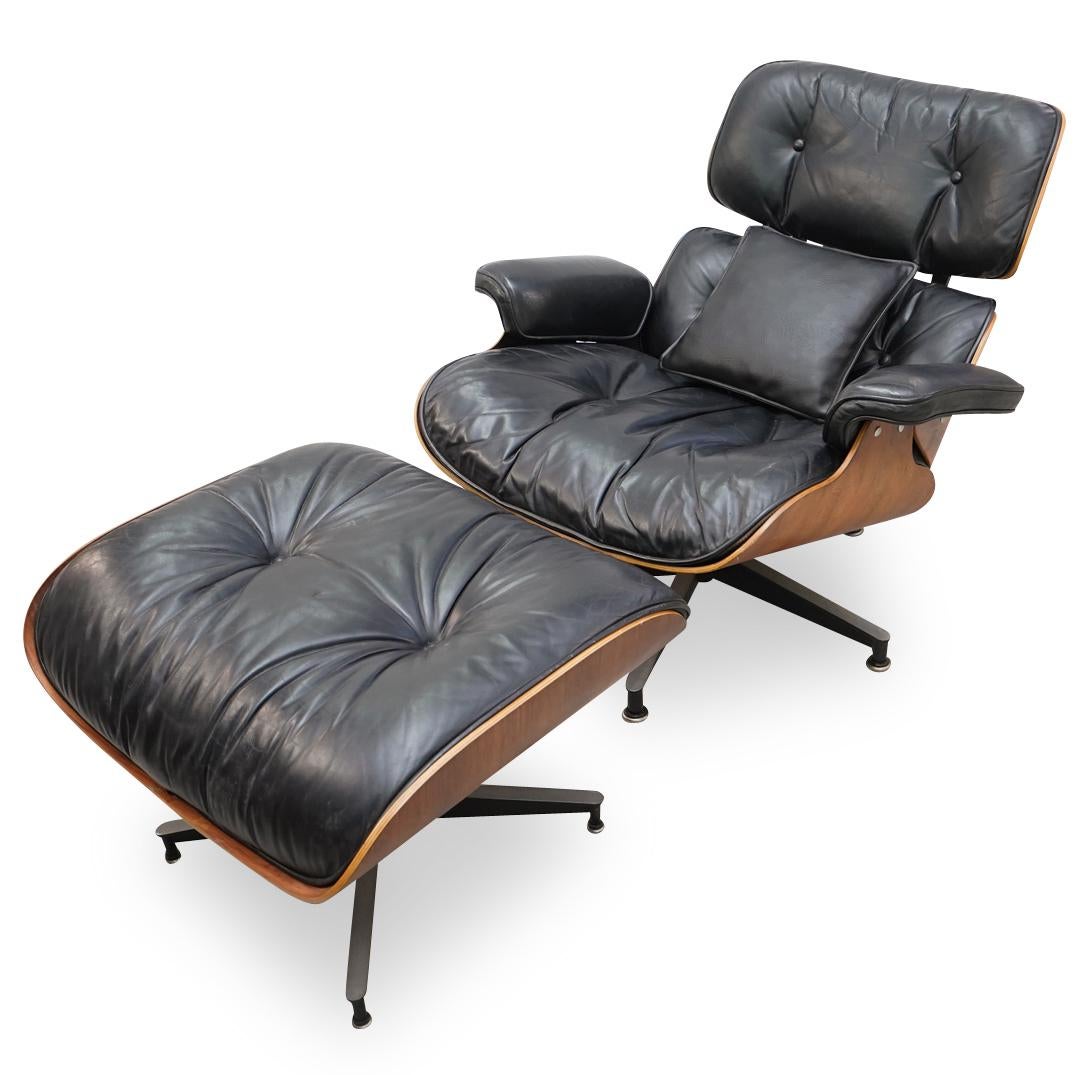
Herman Miller Eames Chair & Ottoman

Herman Miller Eames Chair & Ottoman

Herman Miller for Eames Chair with Ottoman and pillow, composed of black leather and Brazilian Rosewood. stickered underneath “Herman Miller”.

Note: When the set was introduced in 1956, there was nothing like it, and there is still nothing to equal it. The Eameses’ modern take on a 19th century club chair has not only endured for more than 50 years, it has become one of the most significant furniture designs of the 20th century—instantly recognizable and enduringly fresh.

CIRCA: Mid 20th Cent.
ORIGIN: USA
DIMENSIONS: 32.75″ W, X 32.75″ D, X 32″ H; 15″
CONDITION: Good condition. See lot description for details on item condition. More detailed condition requests can be obtained via email ([email protected]) or SMS (305) 333-4134. Any condition statement given, as a courtesy to a client, is only an opinion and should not be treated as a statement of fact. Akiba Antiques shall have no responsibility for any error or omission.

A 14K Brutalist Emerald Crystal & Diamond Bangle

A 14K Brutalist Emerald Crystal & Diamond Bangle

14K yellow gold Brutalist bangle features a central synthetic emerald in a crystal form with eight round cut accent diamonds weighing approx. .30 ctw, hidden box clasp with safety, 2.25 in. W., 47 grams.The Estate of Dorothy Winegrad, Baltimore, MD

Condition

Weight of the stones is approximate and was determined by formula due to their being mounted during evaluation.

Olga de Amaral, 5 Grafitos

Olga de Amaral, 5 Grafitos

Olga de Amaral
5 Grafitos

2013
linen, gesso, acrylic
61 h × 90 w in (155 × 229 cm)

5 parts, mixed dimensions. Overall dimensions vary based on installation.
Signed and dated to verso of each element ‘1252 5 Grafitos 2013 Olga de Amaral’.

Provenance: Acquired directly from the artist by the present owner

Condition

Condition of the item is not included in this description. Condition reports are available from Rago upon request. Rago strongly recommends that you review a condition report for each item on which you plan to bid. Email [email protected] to request a condition report.

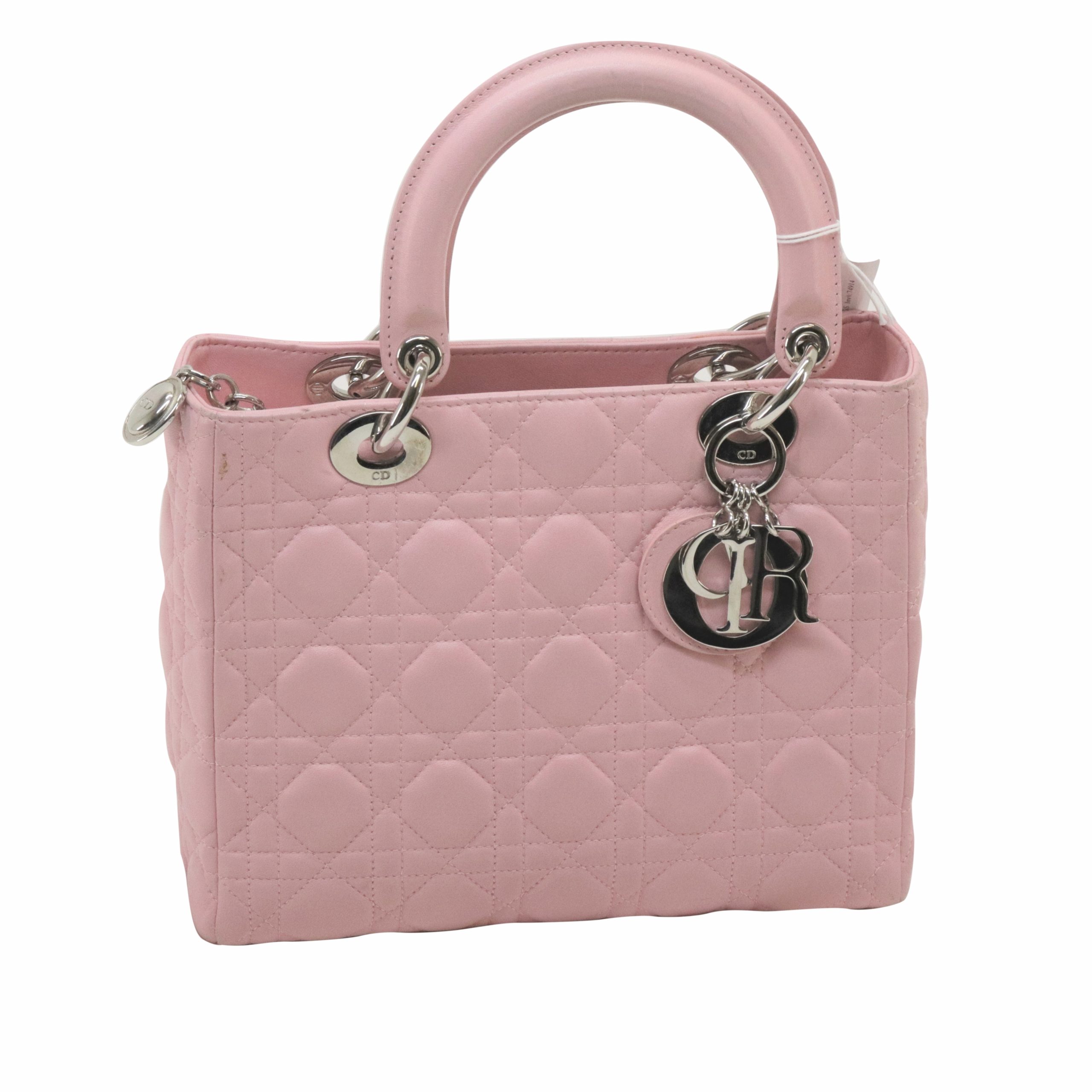
Dior – Lady MM Handbag

Dior - Lady MM Handbag

Dior Lady MM, light pink cannage leather exterior. Silver hardware. Dust bag included. Serial number 02-MA00-94 Dimensions: 24 x 20 x 9 cm

Condition

Minor wear to left front along edge

A Rare Paul Bogatay Signed Commission for the Maurice Knight Stoneware Company

A Rare Paul Bogatay Signed Commission for the Maurice Knight Stoneware Company

Akron, Ohio, Circa 1930s

A prohibitively rare reclining colt lying on a raised plinth, with the impressed logo for the Maurice Knight Acidproof Stoneware Company. Signed in script on the plinth Paul Bogatay. Molded in one piece, hand-tooled when leather hard.

Height 11 1/2 inches at colt’s head; length of plinth 16 1/2 inches.

Paul Bogatay (1905-1972) was born in Ava, Ohio and attended the Cleveland School of Art. After a brief stint in the merchant marines, he received three scholarships from the Louis Comfort Tiffany Foundation and worked in their Oyster Bay studios in the summers of 1928-30. In 1929, he joined the Cowan Pottery in Cleveland, Ohio and along with Guy Cowan, became associated with what would become known as the Cleveland School of artists.

During his work at the Cowan Pottery, he became associated with Arthur Baggs, and spent the summer of 1932-1933 working at the Marblehead pottery before joining the faculty at Ohio State University where he served as an instructor of design, and later as a full professor of ceramics.

Throughout the course of his lifetime, Bogatay took free-lance jobs for various Ohio potteries. We assume this piece represents one such commission.