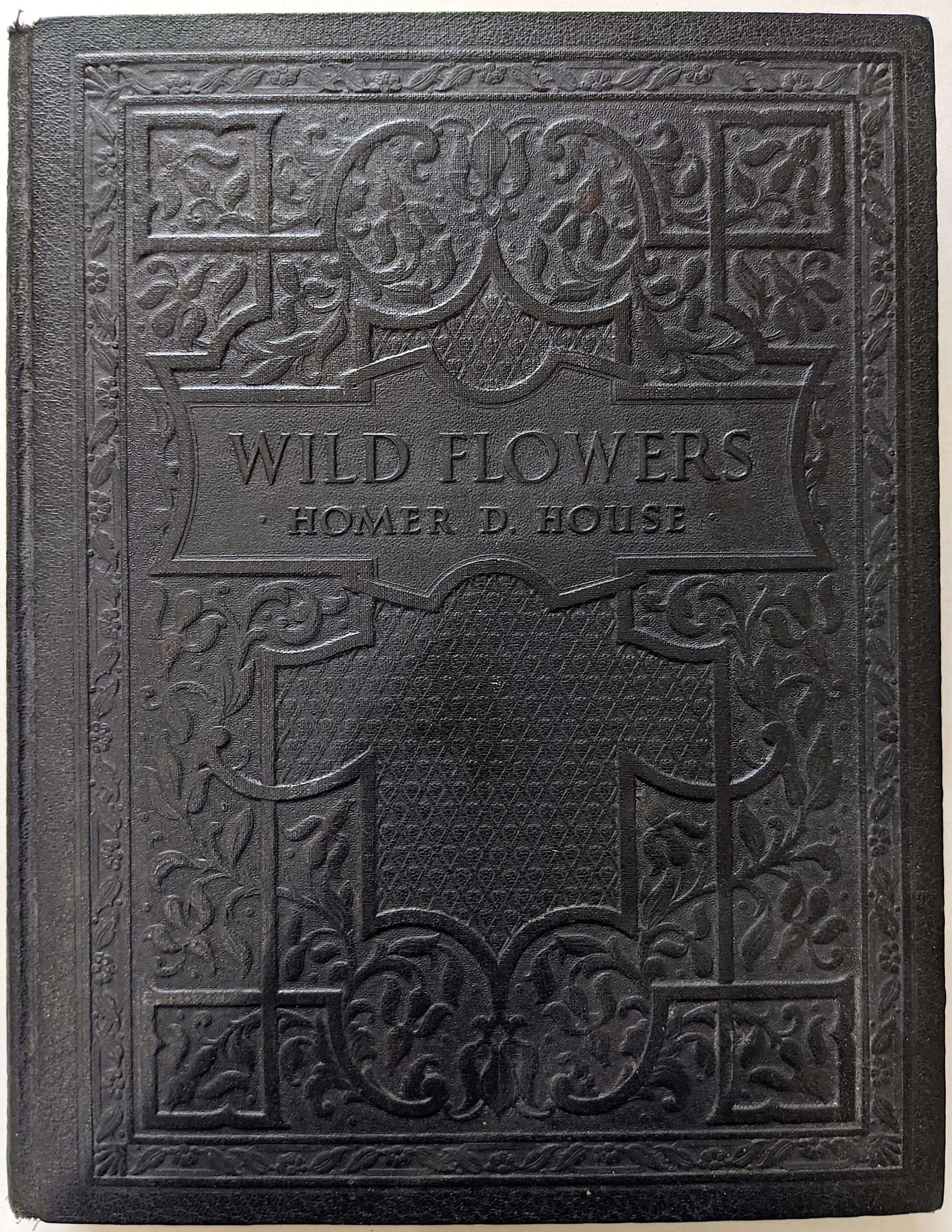
Antique Vintage Rare Book Wild Flowers, 1936

Antique Vintage Rare Book Wild Flowers, 1936

Antique Vintage Rare Book Wild Flowers, 1936:

Most of the lots included in this sale come from a fine estate of a deceased collector in Winter Springs, Florida. Several of these items have inherited by her family since the first half of the 19th century. The estate includes original antique and vintage books, collectibles and quality prints. We have found that many of these lots are very rare and some are part of important public and private collections (including museums). The family has asked us to sell everything quickly. We hope that our clients will take good approach of this opportunity.

This is a live online auction. We have included several images trying to show the condition of each lot. It is important that you review all the images included before participating in the auction. Feel free to contact us if you have any questions.

These lots are located in Boca Raton, Florida. Artelisted can packing them in house “with exception of taxidermy animals (their shipping should be coordinated with a professional shipping contrator and / or picked up in Artelisted)”.

The shipping by Artelisted will be via USPS – First Class or Priority (tracking # will be provided via Stamps.com). Eventually we can ship using UPS, Fedex and DHL. We also use the “media” mail (books only) via USPS. Artelisted is also glad to collaborate coordinating shipping with a third party (between buyer and contractor).

This sale includes a significant number of antique and vintage prints (including originals by Currier & Ives for example). All these prints are very well framed. Our dimensions of the prints indicated in the description correspond to the external part of the frames. Though Currier & Ives did not issue their prints in standard sizes, the prints are usually grouped into three basic size categories: small folio (8 “x 12.5”); medium folio (10-14 “x 14-20”) and large folio (anything over 14 “x 20”). Please note, that these sizes are only for the images (they do not include the margings or little area).

Because all the prints are framed and protected with glass, due to their weight, we limit the shipment consolidation of prints with a small folio size to a maximum of 4 units per package; and a half sheet and over to a maximum of 2 units per package.

Shipping insurance is the responsibility of the buyer. Ask us if you want to add insurance cost. Note that if there is loss or damage due to bad handling and or loss by the transporter, this loss will be assumed only by the buyer. Enquires are welcome, do not hesitate to contact us at your convenience, we are looking to providing you with an excellent service.

Condition: The lots offered in this sale have been selected among many options and always thinking of offering excellent opportunities to the customers. The vast majority are original of the time (unless otherwise indicated). We have included quality images showing its current condition. Do not hesitate to contact us if you have any questions.
18th C. Hawaiian Kou Wood Umeke Bowl w/ Old Repair

18th C. Hawaiian Kou Wood Umeke Bowl w/ Old Repair

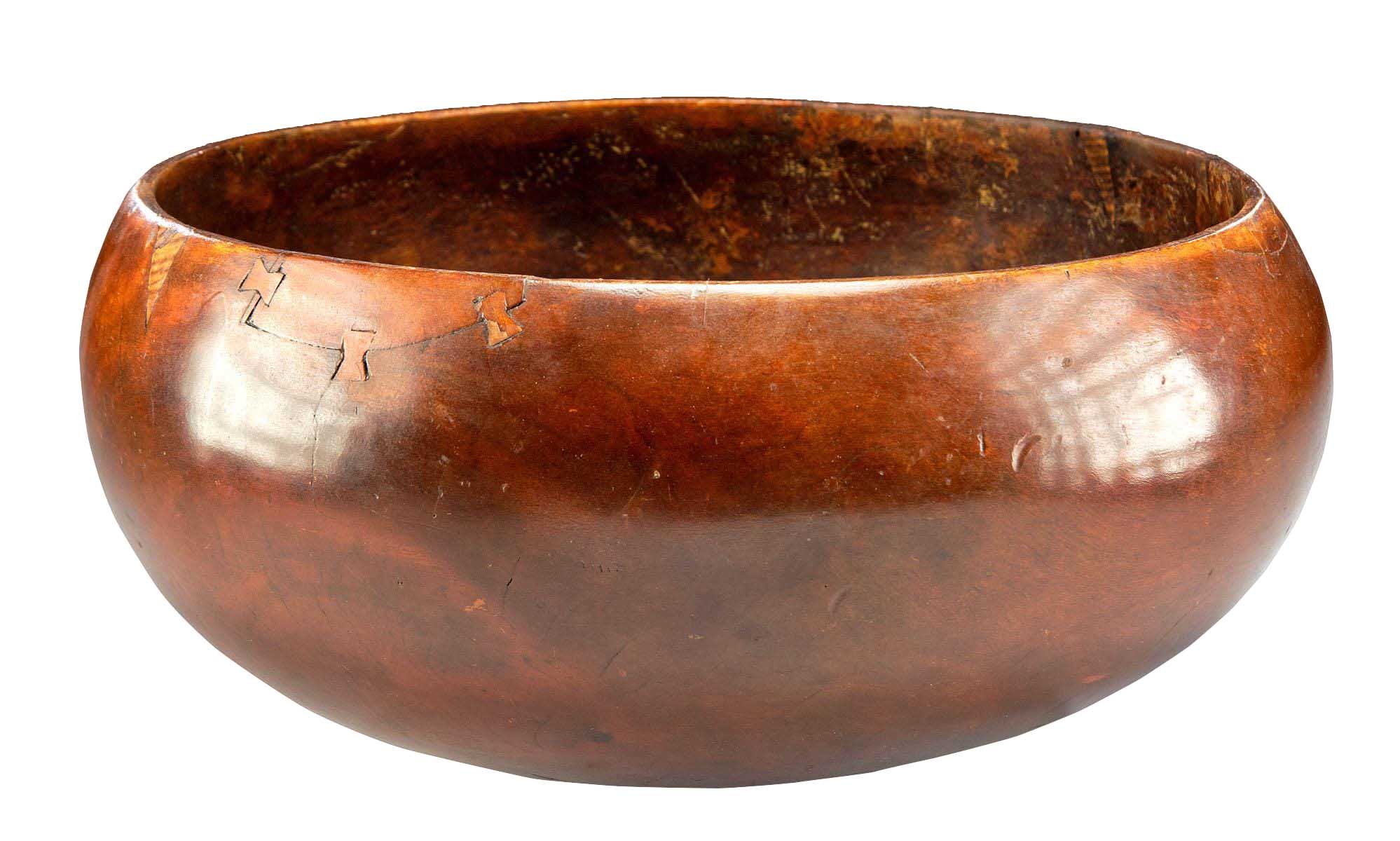
18th C. Hawaiian Kou Wood Umeke Bowl w/ Old Repair: North Pacific, Hawaiian Islands, ca. early to mid-19th century CE. A lovely round-bottomed vessel carved from finely grained kou wood known as an “umeke,” (also “umeke la’au pakaka”) a high-status bowl used for eating poi. The vessel has a slightly rounded base, wide walls with a sloped shoulder, and a thin rim overhanging the deep basin. The exterior is meticulously polished to accentuate the beautiful colors and graining of the red-brown hued wood. A wonderful example from the Hawaiian Islands! Size: 14″ in diameter x 6.5″ H (35.6 cm x 16.5 cm)

Hawaiian royalty often valued specific calabashes – even going so far as to name them after royal individuals – and until the early 19th century they were reserved for elites in society. Prior to the 19th century, they were made with stone and coral tools, carved from kou, milo, and kamani trees most commonly. Repaired calabashes like this one demonstrate signs of immense reverence – the calabash was loved enough to be repaired, and the repairs, like this one, were done with the desire to make the repair itself beautiful.

Native to coastal regions of the Hawaiian Islands, Kou can grow up to 25 feet across and 50 feet tall. The majority of the tree population was destroyed by moths in the 1800s, making it a rare delicacy. Kou was prized by Hawaiian royalty for food vessels due to both the beauty of its wood grain and its inability to corrupt the taste of food.

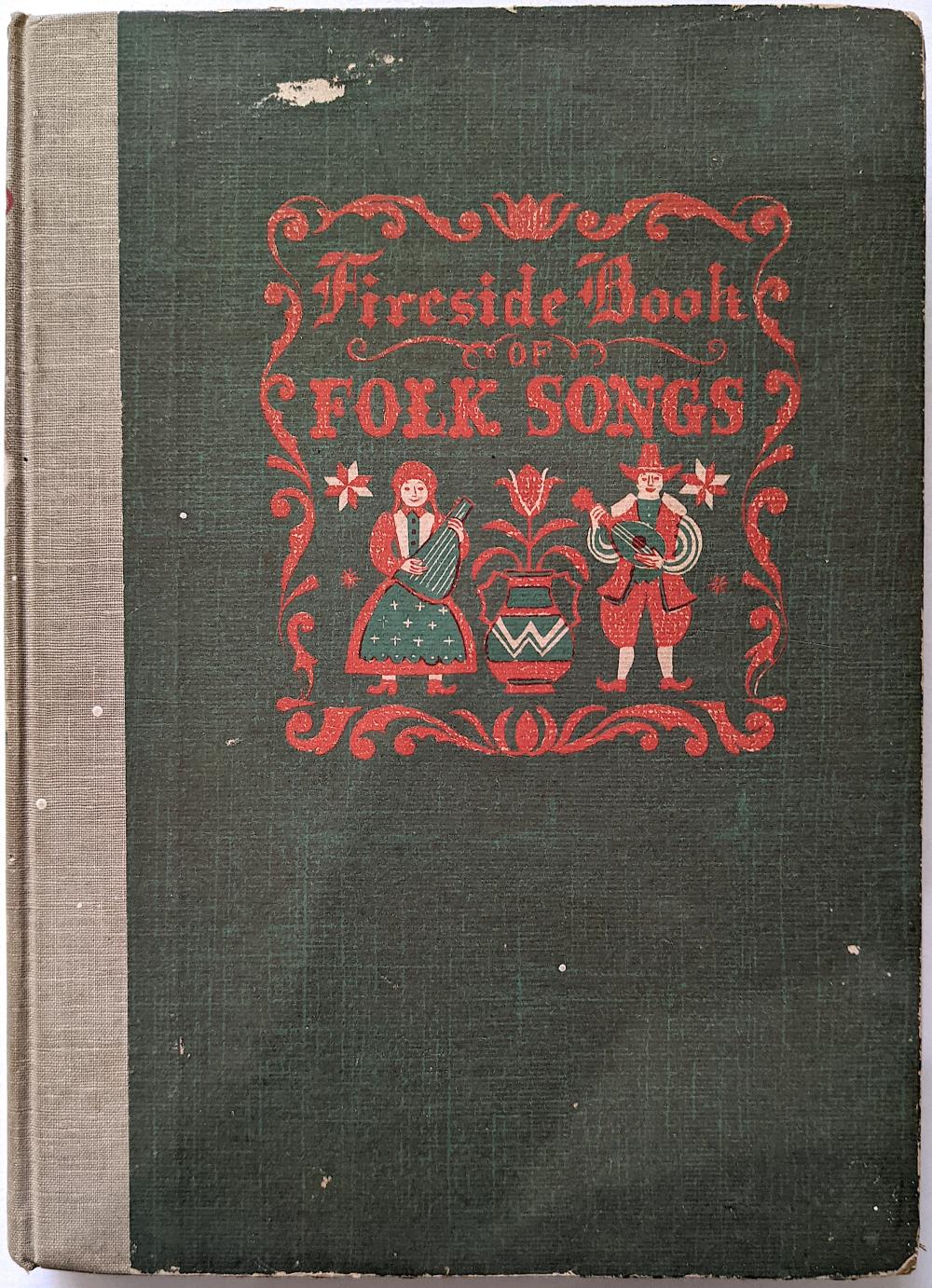
Antique Vintage Book Fireside Book of Folk Songs , 1947

Antique Vintage Book Fireside Book of Folk Songs , 1947

Antique Vintage Book Fireside Book of Folk Songs , 1947:

Most of the lots included in this sale come from a fine estate of a deceased collector in Winter Springs, Florida. Several of these items have inherited by her family since the first half of the 19th century. The estate includes original antique and vintage books, collectibles and quality prints. We have found that many of these lots are very rare and some are part of important public and private collections (including museums). The family has asked us to sell everything quickly. We hope that our clients will take good approach of this opportunity.

This is a live online auction. We have included several images trying to show the condition of each lot. It is important that you review all the images included before participating in the auction. Feel free to contact us if you have any questions.

These lots are located in Boca Raton, Florida. Artelisted can packing them in house “with exception of taxidermy animals (their shipping should be coordinated with a professional shipping contrator and / or picked up in Artelisted)”.

The shipping by Artelisted will be via USPS – First Class or Priority (tracking # will be provided via Stamps.com). Eventually we can ship using UPS, Fedex and DHL. We also use the “media” mail (books only) via USPS. Artelisted is also glad to collaborate coordinating shipping with a third party (between buyer and contractor).

This sale includes a significant number of antique and vintage prints (including originals by Currier & Ives for example). All these prints are very well framed. Our dimensions of the prints indicated in the description correspond to the external part of the frames. Though Currier & Ives did not issue their prints in standard sizes, the prints are usually grouped into three basic size categories: small folio (8 “x 12.5”); medium folio (10-14 “x 14-20”) and large folio (anything over 14 “x 20”). Please note, that these sizes are only for the images (they do not include the margings or little area).

Because all the prints are framed and protected with glass, due to their weight, we limit the shipment consolidation of prints with a small folio size to a maximum of 4 units per package; and a half sheet and over to a maximum of 2 units per package.

Shipping insurance is the responsibility of the buyer. Ask us if you want to add insurance cost. Note that if there is loss or damage due to bad handling and or loss by the transporter, this loss will be assumed only by the buyer. Enquires are welcome, do not hesitate to contact us at your convenience, we are looking to providing you with an excellent service.

Condition: The lots offered in this sale have been selected among many options and always thinking of offering excellent opportunities to the customers. The vast majority are original of the time (unless otherwise indicated). We have included quality images showing its current condition. Do not hesitate to contact us if you have any questions.
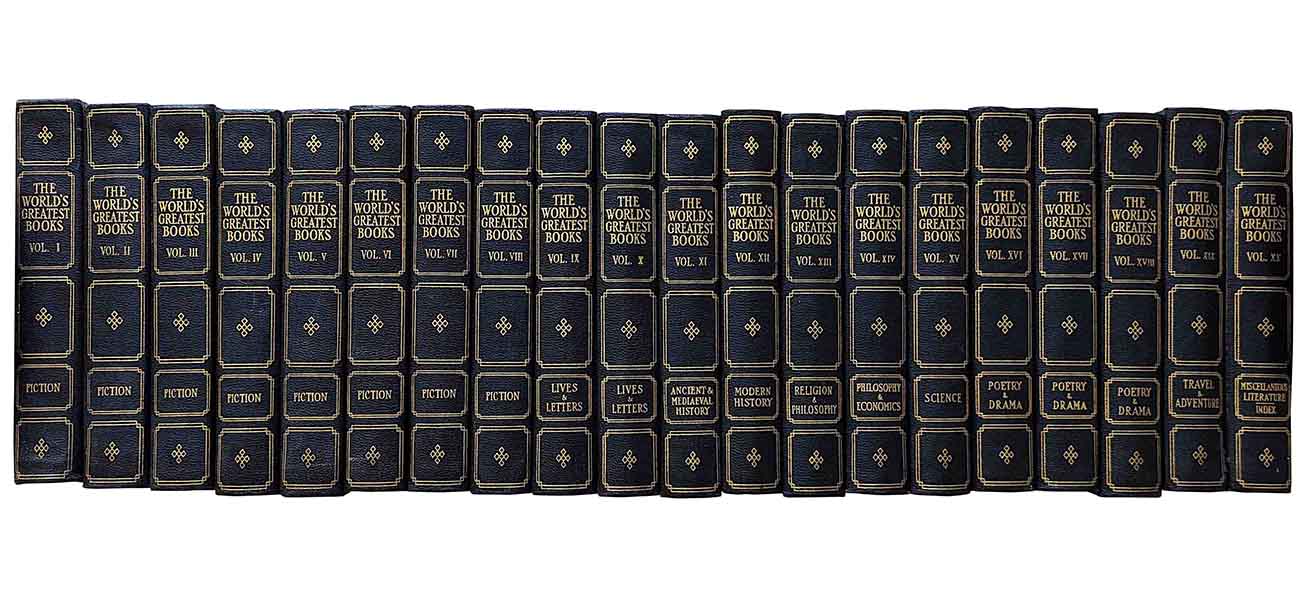
Antique Set 20 Books The World’s Greatest Books, 1910

Antique Set 20 Books The World's Greatest Books, 1910

Antique Set 20 Books The World’s Greatest Books, 1910:

Most of the lots included in this sale come from a fine estate of a deceased collector in Winter Springs, Florida. Several of these items have inherited by her family since the first half of the 19th century. The estate includes original antique and vintage books, collectibles and quality prints. We have found that many of these lots are very rare and some are part of important public and private collections (including museums). The family has asked us to sell everything quickly. We hope that our clients will take good approach of this opportunity.

This is a live online auction. We have included several images trying to show the condition of each lot. It is important that you review all the images included before participating in the auction. Feel free to contact us if you have any questions.

These lots are located in Boca Raton, Florida. Artelisted can packing them in house “with exception of taxidermy animals (their shipping should be coordinated with a professional shipping contrator and / or picked up in Artelisted)”.

The shipping by Artelisted will be via USPS – First Class or Priority (tracking # will be provided via Stamps.com). Eventually we can ship using UPS, Fedex and DHL. We also use the “media” mail (books only) via USPS. Artelisted is also glad to collaborate coordinating shipping with a third party (between buyer and contractor).

This sale includes a significant number of antique and vintage prints (including originals by Currier & Ives for example). All these prints are very well framed. Our dimensions of the prints indicated in the description correspond to the external part of the frames. Though Currier & Ives did not issue their prints in standard sizes, the prints are usually grouped into three basic size categories: small folio (8 “x 12.5”); medium folio (10-14 “x 14-20”) and large folio (anything over 14 “x 20”). Please note, that these sizes are only for the images (they do not include the margings or little area).

Because all the prints are framed and protected with glass, due to their weight, we limit the shipment consolidation of prints with a small folio size to a maximum of 4 units per package; and a half sheet and over to a maximum of 2 units per package.

Shipping insurance is the responsibility of the buyer. Ask us if you want to add insurance cost. Note that if there is loss or damage due to bad handling and or loss by the transporter, this loss will be assumed only by the buyer. Enquires are welcome, do not hesitate to contact us at your convenience, we are looking to providing you with an excellent service.

Condition: The lots offered in this sale have been selected among many options and always thinking of offering excellent opportunities to the customers. The vast majority are original of the time (unless otherwise indicated). We have included quality images showing its current condition. Do not hesitate to contact us if you have any questions.
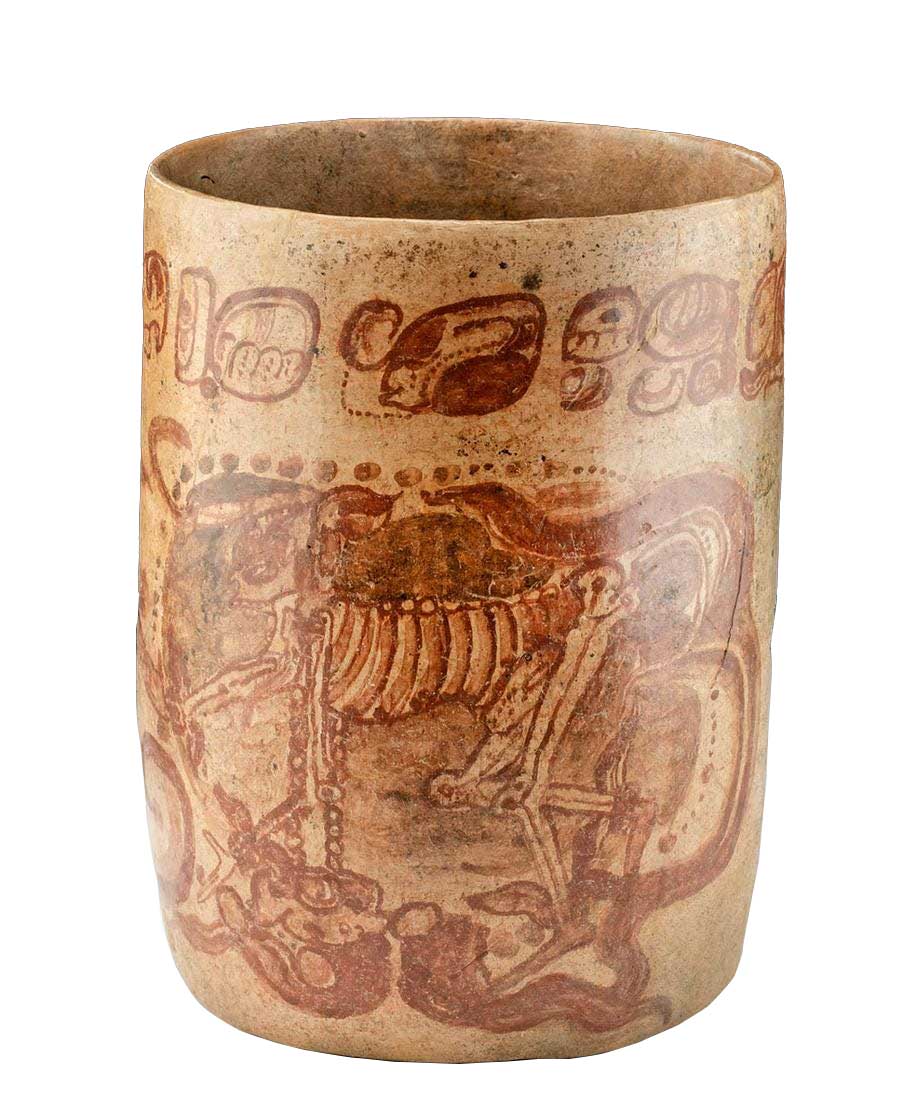
Important Maya Pottery Cylinder Vessel – Kerr

Important Maya Pottery Cylinder Vessel - Kerr Database

Pre-Columbian, Northern Peten, Guatemala, Maya, Late Classic Period, ca. 550 to 900 CE. Amazing! Presenting macabre and incredibly striking motifs, this is a ceramic cylinder vessel with rich iconography. It was probably given as a gift during a feast and used for drinking cocoa. It is tall, with a wide mouth and an unpronounced rim whose edge is gently curved. It stands on a flat base with gently upturned edges, and the sides taper very slightly to the mouth. One complete side of the exterior body is dominated by a painted profile of a composite skeletal image of God A and Chak (he wears the pendant of Chak) in animal form. He stands on all fours and appears to be inside a darkened cave, possibly the underworld. Glyph bands adorn the top rim and run diagonally up one side. Size: 6.625″ W x 9″ H (16.8 cm x 22.9 cm)

God A is one of the Maya codical death gods, known to us only from early colonial-era documents and from the work of 19th century scholar Paul Schellas, who named the gods for letters from the Roman alphabet because at the time Maya hieroglyphs could not be read. A figure similar to God A is referred to with many different names by modern Maya people – often Kimi or Ah Puch – and is the Lord of the Underworld (known variously as Xibalba or Mitnal depending on the dialect). God A is often painted as he is here, as partially dead, with grey, decaying flesh and skeletal bone structure. He is meant to be both terrifying and grotesquely funny, and this portrayal, with its askew teeth and bulbous nose, embodies both. Modern Maya folklore still considers God A a threat – creeping around the houses of the sick, waiting to take them to Xibalba.

Showing a chiaroscuro technique seldom seen with such naturalistic result. Note the background behind the WHAY figure is delicately shaded to give the effect of depth, possibly indicating a cave opening, portal to XIB’AL’BA. This area has not been altered by modern restoration! The deity’s three-dimensional rib cage, and skeletal arms and legs become even more gruesome with this unique and innovative shading technique used by the scribe.

Maya Carved Shell Pectoral – Royal Bloodletting

Maya Carved Shell Pectoral - Royal Bloodletting Scene

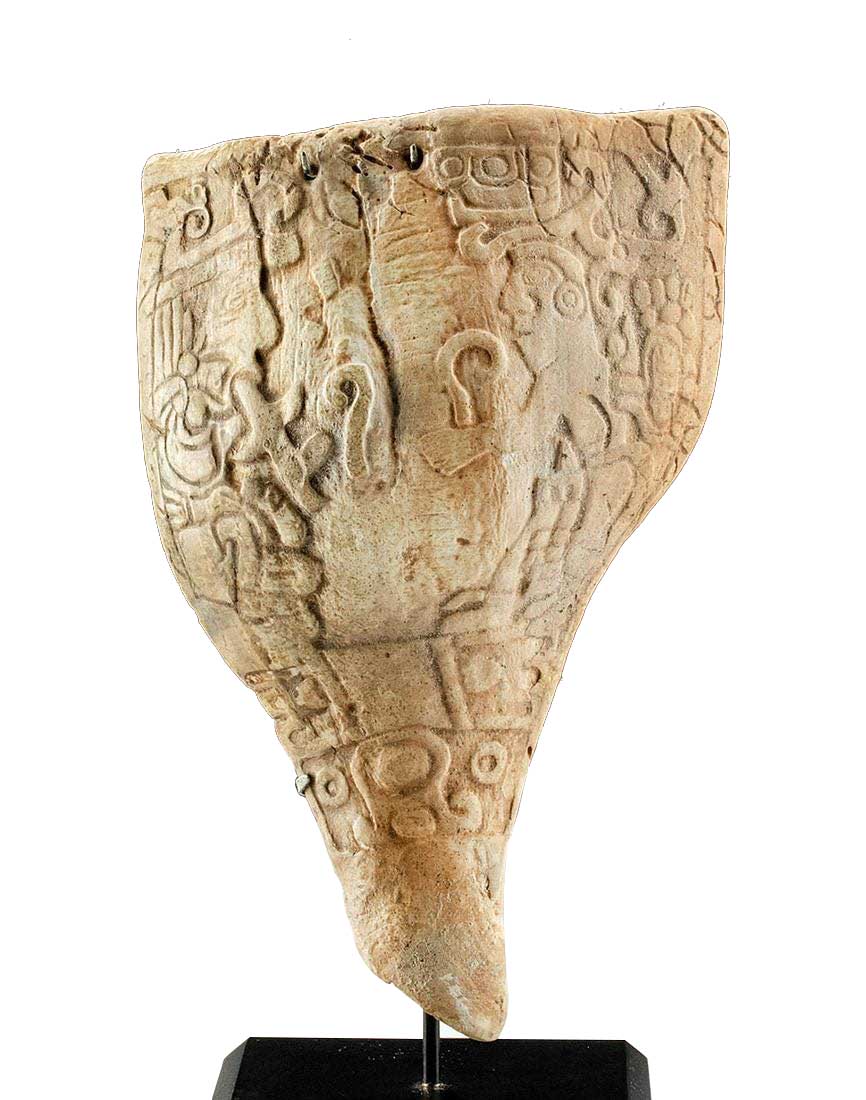
Pre-Columbian, Southern Mexico to Guatemala, Maya, Late Classical, ca. 550 to 900 CE. A very rare depiction of a bloodletting ceremony finely carved on a conch shell pectoral. The white shell surface is carved with two figures facing each other above a geometric pattern. The right figure is larger than the figure on the left, denoting rank and elite status as the royal queen. The ritual between them consists of the queen passing a rope studded with thorns through her tongue, while the priest or other attendant watches it unfold. Many Maya ritual objects used for the ceremony have been found, and although somewhat grisly, a fully depicted bloodletting scene is a thrill to find! Size: 8.5″ L x 5″ W (21.6 cm x 12.7 cm); 9.25″ H (23.5 cm) on included custom stand.

Bloodletting was a ritual practice used throughout ancient Mesoamerica – scholars posit that the Olmec and the Maya elite were enthusiasts of the practice. Archaeologists have found obsidian blade, stingray tails, and bone needles, all believed to have been used in this practice, which allowed an individual to experience a heightened state of consciousness and thus communicate with the gods. The blood given also served as a sacrifice, the price paid by high ranking and royal Maya peoples in order to make contact with the supernatural.

Ernest Trova (American.1927-2009) Falling Man Profile

Ernest Trova (American.1927-2009) Falling Man Profile

Ernest Trova (American.1927-2009) Falling Man Profile:

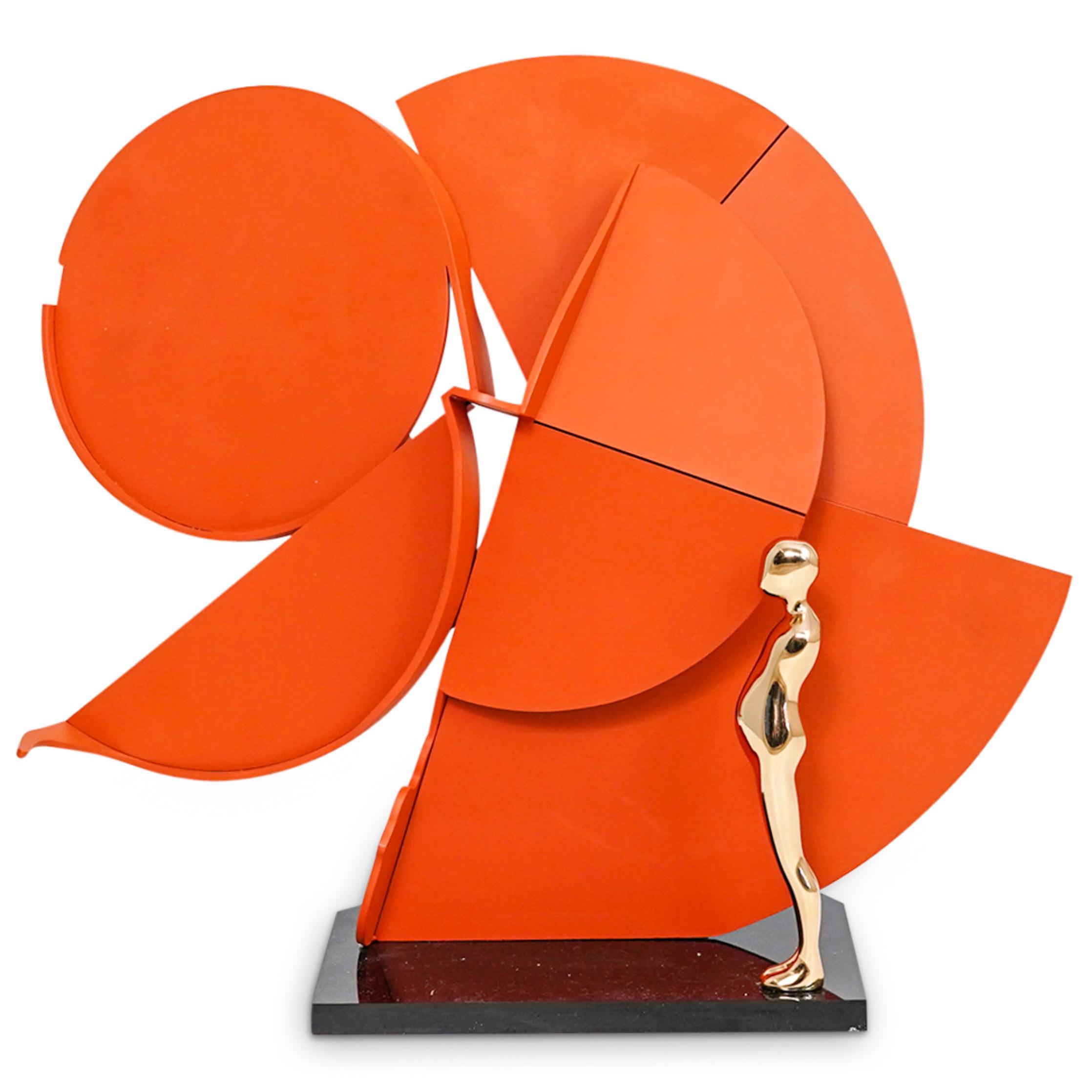
A sculpture by surrealist artist Ernest Trova composed of a cold-rolled steel painted center, fitted with a bronze study man figure. Marked along the bottom Edition “78/99″ dated 1987 with Trova stamp. (Comes with Artist Book)
CIRCA: 1987
ORIGIN: USA
DIMENSIONS: H: 13″ W: 14″ L: 8 1/2”
CONDITION: Great condition. See lot description for details on item condition. More detailed condition requests can be obtained via email ([email protected]) or SMS (305) 332-9274. Any condition statement given, as a courtesy to a client, is only an opinion and should not be treated as a statement of fact. Akiba Antiques shall have no responsibility for any error or omission.

Large 17th C. Hawaiian Stone Game Sphere for Balancing

Large 17th C. Hawaiian Stone Game Sphere for Balancing

Large 17th C. Hawaiian Stone Game Sphere for Balancing:

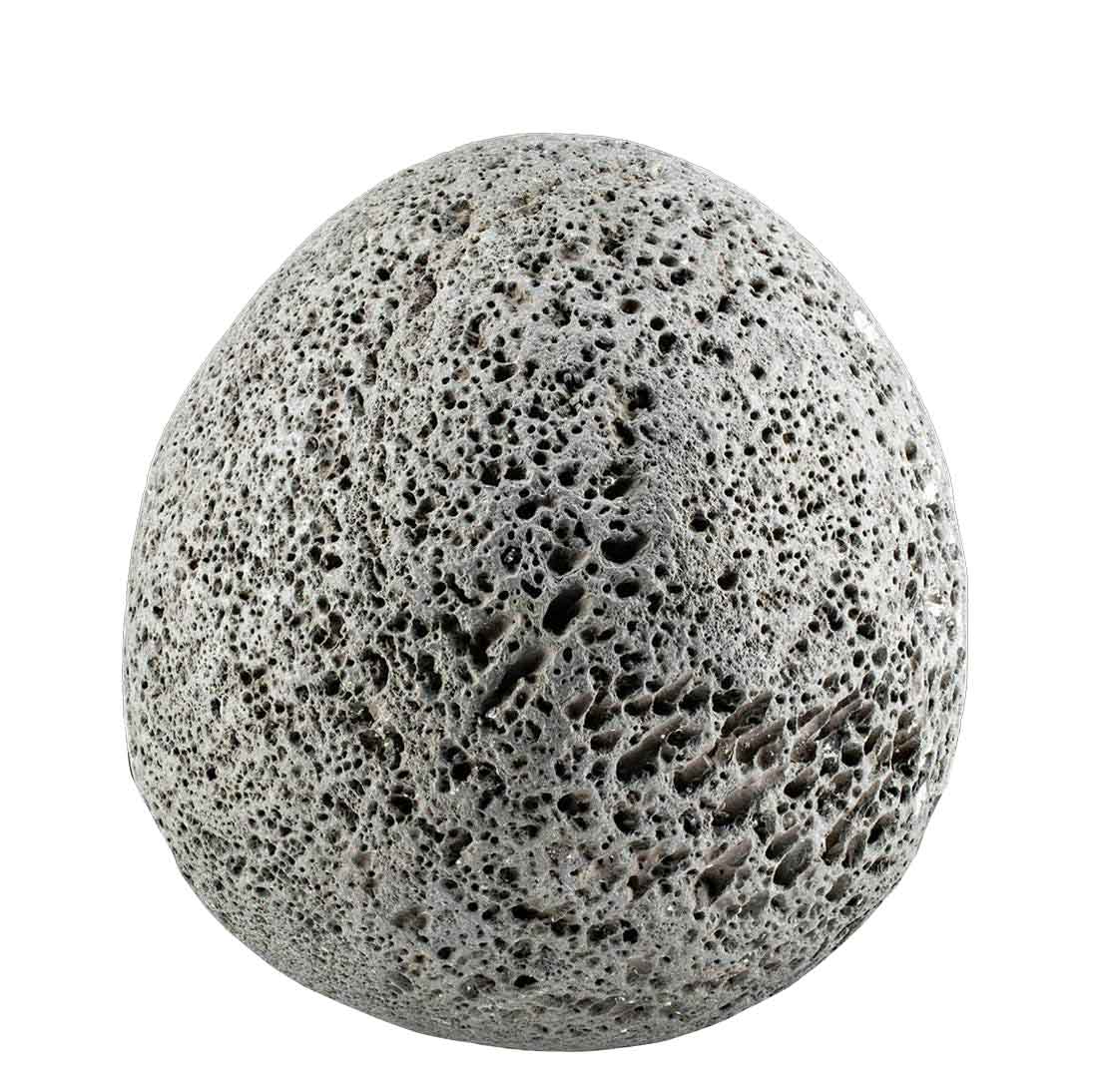
North Pacific, Hawaiian Islands, Pre-Contact Period, ca. 17th to 18th century CE. A sizable and sturdy ball of a nearly spherical form that is hand-carved from pumice using stone tools. This round stone is a game ball that was used by the Kanaka – the name for the native Hawaiian peoples – to develop balance and stamina for tasks like hunting and fighting. Hawaiians played a variety of games to celebrate the arrival of the Pleiades in the eastern sky, signifying the new year and the time for Makahiki. The Scottish botanist, William Dean Howells, traveled to the Hawaiian Islands in 1824 to 1825 and recorded his observations and illustrations, which included a tattooed Hawaiian chief balancing on a large stone ball like this example. Size: 9.1″ W x 9.7″ H (23.1 cm x 24.6 cm)

This piece has been searched against the Art Loss Register database and has been cleared. The Art Loss Register maintains the world’s largest database of stolen art, collectibles, and antiques.

Provenance: private Hawaii, USA collection, acquired 1995 to 2010

All items legal to buy/sell under U.S. Statute covering cultural patrimony Code 2600, CHAPTER 14, and are guaranteed to be as described or your money back.

A Certificate of Authenticity will accompany all winning bids.

PLEASE NOTE: Due to recent increases of shipments being seized by Australian & German customs (even for items with pre-UNESCO provenance), we will no longer ship most antiquities and ancient Chinese art to Australia & Germany. For categories of items that are acceptable to ship to Australia or Germany, please contact us directly or work with your local customs brokerage firm.

Display stands not described as included/custom in the item description are for photography purposes only and will not be included with the item upon shipping.

#166652
CONDITION
Minor nicks and chips to some areas, with light encrustations and calcifications within some recessed areas, otherwise intact and excellent. Relatively smooth surface texture throughout. Old inventory label on one area.

(41 Pc) Antique Meissen Porcelain Coffee/Tea Set

(41 Pc) Antique Meissen Porcelain Coffee/Tea Set

(41 Pc) Antique Meissen Porcelain Coffee/Tea Set:

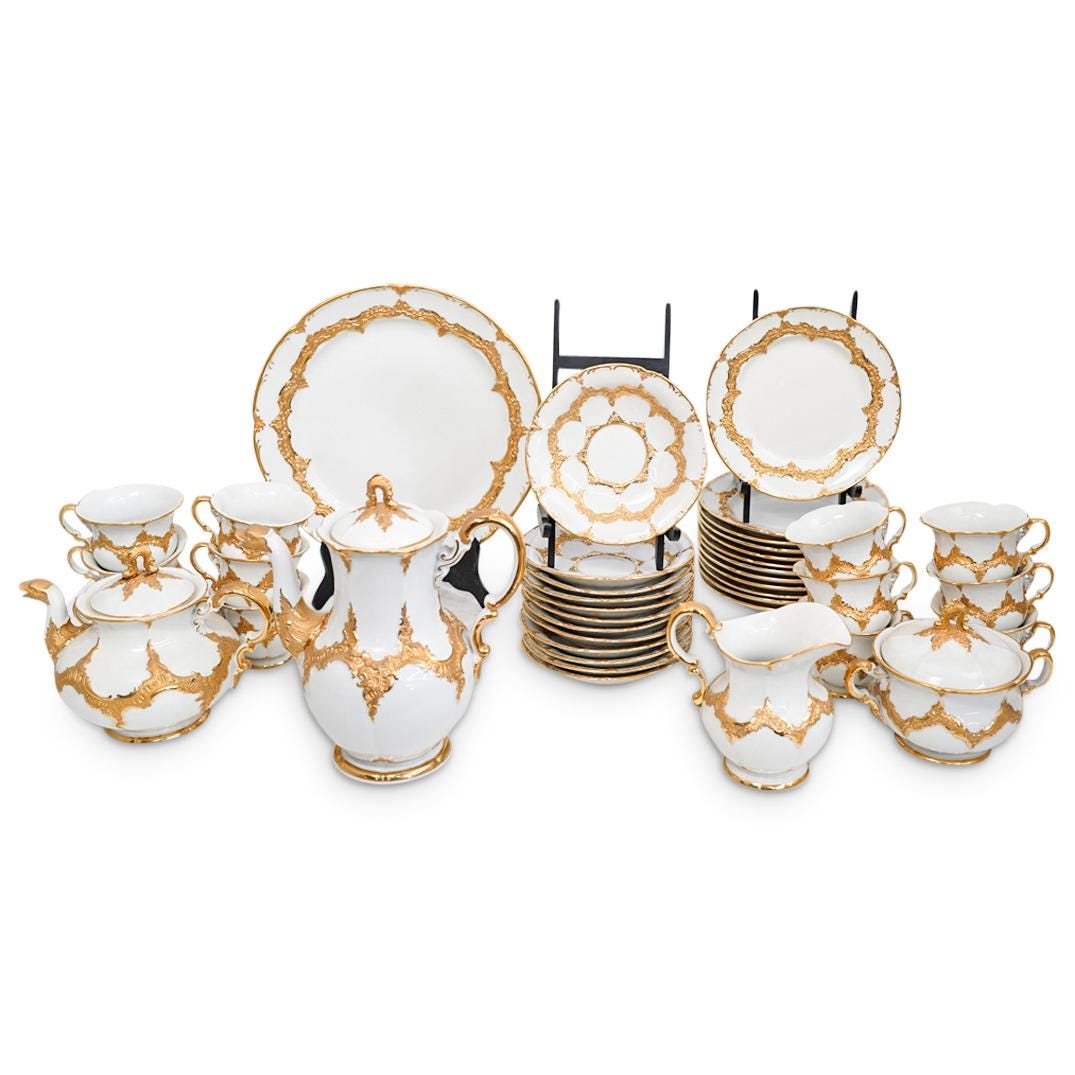
(41 Pc) An antique Meissen porcelain coffee/tea set in white glazed porcelain with gold leaf accents, Ca 1880. Marked on the bottom with the blue double crossed swords Meissen hallmark. This set includes:

(1 Pc) one Meissen white porcelain with gold decoration tea pot. W: 8 1/2″ H: 7″.
(1 Pc) one Meissen white porcelain with gold decoration coffee pot. H:10 1/4″ W: 9 1/4″.
(1 Pc) one Meissen white porcelain with gold decoration creamer. H: 6″ W: 5 3/4″.
(1 Pc) one Meissen white porcelain with gold decoration lidded sugar bowl. W: 7 3/4″ H: 5 1/2″.
(1 Pc) one Meissen white porcelain with gold decoration large cake plate. W: 12″.
(12 Pc) one Meissen white porcelain with gold decoration cups. W: 3 3/4″ H: 3″
(12 Pc) twelve Meissen white porcelain with gold decoration saucer plates. W: 6 1/2″.
(12 Pc) twelve Meissen white porcelain with gold decoration dessert plates. W: 7 3/4″.

CIRCA: Late 19th Century.
ORIGIN: Germany.
DIMENSIONS: See lot description for details.

Have a similar item to sell? Contact: [email protected].

CONDITION: Vintage condition with several chips. See lot description for details on item condition. More detailed condition requests can be obtained via email ([email protected]) or SMS(305)-332-9274. Any condition statement given, as a courtesy to a client, is only an opinion and should not be treated as a statement of fact. Akiba Antiques shall have no responsibility for any error or omission.”

Signed Proof – Frederic Church’s Heart of the Andes

Signed Proof - Frederic Church's Heart of the Andes

Signed Proof – Frederic Church’s Heart of the Andes:

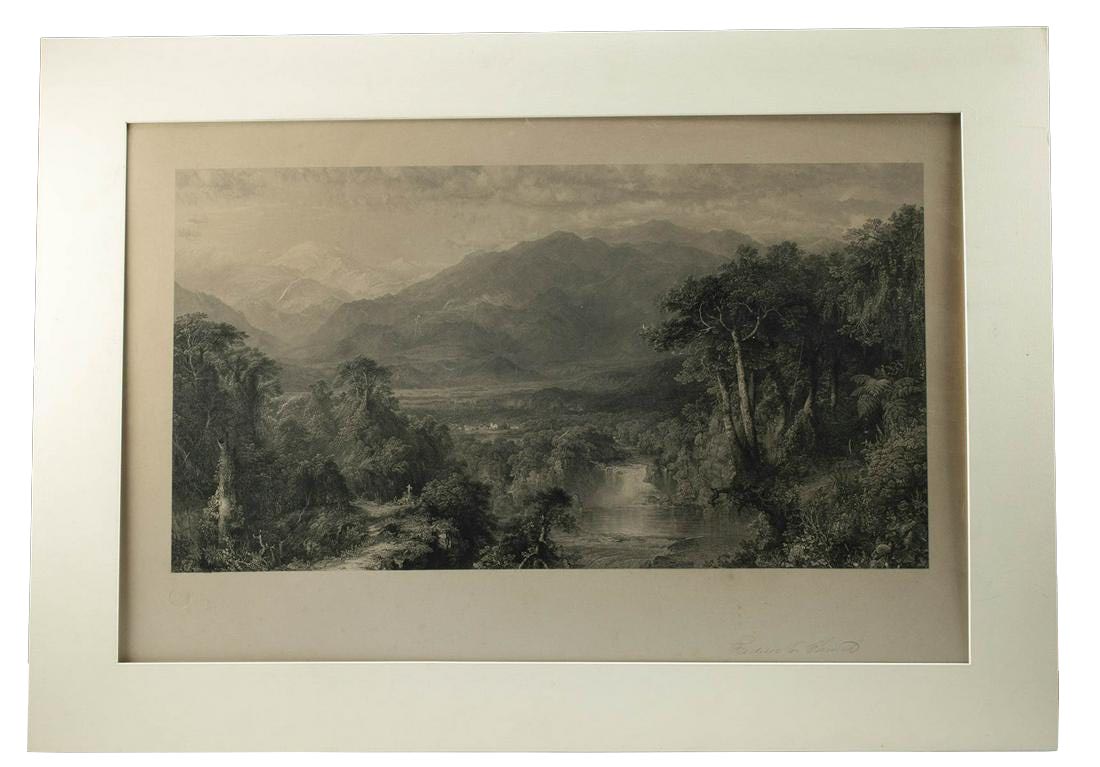
Artist: Frederic Edwin Church (American, 1826-1900). Engraver: William Forrest (Scottish, 1805-1889). “The Heart of the Andes” steel engraving on heavy wove paper. “Published by J. McCLure, 1st May, 1862 London Day & Son” in upper right margin. Proof before letters, blind stamp outside platemark left margin, “Print Sellers Association, RGG”, Signature “Frederic E. Church” on lower right margin in pencil. A rare pencil-signed engraving of Frederic Edwin Church’s “Heart of the Andes”. The masterful composition presents a panoramic view of the Andes in a horizontal format that captures Church’s embrace of the romantic sublime and was also informed by his study of Prussian naturalist Alexander von Humboldt’s “Kosmos”(1840s). Size of image: 13.6″ L x 24.875″ W (34.5 cm x 63.2 cm) Size of sheet: 19.8″ L x 29.875″ W (50.3 cm x 75.9 cm) Size of matte: 24.25″ L x 33.75” W (61.6 cm x 85.7 cm)

For Church’s contemporaries, seeing his monumental painting was akin to a theatrical experience. Church presented “Heart of the Andes” in a dark room, dramatically lit via gas lamps, and surrounded by a colossal frame to suggest the scene was viewed through a window. “Heart of the Andes” was remarkable for its scope and countless details. In fact, viewers wore opera glasses in order to avoid missing any of its elements. As described by Dr. Bryan Zygmont, “The monumental snow-capped mountain in the deep background is Mt. Chimborazo, one of the highest peaks in South America. Moving to the foreground, Church leads the viewer through a variety of topographical zones which all contain unique flora and fauna. There is but a little human presence in this vast depiction of space. A colonial Spanish hacienda appears in the central middle ground, resting on the banks of a river. This waterway flows to the viewer’s right, eventually arriving at a waterfall—a Niagara in miniature—on the right side of the painting. A well-travelled footpath in the left foreground leads the eye to a pair of people who worship before a simple wooden cross. Beyond these ‘major’ elements, the composition is filled with minute details unobservable in any reproduction. Flowers bloom, birds flutter, water flows, and wind seems to blow.”

Although Church is probably best known for his association with the Hudson River School, his pursuit of landscape painting took him beyond the United States. Church spent more than two months in South America, most of which was in Ecuador, and was extremely enamored with the philosophy of Alexander von Humboldt, particularly his “Kosmos” – a two volume work of geological and natural history published in Germany in 1845 and 1847 and shortly thereafter translated into English. In addition to South America, Church traveled to Mexico, Europe, Newfoundland, the Middle East, and Labrador.

Church’s painting “Heart of the Andes” (1859) is a masterpiece that has been admired by man countless viewers, initially unveiled in a theatrical display at Lyrique Hall on Broadway in New York City in 1859, and later accessioned by the Metropolitan Museum of Art. According to the Met’s description, “This picture was inspired by Church’s second trip to South America in the spring of 1857. Church sketched prolifically throughout his nine weeks travel in Ecuador, and many extant watercolors and drawings contain elements found in this work. The picture was publicly unveiled in New York at Lyrique Hall, 756 Broadway, on April 27, 1859. Subsequently moved to the gallery of the Tenth Street Studio Building, it was lit by gas jets concealed behind silver reflectors in a darkened chamber. The work caused a sensation, and twelve to thirteen thousand people paid twenty-five cents apiece to file by it each month. The picture was also shown in London, where it was greatly admired as well.”

This piece has been searched against the Art Loss Register database and has been cleared. The Art Loss Register maintains the world’s largest database of stolen art, collectibles, and antiques.

Provenance: Jon and Mary Williams private art collection, Denver, Colorado, USA

All items legal to buy/sell under U.S. Statute covering cultural patrimony Code 2600, CHAPTER 14, and are guaranteed to be as described or your money back.

A Certificate of Authenticity will accompany all winning bids.

PLEASE NOTE: Due to recent increases of shipments being seized by Australian & German customs (even for items with pre-UNESCO provenance), we will no longer ship most antiquities and ancient Chinese art to Australia & Germany. For categories of items that are acceptable to ship to Australia or Germany, please contact us directly or work with your local customs brokerage firm.

Display stands not described as included/custom in the item description are for photography purposes only and will not be included with the item upon shipping.

#166582
CONDITION
A proof before letters with a blind stamp outside platemark at the left margin that reads, “Print Sellers Association, RGG” and a signature “Frederic E. Church” at the lower right margin. At upper right margin “Published by J. McCLure, 1st May, 1862 London Day & Son”. Expected toning to the paper and a few scattered stains visible in the margins. A few small tears from the right edge into the margin that do not impact the image and were once repaired with acid free tape on the verso. Small tear at upper right edge that also do not impact the image. Laid on linen. Hinged to matte at the upper edge and may be removed if desired.