1943 US Navy Mark V Diving Helmet With History

1943 US Navy Mark V Diving Helmet With History

1943 US Navy Mark V Diving Helmet With History:

This helmet was found in a US Navy supply box. The box was taken off the USS ABSD-4 which was an auxiliary floating dry dock used in the Pacific during World War 2. The dock was used decades after WWII. The dry dock was abandoned in Seealer Harbor where it sank with section still visible above water today. The mask will come with a document attesting to its known history.Unlike a vast majority of diving helmets with no documentable history, this example was found with original US Navy paperwork! The USN form has the helmets location and description from where it was removed! This rare and vital document will accompany this beautiful USN Mark V helmet.

This diving helmet was discovered by Nations Attic recently in a US Navy equipment box. Originally used aboard the USS ABSD-4, which was a WWII floating dry dock in the Pacific theater. After the war the dry dock was used for decades. Eventually sections of the dock were abandoned in Seealer harbor, where it sank with sections still visible above water today.

Arguably the most desirable and collected diving helmet in the world, the United States Navy Mark V. This notable example was made in October 1943 by the A. Schraders Son Company, Division Of Scovill Mfg. Co. Schrader was one of the original two companies to manufacture the Mark V for the US Navy starting in 1916. Schrader would land numerous contracts during World War 2 to produce the Mark V. This example is relatively early WWII Mark V considering production had not increased dramatically until 1943 and 1944.

All USN Mark V diving helmets made for the US Government had the copper body coated in a tinning. This tinning helped prevent saltwater corrosion to the copper. From use, age and polishing this time wears off in many cases. This example still retains much of the original tinning as can be easily seen in the photos. While there is no doubt this helmet was used, it was also taken well care of.

Vitally crucial to Mark V helmets is the serial numbers. During 1943 Schrader would place the serial number on the ID plate and on the bottom side of all four brails. This helmet features the number 928B on the ID plate, bonnet communications cup, and all four brails!

This helmet does feature a US Navy inspection stamp. The inspector at the Schrader factory would place the symbol on the top edge of the communication cup. This helmet features the stamp in that spot and is proof the helmet was inspected and accepted into US Navy inventory! This helmet has the USN inspection stamp in 2 other locations as well.

The helmet has all four brails, 12 wing nuts, window guards, original glass in excellent condition, air & communications fittings, Schrader non-return valve with US Navy inspection stamp, communications fitting cap, spitcock, BTE exhaust valve, and dumbbell safety latch and chain. The latch is a WWII era replacement. Inside the bonnet, the internal air vents are all present, as well as the exhaust button. A communications speaker is still inside with a US Navy inspection stamp. Wire running to the communication fitting is intact. Lastly, vintage rope as shown in the photos will accompany the helmet.

The bonnet and breastplate thread together just as they should. The bonnet is free of any noticeable dents and only shows the slightest hints of age. With a fantastic patina, serial numbers matching status, US Navy inspection stamps, rare USN documents, this is your rare chance to own possibly the best example possible!

All diving helmets in this auction will be accompanied by a certificate of authenticity from Nations Attic. The certificate will have a unique number that will match the number on a tamperproof hologram decal placed inside the helmet. This information will be kept on permanent file at Nations Attic and help ensure the provenance of the helmet and authenticity. The display stand shown in the photos is not included. The option to purchase one after the auction will be provided.

All items will be shipped with a signature required upon delivery and full insurance either via FedEx or the USPS Priority Mail. Worldwide shipping is available; however, no ocean freight will be offered on large items. DHL express is an option for international shipments under 600 pounds via air. A shipping quote prior to the auction can be provided by emailing your postal code.
Incredible 1900s A.J. Morse Diving Helmet w/ History

Incredible 1900s A.J. Morse Diving Helmet w/ History

Incredible 1900s A.J. Morse Diving Helmet w/ History:

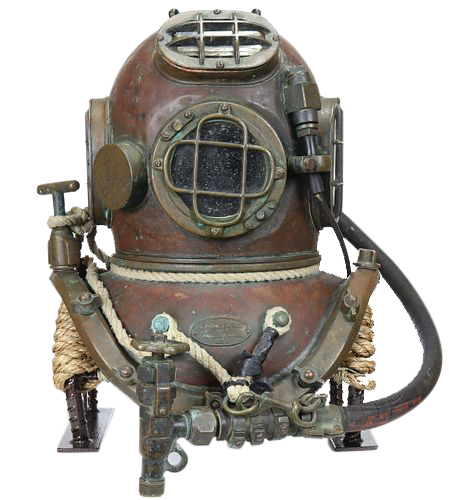
Very impressive all original 110% complete A.J. Morse diving helmet and related equipment! We say 110% because this helmet is accompanied by original components that have been attached to it for many decades that are rarely ever found. In addition, the lucky winner of this helmet will also receive the original owner’s name and diving biography as well to hopefully keep intact with this helmet.

This helmet is virtually untouched! A.J. Morse & Son Inc. 4 light 12 bolt model with serial #s matching in all 6 locations. The serial number is what helps date the helmet to the 1908 time period. Included with the helmet as shown in the photos are a whip with air control valve attached, tee wrench, Craftsweld communication radio, communications speaker or reproducer and finally a photo of the original owner! The whip & air control valve are still attached to the helmet, just like the day the helmet was last used. In addition, the helmet does have a Schrader non-return valve on the air fitting. The helmet itself has the unmistakable patina and look of an original example well over 100 years old. The communications fitting and front faceplate frame are slightly pushed in. The top of the bonnet does have the typical working dents and blemishes from usual use so many years ago. The communications cup does have the early A.J. Morse stamping on it, PATENTED DEC 20 1898.

All helmets sold & auctioned by Nation’s Attic Inc. will come with a certificate of authenticity (COA). This COA will have a serial # on it that will match the # on a tamperproof holographic decal placed on the inside of the helmet. This level of security and long term assurance of the helmets authenticity is un-matched in the industry and very important to us.

The display stand shown in the photos is not included. The option to purchase one after the auction will be provided. All helmets will be shipped in two double boxed boxes via FedEx. Worldwide shipping available. A shipping quote prior to the auction can be provided by emailing your postal code.

All items will be shipped with a signature required upon delivery and full insurance either via FedEx or the USPS Priority Mail. Worldwide shipping is available; however, no ocean freight will be offered on large items. DHL express is an option for international shipments under 600 pounds via air. A shipping quote prior to the auction can be provided by emailing your postal code.
Doulton Lambeth Queen Victoria Exhibition Vase By Tinworth

Doulton Lambeth Queen Victoria Exhibition Vase By Tinworth

Doulton Lambeth Queen Victoria Exhibition Vase By Tinworth:

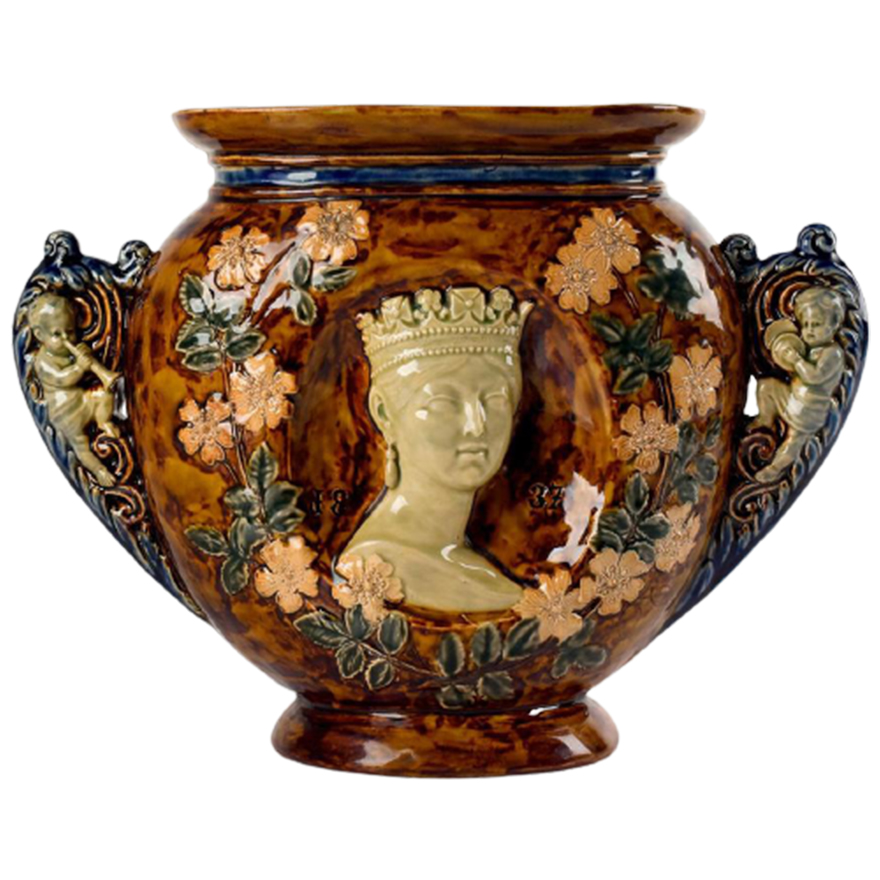
A splendid exhibition vase made for the Golden Jubilee of Queen Victoria in 1887
Double handled vase with cherubs playing a trumpet on one side and cymbals on the opposite. The vase has two panels – a young victoria on one panel and older on reverse side in high relief. #queenvictoria #Goldenjubilee

Artist: George Tinworth
Issued: 1887
Dimensions: 12″L x 5″W x 9″H
Edition Number: Unique Manufacturer: Doulton Lambeth
Country of Origin: England
Condition
Good

Doulton Lambeth Gilbert Bayes Washing Post Bird Finial

Doulton Lambeth Gilbert Bayes Washing Post Bird Finial

Doulton Lambeth Gilbert Bayes Washing Post Bird Finial:

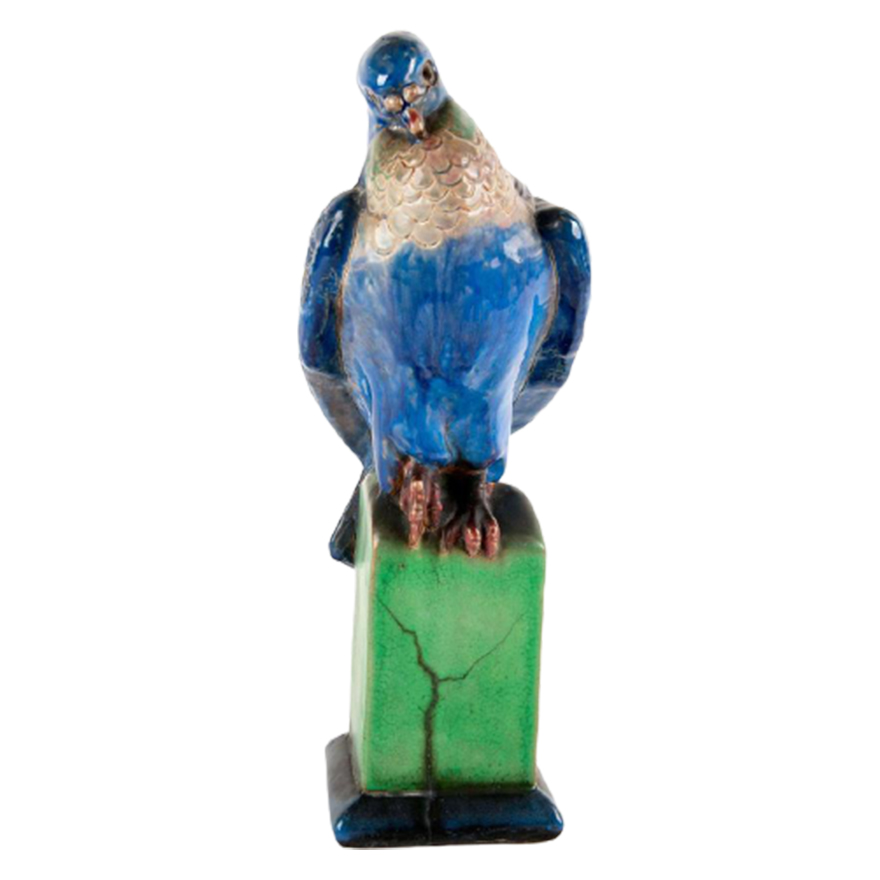
Extremely rare stoneware washing line post finial modelled in high relief as a dove on pedestal.
Blue and green coloration; highly detailed. Attributed to Doulton Lambeth. Age related crazing. These polychrome stoneware finials for washing line posts from the St Pancras Housing Association Estates in London by Gilbert Bayes. Some were exhibited as garden sculptures. Page 30 “The Doulton Story” by Paul Atterbury and Louise Irvine. #bird #finial

Issued: c. 1930s
Dimensions: 17″H
Manufacturer: Doulton Lambeth
Country of Origin: England

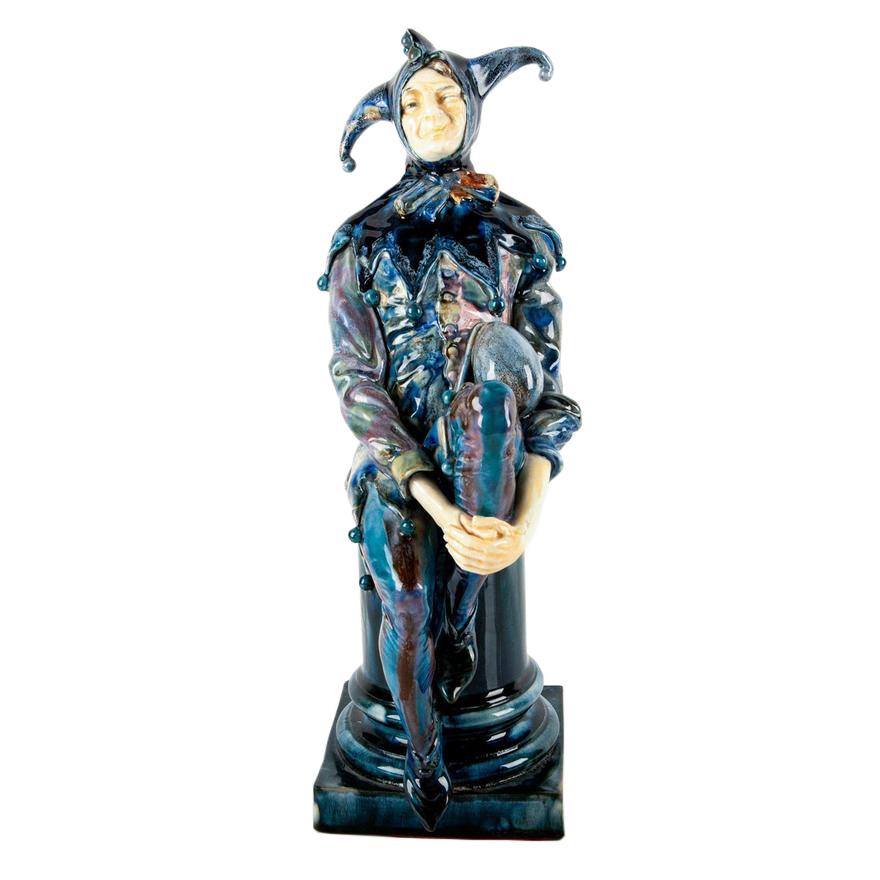
An Exceptional Exhibition Royal Doulton Jester

An Exceptional Exhibition Royal Doulton Jester

An Exceptional Exhibition Royal Doulton Jester:

A large Jester sculpture in high fired Lustre glaze.
One of the rarest and finest Royal Doulton figure studies made. This monumental sculpture was made by Charles Noke and signed on the base “A Jester” C.J. Noke. S.E. Potted by Doulton & Co. and with a Royal Doulton Lion and Crown backstamp. #RARE #Jester #remarkable

Artist: Charles Noke
Issued: 1920s
Dimensions: 5″W x 16″H
Manufacturer: Royal Doulton
Country of Origin: England

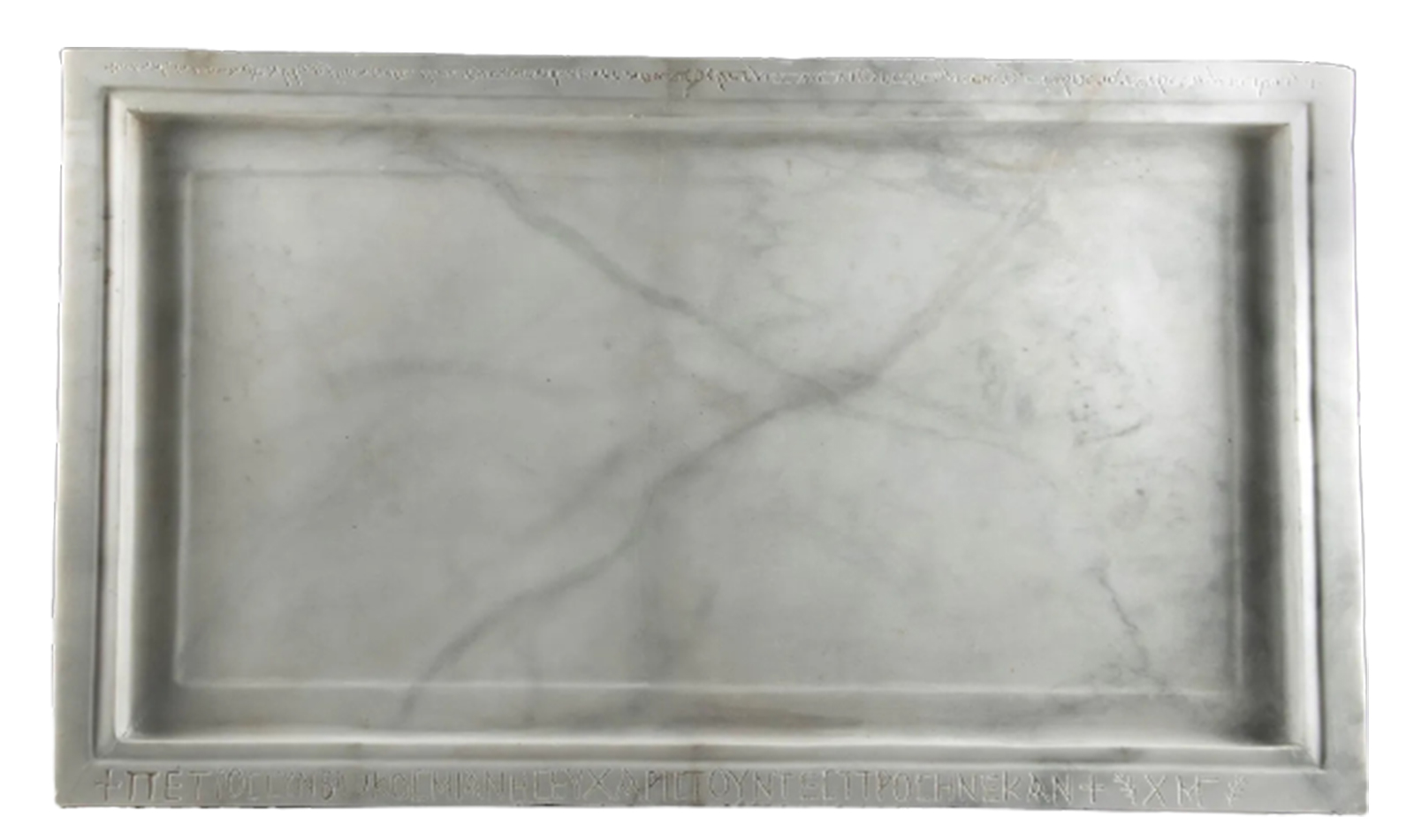
An Important Translated Byzantine Marble Altar Tabletop

An Important Translated Byzantine Marble Altar Tabletop

An Important Translated Byzantine Marble Altar Tabletop:

**This is an oversized piece that may require special shipping. Please inquire for a quote prior to bidding.

Holy Land, Late Roman / Early Byzantine Period, ca. mid-5th to 6th century CE. A marvelous marble altar tabletop of an immense scale and a rectangular form. The elegant piece displays a recessed central basin and a raised rim inscribed with Ancient Greek text along one long side and Syriac Aramaic on the other, each flanked by a pair of Greek crosses and written with the periphery serving as the bottom so that a sitter at the table would be able to read the inscription in front of them. The Ancient Greek text reveals that this was an altar table, translating to “Petros with his wife Kosmiane presented [this] as offering with gratitude” and is followed by 2 palm leaves and 3 letters – X, M, and the Greek letter gamma – which serve as a Christogram meaning “Mary is the mother of Christ.” The Aramaic Syriac script likely bears a plea to God in return for the offering of the table. Size: 55″ L x 31.7″ W x 2.1″ H (139.7 cm x 80.5 cm x 5.3 cm)

Though minimalist in form, the table boasts a skillfully carved 3-tier border, with the highest tier bearing the inscription and the lowest only slightly elevated from the central basin. An additional inscription of a symbol that combines the letters T, P, O, and Y is featured on the verso, likely intended to represent either the artist’s signature, the church for which the table was intended, or the city in which the table was located.

Marble tabletops have been found widely throughout the Roman and Byzantine Empires; however, the vast majority exist as only small fragments. These tabletops were used to celebrate feasts for the dead at grave sites – a commemorative practice known throughout the Roman and early Byzantine worlds – and were often supported by bases and elaborately incised with messages promising salvation.

Prior to the 2nd century, Romans cremated their dead; around that time, inspired by the Greek and Etruscan practice of using sarcophagi, they began to place their dead in sarcophagi. This trend spread rapidly throughout the Roman Empire. In the western part of the Empire, sarcophagi were placed inside a mausoleum against a wall or in a niche, so the only decorated panels were on the front and the short sides. This tabletop probably came from the grave of a high-status Roman citizen.

A marble tabletop with an identical Greek inscription is discussed in “Syria Grammata Kai Agalmata” by Hassan Salame-Sarkis in the journal Syria, 66, no. 1/4 (Institut Francais du Proche-Orient, 1989), 320-322.

This piece has been searched against the Art Loss Register database and has been cleared. The Art Loss Register maintains the world’s largest database of stolen art, collectibles, and antiques.

Provenance: private West Hollywood, California, USA collection; ex-Westreich collection, Rancho Santa Fe, California, USA and previously on display in Chevy Chase, Maryland, USA, acquired on the London art market and imported into the US in 1985

All items legal to buy/sell under U.S. Statute covering cultural patrimony Code 2600, CHAPTER 14, and are guaranteed to be as described or your money back.

A Certificate of Authenticity will accompany all winning bids.

PLEASE NOTE: Due to recent increases of shipments being seized by Australian & German customs (even for items with pre-UNESCO provenance), we will no longer ship most antiquities and ancient Chinese art to Australia & Germany. For categories of items that are acceptable to ship to Australia or Germany, please contact us directly or work with your local customs brokerage firm.

Display stands not described as included/custom in the item description are for photography purposes only and will not be included with the item upon shipping.

#166697
Condition
Repaired from several pieces with some very light restoration and most break lines visible. Chipping with small areas of loss to peripheries. Otherwise, excellent with smooth surfaces and impressive remaining detail to inscriptions.

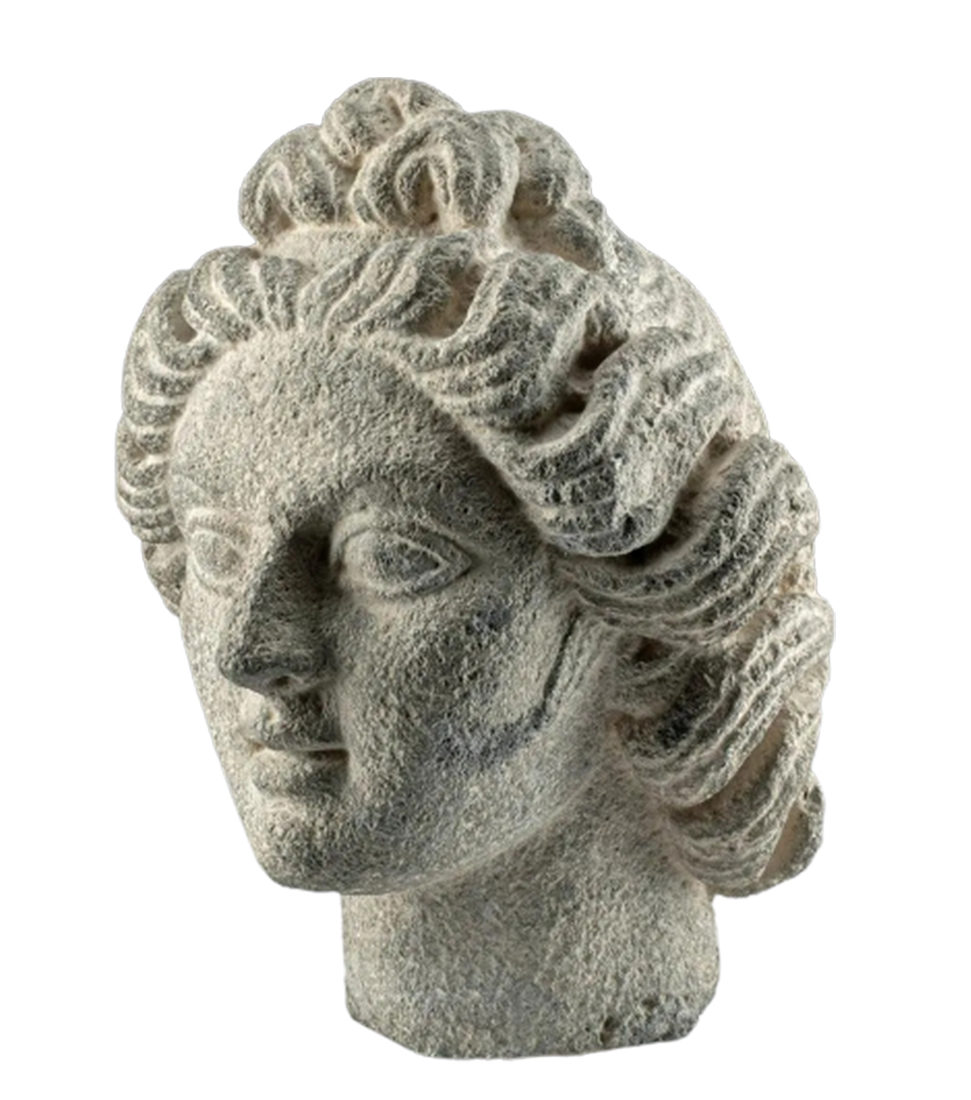
Lifesize+ Roman Basalt Head of God Apollo

Lifesize+ Roman Basalt Head of God Apollo

Lifesize+ Roman Basalt Head of God Apollo:

**This is an oversized piece that may require special shipping. Please inquire for a quote prior to bidding.Rome, Imperial Period, ca. 3rd century CE. A larger-than-life head of the god Apollo, skillfully hand-carved from basalt. The youthful god of music, the sun, light, poetry, prophesy, healing and more is depicted in an idealized manner with “pretty boy” features – huge, almond-shaped eyes with heavy lids, a defined nose, a prominent philtrum, bow-shaped, pursed lips – on that elegant, oval face that tapers to a soft, gently jutting chin. Supported by a broad neck, the divine visage is crowned by a thick waves of hair that dramatically flow upwards in a halo-like manner, topped by classic topknot; reminiscent of the famous Apollo Belvedere (ca. 120 to 140 BCE). Size: 10.75″ L x 10.5″ W x 14.5″ H (27.3 cm x 26.7 cm x 36.8 cm)

This piece has been searched against the Art Loss Register database and has been cleared. The Art Loss Register maintains the world’s largest database of stolen art, collectibles, and antiques.

Provenance: private New York, USA collection; ex-private United States collection, acquired in the 1960s, imported in the late 1980s

All items legal to buy/sell under U.S. Statute covering cultural patrimony Code 2600, CHAPTER 14, and are guaranteed to be as described or your money back.

A Certificate of Authenticity will accompany all winning bids.

PLEASE NOTE: Due to recent increases of shipments being seized by Australian & German customs (even for items with pre-UNESCO provenance), we will no longer ship most antiquities and ancient Chinese art to Australia & Germany. For categories of items that are acceptable to ship to Australia or Germany, please contact us directly or work with your local customs brokerage firm.

Display stands not described as included/custom in the item description are for photography purposes only and will not be included with the item upon shipping.

#164986
Condition
Fragment of a larger piece. Repairs to base with restoration over break lines. Minor areas of loss on both side of top bun and tuft of hair on proper right side. Natural perforations to stone with small areas of loss to back of head, as shown. Abrasions, softening of detail, and nicks throughout, commensurate with age. Otherwise, very nice with earthen deposits throughout.

Alice Baber Oil on Canvas Sacred Space Series

Alice Baber Oil on Canvas Sacred Space Series

Alice Baber Oil on Canvas Sacred Space Series:

Alice Baber (American, Illinois/New York, 1928-1982). Oil on canvas Return From the Journey to the Jaguar, from the Sacred Space Series. Signed and dated 77 upper right and signed, titled and dated on verso. 58 1/4″ x 77″ (with frame 59 1/4″ x 78″). Vertical crease upper center, horizontal scuff mark lower center.

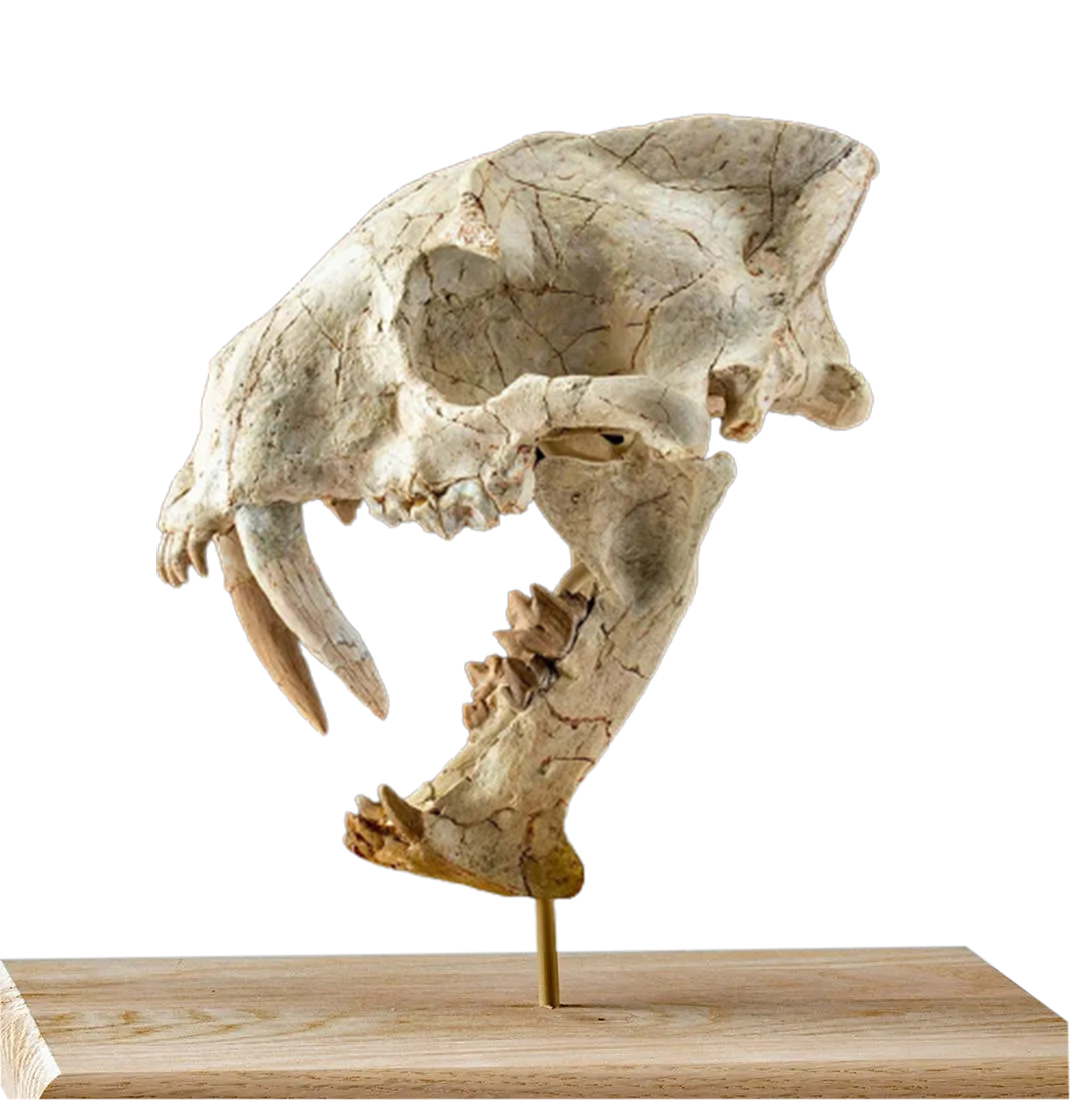
Rare Fossilized Hoplophoneus Saber Cat Skull

Rare Fossilized Hoplophoneus Saber Cat Skull

Rare Fossilized Hoplophoneus Saber Cat Skull:

North America, South Dakota, White River Formation, Late Eocene to Early Oligocene Period, ca. 35 million to 29 million years ago. A rare, fossilized skull from Hoplophoneus primaveus in the Nimravid family, a predecessor to saber-tooth cats! This saber-tooth carnivore has huge canine teeth, wonderfully on display with the lower jaw slightly gaping open, as if to snarl or ambush unwary prey! This is the second earliest saber-tooth cat that roamed North America beginning in the Oligocene Period. The bone quality is magnificent, and the upper skull is outstanding, with definitive shape and teeth! This creature is one of the most highly desired vertebrate fossils in the world due to its resemblance to Smilodon and extreme age! This rare cat is a remarkable prehistorical fauna that very few collectors have the opportunity to own! Size: 8″ L x 5″ W (20.3 cm x 12.7 cm); 8.5″ H (21.6 cm) on included custom stand; saber tooth: 2.25″ L (5.7 cm)

These animals were 2 feet tall (0.6 meters), the size of a large modern-day bobcat, and were more of a group predator with close-knit families as evidenced by some hoplos found together in death while overall very rare species hunting an abundant food supply of grazing ungulates including camels and oreodonts. Using their highly developed saber-teeth they would likely sever the blood supply in the neck of their prey in the initial attack. Hoplophoneus shared many physical characteristics with the famous Smilodon (saber-toothed tiger), namely, the large saber canines; but Hoplophoneus were an earlier much older species that preceded their feline ancestors by millions of years. We cannot stress enough just how awesome and rare this fossilized skull is. While smilodons are often regarded as the king of saber-tooth cats, Hoplophoneus preceded smilodons and paved the way for saber tooth evolution.

This piece has been searched against the Art Loss Register database and has been cleared. The Art Loss Register maintains the world’s largest database of stolen art, collectibles, and antiques.

Provenance: private Rome, Georgia, USA collection

All items legal to buy/sell under U.S. Statute covering cultural patrimony Code 2600, CHAPTER 14, and are guaranteed to be as described or your money back.

A Certificate of Authenticity will accompany all winning bids.

PLEASE NOTE: Due to recent increases of shipments being seized by Australian & German customs (even for items with pre-UNESCO provenance), we will no longer ship most antiquities and ancient Chinese art to Australia & Germany. For categories of items that are acceptable to ship to Australia or Germany, please contact us directly or work with your local customs brokerage firm.

Display stands not described as included/custom in the item description are for photography purposes only and will not be included with the item upon shipping.

#167308
Condition
Professionally prepared and restored. Approximately 85 to 90% or more original material. Infill to gaps and fissures with a larger area of infill along eye orbitals. One saber is cast, and the other is original. Lower jaw has a bar attached for suspension on the stand.

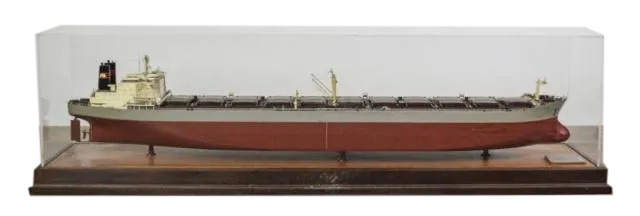
M/S Atland Shipbuilder’s Model

M/S Atland Shipbuilder's Model

M/S Atland Shipbuilder’s Model:

Painted wooden model of the Swedish ship M/S Atland, with plaque in Swedish, M/S Atland Byggo ar 1973, Eriksbergs Mek. Verkstads Aktiebolag Goteborg for Angfartygsaktiebolaget Tirfing, Goteborg (Built in 1973 by Eriksbergs Workshop Steamships Ltd. Co.), with ship’s specifications. Additional plaque E. Fransson, Goteborg. Mounted on wood, with acrylic case. Boat 57″L, with case 63″L x 14″W