The Future Was Then

Cult of the Machine,de Young

The de Young’s “Cult of the Machine” is an ode to the aesthetics of industry and the period of American ascendance.

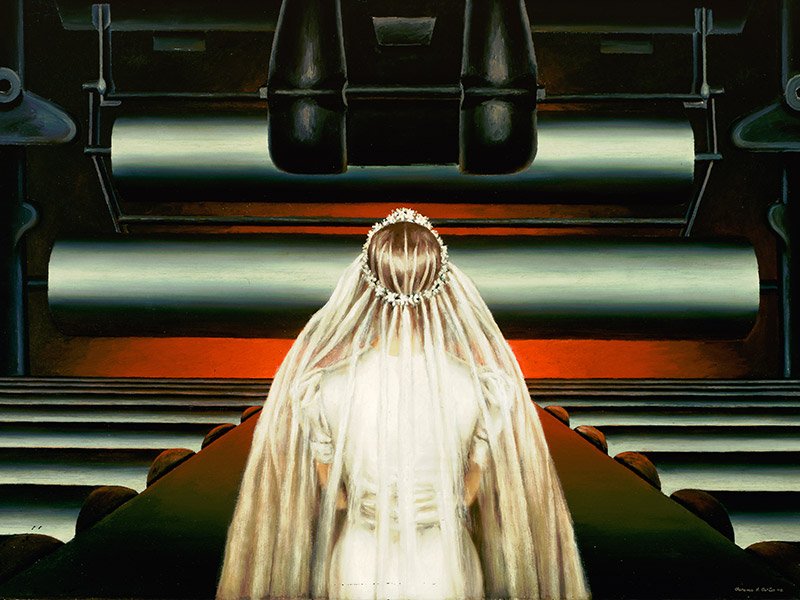
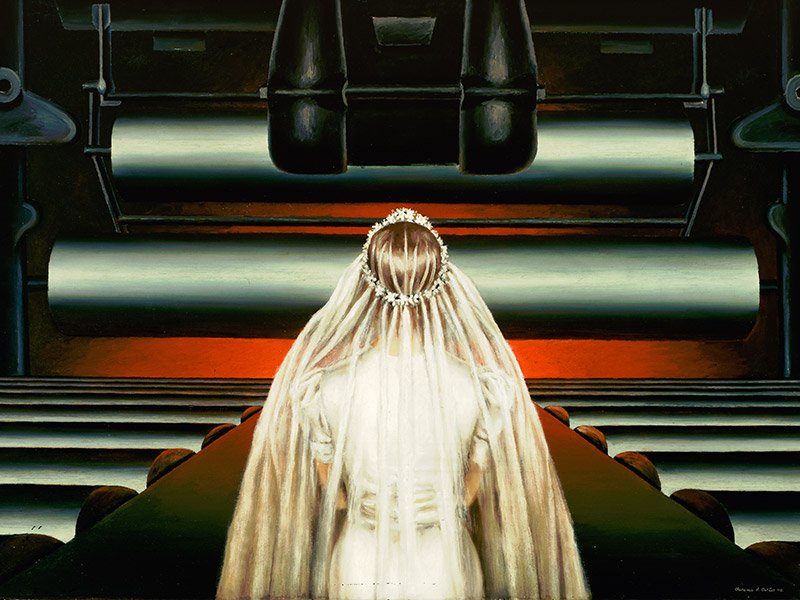
FEATURING CLARENCE HOLBROOK CARTER, WAR BRIDE, 1940. COURTESY OF THE FINE ARTS MUSEUMS OF SAN FRANCISCO

Johan Galtung, the venerable sociologist who predicted the collapse of the USSR, said in 2000 that the American Empire had 25 years of life left in it. Two-thirds the way through that period, the prescience may be increasingly hard to deny. (Incidentally, if re-elected, President Trump would serve until Jan. 20, 2025.)

Rather than issue prophecies of doom about our backward future, the de Young has chosen to make a sweeping statement about the forward-looking past. In “Cult of the Machine: Precisionism in American Art,” the museum has combined various strands of early American modernism into one coherent mass, some of it nearly as photo-realistic as the work of Gerhard Richter.

Precisionism is an aesthetic of industrial magnificence, extolling tall smokestacks with the same adoration that 19th-century English Romantics might feel for a cloud passing over a glen. Its proponents, known as “Immaculates” in their own time, had no trouble finding the sublime in brick and chrome. But they were coy, refraining from the didactic quality of socialist realism. Many of these works display factories without people, allowing viewers to pour in their own ideological interpretation as if ladling molten steel into a crucible. Precision isn’t necessarily the same thing as accuracy, and whether these works are celebrations or criticisms is up to you.

Take Charles Sheeler’s American Landscape, in which a train passes by a snowy industrial plant. Is it the Ford River Rouge Complex in Detroit, at that time the largest factory in the world? (You can make out a Ford logo on one of the train’s cars, a sort of early form of product placement.) Completed in 1930, its quietude could reflect an economic moment that was only just entering free fall. No people means no labor, but then again, no reminder of pesky labor disputes. Upton Sinclair called it the jungle, but Precisionists fashion it as a desert — in the sense of depopulation, like a desert island.

There’s lots of context for cultural events like the General Motors Pavilion at the 1939 World’s Fair and for figures like industrial designer Norman Bel Geddes. But the aesthetic component that jumps out the most isn’t the giddy sense of a world on the cusp of boundless prosperity. It’s the reappearance of harsh vanishing points. Some cityscapes seem to dematerialize into shapes, their overdeveloped lines converging on their horizons like the culmination of the graphical perspective Brunelleschi developed in the early 15th century. It’s as if the medium of painting shed its last trace of innocence.

Moving through the galleries is like watching a YouTube clip of an industrial-scale machine performing a highly specialized task, like soldering other machines together or frosting three cakes with icing every second. It is to glory in the interwar optimism — and occasional night terrors, no doubt — without the sense of foreboding that hangs over European work of that era. The 1930s were hard times, but there were no crematoria powered by slave labor across the Midwest.

The most striking painting is the final one, Clarence Holbrook Carter’s War Bride (1940). The young woman who faces away from us might be about to lose her husband to the war machine, but the heavy formalism suggests she’s a virgin sacrifice at the altar of Vulcan. It’s horrifying.

“Cult of the Machine” contains more than photographs and paintings. Shaker furniture fills one room, a paean to craft and folk arts that’s in no way opposed to the Streamline dream. (The wooden chairs are cleverly lit in silhouette from the back, so you approach the set like a skyline.) A buttercream 1937 Ford Phaeton on display is beautiful for its perfectly proportioned curves. It’s erotic, too, like a beige panther who’s asleep. Maybe its eros doesn’t go quite as far as J. G. Ballard characters playing out twisted psychosexual desires through the re-enactment of head-on collisions, but it’s “auto”-erotic like Mad Max: Fury Road or T.Rex lyrics all the same.

Like a comic Metropolis, sections of Charlie Chaplin’s Modern Times satirize the dehumanizing aspects of factory life, but it’s Mannahatta, a short film based on Walt Whitman’s poetry, that depicts life in the High Modernist city as a sort of all-encompassing neo-pagan rite. Belching smokestacks look almost like censers, as awe-inspiring and mystical as the Wizard of Oz’s throne room.

Immediately prior to World War I, the Vorticist school had similar obsessions for mechanization and speed, a hyper-corrective response to alienation. They’re nowhere to be found here, since that was an explicitly European movement. But you can glean some of their madness in works like Ralston Crawford’s Overseas Highway. It’s meant to be U.S. 1 en route to Key West, but it looks like a boardwalk that goes to infinity without ever letting anybody step down to wade into the surf.

But that’s the rare portrayal of a place far from the city. Time and again, the exhibit turns its gaze to bridges and towers. Manhattan is the gleaming city of the future, its arms race of spires intruding ever higher into the heavens. Aside from the John Langley Howard’s Embarcadero and Clay Street, a depiction of a powderkeg of a port during the 83-day 1934 Waterfront Strike, San Francisco is comparatively absent. Although New York had “Great” fires in 1835 and 1845, it otherwise escaped destruction, yet it became the canvas of choice for the urge to make everything new. San Francisco was of course almost totally obliterated in 1906 — and rebuilt in an ornate fashion, much as before. What if the earthquake-and-fire had occurred in 1936 instead? Downtown would have been reconstructed with an entirely different kind of zeal, resulting in an unrecognizable city. “Cult of the Machine” shows how urgently American modernism craved a fresh theater.

Cult of the Machine: Precisionism in American Art, through Aug. 12, at the de Young Museum, 50 Hagiwara Tea Garden Drive, Golden Gate Park, 415-750-3600 or deyoung.famsf.org

SRQ Auctions Presents An Exceptional Florida Estate Auction

We have been commissioned by the various trustees, executors, and estate directors to sell at public auction an exceptional assortment of art and fine home furnishings along with jewelry from a safety deposit box which will make for an exciting auction. Featuring the estates of Samuel Shapiro, Long Boat Key, FL & Howard & Nancy Cobin of Sarasota, FL – Please plan to join us. Deliveries along the east coast up to New England immediately following the sale offered by Walt’s delivery service, 603-667-5040.

Furniture: Wendell Castle coffee table; pr. of McKenzie Childs fish chairs; Art Deco vanity; Art Deco M/T sideboard; English Geo III secretary; Pr. Louis XVI gilt wing chair frames; French M/T breakfront; inlaid French vitrine; inlaid handkerchief table, inlaid table and chairs; Biedermeier console and mirror; Actress eglomise mirror; carved side table; Knoll Salsa sofa; 2 chairs made by Kathy Callahan for Ginger Rogers and Fred Astaire and Bob Hope; other furniture.

Art: O/C, Lucille Blanche; Fanch Ledan acrylic; 2 oils by Bulman; W/C/Gouache, R.C. Gorman; 4 oil abstracts by Roland Dorcely; Picasso pencil signed litho; John Chamberlain signed & numbered litho; neon art work by Stephen Antonakos; 2 Erte lithos; 2 Erte bronzes; W/C, Michael Atkinson; oil by Svend Svensen; Peter Max litho; Leah acrylic; collection of posters; Simbari; Marianne Cotton, Doug Teller; mixed media, William Cotton; oil by Aurelio Pescina; w/c African girl Gerard Bhengu; many illegibly signed artworks; collection of framed maps; and more.

Decorative Art: Lino Tagliapietra large size vase; Steven Weinberg vase; Orrefors by Vicke Lindstrand; Deco figural vase; Lg. Degue vase in wrought-iron holder; 2 Schneider La Verre Francais vases; 10 Goldscheider Deco ladies; Lorenzl bronze; good signed Loetz vase platinum; Tiffany Favrile glass; Mid-Century bronze head signed John Wines; sculpture by Michael Wilkinson “The Covenant” with revolving pedestal; pr. of Vienna covered urns; several Vienna and Sèvres portrait plates; 12’ stainless steel mountain by Fletcher Benton; Italian trunk and suitcase by Cellerini Firenze.

Sterling: Large Tiffany & Co. sterling “English Kings” flatware service for 14, 117 pieces; Georg Jensen pitcher; Gorham Buttercup 5-piece tea set; E&J Barnard claret jug; silver boxes; other sterling.

Asian: Set of 10 19th-c. Chinese libation cups; antique Chinese white jade and silver hand mirror plus other old Jades; early agate carved bowl; fine pair of bronze 19th-c. foo dogs; good pair of Japanese bronze Meiji vases; good 19th-c. Chinese carving of man and boy; covered Famille verte urn; lg. Chinese Clair De Lune porcelain vase; hardwood chair and stand; Chinese silver box; a selection of antique Chinese porcelains; various Japanese bronzes; bronze and ivory figures.

Jewelry: Art Deco platinum and diamond brooch with approx. 7 ctw diamonds; Art Deco platinum and diamond bracelet, set with large diamond; fancy yellow diamond pendant 1.78 ct. surrounded with diamonds; Art Deco platinum ring set with emeralds and diamonds; approx. 5 ct. oval Colombian emerald ring surrounded with diamonds; impressive 7 ctw diamond and platinum diamond tennis bracelet; pair of 18k yellow-gold diamond bracelets, set with approx. 10 ctw diamonds; signed French diamond and enamel bangle bracelet; exceptional green jade ring; spinach-green jade bracelet; fine antique turquoise ring set in gold; several diamond set bands; and much more jewelry.


Chinese 19th C. Libation Cups

Fine Estate Jewelry

Vienna Porcelain

Oils by R. Dorcely

Fletcher Benton stainless steel fountain

Chinese white celadon jade and silver mirror

Classic Cars Auction: Top Lot Alfa Romeo 8C Pandion, Sold For €575.000


Leads of the sale: Stile Bertone and Italian Ministry of Cultural Heritage

Aste Bolaffi first “Classic Cars and Motorcycles” auction was attend by over 300 collectors and motor enthusiasts from all over the world last May 23 at “La Pista di Arese” (Milan). The targeted decision to offer both unique and rare cars and more affordable models was rewarded: the same enthusiasm, in fact, was shown for the sale of the tiny Isetta, auctioned off for €38.000, and for that of the 2010 Alfa Romeo 8C Pandion. The spectacular concept car designed for Alfa Romeo’s 100th anniversary was highly sought-after and was finally purchased in the room by a famous collector for €575.000 (including buyer’s premium) after a long and fierce battle, securing the title of auction’s top lot. In second place came the 2012 Bertone Nuccio: the last prototype created by the historic coachbuilder before its foreclosure to celebrate Bertone’s 100th anniversary, was sold for € 330.000. To fully preserve their historic importance, both cars were auctioned off grouped with other artifacts as projects, photographs, prizes won and, in the case of the Nuccio, also the 1:1 scale 3D style model that was presented in Geneva in March 2012. Stile Bertone ex designer Mike Robinson remarked with satisfaction: “My creations will be able to present the magic of Italian design to the world“.
There were dozens of bid raises for the style drawings from Stile Bertone’s bankruptcy procedure as well. A total of over 5.000 pieces offered as a single lot, due to the initiation of the process of cultural interest by the Italian Ministry of Cultural Heritage which prevented their sale as individual lots, were purchased for €62.000.

In addition to Stile Bertone drawings, for the first time in the country’s history, the process of cultural interest also involved seven cars, including Isotta Fraschini 8B Imperial Laundalette1930 Alfa Romeo 6C 1750 Cabriolet Gangloff and Autobianchi Stellina, which went unsold.
Filippo Bolaffi, Aste Bolaffi CEO, commented: “This auction had two winners: Bertone and the Ministry of Cultural Heritage which, with only a few hours from the sale start, initiated seven processes affecting cars worth 1,5 million euros. It is difficult to understand a decision that prevented foreign clients from purchasing many cars and, at the same time, is mortifying for the “Made in Italy” brand, which loses the opportunity to be shown to the world“.

Other highly sought-after lots of the auction were the 1981 Renault R5 Turbo (€80.000), the 1956 Alfa Romeo 1900 Super Berlina Primavera Boano (€86.800), the 1982 Porsche 911/930 Turbo (€78.500), the 1985 Peugeot Break 4×4 Dangel (€27.000), the 1962 Jaguar MK II (€46.000), the 1990 BMW Z1 (€43.100), the 1996 BMW Z3 M Roadster (€42.000) and the charming olive-green Mini Morris (€10.350) and, among the motorcycles, the 1960 Norton Manx (€37.000) and the 1928 Aermacchi Ala D’Oro 250 (€21.000).

The overall revenue of the auction – concluded Filippo Bolaffi – was 1,6 million euros. Not counting the 1,5 million euros that we lost because of the Ministry’s decision”.

The Toll Family to be honored as our 2018 Heroes of Liberty

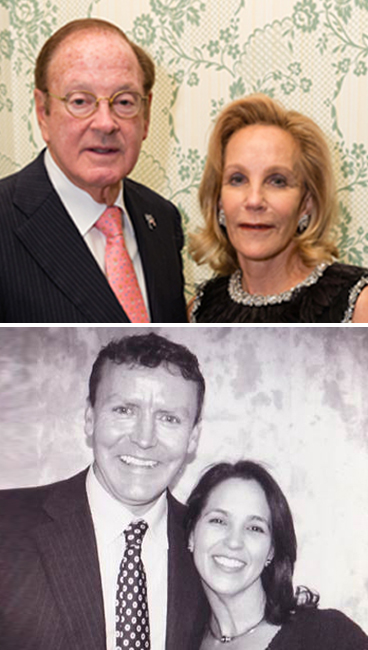
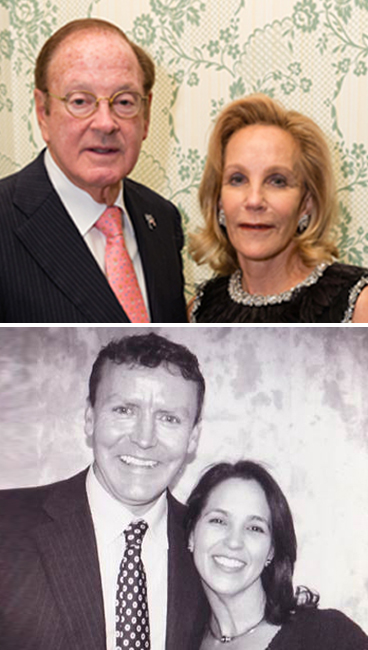
The National Liberty Museum is delighted to honor Bruce & Robbi Toll and Bill O’Flanagan & Michelle Toll-O’Flanagan as our 2018 Heroes of Liberty at the 19thAnnual Glass Auction and Gala on October 6, 2018. Bruce and Robbi have supported the NLM’s mission for more than 25 years. The Museum celebrates the Toll family’s legacy each year through our annual Awards of Valor program, a highly distinguished community recognition that was first launched with the Toll family’s generous support through Reedman-Toll Auto World. Each year, the Award has grown in stature and size. Today, the Awards of Valor program is in its 13th year and has honored thousands of police, firefighters and first-responders from throughout the Mid-Atlantic area. As President of Reedman-Toll, Bill has been integral in expanding the sponsorship of the Awards of Valor program from one dealership to more than 50 who make up the Philly Area Chevy Dealers LMA serving the Philadelphia area, Delaware and Southern New Jersey. Each year, Bill participates in the Awards Ceremony and bestows the honors on courageous heroes throughout our region. Congratulations to Bruce, Robbi, Bill, and Michelle—you are our heroes!
*For more information about Awards of Valor and all of the area Chevy dealers who generously support the program, visit our Hero Awards.

Painting By New Hope Artist John Folinsbee Brings $165,200 At Ahlers & Ogletree’s Signature Estates Auction Held Jan. 6 and 7 In Atlanta, GA.

River At New Hope,Painting.

The 1923 oil on canvas was the top achiever in an auction that grossed around $1.19 million.

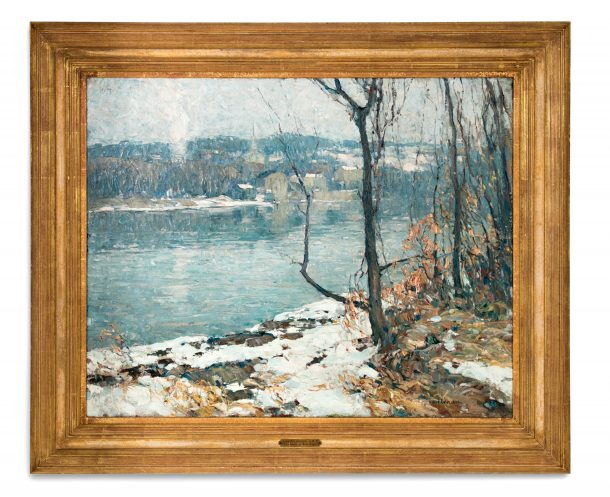
A 1923 oil on canvas painting by the noted American landscape artist John Fulton Folinsbee (1892-1972), titled River at New Hope, knocked down for $165,200, and an important 18kt gold, emerald and diamond necklace pendant found a new owner for $35,400 at Ahlers & Ogletree Auction Gallery’s annual New Year’s Signature Estates Auction held Jan. 6-7.

The two-day event, typically one of the bigger auctions on Ahlers & Ogletree’s calendar, was held in the firm’s gallery at 715 Miami Circle in Atlanta. More than 1,000 quality lots, mostly pulled from prominent local estates and collections, came up for bid in a sale that grossed around $1.17 million. A stout 460 people attended the auction in person, despite the cold winter weather.

John Folinsbee "River at New Hope" | Ahlers & Ogletree Auction Gallery

John Fulton Folinsbee was a member of the art colony at New Hope, Pa. He’s best known for his impressionist scenes of New Hope (the painting sold was an example), and Lambertville, N.J. River at New Hopemeasured 31 ½ inches by 37 ½ inches in the frame and came with a letter from Folinsbee to Hugh Richardson, the Atlanta collector who acquired the painting in 1924.

A determined phone bidder claimed the gold, emerald and diamond necklace pendant, made in 18kt white gold (25 grams) and set with 18 modern round brilliant cut diamonds (1.29 carat total weight), plus one rose cut diamond and six fancy shape diamonds. The pendant also boasted 19 cabochon emeralds (22.99 total carats) and one large faceted oval emerald (11.17 total carats).

Following are additional highlights from the auction. Internet bidding was facilitated by LiveAuctioneers.com (over 5,000 registered bidders, 1,027 bids placed); Invaluable.com (over 4,000 registered bidders, 1,314 bids placed); and bid.AandOAuctions.com (247 registered bidders, 312 bids placed). The 95 phone and absentee bidders combined to place 371 bids.

Session 1, on Saturday, January 6th, focused on American art, furniture, decorative arts, modern design, contemporary art and an important collection of black and white photography. Session 2, the following day, featured English and continental art, period antique furniture, antique lighting and textiles, and fine pieces of sterling silver. All prices quoted include the buyer’s premium.

The collection of black and white photographs included signed works by such luminaries as Robert Mapplethorpe, Joel-Peter Wiltkin, John Coplans, Jimmy de Sana, George Platt Lynes and others. A gelatin silver print signed by the renowned photographer Robert Mapplethorpe (Am., 1946-1989), titled Patrice (1977), dated and numbered (3 of 5) in ink, hammered for $14,880.

One lot combined photography with artwork. It was a mixed media charcoal on photograph self-portrait by Arnulf Rainer (Austrian, b. 1929), titled Stupid Prayers for Forgiveness (1976). The 25 ¾ inch by 30 ¾ inch work (in the frame) was signed, dated and inscribed and was previously exhibited at the Emory University Museum of Art & Archaeology in Atlanta. It brought $13,640.

William Picknell | Ahlers & Ogletree Auction Gallery

A collage of acrylic and charcoal on papers by Juliao Sarmento (Portuguese, b. 1948), titled Arena (1985), apparently unsigned and impressive at 69 ¼ inches by 59 ½ inches (framed), went for $19,360; and a late 19thcentury oil on canvas mounted on board by William Picknell (Am., 1853-1897), titled Coast of France, artist signed and 42 ¾ inches by 54 ½ inches, made $14,160.

A scarce set of “Black Shoulder” hand-painted French china designed by Van Day Truex (Am., 1904-1979) for Tiffany & Co., with all 103 pieces in the private stock set inscribed by Tiffany on the base, along with Atelier Le Talec marks, realized $12,400; while a large set of sterling silver flatware by Tiffany & Company in the Chrysanthemum pattern sold for the exact same amount.

In the furniture category, an English Arts & Crafts mahogany inlaid wing arm chair, made in the 20th century and from the estate of the historical and architectural author William R. Mitchell, Jr., breezed to $8,470; and a 19th century French Louis XV-style parquetry inlaid serpentine front commode made from satinwood, gilt metal and marble, unmarked, changed hands for $6,050.

Rounding out the auction’s primary achievers, a gorgeous Chinese Qing dynasty porcelain vase, 15 inches tall, fetched $3,025. The hand-painted famille rose enamel decorated tianqiuping bottle vase boasted a motif of peaches, birds, flowering vases, ruyi scepters and other precious objects. Made 19th century or a bit earlier, the vase was marked to the underside with double cobalt rings.

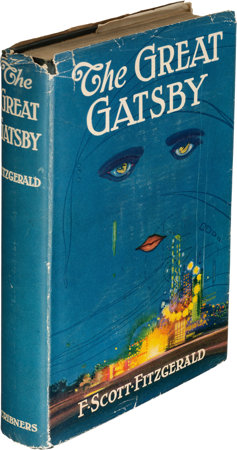
Inscribed First Edition of The Great Gatsby May Bring $100,000 at Heritage Auctions in New York

the great gatsbys

EXCLUSIVE VIDEO
Highlight Video: March 7 Rare Books Signature Auction

First edition The Great Gatsby Fitzgerald
Image by Heritage Auctions

Signed and Inscribed First Edition of F. Scott Fitzgerald’s The Great Gatsby may sell for as much as $100,000 in Heritage Auctions’ Rare Book Auction March 7 in New York. Signed, modern first editions are among the auction’s 600 lots, many from private collections, including a rare Inscribed Presentation Copy of J. D. Salinger’s The Catcher in the Rye (est. $20,000).

“‘Signed, first editions’ is the theme of this season’s auction,” said James Gannon, Director of Rare Books at Heritage. “We have the great fortune to offer many of the 20th century’s greatest novels signed by their authors. Nearly all come from private collections not seen at auction in decades.”

James C. Seacrest, a Lincoln, Nebraska, publisher and philanthropist, assembled the largest collection featured in the auction. Estimated to bring more than $440,000, all proceeds from the Seacrest Collection will be donated to charity, according to a family representative. 

The Seacrest Collection features the near fine, 1925 copy of The Great Gatsby, inscribed by Fitzgerald in 1939 for Tatnall Brown, a banker and former Dean of Haverford College. “The inscription reads ‘For Tatnall Brown / from one, who / is flattered at / being remembered / F Scott Fitzgerald / Hollywood, 1939,’ which reflects Fitzgerald’s deep and well-documented concern about his legacy as a novelist,” Gannon said. 

Additional signed modern editions from the Seacrest Collection also include copies of On the Road by Jack Kerouac (est. $8,000) and Vladimir Nabokov’s 1955 First Edition of Lolita (est. $4,000). Signed tomes by U.S. Presidents include Crusade in Europe by Dwight D. Eisenhower (est. $5,000) and a first edition of Whither Bound? by Franklin D. Roosevelt — an association copy inscribed by Roosevelt to his youngest son (est. $5,000).

Seacrest also sourced important volumes by Charles Dickens, including a signed and dated First Edition, Second Issue, of The Life and Adventures of Nicholas Nickleby (est. $25,000) and an 1843 First Edition of A Christmas Carol, which includes an envelope addressed in Dickens’ hand and signed by him (est. $15,000). The auction also offers additional copies of Dickens’ classics from the Collection of Daniel J. King, such as a set of Christmas books, including a third-person autograph note by the author (est. $15,000) and an unsigned, First Edition, first issue, of A Christmas Carol (est. $10,000). 

The King collection includes choice, first-edition examples of Ian Fleming’s Casino Royale (est. $10,000), an asbestos-bound copy of Fahrenheit 451 by Ray Bradbury(est. $7,000) and two scarce Audubon Prints: The White-Headed Eagle (est. $7,500) and an Uncolored Gannet (est. $2,500).

The auction also features the first time Heritage has presented a significant grouping of Continental, Irish and Latin American literature. The Continental section is anchored by The Marylin R. Duff Collection, featuring an important signed Holograph Manuscript by Jorge Luis Borges, circa 1926 (est. $20,000), Louis-Ferdinand Céline’s Voyage au bout de la nuit; a presentation copy of Anna Karenina, inscribed by author Leo Tolstoy (est. $10,000) and an inscribed copy of Unzeitgemässe Betrachtungen by Friedrich Nietzsche (est. $30,000). Rounding out the auction’s Continental, Irish and Latin American section offerings is one of just 150 first edition copies of Ulysses by James Joyce (est. $12,500). The section also presents what is considered among the most significant association copies in all of Latin American literature: A 1969 first edition of Pablo Neruda’s Fin de Mundo (est. $12,000), inscribed by the author for Chilean President Salvador Allende.

Additional highlights include: 

· Edward Lear’s Book of Nonsense(est. $15,000), which leads one of Heritage’s strongest offerings of Children’s and Illustrated Books to date.

· Samuel Johnson’s A Dictionary of the English Language (est. $7,000), from the second offering of books from a private St. Charles, Illinois, collection. 

· Beautiful copies of Winnie-the-Pooh (est. $6,000), Finnegan’s Wake (est. $6,000) and a first edition copy of William Faulkner’s Go Down, Moses (est. $6,000), which was limited to 100 copies.

Heritage Auctions is the largest fine art and collectibles auction house founded in the United States, and the world’s largest collectibles auctioneer. Heritage maintains offices in New York, Dallas, Beverly Hills, San Francisco, Chicago, Palm Beach, London, Paris, Geneva, Amsterdam and Hong Kong.

George Washington Signed Book A $138,000 Bestseller At Case’s Jan. 27 Auction

KNOXVILLE, Tenn.— A trove of historical books, documents and silver tied to George Washington and other Revolutionary War heroes helped Case ring in 2018 with one of its most successful sales to date. 4500 registered bidders from more than 60 countries participated in the January 27 auction at the company’s gallery in Knoxville, and 95% of the lots sold.

Leading the auction was an important book, owned and signed by George Washington and given to his friend and biographer, the U.S. Supreme Court Chief Justice John Marshall (1755-1835). Published in 1789 by printer and patriot Isaiah Thomas, the leather-bound Volume 1 of The Massachusetts Magazine contained an account of Washington’s first inauguration as President, plus his memoirs, and Washington’s coat-of-arms engraved bookplate. The intriguingly personal piece of presidential ephemera surged to $138,000, shattering its $28,000-32,000 estimate (all prices include the buyer’s premium). The anonymous buyer bid via telephone, competing against 7 other phone bidders and multiple online suitors, including institutions and some of the nation’s leading book and manuscript dealers and collectors.

The book was found by dealer and consultant Carl Schow in the estate of Charles Boyd Coleman, Jr. of Chattanooga, Tennessee. Coleman was a direct descendant of Justice Marshall, and his family tree also included General Henry Dearborn and General Elias Dayton, along with distinguished Civil War soldiers on both sides of the conflict. Company president John Case likened the discovery of material from the estate to “finding a time capsule full of pivotal moments from American history” and noted that more objects from the estate will be sold in Case’s summer auction.

Justice Marshall’s personal copy of his biography of George Washington (second edition, 1832) reached $21,600 (est. $5,000-7,000), and a 1799 letter from George Washington to John Marshall congratulating him on his first election to public office tallied $19,200 (est. $12,000-14,000). A George II silver sauceboat, which descended in the John Marshall family with oral history of having a connection to Washington, served up $11,040. It bore a coat of arms attributed to the Bassett family, and likely belonged to Martha Washington’s niece, Fanny Bassett, who lived at Mount Vernon until her untimely death in 1796. It was accompanied by a velvet remnant said to have come from George Washington’s coat. John Marshall’s signed four-volume set of Plutarch’s Lives, published by James Crissy in Philadelphia,1825, brought $18,600, and Marshall-signed letters to his son and wife brought $4,560 and $4,320 respectively. A full-length oil portrait of Marshall hammered at $16,640. It is one of seven known portraits of Marshall by William James Hubard (Virginia, 1807-1862); all are nearly identical to the Hubard portrait currently in the collection of the National Portrait Gallery. From the same estate, a Joseph Loring Federal silver cup with engraved initials for General Henry Dearborn (1750-1829) brought $3,240, while a military appointment signed by Gen. Dearborn and President Thomas Jefferson realized $3,120. An 1834 Andrew Jackson signed document conferring the rank of Major to Captain Greenleaf Dearborn marched to $2,176. An archive of material related to Marshall descendant, Lt. Col. Lewis Minor Coleman (CSA, Virginia, 1827-1863), including a tintype photo of Coleman in uniform, charged to $10,240, while Coleman’s bird’s eye view print of the University of Virginia, lithographed by Edward Sachse, landed at $11,264. A Civil War-era Annin & Co. flag unfurled at $5,520. It had been the property of Dearborn descendant Charles H. Boyd, who served the Union during the Civil War as chief topographical engineer for Gen. Henry Thomas.

Applause broke out in the saleroom when the only known lifetime painting of stallion Bonnie Scotland and groom, Robert Green, of the famous Nashville plantation and thoroughbred farm “Belle Meade,” crossed the finish line at $48,000 (its top estimate). The artist was Herbert Kittredge, a promising equine artist whose career was cut short by his death in 1881 at the age of 28. Bonnie Scotland’s progeny included War Admiral, Man O’War, and Seabiscuit, and his descendants are still winning races today, including the 2014 Derby Winner and 2016 American Horse of the Year, California Chrome.

“It was an especially significant painting because of the depiction of Robert Green, a slave at Belle Meade who stayed on as a paid employee after the Civil War,” commented Sarah Campbell Drury, Case’s Vice President of Fine and Decorative Arts. “His likeness reminds us of the often-forgotten role of African Americans to the sport of racing in the 19th century.”

The winning bidder, Belle Meade Plantation (now a house museum and historic site open to the public in Nashville) nosed out underbidders on the telephone and internet, after launching a campaign among supporters and on social media to raise money to buy the painting. A portrait of another Belle Meade horse, “Springfield,” by Thomas Scott (Kentucky, 1824-1888) raced to $7,920 (est. $3,400-3,800), selling to an anonymous phone bidder. Two museums competed against a dealer bidding by phone for a painting by William Frye (Alabama, 1822-1872) depicting an unnamed African American man standing in front of an edition of the Louisville Commercial newspaper (known for its anti-slavery leanings). Despite some tears to the canvas, it hammered down to one of the museums for $15,000. (The same institution also purchased a rare sampler made by an African girl in an English missionary school in Sierra Leone for $3,840). A folky early 19th century portrait of a little girl in a painted chair, descended in the Moran family of Middle Tennessee, blew past its $1,000-1,200 estimate to $8,640. Other Southern paintings of noted included a painting of a house by New Orleans artist James Michalopoulos, $5,040; a large house paint on wood panel painting of a dancing woman by Mose Tolliver, $4,096, and a Tennessee landscape by Thomas Campbell, $1,140. Memory paintings by Helen LaFrance (Kentucky, b. 1919) ranged from $1,320 for a still life to $6,240 for a detailed Church Picnic scene. A Carroll Cloar self-portrait lithograph titled “The Ingredients” sold for $3,480 against a $500-600 estimate, and a Charles William Smith woodcut of a Charleston, SC graveyard rested at $1,920.

European Art included Hans Zatzka oil of two partially nude women in a lavish, Orientalist style interior. It sold to a Middle Eastern buyer for $20,480, more than double its estimate. A portrait of a far more conservatively dressed 17th century noblewoman, attributed to the circle of Cornelis De Vos, sold to an overseas buyer for its top estimate, $7,936, while an early 19th century Dutch floral still life by Jan Van Doust flourished at $3,328. A painting of cats by Austrian born animal painter Carl Kahler purred to $6,720, and a Berlin style hand-painted porcelain plaque of a sleeping cherub rested at $4,560. An unsigned 18th century portrait of a well-dressed English gentleman sold for $3,000, and a portrait of a peasant girl in a floral wreath by William Oliver the Younger earned $2,560.

Sculpture included a 36” Victor Issa bronze of a nude woman, $4,608; Erte bronzes Melisande, $3,360 and Heat, $3,072; a Raymond Coins stone tablet carved with Adam and Eve motif, $2,400; and a Tim Lewis carved limestone Noah’s Ark, $1,920.

20th century fine and decorative arts met with avid interest, particularly a George Nakashima walnut credenza, which attracted 8 phone bidders and lots of internet interest, propelling it to $25,600 (est. $5,400-$5,800). Two vivid abstract watercolors by Beauford Delaney (American/Tennessee, 1901-1979), from the artist’s estate, achieved $15,000 and $7,440, while an archive of Delaney letters and paintbrushes drew $4,800. A Picasso Madoura “Visage” ceramic plate brought $7,936 and an Alexander Calder signed lithograph, “Homage to Ben Shahn,” doubled its estimate at $2,880. A Baker “Abalone” chandelier based on a mid-mod Tony Duquette design lit up at $5,632 and a vintage Abercrombie & Fitch leather footstool, in the form of a rhinoceros, trampled its $700-900 estimate to hit $2,688. A group of 3 Clyde Burt Art Pottery items made $1,320.

Several bidders craved a rare Middle Tennessee Sheraton sugar sideboard, pushing the price to $19,800 (est. $5,400-5,800). A Hepplewhite inlaid chest of drawers with deep top “bonnet” drawers, attributed to South Carolina, soared to $18,000, and an East Tennessee desk and bookcase tallied $16,200. An unusual Western Pennsylvania high chest, adorned with what John Case called “a tour de force of inlay,” reached $9,600; an inlaid Hepplewhite style chest of drawers attributed to the Lexington, KY shop of Porter Clay fetched $7,920; and an inlaid sideboard attributed to South Carolina served up $7,440. An English Regency secretary cabinet with ebonized trim including paw feet and sphinx decoration, from the Maple Grove Estate of Knoxville and featured in a Southern Living magazine article on the home, sold for $9,600, while a Chippendale carved tea table with birdcage, possibly from Philadelphia, earned $5,520.

Pottery, a staple at Case, included one of the earliest pieces to surface from “Dave,” an enslaved but literate artisan at the Lewis Miles Pottery of Edgefield, South Carolina. The double handled jar, inscribed LM and dated 1840, achieved $7,920 (est. $5,000-7,000). Other Southern related objects included a James LaFever Tennessee stoneware jug, $3,840, and a John Fashauer Kentucky stoneware jar, $2,280.

Textiles included an 1832 Kentucky house sampler by Eliza Pearson of Nelson County, $6,144, and a circa 1860 Tennessee pictorial sampler featuring a horse and rider, $3,120.

It was a good sale for jewelry and silver. The star jewelry lot was a 3.13 carat oval brilliant cut diamond ring, F color, VS1 clarity, with GIA report, which realized $36,000 (est. $24,000-28,000). An Art Deco platinum ring with two mine cut diamonds (approximately 1.4 carats) and twenty channel set sapphires sparkled at $6,960, and a Georgian 18K diamond bangle bracelet wrapped up $4,096. A set of five 22K yellow gold matching bangle bracelets sold for $2,816. A Kirk Repousse pattern 6-piece tea service including kettle sold for $11,040 (est. $8400-8800), while a Baltimore coin silver Repousse Monteith bowl with scenic design hammered down at $4,096. A George III Sterling Epergne brought $6,912, and a Continental silver figural griffin jug climbed ot $4,864. A large Old Sheffield meat dome with warming stand was a hot seller at $6,960, and a Whiting Sterling overlaid ruby glass biscuit jar quadrupled its estimate at $6,240. A Southern coin silver collector claimed a coin silver agricultural premium goblet with inscription for the 1858 Noxubee Fair in Mississippi, to $4,080, while a Bailey & Co. Victorian sterling ewer competed to $3,120, and a set of five Manchester sterling juleps with horseshoe decoration raced to $1,560.

Maps and documents, many from the estate of the late Dr. Benjamin Caldwell, enjoyed success as well. An 1834 set of working copies of the Tennessee State Constitution with margin notations, suggesting it was used during the Constitutional Convention, sold to an institution for $5,280, and an 1830s engraved tripartite view of Nashville, cut from an extremely scarce map by J.P. Ayres (only two copies are known to exist), shot to $3,120 against a $300-350 estimate. A J. Russell 1794 Kentucky map sold for $3,328, while a 1748 “New Map of Georgia” by Emmanuel Bowen tripled its estimate at $3,240. A Civil War letter archive related to the family of Rep. Francis Burton Craige of North Carolina brought $2,160.

A collection of 28 Chinese jade buckles, sold in multiple lots, brought a total of $30,556. Other Asian decorative arts included a Qing red lacquer armchair, $4,864; a Qing carved hardwood games table, $3,328; and a group of 3 Yixing teapots, $2,400. An archaic form bronze jue served up $2,880, while a bronze tree of life turned into a lamp made $2,880 and a Meiji bronze warrior figure prevailed at $1,536.

Two mechanical music collections struck a chord with buyers. Top lots included a Swiss music box on stand with interchangeable cylinders, $5,120; a Swiss Music Box with inlaid burlwood case and bird and bee strikers, $4,096; and a George Baker Troll Co. cylinder music box, $2,400. And a scarce Lyon and Healy harp shattered its $1,000 high estimate to hit a surprise high note of $18,600.

Other interesting objects included a scarce lithographed tin advertising tray and 4 glasses from the short-lived Alabama Brewing Co. (Birmingham, 1897-1908), $2,816, and a W.T. and C.D. Gunter Jack Daniels No. 7 clear glass whiskey bottle, $1,920; a Western Union Model 2825 3-A Ticker Tape with stand, $5,376, and a Solomon Reed full stock percussion long rifle, .40 cal., $5,280. A set of Baccarat gilded crystal bowls and tazzas earned $5,120, and a French gilt bronze table screen with enameled interior scene closed at $4,352.

NewsFile | Dadaist Zines, A Mega Vessel, Death of the Art Museum + More

Welcome to NewsFile, your weekly round-up of newsy tidbits and happenings from the world of contemporary ceramic art and contemporary ceramics. We begin our week with some sobering statistics regarding art museum attendance.

Museum Attendance Declining

Art and culture museums may be in trouble. Attendance in many museums across the U.S. is falling, but the reasons why aren’t so clear, Hyperallergic reports citing statistical evidence coming out of the scene in Baltimore.

Mary Carole McCauley, a reporter for the Baltimore Sun has recently written about precipitous declines in attendance, citing drops in annual attendance at the Baltimore Museum of Art of 12.7% in the last 15 years, at the Walters Art Museum of 24.1% from a peak of 195,000 visitors in 2008, and at the Reginald F. Lewis Museum of Maryland African American History & Culture, which has seen attendance sink 53% from the opening-year high of 104,500 visitors.

The sobering numbers find corroboration nationwide conveying a narrative of museum-going being on the downtrend.

She writes that “the National Endowment for the Arts reports attendance at art museums dropped 16.8 percent — even as the population grew by more than 33 million people, and museums began offering free admission.” It’s not clear to me where these statistics originate. McCauley cites a National Endowment for the Arts report that shows that 18.7% of US adults visited an art exhibition in a museum or gallery in 2015, as opposed to 26.5% in 2002 — which is a drop of only 7.8% not 16.8%.

Surface Design Show

The UK’s upcoming Surface Design Show (London, February 6 – 8, 2018) presents the latest materials for architecture and interior design, Dezeen writes adding it’s the only event to focus solely on interior and exterior surface materials such as ceramic tile.

This year’s event will see over 170 exhibitors present “the very best” in surface design, from hand-crafted surfaces to the latest technological advances in architectural lighting.

Giant Vessel Structure Nears Completion

Construction on British designer Thomas Heatherwick’s Heatherwick Studio’s monumental Vesselstructure, is expected at its full height, Dezeen writes.  Made up of 154 interlinking honeycomb staircases, the structure will form the centerpiece of New York’s Hudson Yards development and will highlight views of the up and coming  area.

The steps are arranged in layers that widen from a hexagonal base that measures 50 feet (15 metres) in diameter to a top layer that is 150 feet (46 metres) across.

Hot off the Press: Dadaist Zines Celebrate Centennial

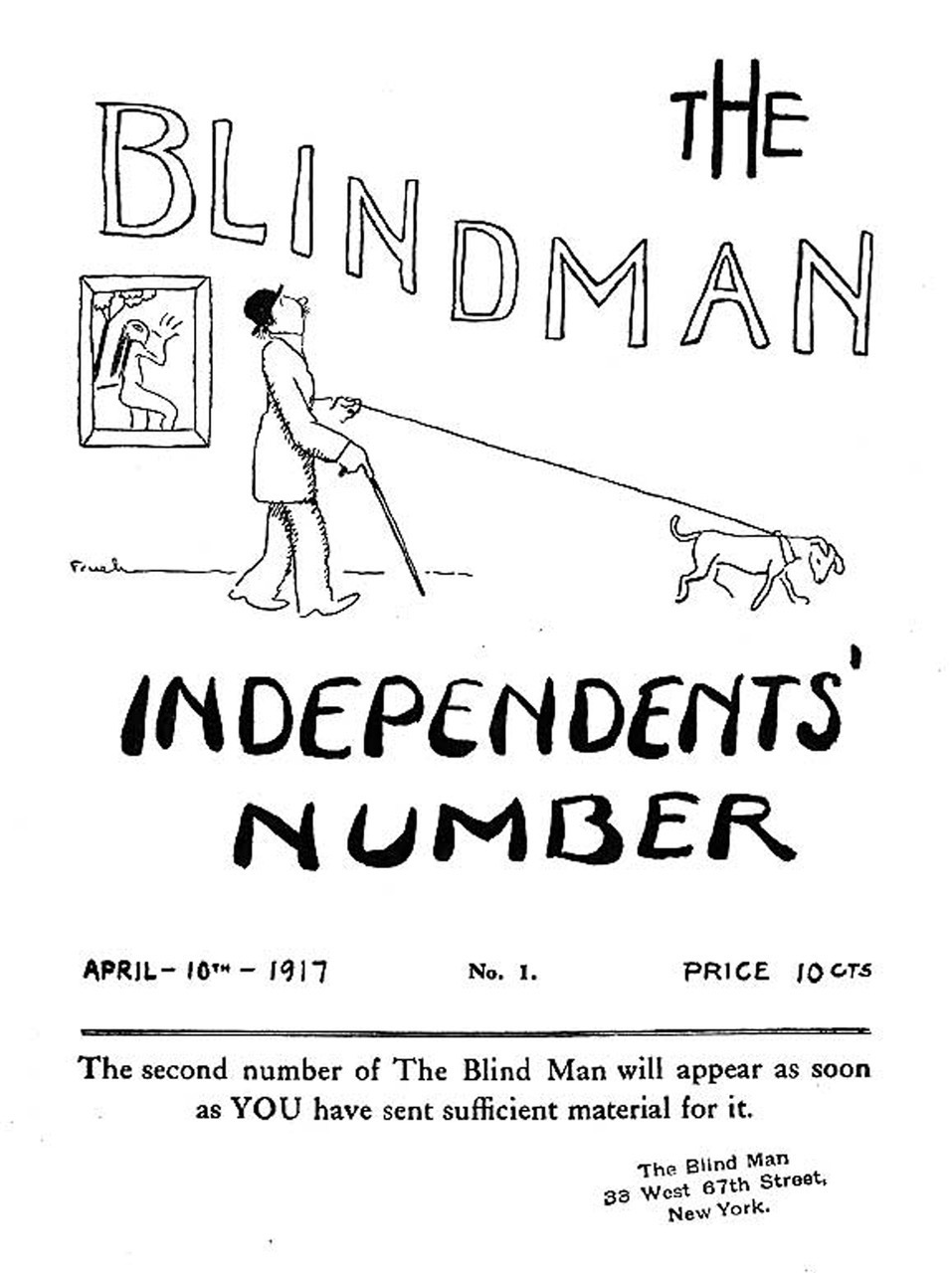
As part of the Dada centennial celebrations, Ugly Duckling Presse has released a limited-edition, boxed-set of the two facsimile editions of the small art journal The Blind Man titles The Blind Man: New York Dada, 1917, Hyperallergic writes.

The Blind Man and rongwrong were seminal New York Dada magazines edited and published by Marcel Duchamp, Henri-Pierre Roché, and Beatrice Wood in 1917. This facsimile edition, introduced by Sophie Seita, celebrates the 100th anniversary of their publication. The box set also includes a two-color offset reproduction of Beatrice Wood’s poster for The Blind Man’s Ball (1917) and a letterpress facsimile of Man Ray’s The Ridgefield Gazook (1915). Translations of the French texts by Elizabeth Zuba accompany the facsimile reprints.

2018, Shopping Feature, Forgotten New York, ‘1st Avenue Upper East Side’

2018, Shopping Feature, Forgotten New York, ‘1st Avenue Upper East Side
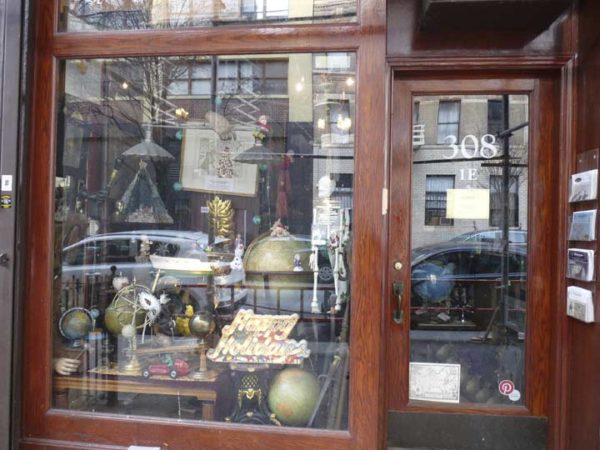
George Glazer Gallery window

Forgotten New York
“1st Avenue, Upper East Side”
January 21, 2018

A contributor to the website Forgotten New York, whose mission is to call “attention to the artifacts of a long-gone New York” wrote an account of a walk down First Avenue on the Upper East Side. Among the observations are this paragraph and these photos of the storefront of the George Glazer Gallery:

You can pretty much find anything you want in NYC and you can pretty much operate any kind of business you want, provided you have enough money to keep up with the exorbitant rents. I passed this storefront at #308 West 94th and found all manner of interesting knickknacks* in the window of the George Glazer Gallery, which specializes in antique globes and maps. It was closed on this Sunday, but a look online finds a quirky place chockablock with collector’s items.

*The only word in English I can think of with a silent double k

From the Desk of Angie Lawson

Preparation

In a rare solitary moment at the end of the day in our office, I am able to forget about the “task” of work and walk around the gallery, appreciating the beauty of this job. We have the best interior designer, moving crew, Director of Operations, auction day staff, consignors and buyers. How it all comes together each month is a work of art in and of itself.

My social media accounts demand attention all day long with merchandisers and resellers posting
photos of their offerings. But no one can come close to the professional presentation, or preparation, completed by our staff, or the high quality of the items our sellers entrust to us. Many of our staff, buyers and consignors have been around this company since before Darin and I have. It is a joyfully humble and peaceful feeling to be able to say that all of this happens because of the years of experience they have, as well as their dedication and work ethic.

We are ALWAYS on deadline. It may often seem that we are hustling around our customers on auction day, but the reason we do it is to make sure that our consignors and our buyers have the best experience possible. We, for a moment, don’t take for granted the amount of trust our sellers have
placed in us, nor do we undervalue our buyers. We have so many wonderful customers.

Each and every month, I look forward to seeing you, if only a glance in my hustle. Don’t think for one moment that you didn’t just make my day by being here!