Rare Militaria, Western & Native American Collectibles To Be Auctioned On Friday, May 10

Native American collectibles

GLENDALE, Ariz. (May 6, 2019) – A large collection of rare militaria, western and Native American collectibles dating from the Civil War through World War II will be sold during a specialty auction at 6 p.m. on Friday, May 10 at EJ’s Auction & Appraisal.

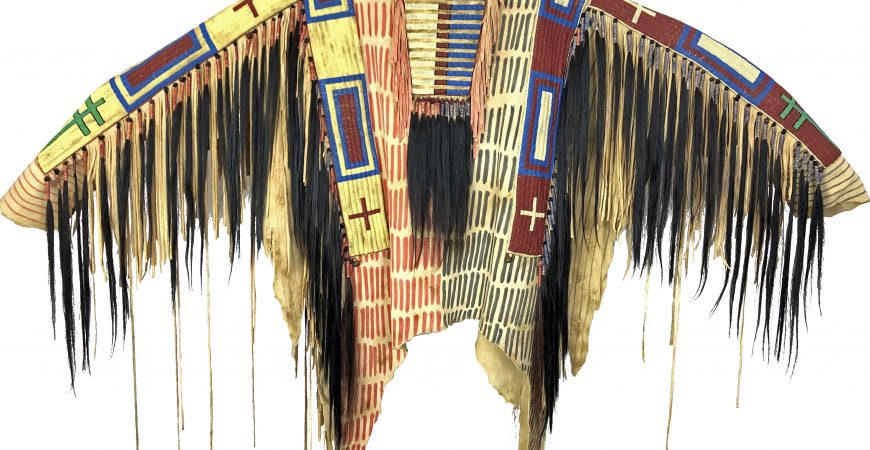
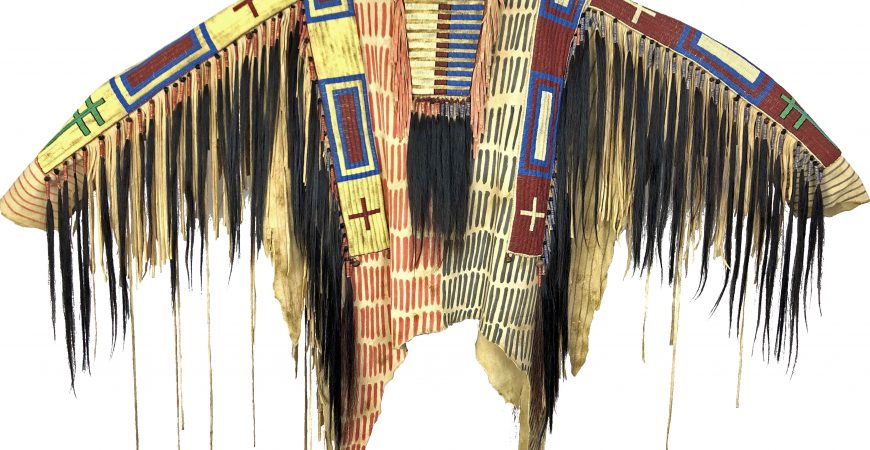
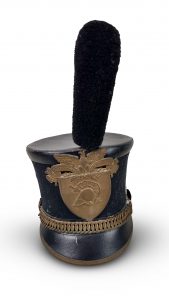
“With the exception of a few pieces, the collection belonged to one man who loved everything relating to the Wild West,” said Erik Hoyer, owner of EJ’s Auction & Appraisal. “He was a big fan of General Custer and he took great care of his collectibles, which included Civil War uniforms, swords, a vintage Plains Indian beaded deer hide war shirt, a circa 1880 U.S. Cavalry dress helmet, a vintage Native American turkey feather headdress and more.”

A free preview will take place Wednesday, May 8 through Friday, May 10 from 9 a.m. to 5 p.m.

“Our online bidding is already heating up, with the most interest for the Plains Indian beaded deer hide war shirt,” Hoyer said. “It features human hair “scalp locks” and horse hair tassels and is in very good condition.”

Hoyer also encourages bidders to come to the auction house Friday night.

“While online bidding is convenient, bidding at our auction house not only gives you the chance to examine items before you place your bid, but you’ll pay less with a lower buyer’s premium fee,” he said.

EJ’s Auction & Appraisal is located at 5880 W. Bell Road, in Glendale on the northeast corner of 59th Avenue and Bell Road. The auction house conducts weekly Saturday auctions starting at 10 a.m. in three rings. Online bidding is also available. For details, visit www.ejsauction.com or call (623) 878-2003.

EJ’S Auction & Appraisal Partners With Goodwill To Help Local Charities Throughout The Year

 School Connect was a recipient of more than $2,700
School Connect was a recipient of more than $2,700

GLENDALE, Ariz. (May 3, 2019) – Every Saturday, EJ’s Auction & Appraisal is bustling with bidders who purchase estate items both live at the full-service Glendale auction house or online. Items range from Picasso paintings to pots and pans, but sometimes items just don’t sell. On Sundays, Goodwill of Central and Northern Arizona sends a truck to EJ’s to pick up the excess items that didn’t sell.

But it doesn’t stop there. EJ’s and Goodwill have worked out a unique arrangement where Goodwill weighs the donated items that didn’t sell at auction and then donates 10 cents per pound to local charities each quarter.

The idea came to life when William McCulloch, EJ’s floor setup manager, approached Joe Barba, Goodwill’s senior donation drive coordinator, to inquire how the two organizations could collaborate to help other non-profits in the community.

“William has been spearheading EJ’s charitable programs, and he is passionate about helping others, especially kids,” said Erik Hoyer, owner and auctioneer of EJ’s Auction & Appraisal. “We’ve been pleased with Goodwill’s capacity to accept our donated items, and the fact that they then turn around and donate a percentage back to our local community speaks volumes about the good work they do.”

Barba said the partnership with EJ’s aligns with Goodwill’s mission to empower individuals, strengthen families, and build stronger communities.

“Goodwill is committed to ending poverty through the power of work and promoting a sustainable environment,” Barba said. “All donated items help drive our vision as we offer no-cost career services where Arizonans can develop their digital skills, connect with career advisors, and meet directly with hiring employers. Every year, Goodwill diverts nearly 200 million pounds of materials from going directly into Arizona landfills.”

The unique partnership has helped several non-profits, such as School Connect, which was presented with a check for $2,762. The Arizona-based non-profit works with hundreds of schools in Maricopa County and is expanding to serve other counties throughout Arizona. They are beginning to work with some six other cities across the country, helping schools to build partnerships with the faith community, local businesses, universities, non-profits, and community leaders.

“We’re very grateful to both Goodwill and EJ’s for this very generous donation,” said Jill Hicks, School Connect’s director of business partnerships. “Funds like this help us to share our model of community engagement through online tools and training.”

Thanks to a unique partnership between EJ’s Auction & Appraisal and Goodwill of Central and Northern Arizona, the non-profit School Connect was presented with a check for $2,762 at EJ’s auction house in Glendale.

Pictured (left to right): William McCulloch, floor setup manager for EJ’s Auction & Appraisal; Jill Hicks, director of business partnerships for School Connect; Joe Barba, senior donation drive coordinator at Goodwill of Central and Northern Arizona; and Erik Hoyer, owner/CEO of EJ’s Auction & Appraisal.

EJ’s Auction & Appraisal is located at 5880 W. Bell Road in Glendale on the northeast corner of 59th Avenue and Bell Road. Doors open on Saturdays at 9 a.m. with the auctions starting in three rings at 10 a.m. A free preview takes place from 9 a.m. to 5 p.m., Wednesday through Friday. In addition, bidders can preview and bid on items online. To learn more, visit www.ejsauction.com or call (623) 878-2003.

To learn about Goodwill of Central and Northern Arizona’s donations centers and retail stores, visit www.goodwillaz.org or call (602) 535-4000.

For details about School Connect’s services and school partnership opportunities, visit www.schoolconnectaz.org or call (602) 496-0215.

Prices Can Soar For Aviation Memorabila

Aviation Memorabila

Earlier this month, we had a specialty auction on a Friday night that focused on aviation memorabilia. As expected for a niche auction like this, the crowds were smaller than our weekly Saturday auctions, and many bidders were registered online.

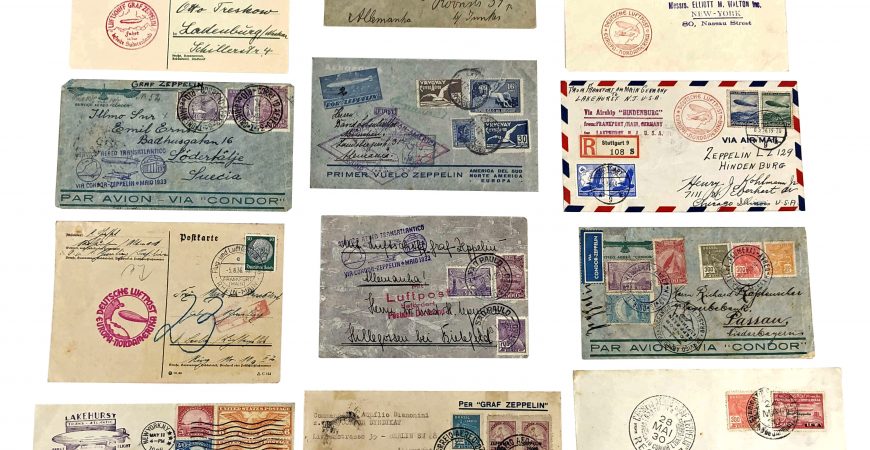
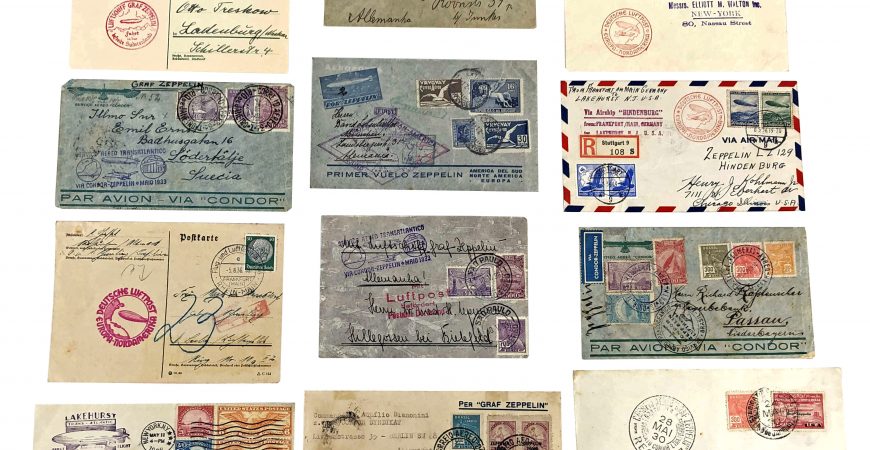
I was fascinated with this collection from the moment it came into our auction house. There were several hundred items that belonged to a former commercial airline pilot who also served as a fighter pilot during his service with the U.S. Air Force. His rare collectibles included military and commercial air mail envelopes and stamps, a large collection of old photographs, with some signed by pilots, black and white press photography, Hughes Airwest flight attendant uniforms, vintage luggage tags, porcelain signs, airplane dash instruments, model airplanes and more.

At the start of the auction, we had a bidding war for a binder of 60 foreign air mail stamp covers from all over the world, which hammered at $1,000. Each vintage envelope told a story of its journey throughout Europe, and in some cases, to the United States. Most had multiple stamps and postal markings. The stamp covers were protected in plastic sleeves and in good condition.

Why so much interest in a binder full of old, stamped envelopes? It appealed to both stamp collectors and collectors of aviation memorabilia. Air mail in the U.S. didn’t officially start until 1918, though the first authorized mail flight took place in 1911 in Mineola, New York. And when air mail did begin through the Post Office Department, it was the military that provided the air mail service…at least until private companies got involved.

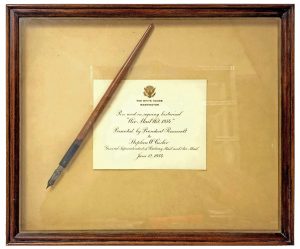
Another item that did well was a framed 1934 Air Mail Act fountain pen that realized $800. The pen was used in the signing of the historical “Air Mail Act 1934” and presented by President Franklin D. Roosevelt to Stephen A. Cisler, General Superintendent of Railway Mail and Air Mail. This was another cool piece of history as it related to a scandal involving President Herbert Hoover’s postmaster general, Walter Brown. It’s worth reading the history behind how this historic piece of legislation came about.

And speaking of Stephen A. Cisler, a stamped postage cover addressed to him from the Pan American Clipper flight crew in Guam hammered at $500. Sent on October 16, 1935, the envelope was signed by the flight crew, which included Fred Noonan, who was Amelia Earhart’s navigator when she disappeared in 1937.

This collection was full of aviation history, and some of the most interesting stories were revealed through old black and white photography. One piece that did well, hammering at $425, was a binder of 60 World War I and World War II British Royal Airforce press photographs.

While not our largest auction, this aviation memorabilia auction was one I won’t forget. It was clear that the late former pilot was passionate about collecting, and it was an honor to represent his estate.

TimeLine Auctions Free Presentation

‘Auctions and Anecdotes’ by Tim Wonnacott

Tim’s career spans 25 years at Sotheby’s and 15 years in the media spotlight including the BBC Antiques Road show and Bargain Hunt. Tim will look at some of the objects and experiences encountered along the way.

From a tender age, when he would watch auctions at his family’s saleroom in Devon, Tim Wonnacott aspired to follow his father into the antiques trade. His first experience of conducting an auction was at the age of sixteen, when he auctioned the contents of a kitchen to conclude a farm sale! After qualifying as a Chartered Surveyor and a Chartered Auctioneer, he trained in Fine and Decorative Arts at the V &A, before taking a position at Sotheby’s in 1978. By 1985, he had risen to Director, overseeing Sotheby’s operations in the North-West, and in 1998 was appointed Chairman of Sotheby’s South saleroom in Sussex. From 2001 to 2003, he held this position concurrently with the role of Chairman of Sotheby’s new Kensington saleroom in Olympia.

Tim’s initial expertise was developed in Sotheby’s furniture department, although a lifetime’s experience in the field has given him a broad-ranging scope of experience across the decorative arts, including in ceramics and silver. After leaving Sotheby’s in 2003 to focus on developing his media career, Tim launched his fine art and brokerage business Tim Wonnacott and Associates, through which he and his colleagues provide independent advice to buyers and sellers of art and antiques.

Tim appears regularly on Antiques Roadshow, and, since 2003, has presented BBC One’s Bargain Hunt. His other television appearances include BBC One’s Restoration; The Great Antiques Hunt, Antiques Roadtrip, and The Divine Michaelanglo, as well as Top Gear!

Once described by the Daily Telegraph as ‘Sotheby’s Finest Auctioneer’, Tim puts his saleroom skills to philanthropic use by conducting high-profile charity auctions. The most notable of these was London’s ‘Cow Parade’, raising more than £400,000 for Childline. His most recent ‘Cow Parade’ auction, on the Isle of Man, raised over £100,000 in the presence of Prince Andrew

Influence of Ethnic Art in Europe

The number of objects and the establishment of museums dedicated to Ethnic Art led artists from the emerging avant-garde, at the beginning of the 20th Century, to focus on the expressiveness of objects from Black Africa.

Henri Matisse and Pablo Picasso were some of the first artists who were seduced and influenced by those artistic expressions, and everyone knows the obvious influence of African masks on the characters’ faces in “Demoiselles d’Avignon” by Picasso.

The Ethnographic Museum of the Trocadéro was created in 1878 in Paris, and it was mainly there where young avant-garde artists nourished their curiosity.

Particularly in France, other museums were created, such as the Museum of Man, the Arts and Civilizations, the Museum of Arts from Africa and Oceania and the Dapper Museum in Paris. In the same vein, there is the Museum of African Art in Lyon (belonging to a religious congregation) and the Museum of African, Oceanian and Amerindian Arts, founded in Marseilles at the end of the 20th Century. At the same time, the Museum for the Belgian Congo was established in Belgium in 1910, promoted by King Leopold II, to house a large number of objects from its main colony.

Sculptures and other items of Ethnic Art

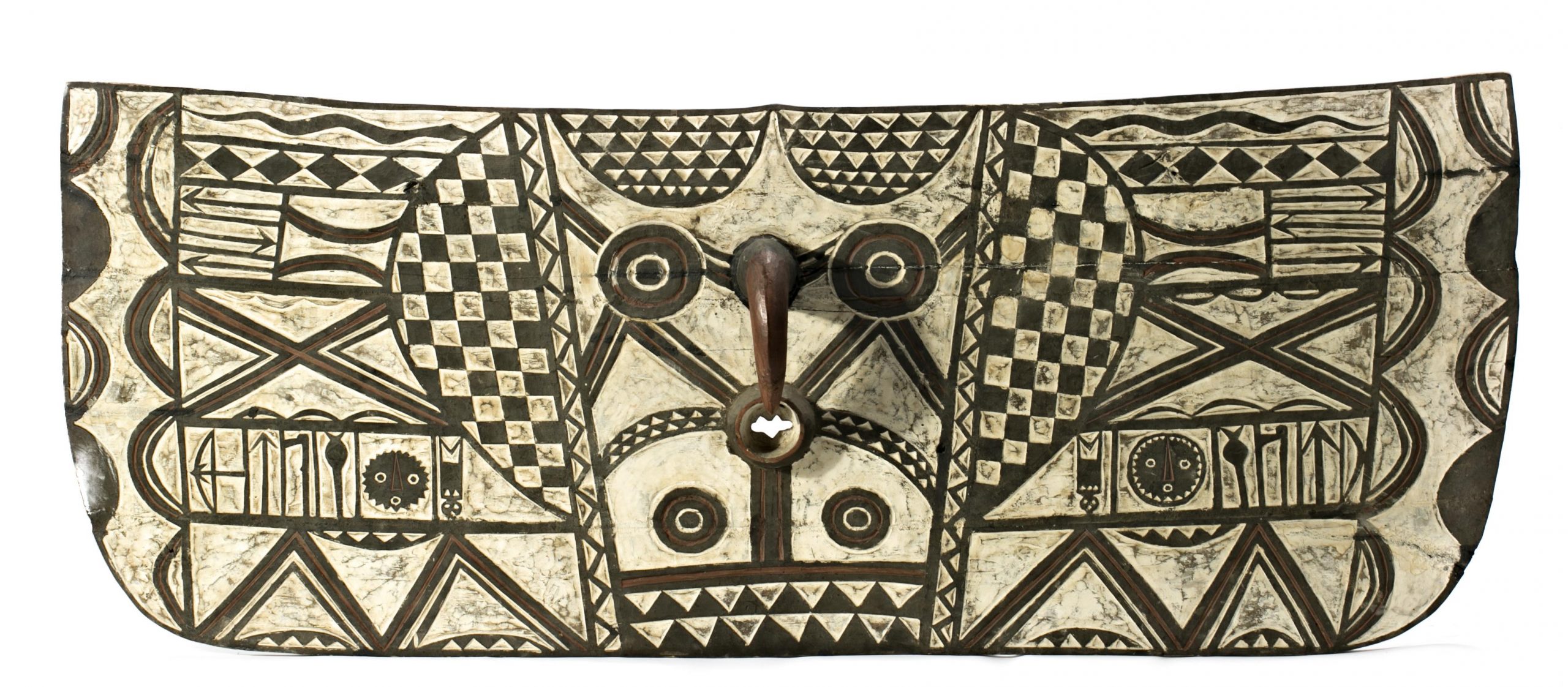
The most important part of ancient Ethnic Art are sculptures (mostly in bronze) from the Kingdom of Benin, which were mostly made during the 15th and 16th centuries. However, pieces on the market are basically of the 19th and 20th centuries, since these objects survived everyday’s use and customs with difficulty. Most of the items were made of wood, especially sculptures, but also masks, spoons or furniture, which were useful and have their own features depending on the ethnic group in which they were created.

The use of patina and wear and tear give a special and more authentic value to those objects. An important aspect when it comes to calculate the age of African works of art is to know the traceability or origin of those works. Certainly, those who arrived in Europe, from the Congo to Belgium or from other colonies to their metropolis, and whose origin is documented, have many more guarantees of records. However, the progress in the study of African art in recent decades offers more and more guarantees of knowledge and cataloguing of such an interesting art, which is different from other cultural traditions. This allows more pieces to arrive at art auction houses.

The birth of the Child Jesus in the Antiques Auction

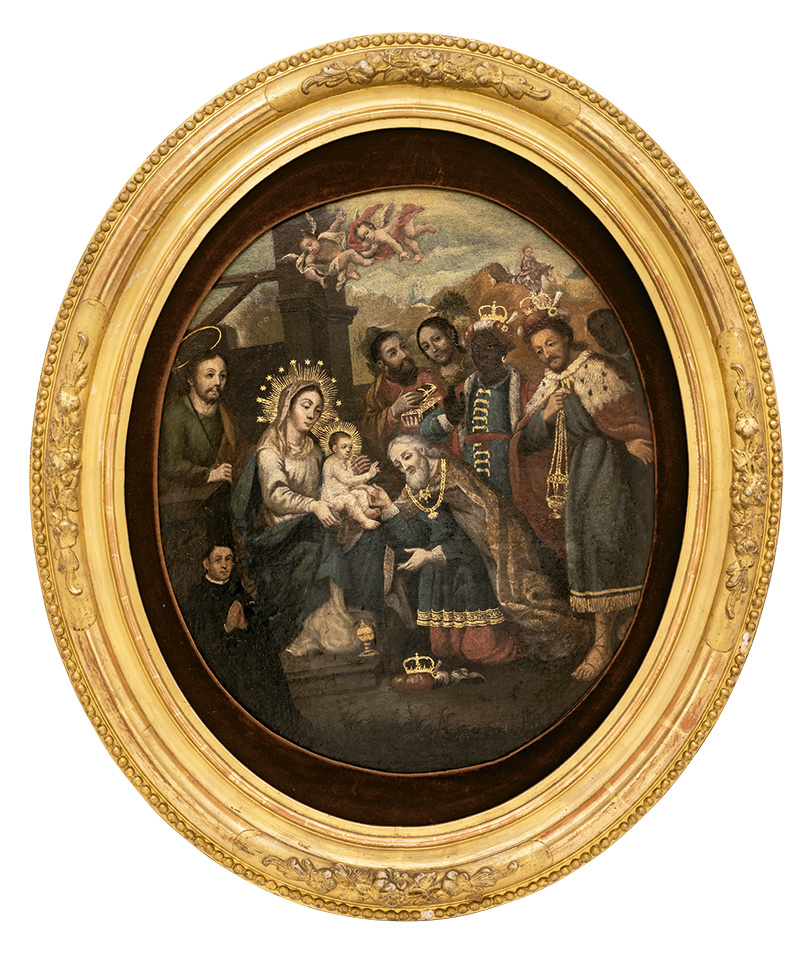
The birth of the Child Jesus has been a recurring theme in the painting since the beginning of Christianity, it is one of the main events in the Christian Liturgical calendar together with the Passion, Death and Resurrection; It has been the task of the artists of different times to spread these messages, the theme has been represented in three ways: the nativity, the adoration of the kings and the adoration of the shepherds, it was until the 15th century where the Baby Jesus passed to being the center in the composition, in all existing forms of representation the intimacy of the scene and the unimportant presence of Joseph coincide.

In the next Antiquities Auction of the month of January 2019, we will have exceptional representative pieces of the Nativity of the Child Jesus, where the representation of the Holy Family is executed in a harmonious, serene and balanced manner; where the most illuminated part of the picture gives the protagonism sought to the Child Jesus, the cherubs are placed in the upper part of the picture and next to the Holy Family, the wise men filled with gifts to the newborn.

We look forward to participating with us in the auctions of the Department of Antiques of 2019, where in addition to art pieces we will have an important section of national and international silverware, we invite you to be aware of our website and social networks to know soon the complete catalog.

From Cave Paintings To 3D Drawings

The earliest strokes were made in prehistoric times: cave paintings such as those in the caves of Altamira or Nerja. The main purpose of those drawings was to express and transmit images of human everyday’s life. This fact was always present to a greater or lesser extent during the following centuries. There are endless examples of artistic drawings in the subsequent centuries, from those by Chinese dynasties to Egyptian papyri and the magnificent Islamic manuscripts.

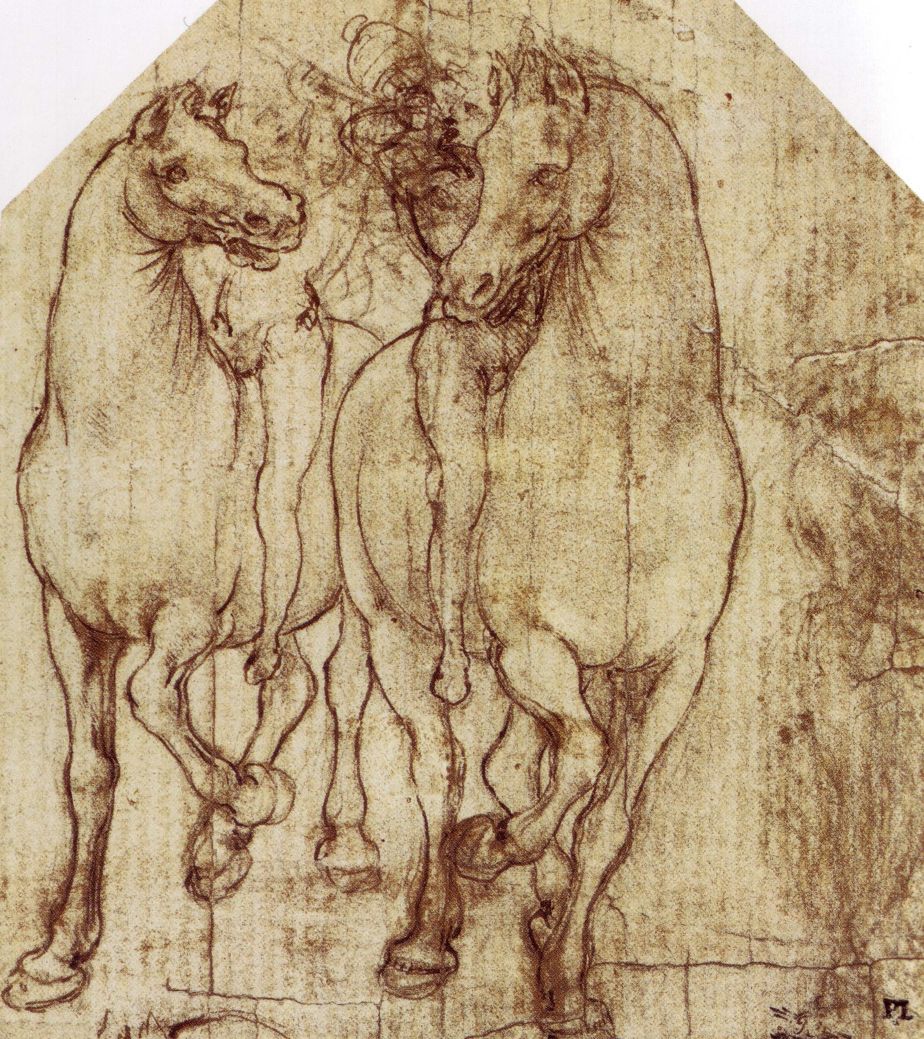
Renaissance was a turning point, in which drawing emerged and reached its maximum splendour. Accuracy with regard to the representation of reality was linked to concepts such as proportion canons, directly inherited from Greek and Roman tradition. Those, combined with a new precision and attention to detail, gave rise to drawing’s masterpieces, some of which can be found in Balclis’ drawing and painting online auctions. Many of them were created by great Italian masters, such as Raphael, Leonardo da Vinci or Michelangelo. For the first time, measures and perspective games dominated over purely aesthetic aspects, in the shape of endless studies, elevations and architectural plans.

Drawing and painting

There is no doubt that drawing always remained closely linked to painting in a symbiotic attitude. In the 17th Century, this relationship developed into a fierce conflict where for the first time colour and drawing were openly confronted. On the one hand, there were those who advocated for drawing as an intellectual symbol, led by Poussin and Charles Lebrun, who was the director of the Royal Academy of Fine Arts in Paris. On the other hand, those who defended an absolute triumph of colour and the agile brushstroke that appealed directly to emotions, led by Rubens.

Over the following centuries, drawing was always present in the artists’ production, in terms of notes or sketches and, to a certain extent, increasingly disconnected from painting, which evolved towards looser and freer lines, in movements such as Impressionism. In the 20th Century, new challenges for drawing arose: fashion figurines, caricatures or comics began to enjoy great success. But maybe one of the highlights was the creation of cartoons by Walt Disney, which was the basis of today’s digital world and gives us a vision of how drawing becomes contemporary art.

Supports and materials

Traditionally associated with paper and cardboard as a support, throughout its long history, drawing has used numerous materials, ranging from the early examples of cave murals to methacrylate and, of course, canvas. Similarly, the most common drawing materials are ink or charcoal, due to their plasticity and ease of use, although pastels, pure pigments or watercolour drawings are equally popular. Today, in a fully digitalised world, computer drawing and 3D creations are the last links in a long chain which brings together from cave paintings to Renaissance perspectives.

The Sandra Clements Estate Auction

The Sandra Clements Estate Auction

THE LIFETIME COLLECTION OF SANDRA CLEMENTS, THE REVERED ANTIQUES DEALER, AUCTIONEER AND INTERIOR DESIGNER, WILL BE HELD APRIL 27th-29th BY J. GARRETT AUCTIONEERS, ONLINE AND AT THE GALLERY IN DALLAS, TEX.

Start times all three days are 12 noon Central. Day 3, April 29th, will have online bidding only.

DALLAS, Tex. – The lifetime collection of Sandra Clements – for the past forty years one of the South’s most formidable figures in the antiques, auction and interior design trades – will be sold over the course of three days, April 27th thru 29th, by J. Garrett Auctioneers, online and in the gallery at 9203 Diplomacy Row. April 29th will be online only, via www.LiveAuctioneers.com

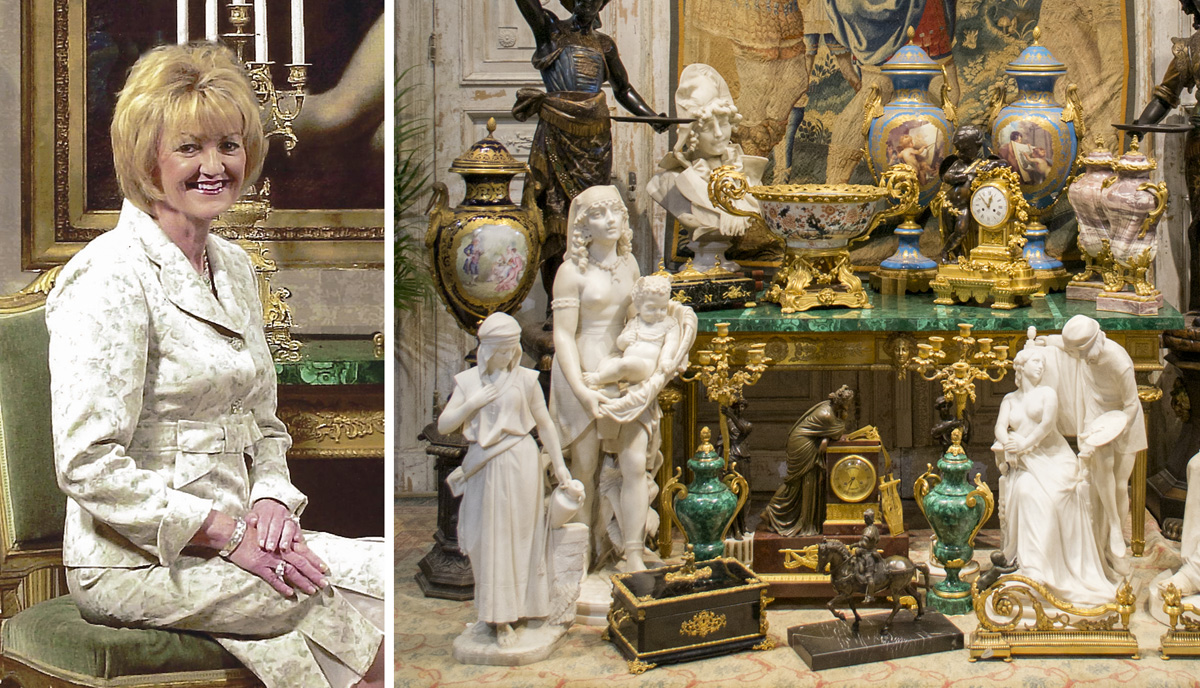
The sale will be packed with a fabulous assortment of boulle, palace-size Sevres vases, sterling silver, a nice collection of Imari, Meissen, Baccarat chandeliers and accessories, Lalique pieces, religious paintings, blackamoors, bronzes, unique lighting, mirrors, great garnitures, paintings (many of them large) and a wide array of superb Italian statues, sculptures and life-size bronzes.

Co-headlining the event will be the antiques collection of Dr. Marianne R. Hopkins, who amassed a fine collection of American cherry and pine case pieces, wonderful clocks, Blue Willow, primitives and nice early paintings. Start times all three days are 12 noon Central time. Online bidding the first two days will be provided by LiveAuctioneers.com and Invaluable.com.

Sandra Clements honed her craft at an early age under the tutelage of her father, the iconic antiques dealer Charles W. Clements, Sr. Over time she became one of the South’s first and most respected female antiques auctioneers. She established her own antiques business in Destin, Fla., during the mid-1980s, where her large showroom was known as the Emerald Coast’s finest shop.

Mrs. Clements’ business acumen was well-known from New York to London, where she excelled in all aspects of the antiques trade. She also became known as one of the South’s finest interior designers and appointed many fine homes in Florida, Georgia, Alabama, Virginia and California. Now, her entire corporate collection, and much of her personal collection, will come up for bid.

Stunning marble statuary will be led by a museum-quality carved marble grouping of a young woman playing a lyre harp with two children at her side, by American sculptor Albert Weinert (1863-1947), 78 inches tall signed on the base and dated 1924 (est. $40,000-$80,000); and a highly detailed Carrara marble grouping of Pharaoh’s daughter holding the infant Moses in a blanketed basket by the 19th century Italian sculptor Biggi Fausto, signed (est. $6,000-$15,000).

Several marble sculptures signed by Ferdinando Vichi (Italian, 1875-1945) will come under the gavel, including a turn of the 20th century white marble sculpture of a young woman in a laced dress holding a vessel and standing alongside a water well, 37 inches tall (est. $8,000-$12,000); and an early 20th century grouping of a parlor scene depicting a young woman in an elegant pose as she converses with an artist holding palette and brushes, 35 inches tall (est. $7,000-$10,000).

Fans of malachite (the opaque semi-precious stone having layers of deep and light green) will be treated to a rare antique French gilt-bronze console table with a malachite top, circa 1900, crafted in the Louis XVI style with appliques across the frieze and centered by a highly detailed caryatid mask (est. $12,000-$18,000); and a pair of circa 1880 Russian malachite urns, 21 inches tall with a narrow neck and of ovoid form, with gilt-bronze leaf fashioned handles (est. $4,000-$6,000). 

Following are just a few more of the many other fine items in the auction:

An antique French boulle (decorative inlay, using tortoiseshell and fine strips of brass) credenza, museum-quality and in immaculate condition, with the two doors featuring symbolic cherub images, 47 inches in height by 44 inches wide (est. $6,000-$8,000).

A rare 19th century American pedal harp by J. F. Browne Co. (New York), crafted of bird’s-eye maple with gold-gilt trim and highlights, finely carved in a Gothic motif with raised figures on sided columns and supported by large claw feet (est. $3,000-$4,000). 

A large antique pair of Italian carved and lacquered blackamoor figures, of a man and a woman dressed in ceremonial garb with gold-gilt trim and accents, each one holding a tazza with a horn an acanthus leaf fashioned stem, 75 inches tall (est. $4,000-$8,000).

“This is, without a doubt, one of the finest collections we’ve offered to date,” said Jeff Garrett, president of J. Garrett Auctioneers. 

As a youngster, Sandra Clements eagerly tagged along when her parents traveled to New England and Europe on buying trips. Later, as an adult, she amassed her own fine collection of antiques, marble sculptures, oil paintings and objects of art.

Now approaching retirement, Mrs. Clements has chosen to share her collection at public auction. The majority of items will be sold without reserve to the highest bidder. Previews will be held Wednesday thru Sunday, April 24th-28th, from 9-5 Central time, in the gallery at 9203 Diplomacy Row in Dallas. In addition to live and internet bidding, phone and absentee bids will be accepted.

Garrett Auctioneers, Ltd. is a full-service auction company with over fifty years’ combined auction experience in the antiques field. The firm specializes in estate auctions and works with private individuals, trust and estate attorneys and family executors to offer a comprehensive approach to all aspects concerning an auction. J. Garrett also purchases entire estates outright.

Garrett Auctioneers utilizes the latest internet technology to promote sales to a live and online worldwide audience of qualified buyers. The firm is always seeking quality consignments for future auctions. Interested parties can fill out a form online, or they can call 214-943-7801 for a free, no-obligation assessment; or, they can send an email to [email protected].

Clear Your Clutter Day And Clean Your Room Day Could Prove To Be Lucrative

Cleaning…decluttering…some people dread it, and it’s not surprising that a recent study published in Current Psychology found a substantial link between procrastination and clutter problems in all age groups

Cleaning…decluttering…some people dread it, and it’s not surprising that a recent study published in Current Psychology found a substantial link between procrastination and clutter problems in all age groups.

Sometimes, though, what appears to be old junk can hold value. There’s no better time to find out than during Clear Your Clutter Day on Friday, May 3 and National Clean Your Room Day on Friday, May 10.

“Don’t assume that just because something is old, ugly, tattered or missing a part, that it’s worthless,” said Erik Hoyer, owner of EJ’s Auction & Appraisal. “You’d be surprised at what people collect and what they’re willing to pay for. We start our bidding at $10, but I’ve seen some items that were deemed as ‘junk’ sell for hundreds, and sometimes thousands of dollars.”

Hoyer shared seven examples of items that could hold value:

Mid-Modern Furniture: Think 1950s Herman Miller Eames chairs and anything Danish modern teak…this style is popular and highly sought after depending on the designer. The better the condition, the better the value. In addition to Herman Miller, brands that do well at auction include Heywood-Wakefield, Finn Juhl, and Edward Wormley.

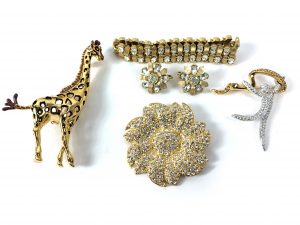
Costume Jewelry: This style of vintage ornamentation that originated in the 1920s and exploded in the 1950s could be worth a lot of money depending on the workmanship and materials. Some brands that do well at auction include Weiss, Eisenberg and Lisner.

  • Art That’s Out of Sight: That painting that’s been collecting dust in the closet or garage could be valuable. Check the painting for marks or signatures and check the back for sales receipts or exhibition stamps. These can help an appraiser determine the provenance and value of the painting.

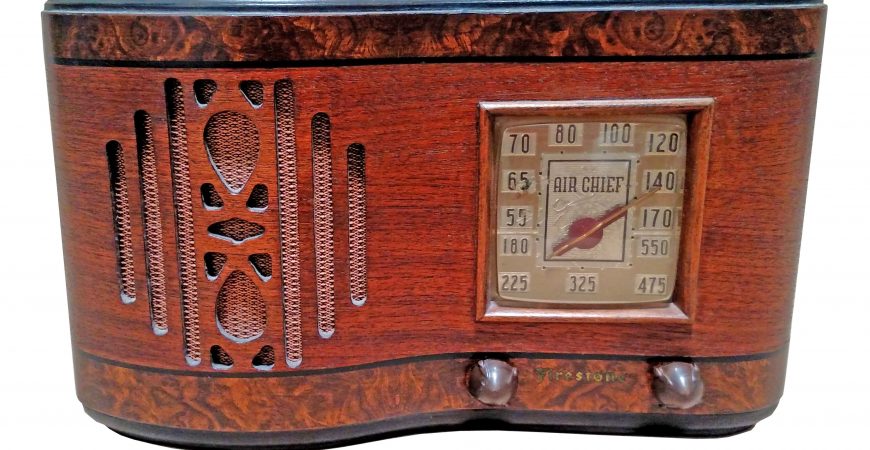
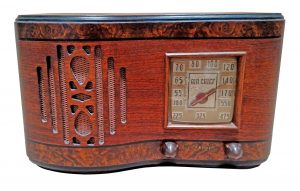
Old Audio Equipment: Old radios, jukeboxes, speakers, tube amps…the list of antique and vintage audio equipment in demand is extensive. Keep in mind that it doesn’t have to be in perfect condition, and sometimes collectors are interested in the parts.

Vintage Toys: Demand is high for old, collectible toys in good condition, especially those that are more than 40 years old. Examples include vintage Star Wars toys, Hot Wheels toy cars, Lionel trains, PEZ dispensers, Masters of the Universe action figures from the 1980s and old friction toys.

  • Black & White Photographs: Antique and vintage black and white photographs can be of high value. Scarcity, condition and the identity of the photographer all affect the worth of the photo.

Military Items – Some military items, such as military patches, ribbons, uniforms and weapons, are in high demand and may sell for a high price at auction.

EJ’s Auction & Appraisal is located at 5880 W. Bell Road, in Glendale on the northeast corner of 59th Avenue and Bell Road. The auction house opens for a free preview from 9 a.m. to 5 p.m. Wednesday through Friday. Doors open on Saturday at 9 a.m. with the auctions starting at 10 a.m. in three rings. Online bidding is also available. For details, visit www.ejsauction.com or call (623) 878-2003.

Stanley Kubrick Memorabilia Auction: 24,000 Euros For The Jacket From The Shining

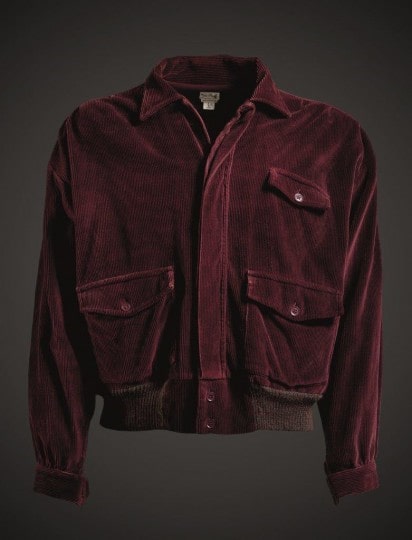
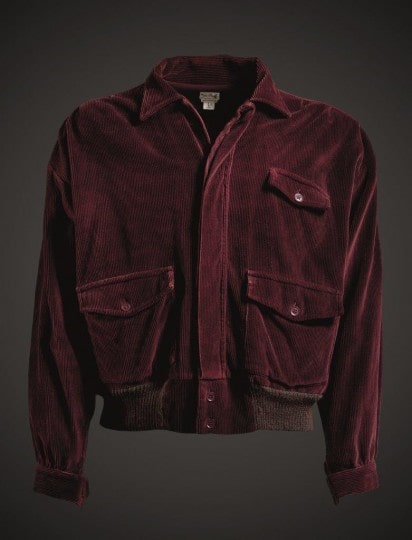
Jack Torrance’s jacket in The Shining was sold by Aste Bolaffi for 24,000 euros (including buyer’s premium). After a long battle of Internet bids, a Californian collector won the jacket included in the cinema auction dedicated to Stanley Kubrick. The burgundy velvet jacket, one of the most iconic stage clothes in film history, was the top lot of the sale. Many enthusiasts and curious participants attended the auction of Emilio D’Alessandro’s collection, the director’s long-time assistant, and over one hundred bidders participated from all over the world, especially from the United States.
The most iconic set props were highly sought-after, in particular: the rug with an optical design from the Colorado Lounge in the Overlook Hotel, where the crazy main character “works” on his novel, sold to an American buyer for 16,250 euros, and the long film fragment of “The Shining” given to D’Alessandro by the director, which sold for 8,100 euros.
Kubrick’s military jacket sold for 12,500 euros and his membership card for the “Writers Guild of America”, the American union for screenwriters, was a great success, rising from a starting price of 1,000 euros to a final price of 16,250 euros. The collection of signed letters from the director achieved very good results as well, in particular “The last mail pickup”, the last message written by Kubrick to Emilio, in which the director admits that he is very sad that Emilio will soon return to Italy, was sold for 2,000 euros.
The auction ended up with over 75% of lots sold, and a total of over 130,000 euros (including buyer’s premium).