Jacopa Vignali (Prato Vecchio 1592-1664 Florence)

Jacopa Vignali (Prato Vecchio 1592-1664 Florence)

JACOPO VIGNALI (PRATO VECCHIO 1592-1664 FLORENCE)
David with the Head of Goliath
oil on canvas
113.5 x 87.5cm (44 11/16 x 34 7/16in).
Footnotes
Provenance
With Pennington Museum Treasures, Los Angeles, 1976
Private Collection, California

Exhibited
California State University, Northridge, California, Collection without walls: problems in connoisseurship, October – November 1976, curated by Dr Jean Luc Bordeaux (as by Cristofano Allori)

This striking, freshly discovered depiction of David and Goliath has been independently proclaimed by the foremost authorities in their field to be a ‘masterpiece’ by Jacopo Vignali, one of Florence’s leading artists of the early 17th century. We are grateful to Professor Francesca Baldassari for identifying this work on the basis of colour photographs as ‘a masterpiece by Jacopo Vignali datable to around 1624 on the basis of other monogrammed and dated works by him of the period, such as the Drunkenness of Noah in the National Gallery in Prague’ (see fig. 1). This is an opinion that was corroborated, furthermore, in a recently unearthed letter to the late owner, dated 3 July, 2003, from Professor Mina Gregori, that refers to this ‘splendid painting with “David with the head of Goliath”‘ of which ‘I firmly think that the painter is Jacopo Vignali, one of the best Florentine painters of the XVII century.’ With reference to the painting’s prior attribution to Cristofano Allori, she writes that ‘this painting is one of his [Vignali’s] masterpieces.’ Professor Gregori continues: ‘You can recognise Vignali from the light, very different from Cristofano and more naturalistic, coming from different experiences: And the boy is his usual model.’ Both the dramatic composition and outstanding quality of this work represents the height of Vignali’s achievement as a representative of a school of painting that valued so highly the importance of disegno.

The subject of David and Goliath has inspired some of the greatest works of art of all time, including Donatello’s and Michelangelo’s sculptures, which Vignali will have been familiar with in his native Florence. There the subject symbolised the courage and resilience of the small city state (and subsequent Grand Duchy) in the face of the larger rising nation states that surrounded it. Florence was all too aware of the threats that encompassed her and consequently David was a perfect symbol of the liberty and freedom of the Florentine people, capturing the unwavering courage, unexpected strength, and historic perseverance that they saw in themselves. Traditionally, David had been portrayed after his victory, triumphant over the slain Goliath. Florentine artists like Verrocchio, Ghiberti and Donatello all depicted their own version of David standing over Goliath’s severed head; while Michelangelo and Donatello instead, chose to represent David before the battle.

The account of the battle between David and Goliath is told in Book 1 Samuel. Saul and the Israelites were facing the Philistines near the Valley of Elah. Twice a day for 40 days, Goliath, the champion of the Philistines, came out between the lines and challenged the Israelites to send out a champion of their own to decide the outcome in single combat. Only David, a young shepherd, accepted the challenge. Saul reluctantly agreed and offered his armour, which David declined since it was too large, taking only his sling and five stones from a brook. David and Goliath thus confronted each other, David hurling a stone from his sling with all his might which hit Goliath in the centre of his forehead: Goliath fell on his face to the ground, and David then cut off his head. By vanquishing sin David had made Israel safe; his unwavering faith in the face of war, and his subsequent rough path to kingship marked him as a hero; he was further admired for his Psalms, while his righteousness and repentance were extolled consistently throughout the Renaissance and Baroque period. When Saul tried to kill David, not once but several times, David never returned such an attempt, possessing virtues which Italian princes desired for themselves. As a king, David was quick to administer justice to those who deserved it and quick to welcome in outcasts, such as Jonathan’s lame son. He defended his kingdom rigorously and victoriously. As a man, David was favoured by God, talented, handsome, and he rose to power at a young age. He was the pre-cursor of Christ, and a symbol of pious perfection. David’s image was the perfect commission for a prince of the Church wanting a constant reminder of faithfulness and redemption, or for a secular prince, wanting a public and readily recognizable symbol of power and fidelity.

Jacopo Vignali trained under Matteo Rosselli, entering his studio in Florence around 1605 at the age of only thirteen; in 1616 he joined the Accademia del Disegno becoming an academician in 1622. Although Rosselli was to have a lasting influence on his pupil’s oeuvre, Vignali gradually evolved his own style distinguished by dramatic light effects, rich colour, painterly technique and a particularly poetic and emotional interpretation of his subjects. His most famous pupil was Carlo Dolci, who was profoundly affected by the intensity of his religious works. Thus Vignali has himself here put a new contemporary interpretation on this subject, employing his and his fellow early seventeenth century Florentine’s celebration of rich and colourful fabrics in the use of contemporary costume in depicting a biblical scene, along with the innovative pictorial drama that Caravaggio had recently made popular throughout Italy, and subsequently Europe. Caravaggio had himself treated the subject three times, between circa 1605 and 1610 in masterpieces which are now respectively in the Prado, Vienna and the Villa Borghese. The masterful way in which Vignali handles the paint, the remarkably delicate modelling of the flesh tones and the theatrical elegance of his simple composition illustrate not only Vignali’s particular style, but also the broader trends within Florentine painting at the time. Unpublished until now, this canvas is a rare and significant addition to the oeuvre of Jacopo Vignali, who has been regarded as the foremost painter of the Florentine Seicento.
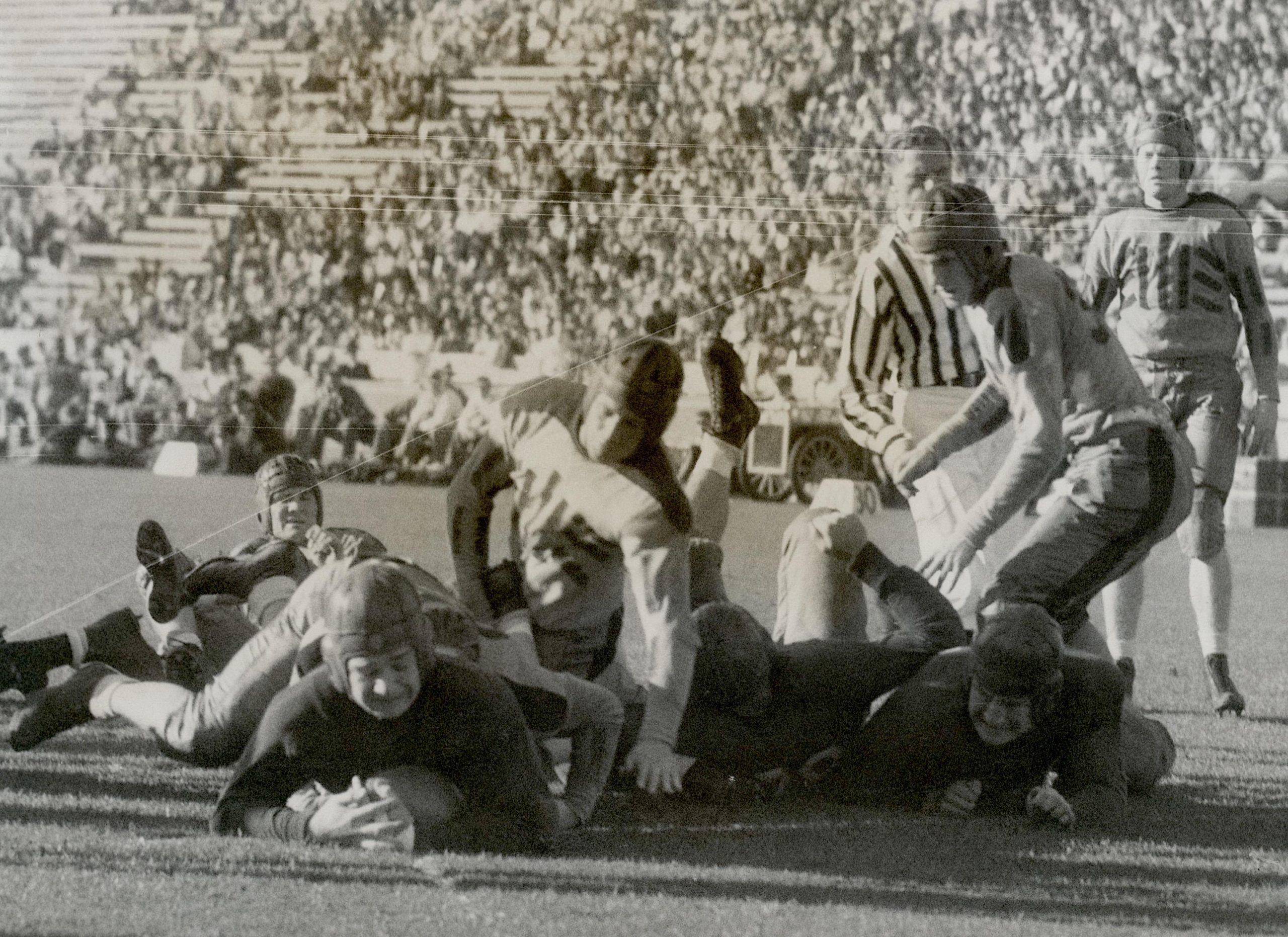
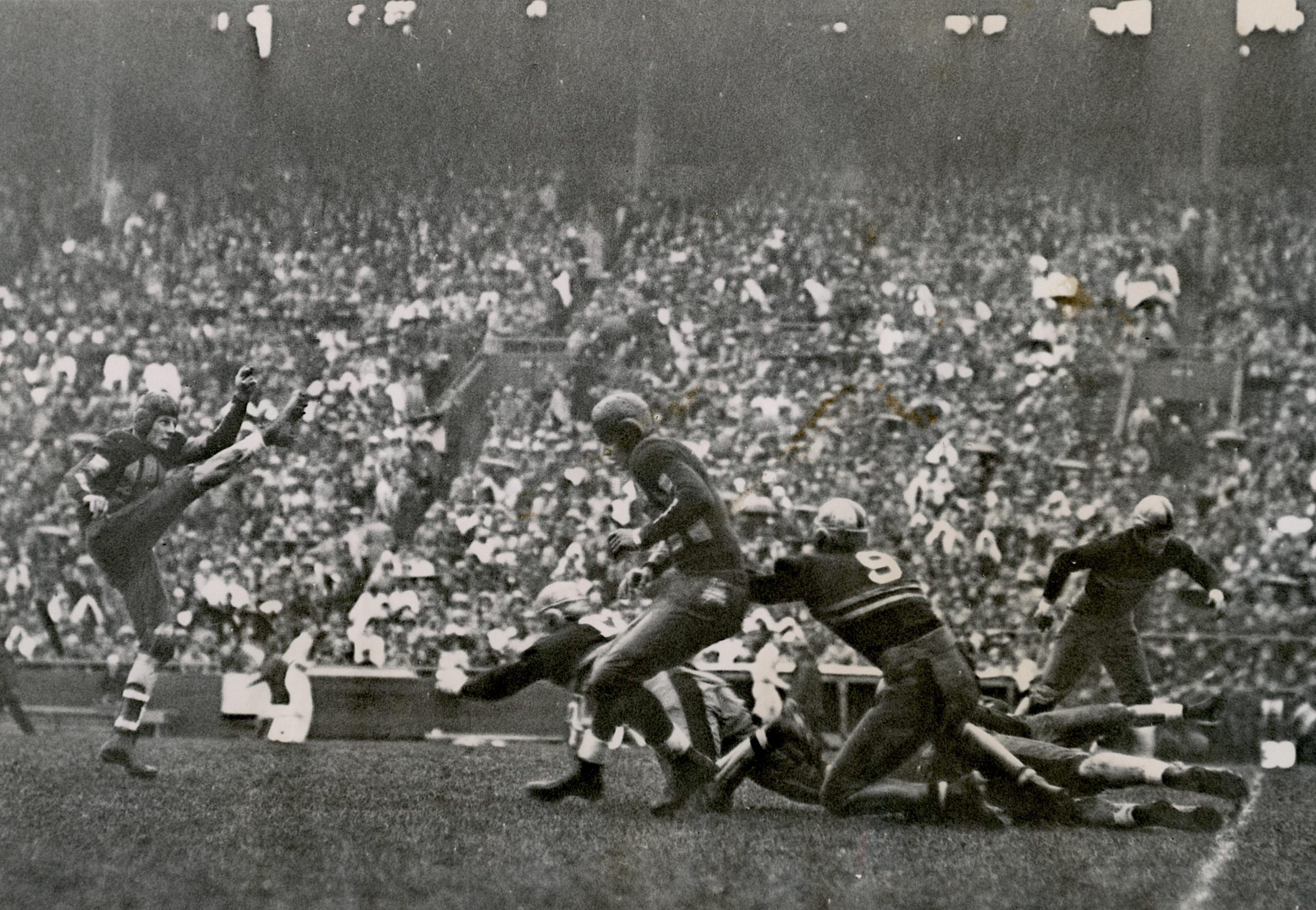
Historical Photo Football Kellog vs St. Mary 1933

Historical Photo Football Kellog vs St. Mary 1933

Historical Photo Football Kellog vs St. Mary 1933:

AMERICAN HEROES DURING 1920s – 1930s: College football fully came of age in the 1920s, when it became widely recognized as America’s greatest sporting spectacle. As college football thrived, professional football struggled for respectability. The NFL was formed in the year 1920 with 11 teams. Today American Football is the most popular sport to watch in the United States.

DIMENSIONS: The paper dimensions are Approx: 7″ X 9″ (small variances can occur).

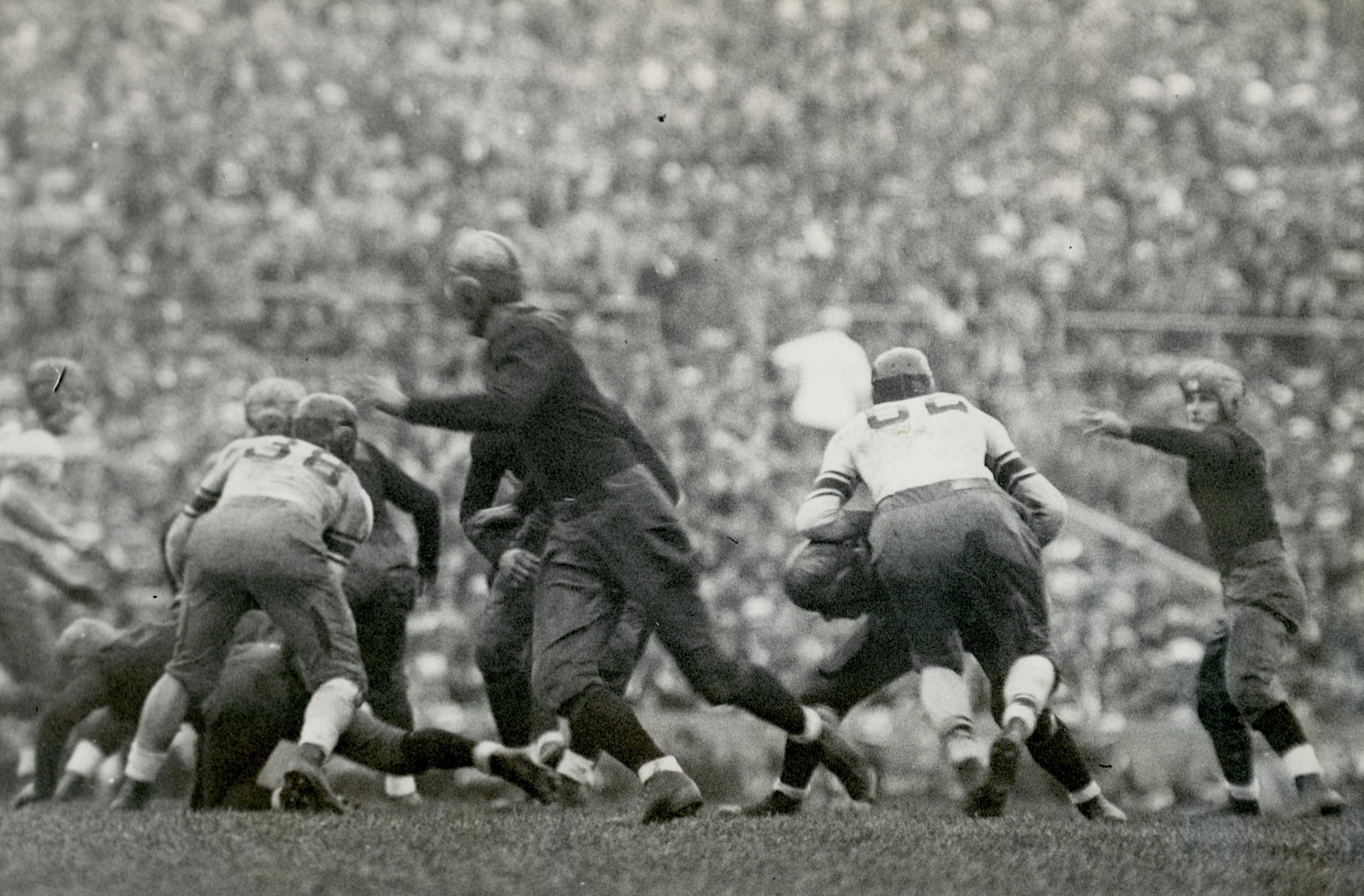
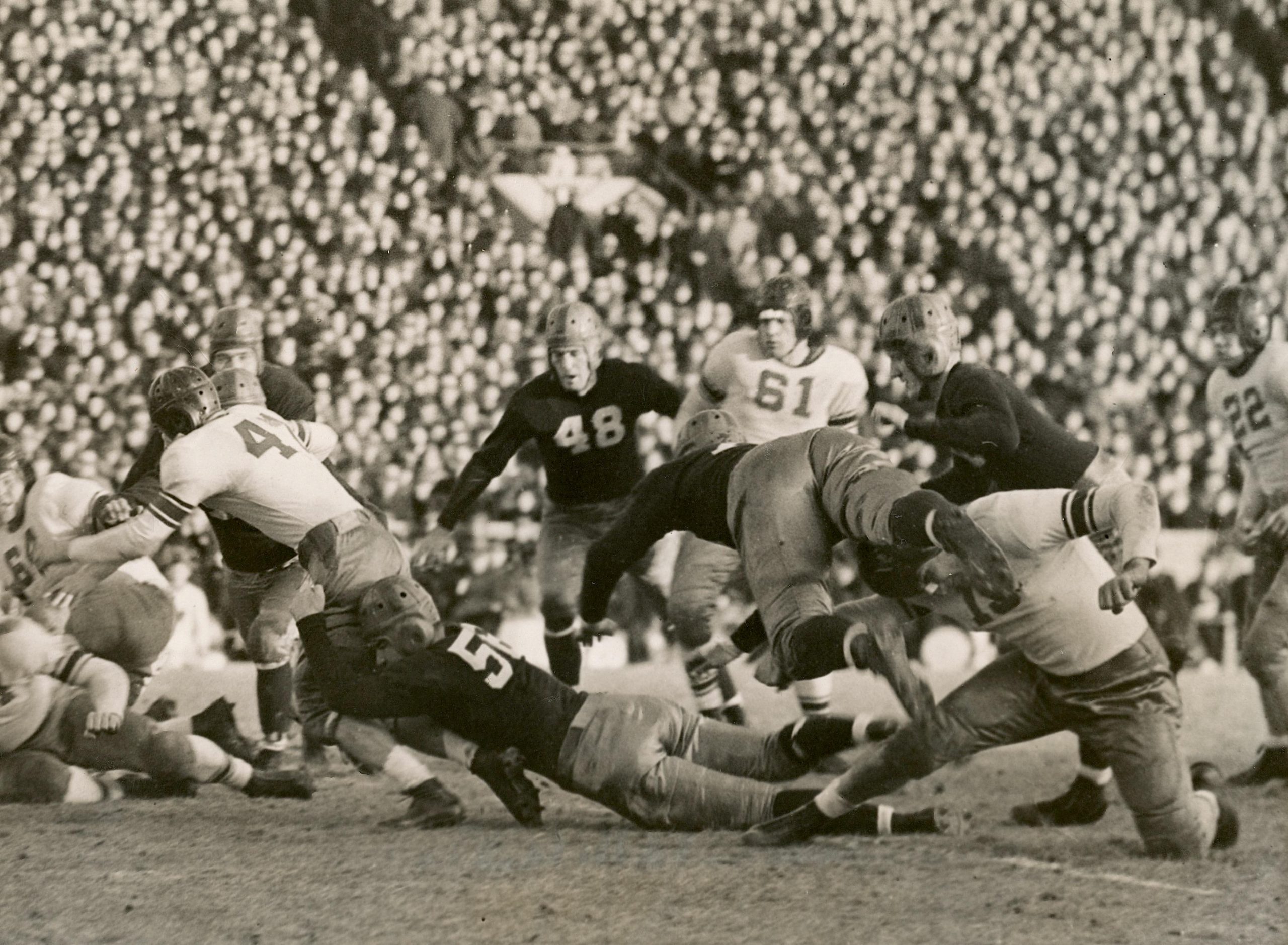
Historical Photo Football Notredam vs Northwestern 1936

Historical Photo Football Notredam vs Northwestern 1936

Historical Photo Football Notredam vs Northwestern 1936:

AMERICAN HEROES DURING 1920s – 1930s: College football fully came of age in the 1920s, when it became widely recognized as America’s greatest sporting spectacle. As college football thrived, professional football struggled for respectability. The NFL was formed in the year 1920 with 11 teams. Today American Football is the most popular sport to watch in the United States.

DIMENSIONS: The paper dimensions are Approx: 7″ X 9″ (small variances can occur).

Historical Photo Football Illinois vs Army 1934

Historical Photo Football Illinois vs Army 1934

Historical Photo Football Illinois vs Army 1934:

AMERICAN HEROES DURING 1920s – 1930s: College football fully came of age in the 1920s, when it became widely recognized as America’s greatest sporting spectacle. As college football thrived, professional football struggled for respectability. The NFL was formed in the year 1920 with 11 teams. Today American Football is the most popular sport to watch in the United States.

DIMENSIONS: The paper dimensions are Approx: 7″ X 9″ (small variances can occur).

Historical Photo Football Purdue vs Northwestern 1932

Historical Photo Football Purdue vs Northwestern 1932

Historical Photo Football Purdue vs Northwestern 1932:

AMERICAN HEROES DURING 1920s – 1930s: College football fully came of age in the 1920s, when it became widely recognized as America’s greatest sporting spectacle. As college football thrived, professional football struggled for respectability. The NFL was formed in the year 1920 with 11 teams. Today American Football is the most popular sport to watch in the United States.

DIMENSIONS: The paper dimensions are Approx: 7″ X 9″ (small variances can occur).

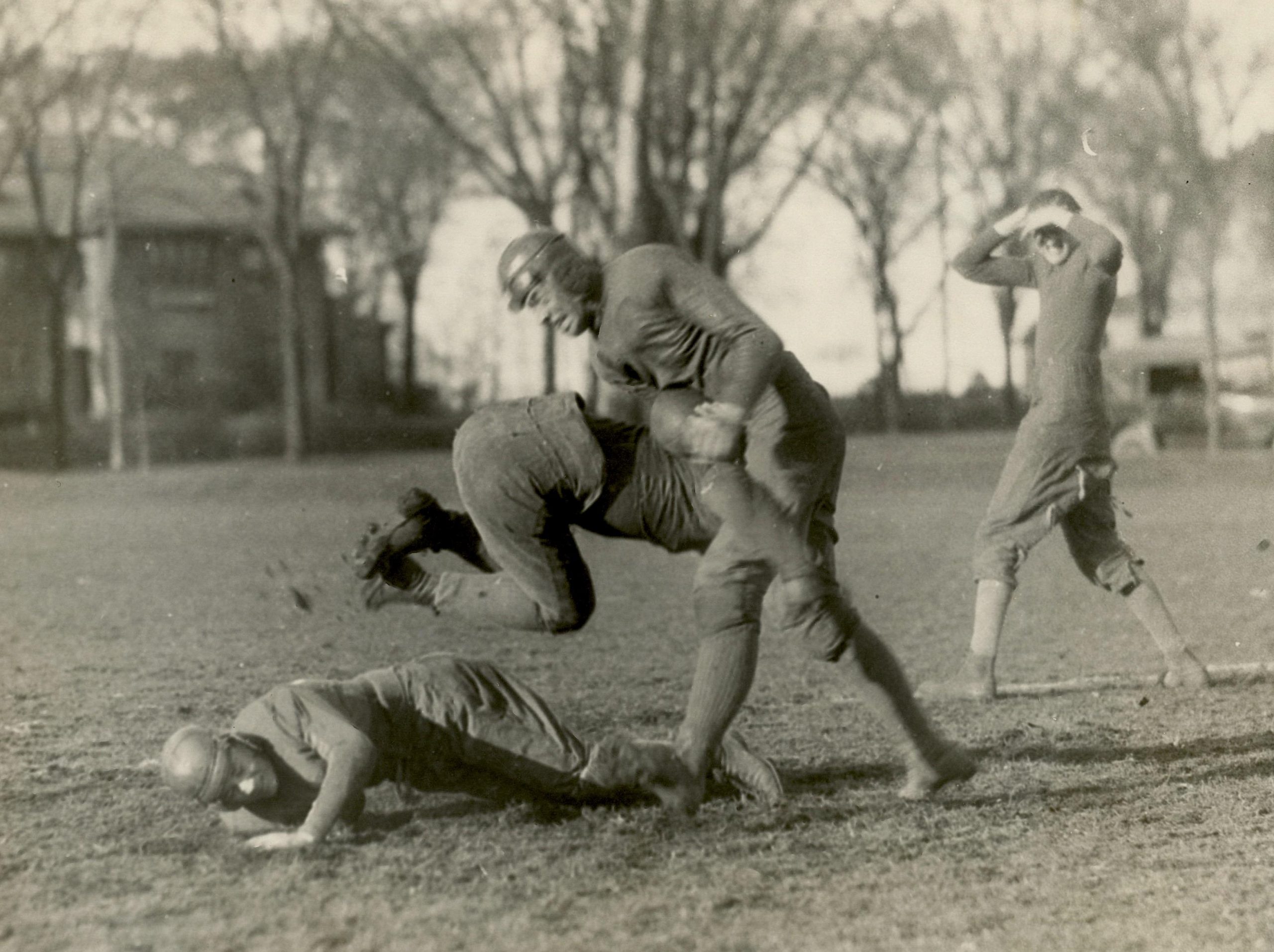
Historical Photo Football North Western Practice 1923

Historical Photo Football North Western Practice 1923

Historical Photo Football North Western Practice 1923:

AMERICAN HEROES DURING 1920s – 1930s: College football fully came of age in the 1920s, when it became widely recognized as America’s greatest sporting spectacle. As college football thrived, professional football struggled for respectability. The NFL was formed in the year 1920 with 11 teams. Today American Football is the most popular sport to watch in the United States.

DIMENSIONS: The paper dimensions are Approx: 6.5″ X 8.5″ (small variances can occur).

Style Of Ogata Korin (1658-1716)

STYLE OF OGATA KORIN (1658-1716)

STYLE OF OGATA KORIN (1658-1716)
A suzuribako (writing box) and matching bunko (document box)
Edo period (1615-1868), 18th century
Each of rounded rectangular shape, the writing box with an overhanging cover and the document box with a flush-fitting cover, decorated in gold takamaki-e and inlays of heavy pewter and iridescent shell against a ground of gold lacquer textured to resemble turbulent waves, the document box with a design of Haku Rakuten (Li Bai, 772-847) being ferried to Japan, the writing box with Sumiyoshi Myojin as he meets the Chinese poet in a small skiff, fitted with a rectangular silver water dropper and an inkstone with fundame edges, inscribed under the inkstone Hokkyo Korin and bearing the seal Hoshuku, the interiors of the boxes with a continuation of the islands and waves, the rims pewter
11 3/8 x 10 5/8 x 2 3/8in (29 x 27 x 6cm) suzuribako, 17 3/4 x 14 5/8 x 6 1/2in (45 x 37 x 16.4cm), bunko

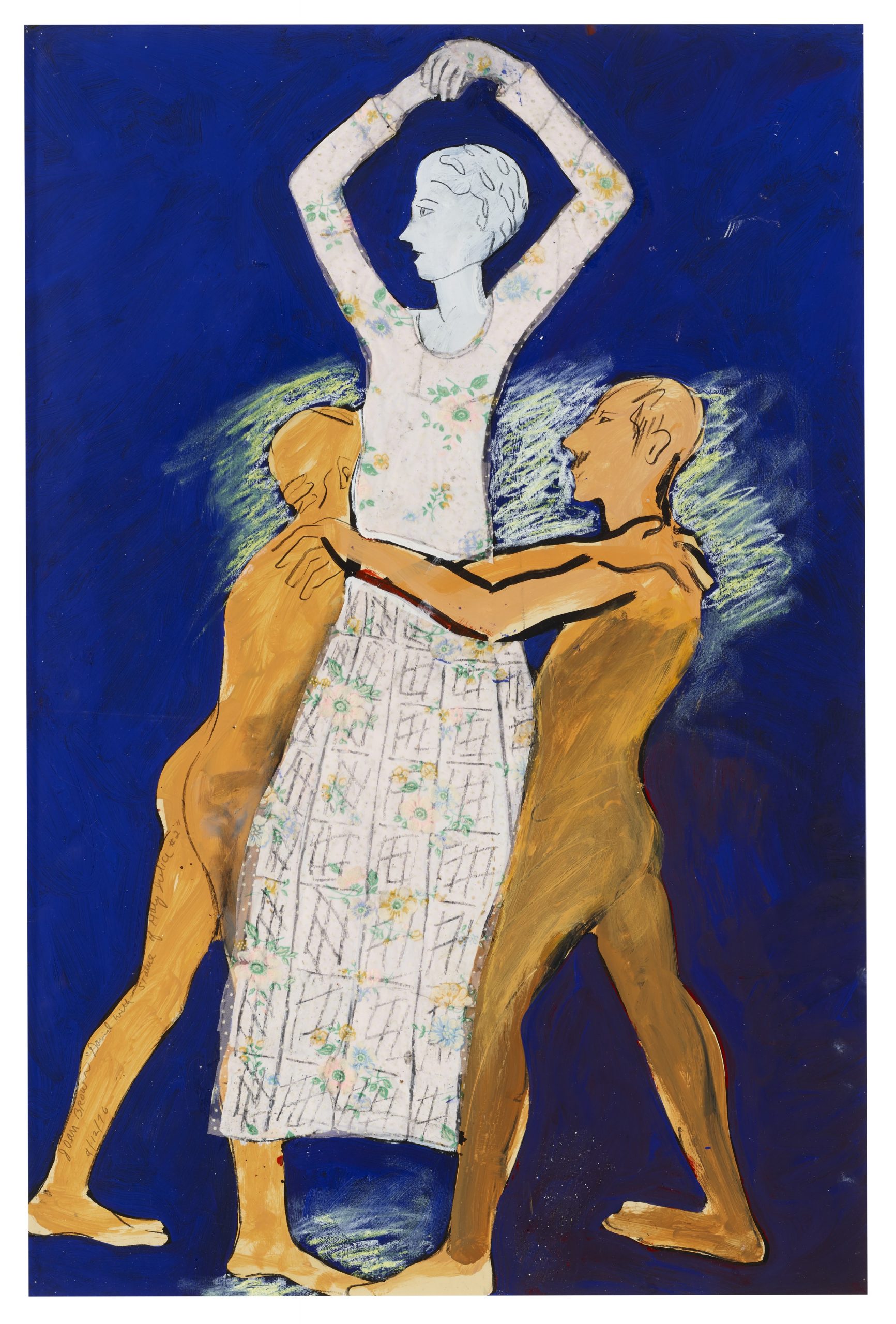
Joan Brown (1938-1991)

Joan Brown (1938-1991)

oan Brown (1938-1991)
David with Statue of Mary Julia #2
signed, titled and dated ‘JOAN BROWN “David with Statue of Mary Julia #2” 9/12/76’ (lower left)
acrylic, pastel and fabric collage on paper
36 x 24 in. (91.5 x 61 cm.)
Executed in 1976.

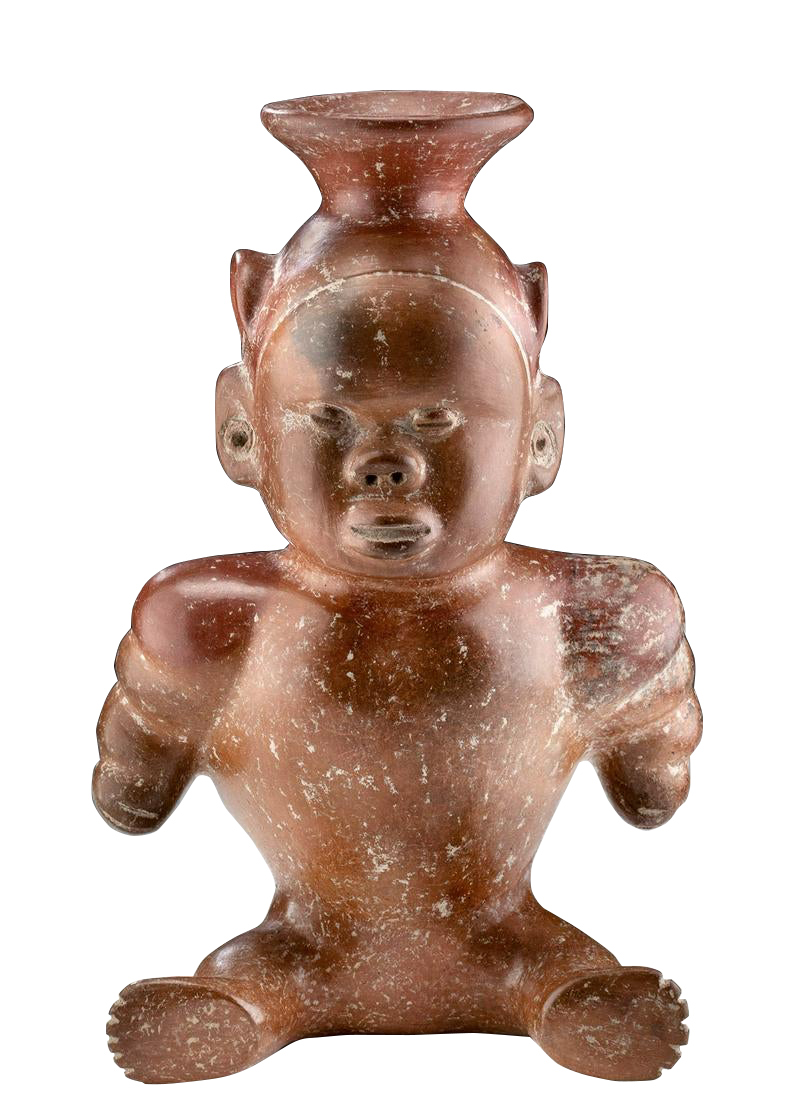
Colima Redware Dwarf Vessel – ex Sotheby’s

Colima Redware Dwarf Vessel - ex Sotheby's

Pre-Columbian, West Mexico, Colima, Protoclassic Period, ca. 100 BCE to 250 CE. A fascinating redware dwarf effigy vessel, the seated figure presenting with out-turned legs, relatively large feet with delineated toes, broad torso and shoulders, and rippling muscular attenuated arms that terminate in a point. The figure’s visage is comprised of coffee bean shaped eyes, an upturned nose with delineated nostrils, full somewhat parted lips, pierced ears, a caplike coiffure or headdress adorned with crescentic head ornaments, with the vessel’s flaring spout emerging from the top. The highly-burnished hunchbacked figure suffers from a severe case of dwarfism made evident by his dramatic forward-leaning posture and his malformed spine which almost protrudes through his back. Scholars posit that in the Pre-Columbian world, such physical deformities were interpreted as signs from the divine, indicating that these individuals were touched by the supernatural. Size: 7.375″ W x 11.7″ H (18.7 cm x 29.7 cm)

Interestingly, Colima sculptors portrayed many hunchback and dwarf individuals, and some have theorized that this relates to their relatively high social status. In addition, some scholars attribute the hunched back in West Mexican shaft tomb culture to a particular form of tuberculosis.

Colima, located on Mexico’s southwestern coast, was during this time part of the shaft tomb culture, along with neighbors to the north in Jalisco and Nayarit. In this culture, the dead were buried down shafts – 3 to 20 meters deep – that were dug vertically or near vertically through the volcanic tuff that makes up the geology of the region. The base of the shaft would open into one or more horizontal chambers with a low ceiling. These shafts were almost always dug beneath a dwelling, probably a family home, and seem to have been used as family mausoleums, housing the remains of many related individuals. This is a figure made to be placed inside those mausoleums, perhaps to mediate between the worlds of the living and the dead.

For a similar example of a Colima seated hunchback figure, please see The Metropolitan Museum of Art, accession number X.2.431

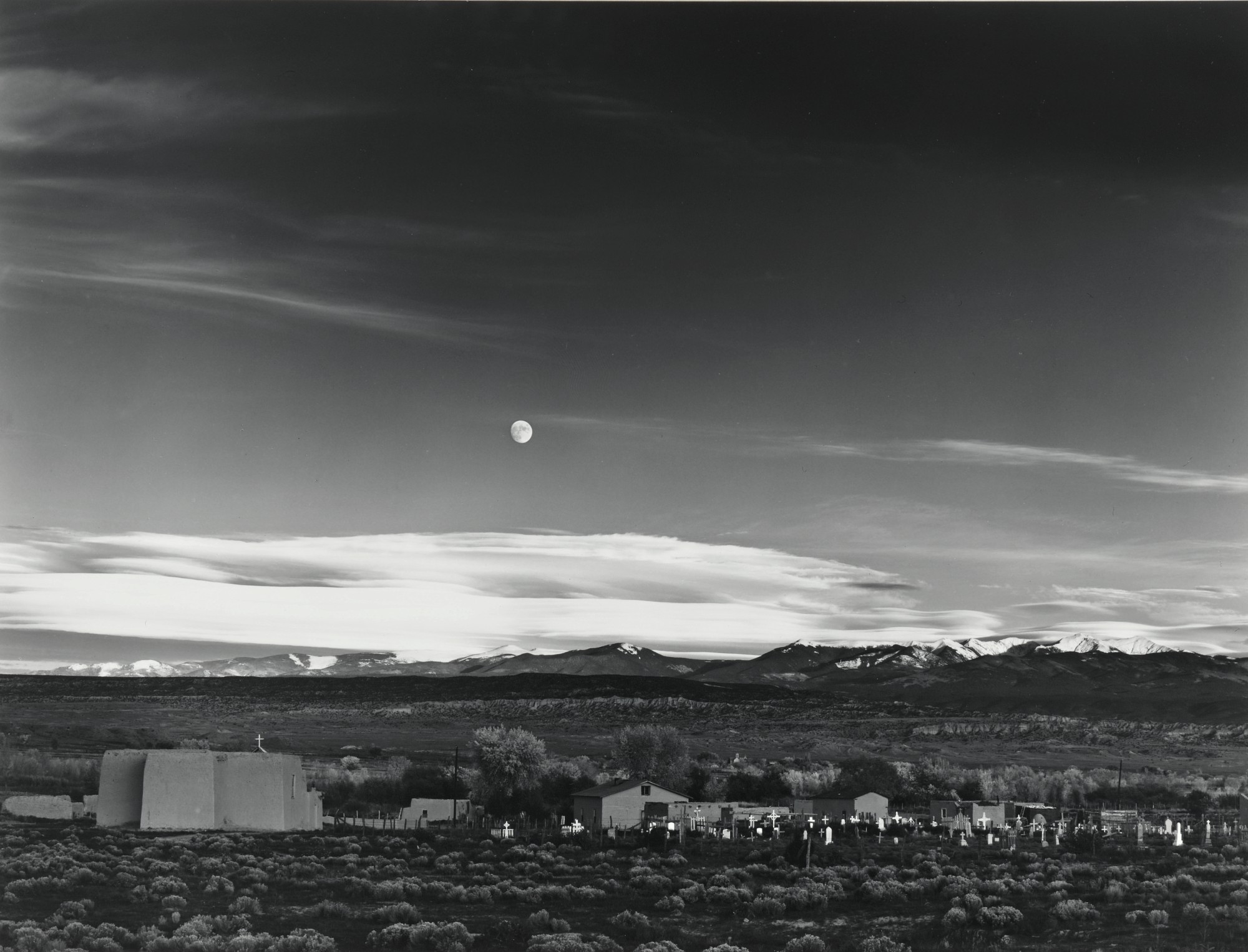
Moonrise, Hernandez, New Mexico

Moonrise, Hernandez, New Mexico

Ansel Adams

1902 – 1984

‘Moonrise, Hernandez, New Mexico’

gelatin silver print, mounted, signed in pencil on the mount, signed, titled, dated, and inscribed ‘For Sidney Liebes, Ansel Adams’ in ink on the reverse, framed, an Andrew Smith Gallery, Santa Fe, label on the reverse, 1941, probably printed in late 1941 or early 1942

image: 9 1/4 by 12 1/8 in. (23.5 by 30.8 cm.)

frame: 22 3/4 by 27 in. (57.8 by 68.6 cm.)