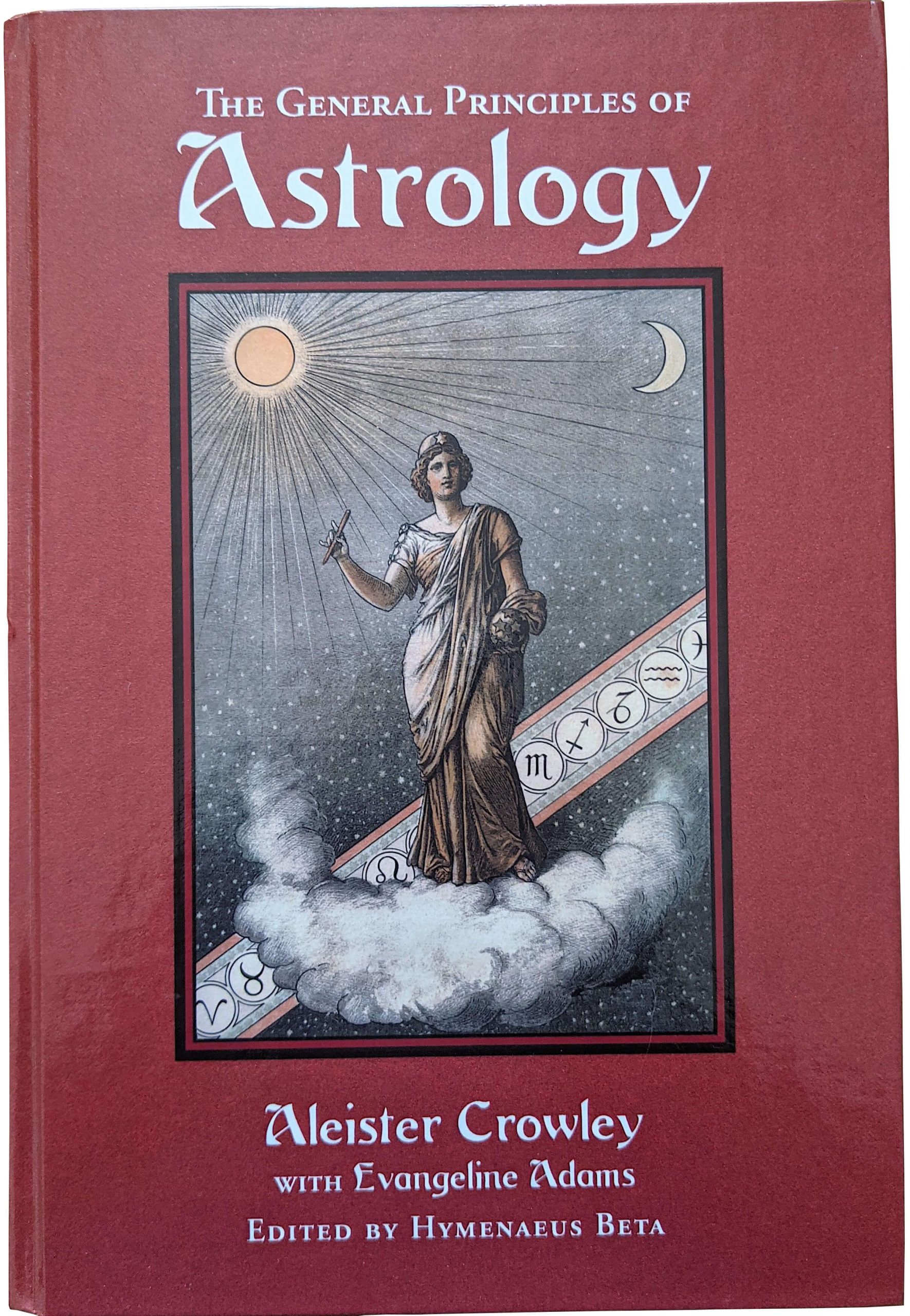
Book The General Principles of Astrology Aleister Crowley:
The provenance of this item is from a WWII veteran collector in Georgia.This is part of his group of rare books on the esoteric, the magical and black arts, the paranormal, and the occult.
This lot is located in Boca Raton, Fl. The shipping by Artelisted will be via USPS – First Class or Priority (tracking # will be provided via Stamps.com). If you wish to use the “media” mail (books only) via USPS, please send us an email and we will update the corresponding shipping cost. Sometimes Artelisted can decide to coordinate shipping with a third party (between buyer and contractor). Shipping insurance is the responsibility of the buyer. Ask us if you want to add insurance cost. Note that if there is loss or damage due to bad handling by the transporter, this loss will be assumed only by the buyer. Enquires are welcome, do not hesitate to contact us at your convenience, we are looking to providing you with an excellent service.
Condition: The lots offered in this sale have been selected among many options and always thinking of offering excellent opportunities to the customers. The vast majority are original of the time (unless otherwise indicated). We have included quality images showing its current condition. Do not hesitate to contact us if you have any questions.
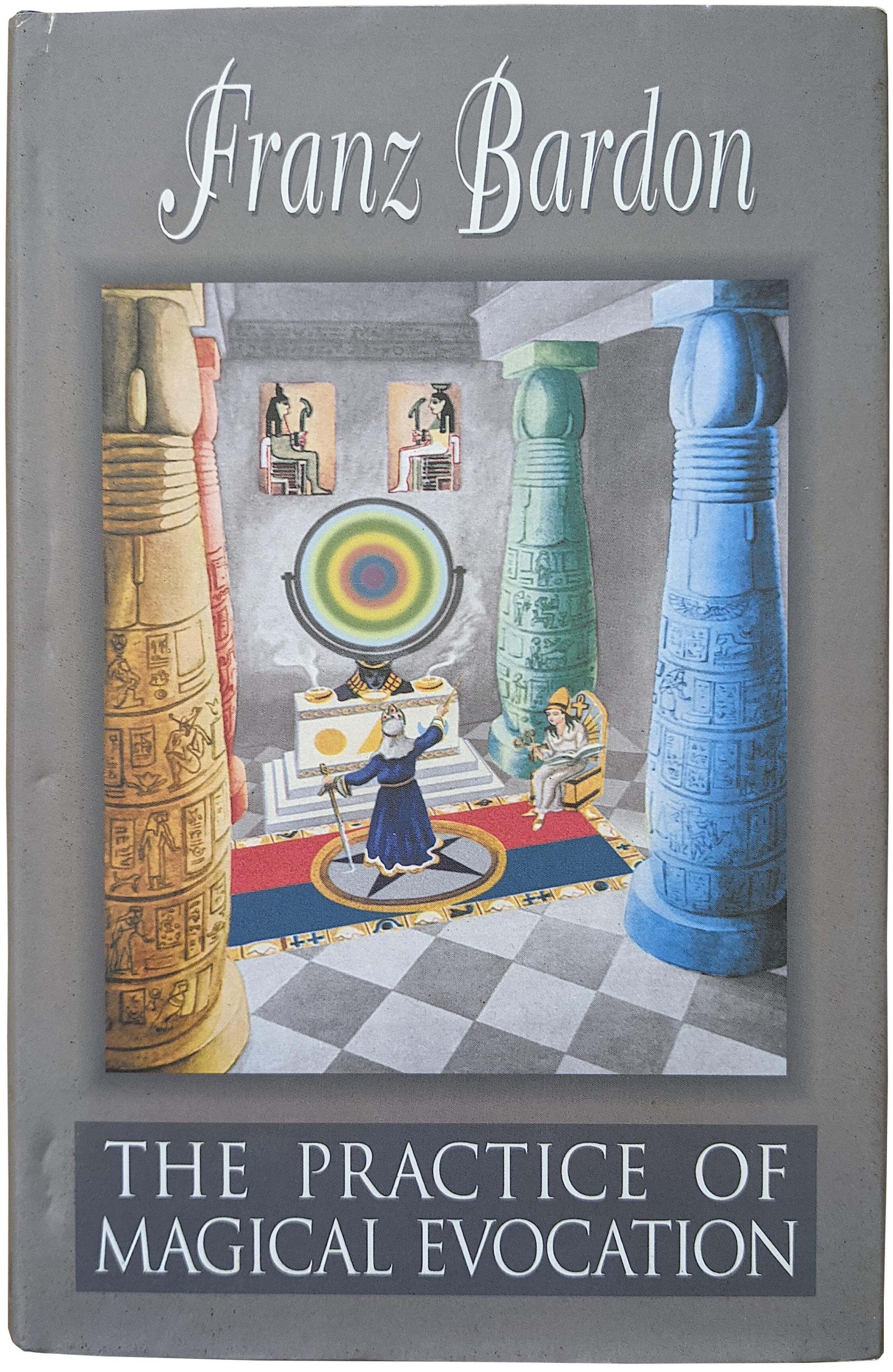
Book The Practice of Magical Evocation by Franz Bardon:
The provenance of this item is from a WWII veteran collector in Georgia.This is part of his group of rare books on the esoteric, the magical and black arts, the paranormal, and the occult.
This lot is located in Boca Raton, Fl. The shipping by Artelisted will be via USPS – First Class or Priority (tracking # will be provided via Stamps.com). If you wish to use the “media” mail (books only) via USPS, please send us an email and we will update the corresponding shipping cost. Sometimes Artelisted can decide to coordinate shipping with a third party (between buyer and contractor). Shipping insurance is the responsibility of the buyer. Ask us if you want to add insurance cost. Note that if there is loss or damage due to bad handling by the transporter, this loss will be assumed only by the buyer. Enquires are welcome, do not hesitate to contact us at your convenience, we are looking to providing you with an excellent service.
Condition: The lots offered in this sale have been selected among many options and always thinking of offering excellent opportunities to the customers. The vast majority are original of the time (unless otherwise indicated). We have included quality images showing its current condition. Do not hesitate to contact us if you have any questions.

Book Flowers From HELL Edited Nikolas Schreck:
The provenance of this item is from a WWII veteran collector in Georgia.This is part of his group of rare books on the esoteric, the magical and black arts, the paranormal, and the occult.
This lot is located in Boca Raton, Fl. The shipping by Artelisted will be via USPS – First Class or Priority (tracking # will be provided via Stamps.com). If you wish to use the “media” mail (books only) via USPS, please send us an email and we will update the corresponding shipping cost. Sometimes Artelisted can decide to coordinate shipping with a third party (between buyer and contractor). Shipping insurance is the responsibility of the buyer. Ask us if you want to add insurance cost. Note that if there is loss or damage due to bad handling by the transporter, this loss will be assumed only by the buyer. Enquires are welcome, do not hesitate to contact us at your convenience, we are looking to providing you with an excellent service.
Condition: The lots offered in this sale have been selected among many options and always thinking of offering excellent opportunities to the customers. The vast majority are original of the time (unless otherwise indicated). We have included quality images showing its current condition. Do not hesitate to contact us if you have any questions.
5.01 ct, D/IF, Round cut GIA Graded Diamond. Appraised Value: $1,668,300:
GIA Graded
Carat: 5.01
Cut: Round
Color: D
Clarity: IF
Symmetry: Excellent
Polish: Excellent
Fluorescence: None
Report: GIA (Gemological Institute of America) Graded Certificate
Appraisal: AGI (Accredited Gemological Institute)
Appraised Value: $1,668,300
Laser Inscription: (GIA) Number Inscribed on Girdle
Condition: Brand New Recently Cut
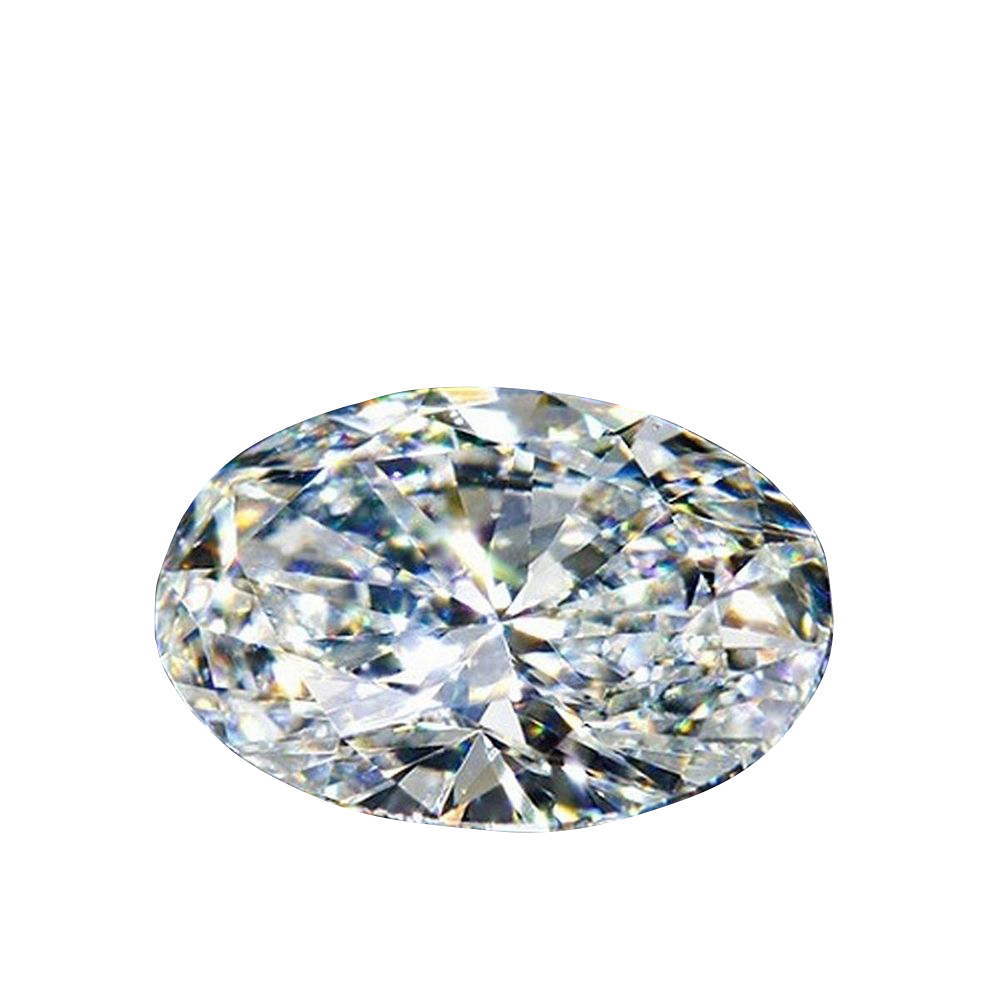
10.44 ct, H/VVS2, Oval cut GIA Graded Diamond. Appraised Value: $1,435,500:
GIA Graded
Carat: 10.44
Cut: Oval
Color: H
Clarity: VVS2
Symmetry: Excellent
Polish: Excellent
Fluorescence: None
Report: GIA (Gemological Institute of America) Graded Certificate
Appraisal: AGI (Accredited Gemological Institute)
Appraised Value: $1,435,500
Laser Inscription: (GIA) Number Inscribed on Girdle
Condition: Brand New Recently Cut
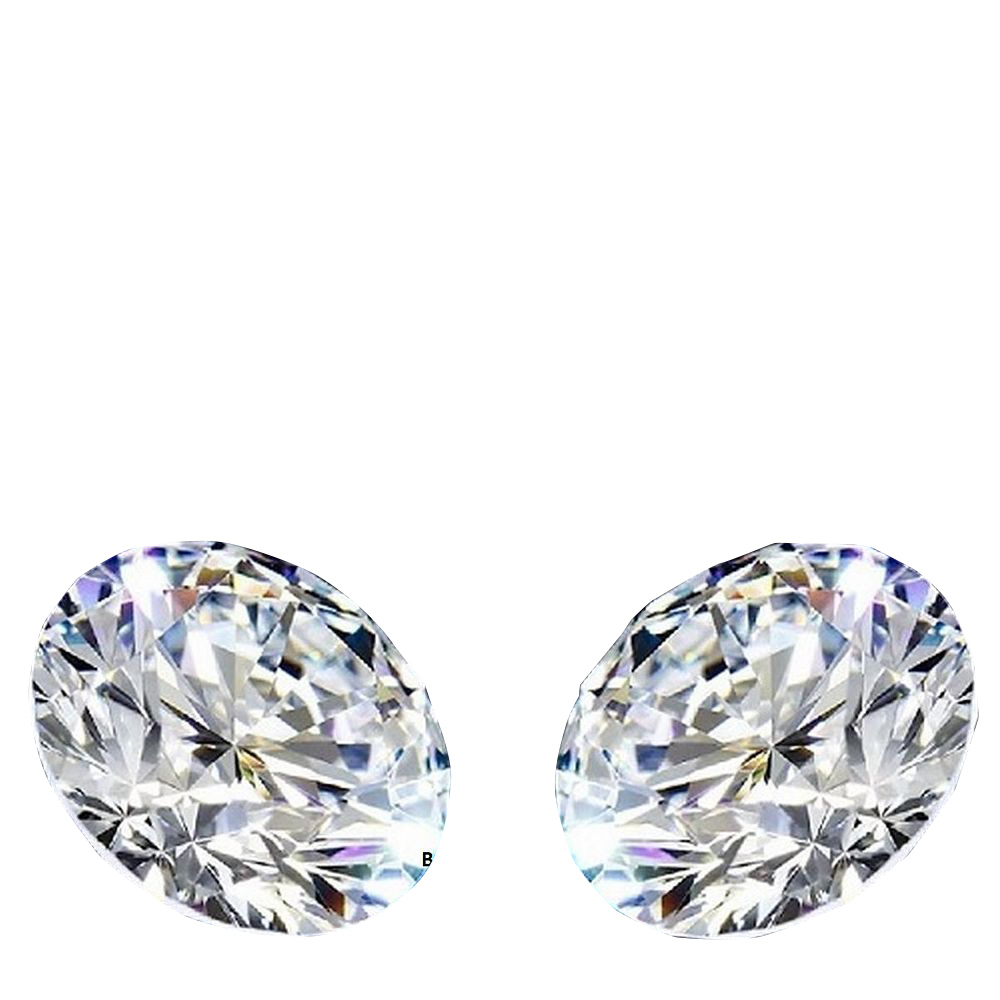
14.01 carat diamond pair Round cut Diamond GIA Graded 1) 7.00 ct, Color F, VS2 2) 7.01 ct, Color F, VS2. Appraised Value: $1,371,400:
1) GIA Graded
Carat: 7.00
Cut: Round
Color: F
Clarity: VS2
Symmetry: Excellent
Polish: Excellent
Fluorescence: None
Report: GIA (Gemological Institute of America) Graded Certificate
Appraisal: AGI (Accredited Gemological Institute)
Appraised Value: $685,200
Laser Inscription: (GIA) Number Inscribed on Girdle
2) GIA Graded
Carat: 7.01
Cut: Round
Color: F
Clarity: VS2
Symmetry: Excellent
Polish: Excellent
Fluorescence: Faint
Report: GIA (Gemological Institute of America) Graded Certificate
Appraisal: AGI (Accredited Gemological Institute)
Appraised Value: $686,200
Laser Inscription: (GIA) Number Inscribed on Girdle
Total Carat Weight(ct): 14.01
Combined Appraised Value: 1,371,400
Condition: Brand New Recently Cut
Superb Greek Archaic Bronze Protome Head of Griffin:
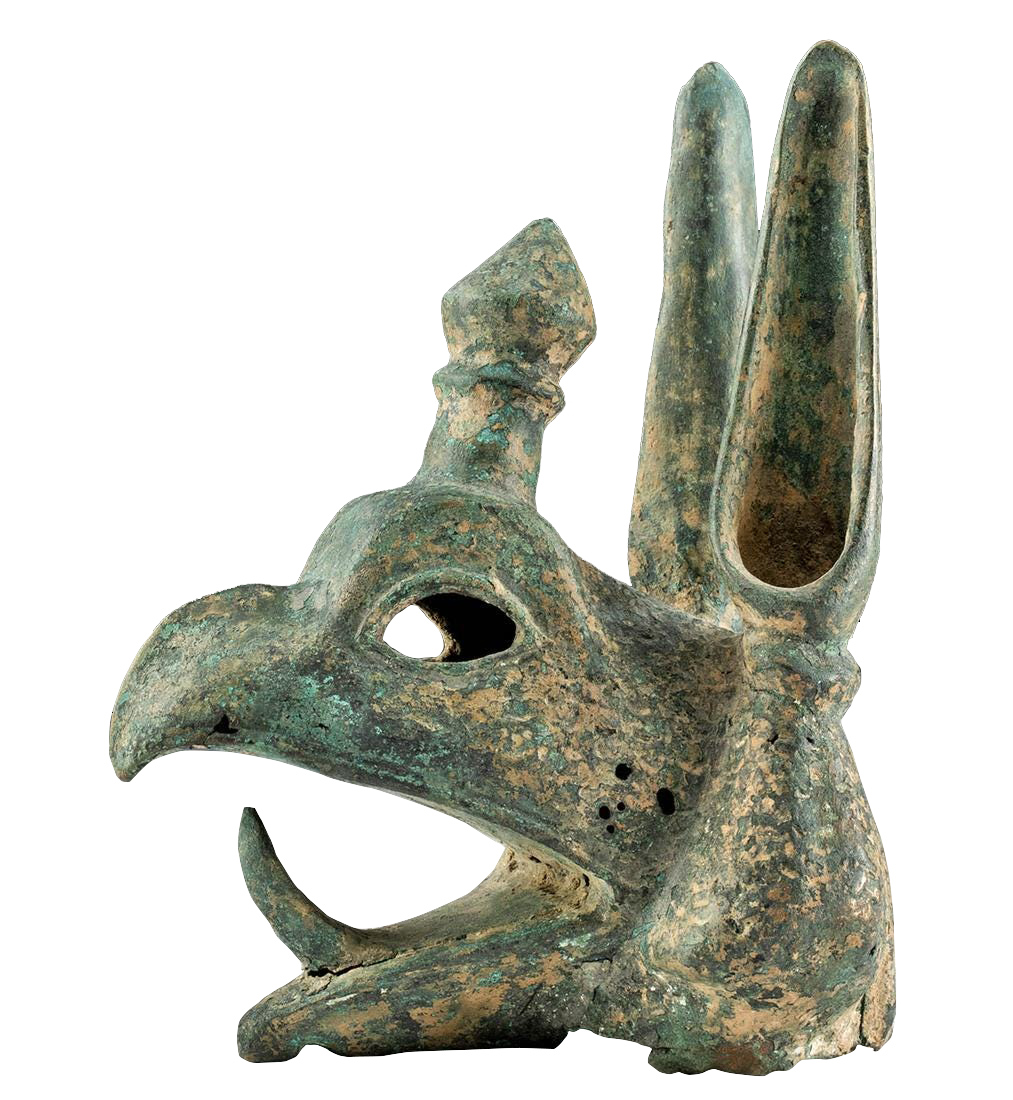
Ancient Greece, Archaic Period, ca. 7th to 6th century BCE. A striking bronze protome cast as a griffin, with the head of an eagle and incised scales and open beak with curled, pointed tongue. The eyes are openwork with raised eyelines around the lobes which may have contained bone inlays. A finial with a knob is set on the brow, and further back on the head are dramatic, pointed ears. This griffin head perhaps rested atop a sinuous neck that attached to the side of a cauldron. The griffin (or gryphon) is a beast with the head and wings of an eagle and the body of a lion. According to Graeco-Roman mythology, griffins lived in the Rhipaean Mountains of Scythia and guarded rich gold deposits. A wonderful green patina envelops this fantastical beast. Size: 5″ L x 3.5″ W x 5.8″ H (12.7 cm x 8.9 cm x 14.7 cm)
The griffin, half eagle and half lion, was a fierce symbol of divine power. The tradition was long lasting – we know of examples from ancient Iran and Egypt that are from ca. 3000 BCE – and the animal continued to appear in classically-inspired art into the early modern period.
Offerings to gods often consisted of impressive bronze vessels or cauldrons that were embellished by protomes featuring guardian heads riveted to the rims.
For a similar example please see the Metropolitan Museum of Art, accession number: 59.11.18.
This piece has been searched against the Art Loss Register database and has been cleared. The Art Loss Register maintains the world’s largest database of stolen art, collectibles, and antiques.
10.02 ct, E/VVS2, Emerald cut GIA Graded Diamond. Appraised Value: $2,570,100:
GIA Graded
Carat: 10.02
Cut: Emerald
Color: E
Clarity: VVS2
Symmetry: Excellent
Polish: Excellent
Fluorescence: None
Report: GIA (Gemological Institute of America) Graded Certificate
Appraisal: AGI (Accredited Gemological Institute)
Appraised Value: $2,570,100
Laser Inscription: (GIA) Number Inscribed on Girdle
Condition: Brand New Recently Cut
Exceptional Maya Limestone Ball Court Marker:
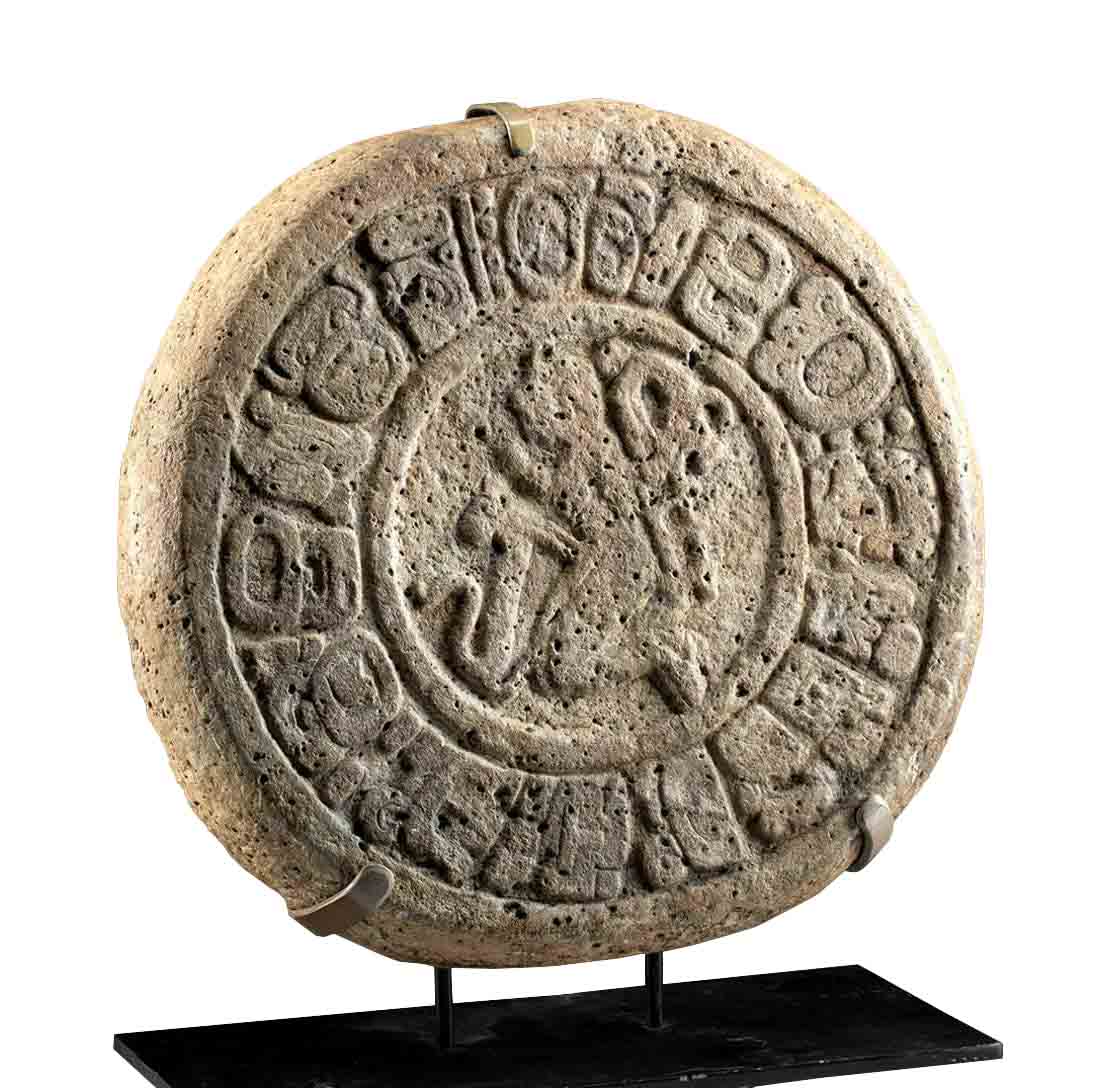
Pre-Columbian, Maya Territory, probably Mexico, ca. 400 to 500 CE. A rare and quite exceptional limestone ballgame marker. Ancient art from the Maya world shows that three such markers were set at the center and end of each court. Based on the size and shape, it appears that these were transported to each game, and could perhaps represent the “home or visiting” teams. Work conducted by the Center for Mayan Research seems to indicate this marker came from the lowlands of Mexico; Yucatan,Campeche or Quintana Roo. This particular marker shows a kneeling captive, bound at the wrist and wearing an emblematic device on his back. Around him are approximately 16 carved glyphs – the glyphs begins on the upper right, more or less behind the figure (if you look at the stone with the captive upright) where four small dots appear in a line. This is the number coefficient on the opening day sign (Glyph A). The text of sixteen glyphs runs counter-clockwise around the stone. The date looks like it might be 4 Imix 9 Keh. The event being commemorated is some sort of dedication, perhaps of the building or court where the stone was originally set, or of the altar itself. The word is pet, meaning to “encircle,” which is obviously suggestive of the stone’s shape. A personal name appears in block G, an animal head located just in front of the captives bound hands. This looks like it might be the name of the Tikal ruler K’an Chitam, but it’s not an obvious identification. The text goes on to repeat the pet verb and then gives what might be a place name or temple name. Custom stand. Size: 23 x 3.5″ (58.4 cm x 8.9 cm)
Abbasid Tin Glazed Ware Pottery Bowl, ex-Christie’s:
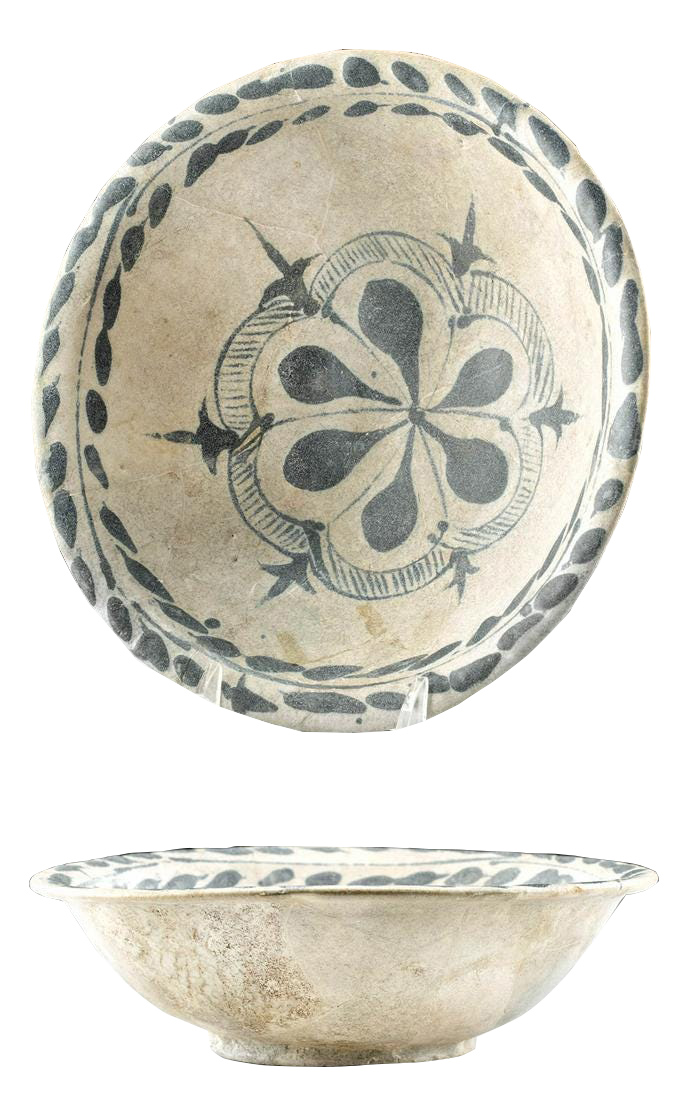
Near East/Middle East, Iraq, Abbasid Dynasty, ca. 9th to 10th century CE. A magnificent lustreware (lusterware) ceramic bowl, made in ancient Iraq and inspired by Tang China. It is a shallow bowl with wide, flaring sides and a diminutive disc foot. The interior is decorated with a delicately-painted elegant motif of a flower in blue on white. Around the rim, in the same colors, a band of laurel leaves forms a border between the interior and exterior of the bowl. This is a truly stunning example of some of the earliest style of this pottery that would come to define Islamic ceramic art for centuries. Size: 7.95″ W x 2.45″ H (20.2 cm x 6.2 cm)
In the later 8th century, Islamic empires in the west and China in the east battled each other for control of the incredibly lucrative trade along the Silk Road. At one point, the western powers captured a group of Tang Dynasty craftsmen, holding them in Baghdad for over 10 years. Tou-Houan, one of these captives, had been taken from his workshop near Samarqand after the Battle of Talas in 751 CE. After his return to China over a decade later, he wrote to his emperor that he and his countrymen had taught the Abbasids several important techniques. With this knowledge, Abbasid artisans created lustreware, a decorative technique that they likened to alchemy – it used a lead-based glaze, silver, and copper paint to create a golden sheen on ceramic surfaces. The warm glow of the motifs here are a perfect example of this “magical” technology. See several similar examples in the Khalili Collection, London, UK, the most famous collection of Islamic artwork in the world.