The du Pont Crowell Woodcock, A. Elmer Crowell (1862-1952)

The du Pont Crowell Woodcock, A. Elmer Crowell (1862-1952)

The du Pont Crowell Woodcock, A. Elmer Crowell (1862-1952):

The du Pont Crowell Woodcock
A. Elmer Crowell (1862-1952)
East Harwich, MA, c. 1912
10 1/4 in. long

“During Elmer Crowell’s youth, the landscape of the Cape was experiencing a regrowth of its forests. Before the arrival of Europeans, Native Americans lived in primarily pine and oak forests, with hickory, beech, cypress, red maple, and birch trees interspersed. Early colonial settlers vastly diminished these forests by cutting down trees in order to sustain themselves in their new land. Wood was used to build and heat homes, and the cleared land was utilized to grow food and graze livestock.

In the late 1800s, as the human population on the Cape declined, timber was no longer in such high demand and trees began to repopulate the landscape. This pattern of land use was beneficial to bobwhite quail, woodcock, and ruffed grouse that thrive in the mixed vegetation of an early-stage regrowth forest. Today these species are not commonly associated with Cape Cod; however, they were fairly abundant in Crowell’s time.” — Chelsie Olney and Stephen B. O’Brien Jr., “Elmer Crowell: Father of American Bird Carving”

This masterwork represents not only one of the maker’s earliest and best carvings of the species, but also one of his pinnacle paint applications on any game bird. Of particular note are the dropped wings with carved primary feathers. A closely related example with this treatment from the James and Diane Cook Collection is prominently featured in “Elmer Crowell: Father of American Bird Carving.” Another early example without the dropped wings emanated from the collection of top Crowell patron Dr. John H. Cunningham.

This early decorative woodcock bears the maker’s crisp oval brand on the underside of its carved wooden base. The undulating base reveals three painted probing holes to emulate where the timberdoodle has just fed. The grand body is outfitted with a bill which displays precise incised carving along all sides of and between the mandibles. It is finished with a subtle, but deliberate curvature to the very tip of the bill. The species’ complex plumage is masterfully applied with tight feathering with high contrast along the top and soft blending in the rich underside.

The form, intricate and accurate carving details, exquisite paint, superb condition, and distinguished provenance of this newly discovered mantle carving place it among the finest of all of upland bird carvings.

This lot hails from the same du Pont family collection as the Crowell mallard and blue jay in this sale.
Excellent original paint with light wear. Typical restoration to thighs and toes, and a spot of minor touch-up just above bill.

Provenance: Eugène E. du Pont Collection, acquired directly from the artist
Private Collection, by descent from the above

Literature: Stephen B. O’Brien Jr. and Chelsie W. Olney, “Elmer Crowell: Father of American Bird Carving,” Hingham, MA, 2019, p. 46, very closely related woodcock illustrated.
ConditionPlease email condition report requests to [email protected]. Any condition statement given is a courtesy to customers, Copley will not be held responsible for any errors or omissions. The absence of a condition statement does not imply that the lot is in perfect condition.

The Harmon Hollow Nantucket Curlew Decoy

The Harmon Hollow Nantucket Curlew Decoy

The Harmon Hollow Nantucket Curlew Decoy:

The Harmon Hollow Nantucket Curlew
Nantucket, MA, c. 1850
16 in. long

A featherlight, hollow curlew with extraordinary carving and construction detail by a great yet to be named Nantucket craftsman. This decoy has no species specific comparables, with only a few plover by the maker known to have survived in any condition. The design, execution, and refinement of this form place it in the ranks of the best shorebirds by A. Elmer Crowell (1862-1952), Fred Nichols (1854-1924), Charles Sumner Bunn (1865-1952), and the Phillips Rig maker. Given the apparent age of this carving and the history of curlew and golden plover hunting on Nantucket, it is likely that this 19th-century sculpture predates the aforementioned named masters by decades.

Along with the great dovetailed maker, this Nantucket carver is among the greatest craftsmen ever to construct a working shorebird decoy. These two early and unnamed 19th-century makers routinely applied an elevated level of refinement to both the inside and outside of their distinct hollow decoys. This curlew displays a very tight vertical body seam, which was hollowed to an egg-shell-thin hull and held together with small cut nails.

The wing carving alone represents a pinnacle execution and makes a case for influencing Crowell’s finest dust-jacket plover. Like his Nantucketer’s plover, the entire perimeter of the curlew’s wing is raised. Going beyond his smaller plover decoys, the wings have more carved features, including the elaborate raised shoulder carving and the connected tips. The thin primaries are hollowed through from the back to the tail and the tips are reinforced with an original cloth backing.

Flaring away from the wings is a thin, curved, and fanned tail treated on top with V-parted feathering that leads to a scalloped edge. A mortise-and-tenon bill fits perfectly in an uplifted head with bead glass eyes.

The surface is finished with excellent mottled feather paint. A white throat frames the head and the primaries have been lined. Much like the maker’s plover, the top of the tail is finished with appealing tiger striping. The surface remains in remarkably good condition.

There are at least two known plover by this maker that were repainted by Elmer Crowell. The similarities between this curlew and Crowell’s “dust-jacket” plover are extensive in both overall form and in the detailed carving features, especially around the wings. The combination of Crowell’s early exposure and the distinct similarities presents a highly plausible case that this unknown island maker was a direct inspiration for the East Harwich master and his “Dust-Jacket” decoys.

A small stick hole is placed at a steep angle, presenting this alert bird with purpose.

This singular decoy, like the Philips Rig running curlew, is among the greatest shorebird decoys ever to surface.
Exceptional original paint with minimal gunning wear.

Provenance: Ted and Judy Harmon Collection

Literature: Copley Fine Art Auctions, “The Winter Sale 2022,” March 4-5, 2022, lots 149 and 164, two related plover illustrated, one with early Crowell paint.
ConditionPlease email condition report requests to [email protected]. Any condition statement given is a courtesy to customers, Copley will not be held responsible for any errors or omissions. The absence of a condition statement does not imply that the lot is in perfect condition.
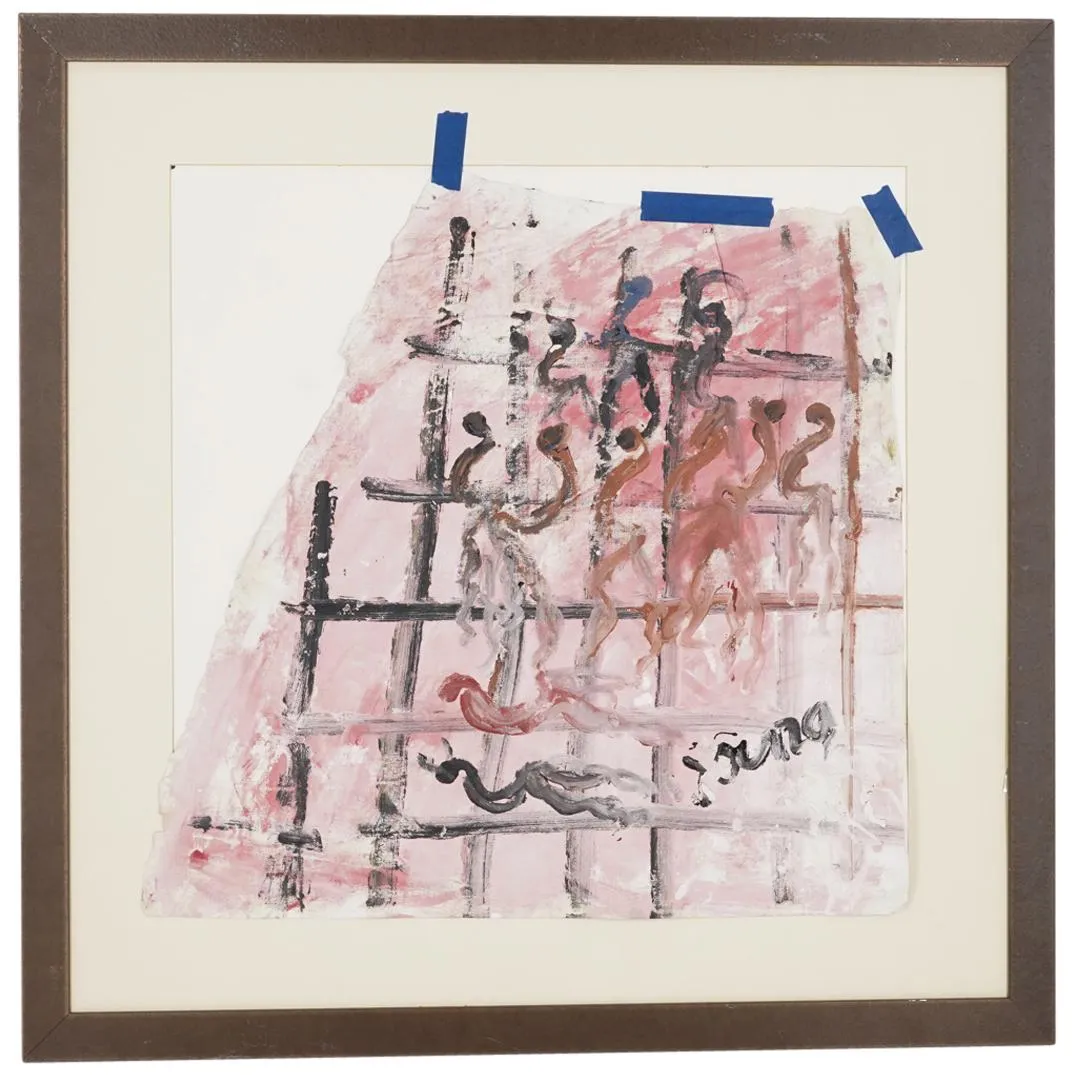
Purvis Young (American 1943-2010) Mixed Media Painting

Purvis Young (American 1943-2010) Mixed Media Painting

Purvis Young (American 1943-2010) Mixed Media Painting:

Purvis Young (American 1943-2010) Mixed media painting featuring house painted on found object (Vinyl) depicting traditional figures within prison bars, Signed bottom right: “Young” mounted in frame.
CIRCA: 20th Cent.
ORIGIN: USA
DIMENSIONS: (Image) H: 23″ x L:23 ” (Framed) H: 32.5″ x L: 32.5″
CONDITION: Frame missing glass. See lot description for details on item condition. More detailed condition requests can be obtained via email ([email protected]) or SMS (305) 333-4134. Any condition statement given, as a courtesy to a client, is only an opinion and should not be treated as a statement of fact. Akiba Antiques shall have no responsibility for any error or omission.

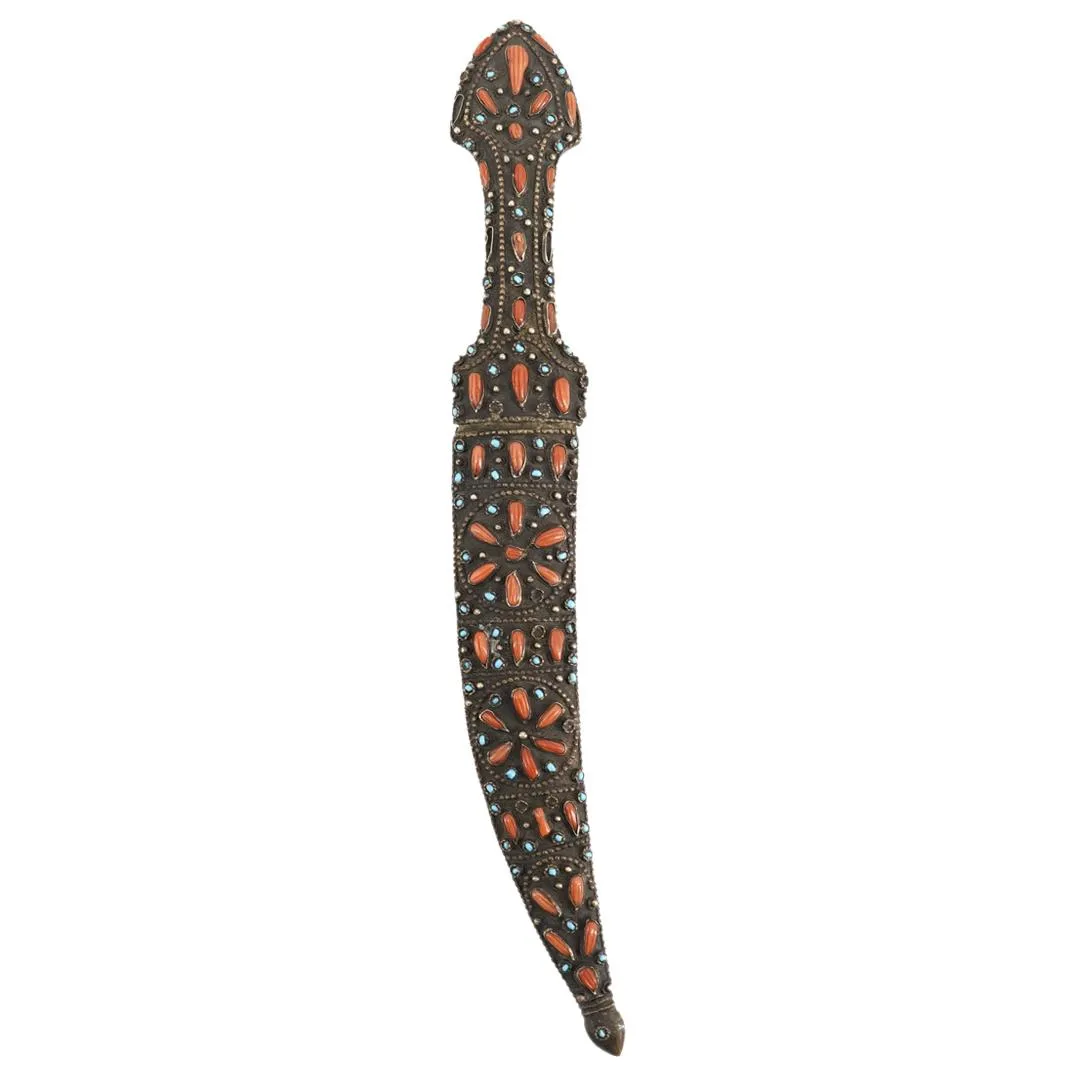
Antique Turkish Coral Turquoise Gold & Silver Damascened Dagger

Antique Turkish Coral Turquoise Gold & Silver Damascened Dagger

Antique Turkish Coral Turquoise Gold & Silver Damascened Dagger:

Antique Turkish dagger featuring blade slightly curving upward presenting gold-damascened forte with an inscription and bands of floral arabesques, the hilt and scabbard with abundant coral and turquoise insets geometrically arranged, the reverse with silver repousse fine foliage details and gold leaf form loop.
CIRCA: 18th Century
ORIGIN: Turkey
DIMENSIONS: W: 1.62″ X L: 11.5″
CONDITION: Wear with age. Some missing stones at the handle and scabbard. See lot description for details on item condition. More detailed condition requests can be obtained via email ([email protected]) or SMS (305) 333-4134. Any condition statement given, as a courtesy to a client, is only an opinion and should not be treated as a statement of fact. Akiba Antiques shall have no responsibility for any error or omission.

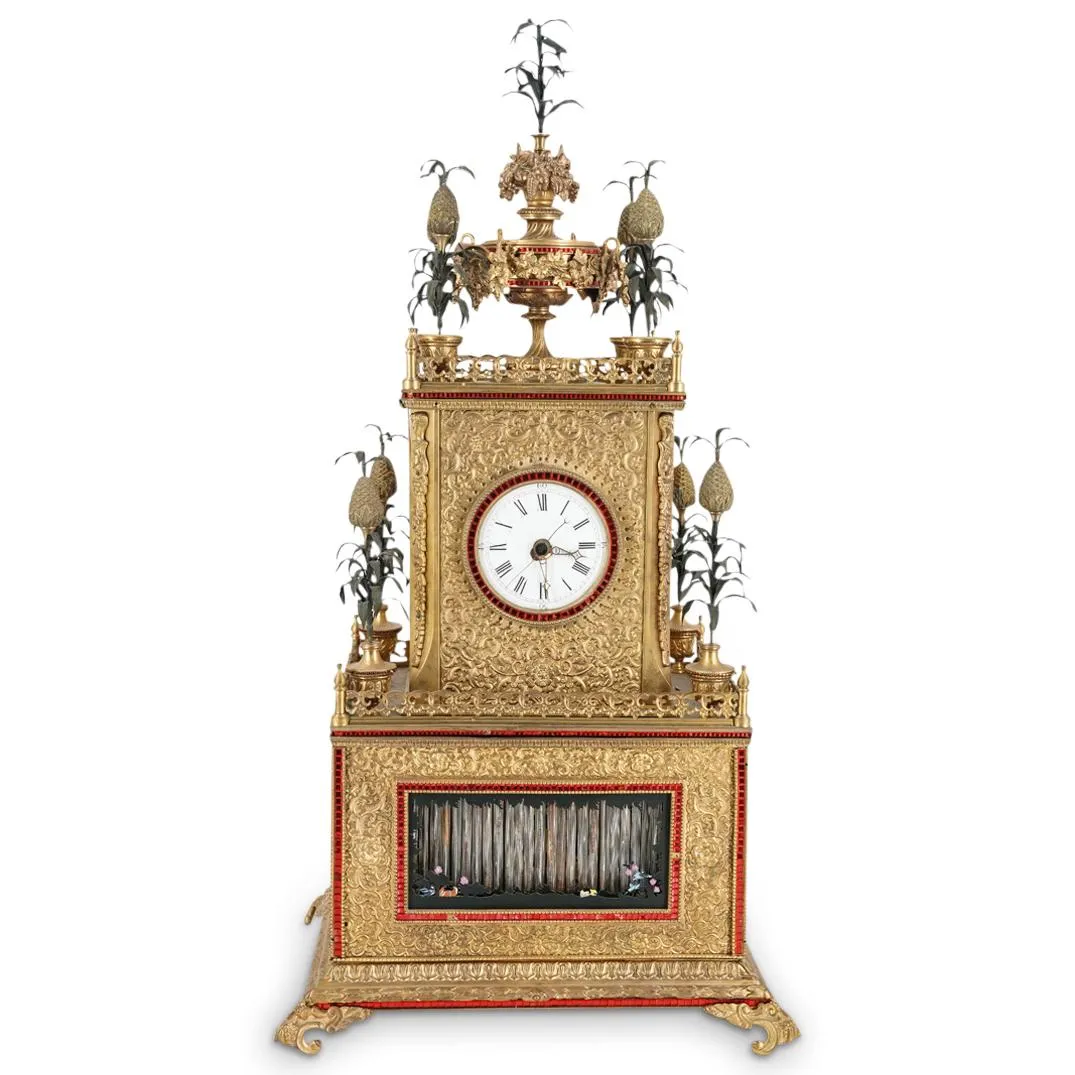
19th Cent. Monumental French Automation Bracket Clock

19th Cent. Monumental French Automation Bracket Clock

19th Cent. Monumental French Automation Bracket Clock:

Monumental 19th Century French automation bracket clock for the Chinese market, with foliate relief, gilt bronze case, white enameled Roman numeral marked dial, surrounded by a crystal inset bezel. Automation consists of spinning trees, simulated waterfalls, and panels with rotating animals scenes. Marked: “Cheong Smeg Canton” at movement. Includes two winding clock keys.
CIRCA: 19h Cent.
DIMENSIONS: H: 33″ x W: 13.5″ x L: 17″

Have a similar item to sell? Contact: [email protected].

CONDITION: Not tested, Contact for condition report. See lot description for details on item condition. More detailed condition requests can be obtained via email ([email protected]) or SMS(305)-332-9274. Any condition statement given, as a courtesy to a client, is only an opinion and should not be treated as a statement of fact. Akiba Antiques shall have no responsibility for any error or omission.

Goebel Hummel Figurine, Sensitive Hunter 6/0

Goebel Hummel Figurine, Sensitive Hunter 6/0

Goebel Hummel Figurine, Sensitive Hunter 6/0:

Matte finish. Goebel backstamp. Limited Edition 1163 of 1935. 70th Anniversary Edition. Authentic 1935 reproduction.
#Goebel

Issued: 2005
Dimensions: 4.75″H
Country of Origin: Germany
Manufacturer: Goebel
Condition
Good.

Olszewski Studio’s Miniature Figurine, The Fox Hunt

Olszewski Studio's Miniature Figurine, The Fox Hunt

Olszewski Studio’s Miniature Figurine, The Fox Hunt:

Scene depicts horse rider, dogs, and fox amid countryside background. Base has gold coloring with felt underneath.
Comes with original box. Olszewski imprinted backstamp on side of figurine. Limited 1st Edition of 500. #Olszewski

Issued: 1996
Dimensions: 2″H
Manufacturer: Olszewski Studio’s
Condition
Good.

2pc Disney Classics Figurines, Headless Horseman, 1214124

2pc Disney Classics Figurines, Headless Horseman, 1214124

2pc Disney Classics Figurines, Headless Horseman, 1214124:

Hand painted in matte,featuring the Headless Horseman and Ichabod from Walt Disney’s The Adventures of Ichabod and Mr. Toda.
Includes certificate of authenticity and original box. Disney backstamp. #Disney #HeadlessHorseman #Ichabod

Issued: 2000
Dimensions: 11.25″H
Edition Number: 2883/3500 Country of Origin: Thailand
Manufacturer: Disney
Condition
Horse’s hind legs have been restored, re-glued. Minor white stains to headless horseman figure.

Highly Stylized Chavin Stone Carving of a Seated Lord

Highly Stylized Chavin Stone Carving of a Seated Lord

Highly Stylized Chavin Stone Carving of a Seated Lord:

Pre-Columbian, Northern Peru, Chavin culture, ca. 1000 to 500 BCE. A fantastic hand-carved stone figure of a Chavin lord seated with his legs bent before him. Highly stylized and adorned with creamy white pigment, the lovely figure is of squat form with a large head and attenuated limbs. His round visage features a rectangular, raised nose, two high-set, annular eyes, and a minimalistic, incised mouth. With both his arms bent at the elbow and resting atop his legs, the ancient nobleman wears a flat-topped, cylindrical hat adorned with vertical striations. A petite phallus is displayed between his feet. Skillfully carved, with each of his fingers and toes clearly delineated. Size: 14″ W x 17.5″ H (35.6 cm x 44.4 cm); 21.5″ H (54.6 cm) on included custom stand.

The Chavin people lived in the northern Highland Andes, and their capital, Chavin de Huantar, is a UNESCO World Heritage Site. The artwork of Chavin represents the first widespread artistic style in the Andes. The center of Chavin de Huantar is a massive, flat-topped pyramid, surrounded by lower platforms. Between 1200 and 500 BCE the pyramid space was used for religious ceremonies. The Old Temple, constructed very early in the history of the site, consists of a series of passageways built around a circular courtyard; within were carved stone monuments showing jaguars, serpents, and other figures with transformative and/or anthropomorphic details.

Provenance: private Hawaii, USA collection; ex-Ralph Neaderland DMD collection, 1967

All items legal to buy/sell under U.S. Statute covering cultural patrimony Code 2600, CHAPTER 14, and are guaranteed to be as described or your money back.

A Certificate of Authenticity will accompany all winning bids.

PLEASE NOTE: Due to recent increases of shipments being seized by Australian & German customs (even for items with pre-UNESCO provenance), we will no longer ship most antiquities and ancient Chinese art to Australia & Germany. For categories of items that are acceptable to ship to Australia or Germany, please contact us directly or work with your local customs brokerage firm.

Display stands not described as included/custom in the item description are for photography purposes only and will not be included with the item upon shipping.

#162526
Condition
Expected surface wear with nicks/chips and abrasions throughout, all commensurate with age. Otherwise, very nice with lovely earthen deposits and liberal remains of pigment.

Huari Gold Crown / Headdress, Repousse Geometric Motifs

Huari Gold Crown / Headdress, Repousse Geometric Motifs

Huari Gold Crown / Headdress, Repousse Geometric Motifs:

Pre-Columbian, Bolivia or Peru, Huari (Wari) or Tiwanaku (Tiahuanaco) culture, ca. 700 to 1000 CE. A beautiful crown or headdress made from 62% gold (equivalent to 14k+) and 34% silver. The band is formed from a wide hammered panel and decorated with repousse and stippled geometric motifs. The motifs are within an upper register and sets of four piercings are evenly placed horizontally along the center, suggesting that additional ornamentation may have been suspended from the band, covering the lower half. The register has 12 repeating motifs of triangular and linear shapes – reminiscent of architectural elements such as temples or stairs. The motifs are reflective of the shapes found in the Andean tradition of textile weaving. The ends of the panel are also pierced vertically to attach the crown to a cloth lining. The piece is displayed with a slightly curved profile, as it would have appeared when worn. Size: 17″ L x 2.75″ W (43.2 cm x 7 cm); 10″ H (25.4 cm) on included custom stand; gold quality: 62% (equivalent to 14k+); quality of silver: 34%

This piece has been searched against the Art Loss Register database and has been cleared. The Art Loss Register maintains the world’s largest database of stolen art, collectibles, and antiques.

Provenance: private Hawaii, USA collection; ex-Nora & John Wise collection, established in 1975

All items legal to buy/sell under U.S. Statute covering cultural patrimony Code 2600, CHAPTER 14, and are guaranteed to be as described or your money back.

A Certificate of Authenticity will accompany all winning bids.

PLEASE NOTE: Due to recent increases of shipments being seized by Australian & German customs (even for items with pre-UNESCO provenance), we will no longer ship most antiquities and ancient Chinese art to Australia & Germany. For categories of items that are acceptable to ship to Australia or Germany, please contact us directly or work with your local customs brokerage firm.

Display stands not described as included/custom in the item description are for photography purposes only and will not be included with the item upon shipping.

#164501
Condition
Cannot be removed easily from stand to weigh gold. Repaired with piece reattached along lower edge near center. Creasing and hairline fissures / perforations. Tears and indentations to peripheries. Areas of patina, and nice motifs.