Daile Kaplan, Swann Vice President & Director at Swann for 30 Years
A Note from Nicholas D. Lowry:
In 1990 Germany was reunified, the Hubble Space telescope was launched, and it was the year I graduated from college. That year, thirteen paintings were stolen from the Isabella Stewart Gardner Museum, including works by Rembrandt, Vermeer and others, and a few months later Van Gogh’s portrait of Doctor Gachet sold at auction for $82.5 million, making it the most expensive painting in the world. It was also the year that Daile Kaplan began working at Swann Galleries.
At the end of this month Daile will be stepping away from her role as Vice President and head of Swann’s Photographs & Photobooks Department. She is not retiring. She is entering the next phase of her life where she has more time to pursue personal ambitions.
To say that she has had an impact would be to understate Daile’s standing within the photo world. Over the years Daile has helped transform the vintage photography auction market. Among the innovations she has brought to the industry was the introduction of photobooks to the auction canon, and transforming vernacular photography from a pastime into an international collecting pursuit.
She has spoken about photography around the world, written countless articles, and is visible far beyond the community of photo enthusiasts due to regular, engaging appearances on the PBS television series Antiques Roadshow.
Daile’s work as a mentor within the photo market can best be exemplified by many of her former staffers who have gone on to populate the photography departments of other auction houses around America.
It would be an understatement to say that this is a bittersweet announcement. It is hard to think that someone who I have known for longer than the duration of my professional career will no longer be right down the hall, with her expertise, knowledge, charm, kindness and humor. Daile is very much part of the fabric and identity of this company.
What is making this change easier for all of us is that Deborah Rogal, who has worked alongside Daile for 15 years, will be taking over leadership of our Photography Department. You will be hearing a whole lot more about Deborah in the coming weeks, but for now I would ask that you join me and the whole Swann family in saying thank you to Daile. Thank you for being a colleague nonpareil: A specialist, mentor, appraiser, collector, auctioneer, enthusiast and friend.
Sincerely,
Nicho
Nicholas D. Lowry President & Principal Auctioneer
In 1952, a major painting by Pierre Soulages almost disappeared off the coast of Tasmania. Now it has resurfaced — to be offered in the ONE sale in Paris on 10 July
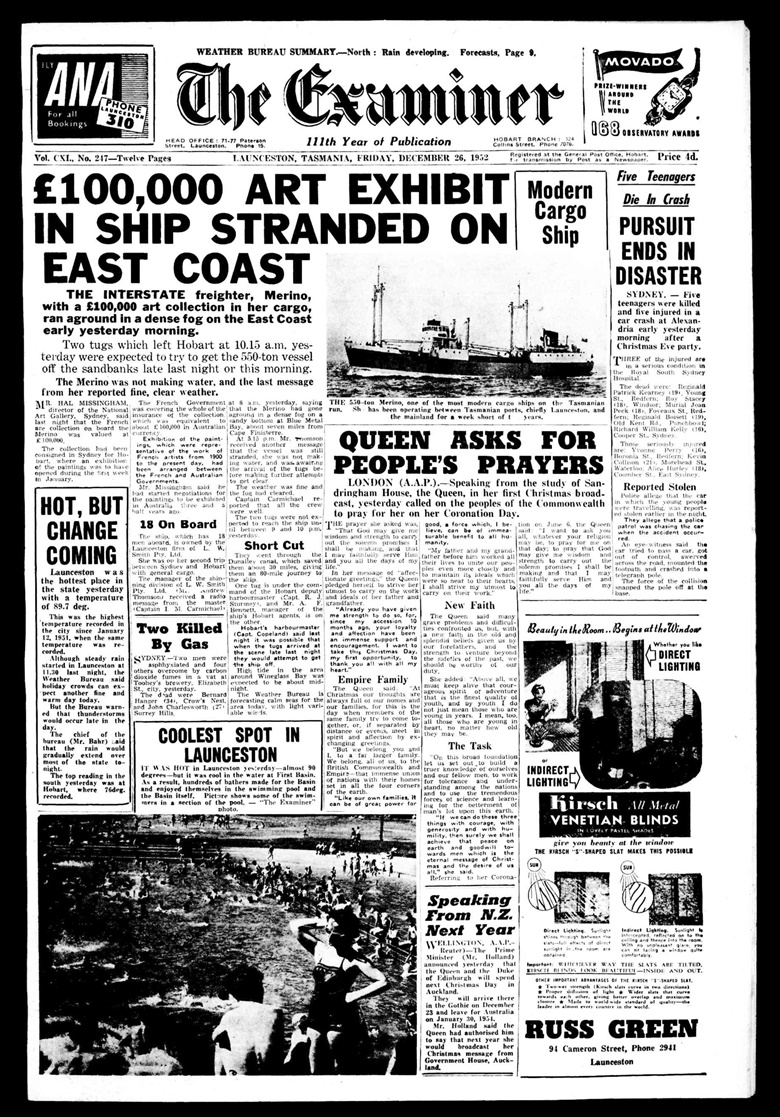
In the early hours of Christmas Day 1952, the cargo ship MV Merino ran aground off the east coast of Tasmania in dense fog. Bound for Hobart, it had 18 men on board, as well as a particularly precious cargo: 119 paintings sent to Australia from the other side of the world.
Four years in the planning, the show had been jointly organised by the Australian and French governments, with Hobart set to be the first stop on a multi-city tour that would also take in Sydney, Brisbane, Melbourne, Adelaide and Perth.
For a few days at the end of 1952, however, it was unclear whether the MV Merino — or any of the masterpieces on it — would survive intact. The 550-ton vessel remained stranded on a sandbank. It was only refloated when tugboats arrived from Hobart, shortly before the New Year.
French Painting Today would go ahead, albeit slightly belatedly, at the Tasmanian Museum and Art Gallery and the other five venues. Thanks to the media coverage surrounding the MV Merino — and the fact that this was the first major showing of modern French art in Australia — it proved a huge success.
The front page of The Examiner, 26 December 1952. The Examiner (Launceston, Tas.: 1900-1954) 26 December 1952: 1. National Library of Australia. http://nla.gov.au/nla.news-page4695719
According to Adelaide tabloid The News, ‘these French paintings are creating the greatest furore for years’. The Canberra Times, meanwhile, spoke of a ‘provocative event’, warning readers that a ‘masculine Antipodean palate, accustomed to a diet of realism, may find some of the paintings sophisticated to a point of being effete’.
Numerous attendance records were broken, with a combined total of 200,000 people seeing the show in Sydney and Melbourne alone.
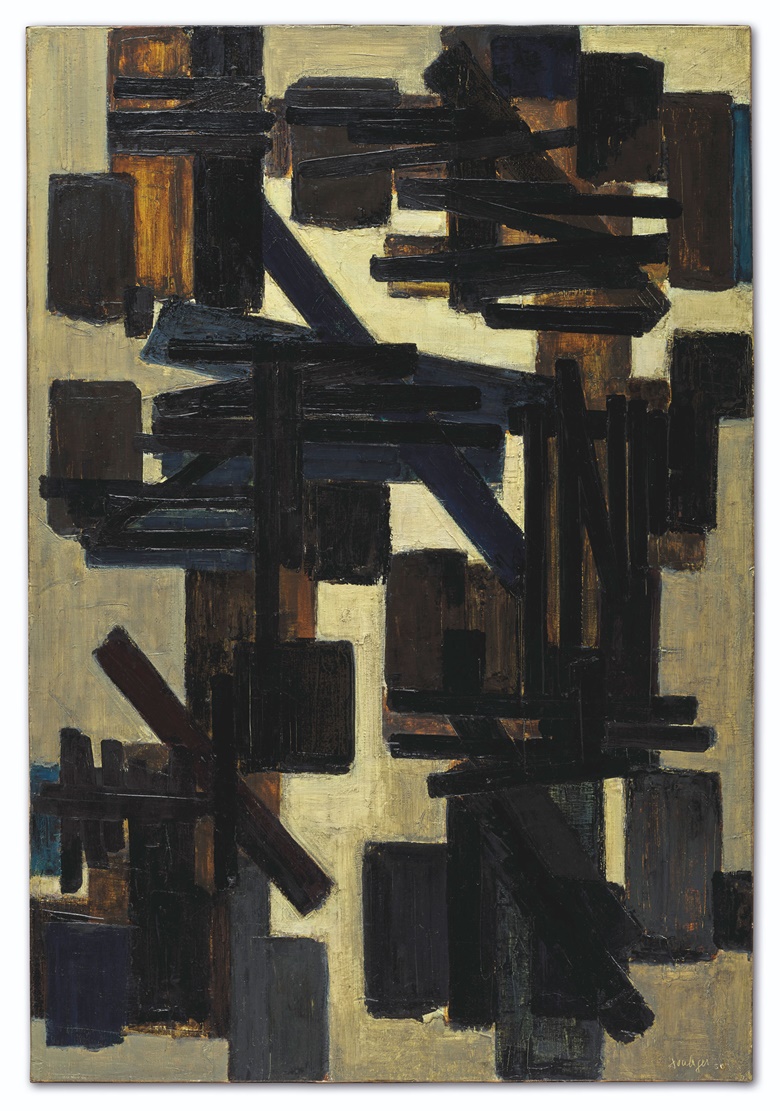
Among the star exhibits was Soulages’s Peinture 130 x 89 cm, 25 novembre 1950. As ever with this abstract artist, who turned 100 last year, black was the predominant colour.
Black, architectonic bars are layered on top of each other against a pale ground. They come in the form of either vertical or diagonal brushstrokes, which provide a contrapuntal structure.
Soulages’s imagery is frequently likened to that of the Abstract Expressionists in the US, who emerged, as he did, shortly after the Second World War. In contrast to their largely gestural approach, though, the Frenchman cared greatly about the construction of his compositions, in a bid for formal balance.
Among the influences on his artistic vocabulary, Soulages often cites the Romanesque architecture of the abbey church of Sainte-Foy in Conques, a village near his hometown of Rodez in southern France.
‘His paintings throw off strange, smoky reflections that suggest the hallucinating light of Rembrandt’ — art historian Sam Hunter
He says that standing beneath its huge barrel vault as a youth was his ‘first artistic experience’ — and that it inspired him to become a painter. With its play of vaulted shadow and tranquil light, Peinture 130 x 89 cm, 25 novembre 1950 is surely an homage to the abbey.
Brushstrokes range from broad slabs to narrow masts, with Soulages’s tarry black offset by occasional passages of mahogany and Prussian-blue. A sepia background glows softly from the centre, like daylight breaking through a window — which seems apt, given that Soulages was commissioned to design new stained-glass windows for Sainte-Foy in 1986.
Soulages, incidentally, tends to dislike giving his works conventional names, lest this unduly influence a viewer’s experience of them. He prefers titles that simply state a picture’s dimensions and date of execution.
Peinture 130 x 89 cm, 25 novembre 1950 was thus painted in 1950. Even at this relatively early stage of his career, Soulages revealed one of his longest-lasting preoccupations: the dynamic interaction of light on black paint.
The American art historian, Sam Hunter, wrote around this time that ‘his paintings throw off strange, smoky reflections that suggest the hallucinating light of Rembrandt’.
French Painting Today ran until September 1953, the date of its final stop at the Public Library of the Museum & Art Gallery of Western Australia in Perth. Peinture 130 x 89 cm, 25 novembre 1950 was purchased by an Australian collector almost immediately afterwards, and hasn’t been seen in public since.
Until now.
Peinture 130 x 89 cm, 25 novembre 1950 by Pierre Soulages is offered as part of the ONE sale at Christie’s on 10 July
The Coeur d’Alene Art Auction, known for selling the highest-quality Western paintings and sculpture from historical and contemporary artists, is pleased to announce its 35th annual Western art auction, to be held July 25 at the Grand Sierra Resort in Reno, Nevada. With over $300 million in sales over the last 15 years, the auction has been hailed as “The Biggest and Most Successful Auction of Western Art” by the Wall Street Journal, and was named “The Most Important Annual Event for Collectors of Western Art” by the New York Times. Once again, the Coeur d’Alene Art Auction is certain to be the high point of the Western auction world.
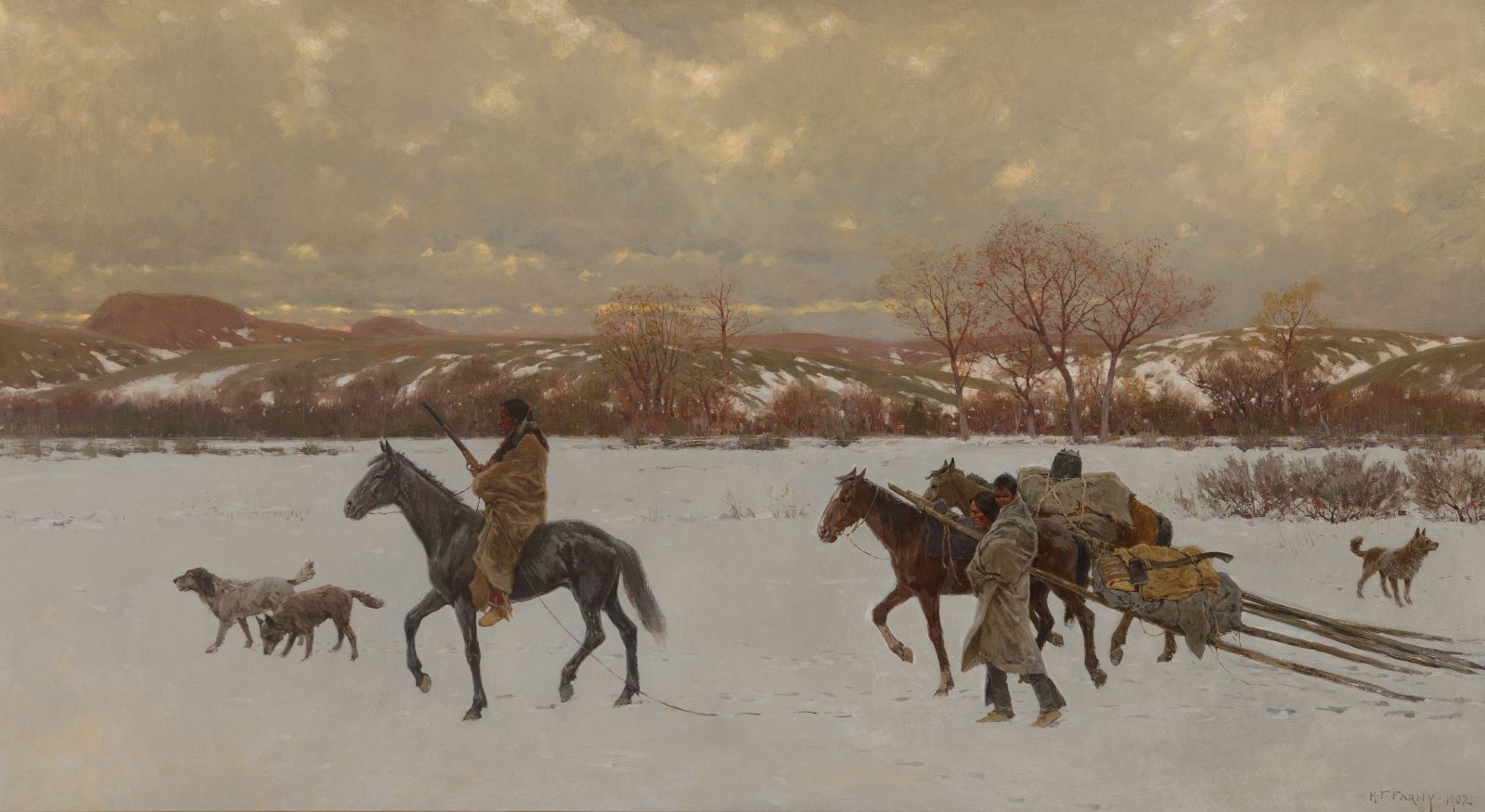
Lot 134, Henry Farny (1847-1916) Nomads (1902) oil on canvas
Museum-quality paintings will cross the block, headlined by a pair of masterpieces by Henry Farny and Thomas Moran. Nomads, by Henry Farny, is considered to be the finest example of the artist’s work. Farny only did a handful of large oils, which makes the painting a once-in-a-lifetime collecting opportunity. Estimated at $1,500,000- 2,500,000, it comes from a private collection and has never been to auction. Green River, Wyoming is a magnificent oil by Thomas Moran. Painted in 1883, it has all the luminescence Moran was known for in one of his most sought- after subjects. Estimated at $1,000,000-1,500,000, the fresh-to-market painting is certain to generate fireworks in the room when it crosses the block.
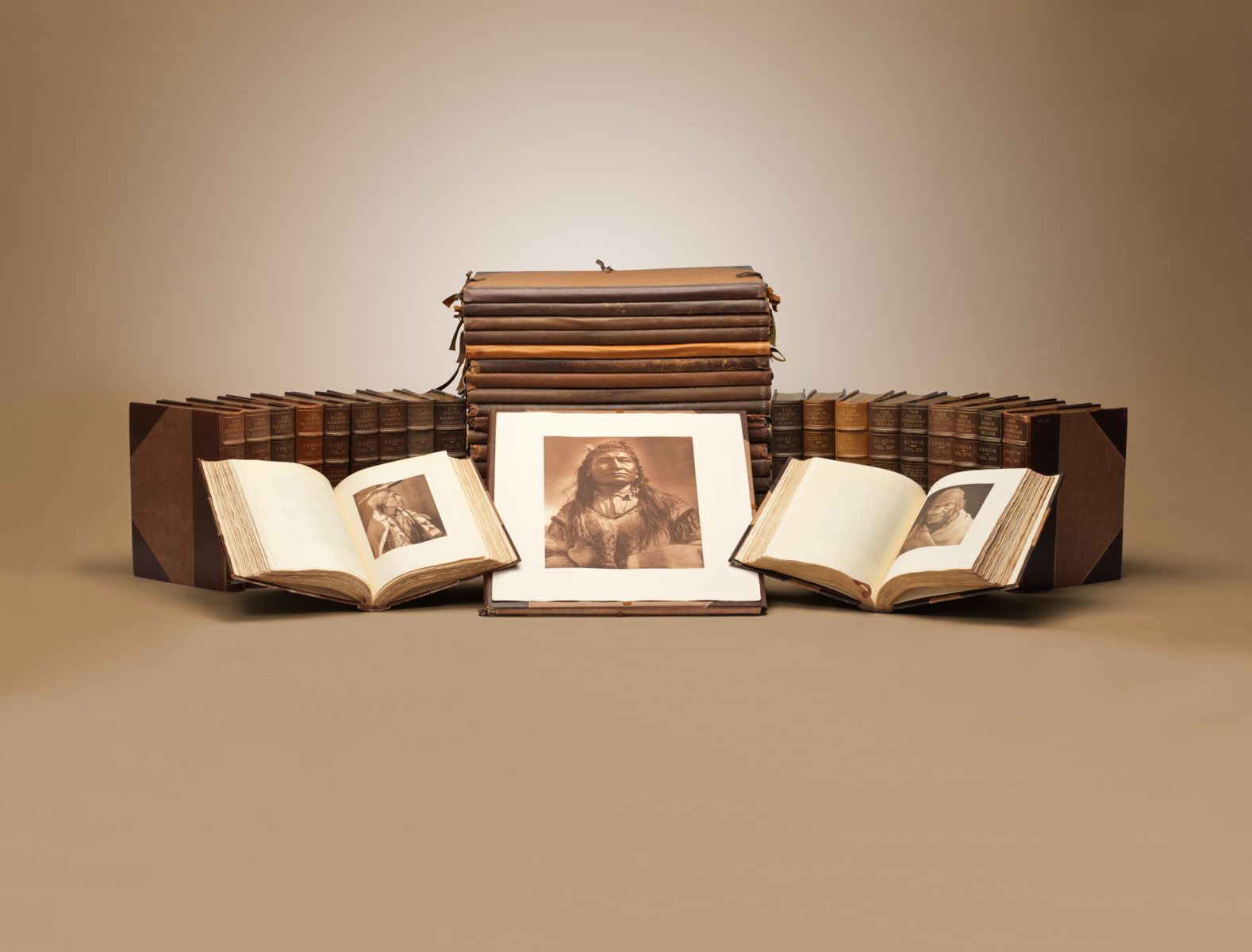
Lot 152, Edward S. Curtis (1868-1952); The North American Indian, Portfolios 1-20; and Vols. 1-20; Stickley Brothers (early 20th cen) American Oak Book Cabinet
One of the most historically important lots ever featured at the Coeur d’Alene Art Auction will be offered with Edward Curtis’ The North American Indian, a significant portfolio of works cataloging every major Native American tribe west of the Mississippi. The lot, which includes Curtis’ personal American oak book cabinet designed to house the portfolio, carries a presale estimate of $1,500,000-2,500,000. The New York Herald hailed his study as “the most gigantic undertaking since the making of the King James edition of the Bible.” For its completion, the project required the assistance of a vast array of patrons – most notably, President Theodore Roosevelt (who wrote the foreword to The North American Indian) and famed financier J.P. Morgan – plus countless researchers, scientists, editors, master craftsmen, interpreters, tribal elders, and medicine men. Of the proposed 500 editions of The North American Indian, only 272 were realized – most of which remain in institutional collections.
Coeur d’Alene has long been the specialist in selling works by Charles M. Russell. Montana’s favorite artist has been a mainstay of the auction for decades, and this year features a large selection of his works. Blackfeet War Party showcases the high action Russell was known for, and is estimated at $200,000-300,000. It will be joined by Planning the Attack ($150,000-250,000), With a Good Hoss under Him … ($150,000-250,000), Scout on Horseback ($60,000-90,000), along with other exemplary works.
The finest painting to come to market in decades by Edward Borein, Trail Boss, is a large watercolor, measuring 15 × 20 inches, and is considered to be his best work. It comes from a prominent single-owner collection of Boreins, and carries an estimate of $50,000-75,000. Additional historical works include E. William Gollings’ The Red Man’s Directions ($250,000-350,000); William Herbert Dunton’s The Cowpuncher ($100,0000-150,000); Frank Tenney Johnson’s Moonrise over the Mesa ($150,000-250,000); Edgar S. Paxson’s Buffalo Hunt ($60,000-90,000); Gerard Curtis Delano’s The Mountain Man ($250,000-350,000); Tom Lovell’s Trouble on the Overland Telegraph ($100,000-150,000); Harvey Dunn’s Midnight Posse ($60,000-90,000); and a rare bison bronze by Henry Shrady ($70,000-100,000). An important single-owner collection of over ten works by Olaf Seltzer will also be offered.
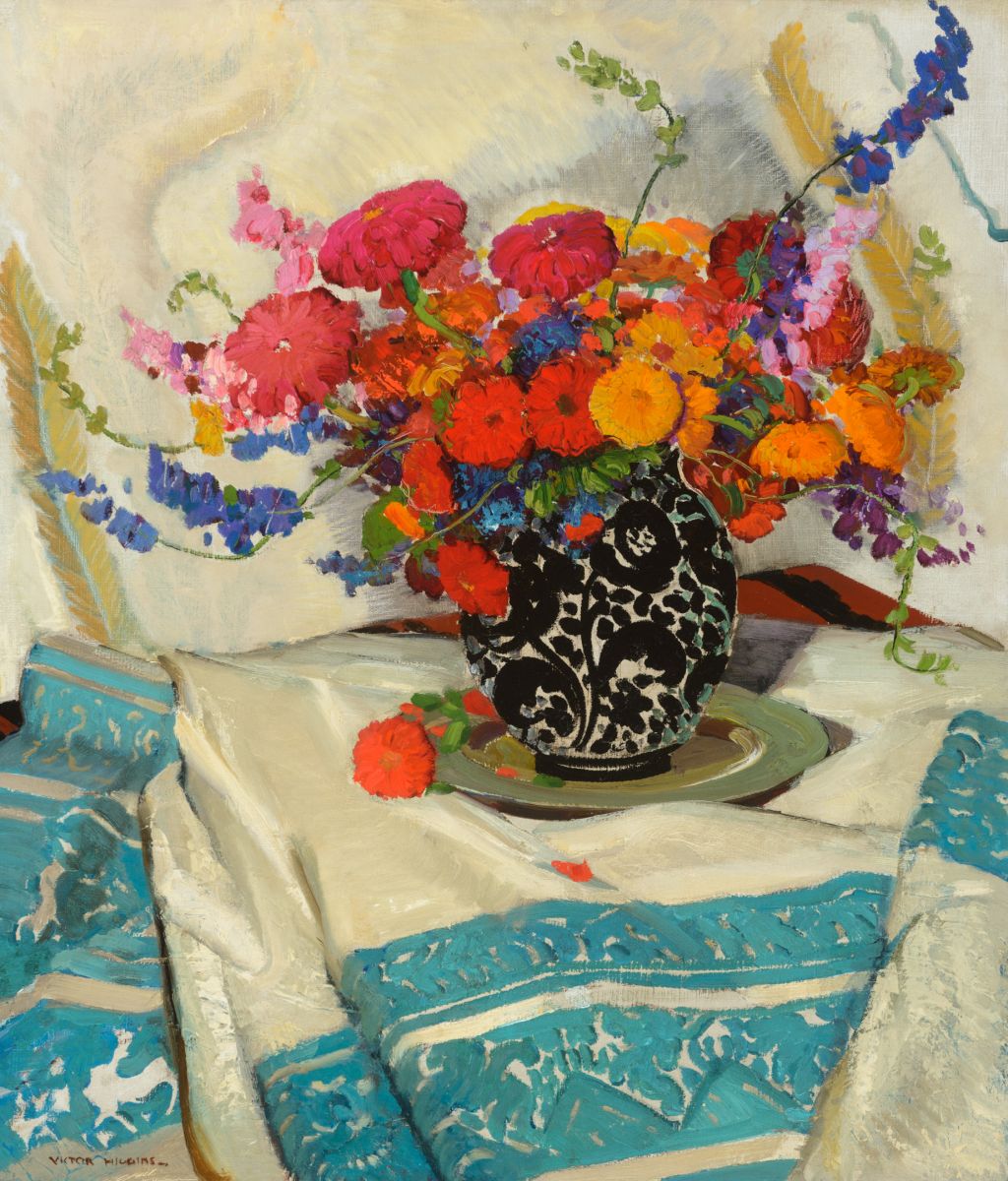
Lot 40, Victor Higgins, New Mexico Zinnias, oil on canvas
Taos artists have always been a mainstay of the Coeur d’Alene Art Auction, and this year features rare works such as Victor Higgins’ New Mexico Zinnias ($200,000-300,000) and Ernest Blumenschein’s White Sun ($150,000- 250,000). Additional Taos works will include a fine group of paintings by Eanger Irving Couse. The Tobacco Bag ($100,000-150,000), Song of the Blue Aspens ($80,000-120,000), and The Butterfly ($80,000-120,000) will be sold, along with works including E. Martin Hennings’ Indians Crossing a Stream, Taos, New Mexico ($80,000- 120,000); Joseph Henry Sharp’s A Corn Dance ($30,000-50,000); Henry Balink’s Hopi Snake Dance ($30,000- 50,000); and Leon Gaspard’s Taos Drummers ($30,000-50,000).
Early Western landscapes include a masterwork by Birger Sandzén. Summer in the Mountains is a 60 × 80 inch oil, estimated at $300,000-500,000. It will be joined by other significant works, such as Edgar Payne’s Sierra Majesty ($150,000-250,000) and Mountain Lake ($40,000-60,000); Maynard Dixon’s Shifting Light on a Poplar ($30,000- 50,000); Thomas Hill’s Waterfall in the Rockies ($20,000-30,000); and Gunner Widforss’ Grand Canyon – Yavapai Point ($15,000-25,000).
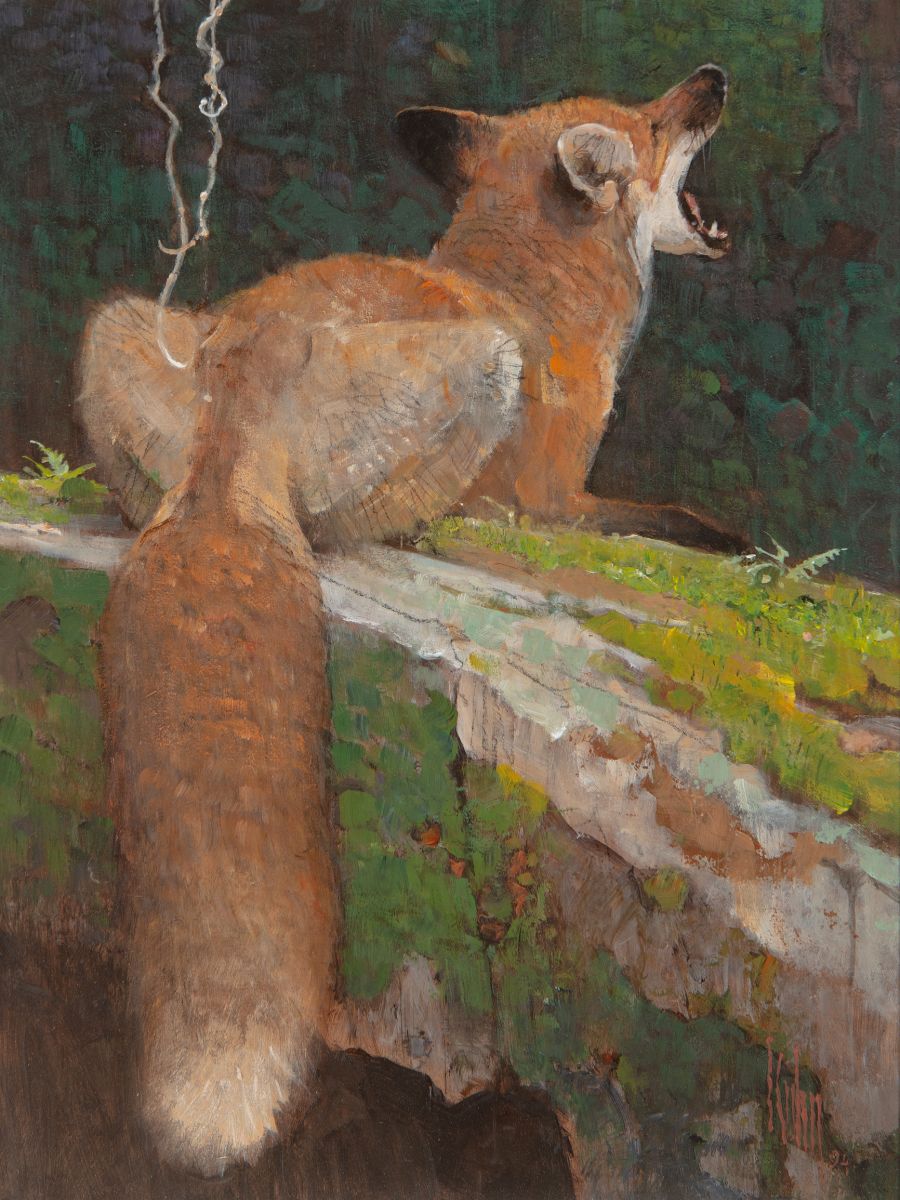
Lot 31, Bob Kuhn (1920-2007) Bored to Tears (1994), acrylic on board
Sporting art is always a major focus of the auction, and this year’s offerings feature a major painting by Carl Rungius. Herd Bull is considered one of his best works, and has been in a private collection for decades. Estimated at $200,000-300,000, it is sure to generate spirited bidding. It will be joined by a group of exceptional works by Bob Kuhn, including Sunny Day, Cape Churchill ($60,000-90,000) and Bored to Tears ($30,000-50,000), the latter of which is a rare red fox painting. In addition, a large collection of eleven works by David Shepherd will be sold, including Serengeti Skies and Twenty Five Thirsty Elephants, both estimated at $30,000-50,000, respectively.
Unique to the sale is a very important collection of paintings by Richard Schmid, many of which were recently featured in the museum exhibition The Masterworks of Richard Schmid at Mark Arts in Wichita, Kansas. New Preston Falls II ($100,000-150,000), The Irish Sea ($40,000-60,000), and Apples ($40,000-60,000) are a few of the offerings. The 20th century realm will be rounded out by works such as G. Harvey’s Moments of Glory ($80,000- 120,000); Clark Hulings’ Old Lady in Black – Valencia ($60,000-90,000); Frank McCarthy’s With Carbines Drawn ($20,000-30,000); Olaf Wieghorst’s Wrangling the Pony Herd ($30,000-50,000); and Roger Medearis’ Summer Pastoral ($60,000-90,000).
Blue-chip contemporary masters make up a large part of the sale, and will feature works such as Martin Grelle’s Monarchs of the North ($250,000-350,000); Logan Maxwell Hagege’s Land Meets Sky ($80,000-120,000); Z. S. Liang’s Beseeching the Underwater People ($50,000-75,000); Martin Grelle’s Windbreak ($30,000-50,000); D. Edward Kucera’s Switchback ($15,000-25,000); Kyle Polzin’s Spare Parts ($15,000-25,000); Jeremy Winborg’s On the Trail to Chinle ($20,000-30,000); William Acheff’s Harmony with Nature ($25,000-35,000); and Ken Carlson’s Solitary Watch ($15,000-25,000). Additionally, 24 model wagons will be offered by master artist Brian L. Ford.
History in the DetailsAn Unprecedented Collection of Watches, Vertu and LettersSheds new light on the Great Visionaries of Modern European HistoryLed by a Revolutionary Watch made for King George III by Breguet,The Father of Modern WatchmakingAnd a Group of Letters and PhotographsCapturing Intimate Portraits of Masterminds of their Time, from Darwin to Napoléon
History is in the details and this was the conviction of an enlightened collector who painstakingly assembled one of the finest collections of horological treasures, objects of vertu, and unpublished letters by the great visionaries of the 18th and early 19th century. All the great minds of the time are represented, from watchmaking genius Breguet, to skilled strategists and leaders, such as Napoléon Bonaparte and Lord Admiral Nelson.
This fascinating collection which captures intimate portraits of these storied figures, while also shedding unprecedented light on turning points in modern European history, will be brought to market by Sotheby’s London in a series of sales starting next month. Under the appellation The Collection of a Connoisseur, the series will include a dedicated live sale on 14 July offering over 150 works, and an online sale The Collection of a Connoisseur: History in Manuscript on 8 – 15 July. Further outstanding pieces from the collection will be offered across a number of sales at Sotheby’s throughout the year.
King George III’s Tourbillon: One of Breguet’s Most Important Watches
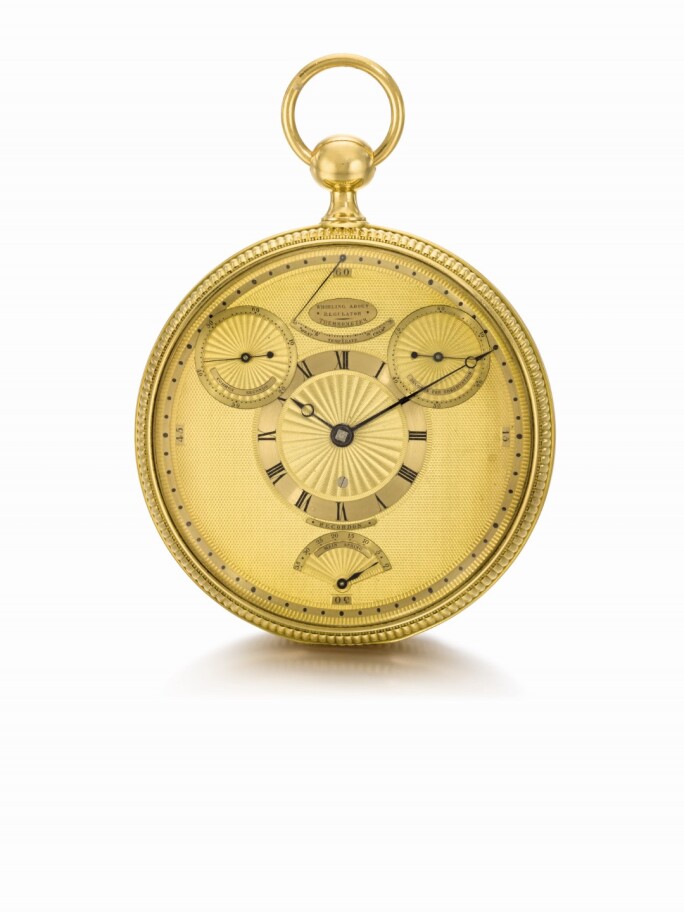
The live sale on 14 July will be led by a gold four-minute tourbillon watch made circa 1808 for King George III by Abraham-Louis Breguet (1747-1823) – the man who made accurate time portable thanks to his revolutionary invention: The Tourbillon. Breguet was also a “celebrity watchmaker” whose creations were sought after by all the crowned heads of Europe, from Marie Antoinette and the King of Spain to Napoléon and Tsar Alexander I.
Estimated at £700,000-1m (€805,000-1.2m / US$ 895,000-1.3m) and engraved with King George III’s royal cypher and the letters G & R, the watch is one of the most important pieces ever created by the genius watchmaker. It is most probably the first tourbillon Breguet sold commercially and is groundbreaking from many points of view (see table below).
An avid supporter of the sciences, deeply involved in the greatest scientific debate of his time – the longitude problem, George III (1738-1820) was also passionate about horology and assembled a remarkable collection of clocks and watches. This passion led the king to brave the blockade isolating Britain from the rest of Europe in the midst of the Napoleonic Wars (1803-1815) to purchase what was then considered cutting-edge technology.
For King George III to purchase a French watch during this period would have seemed unthinkable. To prevent the chance of its seizure, the watch appeared from the outside to be unsigned: Breguet only signed the tourbillon carriage inside the watch. The piece – recorded as No. 1297 in Breguet’s archives – was sent to Recordon, Breguet’s London agent for the King on 29 June 1808 and sold for FF 4,800, a huge sum at the time. It actually took George III over five years to pay for the watch in full. The ‘Georgian Papers’ archive contains a bill ‘reminder’ from 1812 which is addressed to the King’s son, the Prince Regent and lists four Breguet pieces for which payments remain outstanding. The first in the list is no. 1297.
The watch created a sensation when it appeared for sale at Sotheby’s from a private collection inNovember 1999, selling for £551,500. At the time, the watch had not been seen in public since its inclusion in the 1955 exhibition “Five Centuries of Timekeeping” at Goldsmiths’ Hall in London. Carefully stored since 1999, the watch has survived in extraordinarily original condition.
Next month, it will be offered alongside mechanical marvels, including very rare automata created in Geneva at the turn of the 19th century. Among the most sophisticated and whimsical are a ‘temple’ box made in 1807-08 by the Geneva goldsmith Phillipe Sené and Henri Neisser (est. £500,000-700,000) and a singing bird watch made by Frères Rochat, circa 1820 (est. £400,000-600,000).
Royal
Featuring a captivating array of personal and official royal documents the History in Manuscripts sale will offer an incredible insight into the lives and tastes of members of the British royal family. From an early signed letter by Elizabeth I (Lot 5040, £12,000 – 18,000) to a document signed by her cousin and legendary rival, Mary, Queen of Scots (Lot 5066, £8,000 – 12,000) during one of the most turbulent periods in Scottish history, to official court letters of George III and the personal correspondence of Queen Victoria, the collection includes royal manuscripts spanning over three centuries, from the 1560s to the 1880s.
Well known for her extensive journal writing, Queen Victoria was also an enthusiastic and impassioned letter writer as revealed through her well documented private and courtly correspondence. Among the examples on offer are personal letters to her Poet Laureate, Alfred Lord Tennyson (Lot 5110, £4,000 – 6,000 / Lot 5103, £500 – 700) expressing her pleasure in conferring a peerage on him; a rare personal signed letter to Ferdinand II announcing the birth of her son Albert, Prince of Wales in 1841 (Lot 5109, £400 – 600); and a series of 15 intimate autograph letters to Lily Wellesley (Lot 5106, £5,000 – 7,000), the wife of Gerald Wellesley, the Dean of Windsor and one of the Queen’s closest advisors, on a range of personal subjects including her grief following the death of the Dean, and that of her personal attendant, John Brown.
The letters will be offered alongside a splendid group of six etchings (Lot 5107, £1,500 – 2,000) by Queen Victoria showing her as a talented amateur artist. Etching at Windsor Castle, under the guidance of Sir George Hayter and later Sir Edwin Landseer, Victoria produced some sixty-two plates, sometimes working on a plate with her husband, Prince Albert. An activity undertaken largely for the royal couple’s own amusement, very few of each of the etchings were ever printed, with an occasional print and a very few sets, like this present lot, distributed as gifts.
Napoléon and the Great Military Minds
Considered one of the most tumultuous periods in European history, the Napoleonic era was defined as much by the ambitious and eminent military leaders of the time as by the battles they fought. Napoleon’s endeavor to create a French-dominated empire in Europe pitched him against Britain’s formidable leader of the Royal Navy Lord Nelson, bringing together two of the greatest military minds in history.
The power and passion of these great leaders are beautifully captured in a series of important letters and manuscripts from this momentous moment in history – with six letters and documents signed by Napoleon himself; seven letters by Nelson, including letters connected to all three of his greatest victories (the Nile, Copenhagen, and Trafalgar). Also on offer will be the magnificent grant of the Dukedom of Brontë (Lot 5154, £40,000 – 60,000) and letters by most of the generals, statesmen, and royals who played leading public roles in this turbulent period.
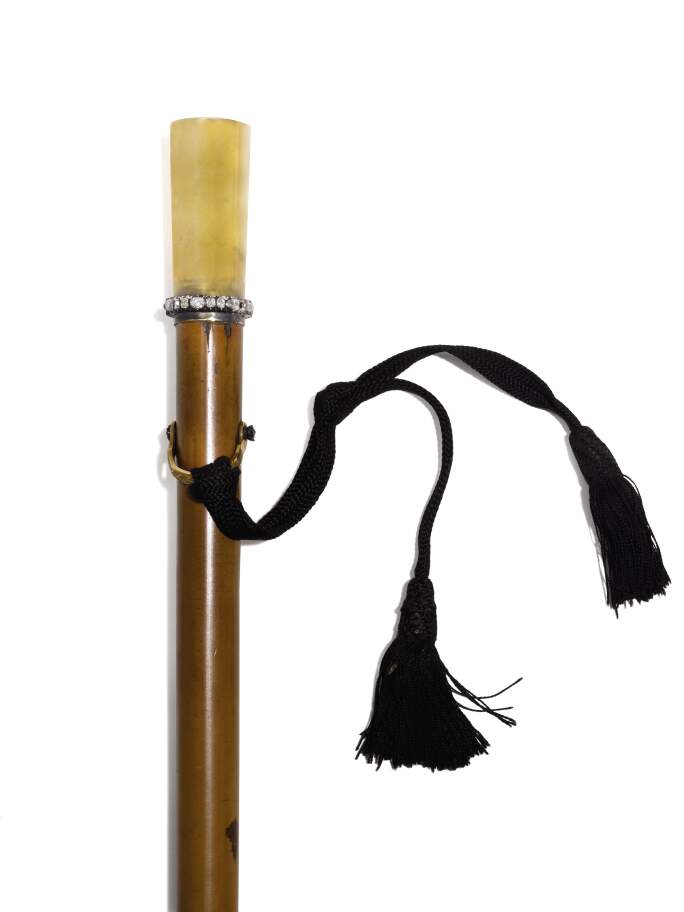
The fascination for objects d’art closely connected to major moments in British and European history will also be evidenced in the dedicated live sale on 14 July, including a diamond-set walking cane presented to Nelson (Lot 17, £70,000 – 90,000, pictured above) by the inhabitants of the Greek Island of Zante following his victory over the French fleet at the Battle of the Nile in 1798; several gold boxes with a Napoleonic connection (Lots 52 – 56), including official presentation boxes with the cipher of Napoleon III found alongside more intimate personal examples, such as a tortoiseshell snuff box containing an intricately painted miniature of Empress Josephine, by the renowned miniaturist Jean-Baptiste Isabey (Lot 56, £8,000 – 12,000).
Further stand-out lots from the sales:
The British Legion Album (Lot 5150, £30,000 – 50,000) – an important commemoration of the sacrifices of the First World War, compiled to raise funds for the British Legion. Comprising c.527 inscriptions, including contributions by many of the leading cultural and public figures of the early 20th century, from autograph poems by Housman and Yeats, to drawings by William Orpen and Augustus John, and autograph messages signed by statesmen and members of the Royal Family;
An autograph letter by Claude Monet (Lot 5071, £1,500 – 2,000) to an unidentified ‘Cher Monsieur’ in French, begging for his help in the desperate situation in which he finds himself, with his furniture loaded on a carriage, but without a penny to pay the removers, and asking for one hundred francs to tide him over;
A photographic portrait of Charles Darwin by Oscar Gustave Rejlander (Lot 5029, £6,000 – 8,000) – a signed photograph of the Father of Evolution taken by the Father of Art Photography.
About Sotheby’s: Sotheby’s has been uniting collectors with world-class works of art since 1744. Sotheby’s became the first international auction house when it expanded from London to New York (1955), the first to conduct sales in Hong Kong (1973), India (1992) and France (2001), and the first international fine art auction house in China (2012). Today, Sotheby’s has a global network of 80 offices in 40 countries and presents auctions in 10 different salesrooms, including New York, London, Hong Kong and Paris. Sotheby’s offers collectors the resources of Sotheby’s Financial Services, the world’s only full-service art financing company, as well as the collection, artist, estate & foundation advisory services of its subsidiary, Art Agency, Partners. Sotheby’s also presents private sale opportunities in more than 70 categories, including S|2, the gallery arm of Sotheby’s Global Fine Art Division, and three retail businesses: Sotheby’s Wine, Sotheby’s Diamonds, and Sotheby’s Home, the online marketplace for interior design.
Highlights Include Exceptional Artworks by Joan Mitchell, Helen Frankenthaler, Jean-Michel Basquiat, Matthew Wong, Maxfield Parrish, Gerhard Richter, David Hammons, Julio González, Charles White, and Banksy, and More
Joan Mitchell, Noël, 1961-1962Estimate: $9,500,000 – 12,500,000
NEW YORK – 18 June 2020 – Phillips announces its forthcoming 20th Century & Contemporary Art Evening Sale in New York City via livestream to bidders worldwide on July 2, 2020 at 5pm EDT. The sale will debut an enriched digital experience on Phillips.com, including augmented multimedia content, enhanced visuals, and art historical and market analysis that will allow for deep viewer engagement. A dynamic live auction streamed on our online platform will bring the live auction experience to collectors and viewers around the world using a virtual international bidding room of Phillips specialists.
“Phillips has been at the forefront of identifying the future of the bidding and buying experience online with the ability to bid on our app along with live streaming for nearly half a decade. We’re thrilled to bring our marquee Evening Sale to collectors worldwide in a format that will capture the intimacy and excitement of being in the room,” states Jean-Paul Engelen, Phillips Deputy Chairman and Worldwide Co-Head of 20th Century & Contemporary Art.
Featuring more than 20 lots, the sale includes works by artists highly sought after in today’s market including Joan Mitchell, Helen Frankenthaler, Gerhard Richter, Jean-Michel Basquiat, Matthew Wong, David Hammons, Amoako Boafo, Albert Oehlen, Lucas Arruda, Christina Quarles, Charles White, Banksy, KAWS and others. “The works presented in our 20th Century & Contemporary Sale mark the bellwether of the art market today, featuring artists who have demonstrated collector demand across the globe with a focus on African American, female, and cutting-edge contemporary artists,” states Robert Manley, Phillips Deputy Chairman and Worldwide Co-Head of 20th Century & Contemporary Art.
Jean-Michel BasquiatVictor 25448, 1987Valued at $10 million
Evening Sale Highlights
Two superlative works by artists of the 20th century include Joan Mitchell’s Noël and Helen Frankenthaler’s Head of the Meadow. An exceptional 1994 painting by Gerhard Richter hails from the height of his abstract period coincides with the highly regarded retrospective currently at the Met Breuer, Gerhard Richter: Painting After All.
Following the house’s stellar result for Jean-Michel Basquiat’s Flexible, which sold for more than $43million in 2018 more than doubling the pre-sale low estimate of $20 million, Phillips will offer an impressive work executed in 1987, just one year before his untimely death. Last offered publicly more than a decade ago, Victor 25448 captures the singular coalescence of text and imagery that is a hallmark of the artist’s celebrated practice.
An Old Master replica tagged with a stenciled monkey guzzling gasoline from a child’s juice box represents a significant work by master-interventionist Banksy to come to auction this season from his Crude Oil series. Fellow disruptor KAWS is represented with a large-scale early Companion painting from 2000.
On the heels of Phillips’ strong debut offering of American art in the 20th Century & Contemporary Sales with Norman Rockwell’s Before the Shot in November 2019, marking the first time the artist was ever included in a 20th Century and Contemporary Evening Sale and achieving a price of $4.7 million, this sale will offer a rare, never publicly-seen painting by Maxfield Parrish. Humpty Dumpty, 1921, hailing from The du Pont Family, captures the technical prowess and imagery which hovers between popular kitsch and surreal that has cemented the artist’s position as the “Grand Pop” of American Pop Art by Time magazine. Phillips is delighted to continue to debut artists with significant primary market following to auction. This season the sale will feature a painting by Matthew Wong, the self-taught artist known for this interior scenes and landscape depictions, marking one of the first paintings by Wong offered in an Evening Sale context. Other contemporary artists debuting this season include Otis Kwame Kye Quaicoe and Robert Nava. Charles White’s Sometimes I Feel Like a Motherless Child from 1958, painted shortly after the artist moved to Los Angeles where he became an important teacher and mentor for African American artists at Otis College of Art and Design. Taking its title from an African American spiritual, which regained popularity in the civil rights movement, the work is a significant example of his signature draftsmanship utilizing ink wash in color. With an estimate of $700,000 – $1,000,000, the work is poised to make a world record for the artist in this medium. David Hammons’ Untitled (Jordan begins his 8th season as no. 1) from 1991 transforms a copy of the Amsterdam News from November 2, 1991 into a work of contemporary realism. Phillips is pleased to continue to bring to market works by artists for which we have achieved world record results across our sales globally. The sale includes a painting Lucas Arruda whose world record was achieved at Phillips London in February 2020, realizing a price of £300,000, as well as a painting by Christina Quarles for whom we achieved the world record this past November 2019, $275,000, more than five times the low estimate of $50,000, after debuting the artist in a Phillips’ Day Sale New York November 2018. In addition, the sale will feature a work by Amoako Boafo, whose world record was achieved at Phillips London in February 2020 with his auction debut The Lemon Bathing Suit, which achieved a price of £675,000 more than twenty times its low estimate of £30,000. Francis Picabia’s 1941-42 Portrait de Femme hails from a late period in the artist’s career devoted to painting pin-ups, which have gone on to have a significant influence on contemporary artists working today including John Currin and David Salle.
Matthew WongMood Room, 2018Estimate: $60,000 – 80,000
Charles WhiteSometimes I Feel Like a Motherless Child, 1958Estimate: $700,000 – 1,000,000
Julio González’s bronze sculpture, L’arlequin / Pierrot ou Colombine represents his pioneering practice in light of his collaborative work with Pablo Picasso.
Christina Quarles, Placed, 2017Estimate: $70,000 – 100,000
Phillips 20th Century & Contemporary Art Day Sale will be livestreamed to bidders worldwide on July 2 across two sessions, starting at 11am EDT and later at 2pm EDT. The sale will champion numerous artists from the 20th and 21st centuries, featuring more than 170 lots across both sessions.
Leading the Morning Session is John Chamberlain’s monumental Pure Drop, 1983, from the artist’s Giraffe series. Pure Drop exemplifies Chamberlain’s novel sandblasting technique, which began to define his oeuvre after his move to Florida in the early 1980s. Also featured in the sale is a remarkable landscape painting from 1995 by Cuban artist Tomas Sánchez, Meditador, its title referring to Sánchez’s conception of landscape playing a meditative role between man and nature. Another top lot is Kenneth Noland’s Resect, 1979, one of the artist’s renowned asymmetrically shaped canvases. Other notable works include sculptures by Anne Truitt and Joseph Cornell, and two works by Henri Laurens, culminating the selection of works from the Collection of Florence Knoll Bassett, which have been offered across Phillips’ 20th Century & Contemporary Art & Design Sales over the past year.
Noah Davis100 Years of Entertainment 1-5, 2008Estimate: $120,000-180,000
The Afternoon Session will feature works by important contemporary artists, including Jonathan Lyndon Chase, Matthew Wong, Amoako Boafo and Noah Davis—notably Davis’s 100 Years of Entertainment 1-5, 2008, which exemplifies the abstracted figuration for which the artist is known. This comes to auction on the heels of a new world auction record for the artist, set this past March at Phillips, with a painting selling for $400,000, over six times its low estimate. Another highlight will be Vivian Springford’s Untitled (Tanzania Series), 1972, the first work by the artist to be offered at Phillips. While an active figure in the New York art scene from the 1950s to the 1970s, Springford withdrew from the public eye until her work was rediscovered in the late 1990s just before her death, and more recently shown at Almine Rech Gallery in New York in 2018. The sale will also include John Baldessari’s Double Bill (Part 2): …and Ernst, 2012—a quintessential example of Baldessari’s unmistakable semiotic wordplay—from the Collection of Blake Byrne, Los Angeles.
John Baldessari Double Bill (Part 2): …and Ernst, 2012Estimate: $200,000-300,000
John ChamberlainPure Drop, 1983Estimate: $600,000-800,000
Phillips is a leading global platform for buying and selling 20th and 21st century art and design. With dedicated expertise in the areas of 20th Century and Contemporary Art, Design, Photographs, Editions, Watches, and Jewelry, Phillips offers professional services and advice on all aspects of collecting. Auctions and exhibitions are held at salerooms in New York, London, Geneva, and Hong Kong, while clients are further served through representative offices based throughout Europe, the United States and Asia. Phillips also offers an online auction platform accessible anywhere in the world. In addition to providing selling and buying opportunities through auction, Phillips brokers private sales and offers assistance with appraisals, valuations, and other financial services.
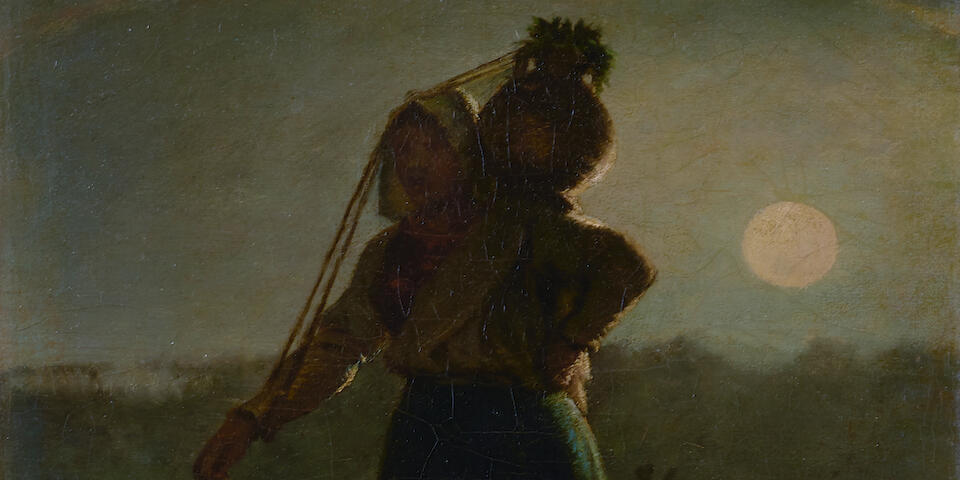
New York – Laitière normande (Norman milkmaid), by renowned French Artist, Jean-François Millet, is one of the highlights of Bonhams 19th Century European Paintings sale in New York on Wednesday 8 July. This painting, one of the first in the artist’s series of works depicting milkmaids, has an estimate of $250,000-350,000.
Passed down for generations within a New York family, Laitière normande has not been seen by the public at large for nearly 90 years. A version is in the collection of the Barber Institute of Fine Arts in Birmingham, England.
Bonhams specialist in 19th century painting Rocco Rich said: “It’s a great pleasure to bring this wonderful and important work – one of the very earliest of Millet’s celebrated milkmaids – to auction. The subject fascinated the artist throughout his life and, of course, offered him many opportunities to pay homage to his beloved native Normandy.”
Additional highlights of the sale include: – A landscape of Environs d’Arras, borde de la Scarpe by Jean-Baptiste-Camille Corot (French, 1796-1875), oil on panel, executed circa 1860-65 (estimate: $80,000-120,000) – A maritime painting of The battle off Lagos, August 18, 1759 by Richard Paton (London 1717-1791), oil on canvas (estimate: $20,000-30,000) – A bronze sculpture of Jeune Fille de bou Saada by Louis Ernest Barrias (French, 1841-1905), bronze with gold-brown patina (estimate: $10,000-15,000)
Freeman’s is delighted to announce the results of its highly successful American Art & Pennsylvania Impressionists auction featuring The Collection of Heidi Bingham Stott.
The auction realized a sell-through rate of 95%, achieving over $2.8 million, surpassing its pre-sale high estimate.
The Pennsylvania Impressionists section of the sale achieved an 100% sell-through rate and accounted for nearly 80% of the sale total,realizing over $2.2 million in just 36 lots. The section opened with 11 works from The Collection of Heidi Bingham Stott, which totaled $1.3 million with nearly 82% of the works selling above their pre-sale high estimates. The stellar results achieved for Pennsylvania Impressionists, including works by Edward Redfield, Daniel Garber, George Sotter, and Fern Coppedge, reaffirmed Freeman’s position as the auction market leader for this collecting category.
“There was excellent pre-sale interest and buzz surrounding the auction given the high quality of the material on offer. The auction, which included two new world auction records, ultimately far exceeded our wildest expectations. With strong competition and bidding wars throughout, it felt like we were selling during a market peak rather than in current circumstances. We, and more importantly our consignors, are delighted with the outcome.”
—Alasdair Nichol, Chairman
RECORD PRICES ACHIEVED FOR WILLIAM LANGSON LATHROP & JACKSON LEE NESBITT
Lot 39 | William Langson Lathrop (American, 1859-1938), The Bonfire, oil on canvas—SOLD FOR $112,500
The Pennsylvania Impressionists section of the auction was led by The Collection of Heidi Bingham Stott, which opened with The Bonfire by William Langson Lathrop (Lot 39). Estimated at $15,000-25,000, the important work elicited spirited bidding from 14 phone lines before ultimately selling to an online bidder for $112,500.This price set a new world auction record for the artist, adding William Langson Lathrop to the list of Pennsylvania Impressionists–including Fern Isabel Coppedge, Kenneth R. Nunamaker, and Antonio Pietro Martino–for whom Freeman’s currently holds world auction records.
Another world auction record was set earlier in the sale when November Evening by Jackson Lee Nesbitt (Lot 24) soared past its pre-sale estimate of $5,000-8,000 to sell for $52,000. This rare and fresh-to-market work was in the same private collection in Lancaster, PA for generations and is the basis for a print in the collection of the Whitney Museum.
TOP PRICES ACHIEVED FOR IMPORTANT WORKS BY EDWARD WILLIS REDFIELD AND DANIEL GARBER
Lot 40 | Edward Willis Redfield (American, 1869–1965), Spring at Point Pleasant on the Delaware River, oil on canvas—SOLD FOR $483,000
Out of the auction’s eight lots that achieved six-figure prices, seven of them were by either Edward Willis Redfield or Daniel Garber, the two titans of Pennsylvania Impressionism. Leading the sale was Redfield’s Spring at Point Pleasant on the Delaware River (Lot 40), the undoubted highlight from The Collection of Heidi Bingham Stott.Realizing $483,000, the frequently exhibited and published work was acquired by a private collector in Pennsylvania and is the highest price achieved by Freeman’s for a spring scene by the artist. A similarly successful result was achieved for Garber’s Rodger’s Meadow (Lot 44), also from the Stott Collection. This important work exceeded its pre-sale high estimate, selling to a collector on the phone for $312,500.
In total, the sale featured five works by Edward Redfield and three by Daniel Garber, and all met, or in the majority of instances, greatly exceeded, expectations: two additional spring scenes by Edward Redfield– May, Point Pleasant (Lot 50) and The Peaceful Valley (Lot 57)–each realized $225,000; while the two remaining works by Garber exceeded their pre-sale high estimates with September Morning (Lot 45) selling for $112,500, and Autumn Solebury (Lot 46) doubling its pre-sale high estimate to realize $100,000, thereby setting a new auction record for the artist’s small-sized works.
AMERICAN ART HIGHLIGHTS
Lot 29 | Arthur Beecher Carles (American 1882-1952), Mlle de C., oil on canvas—SOLD FOR $27,500
Great anticipation undoubtedly surrounded the Pennsylvania Impressionists section of the sale, but similar excitement was generated by many lots within the American Art section. The bidding wars began early in the auction when The Signing of the Compact in the Cabin of the Mayflower by Edwin White (Lot 4) more than doubled its pre-sale high estimate to achieve $32,500. This was soon followed by Theodore Robinson’s Vermont Hillside (Lot 9), which also exceeded expectations when it sold for $43,750. N.C. Wyeth’s The Converted Barn (Lot 26) realized $75,000, and works by Jessie Wilcox Smith (Lot 22); Charles Burchfield (Lot 28); and George Weymouth (Lot 33) are just a few additional lots that sold above their high estimates.Mlle de C. by Arthur Beecher Carles (Lot 29) realized $27,500 and was acquired by the Woodmere Art Museum in Philadelphia. Woodmere’s Director and CEO William Valerio remarks that he is “Very proud to have acquired such a great painting for Woodmere and for all to know.”
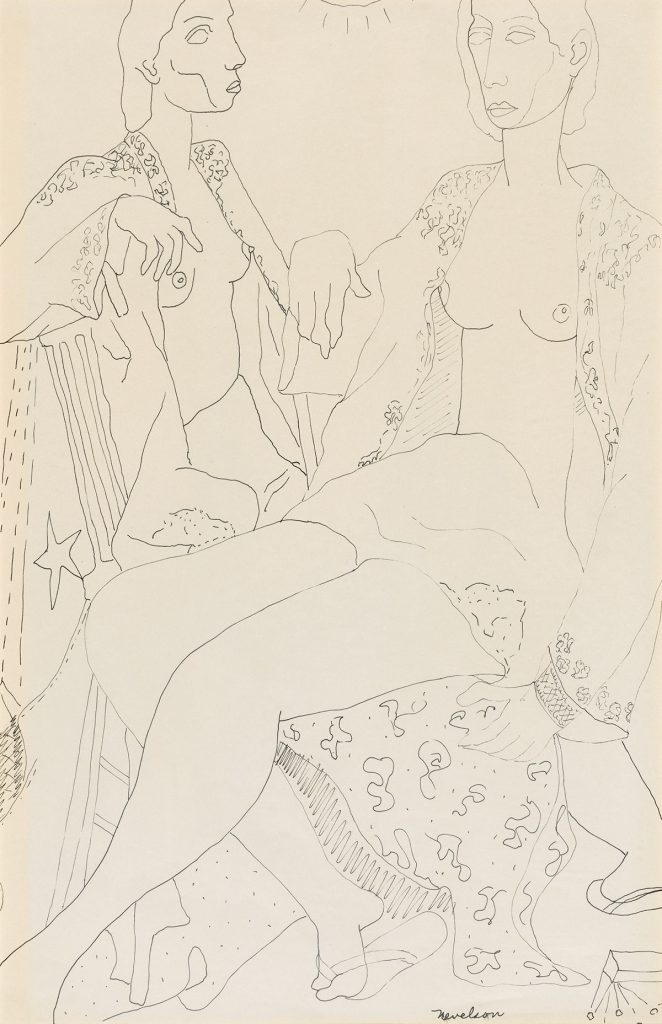
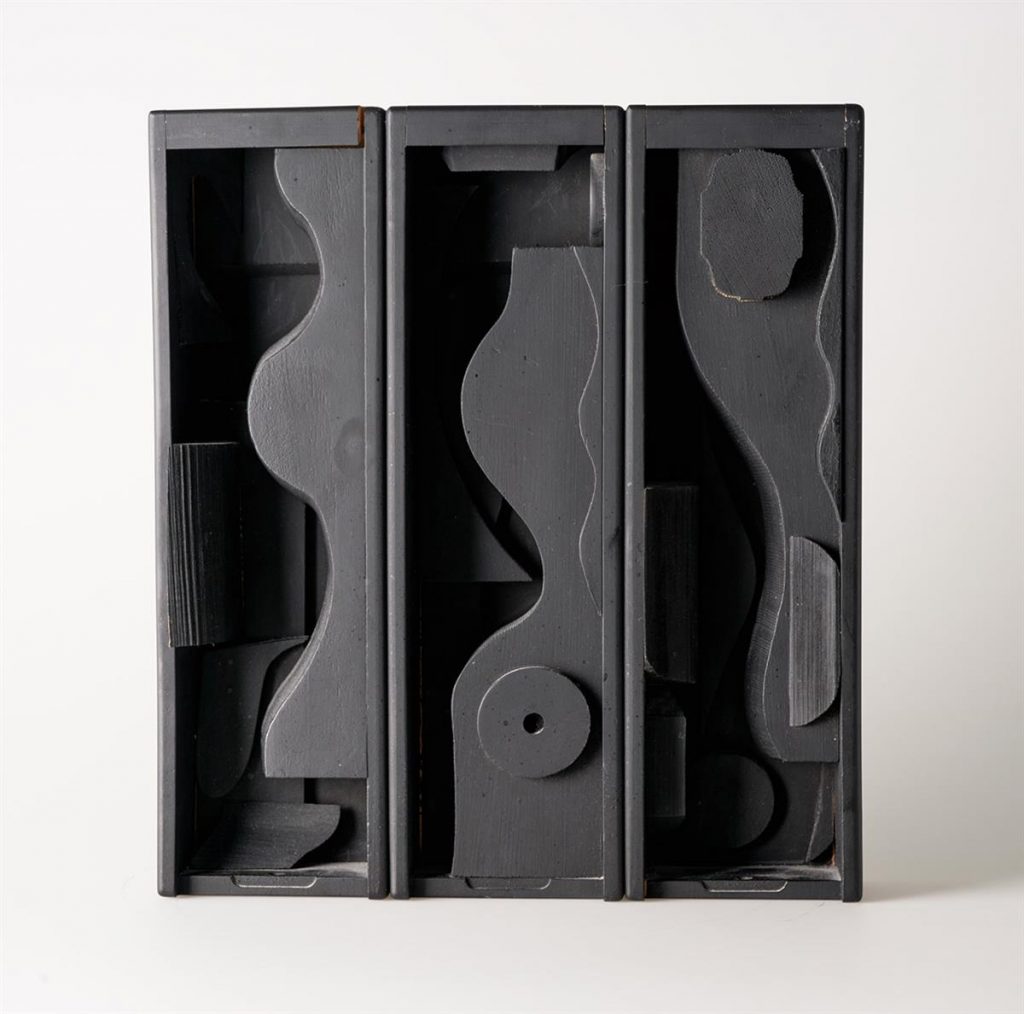
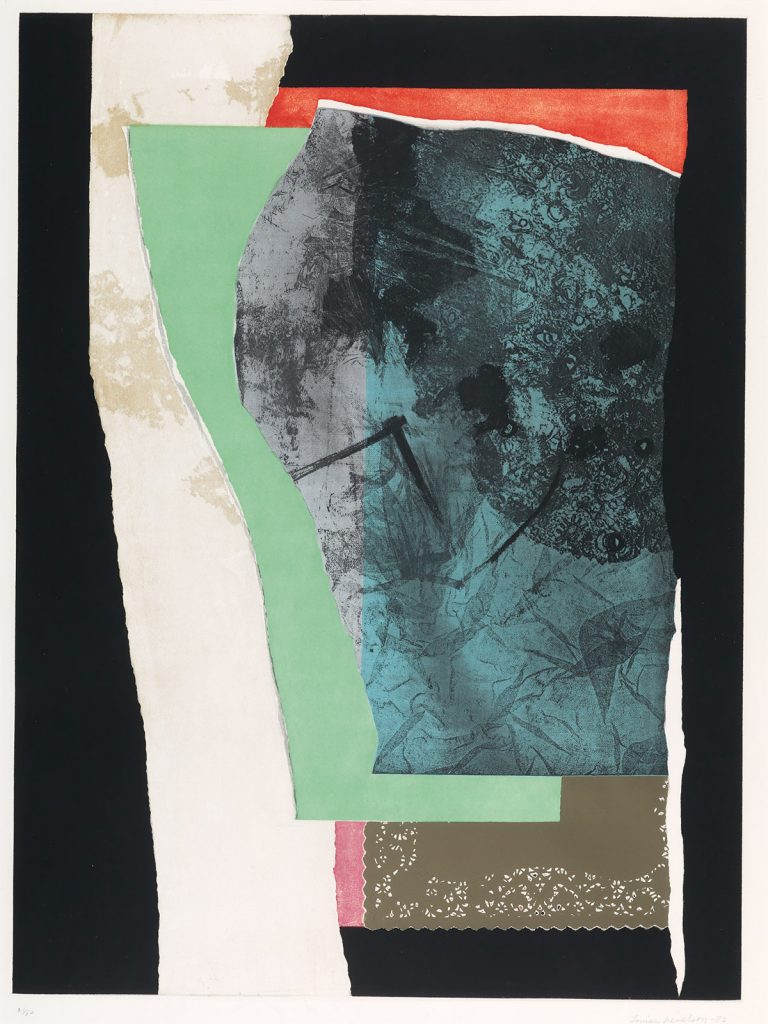
Our June 25 sale of Contemporary Art features a run of prints by Louise Nevelson. Behind great artists are studio assistants equally devoted to their craft. For Nevelson one of those assistants was Teddy Haseltine. Meagan Gandolfo, one of our cataloguers for the prints and drawings department at Swann Galleries, takes us through the collaborative relationship between Nevelson and Haseltine throughout her career.
Theodore “Teddy” Haseltine
Theodore “Teddy” Haseltine, a young artist, was introduced to famous sculptor Louise Nevelson through a mutual friend, sculptor Donald Mavros in the early 1950s. Nevelson, born in present-day Ukraine and raised in the United States, studied at the Art Students League of New York from 1929 to 1930, with artist Hans Hofmann and Diego Rivera. Through the 1930s, she gained attention for her early, Cubist-inspired sculpture and in 1941 received her first solo exhibition at Nierendorf Gallery, New York. She would become a central figure in the fields of sculpture and conceptual art and exhibit at the 1962 Venice Biennale.
Though in the 1950s, Nevelson worked tirelessly to develop her unique, recognizable style. During this time in Nevelson’s life, she depended heavily on her assistants and her small circle of friends to insulate her from the outside world. She struggled financially and strove to gain notice overseas. When Nevelson found herself without an assistant in 1952 in New York, she offered the position to Haseltine. For the next 12 years, Haseltine served as Nevelson’s trusted confidante and she took on a maternal role in his personal and professional pursuits, often rivaling Nevelson’s biological son sculptor Mike Nevelson. Haseltine’s devotion and support withstood Nevelson’s tumultuous relationships with gallerists and the ebb and flow of her career. Haseltine’s exuberance matched Nevelson’s vibrant personality. He enjoyed the freedom to smoke, drink, dance, and listen to music in Nevelson’s studio, where they both worked long hours.
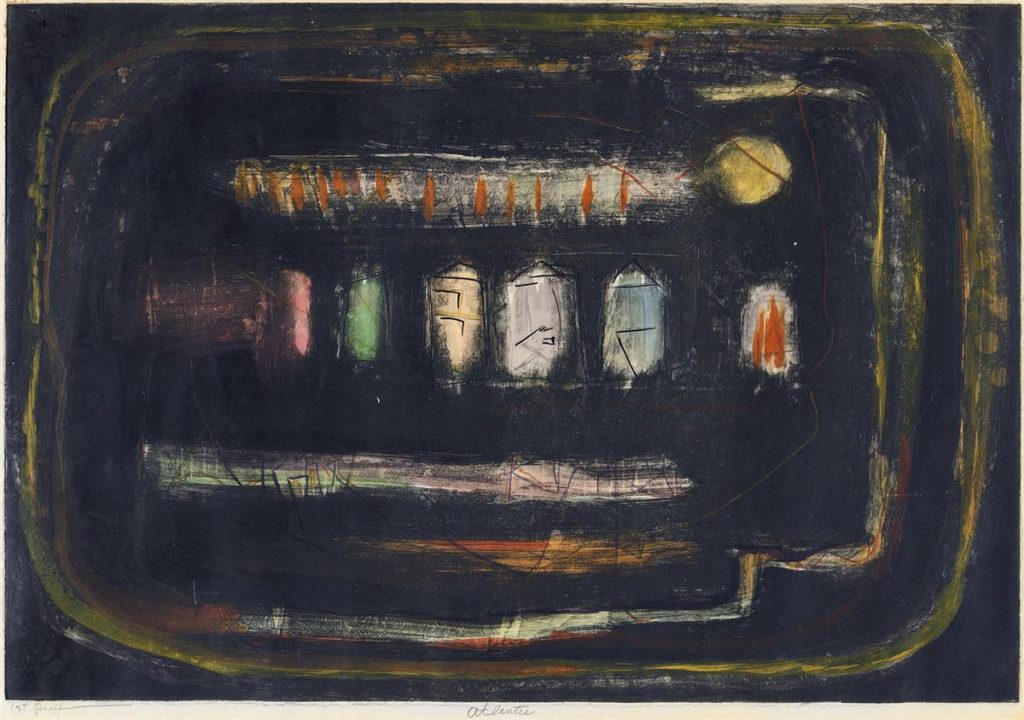
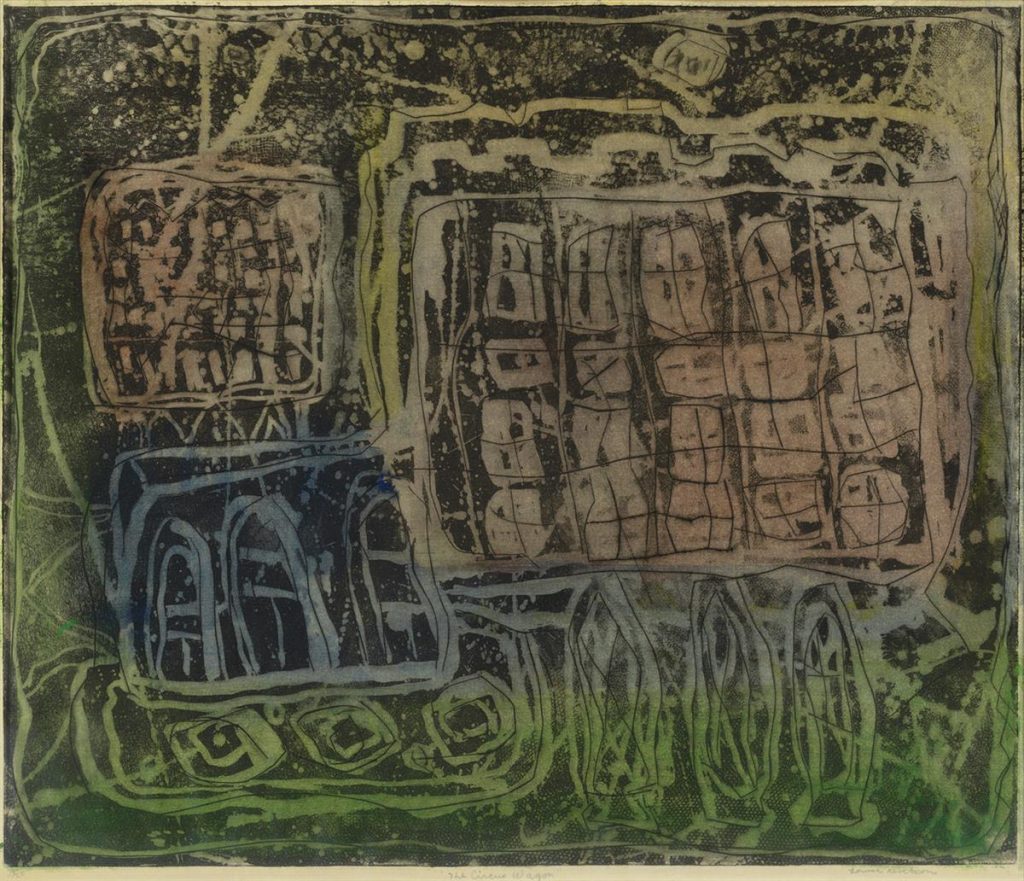
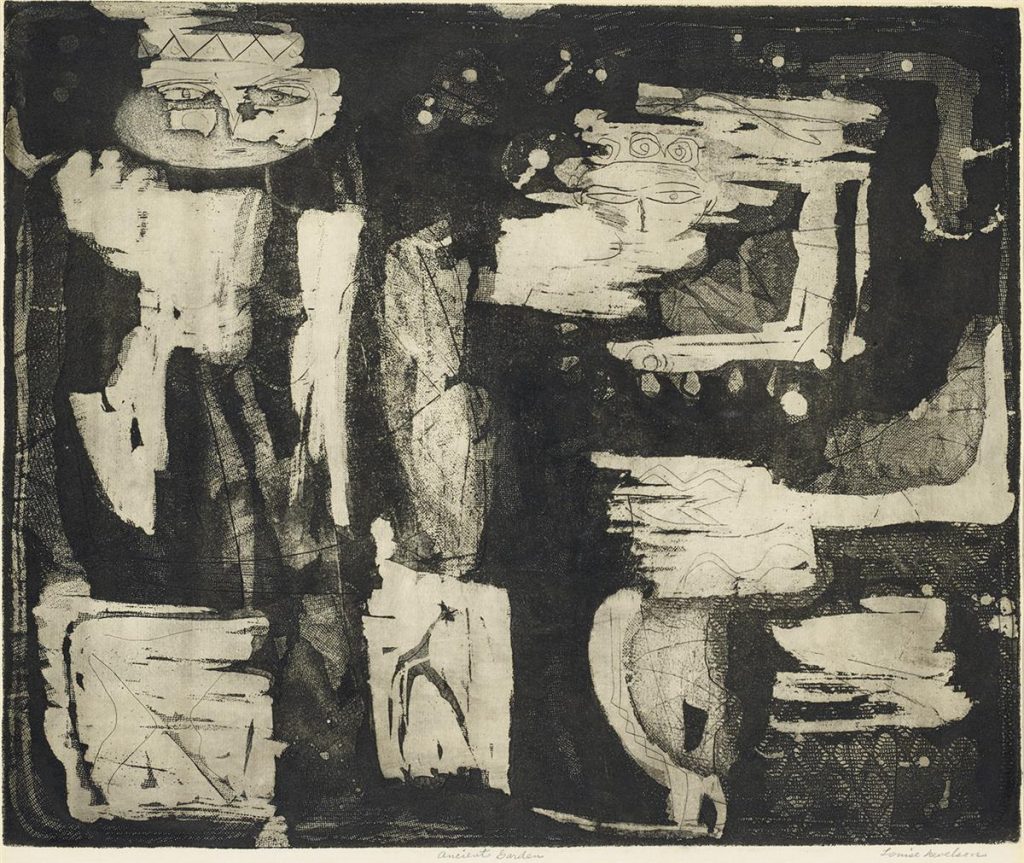
From September 1952 through May 1953 and again in the fall of 1954, Nevelson and Haseltine worked at the print workshop Atelier 17 in New York. In the 1940s, Nevelson briefly worked in etching but did not like the strict technical aspects of the medium taught under Stanley William Hayter. After the transfer of directorship to Peter and Florence Grippe, Nevelson was invited back with the promise that she would be shown how to create etchings with unconventional tools. Nevelson used the soft-ground etching technique paired with vintage lace, fabric, and rudimentary sharp objects like a can opener to texturize her large etching plates. After the first acid bath, she would further scratch into the plate. In her most innovative impression, Moon Goddess II, Nevelson continuously added and moved ink around the plate using a paintbrush. Her bold prints, usually characterized by intricate patterns and darkness were inspired by her time in Central America and the area’s culture. They were admired by artist Dorothy Dehner, who became close friends with Nevelson. Previously, Haseltine was trained by Dehner to operate a printing press during Dehner’s time living in Bolton Landing, New York.
Dehner remembered that Haseltine usually “turned the wheel” for Nevelson and he and Nevelson worked feverishly on Nevelson’s newfound medium (in a 1970 interview, Nevelson would claim that she operated the press independently). Florence Grippe claimed that Nevelson had spent the equivalent of about two month’s rent on etching supplies in only a few months at Atelier 17. In October 1954 alone, Nevelson produced 29 plates and hundreds of impressions. She had dedicated many of her early proofs to Haseltine and his partner, photographer and WWII veteran Albert Argentieri. Her Atelier 17 works culminated in her first solo exhibition in eight years, Louise Nevelson: Etchings at Lotte Jacobi Gallery, New York in 1954. Nevelson’s fixation on the heavy black ink of the etchings would return often in her future work.
Move to Spring Street & Development of Nevelson’s Cathedrals
In 1956, Haseltine moved into Nevelson’s home and traded his work for boarding. He accompanied Nevelson’s move to Little Italy’s Spring Street in 1958 and played a role in convincing her to leave the emotional safety of her beloved condemned brownstone on 30th Street. The two artists were in constant collaboration with each other and Haseltine’s free spirit was said to have rekindled the mid-career artist. Haseltine and Argentieri helped gather materials for her landmark wooden sculptural walls (“cathedrals,” the first of which exhibited in 1958) which rivaled the other artists’ large scale Abstract Expressionist canvases. Haseltine and Argentieri would search for material in abandoned buildings in New Jersey together. Haseltine would saw and hammer away at the found material after Nevelson laid out the construction. Argentieri photographed Nevelson’s studio and art. Over the years of their friendship, Nevelson would gift him some of her prints and drawings.
The 1960s found Nevelson in legal turmoil involving gallery contracts and real estate. Haseltine also began the years of the new decade experiencing his own personal troubles as his relationship with Argentieri had ended. Haseltine and Nevelson both went through a period of easing their depression with drinking. Nevelson’s career had plummeted alongside her mood. In April 1963 Nevelson traveled to Los Angeles at the request of the Tamarind Workshop and produced a cathartic series of lithographs. During her three months away, Nevelson received positive reports from her son who visited Haseltine in New York. Nevelson transformed her outlook and returned to New York reinvigorated.
By that winter, Haseltine’s health was failing and the following summer he had to undergo an operation (presumably due to heavy drinking). In August, though originally thought to be in recuperation, he collapsed in Nevelson’s bedroom and reportedly died of a cerebral blood clot. Nevelson dealt with Haseltine’s death with her common tactic of insulating herself and declined to attend her assistant’s funeral and avoided talking about him entirely. Haseltine’s funeral was held in Hudson Falls, New York, where Argentieri had arranged for him to be given a Roman Catholic burial next to his mother. Nevelson’s biographer, Laurie Wilson, PhD, suspects that Nevelson’s work on Homage to 6,000,000 dedicated to victims of the Holocaust, was part of the artist’s private grieving process.
From 1965 through 1966, Nevelson made the decision to have her Atelier 17 experimental plates reprinted by Emiliano Sironi at the Hollander workshop. Though the original Atelier 17 prints have more of an expressive, bold quality, Nevelson’s Hollander edition gained more popularity. Nevelson spontaneously re-titled the etchings as she saw them being printed. Her titles were based on what she saw in the image at that time. With a decade more of life behind her, Nevelson saw a new vision in these prints. In 1965, Nevelson donated several of her original Atelier 17 works to the Brooklyn Museum in Haseltine’s memory. Argentieri’s Nevelson prints, each unique in the artist’s additions, remained with his family.
It is often said that Chinese collectors are loath to buy works from tombs for fear of disturbing the spirits of their ancestors. In fact, nothing is further from the truth. Throughout millennia, farmers relished digging for buried objects found in countless surrounding tombs, as much as they did digging for their crops. Until recent laws passed by the Chinese government prohibiting the sale of burial objects, the market for this material was lucrative.
Three Storytellers, China, Han dynasty (Lot 1011, Estimate: $6,000-8,000)
As tomb pottery began to enter the art market, Western collectors, and a few Chinese collectors, were delighted by their charm and beauty. Dating to the Tang and Han dynasties, elegant figural sculptures, animals, and daily use objects, made of terra-cotta, reached the Hong Kong markets. The simplicity of line and form coupled with the animated facial expressions and realism greatly appealed to the modern eye. The demand was so great it was gradually diminishing the supply of materials, resulting in the manufacture of numerous reproductions which were made from similar clay and fired in similar kilns as the ancient objects.
Pottery Male Attendant, China, Han dynasty (Lot 1006, Estimate: $200-400)Pottery Court Lady, China, Tang dynasty (Lot 1008, Estimate: $800-1,000)
Many of these reproductions show up on the market today. Attractively deceptive, potential buyers are often reluctant to purchase them without a thermoluminescence analysis, a scientific test of the clay authenticating the date of manufacture.
Pottery Ox, China, Han dynasty (Lot 1004, Estimate: $800-1,000)
If you, too, become enchanted with the history and beauty of tomb pottery, but do not have the fortune to find an object that has been tested, you can trust the trained eye of a specialist who can often tell the difference between the original object and the reproduction. Most often a reproduction lacks the spirit captured in the original.
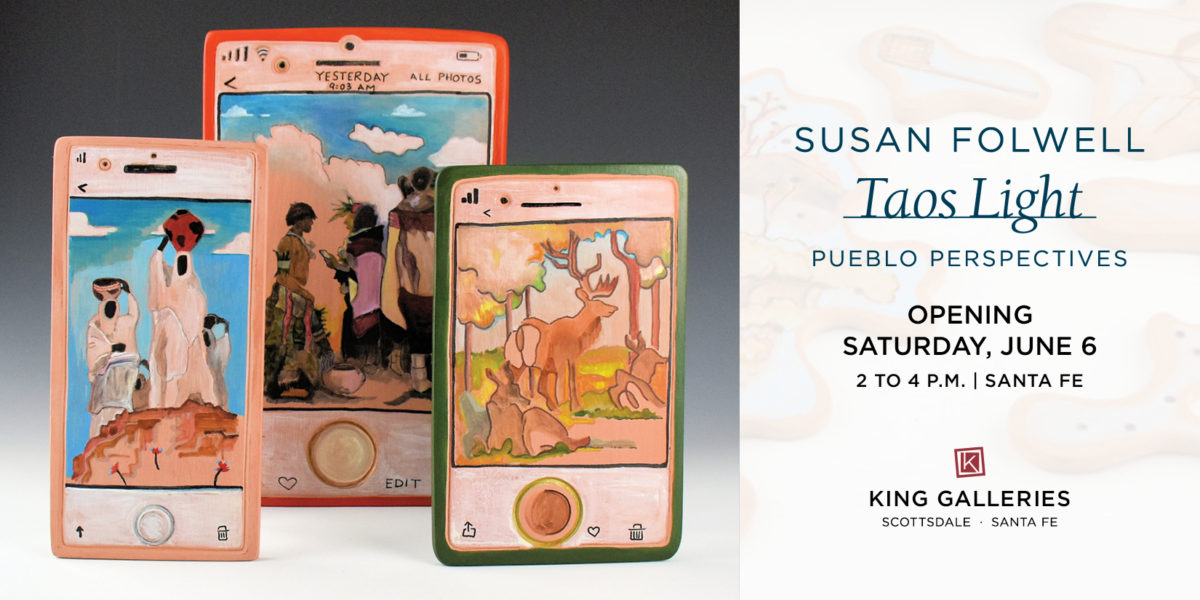
Susan Folwell began her journey into a Native re-interpretation of the Taos Society of Artists in 2017. Since then, the work has found its way into museums from the Eiteljorg Museum permanent collection to an exhibition at the Harwood in Taos, New Mexico. This show continues this provocative and thoughtful journey. “Pueblo Perspectives” is an online exhibition at King Galleries and an installation in our Santa Fe gallery which will continue through October 2020.
The Taos Society of Artists was formed in 1915 and disbanded in 1927. These painters were attracted to Taos, the light, the people, and the culture of the nearby Pueblos. During the twelve years of its existence, there were 12 active members which included: Bert Phillips, Ernest Blumenschein, Irving Couse, Henry Sharp, Oscar Berninghaus, Herbert Dunton, Julius Rolshoven, Walter Ufer, Victor Higgins, Martin Hennings, Kenneth Adams, and Catherine Critcher. It is from this extraordinary group of paintings, in both public and private collections, which Susan draws for her clay work.
The continuing significance of this work is to see the concepts filtered through Native eyes and perspective. It’s social commentary in clay, often capturing what makes the paintings of this group so renowned, and then giving it a modern spin. As has been written about Susan Folwell, her, “intricately designed pottery is like reading a book, as each piece must be turned, examined and viewed from different angles to understand the whole story”. That may well sum up how this show is best seen, as each piece is turned and viewed as a painting, finding the right light and angle, not only of the art but of its extension of this story into the future.