Sir Winston Spencer CHURCHILL (1874-1965)

Sir Winston Spencer CHURCHILL (1874-1965)

Sir Winston Spencer CHURCHILL (1874-1965)

6-page typed carbon-copy article, starting ‘“Although at first sight one would notice the important differences of sex, ago, appearance, and culture between Mr. Bernard Shaw and Lady Astor, they have at least one intensely marked quality in common. They like to have everything both ways”, [N.p.: probably written in July/August 1931], with manuscript corrections in ink, the first leaf with ink stamp of ‘Curtis Brown Ltd’ in the left side of the upper blank margin

Churchill attacks the official visit by George Bernard Shaw and the Astors to Stalin’s USSR.

With an opening that was apparently discarded: “Hitherto these articles have each dealt with a substantial political figure. Today we turn to two personages of gayer colouring who, although of frailer build, occupy well known positions in the public eye”. (These lines are crossed out).

The article’s “official” start: “Although at first sight one would notice the important differences of sex, ago, appearance, and culture between Mr. Bernard Shaw and Lady Astor, they have at least one intensely marked quality in common. They like to have everything both ways. Thus Mr. Bernard Shaw is at once a wealthy and acquisitive capitalist and an ardent Communist. His spiritual home is in Russia; but he lives comfortably in England which he derides, and abuses on every occasion. He has always preached the ownership of all forms of wealth by the state, and the destruction of private property but no one squealed more shrilly than he when Lloyd George first introduced the Super tax.”

WSC skewers his subjects, dismissing GBS as “the World’s most famous intellectual Clown and Pantaloon,” and Nancy Astor as “the charming Columbine of the capitalist pantomime.” WSC lambasts their Moscow reception comittee : “It must have been with some trepidation that the chiefs of the Union of Socialist Soviet Republics awaited the arrival in their grim domains of a merry harlequinade. The Russians have always been fond of circuses and traveling shows. Since they had imprisoned, shot or starved most of their best comedians, their visitors might fill for a space a noticeable void …. Commissar Litvinoff, unmindful of the food queues in the back-streets, prepared a sumptuous banquet; and Arch-Commissar Stalin, ‘the man of steel’, flung open the closely guarded sanctuaries of the Kremlin and, pushing aside his morning’s budget of death warrants and lettres de cachet, received his guests with smiles of unaffected comradeship.”

Published: “‘Personalities: No. 4. Lady Astor and G. Bernard Shaw”, in ‘Sunday Pictorial’, 16 August 1931 (reprinted as part of Churchill’s chapter on Shaw in Great Contemporaries (1937)).]

Provenance: William Hillman (1895-1962); with a Litchfield auction house (c.1997-2005); purchased by the present owner.

William Hillman was born in New York City in 1895. His career as a journalist started in 1915, and from 1926 onwards he worked as a foreign correspondent for Universal Service and Hearst Newspapers in Paris, Berlin and London. From 1934 to 1939 he was Chief of Staff, Foreign Correspondents, for Hearst Newspapers, also reporting directly to Mr. Hearst.

He subsequently did a lot of work for President Truman, and the Harry S. Truman Library & Museum in Independence, MO, have a large holding of his papers (but largely concerned with this latter part of his career from 1951 until his death in 1962 , with a few items going back as far as 1934). See https://www.trumanlibrary.gov/library/personal-papers/william-hillman-papers

Yale also have some of Hillman’s papers, part of the Than Vanneman Ranck papers (see https://archives.yale.edu/repositories/12/resources/3673 ). These are probably more relevant as they concern the workings of the Hearst organization.

Hillman stored his files and papers in a barn that was ‘local’ to his New Milford, Ct. property. In effect these ‘disappeared’ when he died and only ‘re-surfaced’ in the 1990s. The dispute over their ownership was not sorted out until 2005, and they were subsequently put up for auction in Litchfield, Ct. The present lot is from this ‘New Milford group’.
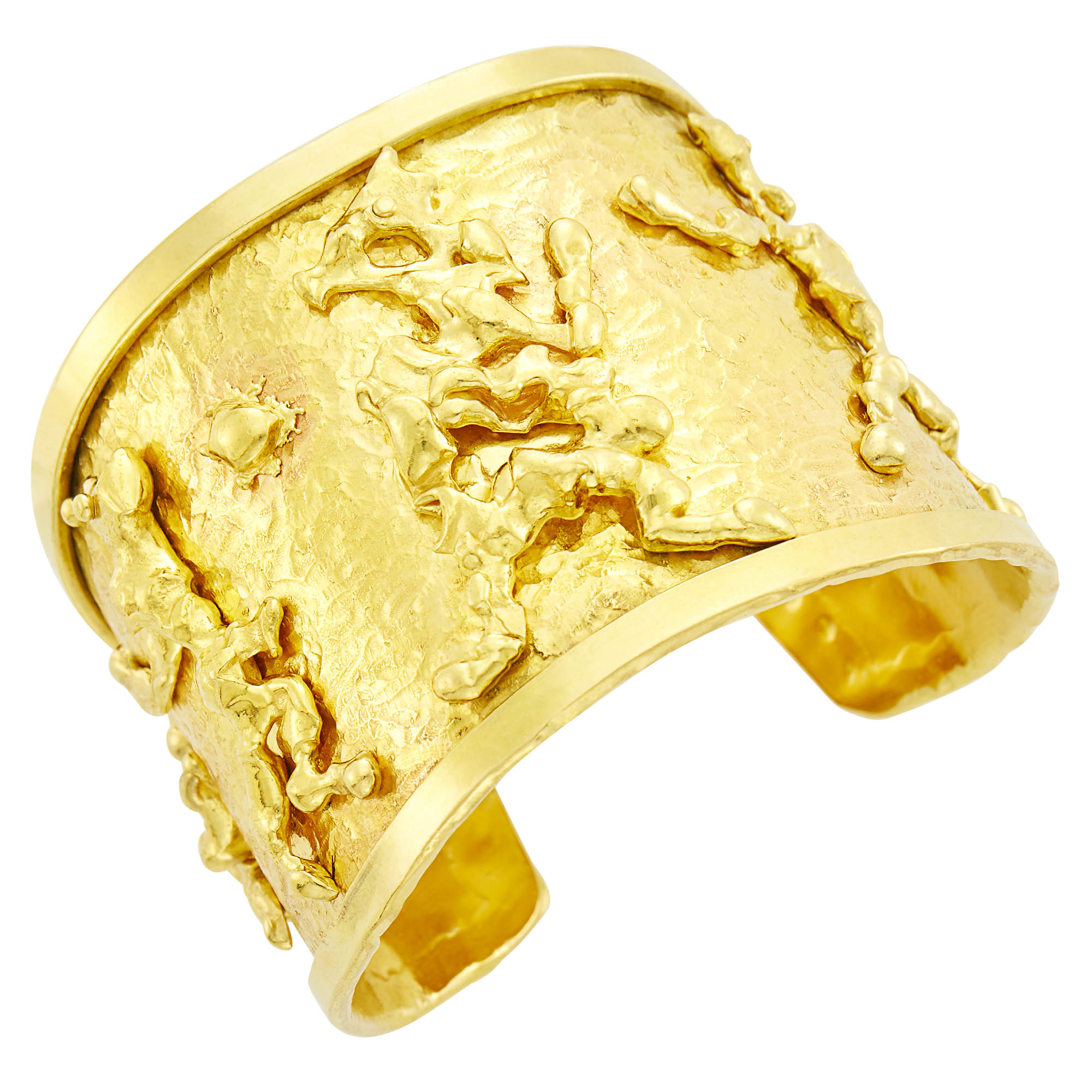
Jean Mahie High Karat Gold Cuff Bangle Bracelet

Jean Mahie High Karat Gold Cuff Bangle Bracelet

Jean Mahie High Karat Gold Cuff Bangle Bracelet
22 kt., the wide cuff with raised abstract figures against a hammered gold background, within a polished raised rim, signed Jean Mahie, ap. 80 dwts. Inner cir. 6 3/4 inches, open back.

Chinese Hand Carved Jadeite Lavender Figural Group

Chinese Hand Carved Jadeite Lavender Figural Group

A heavily carved Chinese reticulated Jadeite lavender figural group featuring warriors and Goddesses on top of a bull and horse. Comes on a wooden base. CIRCA: 1950s ORIGIN: China DIMENSIONS: H:9″ L:7″ D:3″ INCLUDING THE BASE CONDITION: Great condition. See lot description for details on item condition. More detailed condition requests can be obtained via email ([email protected]) or SMS (305) 333-4134. Any condition statement given, as a courtesy to a client, is only an opinion and should not be treated as a statement of fact. Akiba Antiques shall have no responsibility for any error or omission.

Ernest Trova (American.1927-2009) Standing Jackman

Ernest Trova (American.1927-2009) Standing Jackman

A sculpture by surrealist artist Ernest Trova, composed of polished bronze titled “Standing Jackman” Features multiples figures mirroring each other. Stamped along the underside “8/99 1986″ with Trova Stamp. Comes with Artist book, Similar sculptures/studies for walking Jackman pictured on pages 95 and 96. Replicas of these sculptures are given to CFDA winners as awards, designers such as Ralph Lauren, YSL, Giorgio Armani, and Marc Jacobs have been recipients. CIRCA: 1986 ORIGIN: USA DIMENSIONS: H: 9″ W: 11” CONDITION: Good condition. See lot description for details on item condition. More detailed condition requests can be obtained via email ([email protected]) or SMS (305) 333-4134. Any condition statement given, as a courtesy to a client, is only an opinion and should not be treated as a statement of fact. Akiba Antiques shall have no responsibility for any error or omission.

Lalique “Antinea” Crystal Vase

Lalique "Antinea" Crystal Vase

A Lalique crystal “Antinea” vase Features a rotund, clear crystal body embellished with Art Nouveau style, nude women in a rich green frosted crystal hue supporting the clear crystal body, leaving it suspended. Marked:”Lalique France” along the bottom. CIRCA:20th Ct. ORIGIN: France DIMENSIONS: H:8.25″ L:10.25″ CONDITION: Great condition. Comes with original box. See lot description for details on item condition. More detailed condition requests can be obtained via email ([email protected]) or SMS (305) 333-4134. Any condition statement given, as a courtesy to a client, is only an opinion and should not be treated as a statement of fact. Akiba Antiques shall have no responsibility for any error or omission.

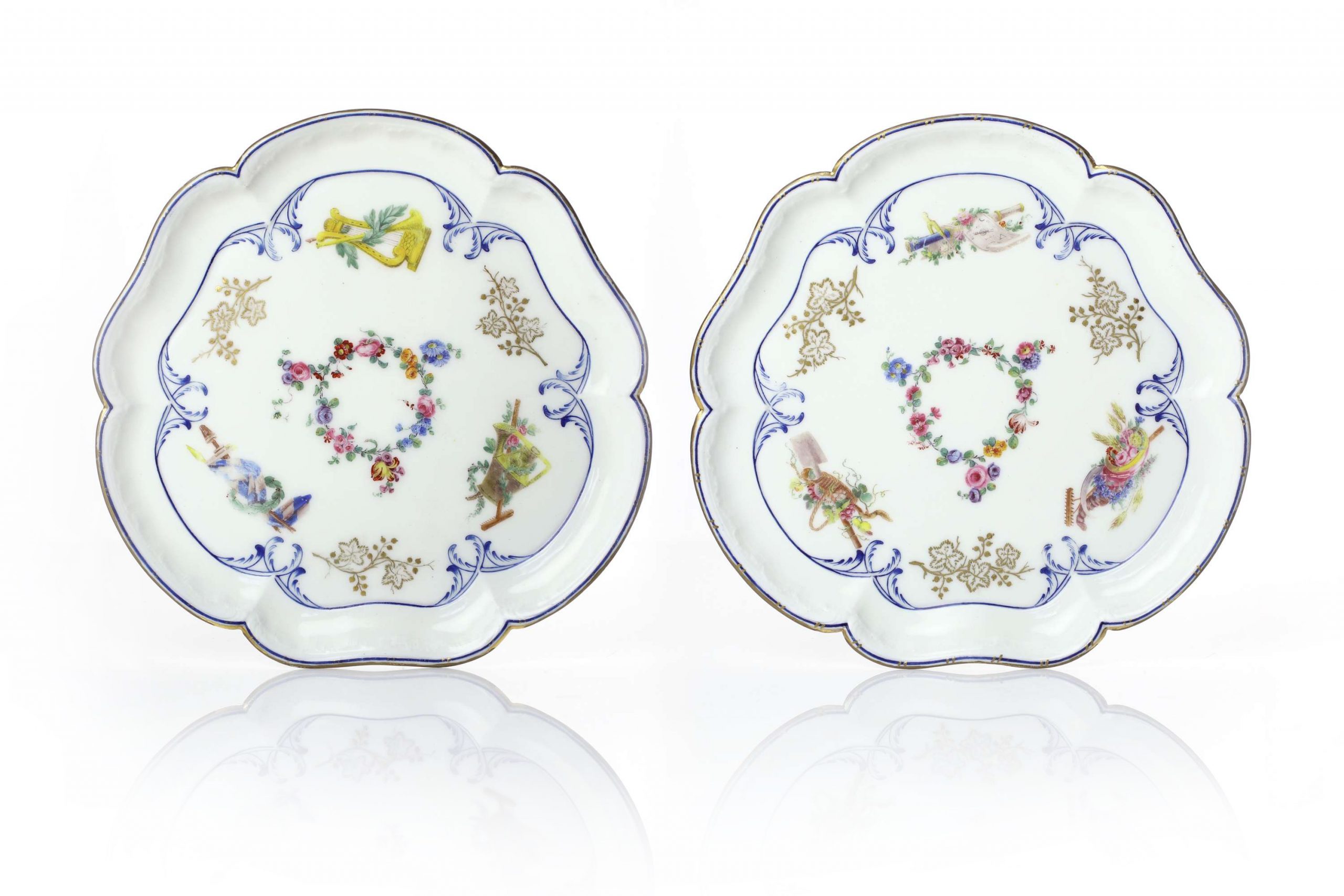
Sèvres pair of footed trays

Sèvres pair of footed trays

Code: MB654/655

POA

From the Louis XV Petit Trianon Service

Plateaux Bouret

Circa 1763

Soft-paste porcelain

Width: 8 1/4 in. (21 cm.) each

Louis XV purchased the service in December 1763, probably for use at the newly built Petit Trianon (see David Peters, Sèvres Plates and Services of the Eighteenth Century, vol. II, 63-2). As it was included in a bulk purchase by the king with other service wares (notably a supplement for the Fontainebleau pink camaïeu service) it is impossible to know the exact composition of the original service. Supplements were supplied at regular intervals (the last one being in 1790). The service is mentioned in a 1782 inventory at Versailles, when it included five “soucoupes à glace en triangle,” which are presumed to be plateaux Bouret. This shape was used to hold ice cups.

The decoration of this service is quite particular. The plates are described as assiettes à groseilles, and they have raised redcurrant branches on the edge, which are highlighted in gilding, in addition to the varied and colorful trophies. The shaped pieces do not have the raised motifs, but they are rendered in flat gilding.

The central flower wreaths on the present trays are clearly painted by the experienced flower painter Vincent Taillandier (active 1753-90). They are similar in style to the wreaths he painted on another royal service at around this time (frises colorées, Peters 62-3), so it is probable that it dates from the original 1763 delivery.

These trays are the only known pieces of this shape to survive from the service. Versailles has been collecting pieces of the service since David Peters first identified it in around 1990.

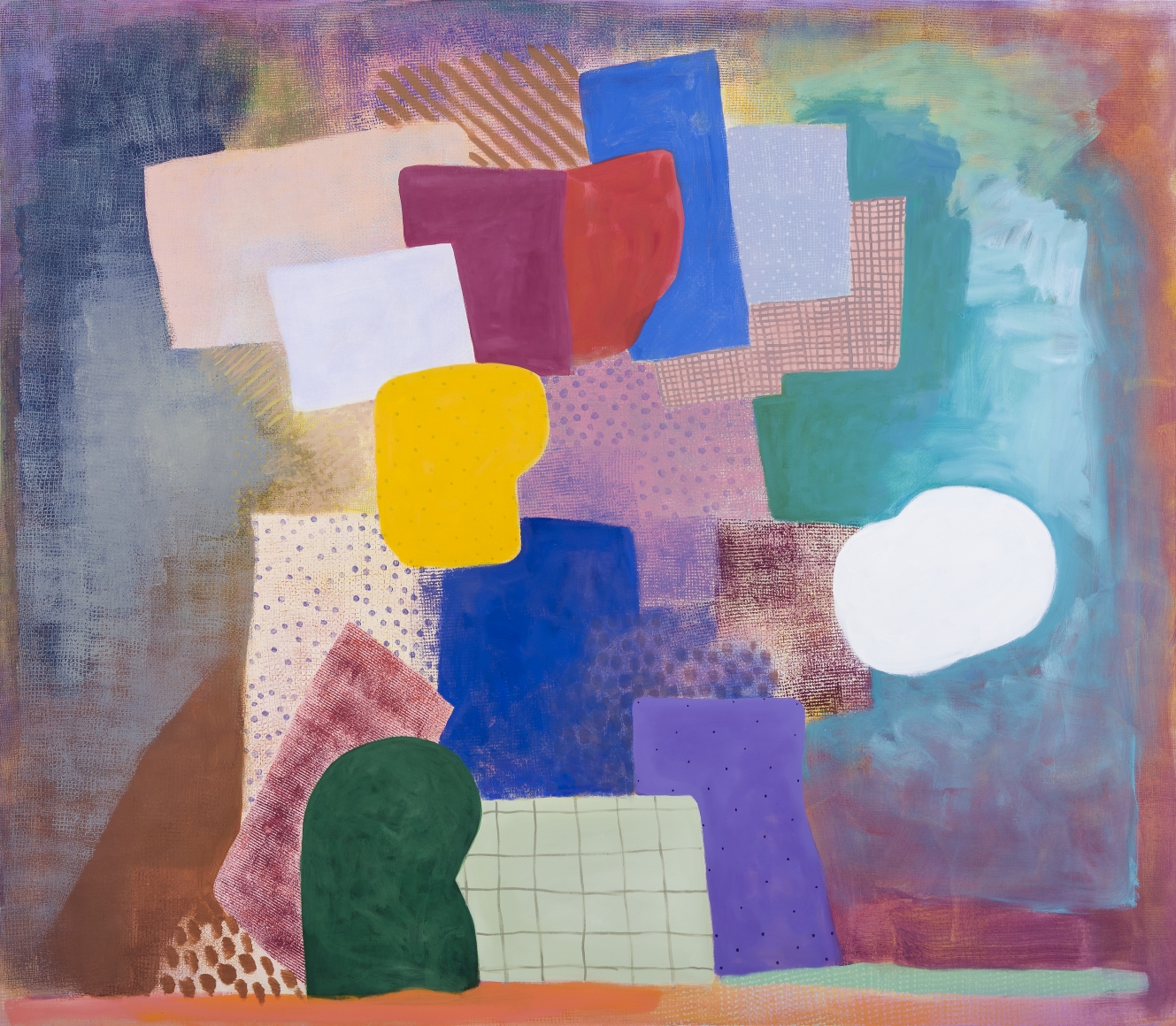
Robert Natkin (1930–2010) Untitled (Hitchcock), 1988 Acrylic on linen, 70 x 80 in.

Robert Natkin (1930–2010) Untitled (Hitchcock), 1988 Acrylic on linen, 70 x 80 in.

Starting at the age of five Robert Natkin frequented the movie theater—sometimes as much as six times a week! No doubt that his early exposure to film influenced his career as an artist. Natkin leads the viewer though his paintings by carefully interweaving shapes, patterns, and emotive colors, much in the same way the great filmmaker Alfred Hitchcock connected different story lines into one cohesive film. —Ellyn Basky, Assistant, Hirschl & Adler Modern