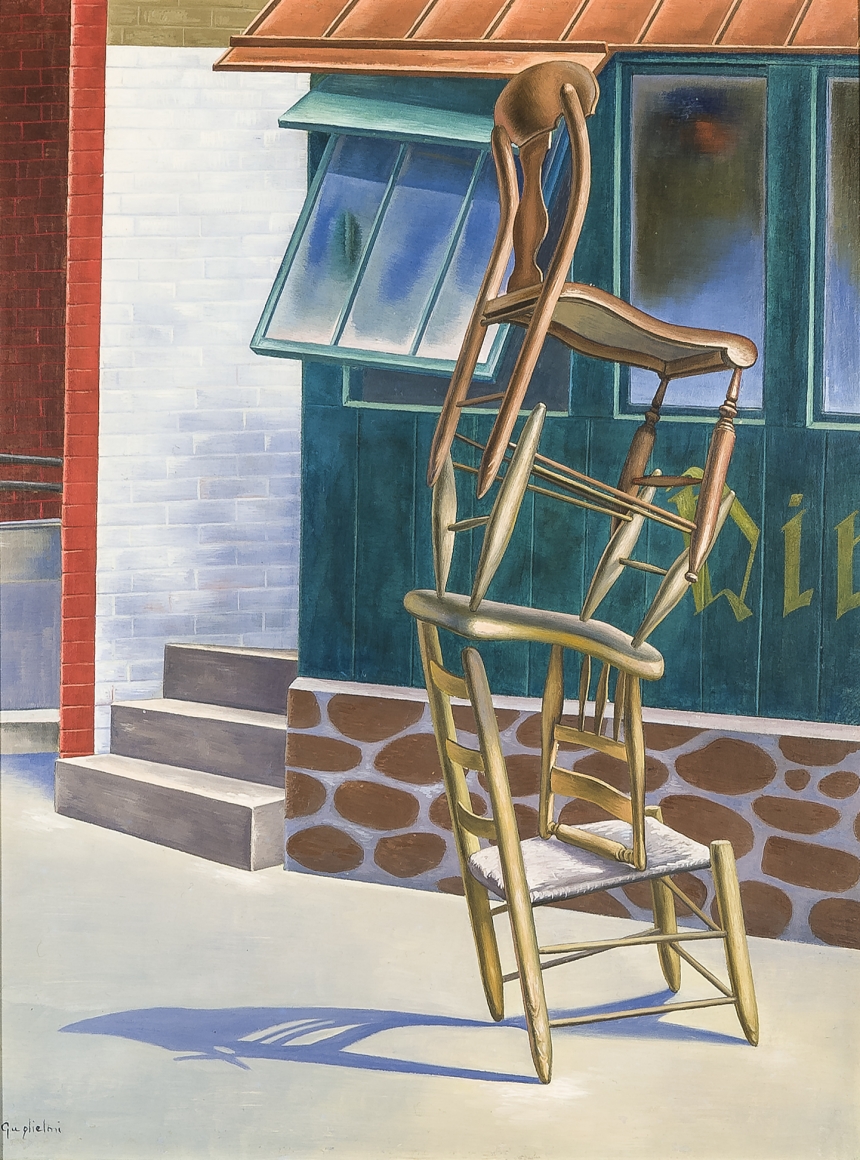
This small gem of Magic Realism depicts three stacked, tottering chairs. They appear to be celebrating their escape from the darkness of their urban interior into the dazzling sunshine bathing the sidewalk. Exhibited at the seminal exhibition of Magic Realism at MoMA and from the personal collection of the museum’s influential curator, Dorothy Miller, this whimsical work is a deviation from the artist’s earlier somber and political themes. The hopeful image of “Tumblers” embodies what we are all looking forward to right now: an escape into the sunlight. —Margot Chvatal, Vice President
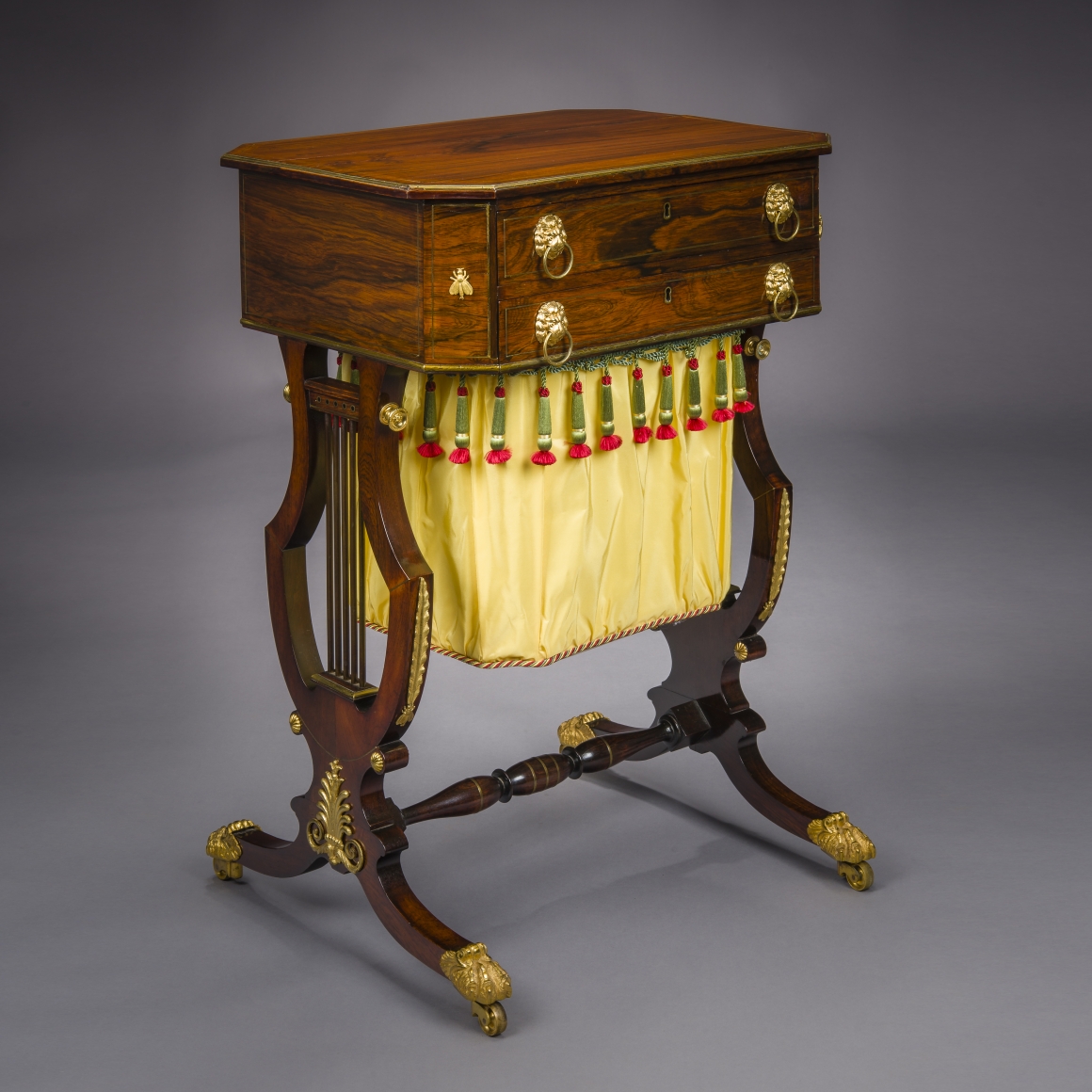
Neo-Classical Work Table with Lyre Ends, about 1815
Attributed to Thomas Seymour (1771–1848), Boston
Rosewood (secondary woods: mahogany), with brass line inlay and brass-over-wood moldings, gilt-brass and gilt-bronze and ormolu mounts, toe-caps, and castors, and fabric work bag
29 3/4 in. high, 20 5/16 in. wide, 16 3/4 in. deep (in the case), 17 5/8 in. deep (at the feet)
Our notion of “work at home” has recently come sharply into focus. Ladies of the early 19th century worked at home in great style, with work tables, or sewing tables, made of the finest materials and in the newest fashions of their day. Inspired by English and French design sources, this Boston-made table, likely from the workshop of Thomas Seymour, is the highest style of “work at home” chic, circa 1815. —Stuart Feld, President
Purvis Young was one of those rare artists whose own truth and vision led him to create universal images of the human condition. That his depictions of the people and life in Overtown, a downtrodden section of Miami in the immediate aftermath of the Civil Rights Era, can be read as prescient emblems of today’s struggles for equality is nothing short of tragic. For Young however, there always remained hope for a better tomorrow in the face of a brutal today. Protestors turn into dancers, warriors become angels, and communities ravaged by civil unrest are united in solidarity. —Ted Holland, Artist Manager & Exhibition Coordinator, Hirschl & Adler Modern
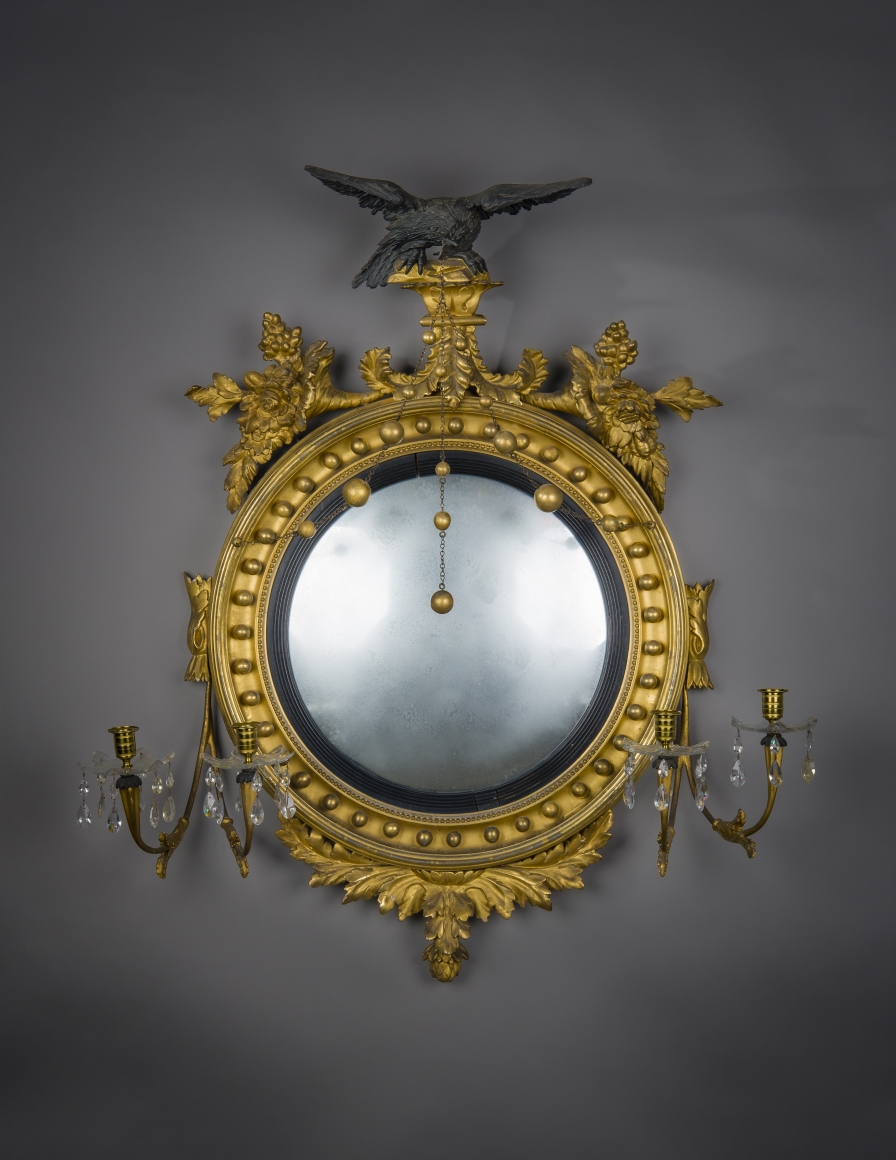
Neo-Classical Convex Girandole Mirror with Candle Arms, about 1810
American, probably Salem, Massachusetts
Eastern White Pine (Pinus strobus), gessoed and gilded, and partially ebonized, with convex mirror plate, glass drip pans, blown and cut, glass prisms, gilt-brass candle cups and bobeches, and brass chain
43 in. high, 38 in. wide, 10 5/8 in. deep
This Neo-Classical girandole mirror has reflected the interiors of American homes for over 200 years. With its elaborate gilded frame, hanging gold balls, swooping chains, and glass prisms, all topped with a majestic ebonized eagle, this looking glass would have been the centerpiece of any grand parlor. Now, more than ever, it is a great time for self-reflection, so why not do it in style? —Debra Wieder, Associate Director
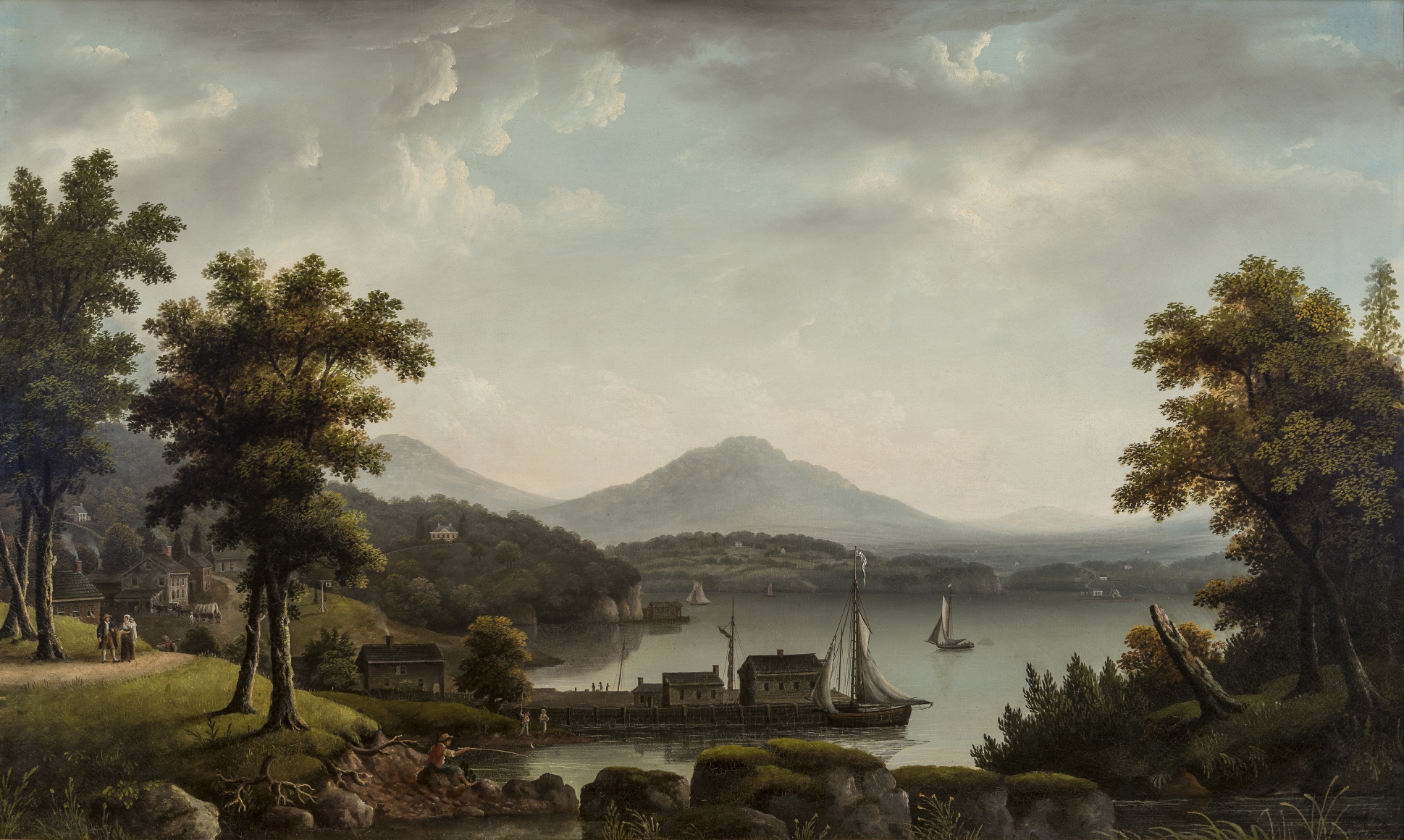
Predating the Hudson River School, this extraordinarily rare, early American landscape gives us a wonderful glimpse of life on the Hudson during the second decade of the 19th century. Depicting the town of Rhinebeck, New York, the topographical elements are expertly blended with atmospheric effects that suggest something of an eerie tranquility, an element that is latent in much of the mythology of the Hudson. This is the world recorded by Washington Irving, and Guy’s picture—painted at the height of his powers—is an important, newly-discovered pictorial account of it, deftly executed and infused with the quiet Romanticism that would later inform our Transcendentalists, not to mention the Hudson River School artists that were soon to follow. —Brendan Ryan, Associate, President’s Office
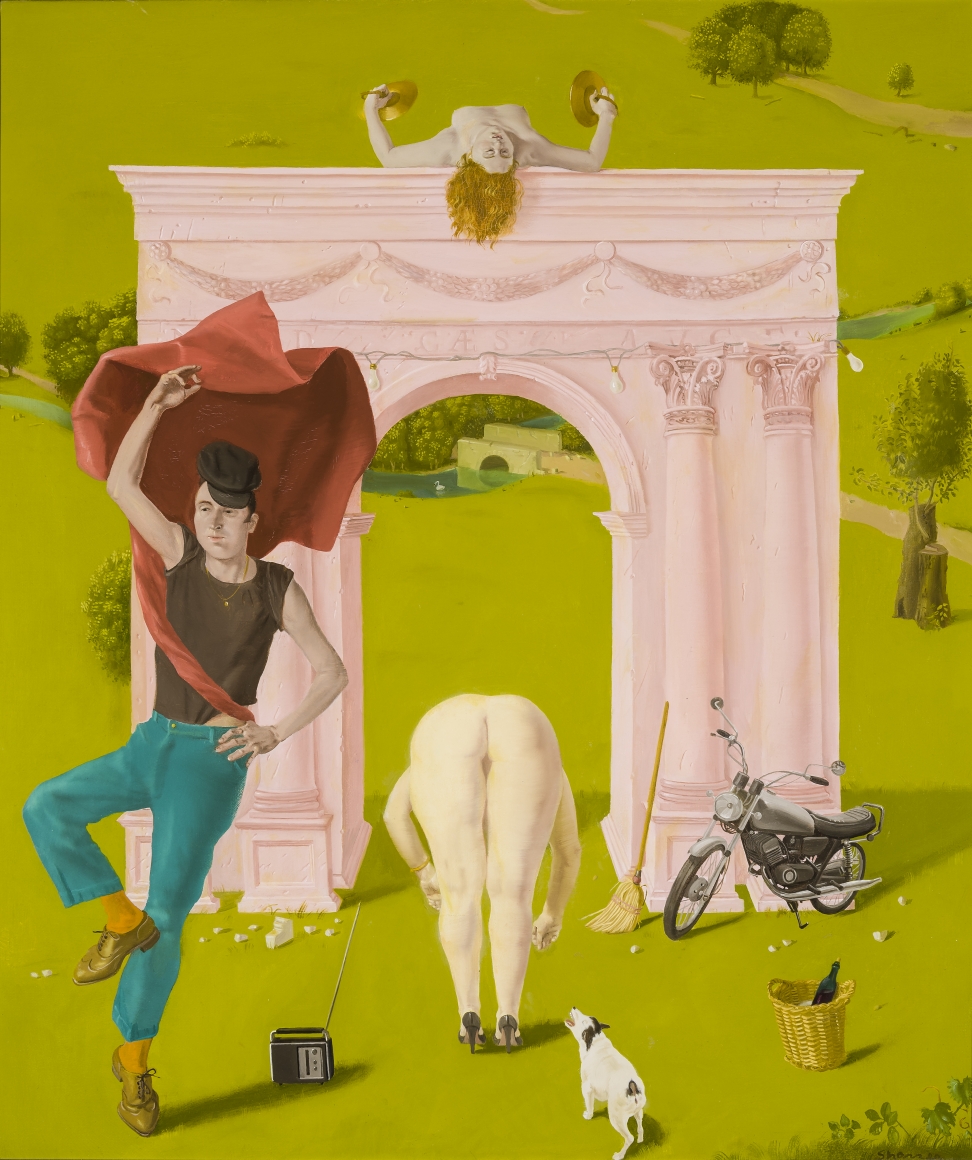
Few artists have the intelligence, skill, and courage to challenge America’s patriarchy like Honoré Sharrer. Her refined technique and acerbic wit have earned her cult status among contemporary artists and enthusiasts alike. In “Roman Landscape,” of 1990, our “hero” is giddy with delight—he’s a macho toreador about to claim his prize. But through his lust he fails to see how his conquest mocks him with her knowing confidence and power. The pink triumphal arch tells us all we need to know about the true victor on this day. Hypocrisy, chauvinism, misogyny don’t stand a chance against the artist’s brush. Sharrer knew. —Tom Parker, Associate Director

![Purvis Young (1943–2010) [Urban Angels with Funeral and Cars], about 1990 Mixed media on wood, 48 x 48 in.](https://auctiondaily-prod.s3.ap-northeast-2.amazonaws.com/uploads/2020/08/20090459/cb07373356b1c265fc70bff2976625c4.jpeg)