The museum where Empress Josephine once lived has added another work to its collection.
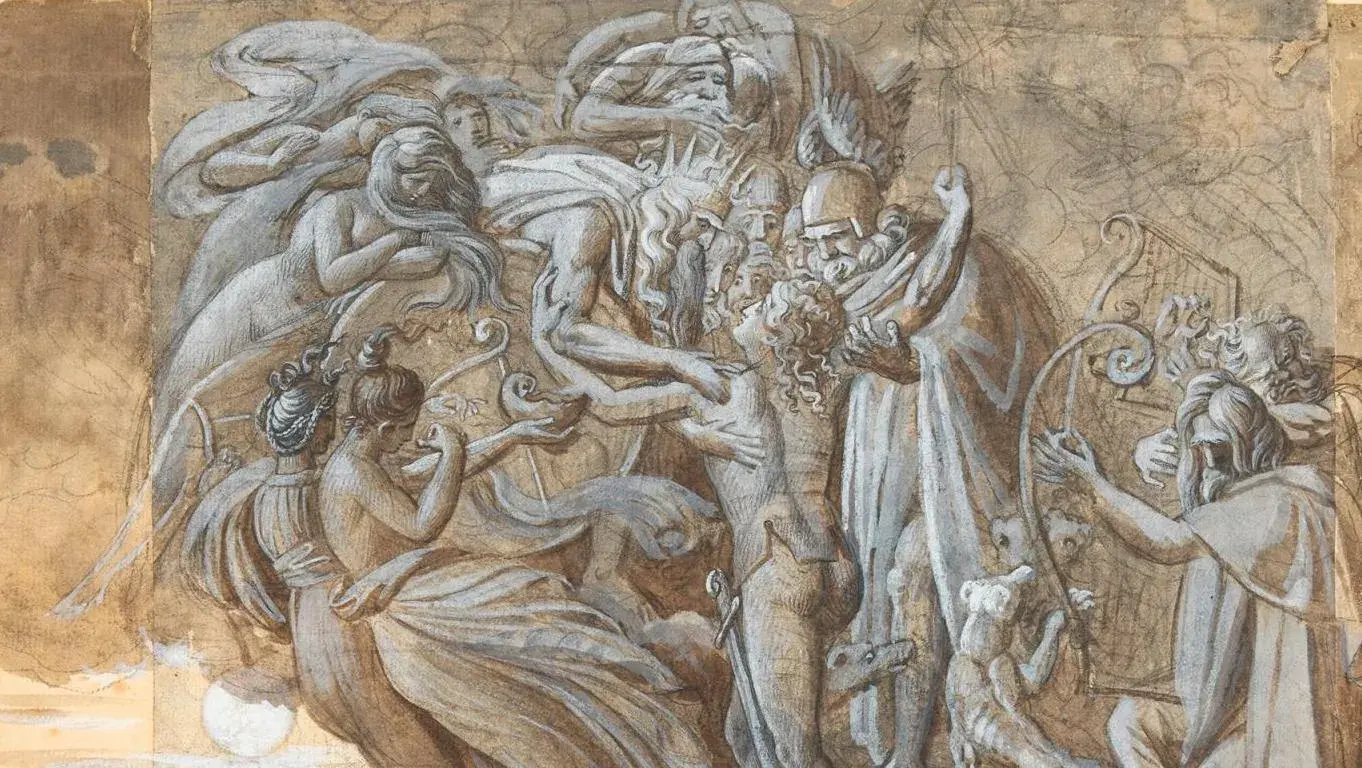
Anne-Louis Girodet de Roussy-Trioson (1767-1824), Le Paradis d’Ossian accueille un héros (Ossian Receiving a Hero in Heaven), pencil, India ink wash and sepia, gouache highlights, 23.1 x 30.8 cm/9.09 x 12.12 in. Friday, May 31, 2024, Room 4, Hôtel Drouot. Auction Art Rémy Le Fur & Associés OVV. Cabinet de Bayser. Preempted at €29,210 by the château de Malmaison.
Pursuing the continuous expansion of its already large collection, the musée national des châteaux de Malmaison et Bois-Préau has bought Le Paradis d’Ossian accueille un héros (Ossian Receiving a Hero in Heaven), a study by Anne-Louis Girodet de Roussy-Trioson for one of the historic site’s most important paintings. The drawing boasts an impeccable provenance: it had never left the Becquerel family, the executors of the painter’s estate. “This was probably the last drawing from the Ossian group still in private hands, and we didn’t own any,” says Rémi Cariel, Head Curator in charge of the painting, sculpture and graphic arts collections, elated at having been able to buy the drawing for €29,210. Napoleon I wanted an estate near Paris where he could work and relax and Josephine acquired the 18th-century château in 1799. The couple immediately set about restoring Malmaison, which was not only their private home, but also where some of France’s most important political decisions were made, and called on the invaluable duo of Charles Percier and Pierre Fontaine.
Napoleon commissioned Girodet to paint a vast composition to decorate the gilded salon. The painting, Apothéose des héros morts pour la patrie pendant la guerre de la Liberté (Apotheosis of Heroes Who Died for the Fatherland in the War of Liberty), returned to the wall for which it had been designed after its purchase in Switzerland in 1931. While it depicts a mythological theme already on the painter’s mind when he was in Italy in 1790, as a notebook from the period preserved at INHA attests, Girodet set the story in the Celtic world and it obviously echoes Bonaparte’s recent history. “It gave Napoleon and Girodet some rare common ground,” says Mr. Cariel. “The Apotheosis is the manifesto of an unusual aesthetic, breaking with the classicism of Jacques Louis David, with whom Girodet had trained, and offering one of the first expressions of Romanticism in painting.” The drawing bears witness to the painting’s beginnings, both as a graphic work with a rich and atypical iconography—the meeting of myth and reality—and as a demonstration of the formal renewal Girodet was trying to achieve. Grisaille washes bathed in a milky, romantic atmosphere temper the precision of his line. Strips of laid paper joined to the main sheet by the artist add a little extra soul and express his hesitations.
“This was probably the last drawing from the Ossian group still in private hands, and we didn’t own any,” says Rémi Cariel, head curator in charge of the painting, sculpture and graphic arts collections.
From Napoleon to Napoleon Charles
The historic estate has already intervened twice since last winter, continuing a policy underway for over a century. Its aim is always to preserve, and even enhance, the intimate character of the original furnishings designed for the imperial couple. On November 23, 2023, a large painting by Maurice Réalier-Dumas (1860-1928), Bonaparte, nouveau à l’école de Brienne, octobre 1779 (Bonaparte, Newcomer at the Brienne School, October 1779), was bought at a Millon sale at Drouot for €26,000. The artist depicted the young schoolboy as an outsider. At the age of just 10, he entered the prestigious military academy, where his classmates mocked him for his Corsican accent and poor French. And yet he advanced, indifferent to their taunts, dressed in dark garb that contrasted with his classmates’ military uniforms, his gaze already far away and his arms behind his back in a pose that would become familiar to the world. Réalier-Dumas wanted to capture the genesis of a future statesman. His grandfather had owned the Hôtel Bonaparte on Rue de la Victoire, which may have been the source of his interest in the Emperor. As luck would have it, on the same day at a Rossini sale, Malmaison preempted a marble bust of Napoleon Charles Bonaparte (1802-1807) wearing a gilded bronze wreath of laurel leaves for €25,760. Pierre Cartellier (1757-1831) carved the small, touching sculpture in 1805 before it fell into oblivion for nearly two centuries. This portrait of the eldest son of Hortense de Beauharnais and Louis Bonaparte – Napoleon’s youngest brother – was commissioned by Empress Josephine and completed in March 1807, as evidenced by correspondence between the infant’s grandmother and Vivant Denon. As Napoleon had no children of his own at that time, Napoleon Charles, his eldest nephew, was considered his heir from birth. Unfortunately, fate decided otherwise, and the young boy died on May 7, 1807. The intimate portrait is therefore historic in more ways than one, and it is returning to the place where it was commissioned. After her divorce in 1809, Josephine went into seclusion at Malmaison, where she died on May 29, 1814. Malmaison was inherited by Prince Eugene, her son, who owned the estate until his death. In 1861, it was bought by his nephew, Emperor Napoleon III, who planned to turn the house into a museum. The fall of the Second Empire interrupted the project, which was revived decades later by financier and visionary philanthropist Daniel Iffla. But that’s another story.
WORTH SEEING Musée national des châteaux de Malmaison & Bois-Préau, Rueil-Malmaison, France www.chateau-malmaison.fr
Prominent Artists of the Printed Material Include Ray Sullivan, Phil Frank, George Lichty, Wayne Pope, Amado Gonzales, Antonio Sotomayor, Vincent Perez & Lonnie Bee
SOUTH SAN FRANCISCO, CA, July 12, 2024 – Turner Auctions + Appraisals is pleased to present Bohemian Club Books & Ephemera on August 10, 2024. The sale features over 200 lots of books, booklets, posters, flyers, programs, playbills, invitations, wine lists and menus, and reports from the private men’s club based in San Francisco and Northern California. These offerings from a California collector range from 1909 to the 2000s. Several related lots from other collections round out the sale.
The offerings in this auction reflect a vast range of events held at the Bohemian Club in San Francisco or the Bohemian Grove in Monte Rio, California, where the Midsummer Encampment, an annual 18-day members’ retreat, is held each July. The sale features Bohemian Grove posters from 1956-2005 and Cremation of Care posters from the 1970s. Besides plays from 1913 and 1919, there are playbills for the Grove plays; and programs for diverse events – art exhibitions, ladies’ nights, “low jinks” evenings, tribute dinners, aviary and more. The extensive selection of events flyers or invitations includes those for film, music, comedy, opera, theater, jazz, anthropology, holidays and Oktoberfest, authors, sons & grandsons, golf, baseball, skeet, Vienna, Italia, veterans, and much more. Most of these ephemera date from the 1950s-early 1980s. Some menus and wine lists are also available. Besides printed material promoting the club’s numerous events, there are also official documents from various years, most from 1908-1940, including the President’s and Treasurer’s Reports, and the club’s constitution, by-laws, rules, and annals.
For over 30 years, the California owner has assembled an extensive collection of Bohemian Club and Bohemian Grove items, keeping them in a well-preserved condition. Commenting on his collection, he says he enjoys and appreciates these “highly unique and rare items from the most exclusive men’s club in the world.”
Founded in 1872, the Bohemian Club was created “for the association of gentlemen connected professionally with Literature, Art, Music, Drama and also those who, by reason of their love or appreciation of these objects and their interest in participating in Club activities, may be deemed eligible…The Club is social in nature and purpose with its focus on the fine and performing arts and literature.” Early on, science was added to the “four pillars” of literature, art, music, and drama. Proud to be a refuge for artistic and intellectual activities, conducting business is prohibited. In fact, the club’s motto is “Weaving spiders, come not here.”
While members’ names are not made public, many notable men are known to be or have been Bohemian Club members – politicians such as Herbert Hoover, Dwight Eisenhower, Ronald Reagan, Richard Nixon, Gerald Ford, George H. W. Bush and son, George P. Schultz, and Newt Gingrich; artists or writers such as Maynard Dixon, Granville Redmond, Xavier Martinez, and Herman Wouk; business tycoons such as William Randolph Hearst and David Packard; and other famous men including Eddie Rickenbacker and Arnold Schwarzenegger. Today the club has about 2,600 members at a time, with some waiting up to 15 years to become regular, full members. In addition, there are honorary or professional members, usually in the arts, who assist with the club’s various activities. Since its inception, there have only been four women in the club – honorary members chosen in the club’s first two decades – although women and other guests are included at many of the club’s events.
Turner Auctions + Appraisals begins its online auction on Saturday, August 10, 2024, at 10:30 am PDT; sale items are available for preview and bidding now. The online auction will be featured live on multiple platforms: LiveAuctioneers, Invaluable, Bidsquare, and Turner Auctions + Appraisals’ free mobile app, which can be downloaded from the App Store or Google Apps (“Turner Auctions”). All are easily accessed through ‘Upcoming Auctions’ at the company’s website: www.turnerauctionsonline.com/upcoming-auctions.
Here below are some highlights of the upcoming online sale (please see auction information and lot details in the online catalog).
LOT 2: THREE MUSIC OF BOHEMIA PROGRAMS, 1909-1911. 1.) MUSIC OF BOHEMIA. Under the Direction of Paul Steindorff, Van Ness Theater. San Francisco: The Bohemian Club, printed by H. S. Crocker Co., 1909. 8vo, 23-page booklet. Pictorial printed wraps. Condition: Good; very slight vertical bend; light toning, faint spotting title page, penciled price. 2.) MIDSUMMER MUSIC OF BOHEMIA. Annual Concert of the Bohemian Club Under the Direction of Herman Perlet, Van Ness Theater. San Francisco: The Bohemian Club, printed by the Stanley-Taylor Co., 1910. 8vo, 20-page booklet. Pictorial paper wraps. Condition: Good; some edge tears/chipping, and scattered dampstaining/soiling to wraps; slight center crease to booklet. 3.) MUSIC OF BOHEMIA, Given at the Central Theater, San Francisco… Musical Director, Wallace A. Sabin. San Francisco: The Bohemian Club, 1911. 8vo, 62-page booklet. Pictorial paper wraps. Tipped-in frontispiece photograph. Condition: Good; small edge creases/ tears and slight diagonal crease to wraps; light soiling, pencil marks; ex-libris stamps. Estimate $800-$1,200.
LOT 9: “THE BILLIONAIRE,” 1956 BOHEMIAN GROVE POSTER. Artist: Lonie Bee (Lorenzo Potter Bee, 1902-1995). Bohemian Grove, The Billionaire, 1956 Low Jinks Poster, two-sided. 22 1/8″ x 17 15/16″. Condition: fold creases, toning. Estimate $300-$500.
LOT 82: BOHEMIAN CLUB, PRESIDENT AND TREASURER REPORT (10), 1968-1981. BOHEMIAN CLUB. A collection of ten volumes of the Report of the President and Treasurer (rarely available): 1968-1969; 1970-1971; 1971-1972; 1972-1973; 1973-1974; 1974-1975; 1975-1976; 1976-1977; 1978-1979; and 1980-1981. 8vo stapled booklets, running 29-33 pages; covers printed with owl device/motto. Each contains recaps for the period, including committees, events, financial summaries/statements, bequests, and In Memoriam member list. Condition: the collection is overall good; some staining/soiling to covers; one with hole punches, and strip cut from back cover. Estimate $800-$1,200.
LOT 10: “SHOOT THE WORKS”, 1957 BOHEMIAN GROVE POSTER. Artist: Paul T. Carey (1904-2001). Bohemian Grove, “Shoot the Works”, 1957 Low Jinks Poster, two-sided. 22″ x 17 1/2″. Condition: fold creases. Estimate $300-$500.
LOT 3: BOHEMIAN CLUB MIDSUMMER JINKS PROGRAMS (2), 1910. 1.) FIELD, CHARLES K. The Cave Man, A Play of the Redwoods. Thirty-third Midsummer High Jinks of the Bohemian Club. Music by W. J. McCoy. San Francisco: The Bohemian Club, 1910. 8vo, 23-page booklet. Printed paper wraps. Condition: Very Good; light toning; slight surface tear to cover (does not extend through); pencil notation. 2.) PATIGIAN, HAIG. Midsummer Low Jinks, 1910, 8vo, single-sheet/folded program. Owl illustration by Randall W. Borough. Condition: Good; slight vertical crease; pencil notations. Estimate $500-$700.
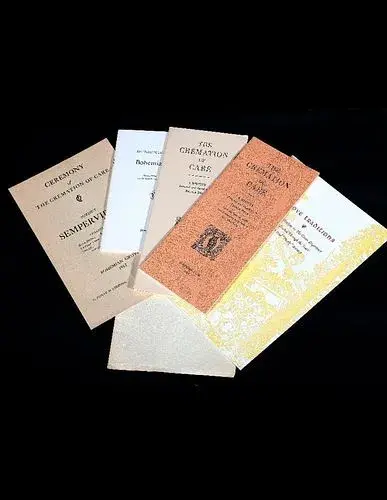
LOT 4: BOHEMIAN CLUB BOOKLETS/EPHEMERA (5), 1910S-1980S. 1.) BOHEMIAN CLUB. Introduction to the Bohemian Club, Reprinted from the Club Book of By-laws. San Francisco: 1965. 16mo, 32-page booklet, printed paper wraps. Condition: Very Good; a few scattered spots of light soiling. 2.) BROWNE, PAUL. Grove Traditions, From Reflections on The Grove Experience As Recited Through the Years by Paul “Pearly” Browne. San Francisco: The Bohemian Club, printed by Peter Koch, 1989. 8vo. Pictorial letter press paper wraps illustrated by Kendall C. Rossi. Condition: Very Good. 3.) FIELD, PALMER. The Cremation of Care, A History Exhumed and dusted off by Palmer Field (2 copies). San Francisco: The Bohemian Club, 1953. 12-page booklets, printed paper wraps. One copy printed “Upon the occasion of the 74th consecutive performance, July 18th, 1953.” Condition: both Very Good. 4.) MORSE, CARLTON E. Grove Play: The American Scene. Music by Paul Carson. San Francisco: 1942. 8vo, 10-page booklet, paper wraps. Frontispiece illustration by Ray Sullivan. Condition: Good; slight vertical crease in booklet. 5.) REDDING, JOSEPH. Ceremony of the Cremation of Care, Subject Semper Virens. San Francisco: Bohemian Grove, 1912. 8vo, single sheet/folded program. Condition: Good; light toning, Estimate $500-$700.
1.) BOHEMIAN CLUB. Introduction to the Bohemian Club, Reprinted from the Club Book of By-laws. San Francisco: 1965. 16mo, 32-page booklet, printed paper wraps. Condition: Very Good; a few scattered spots of light soiling. 2.) BROWNE, PAUL. Grove Traditions, From Reflections on The Grove Experience As Recited Through the Years by Paul “Pearly” Browne. San Francisco: The Bohemian Club, printed by Peter Koch, 1989. 8vo. Pictorial letter press paper wraps illustrated by Kendall C. Rossi. Condition: Very Good. 3.) FIELD, PALMER. The Cremation of Care, A History Exhumed and dusted off by Palmer Field (2 copies). San Francisco: The Bohemian Club, 1953. 12-page booklets, printed paper wraps. One copy printed “Upon the occasion of the 74th consecutive performance, July 18th, 1953.” Condition: both Very Good. 4.) MORSE, CARLTON E. Grove Play: The American Scene. Music by Paul Carson. San Francisco: 1942. 8vo, 10-page booklet, paper wraps. Frontispiece illustration by Ray Sullivan. Condition: Good; slight vertical crease in booklet. 5.) REDDING, JOSEPH. Ceremony of the Cremation of Care, Subject Semper Virens. San Francisco: Bohemian Grove, 1912. 8vo, single sheet/folded program. Condition: Good; light toning, Estimate $500-$700.
LOT 20: “THAT’S NOT MY BAGHDAD,” 1969 BOHEMIAN CLUB POSTER. Artist: George Lichty (1905-1983). The Bohemian Club Presents, “That’s Not My Baghdad,” 1969 Low Jinks Poster, two-sided. 22″ x 16 3/8″. Condition: fold creases; very light soiling. Estimate $300-$500.
LOT 206: ARTIST: XAVIER MARTINEZ (1869-1943). Title/Description: “1 Year After”; a caricature self-portrait depicting a humorous take on parenthood as an artist, with Elsie Whitaker Martinez, and their daughter Micaela in a buggy along with a canvas and paintbrushes. Unsigned. Date: Circa 1914. Medium: Charcoal on paper. Size: 10″ x 12″. Condition: toning, scattered foxing; a few small edge tears. PROVENANCE: Acquired from the Turner Auctions + Appraisals sale, “The Bohemian World of Xavier Martinez,” February 25, 2023, featuring property from The Family of Xavier Martinez (1869-1943), Elsie Whitaker Martinez (1890-1984), and Micaela Martinez DuCasse (1913-1989). Xavier “Marty” Martinez was an early member of the Bohemian Club, being invited to join in 1897. He was a noted artist among the ranks and was elected to the List of Fifty. Following the 1906 San Francisco earthquake, he moved to the Piedmont/Oakland hills, where he built a studio behind the home of writer and fellow Bohemian, Herman Whitaker, and soon after married Whitaker’s daughter, Elsie. TOGETHER WITH: Neubert, George W. Xavier Martinez (1869-1943); The Oakland Museum Art Special Gallery (Exhibition Catalog, February 12-April 7, 1974). Oakland: The Oakland Museum, Art Department, 1974. 4to. Pictorial paper wraps. Condition: overall good; crease to front cover; small pencil mark to cover; library stamps to cover and fore-edges. Estimate $300-$500.
LOT 5: BOHEMIAN CLUB CONSTITUTION/BY-LAW BOOKS: 1907, 1914. BOHEMIAN CLUB, SAN FRANCISCO, CERTIFICATE OF INCORPORATION, CONSTITUTION, BY-LAWS AND RULES, OFFICERS, COMMITTEES, AND MEMBERS (two volumes: 1907, 1914). San Francisco: The Bohemian Club. 12mo. Red cloth, gilt-stamped club armorial/motto. 142 pages. Each volume contains complete lists of members for the given year; and a list of all former officers from 1872 onward. 1.) 1907. Condition: staining, fading to cloth, wear to spine; edge wear; toning; pencil notations to front end leaf; slightly shaken. 2.) 1914. Condition: light scuffing to cloth; inked notations on cover; toning; the member section with contemporary inked marginalia/underlining (adding new members with dates, and striking members out). Estimate $300-$500.
LOT 53: “CREMATION OF CARE,” 1971 BOHEMIAN GROVE POSTER. Artist: Marshall D. Potter (1920-2005). Bohemian Grove, 1971 Cremation of Care Poster, two-sided. 20″ x 15″. Condition: fold creases, small dings to corners/edge. Estimate $200-$300.
LOT 78: BOHEMIAN GROVE WINE LISTS (2), RED/WHITE, 1977. Two Bohemian Grove Wine Lists, one for red wines, one for white wines, 1977; each one-sided; 13″ x 9 1/2″. Condition: both very good. Estimate $250-$350.
LOT 58: BOHEMIAN CLUB PATRIOTIC FLYERS (2), 1960S-1970S. 1.) Artist: Hubert Buel (1915-1984). Bohemian Club program/menu flyer, Damn the Torpedos!, January 19, 1961, C. W. Nimitz, Sire. Single sheet, folded11 3/4″ x 8″. Lithograph illustration. Condition: pinholes and small corner tears at top. 2.) Bohemian Club, Our Town’s Gala February 19th Fourth of July Picnic Celebration, two-sided flyer, 1976. 14″ x 8 1/2″. Condition: good; slight fold crease at bottom; pinholes at one corner. Estimate $200-$300.
LOT 29: “CHARLIE’S LITTLE ACRE,” 1979 BOHEMIAN GROVE POSTER. Artist: Wayne Pope (Epop) (1932-2017). Bohemian Grove, Charlie’s Little Acre, 1979 Low Jinks Poster, two-sided. 10″ x 15″. Condition: overall very good; appears to be some fading to title, tiny corner crease, small mark lower left.Estimate $200-$300.
LOT 205: ANNALS OF THE BOHEMIAN CLUB, VOLS. V-VIII. THE ANNALS OF THE BOHEMIAN CLUB (five volumes): 1.) VOLUME V. Centennial Edition, For the Years 1907-1972. Alexander T. Case, Editor. San Francisco: The Bohemian Club, 1972. 4to. Gilt-stamped blue-green cloth boards. Condition: Good. 2.) VOLUME VI: 1973-1987. Kevin Starr, Editor.4to. Gilt-stamped blue-green cloth boards. Condition: Good. 3.) VOLUME VII: 1988-1996. Jerry C. Cole, Editor.4to. Gilt-stamped blue-green cloth boards. Condition: Good. 4.-5.) VOLUME VIII, THE VISUAL ARTS IN BOHEMIA, 125 Years of Artistic Creativity in the Bohemian Club (two copies). James Earl Jewell, Editor. 4to. Olive green cloth boards; tipped-on gilt/black pictorial paper label. Condition: Good; one copy with fading to cloth. TOGETHER WITH: two reprint/ facsimile editions (Volume IV, 1930; and Volume II, 1887), and miscellaneous facsimile ephemera. Estimate $300-$500.
LOT 33: “I, GLUTEUS,” 1985 BOHEMIAN CLUB POSTER. Artist: Wayne Pope (1932-2017). Bohemian Club Production; I, Gluteus, 1985 Low Jinks Poster, two-sided. 20 1/2″ x 15″. Condition: very good.Estimate $100-$200.
###
ABOUT TURNER AUCTIONS + APPRAISALS
Based in South San Francisco, Turner Auctions + Appraisals was founded by Stephen Turner to expand and complement the capabilities of Stephen G. Turner Associates,an auction and appraisal consulting firm founded in 2004.Turner Auctions + Appraisals presents online auctions in diverse categories of personal property (www.turnerauctionsonline.com). Among them are Fine Arts, Decorative Arts, Asian Arts, Toys, Jewelry, Militaria, Ethnic Arts, and others. The company offers a range of auction and appraisal services for buyers, sellers, and collectors. Online auctions are held several times a month. Working with leading live and online auction houses on the West Coast since 1991, Turner is a professional appraiser of personal property and seasoned auctioneer. His areas of expertise include fine art, decorative arts, antiques & residential contents. The company welcomes consignments and appraisals.
For more information about the company, please contact:
Stephen Turner, President, Turner Auctions + Appraisals, 461 Littlefield Avenue, South San Francisco, CA 94080
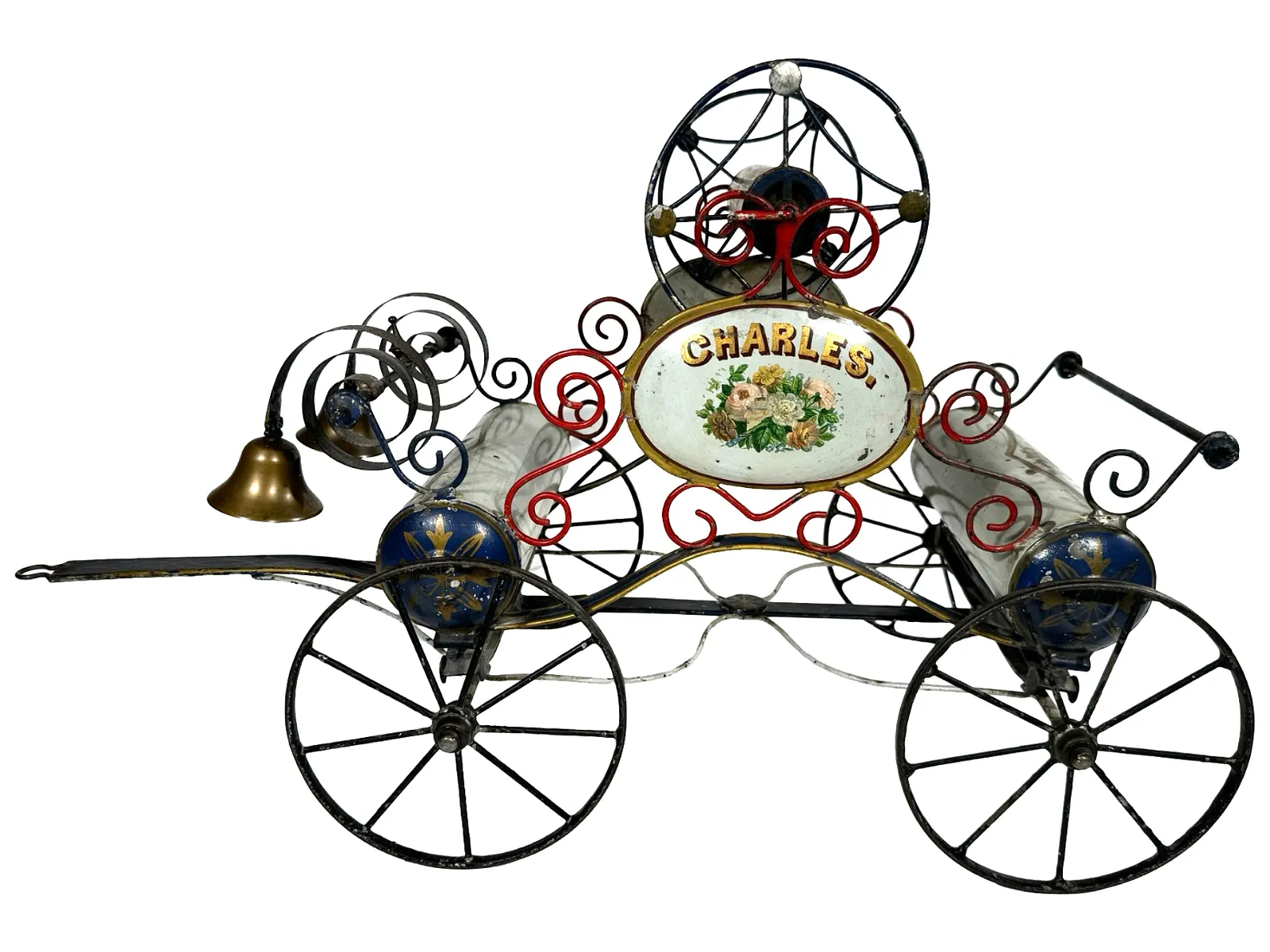
After 50+ years of upgrading, the impeccable multigenerational collection includes many “only known” or “best of all known” examples, plus the legendary George Brown “Charles” Hose Reel Carriage
WHITEHOUSE STATION, N.J. – On Saturday, August 3 at RSL Auction’s New Jersey gallery, Pittsburgh’s revered Haradin family will bid farewell to a 149-piece legacy collection of American toys and banks that literally has no rival. Richly historical and boasting one peerless rarity after another, the fabled archive spans multiple generations of a clan whose roots are deeply embedded in two communities: their Western Pennsylvania hometown and the borderless realm of antique toy and bank collecting.
The celebrated circa-1870 George Brown (Forestville, Conn.) ‘Charles’ Hose Reel Carriage, estimate $125,000-$175,000, and its companion George Brown Hook and Ladder Wagon, estimate $35,000-$45,000, are considered two of the most important and significant of all American tin toys.
As each extraordinary piece passes into the hands of a new owner to begin the next phase of its journey, it will do so with gilt-edged provenance as its traveling companion. And thanks to the Haradins’ unwavering emphasis on rarity and condition, buyers will have the assurance of knowing they have acquired the crème de la crème of toys and banks from a collection whose contents literally cannot be upgraded. That task was already taken care of during the Haradin family’s half-century of astute stewardship.
The Haradin Family Collection began with Dr. Anthony “Tony” Haradin (1937-2016) and his wife, Roberta Haradin. A prominent oncologist and hematologist, Tony accrued many honors and distinctions during his decades of selfless service to the people of Pittsburgh. He was an Assistant Professor of Medicine at the University of Pittsburgh for 45+ years and served on the staff of several Pittsburgh hospitals, including St. Clair Hospital, where he was Chief of Hematology/Oncology until 2013. One year prior to his retirement, he received the first-ever St. Clair’s Physician Recognition Award.
On weekends, Tony and Roberta could be found side by side, gleefully scavenging for art, antiques and midcentury furniture at local flea markets and auctions. It was a pastime that developed organically, since neither of them came from a family that collected or had an involvement in the arts. The family’s 50-year odyssey into the world of toy and bank collecting began one fateful day in 1969, when Tony and Roberta returned home with five mechanical banks they had purchased at an auction. Their young sons Ray and David were allowed to pick a favorite which would be their own personal bank upon which to build an individual collection. Ray recalled, “As the years went on, the rule we always followed was, whoever upgraded a bank or toy would become its owner. That worked out very well.”
While The Haradin Family Collection has never been publicly exhibited, Ray – who co-founded RSL Auction Company – and his wife, Nancy, have always taken great pride in welcoming friends and members of the Antique Toy Collectors of America, the Mechanical Bank Collectors of America, and Still Bank Collectors Club of America to their home to view the heirloom toys. But because the Haradins were always buyers and almost never sellers, their blue-chip holdings were assumed to be “off limits” to others. No collector ever thought they would have the opportunity to buy a single piece from the fabulous Haradin assemblage, which includes such treasures as a flawless Jonah and the Whale on Pedestal cast-iron mechanical bank (ex Edwin F. Mosler Jr. collection), estimated at $175,000-$225,000; an absolutely perfect early-1880s Clown, Harlequin & Columbine bank (ex L.C. Hegarty collection), $125,000-$175,000; and the incomparable circa-1870 George Brown “Charles” Hose Reel Carriage (ex Bernard Barenholtz collection), which is considered by many to be the most important of all 19th-century American toys. Its pre-sale estimate is $125,000-$175,000.
Each piece in the Haradin assemblage can boast provenance from at least one, if not many more, of the revered mid-20th-century collectors who formed the framework of antique toy- and bank-collecting as a bona fide hobby. “Like today’s enthusiasts, those pioneers considered each piece in their collections to be a historically important object because they reflected American life as it was from the mid-1800s through the first decade of the 20th century,” Ray Haradin said.
In addition to the aforementioned toys, other top picks include: a circa-1890 Ives, Blakeslee & Co. (Bridgeport, Conn.) oversize cast-iron Cutter Sleigh, $25,000-$35,000; a stunning Hubley Royal Circus Revolving Monkey Cage (ex Donald Kaufman collection), $70,000-$90,000; a mid-1880s James Fallows (Philadelphia) “Defiance” fire pumper in mint condition, $55,000-$75,000; and the mysterious circa-1880s cast-iron “Yankee Schoolmaster,” also known as “The Alphabet Man.” Acquired by the Haradins at Noel Barrett’s 1991 auction of the Tom Anderson collection, it is one of fewer than 10 examples known to exist. Despite years of tireless research by toy scholars, its manufacturer has never been determined. However, Ray Haradin notes that the schoolmaster resembles the Boss Tweed character in J&E Stevens’ “Tammany” bank. Auction estimate: $35,000-$75,000
Additional cast-iron mechanical bank highlights include: a mid-1880s Kyser & Rex (Philadelphia) “musical” Merry-Go-Round bank in near-mint condition, $120,000-$150,000; and a circa-1910 J&E Stevens North Pole bank (ex Wally Tudor collection and Donal P. Markey collection) in virtually mint condition with an exceptional patina. This bank documents Robert Peary’s arrival to the North Pole in 1909 and is decorated with images of a dog sled loaded with supplies and three male polar adventurers navigating the rocky, snowy terrain. When a coin is dropped into the bank, an American Flag pops up as though staking a claim at the Earth’s summit. Estimate: $75,000-$95,000
AUCTION DETAILS:
The auction of The Haradin Family Collection of American Toys and Banks will be held on Saturday, August 3, 2024 at RSL Auction Company’s gallery, starting at 10 a.m. ET. Address: 295 US Hwy. 22 East, Suite 204 West, Whitehouse Station, NJ 08889. All forms of remote bidding will be available, including absentee, by phone, fax or live online through LiveAuctioneers or RSL’s own platform (via BidSpirit). Preview: Aug. 2 from 8-5, Aug. 3 from 8-10 a.m., or by appointment (tel. 908-823-4049).
On June 29, 2024, Ladenburger Spielzeugauktion GmbH of Ladenburg, Germany presented its annual Steiff Special Auction. This 226-lot sale took place in Giengen, Germany– the birthplace of the Margarete Steiff GmbH company. The event was held in a centuries-old building located just a stone’s throw from where Richard Steiff invented the jointed Teddy bear that we still know and love today in 1903.
This auction, traditionally held in conjunction with the Steiff company’s annual family summer celebration, tempts collectors from all over the world with the finest antique Steiff treasures curated especially for this signature event. It also consistently delivers breathtaking results; at last year’s sale, Ladenburger Spielzeugauktion sold an all-but-perfect Steiff black mohair Titanic Mourning Bear for nearly USD 250,000, setting a new world record for the most expensive antique bear sold at auction.
The cover of the June 2024 Ladenburger Spielzeugauktion Steiff Special Auction. Image courtesy of Ladenburger Spielzeugauktion.
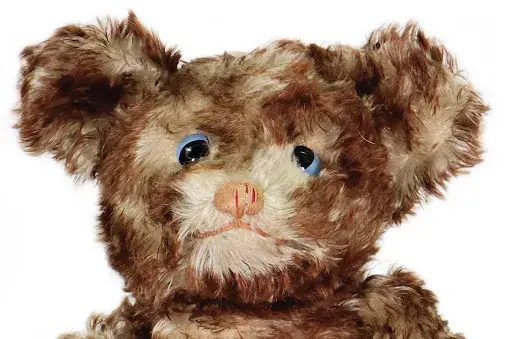
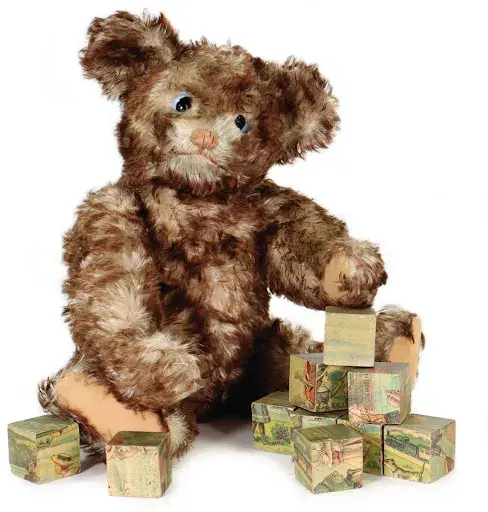
This year, the top lot in the sale was #34, a remarkable Steiff Petsy Teddy bear in almost new condition. This precious and important cub was made in the 1928 – 1930 time frame and measured 36 cm tall sitting. He was fully jointed, made from brown-tipped mohair, and had felt paw pads. His face came to life with a center seam, a hand-stitched nose and mouth, large rounded ears lined in wires, and unusual black and blue glass googly-style eyes. The opening bid for this bear was EUR 4,500 or USD 4,900; after many minutes of spirited bidding, he hammered at EUR 82,000 or USD 89,000. We spoke with Pia Fast Seidel of Ladenburger Spielzeugauktion GmbH to learn more about this sale and this most desirable Steiff Petsy Teddy bear.
Pia Fast Seidel, auctioneer and Steiff specialist, Ladenburger Spielzeugauktion. Image courtesy of Ladenburger Spielzeugauktion.
Auction Daily: Tell us why you think this Steiff Petsy Teddy bear, which was lot #34 in your June 2024 Steiff Special Auction, was so interesting and special.
Pia Fast Seidel: Steiff’s original, pre-war Petsy bears have always been a very popular and sought-after design. One thing that makes these bears extraordinary is their brilliantly tipped mohair. Today, you often find an antique Petsy bear with faded mohair, which can occur naturally over time. The one we just sold in June 2024 was in exceptionally good condition with excellent color and rare, distinctive eyeballs. These things made him very noteworthy from the collector’s perspective, and clearly he caught the attention of many people worldwide. I think that, in part, is why the bear did so well at auction.
Auction Daily: Did this Steiff Petsy Teddy bear generate much interest before the auction?
Pia Fast Seidel: Oh yes! We had dozens of international inquiries about the bear as soon as the auction catalog was published. I had numerous phone conversations directly with possible bidders, to answer their questions about the bear and to provide additional information to them. We also made videos about this bear and posted those to our social media channels. These got many views and comments and also contributed to the pre-auction buzz surrounding this Petsy.
Auction Daily: Petsy realized about EUR 101,000 or USD 110,000, with fees. Were you surprised?
Pia Fast Seidel: I suspected that the bear might trade hands at EUR 50,000, based on the marketplace and other recent sales of somewhat similar bears. However, I didn’t imagine that he would double that. I was thrilled at the result, and so was the consignor!
Steiff Petsy Teddy bear, full body image. Image courtesy of Ladenburger Spielzeugauktion.
Auction Daily: And finally, what was it like in the auction room as this lot was being sold?
Pia Fast Seidel: My husband Eduard Fast was at the podium and sold the bear. There were six telephone bidders and several live audience members who were actively bidding as well. Eduard opened the bidding with the starting price, and the bids quickly escalated to EUR 30,000– this bid was from a collector in the room. There was a short pause, and we thought the live bidder may have won. But shortly after that, the phone bids started pouring in. The live bidder went to EUR 40,000. But in the end, a phone bidder did offer the highest price and won the bear.
Auction Daily: Thank you for your time and expertise here, and congrats on an outstanding sale!
For more information on Ladenburger Spielzeugauktion’s June 29, 2024 Steiff Special Auction and this Steiff Petsy Teddy bear, please visit Ladenburger Spielzeugauktion.
Visit Auction Daily’s news channel for the latest on the art and auction world.
Celebrities, artists, pupils and the general public donated 2,146 pieces of unique artwork that were auctioned on eBay for 10 days in June 2024.
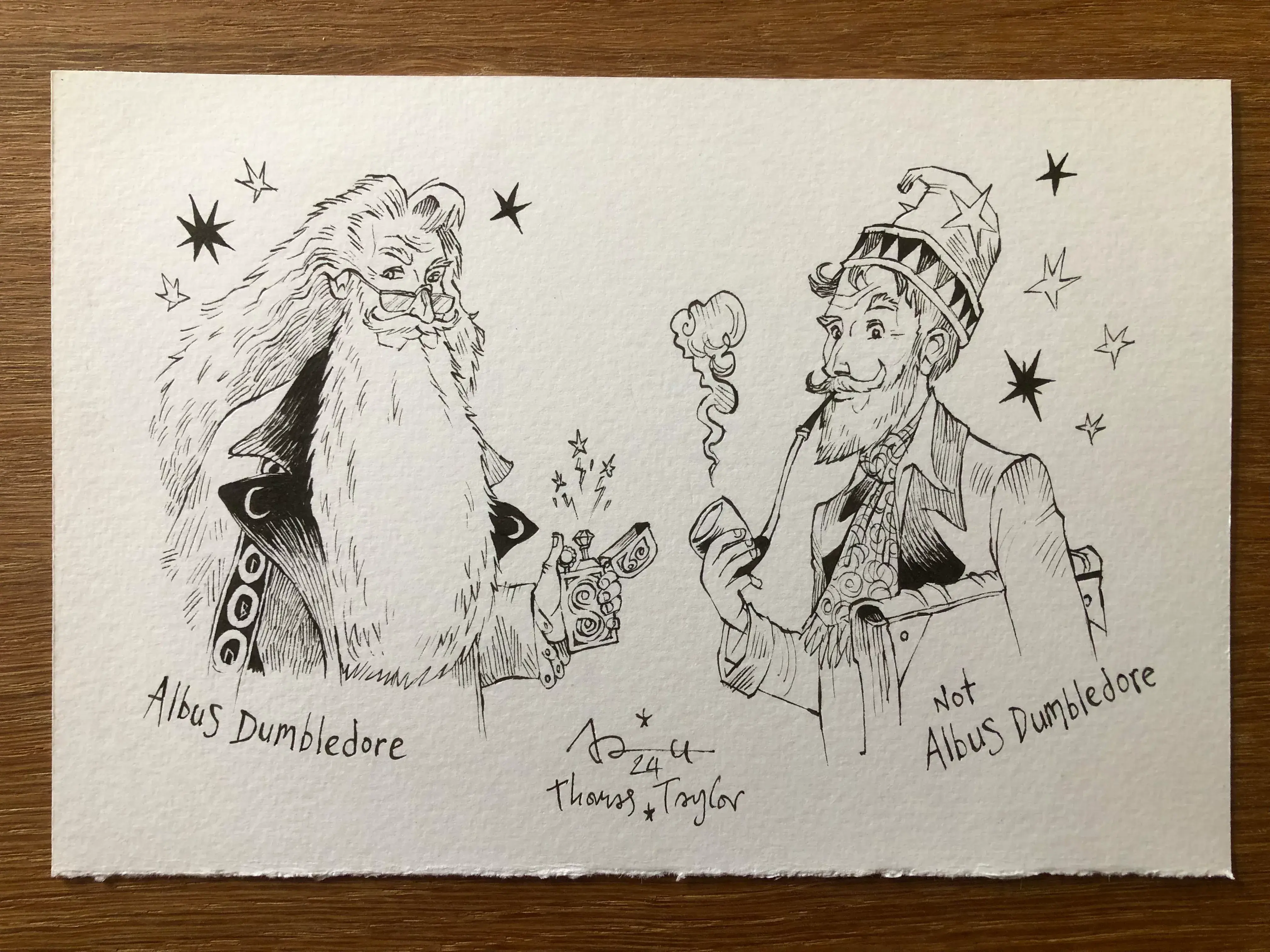
1866 Wizards Signed by Thomas Taylor
Since 2018, St Richard’s Catholic College has held the secret art auction every two years to fundraise for The Royal Marsden Cancer Charity in memory of former pupil, Sophie Maria Taylor who loved art.
Secret postcards were created and donated by some incredible artists and celebrities including: Billy Childish, Bob & Roberta Smith, Curtis Holder, Dame Prue Leith, Ed Fairburn, Fearne Cotton, Gilbert & George, Joe Lycett, Jen Orpin, Korky Paul, Lorraine Kelly, Loui Jover, Mark Curryer, Matthew Lyons, Michael Riddle, My Dog Sighs, Nelly Edwards, Peter Dennis, Rev. Richard Cole, Richard Spare, Russell Herron, Sarah Graham, Susanne du Toit, Susie Hamilton, The Cameron Twins, The London Police, The Postman, Thomas Taylor, Trust Icon, Will Rochfort, Yeside Linney and many many more!
The list of contributors was available on sophiespostcard.com before the auction but the work was kept anonymous. Buyers will find out who created their amazing postcards now that the auction is over, and this will also be published on sophiespostcard.com
Art teacher and organiser, Miranda Pennington said, “Thanks to all the incredible artists and all the bidders, this year’s Sophie’s Postcard was the best yet. So many wonderful artists donated artwork for this special fundraiser in Sophie’s memory and I am astounded by the amount raised. I was hoping to raise £30,000 this year, however, on the final day of the auction, I realised that it was going to be above £70,000 and could not believe it when the figure kept rising to over £100,000! This is an absolutely staggering amount for a very worthy cause!”
The money raised from this year’s auction is added to the £82,500 already raised since the project started in 2018 and this money will make a real difference, helping to fund world-leading research to improve the lives of young cancer patients.
Famous children’s author and illustrator, Thomas Taylor, has contributed to all of the four auctions, and his pieces are always highly sought after. His amazing artwork ‘Wizards’ raised a staggering £4177.77 and a wonderful illustration by the artist, Ed Fairburn, made £2250.
The artwork from St Richard’s staff and pupils was really successful in the auction including that of Year 10 pupil, Isla, whose amazing oil portrait raised £76; Year 11 pupil, Renisse, who created 50 works for the auction which raised an astonishing £862, and Art teacher, Mr Peachment, whose wonderful painting of Clifton Suspension Bridge was sold for £327 All the contributions helped to raise such a phenomenal amount for The Royal Marsden Cancer Charity.
Sophie’s parents, James & Luiza Taylor said, “We continue to be amazed at the incredible support given by artists and enthusiastic people all over the world, and are so thankful to everyone who has helped us keep Sophie’s memory alive in a very special way.
When Sophie was having her treatment, she found great solace in art activities at both the Royal Marsden and St Richard’s, and we are sure she would be very proud of everyone involved. We find great comfort in the knowledge that this auction is directly helping the Royal Marsden support other young people in their fight against cancer.”
Both paintings were featured in 2002 contemporary art exhibition at LA gallery IKON Ltd prior to joining a Miami private collection where they’ve remained for 20+ years
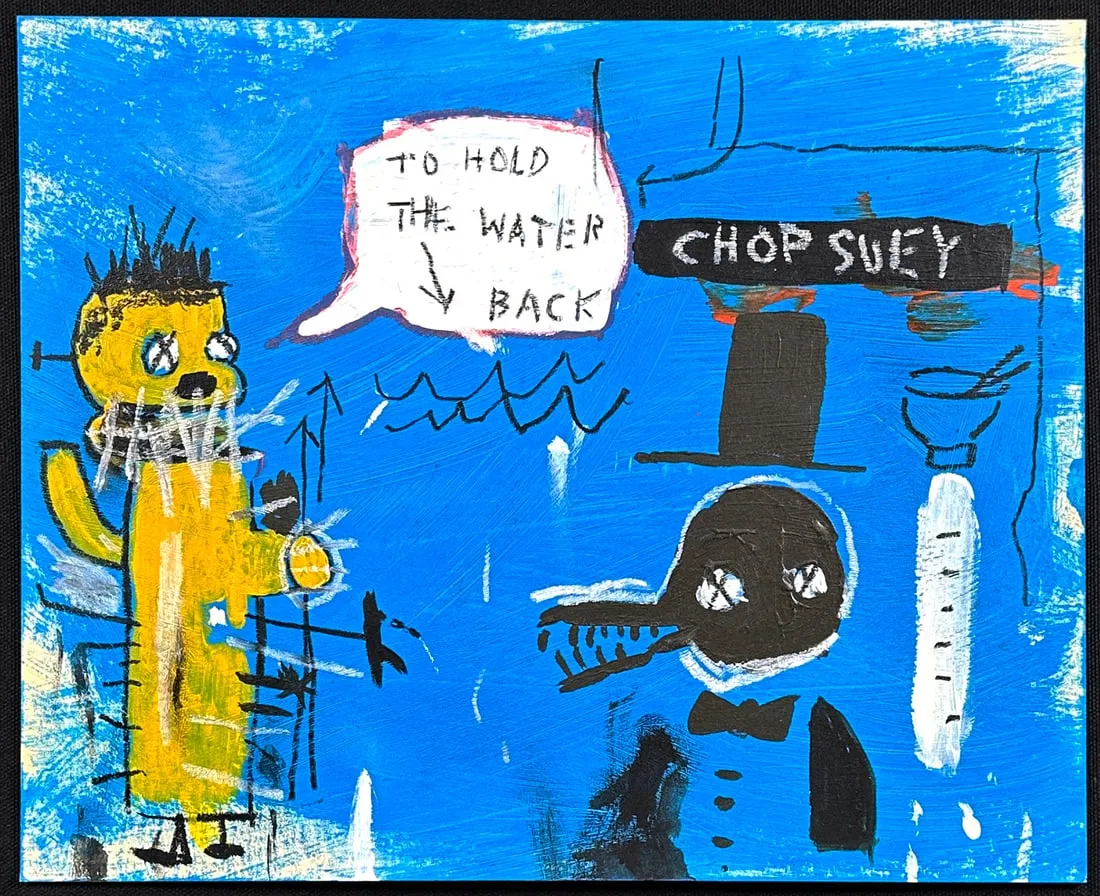
Jean-Michel Basquiat (American, 1960-1988), ‘Chop Suey,’ painting on illustration board. Artist-signed on verso. Size” 9¾in x 12in, in an 18 3/8in x 20¼in frame. Framed for gallery exhibition by Castelli Custom Picture Framing of Culver City, California. Provenance: Exhibited at Santa Monica, California gallery IKON Ltd., in 2002. Opening bid: $50,000
CLEARWATER, Fla. – On July 27, 2024, Florida’s Blackwell Auctions will present two signed, fresh-to-the-market paintings by Jean-Michel Basquiat (American, 1960-1988) as highlights of their Exceptional Estates Auction. Neither of the Basquiat artworks has been seen publicly since their display at a 2002 contemporary art exhibition held at the respected Santa Monica, California, gallery and private consultancy firm IKON Ltd. At that event, the Basquiats appeared alongside paintings by Keith Haring, Andy Warhol, Damien Hirst, Ed Ruscha, Roy Lichtenstein and several other contemporary artists of great distinction.
The larger of the two Basquiat artworks to be auctioned is titled Chop Suey. Created in 1983, the vibrant marine-blue, black, yellow and white painting on illustration board measures 9¾ inches by 12 inches (sight). Chop Suey incorporates two familiar symbols that recur in Basquiat’s work: the tuxedo-clad penguin with a top hat, and the figure with an upraised arm and vertical body riddled with arrows. It has been suggested that Basquiat may have expanded the concept of this work into his mural-sized The dingoes that park their brains with their gum, as the two bear some thematic similarities. The painting is boldly artist-signed on verso. It will open for bidding at $50,000.
The second Basquiat featured in the July 27 auction is Untitled (Fig One), a 1982 oilstick on paper that measures 9 1/8 inches by 11 inches (sight). In addition to the depictions of two narrow apartment buildings and a morose dog figure, Basquiat included his most iconic symbol, the three-pointed crown. It is positioned atop one of the buildings, as though the artist wanted to add a regal touch to an otherwise pedestrian-looking urban edifice. The front of the artwork is signed with Basquiat’s full name. Opening bid: $35,000
Both Basquiat works were professionally framed in 2002 by Castelli Custom Picture Framing of Culver City, California, to achieve a size that would be most suitable for exhibition. Chop Suey has a framed size of 18 3/8 inches by 20¼ inches, while Untitled (Fig One) measures 20½in x 22in. To this day, Castelli continues to provide its bespoke framing services to noted artists, top-tier galleries and several major auction houses.
Edwin Bailey of Blackwell Auctions remarked, “It’s a tremendous honor for us to offer these two artworks by Jean-Michel Basquiat, especially given the unimpeachable provenance of their having been exhibited at IKON.” After the IKON exhibition concluded, both of the Basquiats joined a private art collection in Miami, where they have remained for more than two decades.
The July Exceptional Estates Auction’s extensive selection of other fine-art pieces includes original works by Leroy Neiman, Michael Cartellone, Charles Hinman, Alan Davie, Louis Leopold Boilly, Richard Schmid, Peter Max and others. Additionally, there are signed lithographs by Picasso and Erte.
In-person inspection of the Basquiat paintings is by appointment only. A public preview of all auction items, including the Basquiats, will be held at Blackwell’s gallery on July 26 from 10-4 ET, as well as on the morning of the July 27 sale from 10am until the auction starts at 12 noon. Blackwell Auctions is located at 5251 110th Avenue North, Suite 118, Clearwater, FL 33760.
Jean-Michel Basquiat (1960-1988) was an American artist who rose to success during the 1980s as part of the Neo-expressionism movement. He first came to the public’s attention as part of the graffiti duo “SAMO.” Alongside his SAMO collaborator Al Diaz, Basquiat wrote enigmatic epigrams all over Manhattan, especially in the cultural hotbed of the city’s Lower East Side, where rap, punk and street art coalesced into early hip-hop culture. His work has always been known for its social commentary on racism and inequality, largely drawn from the artist’s own experiences in the Black community. In early 1980s, Basquiat’s paintings were already being exhibited in galleries and museums abroad. At 21, he became the youngest artist to ever take part in Documenta in Kassel, Germany, and one year later, he earned the distinction of being one of the youngest artists ever to exhibit at the Whitney Biennial. Since his death at age 27 in 1988, Basquiat’s work has steadily increased in value. In 2017, his 1982 painting Untitled, depicting a black skull with red and yellow rivulets, was auctioned for $110.5 million, making it the most expensive painting by an American artist to be purchased in a public sale.
Find more auction world news on AuctionDaily‘s news channel.
The Coeur d’Alene Art Auction returns this year with its signature Fine Western & American Art sale, offering collectors a singular opportunity to own extraordinary works by both historical and contemporary artists. The event will take place in Reno, Nevada on July 27, 2024. Online bidding options are available through Bidsquare.
Leading this 404-lot sale are several works by Howard Terpning, including 1981’s Army Mules No More (lot #107; estimate: USD 600,000 – $900,000). In this vivid oil on canvas painting, Terpning captures a scene from the Apache Wars of the mid-1800s. A group of Native American warriors, wielding shotguns, rounds up a group of mules along a narrow river. Capturing mules was a key Apache tactic for disrupting United States Army supply lines during the wars. “Although the Apaches lived primarily in Arizona and New Mexico, they ranged easily into the Sierra Madre Mountains of Mexico and considered Sonora and Chihuahua their own province,” Terpning wrote about this piece. “To them, both Americans and Mexicans were foreign invaders deserving of no quarter and as a general rule the Apaches offered none.”
Howard Terpning (b. 1927) – Army Mules No More (1981)
Another key Howard Terpning painting on offer is titled Lady of the House (lot #265; estimate: $500,000 – $750,000). Executed in 2006, this work depicts a Blackfoot woman standing outside a striped tepee. She is draped in a red blanket and rests her fist on her hip. To the side, a young child emerges from the tepee, gazing at the woman. Terpning was an Illinois native who focused his painting career on the American West. He frequently depicted Native Americans and scenes from history.
Additional works of interest were painted in the late 19th and early 20th centuries by the likes of William R. Leigh and Thomas Moran. Available from Leigh is Embarrassed (Range Pony in Town), a 1910 oil on canvas painting (lot #133; estimate: $600,000 – $900,000). This significant work captures a humorous scene in a frontier town as a horse bucks its rider and a group of onlookers laugh at the spectacle. Thomas Moran’s Monterey Coast from 1920 is another key item (lot #153; estimate: $500,000 – $750,000). This luminous work shows a rising or setting sun hovering just behind a grassy hill. In the foreground, leafy trees cast a dark silhouette. The auction house notes that by 1920, Moran was in the twilight of his career and preferred to reevaluate familiar themes, such as the California coast. This work reflects the artist’s career growth and fully-developed technical skills.
Western and American artworks by Charles M. Russell, Frederic Remington, and Frank Tenney Johnson will be available. Additional lots of interest in the 2024 Coeur d’Alene Art Auction include:
Philip R. Goodwin’s Dangerous Sport painting (lot #33; estimate: $250,000 – $350,000)
Victor Higgins’ Taos in Autumn painting (lot #138; estimate: $200,000 – $300,000)
Joseph Henry Sharp’s Indian by Firelight painting (lot #14; estimate: $100,000 – $150,000)
Deborah Butterfield’s Jane sculpture (lot #66; estimate: $80,000 – $120,000)
Coeur D’Alene Art Auction specializes in the finest classical Western and American Art representing past masters and outstanding contemporary artists. The auction principals have over 100 years of combined experience in selling fine art and have netted their clients over $310 million in the last fifteen years alone. Long known leaders at the Coeur d’Alene Art Auction, such as Howard Terpning, Alfred Jacob Miller, Frederic Remington, Eanger Irving Couse, Edgar Payne and William R. Leigh, amongst many others, are consistently featured in their annual auction.
The 2024 Coeur d’Alene Art Auction of Fine Western & American Art will begin at 2:00 PM EDT on July 27, 2024. Find the complete catalog and register to place a bid on Bidsquare.
Find more information about this and other upcoming events on Auction Daily.
For the first time ever, Rome’s most secret collection is leaving Italy to be shown at the Louvre. Masterpieces that were in darkness for nearly 50 years will come out into the light.
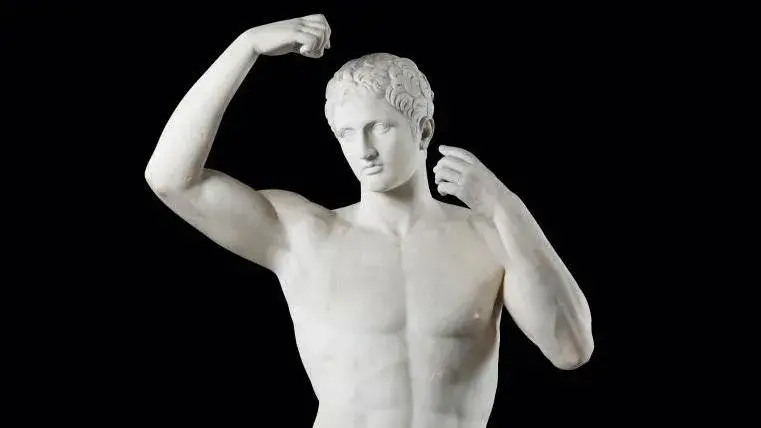
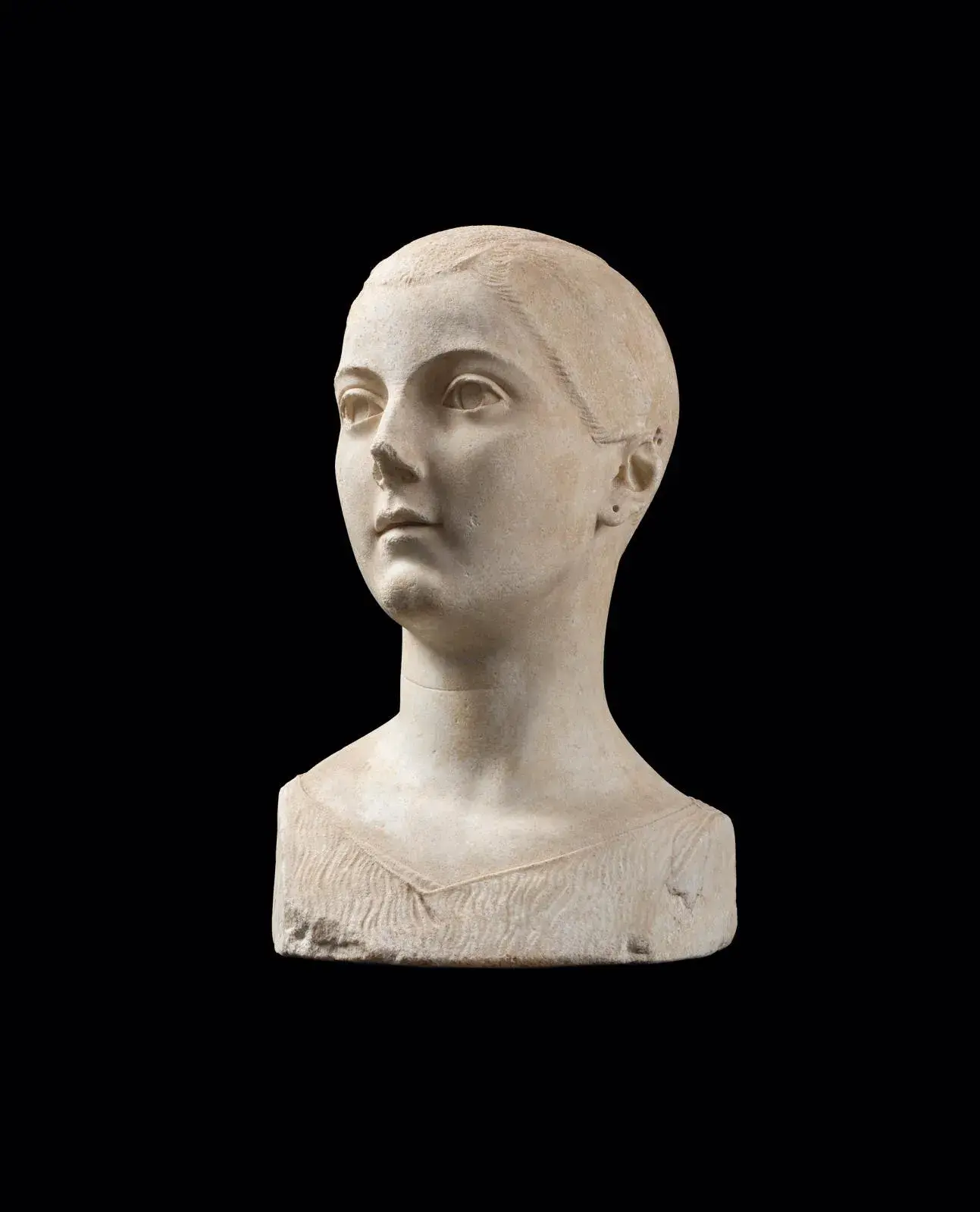
The Torlonia marbles are crossing the Alps. An exhibition at the Louvre of the world’s largest private collection of ancient sculptures, once belonging to a 19th-century Roman prince, is being organized by Cécile Giroire, Head of the Department of Etruscan, Greek and Roman Antiquities, and curator Martin Szewczyk. This treasure of Italian heritage will grace one of the museum’s most beautiful settings, Anne of Austria’s newly restored summer apartments: an obvious choice because they have housed the permanent collection of ancient sculptures since the museum was created. Inaccessible to the public for decades, the masterpieces of the Torlonia Collection have set out on a tour of exhibitions-events in Rome, Milan and now Paris, the first stop outside of Italy. For its owners, this is a return to distant origins. But the dynasty that was one of the papacy’s most reliable financial backers has its roots in France.
Marin Tourlonias (1725-1785), the son of a merchant and farmer in Auvergne, moved to Rome at age 25. He Italianized his name and began selling cloth, but it was the world of finance that saw him launch his family’s meteoric rise. Preferring the sound of clinking coins to that of rustling fabrics, Torlonia became a pawnbroker while continuing to work in the cloth trade. His son Giovanni (1754-1829) founded a bank that quickly became the most prosperous one in the city. Stendhal described his lavish parties in Walks inRome. The writer was not the only one fascinated by this man driven by “his passion for money and art”, whose son Alessandro (1800-1886) quickly earned the nickname the “Roman Rothschild”. The early 19th century abounded in opportunities to strike it rich. Alessandro left his role as supplier to the armies of the French Republic and became the pope’s banker: every time there was a historical crisis or regime change the family took another step up on the ladder of wealth. By 1810, they were already among Rome’s 20 leading clans. Aristocrats soon stopped looking down on them as bourgeois parvenus: it is hard to sneer at one’s creditors. In exchange for loans, the Torlonias requested artworks as collateral, and soon filled their many palaces with them. Frequent visits to auction rooms enriched their collection, which began in 1800, when Giovanni bought about a hundred pieces from sculptor and restorer Bartolomeo Cavaceppi, whose studio was a mandatory stop on the Grand Tour. At an 1825 sale, he purchased 270 works, some from the 17th-century’s most prestigious collection of ancient sculptures, owned by Marquis Vincenzo Giustiniani, a friend and patron of Caravaggio.
A Legend Was Born
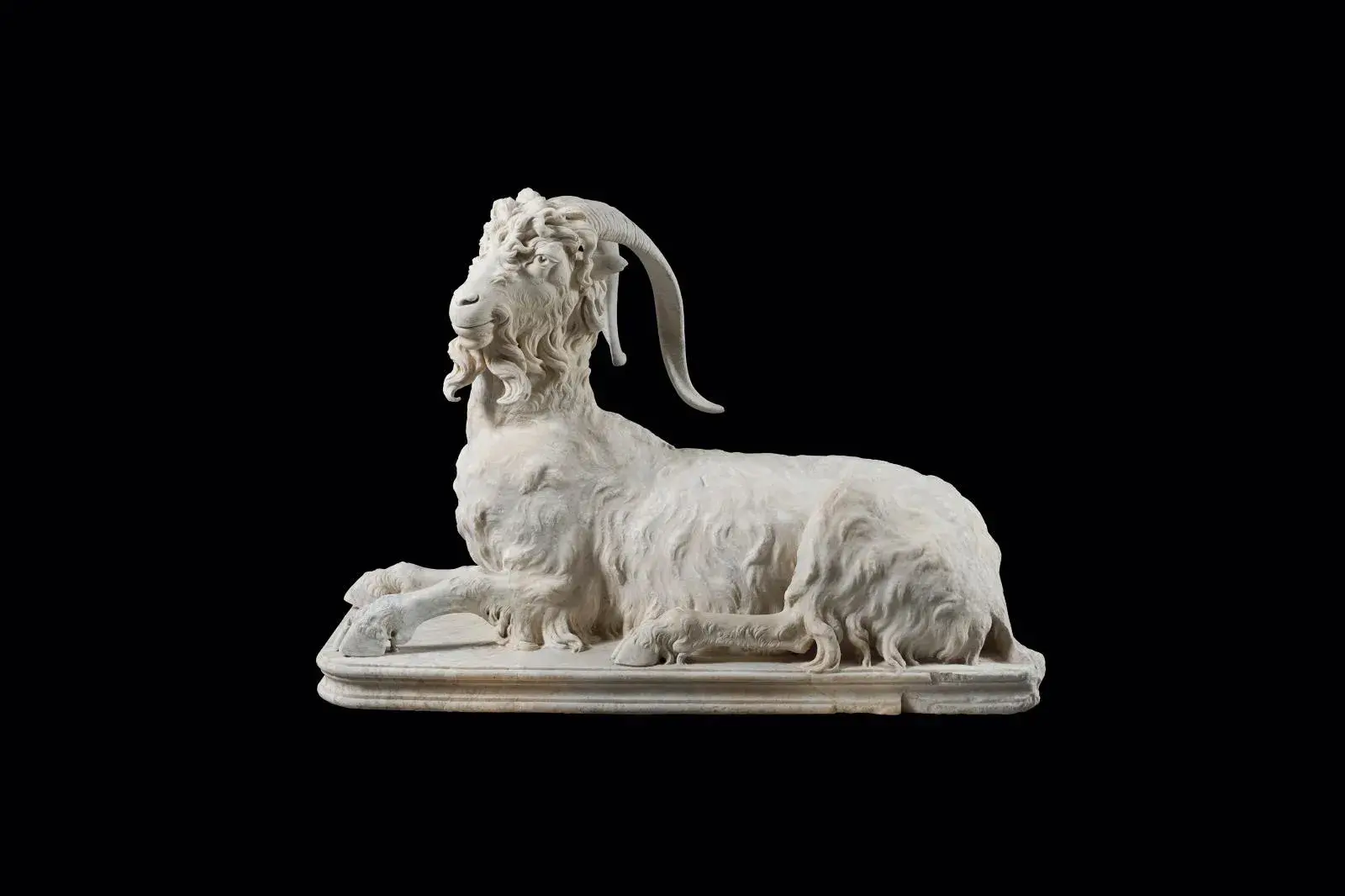
High-quality pieces flowed into their collection. Discoveries made during excavations on their lands in Lazio joined sculptures included in the dowries of daughters of the high nobility. The Torlonia’s ask for their hand in marriage, while putting theirs own hands on their family’s art collections. In 1866, Alessandro bought Cardinal Albani’s villa and collection of antiquities in Rome (see Gazette 2023 no. 25, page 224). But money was not enough to reach the apex of high society: the Torlonias lacked a title. The pope obliged by raising them to the rank of marquises, then princes, then Roman patricians. In 1876, the family allowed a privileged few to ogle their riches. Their palace on via della Lungara, near the Tiber, became one of the world’s first private houses open to the public. In 1881, photographs of the collection’s 623 marble and alabaster statues appeared in a detailed catalog. Dozens of Hercules and Venuses could be seen alongside hundreds of busts of emperors and philosophers, while copies of Greek statues mingled with sculptures of animals, like the ancient Caprone restored by Bernini in the 17th century. After being scattered for safekeeping during the Second World War, the works returned to via della Lungara. In the 1970s, the building’s roof was in need of repair. Prince Alessandro Torlonia (1925-2017) took advantage of the opportunity to convert the property into nearly 100 luxury apartments. The collection was stored in the palazzo’s cellar, where it slumbered for nearly a half-century, becoming the stuff of legend, shrouded in mystery and fueling rumors. The sculptures were said to have been put willy-nilly in damp cellars in conditions that endangered them. Scandalized Italian journalists wrote that Alessandro was planning to sell the pieces, plundering the country’s artistic heritage. The prince brushed aside the criticism and accusations. Alluring offers, such as the €125 M made by Silvio Berlusconi, left him as cold as marble. He did not yield to the Italian government’s generous advances until 2005.
His treasure was compared to Tutankhamun. “It was as if the prince had sealed up the statues in a tomb, forbidding access to anyone,” says Anna Maria Carruba, the head of the restoration team. In fact, darkness and a thick coat of dust perfectly preserved the precious vestiges. The slightest details on their condition and the methods used in the past to restore them were recorded. This painstaking job, which was funded by jeweler Bulgari and promoted by the Torlonia Foundation, stemmed from Prince Alessandro’s desire to allow future generations to enjoy his collection. Each exhibition is an opportunity to learn more about this precious heritage. Twelve pieces have been restored for the Louvre exhibition. But where will the 623 sculptures end up once their world tour is over, after stops that could include London and New York? The question has been in the air since the 1960s. The City of Rome and the Italian government have tried to answer it with three museum projects, none of which amounted to anything. Nor did Prince Torlonia’s dream of building a museum entirely dedicated to his collection. The Ministry of Culture recently considered, with the Torlonia Foundation, moving them into the Palazzo Silvestri-Rivaldi, near the Coliseum, which is undergoing a renovation due to end in 2025. No decision has been made yet, but one thing is sure: after spending a half-century in darkness, Rome’s last great princely collection will never again be out of the spotlight.
WORTH SEEING “Masterpieces from the Torlonia Collection”, Louvre Museum, Paris I Until November 11, 2024 www.louvre.fr
Carved from life, the founding father’s bust confirmed its reputation as a monument of 18th-century sculpture.
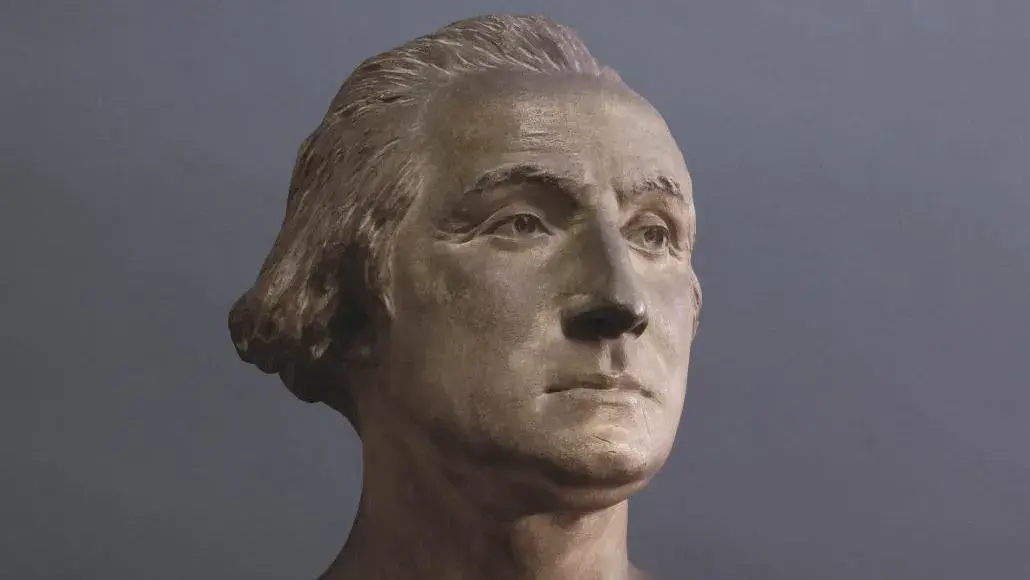
Jean-Antoine Houdon (1741-1828) and his studio, George Washington (1732-1799), plaster bust with terracotta-like patina, signed, original model created in 1785, h. 65 cm/25.59 in (breccia marble plinth, h. 14 cm/5.51 in). Result: €901,600
While the provenance is cryptic—“A family of connoisseurs, Paris, probably before 1960”—the model is famous. This bust of George Washington is almost as well-known a monument of French sculpture in the United States as the Statue of Liberty. When they were in Paris, Thomas Jefferson and Benjamin Franklin asked Jean-Antoine Houdon (1741-1828) to carve the portrait without a second thought. It was out of the question for him to depict this hero of American Independence and first President too “naturally”: his Voltaire was still fresh in everyone’s mind. Houdon made three versions of the bust. Based on classical models; this one shows Washington in all his truth, gazing out into the distance with the eyes of the visionary statesman that he was. “It is hard to say how many patinated plaster busts were made in this ancient-style version,” says the experts’ report. Houdon’s signature under the shoulder, with the cursive, disjointed characters he made in the still-wet plaster, is immediately recognizable. What’s more, the reverse side features the wax stamp Houdon had affixed to his busts, which was found on all the plaster and terracotta sculptures from his studio that were put up for sale in 1795 and 1828. All of these details mean that the work surpassed its reasonable estimate to fetch €901,600. A Portrait of Edmond Membrée in a Medallion (61 x 61 cm/24.01 x 24.01 in.) by Jean-Léon Gérôme (1824-1904), reproduced on page 74 of Gazette no. 24, sold for €34,776.
Hartzell’s Auction Gallery, Inc. of Bangor, PA will present its Annual PITCA Pressing Iron Auction on July 11, 2024. PITCA, which is the abbreviation for Pressing Iron and Trivet Collectors of America, was founded in 1984 and produces a quarterly collector’s publication titled The Pressing News Journal. Hartzell’s upcoming pressing iron auction features 500+ lots of antique pressing irons and related laundry accessories from all across the United States and Europe. Here are some extraordinary examples that caught the eye of the Auction Daily team.
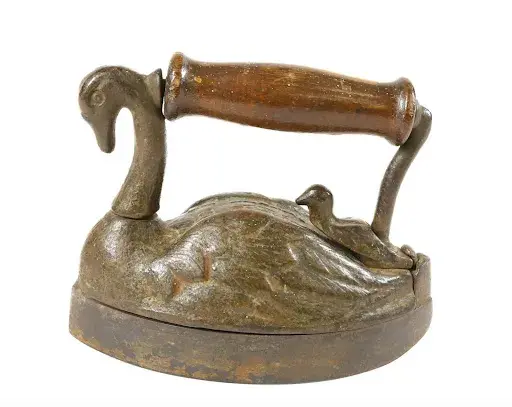
Lot #200, a Barnes Patent Swan on Swan box iron, is estimated at $4,000 to $8,000. Image courtesy of Hartzell’s Auction Gallery.
Barnes Patent Swan on Swan Iron
The top lot in this tidy sale is #200, a Barnes Patent Swan on Swan box iron. It is estimated at USD 4,000 to $8,000 and is in the form of a fully dimensional mother bird with a baby bird on her back. This lidded iron is detailed with a large wooden handle and measures 7.5 inches long. It is marked “Patent Dec 11, 1877.”
Given its rarity, appeal, and design, this exact iron tops the wish lists of many collectors of early American patented irons. Barnes made this design for only a handful of years and in different sizes, with the 7.5-inch long version being the rarest. Perhaps the most charming feature of this bit of Americana is its lovingly rendered cygnet, which also doubles as the rear latch to open the iron. Over the last decade, Swan on Swan box irons have sold in the four and five-figure range at auction; in 2020, an example with its original patent papers and pen stripes traded hands through Hartzell’s for almost $18,000.
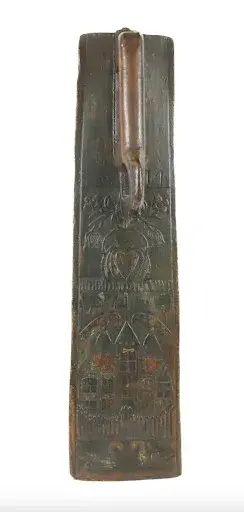
Lot #323, an early 19th-century mangle board, is estimated at $500 to $1,000. Image courtesy of Hartzell’s Auction Gallery.
Early 19th-Century European Mangle Board
Mangle boards are well-represented in this sale, with 28 examples on offer. Lot #323, an early 19th-century wooden carved European mangle board, is estimated at $500 to $1,000. This piece is dated 1814 and measures 23 inches long. It retains traces of its original green, red, and cream-colored paint. It features a prominent rectangular handle and is decorated with a large heart, flowers, a home with a fence, and swans rustically carved on its surface.
Mangle boards predate hand-held irons. They were used to squeeze out water and to flatten folds and wrinkles out of cloth items. The garment being dried and pressed would be wrapped around a rolling pin and then pressed into the mangle board. Mangle boards are also often considered folk art, given their handmade nature and design elements. Centuries ago, in Scandinavia, if a young man was interested in dating a young woman, he would carve her a mangle board and leave it by her doorstep. If she were interested in the man, she would take the board into her home as a sign that courtship could begin.
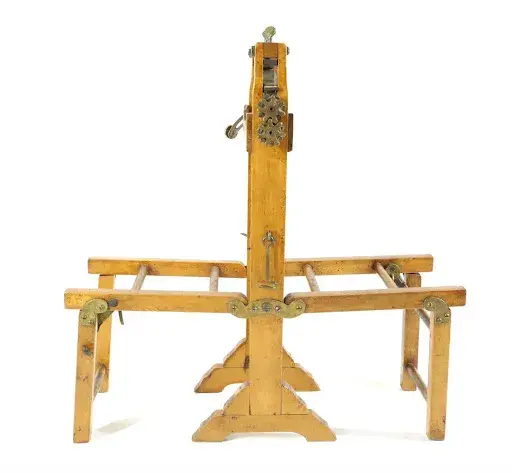
Lot #309, a salesman’s sample American wringer, is estimated at $100 to $300. Image courtesy of Hartzell’s Auction Gallery.
Salesman’s Sample American Wringer
Wringers are another key category in this signature summer sales event. Lot #309, a salesman’s sample American wringer, is estimated at $100 to $300. This wooden, folding example measures 15 inches high and has metal gears, joints, and hardware. It is marked “No. 3 / New Eclipse / American Wringer / New York” on its side.
The American Wringer Company was established in 1891. It was formed from the consolidation of several East Coast manufacturing firms, including the Empire Wringer Company, the Metropolitan Mfg. Company, the F. F. Adams Company, and the Bailey Wringing Machine Company. American Wringer had manufacturing facilities in Woonsocket, RI and Auburn, NY. It focused production on items that households needed to wash everyday laundry. These included clothes wringers, rubber rolls, and even mangle boards. The company did well through the first two decades of the 20th century, but the introduction of electric home washing machines in the 1920s would eventually prove to be its death knell in the early 1950s.
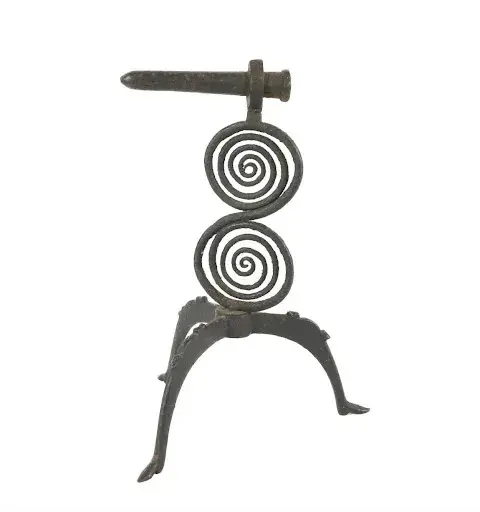
Lot #360, a double monkey tail goffering iron, is estimated at $1,000 to $2,000. Image courtesy of Hartzell’s Auction Gallery.
Double Monkey Tail Goffering Iron
This pressing iron auction also features goffering irons, with nearly 40 examples on offer. Lot #360, a fine hand-wrought double monkey tail goffering iron, is estimated at $1,000 to $2,000. It stands 7.5 inches tall, is in the form of a double spiral, and is mounted on a tripod base with distinctly human-like shoe feet.
Goffering irons were designed for ironing clothing with frills. They were also called Italian or tally irons. Goffering irons made it possible to press attire with flounces and ruffles without flattening their decorative aspects. Their horizontal, tube-like irons were heated and then clothing– including shirts, collars, and bonnets– would be curled around the iron’s cylinder for the right amount of pressing. In the Victorian era, expertly ironed ruffles were a source of great pride and a sign of social class and influence.
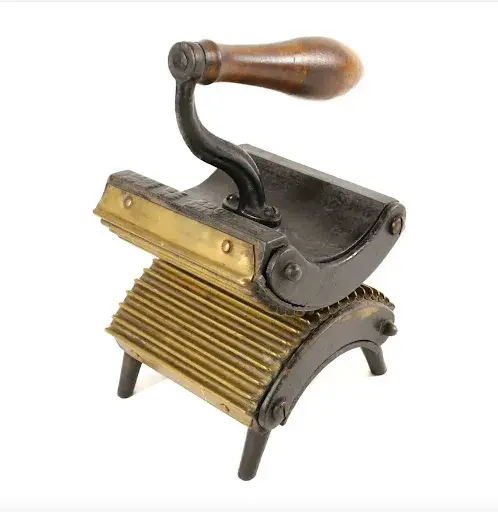
Lot #171, an early fluting iron, is estimated at $800 to $1,200. Image courtesy of Hartzell’s Auction Gallery.
Early Fluting Iron
Strong selections of fluting, miniature, ox tongue, and other iron types round out this well-tailored pressing iron auction. Lot #171, an early fluting iron, is estimated at $800 to $1,200. It measures 4.25 inches long and has an iron body, slugged brass pressing plates, and an oversized wooden handle. It is marked with two patent dates: August 22, 1866 and October 18, 1870. This type of device was designed to press clothing with pleats during the late 19th to early 20th centuries.
For more information on Hartzell’s Auction Gallery’s July 11, 2024 Annual PITCA Pressing Iron Auction, visit LiveAuctioneers. For more on pressing irons and their history, check out Auction Daily’s interview with John R. Hartzell of Hartzell’s Auction Gallery from 2021.
Looking for more art and auction world news? Visit Auction Daily’s news channel for the latest.