Milestone’s Aug. 24 auction features estate collection of rare German Schucos, other fine European, American & Japanese toys

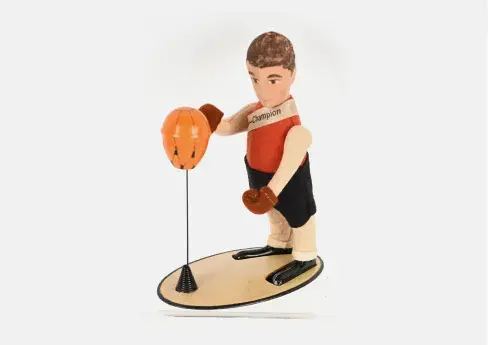
Schuco felt and tin windup Boxer Jack with platform and punching bag. Figure has painted facial features and wears original Schuco Germany imprinted fabric sash that says ‘Boxer-Champion.’ Height: 6in. All-original and in working order. Beautiful condition. Estimate: $2,000-$2,500

Highlights: Winton Johnson’s ‘ultra-complete’ collection of early German Schuco toys, pre-WWII airplanes, toy boats/motors, Minics, three real wooden race boats & motors, duck decoys 
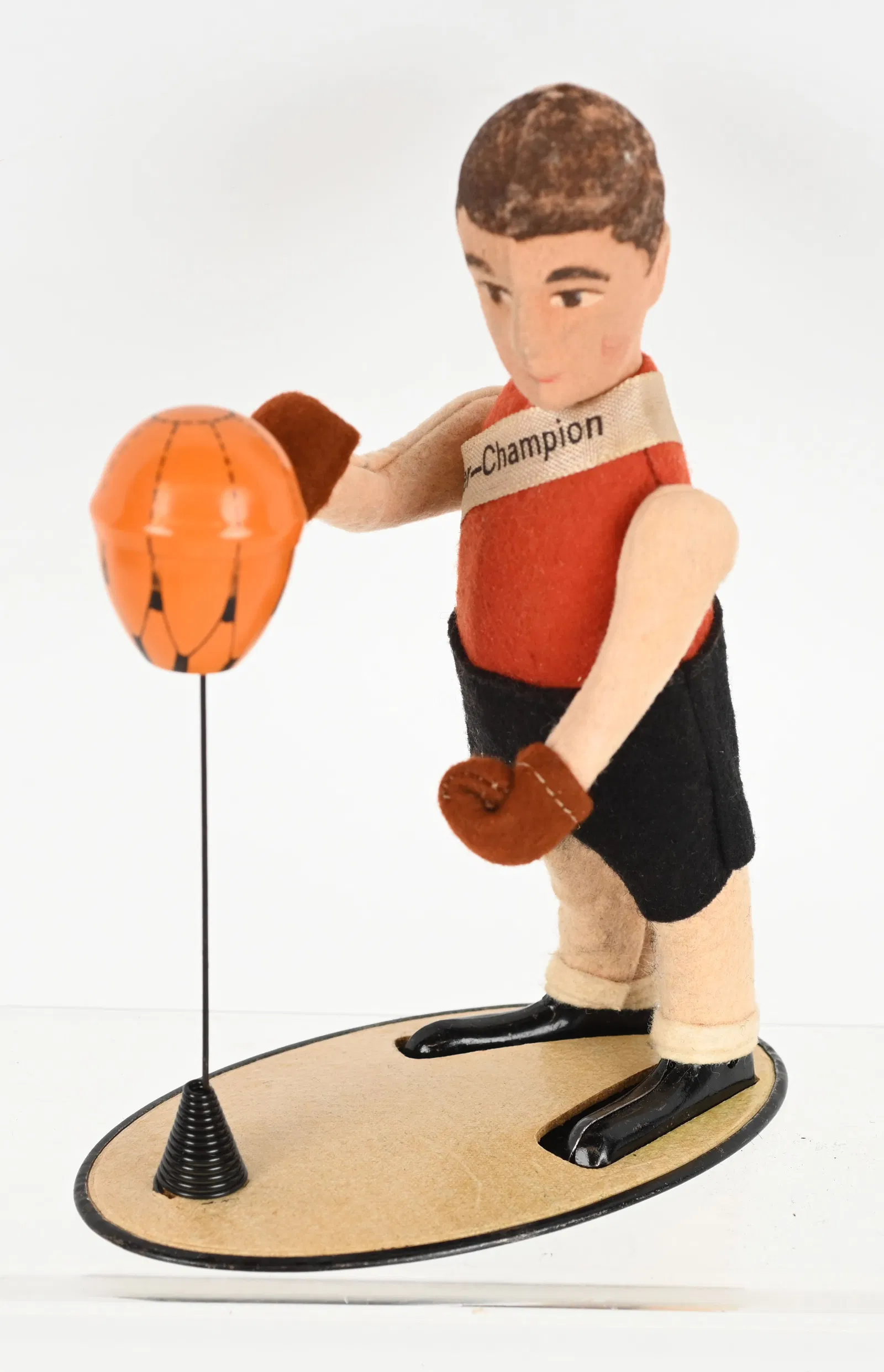
Schuco felt and tin windup Boxer Jack with platform and punching bag. Figure has painted facial features and wears original Schuco Germany imprinted fabric sash that says ‘Boxer-Champion.’ Height 6in. All-original and in working order. Beautiful condition. Estimate $2,000-$2,500
Schuco felt and tin windup Boxer Jack with platform and punching bag. Figure has painted facial features and wears original Schuco Germany imprinted fabric sash that says ‘Boxer-Champion.’ Height: 6in. All-original and in working order. Beautiful condition. Estimate: $2,000-$2,500

WILLOUGHBY, Ohio – One of the world’s finest and most-complete assemblages of antique and vintage Schuco toys – the estate collection of the late Winton “Wint” Johnson (1937-2022) – will headline Milestone’s August 24 Premier Toy Auction. Alongside the blue-ribbon Schucos are Wint’s other prized holdings: Japanese toy boats and prototypes, toy outboard motors (some boxed), pre-WWII airplanes, and English clockwork Minic toys. Wint’s love of lakes and boating was lifelong, as reflected in the three real-life wooden racing boats, boat motors and carved duck decoys also entered in the sale.

Wint Johnson was a Minnesotan of German heritage, and it has been suggested that perhaps his interest in German-made Schuco toys was inspired by having received a Schuco toy as a child. Whether that was the case or not, Wint’s family says he was intrigued by the windup nature of Schuco toys and proud of the German engineering that went into their design. This was not surprising, since Wint was, by profession, a mechanical engineer.

Established in 1912 in Nuremberg, Germany, the Schuco toy brand was known for its small-scale designs replicating people, various types of vehicles, and storybook and comic characters. The precision-made toys delighted children because of their clever actions, which could be initiated by the turn of a key or, in some cases, by friction. Even now, a century after the first finished examples rolled off the production line, Schucos are in high demand. Collectors are especially keen to acquire the classics manufactured during the golden era between World Wars I and II, however, top-of-the-line examples are hard to find. And that’s where the Johnson collection excels.

Nearly 300 lots of Schucos are offered in the August 24 sale, each toy an outstanding original example. According to Wint’s daughter and son-in-law, Katie and Chris Miller, Wint bought regularly at shows, auctions, online and through a global network of like-minded toy aficionados. He would upgrade his toys whenever possible and continued to buy until the very end of his life, even receiving a package on the day he passed. He would sell duplicates but never parted with anything from his core collection, which contained only the rarest and best Schuco toys and prototypes. Without question, his treasured collection is one of the world’s largest and most highly refined of its type.

Every Schuco toy is a charmer, but if a choice had to be made, the top 10 would undoubtedly include Wint’s felt and tin windup “Boxer Jack” with punching bag. The figure has painted facial features and retains its original Schuco Germany fabric sash imprinted “Boxer-Champion.” In superb original condition with an excellent working mechanism, it could deliver a knockout punch in the vicinity of $2,000-$2,500.

Another great rarity is the Schuco Walt Disney Mickey Mouse on Scooter. Excellent and all original, the lovable cartoon rodent rides atop a lithographed-tin windup scooter. It’s ready to glide across the auction block with a $2,000-$3,000 estimate. 

Collectors especially love Schuco tin windup vehicles with drivers. Two of the best are featured in the sale. Known simply as Race Car with Driver, the first of the two combines a lithographed tin racer and a helmeted driver dressed in a jaunty felt jacket and scarf. Sporting round tin goggles, the driver steers and moves his head as the car rolls along. No apologies are needed for this very scarce and early toy, which is estimated at $1,500-$2,500. Following closely behind is a Schuco Monkey Driving Car. The mohair and felt monkey figure drives a lithographed-tin car with a Schuco logo on the back. Also an early production, it is expected to earn $1,000-$1,500.

There’s no need to fear the felt, mohair and tin Teufel (Devil) with its malevolent hand-painted facial features. He stands out as one of Schuco’s most striking characters and presents in 100% original working order. This creepy resident of the underworld, standing 6½ inches tall, is rarely seen in the marketplace and therefore should have no problem achieving the pre-sale estimate of $1,000-$1,500.

Two toys from Schuco’s Automato series marketed in 1914 are worthy of special mention. Each stands 10½ inches tall. First, there’s the felt and tin Automato Porter with shoe-button eyes and metal buttons on his jacket. All-original and in excellent condition, it could claim a winning bid in the $1,500-$2,000 range. The second Automato toy is Schuco’s Imperial German Soldier. Also all-original with a working windup mechanism, this wonderful toy is cataloged with a $1,000-$1,500 estimate.

Several tin friction scooters are lined up and awaiting directions to their next destinations. An appealing Gnome on Scooter consists of an elfin figure dressed in felt clothing, with a mohair beard, riding atop a lithographed tin friction scooter with the Schuco marque on its side. Excellent and in working order, it carries an estimate of $1,000-$1,500.

The auction includes approximately two dozen Schuco “Yes No” toys, so named because of a design feature that allows the figure’s head to move up and down or side to side, indicating “yes” or “no.” The menagerie of Yes No toys includes bears, monkeys, dogs, cats, birds and more. A Yes No mohair French bulldog, all original and in working order, is entered with an $800-$1,000 estimate.

Dozens of very clean and colorful British Minic tin windup toys and sets will be auctioned, many with their profusely illustrated original boxes. The variety includes cars, buses, panel trucks, boats, and vans. A red Rolls-Royce saloon is estimated at $300-$500, while a boxed London Transport double-decker bus advertising Carr’s Biscuits could change hands for $100-$300.

In the nautical section, there are dozens of toy outboard motors (Evinrude, Mercury, Johnson, etc.), many with their original boxes; tin windup and battery-operated outboard, racing and speed boats, some boxed; 25+ European, Japanese and British toy seaplanes; and a great selection of old outboard motor oil cans, many with very colorful graphics. Also, there are three actual wooden racing boats and no fewer than 10 real-life Mercury and Johnson outboard motors. Finally, there are approximately two dozen lots (both individual and group lots) of carved duck decoys, many of them quite beautiful and unusual.

The Saturday, Aug. 24, 2024 Premier Toy Auction Featuring the Winton Johnson Collection will be held at Milestone Auctions’ gallery at 38198 Willoughby Parkway, Willoughby (suburban Cleveland), OH 44094. Start time: 10AM ET. All forms of remote bidding will be available, including absentee, by phone, and live online through Milestone’s bidding platform or LiveAuctioneers. Milestone ships worldwide. To reserve a phone line or enquire about any item in the sale, call 440-527-8060 or email [email protected]. Online: www.milestoneauctions.com

Rarity and condition fueled above-estimate prices at Morphy’s July 11 Automobilia & Petroliana Auction

The sale’s top lot was a rare and exceptional circa-1940s Harbor Petroleum Products single-sided porcelain advertising sign with an exciting seaplane graphic. Outstanding color and gloss. Size: 39in x 35in. Condition: 8.75. Sold with estimate range for $46,740

Highlights: circa-1940s Harbor Petroleum sign, $46,740; Aerio 70 Gasoline globe, $34,800; Michelin banner, $34,440; Clear Vision duplex gas pump, $30,000; Esso Aviation sign, $20,910

Harbor Petroleum Products Porcelain Sign W/ Seaplane Graphic.

DENVER, Pa. – Collectors of high-end gas and oil collectibles know where to go for the “good stuff,” and to many that means Morphy’s Automobilia & Petroliana auctions. The most recent edition of Morphy’s motoring-focused specialty sale, held July 11 at the company’s Pennsylvania gallery, featured 650 lots of choice petroleum-related advertising signs, elusive gas pumps and globes; colorful oil cans, and eye-catching display pieces. The sale totaled $1.85 million, with most lots either finishing within estimate or surpassing expectations. As is always the case at Morphy’s, some unexpected auction competitors enjoyed runaway success because they had exactly what collectors wanted: rarity, eye appeal and clean, crisp condition.  

The top lot of the day was a circa-1940s Harbor Petroleum Products sign with an exciting seaplane-on-water graphic. The single-sided porcelain sign was in 8.75 condition, with a Pacific blue, orange and yellow palette and an oval cartouche in which the seaplane was showcased. Described in Morphy’s catalog as “exceptional” and potentially “hard to upgrade,” this high-flying sign landed within estimate at $46,740.

A circa-1920s Norwalk Tires double-sided tin service station flange sign was designed in “billboard” style with a graphic that showed a Norwalk tire, a period automobile in the background, and a couple seated outdoors with a golf bag and clubs. Additionally, its message boasted “8,000 Miles,” presumably the mileage a driver might expect to achieve from one of the company’s sturdy “Cord” tires. With sides graded 79 and 78, respectively, the attractive advertisement sold above high estimate for $27,000.

Big and bold, a circa-1940s two-piece, single-sided porcelain sign promoting Esso Aviation Products with an impressive winged graphic at its center was of a type seldom seen in the marketplace. A massive 90 inches wide by 72 inches high, the red, white and blue beauty was bid to $20,910 against an estimate of $3,000-$5,000. 

A timely entry, considering the Paris Olympics would soon be opening in Paris, a circa-1940s single-sided porcelain sign from Marathon petroleum company was adorned with the image of a runner in classical attire and the slogan “Best In The Long Run.” Measuring a full 6ft in diameter, the sign displayed amazing condition with a rich cardinal-red background and high gloss overall. It was AGS-certified and graded 95, and crossed the finish line within estimate for $20,400.

An endearing circa-1940s single-sided die-cut porcelain sign from Husky depicted the petroleum brand’s iconic dog mascot in a standing pose enabled by means of its included original support frame. A very clean and artistically beautiful sign with only minor edge chipping, it measured 3ft long by 29in high. It bounded out of the auction gallery for $18,000 against an estimate of $7,000-$14,000.

Gas pump globes have never fallen out of favor with petroliana collectors, and Morphy’s rose to the occasion on July 11 with a selection that included more than 275 extremely desirable globes and lenses. Two of the most appealing designs featured majestic Native American chiefs wearing feather bonnets. A Musgo Gasoline (Muskegon Oil Co., Muskegon, Michigan) “Michigans Mile Maker” one-piece baked gas pump globe was stamped September 10th, 1929 and Made In U.S.A. With its brilliant color palette, and AGS-certified and graded 93, it was described by Morphy’s Automobilia & Petroliana Department Head John Mihovetz as “one of the highest-graded examples ever to be offered for public sale.” It rose to $29,520, just shy of its $30,000 high estimate. The second Native American-themed highlight was a Tioga Gasoline (The Petroleum Products Co., Chanute, Kansas) single-sided gas pump globe lens which Mihovetz assessed as “likely new-old stock.” AGS-certified and graded 93, it surpassed its high estimate to settle at $20,910.

Rare and complete, a 13.5in-diameter gas pump globe for Aerio 70 Gasoline (Gregory Independent Oil Co., Gregory, South Dakota) retained its original graphic shipping box that was designed and fabricated by Cincinnati Advertising Products. Its original wide milk-glass body displayed a vibrant airplane graphic and “Aerio 70” on each of its lenses, which were graded 96 and 94, respectively. The globe sold for $34,800 against an estimate of $15,000-$25,000.

Originating in Canada, a Clear Vision duplex visible gasoline pump manufactured by Service Station Equipment Co. Ltd., Toronto, exhibited a design that was patented in 1926-7. It had been wonderfully restored in Esso Gasoline livery and attracted strong interest, selling for $30,000, twice the high estimate. 

A subcategory that has grown by leaps and bounds is vintage porcelain plates that were once affixed to gas pumps. A rare circa-1930s Jenney Solvenized Aero (Jenney Mfg., Boston, Mass.) single-sided porcelain pump plate, 9 inches in diameter with an excellent airplane graphic, was assessed to be in 9.0 condition. It claimed a winning bid of $18,000 against an $8,000-$14,000 estimate.

A huge (120in x 40.75in) single-sided cloth banner advertising Michelin Tires and Tubes prompted a surprising auction price. Maker-marked Sweeney Litho, Belleville, New Jersey, the banner portrays a mountainside road with bumper-to-bumper auto traffic, high above a cityscape. Along the entire bottom width of the sign are 12 Bibendum (Michelin’s mascot) figures, each rolling a tire. In excellent condition overall, it was described by John Mihovetz as “the rarest of the rare.” It came to auction with an AGS certification of “Authentic” and sold for $34,440 against an estimate of $10,000-$20,000.

To discuss consigning a collection or single item to a future Automobilia & Petroliana Auction at Morphy’s, please call 877-968-8880 or email [email protected]. All enquiries are kept strictly confidential, and there is never an obligation to consign. Visit Morphy’s online at www.morphyauctions.com.

Own a Piece of Tommy Hilfiger History in Brunk Auctions’ Upcoming Sale

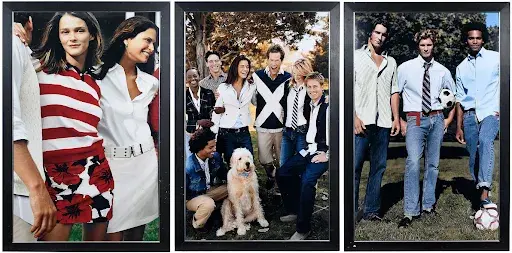
Three Tommy Hilfiger advertising images. Image courtesy of Brunk Auctions.

Fashion-forward collectors will have a chance to own a piece of Tommy Hilfiger history in Brunk Auctions’ upcoming sale. Personal items from the collection of the fashion designer and his wife, Dee Ocleppo Hilfiger, will come to the market this July in a 256-lot event. The catalog is wide-ranging, including fine art, decorative art, furniture, celebrity and pop culture items, and more. Here are some of the key lots in the catalog.

Three Tommy Hilfiger advertising images. Image courtesy of Brunk Auctions.
Three Tommy Hilfiger advertising images. Image courtesy of Brunk Auctions. 

Tommy Hilfiger Advertising Images

This sale presents several lots of Tommy Hilfiger advertising images, dating from the early 2000s. Many are custom prints created expressly for Tommy and Dee Hilfiger. They commemorate the launch of various clothing collections and document the Tommy Hilfiger brand’s collaborations with high-profile celebrities. 

A set of three style shots from one such advertising campaign is among the key items in this sale (lot #23). Printed in color, the images depict groups of young people modeling Tommy Hilfiger clothes around 2005. Stripes featured prominently in this collection, which associates the brand with a light-soaked summer day. These images come to auction in matching black frames and together have a presale estimate of USD 1,000 to $1,500. 

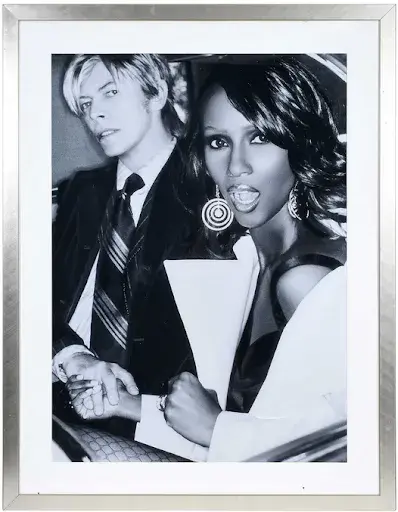
Ellen von Unwerth, Iman and David Bowie photograph. Image courtesy of Brunk Auctions.

Several images by Ellen von Unwerth will also be available in this sale. They were included in Tommy Hilfiger’s “H” advertising campaign from 2003 or 2004 and depict Iman and David Bowie in casual, intimate settings. Edward Enninful styled the pair for this photoshoot. “I had been too intimidated to reach out to [David Bowie] before. I was in awe. But in person, he was so funny,” Enninful later recalled for W Magazine. “I remember being on the shoot with him and Iman— we shot in Amsterdam and then in New York, at Mr Chow’s— and it was just endless jokes… They were two icons, but a normal couple.” Each photograph comes to auction with an estimate of $4,000 to $6,000 (lots #12 – 14). 

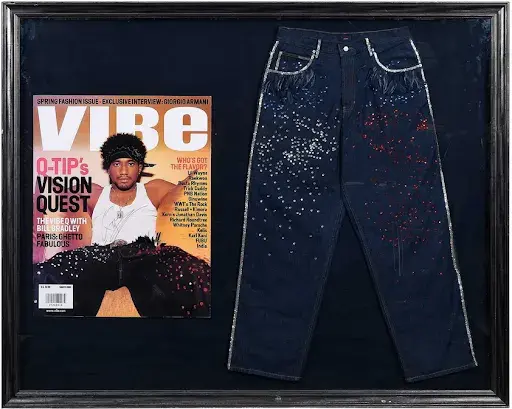
Framed Q-Tip-worn custom Tommy Hilfiger jeans with signed magazine cover. Image courtesy of Brunk Auctions.
Framed Q-Tip-worn custom Tommy Hilfiger jeans with signed magazine cover. Image courtesy of Brunk Auctions. 

Tommy Hilfiger Celebrity Memorabilia

An assortment of celebrity memorabilia associated with Tommy Hilfiger will cross the auction block in this sale. Notable from this section of the catalog is a pair of Tommy Hilfiger jeans worn by American rapper and record producer Q-Tip, of A Tribe Called West. These custom jeans are from circa 2000. They are decorated with feathers and multicolored beads that catch the light, glinting red, white, and blue. Q-Tip wore these jeans for the March 2000 cover of Vibe magazine; an enlarged and signed copy of that cover is presented in the same lot. It comes to auction with an estimate of $800 to $1,200 (lot #56). 

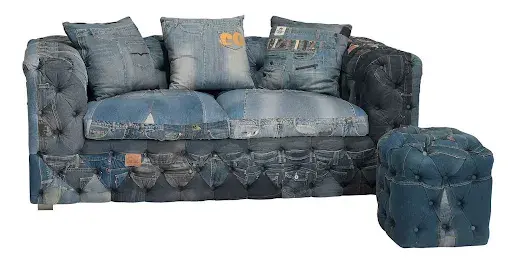
Amen Wardy custom-made blue jeans upholstered sofa and ottoman. Image courtesy of Brunk Auctions.
Amen Wardy custom-made blue jeans upholstered sofa and ottoman. Image courtesy of Brunk Auctions. 

Dee and Tommy Hilfiger-Owned Items

Beyond photography prints and celebrity memorabilia, this auction will include a robust selection of items personally owned by Dee and Tommy Hilfiger. This includes two sofas custom upholstered in blue jeans that formerly decorated the New York City Tommy Hilfiger office. These sofas were designed by American retailer Amen Wardy, who enjoyed a strong following in El Paso, Texas and Aspen, Colorado. Wardy also boasted a star-studded client list, with admirers including Hilfiger, Joan Rivers, and Joan Collins. The available jean-upholstered sofas will be presented separately; one sofa also includes a matching ottoman (lot #54, estimate: $1,000 and $2,000; and lot #55, estimate: $1,200 – $1,800). 

Other notable Dee and Tommy Hilfiger-owned items in the catalog include a La Cornue Chateau gas range and hood (lot #104; estimate: $10,000 – $15,000), a 211-piece Wedgwood dinner service set (lot #92; estimate: $1,000 – $1,500), and more. 

The Collection of Dee and Tommy Hilfiger Auction will begin at 10:00 AM EDT on July 31, 2024. To browse the complete auction catalog and register to bid, visit Bidsquare.

Find more coverage of this auction on AuctionDaily

Court-ordered auction of Michael Jackson original artworks slated for Aug. 3 in Beverly Hills

ORIGINAL COLLECTION ALL LOTS /Art Signed by Michael Jackson - 76 Pieces - 26 are Double

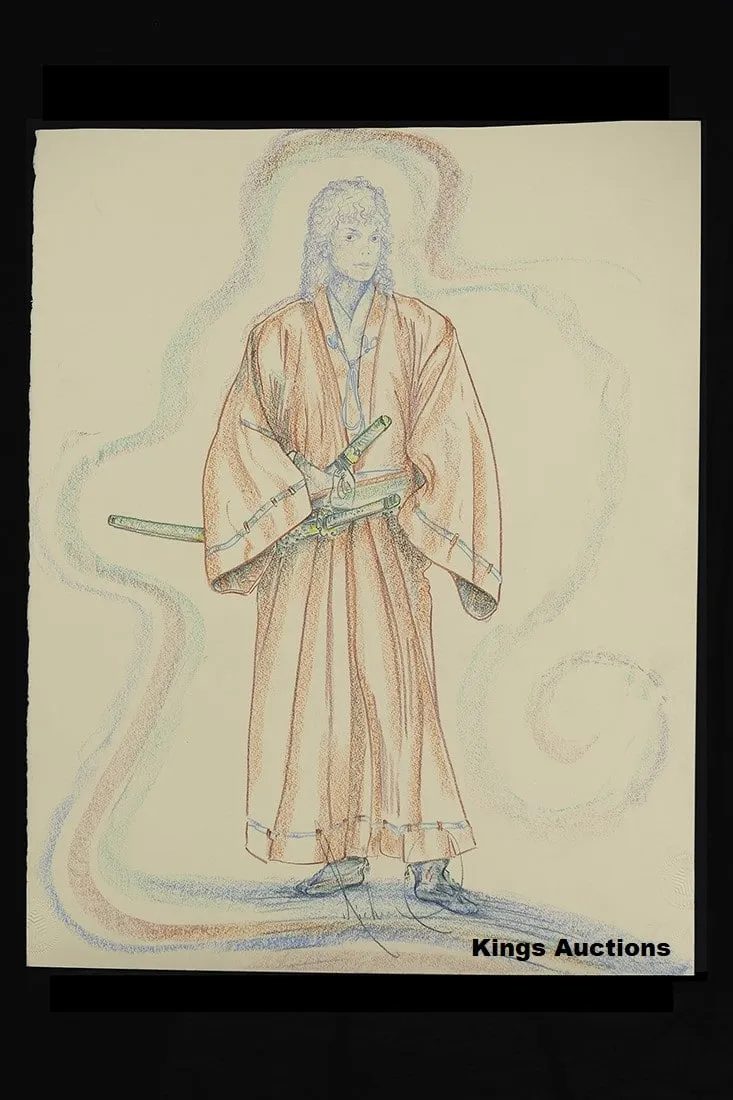
Collection includes 78 signed drawings, some double-sided, including Presidential portraits with gold-embossed POTUS Seal; bonus item: iconic MJ throne constructed for 2014 Billboard Awards

ORIGINAL COLLECTION ALL LOTS /Art Signed by Michael Jackson - 76 Pieces - 26 are Double
ORIGINAL COLLECTION ALL LOTS /Art Signed by Michael Jackson – 76 Pieces – 26 are Double

BEVERLY HILLS, Calif. – King’s Auctions of Las Vegas has been appointed by the Superior Court of California to auction a collection of 78 original artworks signed by Michael Jackson during his adult years. The August 3, 2024 live auction will be conducted in association with King’s Los Angeles branch and held at an upscale Beverly Hills venue. All who wish to bid in person must register ahead of time with the auction house, at which point they will be provided with details regarding the location of the sale. Absentee and Internet live bidding will be available from anywhere in the world via LiveAuctioneers.

The auction has an unusual angle in that Lot #1, which requires an opening bid of $1 million, represents the entire collection of art. If the reserve price for Lot #1 is met, the complete collection will go to the winning bidder. If the reserve is not met, the auction will automatically revert to a standard auction protocol in which each artwork is offered individually. The closing item, an extravagant Michael Jackson throne designed for the late singer’s holographic “appearance” at the 2014 Billboard Awards, is not part of the art collection. It will be auctioned as a separate entity, whether the collection is purchased as a whole or the artworks are sold individually. Each drawing has a starting bid of $9,999, while the throne will open at $7,499.

It may come as quite a surprise to Michael Jackson’s fans that he had artistic talent beyond his prodigious gifts as a singer, dancer and composer. He was interested in art from the time he was a young boy, and in later years – including when was on tour – he pursued drawing as a hobby. He was influenced by many art genres, from classical and architectural to pop art and even portraiture. On several occasions he discussed his love of drawing during TV interviews.

No one could have been more acutely aware of the celebrity phenomenon than Jackson, and that translated to the subjects he chose to draw. The collection includes portraits such as My Friend, which depicts a beautiful woman with a striking resemblance to Elizabeth Taylor; and Andy, an affectionate bust-portrait of a smiling Andy Warhol wearing a bowtie, his head turned sideways and showing a full thatch of fluffed hair. Jackson’s homage to cartoon art is revealed in his strikingly accurate portrayal of animator Walt Disney, and in Baseball Mickey, a Disney-style drawing of Mickey Mouse as a pitcher, captured at the midpoint of a wind-up.

Following an invitation by Supreme Court Chief Justice Warren Burger, Jackson produced a series of US Presidential portraits which were intended for exhibition at the White House during the Bicentennial of the US Presidency. Using custom-made archival paper embossed with the Presidential Seal in gold foil, Jackson initially drew portraits of early presidents whom he admired, including George Washington, Abraham Lincoln, Thomas Jefferson and John Adams, amongst others. In 1984, President Ronald Reagan and First Lady Nancy Reagan invited Jackson to the White House, where he stayed overnight in the Lincoln Bedroom, an experience that inspired his Lincoln portraits, the drawing titled White House Doors, and a portrait of President Reagan. While the White House art exhibition never transpired, the original artworks Jackson created for that express purpose were preserved. All are entered in the August 3 auction. 

Jackson also had a love affair with London, where his presence literally stopped traffic. On March 28, 1985, while he was there to unveil a likeness of himself at Madame Tussaud’s wax museum, Jackson’s limousine – on whose roof he sat to wave at the throng of fans – caused an hours-long gridlock felt throughout England’s capital city. His fondness for Britain’s customs, architecture and Royal Family are seen in drawings such as Buckingham Palace Gates, Afternoon Tea, London; and the dignified and finely-executed portrait of Queen Elizabeth II, which he titled Her Majesty.

The influence of classical art can be seen in such works as Getty Bronze and Michael’s Statue of David, Jackson’s interpretation of Michelangelo’s immortal Renaissance masterpiece. Ornate Gothic keys, the Wright Brothers in flight, antique shoes, still-life fruit, furniture, and architectural elements were also among the various subjects that fascinated Jackson. He drew many elaborate entry gates – including those that guard Neverland – and intricately-detailed interior doors.

Each of the artworks in the sale is accompanied by a Certificate of Authenticity from music industry autograph specialist Roger Epperson, who personally inspected and validated all of the signatures. Note: none of the art will convey with copyright or IP (intellectual property) rights.

The auction will conclude with a showstopping throne fabricated for Michael Jackson’s holographic “appearance” at the 2014 Billboard Awards. Constructed from solid wood with an “MJ” logo and lightning bolts sculpted from high-density foam, it is richly upholstered in faux-leopard-print fabric. Measuring 7.5ft tall by 5ft wide by 3ft deep, this substantial piece weighs approximately 50lbs.

A portion of the auction’s profits will benefit a Los Angeles charity. Immediately preceding the auction on August 3, pre-registered guests are invited to preview the art and meet special guests Nick Cannon and Bre Tiesi, who will co-host the event. A multitalented comedian, actor, TV personality and rapper, Cannon is known most recently as the host of Fox-TV’s The Masked Singer. A businesswoman and social media star, Tiesi is one of the elite real estate agents featured on the hit Netflix series Selling Sunset. On July 27, an additional pop-up preview, for pre-registered bidders only, will be held at a Las Vegas gallery adjacent to the “Strip.” Approximately 10 Michael Jackson artworks from the auction will be exhibited. 

For questions about any artwork, to register to attend the invitation-only August 3, 2024 live gallery auction or celebrity-hosted preview immediately preceding the auction in Beverly Hills; or to register to attend the July 27 pop-up Las Vegas mini-exhibition and preview, email [email protected] or register online at https://kings-auctions.com/jackson-rsvp/. The Beverly Hills auction preview will be held on August 3 from 9:30-11:30am PST. Doors will close at 11:30am in anticipation of the auction’s start time at 12 noon PST/3pm EST. Bid absentee or live online through LiveAuctioneers

Disclaimer: The auction is not affiliated with, or endorsed by, the Estate of Michael Jackson; it is a court-mandated sale by order of the Superior Court of California, County of Los Angeles, Civil Division, West District, Santa Monica, California.

Find more upcoming sales and events on AuctionDaily’s auction calendar.

P is for Chinese Porcelain

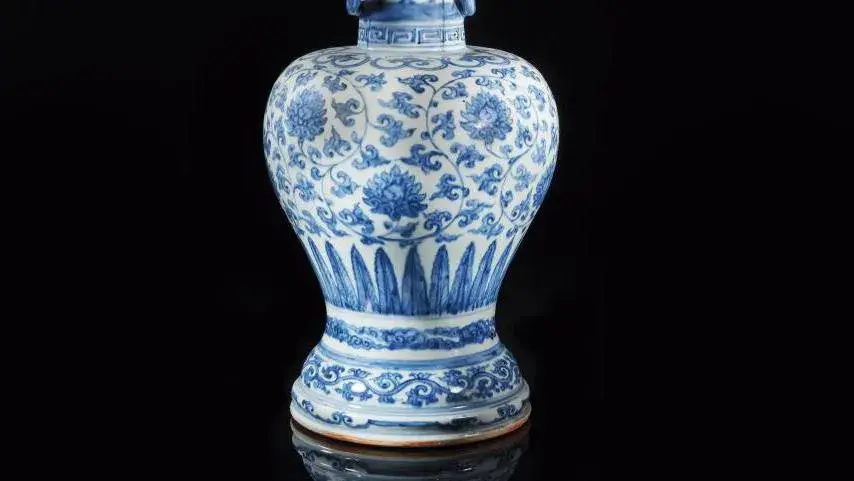
China, Zhengde period (1506-1521). Blue-and-white underglaze porcelain baluster vase with high multi-foiled bell neck, Zhengde four-character kaishu mark, h. 44.6 cm/17.3 in. Wednesday June 12, Hôtel Drouot, Tessier & Sarrou & associés auction house, Cabinet Portier & associés. Result: €755,200

Ceramics are to China what painting and sculpture are to Europe. While Europe distinguishes translucent porcelain from other Chinese ceramics, the “Middle Kingdom” is less restrictive.

China, Zhengde period (1506-1521). Blue-and-white underglaze porcelain baluster vase with high multi-foiled bell neck, Zhengde four-character kaishu mark, h. 44.6 cm/17.3 in. Wednesday June 12, Hôtel Drouot, Tessier & Sarrou & associés auction house, Cabinet Portier & associés. Result: €755,200
China, Zhengde period (1506-1521). Blue-and-white underglaze porcelain baluster vase with high multi-foiled bell neck, Zhengde four-character kaishu mark, h. 44.6 cm/17.3 in. Wednesday June 12, Hôtel Drouot, Tessier & Sarrou & associés auction house, Cabinet Portier & associés. Result: €755,200

In Europe, kaolin, a white clay, is considered the key ingredient in creating translucent porcelain, hard and resonant. In China, high firing temperatures earn ceramics their coveted title. But what they all have in common is their composition: a paste combining kaolin and feldspathic rock called petuntse: the “china stone”. The forms obtained on a wheel or in a mold can be incised, embellished with relief or painted decoration, before or after an enamel layer is applied to make the porcelain impermeable. This protective covering is called a glaze, and may be high- or low-temperature. It is obtained by mixing a flux (a meltable mineral) with metallic oxides. The palette varies according to the historical period and technological developments. High-temperature glazes are fired at a high heat, known as “grand feu” (between 1,200° and 1,300°C), while low-temperature glazes only tolerate a “petit feu”, i.e. a heat below 900°C. Knowing how to distinguish between the different types helps in dating a piece.

Underglaze Decoration
A piece of unfired porcelain can be coated with a colored or transparent glaze, or decorated with metallic oxides—copper green, copper red, cobalt blue—diluted in water before the glaze is applied. This is called underglaze decoration. This delicate technique does not permit any reworking, as the unfired paste immediately absorbs the oxides used for painting the decoration. Meanwhile the pigments, logically, withstand the same firing temperature as the glaze covering them, but change color if the firing is not perfectly controlled. The fusion of materials in the kiln produces a smooth piece where the glaze is inseparable from the body. This type of monochrome or decorated porcelain can also be enhanced with low-fired enamel ornamentation.

Overglaze Decoration
This technique allows craftsmen to rework a design, as the enamels are painted onto a smooth, glassy surface after the first firing. Once satisfied with her work, the potter low-fires the piece, whose main drawback is that the decoration, unprotected by glaze, is somewhat fragile.

Porcelain Biscuit
Another process consists of drying the unfired form before firing it at low temperature, during which the petuntse particles coat the kaolin particles, like “flesh and bone”, according to a Chinese expression. What comes out of the kiln is a matt white substance known as biscuit porcelain. Biscuit can be left as it is or covered with an enamel decoration: a glaze containing enamels that only tolerate low-heat firing.

A Matter of Taste
Chinese porcelain appeared in its white, translucent form in the late 8th century during the Tang Dynasty (618-906). The influence from the Middle East imbued monochrome forms that copied and replaced silverware. At the same time, “three-color” sancai glazes on biscuit porcelain, combining browns, ambers, yellows and more rarely blues, were used with tableware and funerary statuettes. During the Song Dynasty (960-1279), the purity of form was delicately expressed. Porcelains might be small, but their proportions and archaic Chinese lines reflected the refined erudition of the elite. White glazes with creamy textures from the Ding kilns were much prized at this period, while the green tones of celadon glazes evoked jade. A turning point came during the Yuan Dynasty, its roots in Mongolia (1279-1368), when rapidly burgeoning trade brought about considerable changes in decorative techniques, now benefiting from new Islamic influences and the importation of cobalt. Potters took advantage of this to develop the contrasting blue and white underglaze decoration known as qinghua. Its success was embodied in meipings—very straight-necked vases—or gourds and dishes designed for the Middle East. Starting in 1369, the Ming Dynasty (1368-1644) imposed porcelain for official rites. Monochromes sometimes featured anhua or secret decorations, made with incisions in the unfired porcelain so shallow as to be barely perceptible beneath the glaze. This refined elite still scorned the increasingly colorful decorations inspired by silks, but this did not last. The bourgeoisie fell in love with copper red and blue underglaze, “contrasting color” doucai and “five color” wucai decorations, characterized by a combination of blue underglaze and overglaze polychrome enamels. The kilns of Jingdezhen, the porcelain capital from the 15th century onwards, produced thousands of pieces soon stamped with imperial marks, while the Dehua kilns produced admirable white porcelains. At the same time, kilns began to produce for the middle class by levelling the quality.

The varied output of the Qing Dynasty (1644-1912) reserved a new luminous yellow solely for imperial use. By the 18th century, Chinese porcelain was at its peak, and had huge appeal in Europe, from where it borrowed Rococo influences. The development of wucai glazes gave rise to the porcelain known as famille verte, dominated by green overglaze enamels. Then the invention of pink and white enamels broadened the palette of pastel shades and led to famille rose porcelain, particularly popular in the first half of the 18th century. The reign of the Qianlong Emperor (1735-1796) marked the end of this golden age, which declined in the 19th century with the profuse production of copies and scenes of gardens, children and animals on white backgrounds. Once possessing the power of enchanting the world by adapting its forms, contemporary porcelain seems frozen in the past. A few artists, including Zhang Hongtu and Lei Xue, have tried to escape it by exchanging tea bowls for bottles and soda cans modeled in qinghua porcelain.

Worth Seeing
The Chinese porcelain collections at the Musée Guimet in Paris and Chinese export porcelain
at the Musée de la Compagnie des Indes in Lorient.

Basque Country Painting: When North Meets South

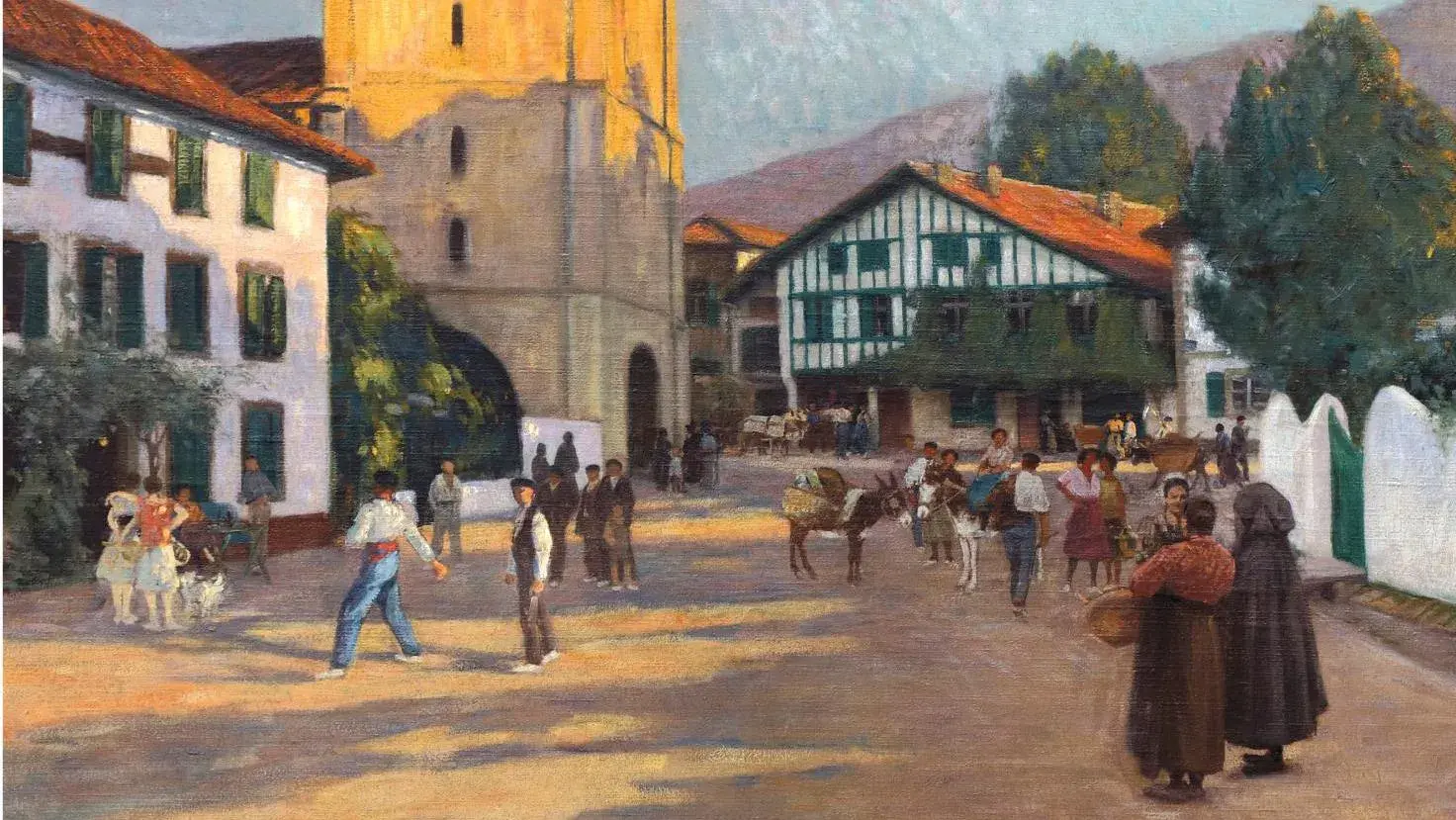
Pedro Ribera (1867-1949), Un dimanche d'été à Ascain (Summer Sunday in Ascain), 1927, oil on canvas signed, located and dated, 116 x 120,5 cm/45.7 x 47.2 in. (detail). Estimate: €15,000/20,000

On July 29, the Carrère & Laborie Auction House is presenting its annual event devoted to artists from the Basque Country. It will give art lovers a chance to discover artists from the southern part of the country, less well known in the French market

Pedro Ribera (1867-1949), Un dimanche d'été à Ascain (Summer Sunday in Ascain), 1927, oil on canvas signed, located and dated, 116 x 120,5 cm/45.7 x 47.2 in. (detail). Estimate: €15,000/20,000
Pedro Ribera (1867-1949), Un dimanche d’été à Ascain (Summer Sunday in Ascain), 1927, oil on canvas signed, located and dated, 116 x 120,5 cm/45.7 x 47.2 in. (detail). Estimate: €15,000/20,000

For the last six years, the Ivoire-Carrère & Laborie Auction House, based in Pau and Bayonne, has staged a sale every July dedicated to Basque artists from the first half of the 20th century. The now firmly established market for these painters means that Ramiro Arrue, Pedro Ribera and Louis Floutier are well-known names sought after by art lovers and collectors. The Villa Les Camélias, in Cap-d’Ail (a long way from the Basque Country, in Alpes-Maritimes) even exhibits, in its Ramiro Arrue Museum, the largest private collection of the artist’s work all year round. The powerful images of these Basque paintings evoke the Pont-Aven School which, from the Breton to the Basque coasts, used a style influenced by modernity, Cubism and Post-Impressionism to depict the down-to-earth, tough and sometimes harsh daily lives of men and women, transcended by the poetry of light and color. “We’re helping to promote Basque art by endeavoring to create a festive occasion,” says auctioneer Patrice Carrère. “The choice of venue is one of the most important aspects of these events. This year, after several sales in Guéthary, we are lucky enough to be exhibiting and selling in the famous medieval Bordagain Tower in Ciboure. The town hosted almost all the region’s painters at some time in their lives. On July 12, we’re showing works from the “Spanish” section of the sale at the Carlton Hotel in Bilbao, the capital of Biscaya province.”

Louis Floutier (1882-1936), Bouvier devant une ferme basque à Osse (Cowherd at a Basque Farm in Osse), oil on octagonal canvas, signed, 73.5 x 99.5 cm/28.7 x 39 in. Estimate: €9,000/10,000
Louis Floutier (1882-1936), Bouvier devant une ferme basque à Osse (Cowherd at a Basque Farm in Osse), oil on octagonal canvas, signed, 73.5 x 99.5 cm/28.7 x 39 in. Estimate: €9,000/10,000

A Passion for the Quattrocento
The Carlton will have a special resonance for lovers of one of the foremost painters of the Hegoalde (Southern Basque Country), Aurelio Arteta, whose key work, Espatadantzaris et porte-étendard, scène de romería (Espatadantzaris and Standard-bearer: Scene from a Romeria) will be up for sale with an estimate of €18,000/20,000. In fact, a tribute was paid to the artist in this hotel in February 1927, roundly clearing him of the charges of favoritism levied against him when he was director of Bilbao’s Museum of Modern Art. The work on offer is remarkable on several counts. “Painters from the southern Basque Country are very rare in Iparralde, its northern part,” says Patrice Carrère. “Spanish and French collectors buy according to the painters’ geographical origins. The Arrue family, natives of Bilbao, are no exception to the rule: in France, Ramiro, who was based in Saint-Jean-de-Luz, is at the top of the list. In Spain, Alberto and Ricardo [his brothers—Ed.], who returned to Bilbao, are popular.” Yet Aurelio Arteta and Ramiro Arrue have much in common: both men spent their formative years in Paris, attending the Grande Chaumière School, a creative epicenter and hatching ground for famous artists. Tellingly, they admired the work of Pierre Puvis de Chavannes, and were deeply inspired by it. The format of the oil on canvas Espatadantzaris… echoes that of the French artist’s allegorical and symbolist frescoes. In the foreground, the sword-dancers and standard-bearer leading the romería, a highly popular festive procession, are shown in profile. They illustrate Arteta’s passion for Quattrocento painters, discovered during his travels in Italy with the sculptor Quintín de Torre between 1905 and 1906.The spectators—the two women friends, the old man, the grandmother and the child—are shown head-on, and seem somewhat frozen, absorbed in the scene before them. They all stand out against a background whose colors dialogue with those of the main figures and the flag. The painting perfectly encapsulates the artist’s goal. According to the catalog of the 1984 “A. Arteta” exhibition at Bayonne’s Musée Bonnat, he “sought a pictorial identity and a classico-modern symbolism that was always palpable in his work, and his idea was to found a modern Basque school of painting based on what he considered the pinnacle of European art: the Renaissance.”
 

The powerful images of these Basque paintings evoke the Pont-Aven School which, from the Breton to the Basque coasts, used a style influenced by modernity, Cubism and Post-Impressionism to depict the down-to-earth, tough and sometimes harsh daily lives of men and women, transcended by the poetry of light and color.

This work comes from the collection of a descendant of Biscayan collector and patron Martín García-Urtiaga, whose family, continuing his legacy, was one of the most important donors to the Guggenheim Museum in Bilbao. The collector had emigrated to Mexico and undoubtedly met Aurelio Arteta there. The artist, who had lived in Saint-Jean-de-Luz since the end of the Spanish Civil War, foresaw the Nazi occupation and fled France in 1939. In 1984, only a 100-odd of his oil paintings were known to exist and only six of these paintings have been auctioned in France since 2001. His rarity on the market partly explains why “the Bayonne museum has no paintings by Aurelio Arteta,” to quote Olivier Ribeton, Honorary Chief Curator of the Musée Basque et de l’Histoire de Bayonne. The sale features other Spanish artists. Many people will be intrigued by the highly singular world of the painter Valentín de Zubiaurre Aguirrezábal, and the sale of three of his oils on canvas will be one of the highlights of the event. The painting Le Pain bénit, deux femmes près d’un altel marial (The Blessed Bread, Two Women at a Marian Altar) (€20,000/30,000) conveys the deep and almost melancholy devotion of rural Spain, but the clouds rising behind the church may also evoke factory smoke, heralding the massive and threatening industrialization of Biscaya. Two oils on panel by José María Ucelay, Chantier naval (Shipyard) and Marine (Seascape)—both estimated at €1,500/2,000, and also from the Martín García-Urtiaga Collection—round off this group of paintings from the Spanish Basque Country.

Aurelio Arteta (1879-1940), Espatadantzaris et porte-étendard, scène de romería (Espatadantzaris and Standard-bearer: Scene From a Romeria), c. 1913-1915, oil on canvas mounted on canvas-covered stretcher, 53.5 x 186.3 cm/20.6 x 73.2 in.
Estimate: €18,000/20,000
Aurelio Arteta(1879-1940), Espatadantzaris et porte-étendard, scène de romería (Espatadantzaris and Standard-bearer: Scene From a Romeria), c. 1913-1915, oil on canvas mounted on canvas-covered stretcher, 53.5 x 186.3 cm/20.6 x 73.2 in.
Estimate: €18,000/20,000

The Basque Soul
The French side is represented by the inevitable Ramiro Arrue, with five paintings and gouaches up for auction. Le Couple basque (Basque Couple), painted in around 1925 (€12,000/15,000), encapsulates several of the artist’s favorite themes, like hieratic figures and the meditative communion with landscapes. Pedro Ribera, a member of the “Group of Nine” to which Arrue belonged, is also considered one of the most talented painters from the Basque Country. After studies at Madrid’s San Fernando Royal Academy of Fine Arts, his more classical training led him to join the classes taught by Léon Bonnat (whose name graces the Bayonne museum) at the Beaux-Arts school in Paris. Un dimanche d’été à Ascain (Summer Sunday in Ascain), painted in 1927 (€15,000/20,000), elegantly depicts peaceful village life, glorified by the play of light and shade that stands out on the church walls, extending the distant mountain peaks. The painters, whether from the North or the South, were fired by a sincere passion for this land straddling two countries. Though less recognized than the painters of the Pont-Aven School, whose creative choices took them to the vanguard of modern artistic movements, these artists, sometimes seen as mere champions of an idealized Basque Country, firmly avoided a figurative, narrative or even ornamental approach. To capture the soul of the land and stand out from the merely decorative, they all decided to probe and dig deeply into the earth that served as a binder for their oil paints.

ARTS DU PAYS BASQUE

Monday 29 July 2024 – 14:30 (CEST)

Tour de Bordagain, rue de la Tour – 64500 Ciboure

Ivoire – Carrère & Laborie

Info and sales conditions

Dee and Tommy Hilfiger’s Collection of Fine Paintings, Celebrity Memorabilia, and More at Brunk Auctions

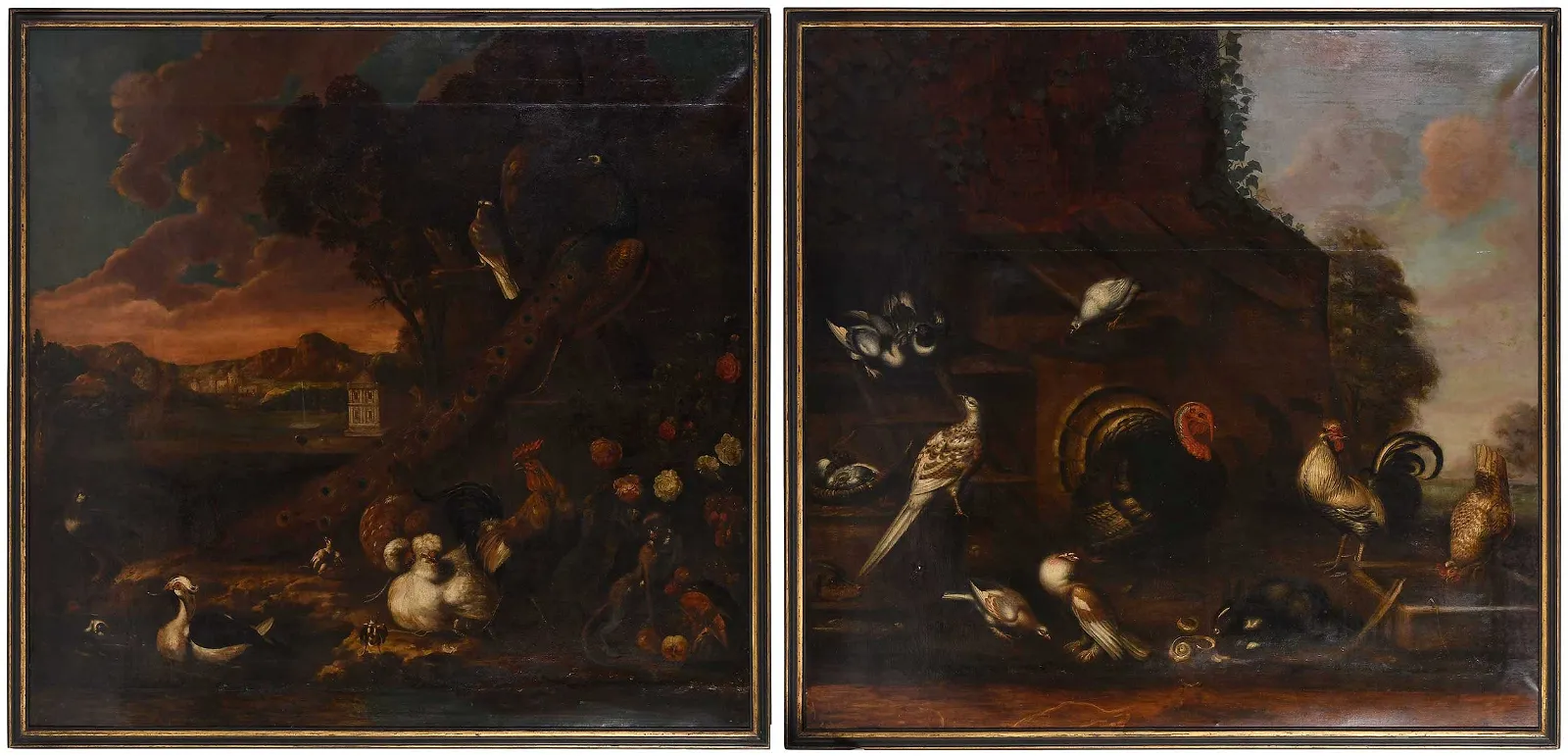
Manner of Melchior de Hondecoeter, A Pair of Menagerie Paintings

Fashion icons Dee and Tommy Hilfiger will present a variety of items from their personal collection with Brunk Auctions this July. The robust auction catalog includes celebrity photography, as well as furniture, decorative art, and collectibles. Online bidding options are available through Bidsquare. 

Among the top lots of this sale is a pair of menagerie paintings in the manner of Melchior d’Hondecoeter (lot #119; estimate: USD 10,000 – $15,000). Both Peacock, Ducks, and Birds with a Monkey and A Turkey, Chickens, Pigeons, and Birds with a Rabbit are unsigned. They are presented together in matching parcel gilt and painted frames. Hondecoeter was a Dutch painter who worked in the mid- to late-17th century. He specialized in animal paintings and eventually focused almost exclusively on birds. Unlike many other bird painters of his time, Hondecoeter portrayed his fowl as living individuals capable of drama and expression instead of merely meat or objects of sport. Turbulent skies often dominate the background of Hondecoeter’s paintings, including the offered examples. 

Manner of Melchior de Hondecoeter, A Pair of Menagerie Paintings

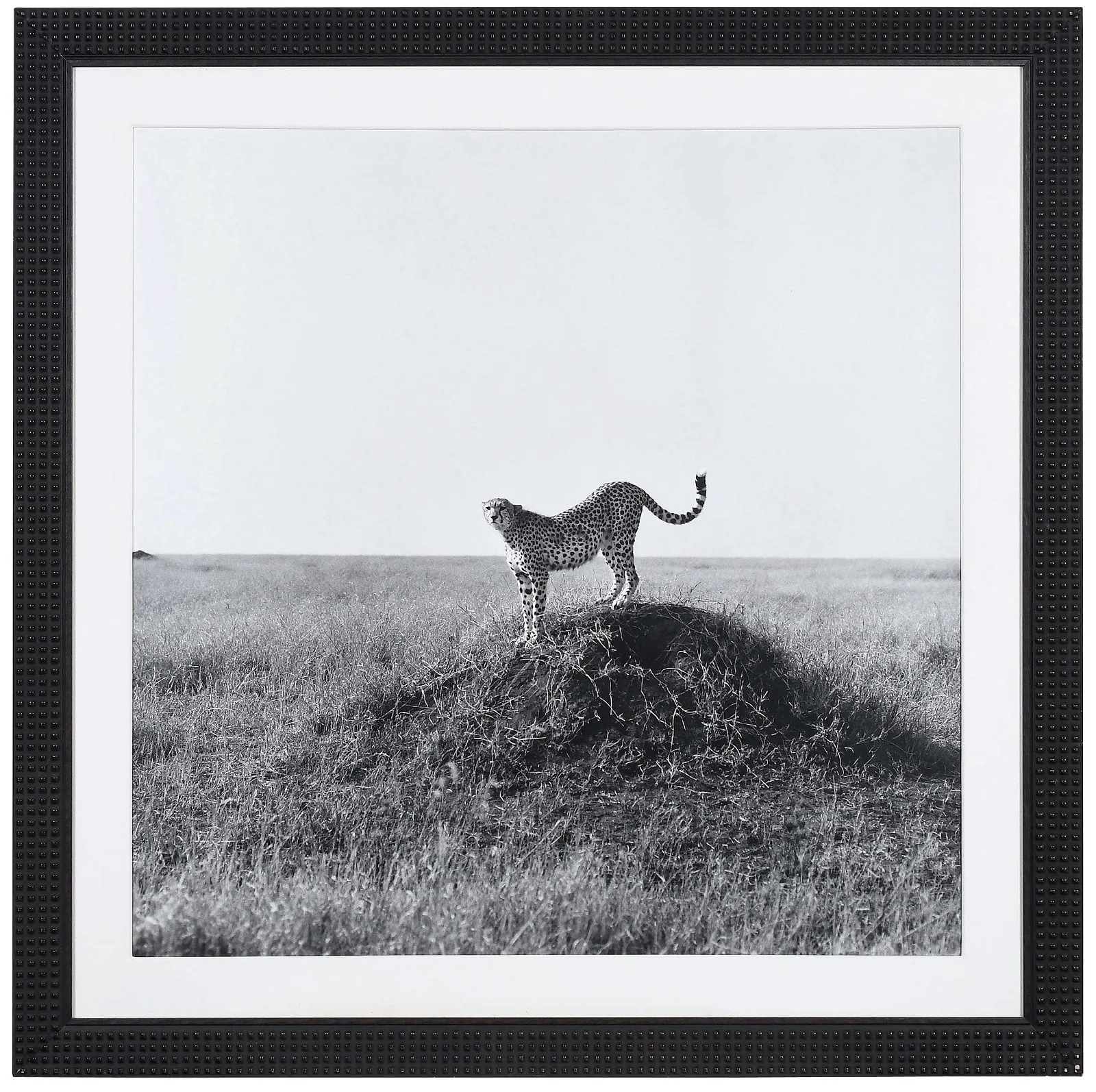
Two black-and-white photographs by Patrick Demarchelier will be available in this sale. Lot #21 is titled Cheetah and depicts the big cat balanced atop a grassy mound (estimate: $3,000 – $5,000). This still is dated 1993 and was captured in Tanzania. Demarchelier’s Giraffes is also available (lot #22; estimate: $3,000 – $5,000). It dates from the same trip to Tanzania and features three giraffes standing in a group, gazing at the viewer. Patrick Demarchelier was best known for his fashion photography, which was published in Vogue, Harper’s Bazaar, and other publications.  

Patrick Demarchelier Photograph, Cheetah

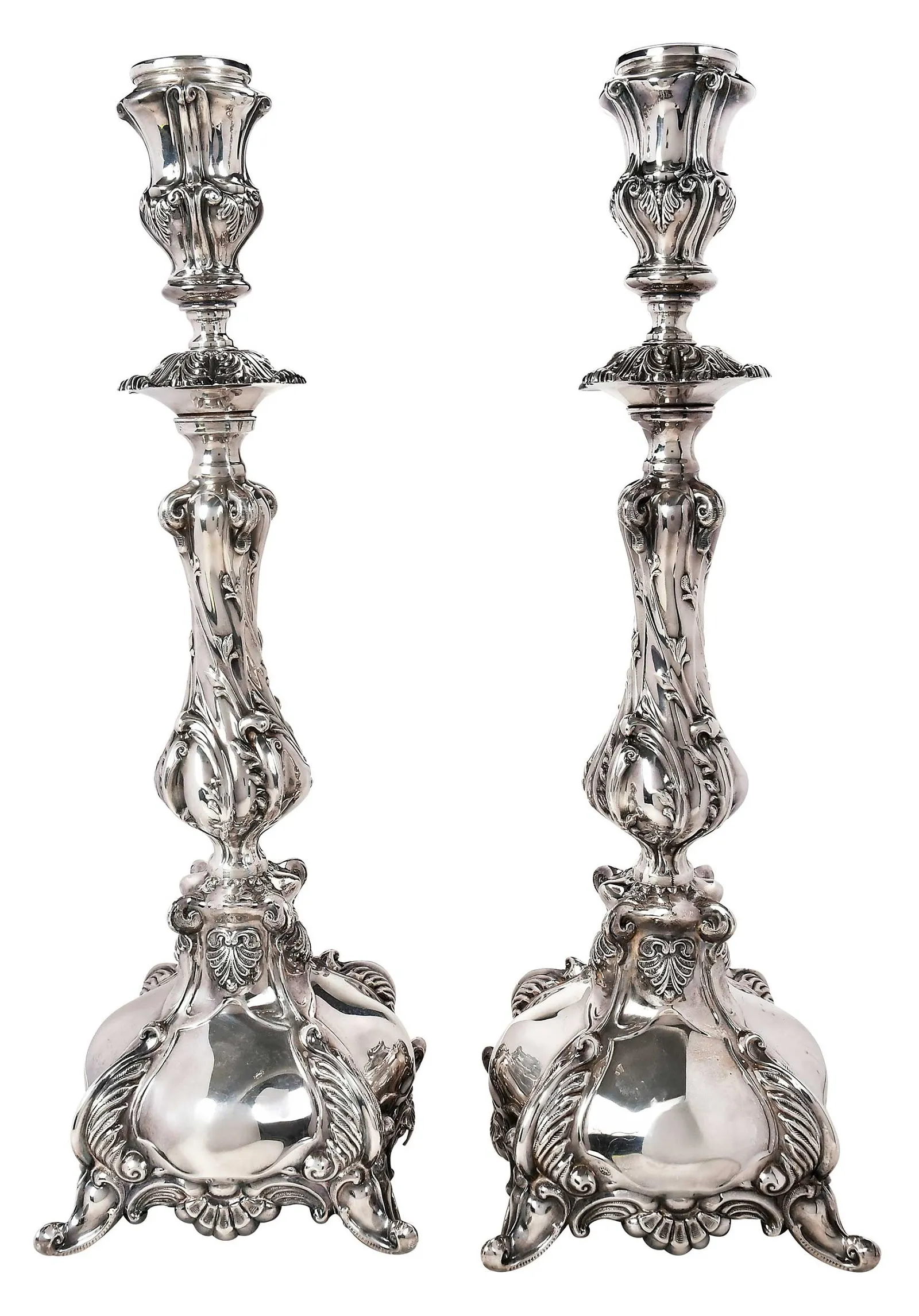
Beyond fine art, this sale includes several fine silver items, including a pair of sterling silver repousse candlesticks (lot #165; estimate: $2,000 – $3,000). Produced by the Israeli company Hadad Bros., these 20th-century candlesticks feature rounded bases and elaborate scrollwork throughout. A coin silver entrée dish with stag handles and finial (lot #93; estimate: $1,000 – $1,500) will be presented alongside a Gorham sterling silver and horn handle loving cup (lot #88; estimate: $500 – $800). 

Pair Large Hadad Sterling Repousse Candlesticks

Bidders can also consider the following lots: 

  • A limited edition 1965 Shelby pool table (lot #66; estimate: $5,000 – $7,000)
  • A Helmut Newton signed sumo book with a custom stand (lot #37; estimate: $2,000 – $4,000)
  • A palace-sized Persian Malayer carpet (lot #128; estimate: $1,500 – $2,500) 
  • A custom Amen Wardy sofa and ottoman pair upholstered in blue jeans (lot #55; estimate: $1,200 – $1,800) 
  • A pair of Knoll Wassily chairs (lot #5; estimate: $1,000 – $2,000)

Based in Asheville, North Carolina, Brunk Auctions has been conducting sales of fine and decorative arts for over 30 years. Auctions are held in the company’s North Carolina sale room and attract a global audience. Founded by Robert Brunk in 1983, the auction house now employs a full-time staff of nearly 30 specialists with over 100 years of combined experience. Bob brought to bear his experience as an anthropologist, writer, and professional woodworker, an unmistakable combination of skills that continue to illuminate catalog entries and elucidate auction-goers. He is now a valued consultant and continues as auctioneer. Andrew Brunk joined his father in 2005. His curatorial experience has brought additional focus on research and connoisseurship. Andrew Brunk’s experience as the head of the American furniture department at one of the world’s largest auction houses has allowed Brunk Auctions to continually align itself with the best in the business. The firm values connoisseurship, customer service, transparency, and stellar results for both buyers and sellers.

The Collection of Dee and Tommy Hilfiger Auction will begin at 10:00 AM EDT on July 31, 2024. To browse the complete catalog and register to bid online, visit Bidsquare

Find more press releases and auction news by visiting Auction Daily

Shiraga Sets Sparks Flying at Drouot

Kazuo Shiraga (1924-2008), Sakuhin, 1962, oil on canvas, 130 x 162.5 cm/51.18 x 63.97 in.

Falling just short of €1.2 M, this spirited painting by the Japanese artist achieved the highest result posted at Drouot in 2024. It was accompanied by a work on paper that also expresses intense emotion of a scream. 

Kazuo Shiraga (1924-2008), Sakuhin, 1962, oil on canvas, 130 x 162.5 cm51.18 x 63.97 in.
Result €1,170,000
Kazuo Shiraga (1924-2008), Sakuhin, 1962, oil on canvas, 130 x 162.5 cm/51.18 x 63.97 in.
Result: €1,170,000

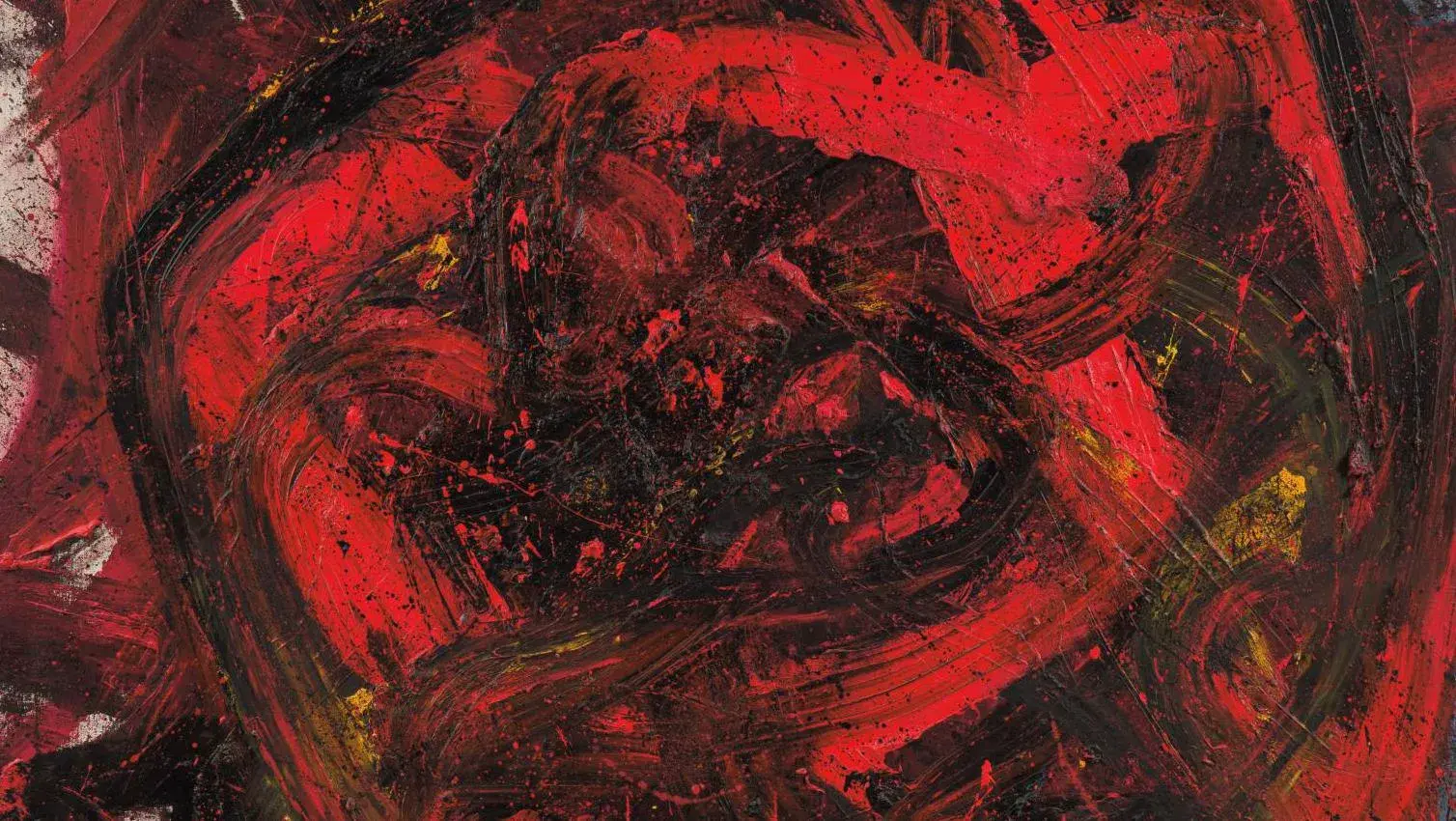
Fiery is the word most often used to describe Kazuo Shiraga’s creative genius. This painting, Sakuhin (“Work”), is a prime example. It is dated 1962, a pivotal year for the artist. Emerging from it is the famous “Crimson Lake”, composed of a magma of matter, an impasto that brings it to life and recalls Shiraga’s membership in the Gutai movement. It’s a scream that erupts from the canvas, one that inhabits the artist’s body and soul, which he manages to let out. “Red on red, everything moves.”

This was followed by Composition rouge (Red Composition, 194 x 104 cm/76.37 x 40.94 in), a 1960s gouache on kraft paper by Orhon Mübin (1924-1981) that fetched €67,600. Just after the Second World War, the Turkish artist arrived in France, where he discovered abstract expressionism. Like Shiraga, he needed free gestures and bold materials and colors to express his emotions, channeling them and conveying the absurdity of the conflict and its millions of dead. Broad, brisk strokes punctuate his compositions, like this incandescent red drawing. Next up came a bright orange 2006 gouache by Ufan Lee (born 1936). Designed by the Korean as a breathing space, it sold for €65,000. None of this was enough to wake up the snoozing dog lying in his kennel. The perfectly documented watercolor over pencil by Théodore Géricault (1791-1824), Portrait de Galaor, chien de l’artiste (Portrait of Galaor, the Artist’s Dog, 15.5 x 15.5 cm/6.10 x 6.10 in), c. 1818-1819, fetched €39,000. It steers clear of the controversy surrounding the “Géricault’s Horses” exhibition at the musée de la Vie romantique.

JEWELRY – SILVERWARE ANTIQUE, MODERN AND CONTEMPORARY PAINTINGS FURNITURE & WORKS OF ART

Friday 21 June 2024 – 14:00 (CEST) – Live

Salle 9 – Hôtel Drouot – 75009 Paris

Christophe Joron Derem

Info and sales conditions

Catalogue

Results

Captain America Comics #1, a key Golden Age comic book, could pack a mighty punch at Hake’s big July 30-31 pop culture memorabilia auction

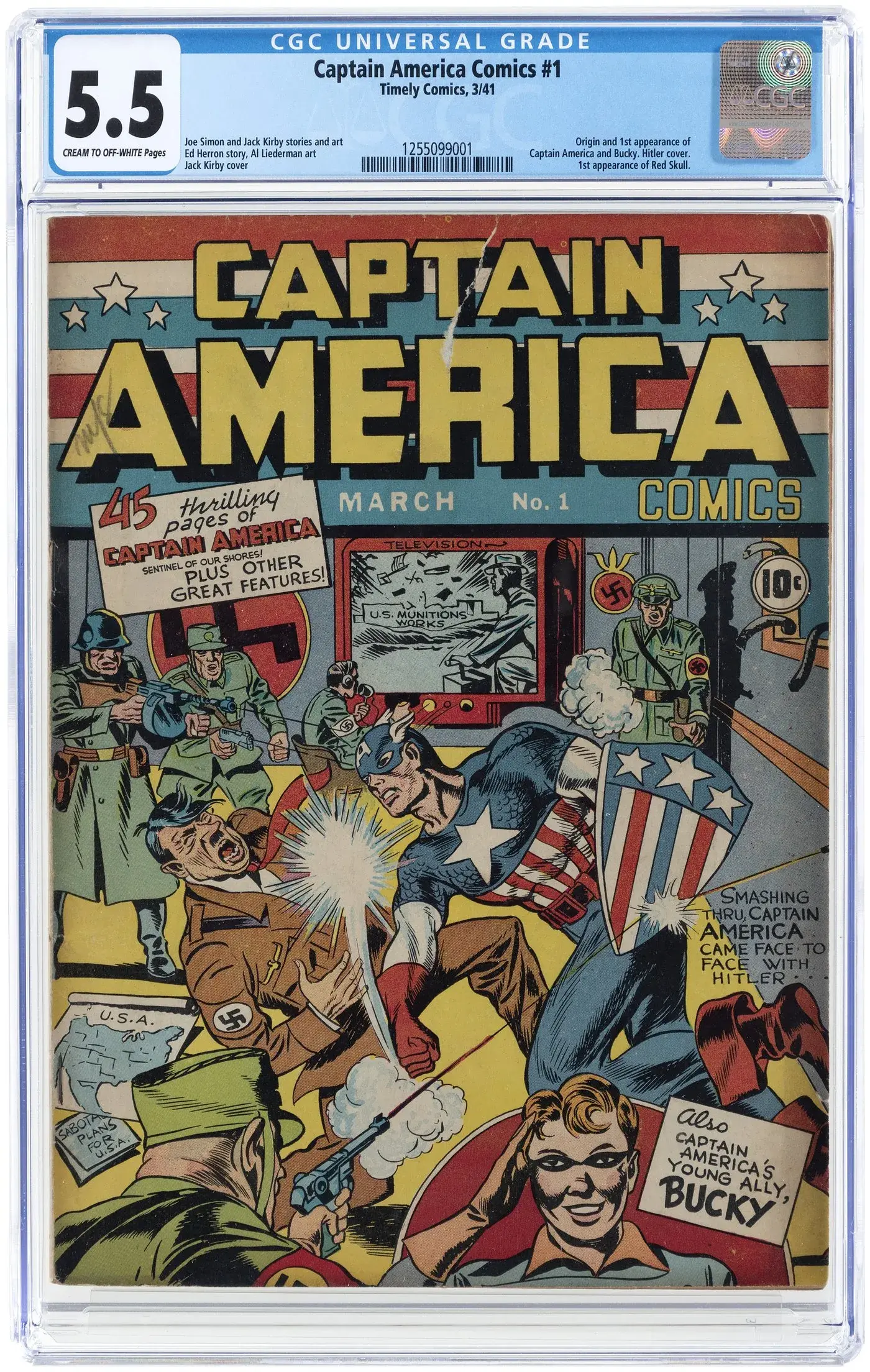
‘Captain America Comics’ #1, March 1941, CGC 5.5 Fine-, with origin and first appearance of Captain America, Bucky Barnes, and their nemesis The Red Skull. Action-packed World War II cover shows the Captain punching Hitler. Stories by Joe Simon and Jack Kirby. Cover art by Kirby; interior art by Simon, Kirby and Al Liederman. Key Golden Age comic book with historical significance. Estimate: $200,000+

Also featured: original comic book cover art, 1881 Troy Trojans baseball cabinet card, Star Wars: 1978 French Meccano Luke Skywalker figure, Boba Fett mail-in bell hanger, 1982 Princess Leia sample

Captain America Comics’ #1, March 1941, CGC 5.5 Fine-, with origin and first appearance of Captain America, Bucky Barnes, and their nemesis The Red Skull. Action-packed World War II cover shows the Captain punching Hitler. Stories by Joe Simon and Jack Kirby. Cover art by Kirby; interior art by Simon, Kirby and Al Liederman. Key Golden Age comic book with historical significance. Estimate: $200,000+

YORK, Pa. – Original comic book cover art by iconic creators, Star Wars rarities to delight even the most advanced collectors, and a prized Golden Age comic, Captain America Comics #1, form a powerful leaderboard for Hake’s Premier Auction taking place online, July 30 and 31. The top-notch 2,120-lot selection, fully vetted by the Pennsylvania company’s team of specialists, spans many dozens of pop-culture categories that have proved to be fan favorites over Hake’s 57 years in the collectibles business.  

The star of the two-day event is expected to be a CGC 5.5 Fine- issue of Captain America Comics #1. Published in March 1941, the rare book contains the origin and first appearance of Captain America, Bucky Barnes, and their nemesis The Red Skull. Its action-packed World War II-themed cover shows the Captain punching Hitler. Wondering how many comic book all-stars can be showcased in one issue? This one goes for the max, with stories by Joe Simon and Jack Kirby, plus Kirby cover art and interior art by Simon, Kirby, and Al Liederman. “This is not only a key Golden Age comic book with added historical significance, it’s also a key issue when compared to the entire realm of comic books,” said Alex Winter, president of Hake’s Auctions. “It’s an absolute must-have for any serious comic collection and would qualify as the centerpiece.” Auction estimate: $200,000+

One of the fastest-rising categories in the collectibles world is original comic book art, especially cover art. Hake’s will answer the demand with an array of outstanding choices, led by everyone’s favorite, Spider-Man. The nimble Spidey was introduced to the world in Amazing Fantasy #15, with Jack Kirby’s immortal artwork on the cover. Hake’s comic art specialists have a hunch collectors will jump at the chance to acquire Alex Ross’s original cover art for Hero Illustrated #6, published December 1993, which reinterprets Kirby’s Spider-Man cover in gouache, with a warm color palette that lends a more grounded, realistic feel to the crime-fighting superhero’s entrance. Measuring 15 by 20 inches on artpaper, this unqualified masterpiece was previously in the Gary and Dawn Guzzo collection. “This lot could produce a big surprise at auction, and because there really isn’t any Ross art to which it can be compared, we’ve left the estimate open,” Winter said.

Another outstanding entry is Sam Kieth’s original pen-and-ink art for the cover of Marvel Comics Presents Featuring Ghost Rider #99, published in March 1992. The scene depicts Ghost Rider (Danny Ketch) surrounded by D’Sprytes, the toothy, goblin-like minions of the Fear Lord D’Spayre. Sized 11 1/8 inches by 17 1/8 inches, this artwork will make its auction debut with a $20,000-$35,000 estimate.

Also poised for success is Walt Simonson’s original pen-and-ink art for the cover of Shadow Cabinet #0, published by DC Comics as part of their Milestone Comics imprint in January 1994. This issue marks the first appearance of the Shadow Cabinet, with the cover showing members Hardware, Xombi, Iron Butterfly, Icon and Rocket; Static, and Blitzen. Alex Winter observed: “Walt Simonson original art rarely comes to the market, let alone a cover of this magnitude.” Signed by Simonson and dated 7-15-93 at its lower left, the 14- by 16.75-inch artwork is expected to sell in the $10,000-$20,000 range. 

Even veteran Star Wars collectors have become accustomed to seeing pieces in Hake’s sales that are completely new to them. In the July 30-31 offering, there are three candidates likely to elicit the comment, “I’ve never seen that before.” First, there’s a French Meccano Star Wars (1978) Luke Skywalker 3.75-inch action figure on a square 20 Back blister card. It is AFA-graded 80 Y-NM, and according to the current AFA Population Report, it is the sole and highest-graded example of this very rare figure. Estimate: $20,000-$35,000

For the legion of fans who want anything-and-everything Boba Fett, Hake’s suggests a 1978 Star Wars bell hanger advertising store display sign illustrated with Kenner’s first 20 Star Wars action figures. AFA-graded 95 Mint, with none graded higher according to the current AFA Population Report, this advertisement touts a mail-in “Special Limited Offer” promising a free Boba Fett action figure with the purchase of any four Star Wars action figures. The bell hanger comes with its original cardboard carton ink-stamped to indicate it was destined for a Kroger store in Cincinnati, Ohio. Estimate: $20,000-$35,000

A most unusual hybrid sample and card combines a figure of Princess Leia Organa (Boussh Disguise) and a 1982 Star Wars: The Empire Strikes Back Boba Fett 48 Back-A card. This particular mash-up was created to give a general idea of how the Leia figure would look on a blister card before an actual Princess Leia Organa card was available. Made in Taiwan and presented in an archival case, it is the only known example of this unique sample variation. It has been AFA-graded 75 EX+/NM and comes with a CIB LOA. Previously in the Wayne Gillespie collection, it is now offered with an auction estimate of $20,000-$35,000.

Something special for ThunderCats collectors is an LJN/Rainbow Toys Europe “Thunderwings Lion-O” Deluxe 7-inch action figure from the 1987 ThunderCats range. The character comes with Thunderwings Battle-Matic Action and is accessorized with a vehicle, Sword of Omens and a Secret Power Ring that causes the figure’s eyes to illuminate. In an archival case and graded AFA 80 NM, it is the only AFA-graded example of the LJN/Rainbow Toys European release as well as the highest-graded example of all varieties. With provenance from the Mark Warner collection (UK), it comes to auction with a $10,000-$20,000 estimate.

No collector will strike out if they’re bidding on a cabinet card depicting all 11 team members of 1881 Troy (NY) Trojans National League baseball team, including four future National Baseball Hall of Famers: Buck Ewing, Roger Connor, Tim Keefe and Mickey Welch. This fantastic card is the only known example of its type. Estimate: $20,000-$35,000. Another terrific baseball treasure is a 1910 PC805 postcard depicting Honus Wagner at bat in an action pose. The image of Cobb is presented in a “framed” portrait style and is from a series that was produced by Novelty Cutlery, a Canton, Ohio, knife company. Only five such cards have been graded by PSA, with this one graded 1.5 Fair. Estimate: $10,000-$20,000

As the US presidential race shifts into high gear, it’s fascinating to see how 19th-century candidates powered their campaigns. In the case of William McKinley and Garret Hobart, the ultimately-successful ticket of 1896, their momentum came on two wheels, as seen in a rare button showing the candidates on a tandem bike headed for the White House. Emblazoned with the slogan “Gold Didn’t Get There July 7th / But Watch Us Take It There Nov. 3rd,” in reference to William Jennings Bryan’s famous “Cross of Gold” speech delivered at the 1896 Democratic National Convention, this 1.25-inch pin-back has a $5,000-$10,000 estimate. 

An exceptional and gloriously colorful Charles Evan Hughes and Charles W Fairbanks jugate button displays a furled American flag flanked by oval images of the candidates, all against a sunny lime-green background with golden rays. This rare and very attractive 1.25-inch button documents the Republican duo’s unsuccessful run against Woodrow Wilson and Thomas R Marshall in the 1916 Presidential election. Estimate: $10,000-$20,000

Hake’s July 30-31, 2024 online auction is now open for bidding. For a free printed catalog or additional information on any item in the sale, call +1 866-404-9800 (toll-free) or +1 717-434-1600; or email [email protected]. View the fully illustrated catalog online and sign up to bid at https://hakes.com/.

CONTACTS:

Hake’s Auctions

Tel. 866-404-9800 (toll-free) or 717-434-1600

[email protected] 

PR Office

Tel. 610-373-5959

[email protected] 

Find more auction world news on AuctionDaily‘s news channel.

2024 Coeur d’Alene Art Auction to Feature Fine Art by Frederic Remington

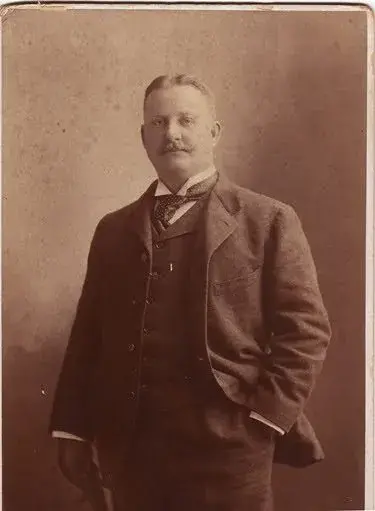
Frederic Remington, undated photo. Image via Daily Dose of Art.

The much-anticipated annual Coeur d’Alene Art Auction of fine Western and American art will take place in Reno, Nevada on July 27, 2024. A number of fine masterpieces by the likes of Howard Terpning, Thomas Moran, and Frederic Remington will be available this year. Paintings and sculptures by Remington are particularly notable. Auction Daily takes a closer look at Remington’s life and work before the sale.

Frederic Remington, undated photo. Image via Daily Dose of Art.
Frederic Remington, undated photo. Image via Daily Dose of Art

About Frederic Remington

An artist known for his depictions of the American West, Frederic Remington was born in 1861. His early years were remarkably happy and active, filled with outdoor activities and loving attention from his parents. Remington pursued art in college but had little interest in studying formal techniques. His strength was in action drawing. The artist carried that skill with him on trips west, where he encountered Native Americans, cowboys, and a rugged landscape. The scenes fascinated him. 

Remington began publishing depictions of the American West in national newspapers, feeding a rising appetite for romanticized depictions of the West. He accepted commissions from newspapers, magazines, and figures like Theodore Roosevelt. Remington was soon counted among the most famous and popular painters of his era. 

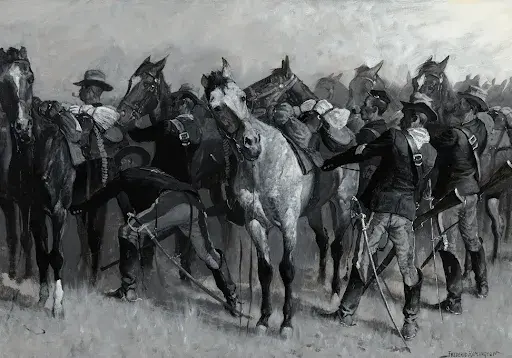
Frederic Remington, Boots and Saddles, c. 1890 - 91. Image courtesy of Coeur d’Alene Art Auction.
Frederic Remington, Boots and Saddles, c. 1890 – 91. Image courtesy of Coeur d’Alene Art Auction. 

Frederic Remington Paintings

Frederic Remington paintings are recognized for their sense of movement and Impressionistic brushstrokes. And unlike many of his contemporaries, Remington prioritized action scenes with people and animals over depictions of the West’s awe-inspiring landscape. As an illustrator for magazines and newspapers, Remington was keenly aware of the viewer’s eye and the need for sustained visual interest. He occasionally took artistic liberties with his subject matter, colors, and other details to maintain the region’s mystery and myths. 

Some of Remington’s paintings were rendered in black and white for commercial reproduction. One example of his grisaille work will be offered in the 2024 Coeur d’Alene Art Auction. Boots and Saddles from circa 1890 is an oil on canvas depiction of several soldiers preparing their horses for a ride (lot #202). The scene is set in the aftermath of the American Civil War, when groups of war volunteers were sent west to combat Native American attacks. It is presented with a pre-sale estimate of USD 300,000 to $500,000. 

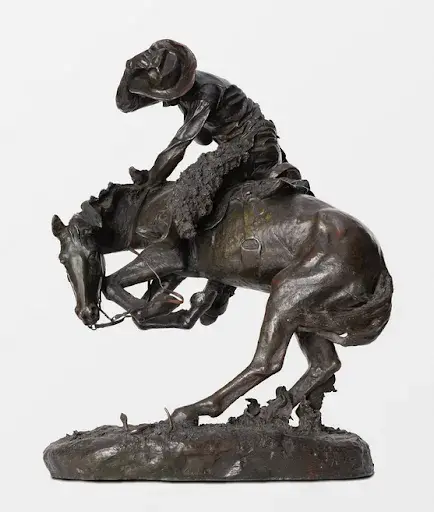
Frederic Remington, The Rattlesnake. Image courtesy of Coeur d’Alene Art Auction.
Frederic Remington, The Rattlesnake. Image courtesy of Coeur d’Alene Art Auction. 

Frederic Remington Sculptures

Frederic Remington began exploring sculpture during the 1890s to supplement his painting practice. At first, the works were not received positively by critics. Remington nevertheless persisted and eventually adopted the lost wax method. This technique allowed for greater detail and control over the finished sculpture. Remington turned toward sculpture full-time in his later career, coming to despise the commercial paintings that he had once created for magazines.

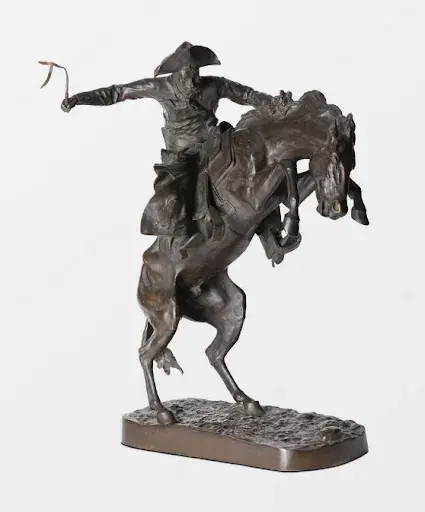
Frederic Remington, The Broncho Buster. Image courtesy of Coeur d’Alene Art Auction.

Several notable cast bronze sculptures by Frederic Remington will cross the auction block this July with Coeur d’Alene. These works, which place cowboys atop rearing horses, were among Remington’s most popular creations. The artist started working on The Rattlesnake in the early 1900s and copyrighted the design in 1905. An energetic work, this delicately balanced piece depicts a horse rearing away from a snake. Its rider grabs his hat, prepared to throw it off and cover the offending serpent. The available casting of The Rattlesnake has an estimate of $200,000 to $300,000 (lot #137).

Also offered is Remington’s The Broncho Buster, his first major sculptural work (lot #242). The artist based the figure on several earlier sketches. The compelling figurine became one of his most famous and popular works, with one casting eventually being gifted to Theodore Roosevelt by the Rough Riders in 1898. The offered casting of The Broncho Buster has an estimate of $100,000 to $150,000. 

The 2024 Fine Western & American Art sale from Coeur d’Alene Art Auction will begin at 2:00 PM EDT on July 27, 2024. To browse the complete auction catalog and register to bid online, visit Bidsquare.

For more coverage of this event, visit Auction Daily