Royal Doulton Loving Cup, George Washington

Royal Doulton Loving Cup, George Washington

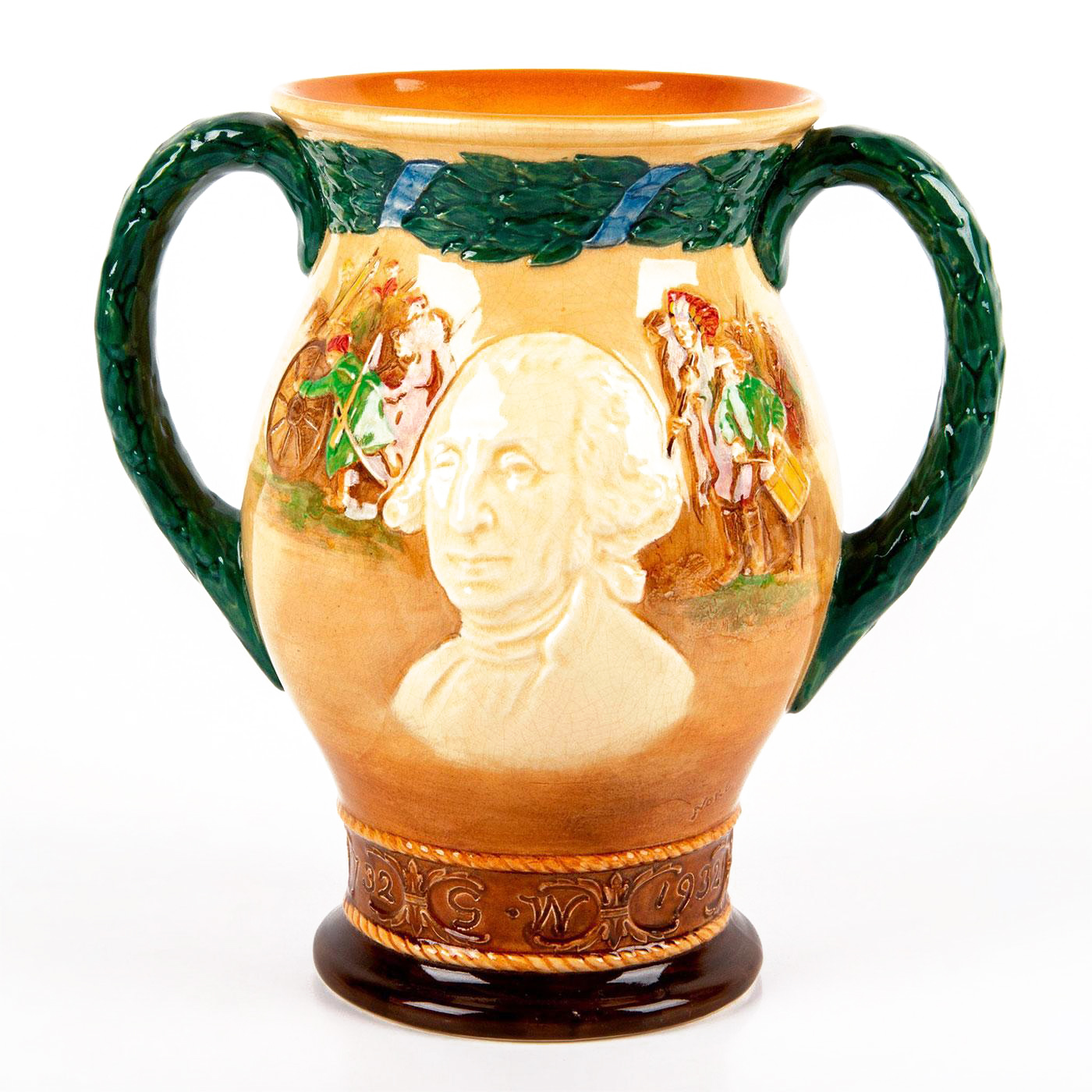
Royal Doulton Loving Cup, George Washington:

Rare commemorative cup; encircling scene with a profile of George Washington in relief.
Baluster form; brown colored with green handles and borders. Signed Noke on body. Doulton backstamp. Age related crazing. #Doulton #lovingcup #GeorgeWashington

Issued: c. 1932
Dimensions: 8.75″H
Manufacturer: Royal Doulton
Country of Origin: England

Mephisto Hn723 – Royal Doulton Figurine

Mephisto Hn723 - Royal Doulton Figurine

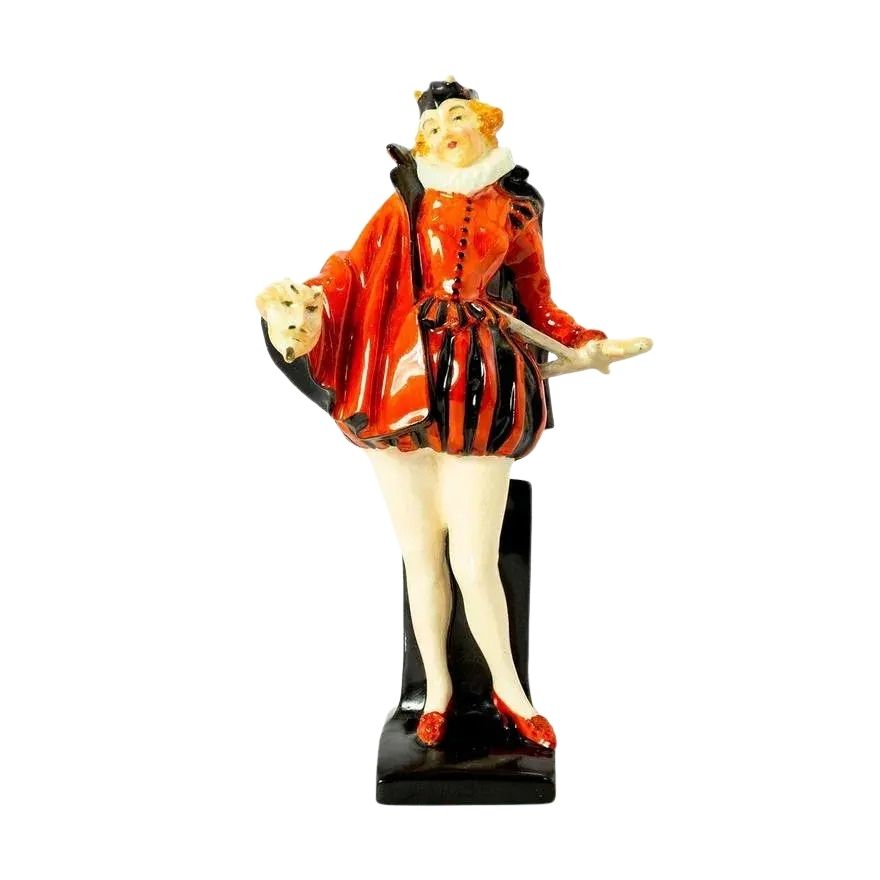
Mephisto Hn723 – Royal Doulton Figurine:

Very rare piece. Glossy finish; young lady in character dress holding a mask of Mephistopheles.
Literary Characters. Royal Doulton backstamp. Good condition.

Artist: Leslie Harradine
Issued: 1925 – 1938
Dimensions: 6.5″H
Manufacturer: Royal Doulton
Country of Origin: England
Condition
Good condition.

Royal Doulton Titanian Figurine, A Mandarin

Royal Doulton Titanian Figurine, A Mandarin

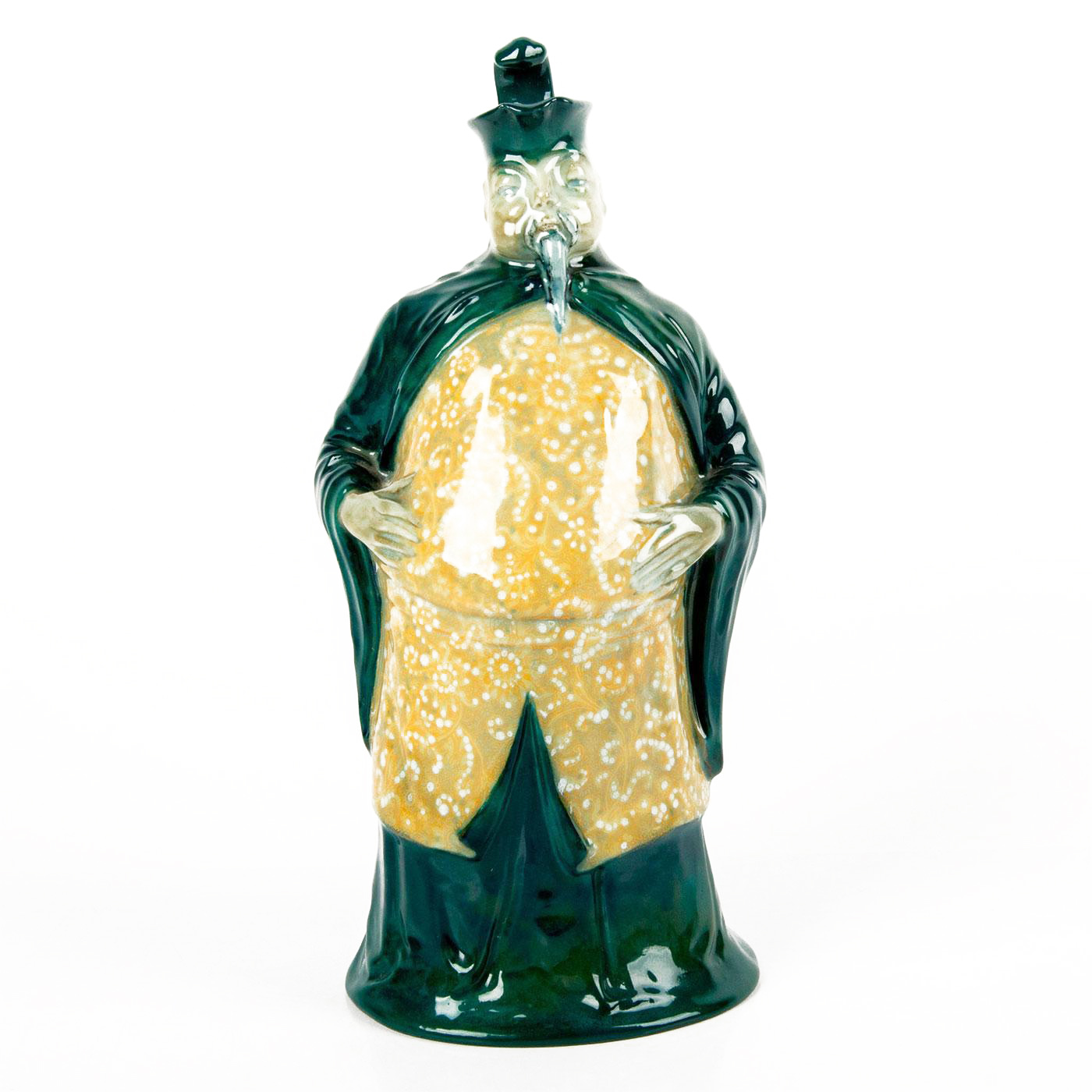
Royal Doulton Titanian Figurine, A Mandarin:

Extremely rare, unrecorded, variation. Unique Titanian glaze, resulting in blue, green and yellow coloration. Chu Chin Chow.
Royal Doulton backstamp. Some writing on bottom has worn off. “11.12.318” inscribed on the inside. Good condition. #titanian #vintage #rare

Artist: Charles Noke
Issued: 1924-1936
Dimensions: 10.25″H
Manufacturer: Royal Doulton
Country of Origin: England
Condition
Good condition. Some writing on bottom has worn off.

New Jersey Regiment Hn2752 – Royal Doulton Figurine

New Jersey Regiment Hn2752 - Royal Doulton Figurine

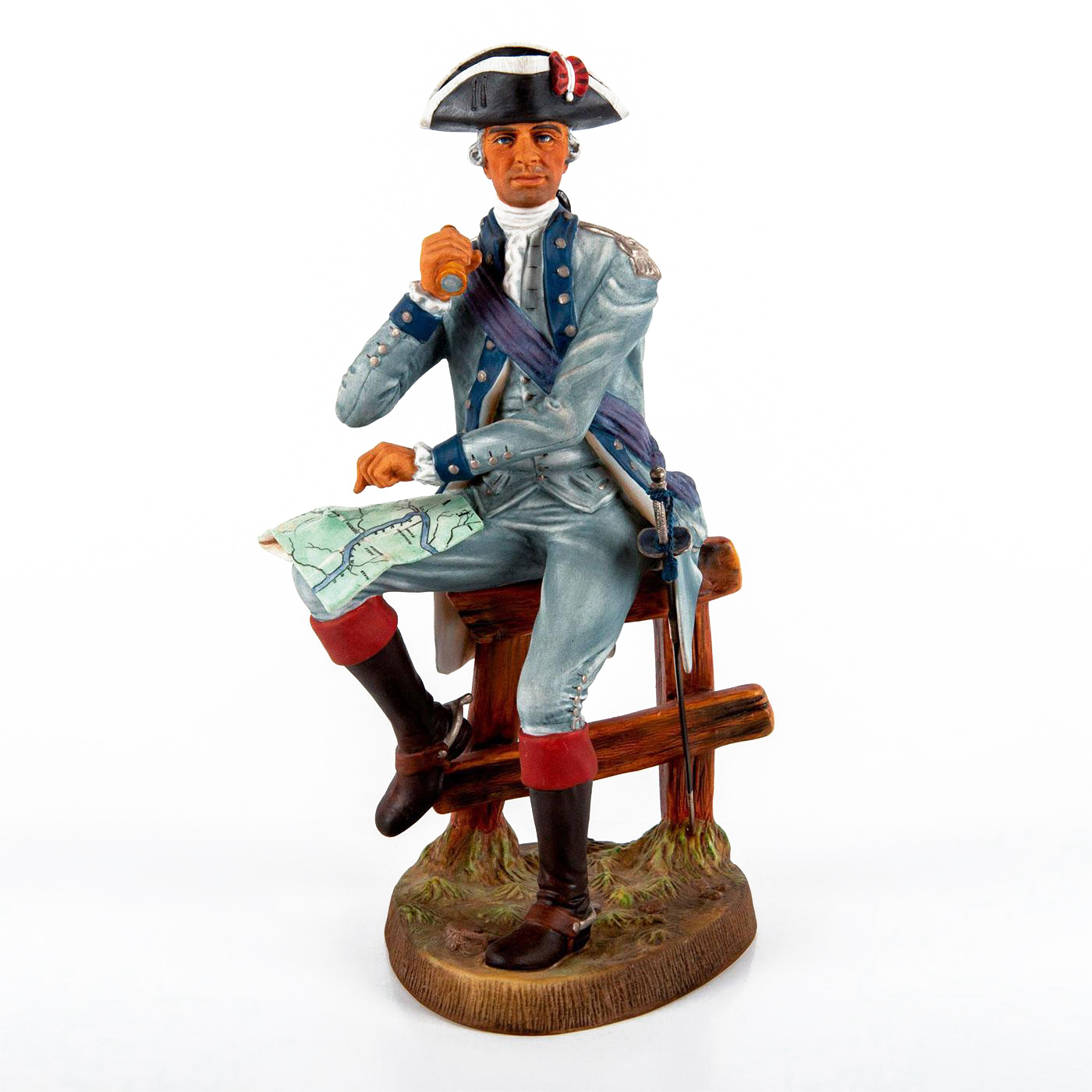
New Jersey Regiment Hn2752 – Royal Doulton Figurine:

Matte finish; Highly detailed and hand-painted military sculpture.
Marked MAJOR, 3RD NEW JERSEY REGIMENT 1776 HN2752 and Royal Doulton backstamp. ?Limited edition number 49 of 350.

Artist: Eric J. Griffiths
Issued: 1975
Dimensions: 10″H
Manufacturer: Royal Doulton
Country of Origin: England
Condition
Good.

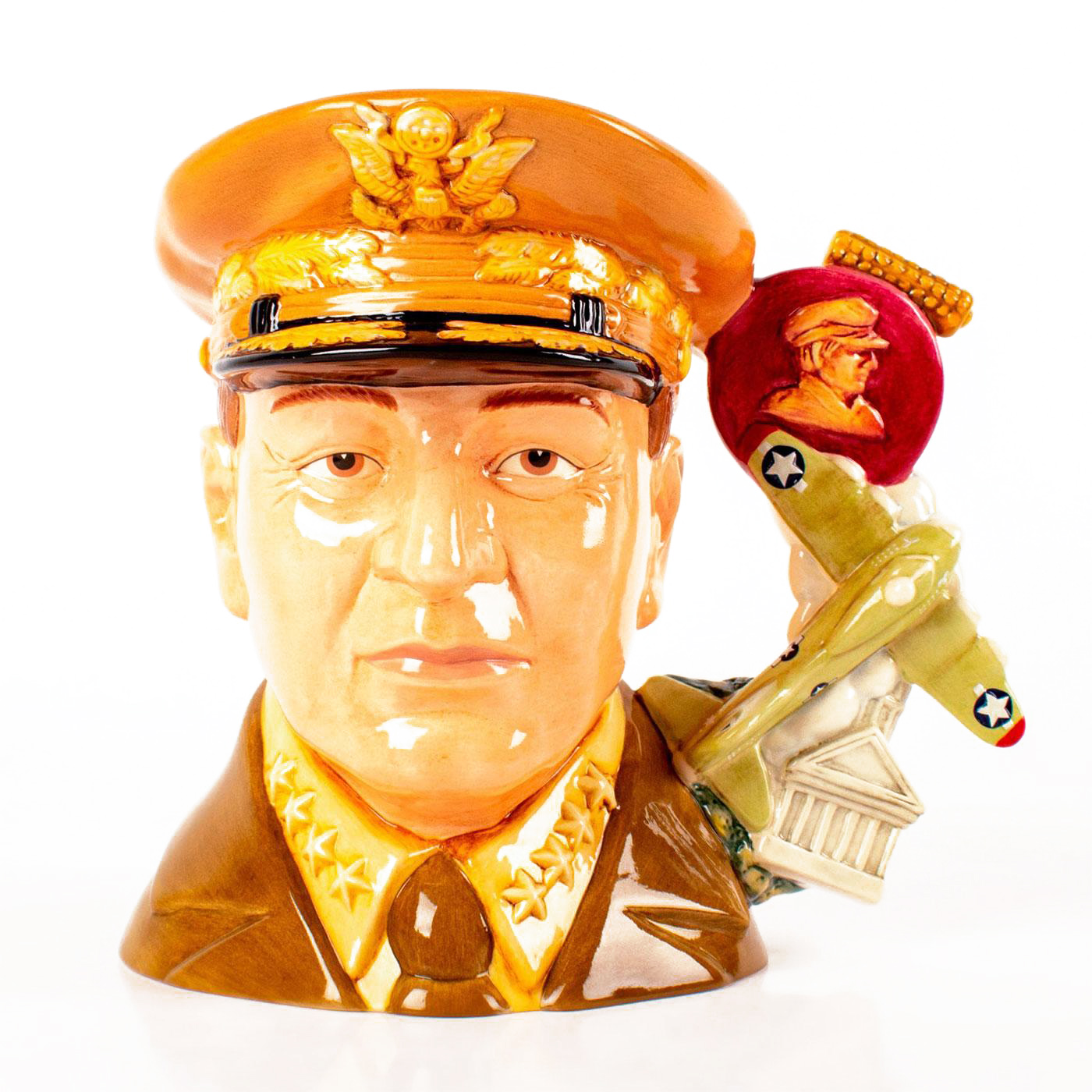
General Macarthur D7264 – Large – Royal Doulton Character Jug

GENERAL MACARTHUR D7264 - LARGE - ROYAL DOULTON CHARACTER JUG

General Macarthur D7264 – Large – Royal Doulton Character Jug:

Khaki colorway.
Limited edition number 70 of 100. Designed by Caroline Dadd and modeled by Robert Tabbenor. Series: Great Generals. Royal Doulton backstamp.

Artist: Caroline Dadd
Issued: 2008
Dimensions: 7″H
Manufacturer: Royal Doulton
Country of Origin: England
Condition
Good.

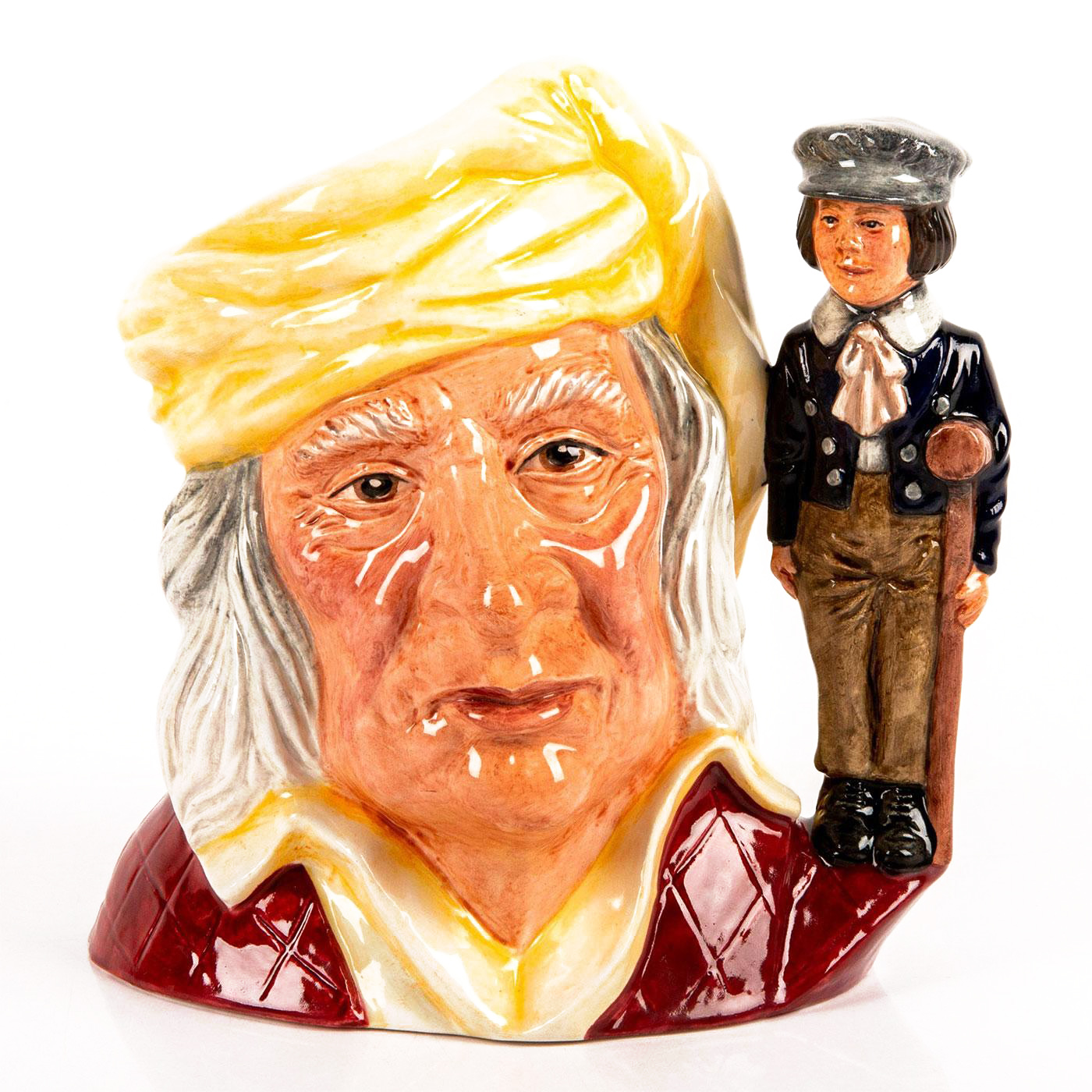
Royal Doulton Prototype Large Character Jug, Scrooge

Royal Doulton Prototype Large Character Jug, Scrooge

Royal Doulton Prototype Large Character Jug, Scrooge:

Charles Dickens characters from the novel Christmas Carol. Handle in form of Oliver Twist
Royal Doulton backstamp. Marked The Property Of Royal Doulton Tableware LTD Not Produced For Sale.

Issued: 20th c.
Dimensions: 7.75″H
Manufacturer: Royal Doulton
Country of Origin: England

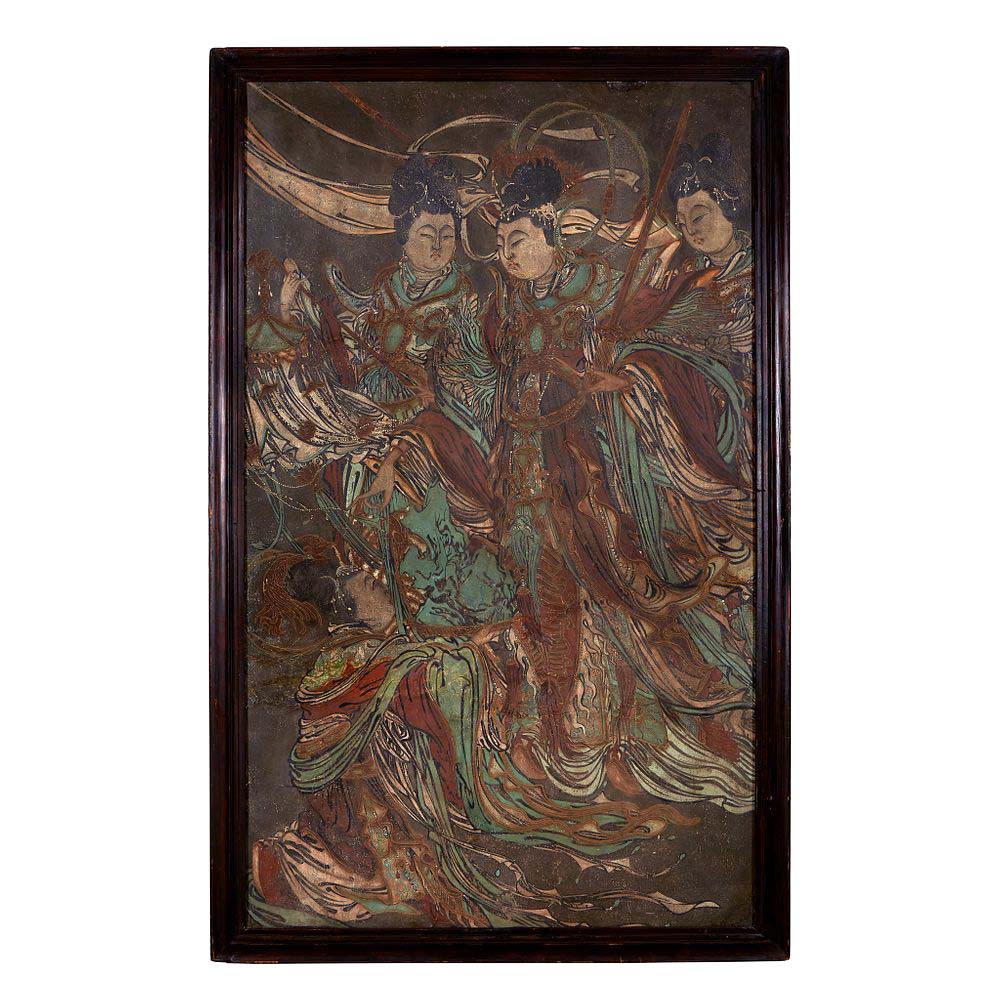
A Large Chinese polychrome stucco fresco panel 灰泥彩绘天女图壁画 Yuan/Ming Dynasty or later 元/明或更晚

A Large Chinese polychrome stucco fresco panel 灰泥彩绘天女图壁画 Yuan/Ming Dynasty or later 元/明或更晚

A Large Chinese polychrome stucco fresco panel 灰泥彩绘天女图壁画 Yuan/Ming Dynasty or later 元/明或更晚:

Boldly painted with strong, energetic lines, some raised in low relief; centered by a female celestial deity with phoenix crown wearing heavy, luxurious garments, bearing a sword upright in her left hand, her right hand gracefully gesturing in the direction of a kneeling attendant, also wearing a phoenix crown, offering a rockwork “mountain” on a platter to the deity, all flanked by two elegant attendants, similarly clad and bejewelled, one bearing a lantern or canopy.

(H: 70 in., W: 44 1/2 in.)

Qty: (1)

U.S. Diplomat C. Edward Wells
Property from the collection of William and Kathleen Cavanaugh, Canton, CT, acquired from the above

Footnote:
For a closely related example, dated to the Ming dynasty, with similar rendition of the female face and elegant windswept draperies, wearing a phoenix crown, with a basket in her hand, see the fresco panel in the collection of the Washington County Museum of Fine Arts, Hagerstown, Maryland, gift of Cornelius Ruxton Love, Jr., 1956. For other panels with similar figures and energetic, dramatic use of calligraphic line, see a smaller example depicting an apsara dated Yuan/Ming dynasty, offered at Sotheby’s New York, September 21, 2007, lot 29; another closely related example with apsara, similarly dated, sold at Sotheby’s, New York, September 15, 2010, lot 293; a pair of frescos, dated Yuan/Ming dynasty, sold at Sotheby’s, New York, September 12, 2018, lot 200. See also an example with two figures from a private Italian collection, dated to the 14th/15th century, illustrated by Rasti Fine Art, Hong Kong, “Arcane Realms, Buddhist and Daoist Art”, 2019, no. 24.

Dimension

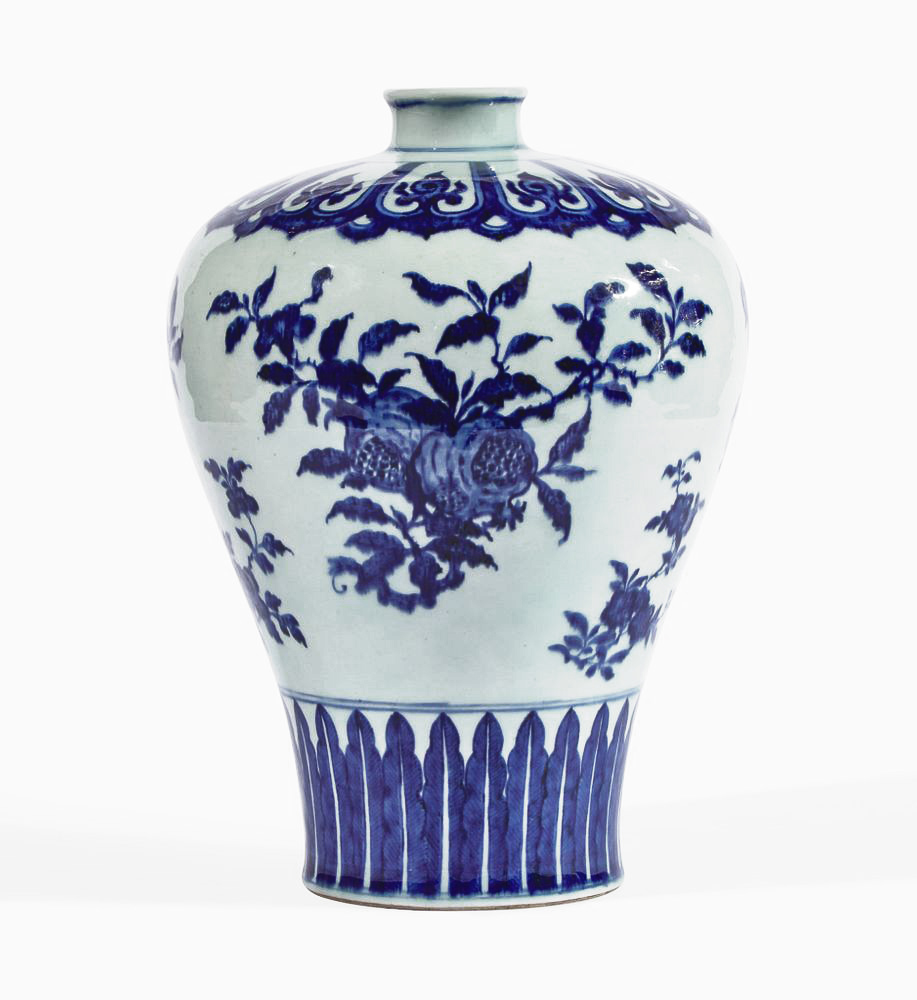
A fine and rare large Chinese blue and white porcelain Ming-style meiping vase 明式青花三多瑞果纹梅瓶 18th century 十八世纪

A fine and rare large Chinese blue and white porcelain Ming-style meiping vase 明式青花三多瑞果纹梅瓶 18th century 十八世纪

A fine and rare large Chinese blue and white porcelain Ming-style meiping vase 明式青花三多瑞果纹梅瓶 18th century 十八世纪:

***PLEASE NOTE, THIS IS A PREMIUM LOT. A DEPOSIT IS REQUIRED TO PARTICIPATE IN BIDDING ON THIS LOT. PLEASE CONTACT CLIENT SERVICES FOR FURTHER DETAILS.****

请注意,本件为高价拍品,需缴付押金方可竞投。请联系客服以获取更多信息。*

Finely potted, the tapering body with swelling shoulder and slight waisted neck, boldly painted with three fruiting and floral sprays arranged in two registers, with peach, pomegranate and lychees on the upper register, chrysanthemum, prunus, and peony floral sprays on the lower register; the foot is encircled by overlapping stiff leaves and the shoulder with a band of stylized lotus petal lappets enclosing flamelike scrolls, the lip and neck with fine blue lines, all under a transparent glossy glaze pooling to a pale blue tint.

(H: 13 in.)

Qty: (1)

Property from a private collection, Bucks County, Pennsylvania, acquired in Philadelphia.

Footnote:
The inspiration for this shape and decoration derives from examples produced during the Yongle reign of the Ming Dynasty (1402 – 1424), such as the example illustrated in T. Misugi, “Chinese Porcelain Collections in the Near East, Topkapi and Ardebil, Volume Two, THE TOPKAPI PALACE MUSEUM”, Hong Kong, 1981, p.105, T.40; and two other examples illustrated in Misugi, Volume Three, THE ARDEBIL SHRINE COLLECTION”, Hong Kong, 1981, p.148, A.69 – A.71. See also the Yongle period meiping sold at Christie’s Hong Kong, November 27, 2006, lot 1518. The present vase has a very similar boldly-executed shoulder lappet-border to the Yongle examples, showing how inspired the artisans were, following the Yongle prototypes.

Ming style meipings were particularly popular in the Qing dynasty, notably during the Yongzheng reign(1722-1735) and the Qianlong reign (1735-1796), and were often developed into a form with more greatly swelling shoulder than the Ming prototypes, and also with a number of variations on the decorative motifs. An example with taller and flatter shoulder, with upper floral register and lower fruit register, Qianlong seal mark and period, was sold at Christie’s, Hong Kong, November 30, 2010, Lot 2970; Another similarly-decorated example was sold at Christie’s Hong Kong, November 29, 2020, lot 3067. For un unmarked example, slightly smaller than the present meiping, with more stylized lappets to the shoulder and bold fruiting sprays, see the meiping sold at Sotheby’s, Paris, December 10, 2019, lot 90.

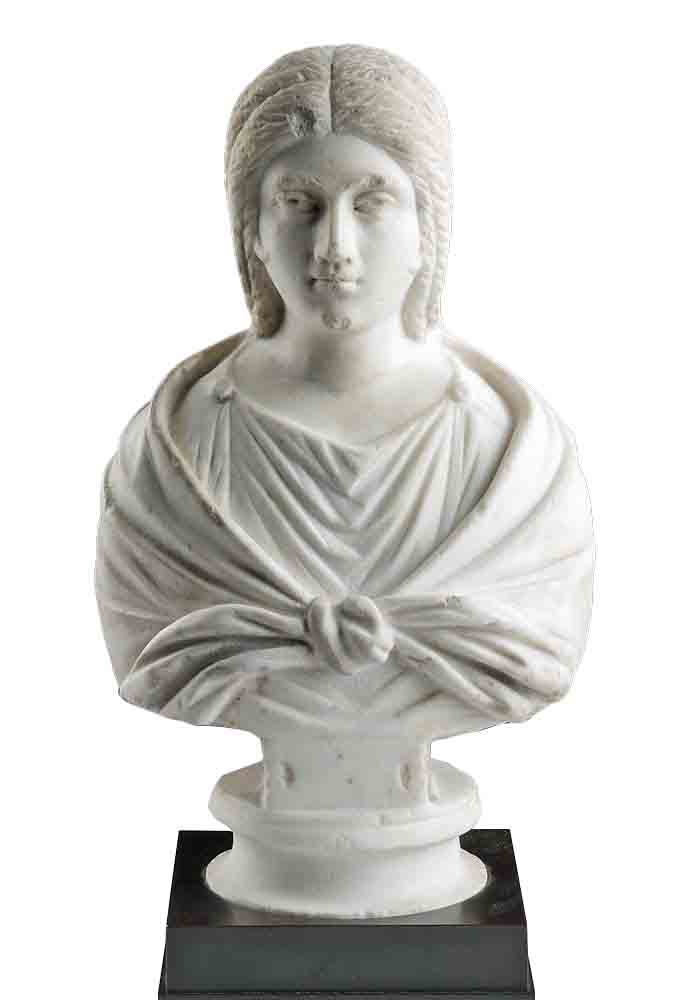
Important Roman Antonine Marble Bust of a Woman

Important Roman Antonine Marble Bust of a Woman

Important Roman Antonine Marble Bust of a Woman:

Roman, Imperial Period, Antonine, ca. mid to late 2nd century CE. A beautiful bust of a woman with her hair parted at the center as was popular during the Antonine period. The marble itself is very pale in hue, with limited grey bands through it. Her face is serene, with large eyes drilled to have deep pupils, a delicate nose, and a small mouth, slightly turned up at the corners. Her hair is carved to be in twisted, thick strips that flow from a deep central part, with two small curves of hair at her ears that rest against her cheeks. The rest of her hair is wrapped up in a loose bun at the back of her head. She wears a peplos, a tunic worn by women, that is fastened at both shoulders with small round brooches. Tied in a loose knot at her chest is a himation which is also draped around her shoulders. Size: 6.7″ W x 12.6″ H (17 cm x 32 cm); 13.9″ H (35.3 cm) on included custom stand.

Below this, the sculpture swoops inward to a narrow, squared-off plinth atop a round pedestal foot. The front of the plinth may have once had an inscription attached, perhaps in bronze, as there are two incised grooves on its front face. A beautifully sculpted, lifelike memorial!

This piece has been searched against the Art Loss Register database and has been cleared. The Art Loss Register maintains the world’s largest database of stolen art, collectibles, and antiques.

Provenance: East Coast collection, New York Gallery, New York City, New York, USA, acquired 2011; ex-Gorny & Mosch, Munich, Germany, sale 198, June 29, 2011, lot 14

All items legal to buy/sell under U.S. Statute covering cultural patrimony Code 2600, CHAPTER 14, and are guaranteed to be as described or your money back.

A Certificate of Authenticity will accompany all winning bids.

PLEASE NOTE: Due to recent increases of shipments being seized by Australian & German customs (even for items with pre-UNESCO provenance), we will no longer ship most antiquities and ancient Chinese art to Australia & Germany. For categories of items that are acceptable to ship to Australia or Germany, please contact us directly or work with your local customs brokerage firm.

Display stands not described as included/custom in the item description are for photography purposes only and will not be included with the item upon shipping.

#146829
Condition
Repaired at back of head and neck/upper back from approximately three pieces. Nose may have been repaired but it is very difficult to tell. Light deposits on surface and a few small chips, nicks, and scratches commensurate with age. With beautiful preservation of detail.

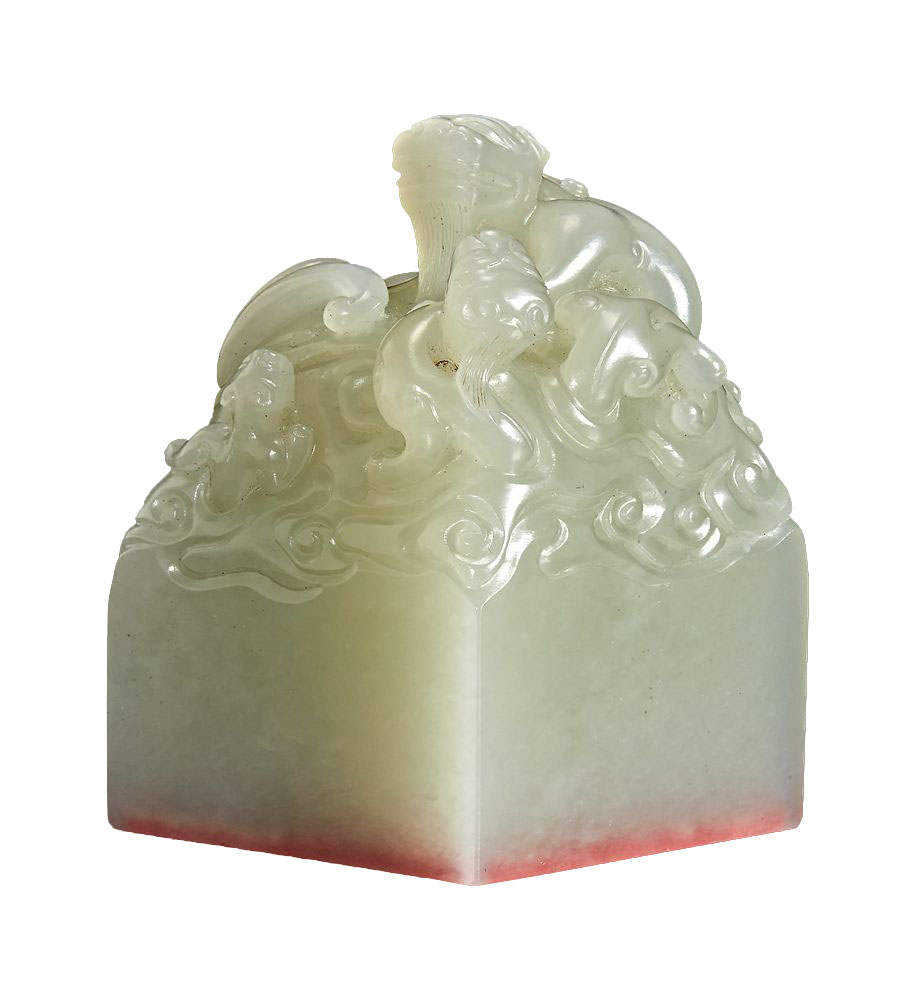
An important Imperial pale celadon-white jade “Taishang Huangdi zhi bao” seal 珍罕乾隆“太上皇帝之宝“玉玺 Circa 约 1795

An important Imperial pale celadon-white jade "Taishang Huangdi zhi bao" seal 珍罕乾隆“太上皇帝之宝“玉玺 Circa 约 1795

An important Imperial pale celadon-white jade “Taishang Huangdi zhi bao” seal 珍罕乾隆“太上皇帝之宝“玉玺 Circa 约 1795:

***PLEASE NOTE, THIS IS A PREMIUM LOT. A DEPOSIT IS REQUIRED TO PARTICIPATE IN BIDDING ON THIS LOT. PLEASE CONTACT CLIENT SERVICES FOR FURTHER DETAILS.***
***请注意,本件为高价拍品,需缴付押金方可竞投。请联系客服以获取更多信息。*

Of square section, the upper face finely carved with three sinuous qilong, the largest qilong above and facing the two smaller as if in conversation, all elegantly entwined among cloud scrolls, the seal face carved in high relief with six characters in seal script: “Tai Shang Huang Di Zhi Bao”, the stone of a very luminous and even pale celadon-white tone, with a very fine polish.

(H: 2 1/2, W: 1 13/16, D: 1 13/16 in.)

Qty: (1)

Private collection
Thence by descent

Footnote:
In 1772, the Qianlong Emperor of China announced he had made a vow to voluntarily abdicate the throne to his heir in 1795 if he was blessed with a reign of 60 years. Remarkably, he reached this milestone, fulfilled his vow and announced that he would designate his fifteenth son, prince Jia, as his successor, and the following year would be the first of the new Emperor’s reign.

After his retirement, the “Emperor Emeritus”, commissioned approximately 20 “Taishang Huangdi” seals. These seals were executed in a variety of sizes, forms, and materials. Freeman’s is honored to present a jade seal from this select group, consigned by descendants of the original collector.

A larger white jade seal from this group, sold at Christie’s Hong Kong, November 26, 2007, lot 1861, was accompanied by a lengthy essay by Guo Fuxiang, Associate Researcher, Department of Palace History, Palace Museum, Beijing, discussing the seals commissioned by the Qianlong Emperor to reflect his new title of “Taishang Huangdi”, and this title’s wider context in Chinese history. Guo discusses the origins of “Taishang Huang”, loosely translated as “…the noblest man in the world who is more virtuous than the Emperor”. Guo further notes this title was conferred posthumously by the first Emperor of unified China, Qin Shihuangdi, on his father as a mark of filial respect. The title was also conferred on the father of Liu Bang, first Emperor of the Han dynasty. The Qianlong emperor was the only ruler of the Qing dynasty to bear this title.

An impression of the present seal is recorded in Gugong Bowuyuan cang, “Qing dai di hou xi yinpu” (“The Seals of the Qing Dynasty Emperors and Empresses”), vol. 6, Qianlong II, p. 178. In addition, the fine, luminous pale celadon-white jade accords perfectly with the material known to have been utilized for that seal: “qingbai yu” or pale greenish-white jade. The carving and polish are exceedingly fine, as would be expected of a work commissioned by the Qianlong emperor, a connoisseur of jades. It is an exemplary example of Chinese jade carving from this period.

The upper face is gracefully sculpted with a sinuous qilong and two smaller qilong among scrolling waves or clouds, likely referring to the Chinese saying “Canlong jiaozi”, which may be translated as “The Eastern [blue] dragon teaching his son[s]”, implying not only the importance of instructing the young, but also bringing up one’s descendants to succeed in court or higher office. This expression would certainly hold relevance for a powerful retired Emperor benevolently extending influence over his son, a reigning Emperor. For similar Imperial seals portraying sinuous qilong among scrolled waves or clouds, compare the three examples sold at Sotheby’s, Hong Kong: a seal with the face carved for the Yongzheng Emperor, sold April 7, 2015, lot 102; a seal for the Qianlong Emperor, also sold April, 2015, lot 3647; and another seal for the Qianlong Emperor, sold October 9, 2012, lot 3006.

乾隆三十七年暨公元1772年,乾隆皇帝昭告天下将于乾隆六十年暨公元1795年退位,以彰其功。及是时,乾隆皇帝不失允诺,让位于十五皇子永琰暨嘉庆皇帝,并于次年变更年号。
退位之后,乾隆太上皇命匠人御制“太上皇帝之宝”印文玉玺约二十方,大小,形制,题材,用料,亦各有千秋。是次拍卖,福礼蔓拍卖行荣耀呈现由故人旧藏家族传承的其中一方遗珍。此组玺印中的一例体型较大白玉玉玺于2007年11月26日经香港佳士得售出,并撰有北京故宫历史研究员郭福祥的长篇文章。文章中,郭福祥专登研讨分析了此类玉玺反映了乾隆皇帝的新称谓“太上皇帝”与中国史观的深远意义。在文章中他提到了“太上皇帝”一词的出处,此处翻译为”比帝王德行更高者”,更探讨了此称谓的出处来自首位一统中国的秦始皇帝,为其父亲初创此尊称,以表孝悌,后世汉高祖刘邦亦为其父亲冠以此称谓。纵览清朝,乾隆皇帝乃唯一一位拥有此称谓的皇帝。
是次拍卖的玉玺印面收录于故宫博物院藏所出版的“清代帝后玺印谱”第六册,乾隆卷二,第178页;而该印玺温润晶莹的青白色玉料材质,亦与传世记录中雕刻此枚玉玺所用的“青白玉”别无二致。仔细观察其雕刻工艺鬼斧神工,打磨抛光细致入微,亦符合乾隆皇帝作为第一玉器鉴赏大家的宫廷御用定制规格。应为清乾隆晚期宫廷玉器代表作无疑。是枚玉玺正上方雕刻一盘踞大螭龙,佐以两只小螭龙隐现于波涛云雾之中。该风格应引申为中国传统题材苍龙教子,意在突显教诲后世的重要性,并大有望子成龙之深切期盼。不难推测,是枚玉玺的题材在彰显了乾隆皇帝至高无上的权威之余,更寄托了他对于继任者嘉庆皇帝的殷切希望。一枚相似题材为螭龙云海的雍正玉玺于2015年4月7日经香港苏富比售出拍品编号102;另有两例乾隆玉玺分别售于2015年4月,拍品编号2647,和2012年10月9日,拍品编号3006。