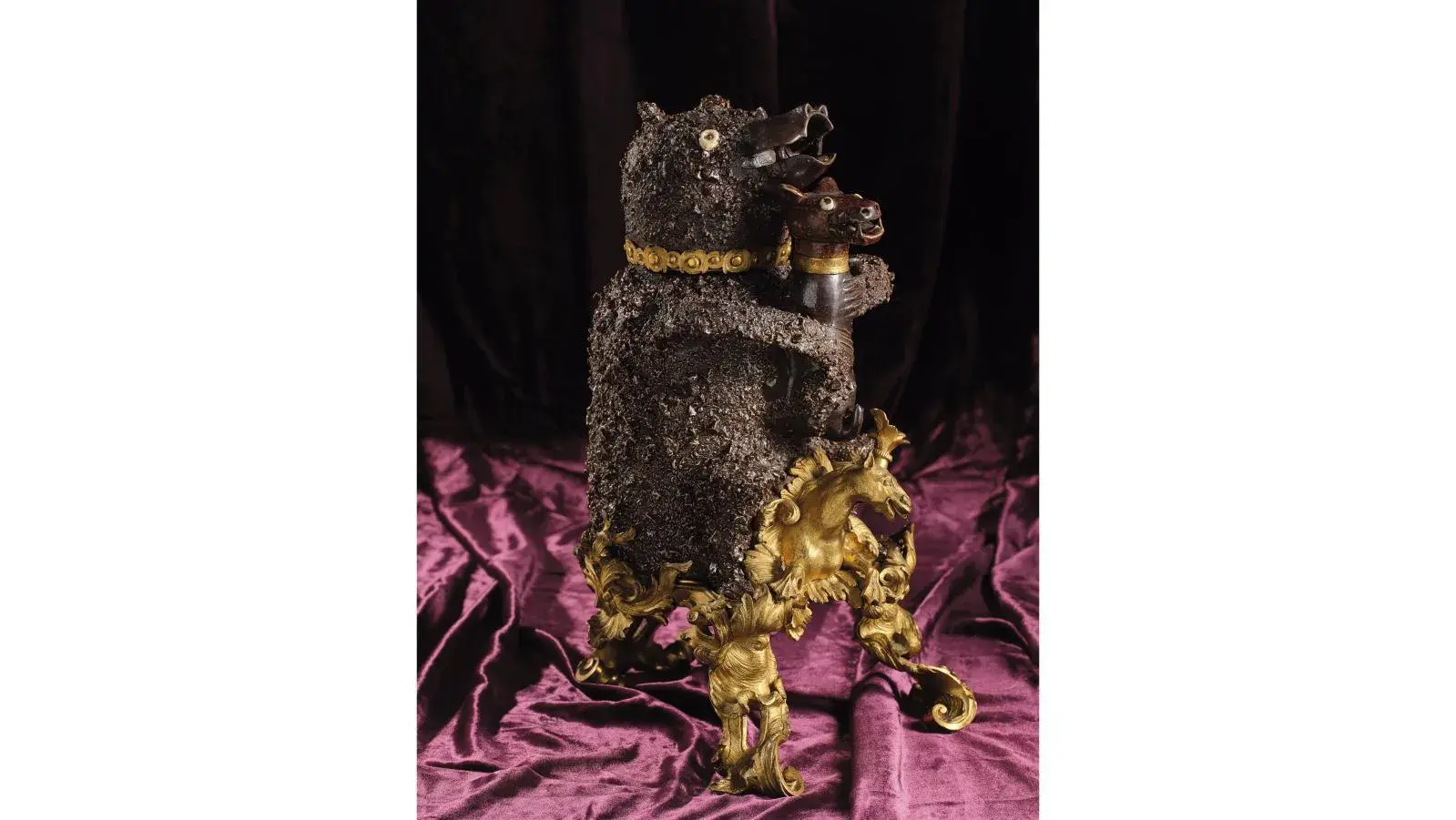
Originating in the folk art traditions of Nottingham, a bear-shaped fountain acquired its letters of nobility as a precious fountain.
England, Nottingham, 18th century, mounting: Germany or France, c 1745. Bear-baiting table fountain, stoneware reservoir with brown salt glaze in the shape of a bear in fighting posture, head forming a removable cover, chased and gilded bronze mount, Rocaille feet, tap in the shape of a sea horse, ceramic, 48 x 21.5 x 24.5 cm/18.89 x 8.46 x 9.46 in. Result: €214,140
The object had all the makings of being the most attractive at this auction dedicated to curiosities and the Late Middle Ages. And the bidders fought long and hard before one of them managed to win the bear for the substantial sum of €214,140, more than twenty times the starting bid. Its story begins in the kilns of Nottingham, where stoneware was fired to serve as wine or beer jugs. These vessels drew inspiration from the terrible sport of bear-baiting, which so fascinated Tudor England, featuring a chained bear holding a dog, which it would essentially hug to death — at the start the animal was goaded with burning coals to make it even more angry. Grégoire de Toury, a specialist at the auction house, provided these details, pointing out that the Victoria and Albert Museum has a copy extremely close to this one. Here, the bear’s head is removable and takes the form of a goblet. Its originality is enhanced by a chased and gilded bronze frame, perfectly adapted to the animal’s morphology and unmistakably the result of a special commission, which could only have come from a powerful man. It was made either in France or Germany around 1745, transforming an ordinary vessel into a precious table ‘fountain’ designed to impress guests. There was nothing around to compete with this fighting bear, with everyone keeping a respectable distance from its claws. Nevertheless, if the enamelled gold pendant probably made in Nuremberg in the second half of the 16th century did not sell, there was nothing to be ashamed of. An oratory for private devotion in carved and painted wood, a Spanish work from the late 16th century (154.2 x 83.5 x 42 cm/60.70 x 32.87 x 16.53 in), and a zulaque chest — a particular technique featuring inlay and sgraffito in which the traces of the incisions of the decorative motifs are filled with zulaque, a putty or paste of black color — in marquetry of exotic woods (71.2 x 106 x 61 cm/28.03 x 41.73 x 24.01 in), made in the Oaxaca region of Mexico in the early 17th century, ended the game with an equal score of €13,000.
This 738 lot, finely curated sale produced strong results across all categories, including jewelry, fine and decorative arts, antiques, and furnishings.
Windsor, CT, January 9th, 2025 – Nadeau’s Auction Gallery, Connecticut’s largest and fastest growing auction house, is excited to announce the results of their January 1st, 2025, Annual New Year’s Day Auction. This signature sale had a 96% sell through rate and generated spirited bidding from start to finish. Prices noted include the company’s buyer’s premium, which varies across selling platforms. Realized prices for all lots may be found on NadeausAuction.com.
Museum quality paintings took several of the top slots at this important sale.
Lot #425, Robert (Henry Cozad) Henri’s (American 1865-1929) Au Champ de Mars, Paris, was estimated at $5,000-10,000 and realized $29,280. This 4″ x 6″ oil on board work was signed by the artist on its lower left and featured a distant view of an elegantly dressed woman strolling through the Champ de Mars – a large, public park in central Paris. That space was named after the Campus Martius in Rome, which was dedicated to the god Mars. This painting was sold at Christie’s in New York in 1991 for $12,100 and was exhibited previously at the Parrish Art Museum, Skidmore College, the Albany Institute of History and Art, the Everson Museum of Art, the Davis Galleries, The New Britain Museum of Art, the Williams College Museum of Art, and others. It was from the Estate of William J. Levy of Park Ave., NY.
Lot #496, Charles Vezin’s (American 1858-1942) Gray Twilight, was estimated at $500-1,000 and sold for a whopping $17,500. This oil on board painting from 1937 depicted a New York City skyscape scene. It was elegantly housed in a gilt frame, measured 8″ x 10″, and was signed by the artist on the lower left, with its title and date on its verso. Vezin, who came to painting midlife, was best known for his impressionist take on New York’s skyline and harbors. This work was exhibited in 1993 at The William Benton Museum of Art of Storrs, CT and was consigned from a fine estate from Old Lyme, CT.
Sculptures with noteworthy provenance were another key category in this top-tier event.
Lot #402, Carlo Sarrabezolles’ (French 1888-1971) Le Genie de la Mer, was estimated at $6,000-12,000 and traded hands at $38,000. This 1936 patinated bronze of the Greek figure Triton was 50″ tall and mounted on a 40″ tall wooden pedestal. It was signed and dated by the artist on the base, and was in the form of a naked figure, arms stretched towards the sky, with three diving dolphins at his feet. Triton was a demigod and merman who served as the messenger for the sea god Poseidon. This design was the model for a larger version meant for the Ocean Liner Normandie; the larger version is currently on display outside CMA-CGM’s headquarters in Marseille, France. This smaller Le Genie de la Mer was previously sold by New York City design firm Ronald Bricke and Associates, Inc. in 1991 for $42,452.
This auction featured exquisite furnishings, rugs, and decorative items that caught the eye – and interest – of collectors all over the world.
Lot #678, a vintage Louis Vuitton travel trunk, was estimated at $5,000-8,000 and made $18,750. It was labeled Louis Vuitton 154057 and detailed with a full tray, a small upper tray, and brass handles. The trunk measured 22-1/2″ x 20″ x 31-1/2″, with a 31-1/2″ x 20″ top. It was from a fine New York City estate.
Lot #711, a Ziegler Sultanabad palace size Oriental carpet, was estimated at $15,000-25,000 and sold for $46,000. This 19th century, 16′ x 20′ masterpiece was made in Sultanabad, a small town in NW Persia, and featured a heavy pale tan ground and a blue, orange, and red floral pattern overall. The Ziegler Company, based in Manchester, England at the time, set up shop in Sultanabad to market and distribute these handsome carpets that were designed with western tastes in mind.
This sale came full circle with spectacular jewelry, timepieces, silver, and other fine antiques.
Lot #69, a Graff brand 18K yellow gold and diamond necklace, was estimated at $18,000-30,000 and realized $35,000. It measured 16″ long with a total weight of 33.7 grams. This sparkler featured 111 Marquise cut F-G color VS quality diamonds of approximately 35.5 total carats. Graff is one of the world’s most premier jewelers and is known for its breathtaking diamonds and unique business process which controls all aspects of operations from mining to the final product.
Lot #75, an important diamond engagement ring, was estimated at $30,000-50,000 and realized $51,850. It featured a 7.15 carat marquise diamond, graded color L and VS1, and was flanked by tapered baguettes in a platinum setting.
According to Eddie Nadeau, President of Nadeau’s Auction Gallery, “We are delighted with the results from our 2025 New Year’s Day sale. We spend the entire year collecting our best offerings for this signature auction, and clearly all of these merchandising efforts have paid off – again! Although there were many unanticipated highlights, perhaps the most exciting for me was Vezin’s Gray Twilight, which realized nearly 40 times its low estimate! On behalf of the entire Nadeau family, I would like to express our gratitude to all of our consignors and customers who made this sale so successful. Please mark your calendars for our upcoming Mid-Century Modern sale on Saturday February 1st that will include contemporary art and sculptures. May 2025 be a year of fantastic finds for everyone!”
About Nadeau’s Auction Gallery Inc.:
Nadeau’s Auction Gallery is a full-service auction house providing a complete range of estate offerings, nonprofit deaccession management, and fine art and personal property appraisals. The company presents about a dozen premier sales annually, with a focus on art, furniture, accessories, and important antiques. A second-generation family company, Nadeau’s enjoys a well-deserved reputation for outstanding merchandise, top-tier personalized service, and helping sellers realize the maximum value for their collections. The company has been in business since 1985 – with the family starting in the antique business in 1945 – and today is one of the largest and fastest growing auction houses in New England. Its state-of-the-art auction facility is conveniently located right off Route 91 and easily accessible from all points in the mid-Atlantic and northeast.
Nadeau’s Auction Gallery is located at 25 Meadow Road, Windsor, CT 06095 and can be reached by phone at 860-246-2444, fax at 860-524-8735, or email at [email protected]. For more information on this sale and Nadeau’s Auction Gallery, please see www.nadeausauction.com.
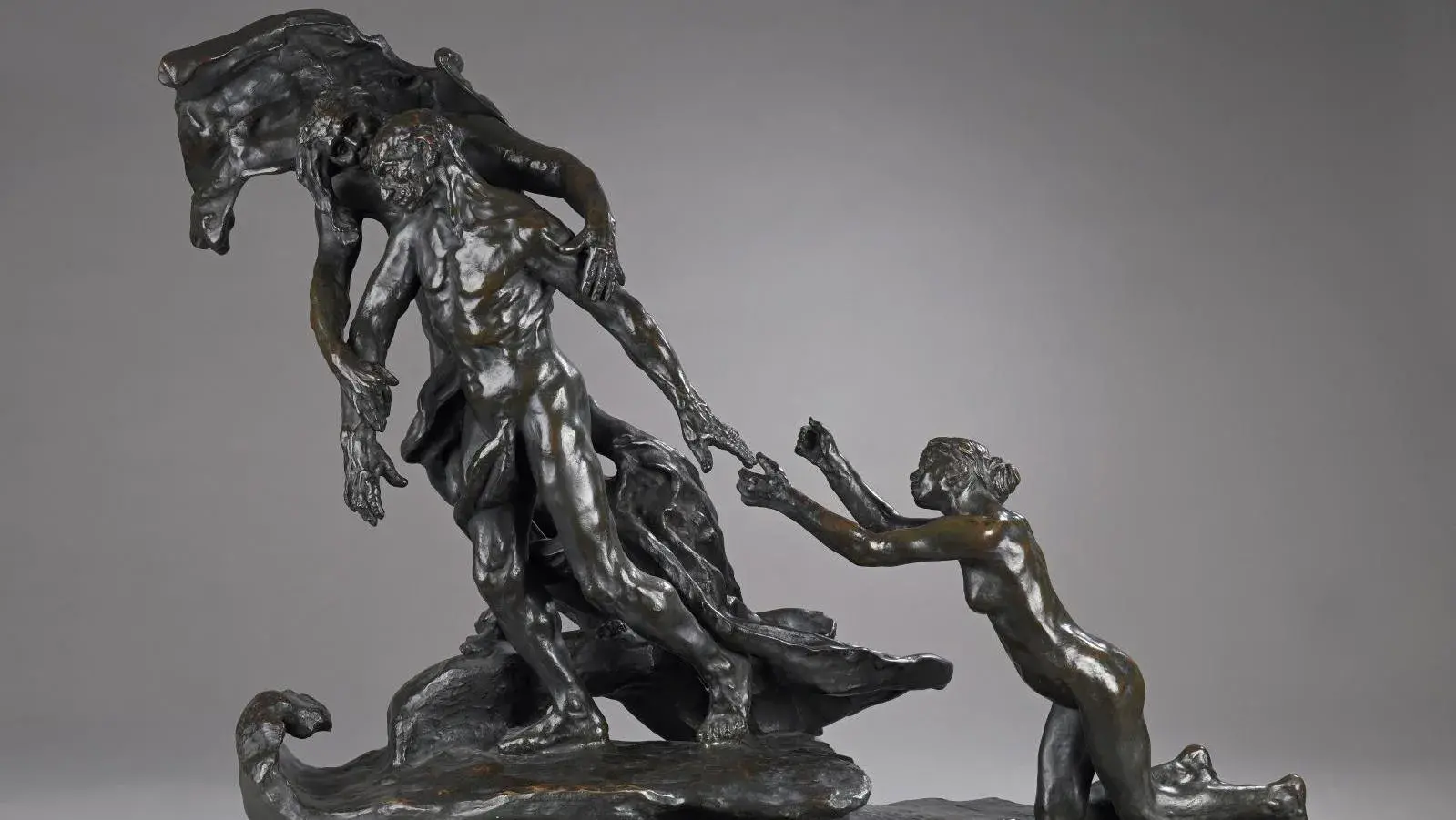
A major work by Camille Claudel, L’Âge mûr et la Jeunesse (The Age of Maturity and Youth), had a long and checkered history. The recently rediscovered, No. 1 in Blot’s cast edition sheds light on the various stages.
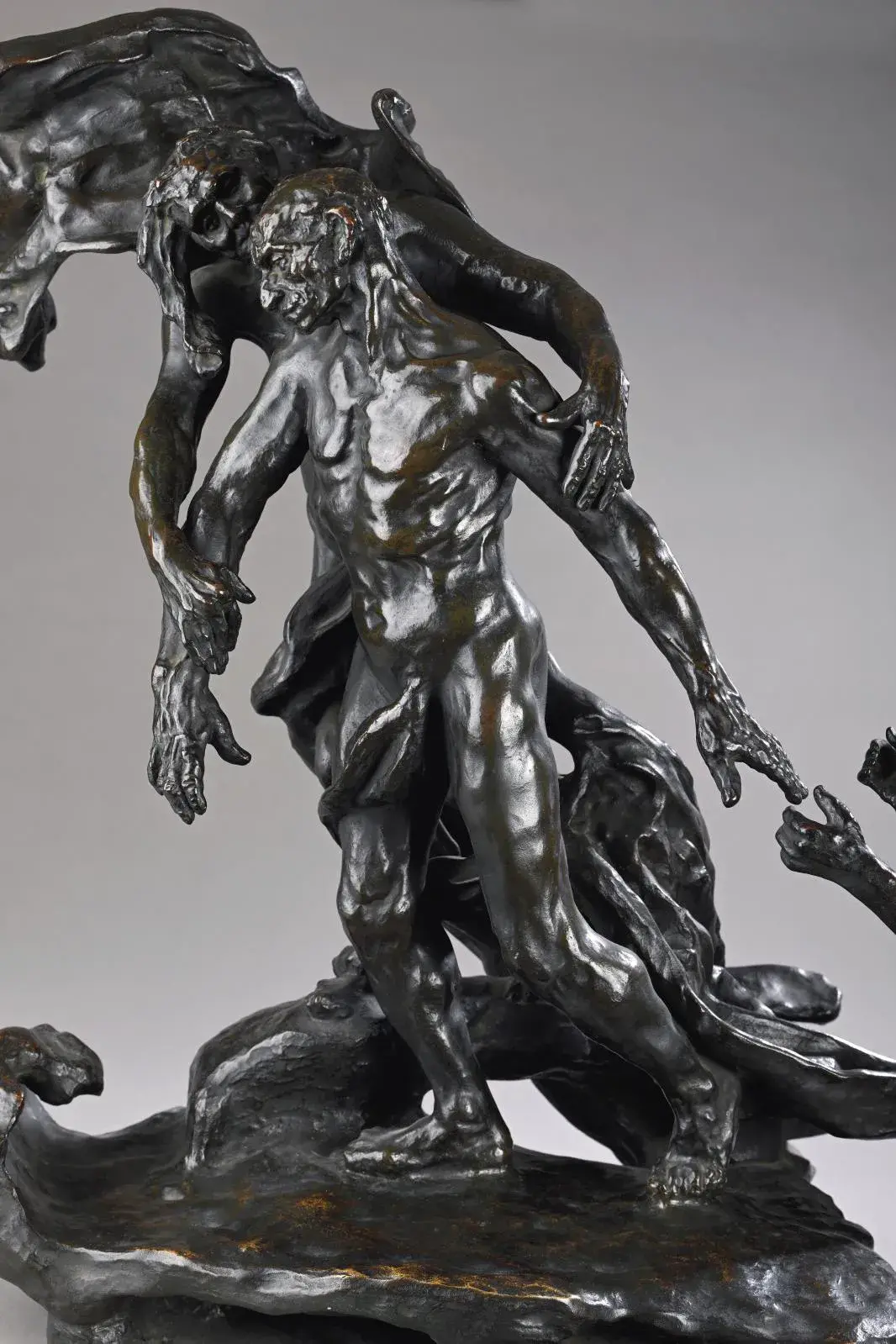
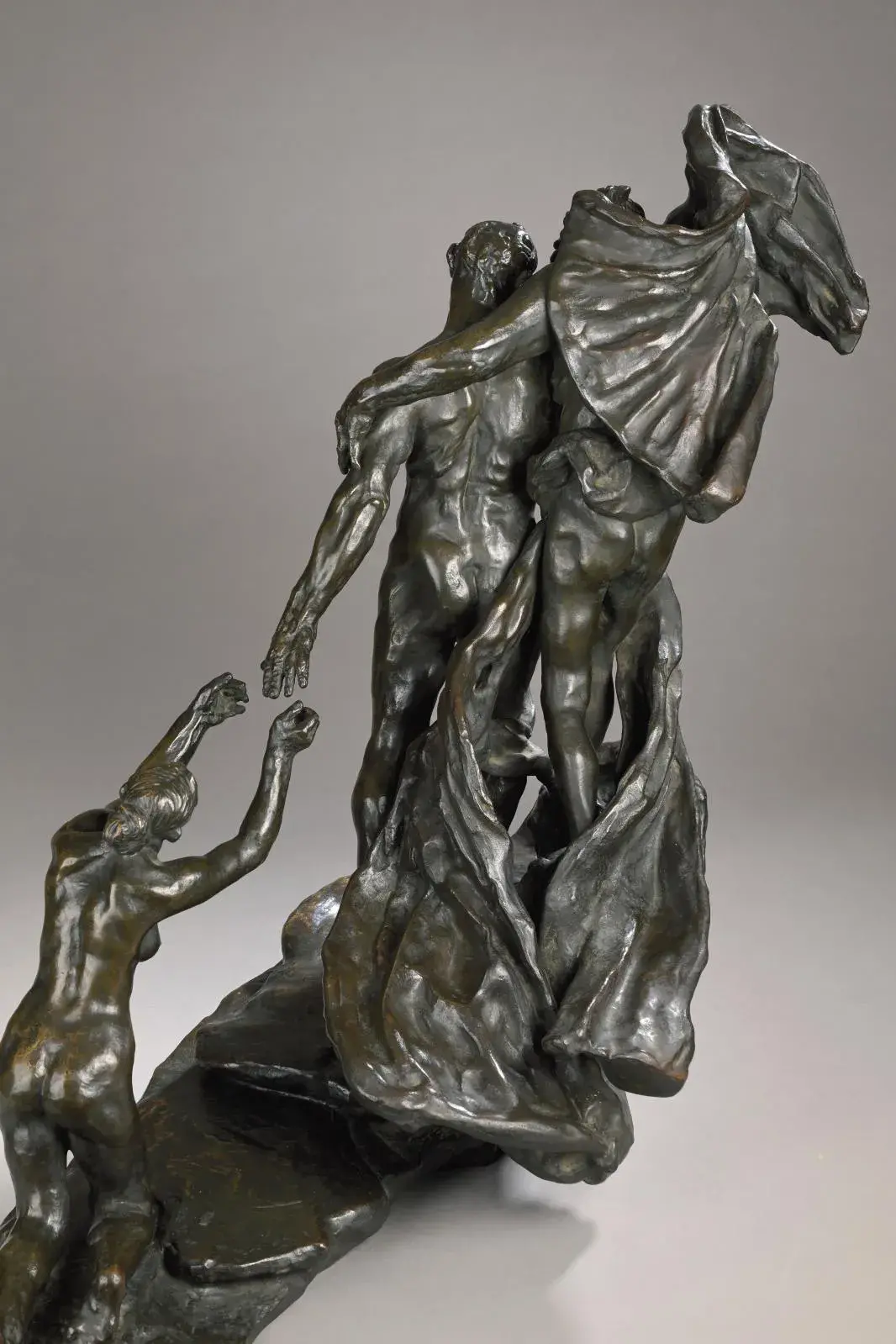
Camille Claudel (1864-1943), L’Âge mûr aka L’Âge mûr et la Jeunesse, 1898, bronze with richly shaded brown patina, sand cast by Eugène Blot in 1907, the number “1” at the feet of the imploring woman, 61.5 x 85 x 37.5 cm/24 x 35.5 x 14.6 in. Estimate: €1.5/2 M
Critics of the time unanimously acclaimed Camille Claudel‘s L’Âge mûr as her masterpiece. In 1907, the art critic Charles Morice wrote in the Mercure de France: “Camille Claudel’s talent is one of both the glories and scandals of our country. That this woman is one of the great artistic personalities of our time, no one, I repeat, no qualified person disputes…We know all this, and yet we do nothing to facilitate her work, and, among so many, so strangely allocated commissions, not one is reserved for the admirable creator of L’Âge mûr et la Jeunesse.” The paradox of an artist celebrated by critics, officially recognized but receiving little financial support, explains why this group is so rare. Various institutions possess plaster casts and a few bronze editions, through donations or late acquisitions, but not all copies in private hands have been located, and this reappearance is a red-letter day for the market. The work remained in the family of the first buyer through a direct inheritance. It had lain dormant under a sheet in a Parisian apartment that had been closed for some 15 years, and which housed a whole collection of sculptures, including animal subjects by Antoine-Louis Barye and a Penelope by Bourde le. The auctioneer was immediately struck by the signature of the founder and art dealer Eugène Blot on the sculpture. Matthieu Semont had a particularly vivid memory of L’Implorante from his formative years in a Saint-Germain-en-Laye law firm… and the pieces of the puzzle came together. The figure of this young woman trying to hold on to an older man who is already abandoning her has of course been interpreted as autobiographical: the supplicant can be seen as an alter ego of the sculptor, who realized as she approached her thirties that Rodin would never leave Rose Beuret for her. The dates are confusing. Claudel sketched the first drawings for her group in the early 1890s in a letter to Léon Gauchez. She was gradually becoming estranged from Rodin at that time, and she finally broke with him and his studio in 1892. Le Chemin de la vie ou La Destinée (The Path of Life or Destiny), one of the first titles envisaged for L’Âge mûr, was also a declaration of independence and an assertion of her style. This can be felt as well through its allegorical aspect, with the three ages of life and the shadow of death, the older figure that carries the man into maturity.
The Stages of the Sculpture
Camille’s correspondence with her brother describes the various stages in the creation of this work: in 1893, Paul learned that she was thinking of including a leaning tree, to accentuate the diagonal and the interpretation of destiny. At that time, all the characters were still joined: Youth sought to hold in her arms Mature Age, which gradually replaced the tree with his own arms, evoking the forks in road of life. The process took a long time, made even longer by the artist’s financial difficulties. In 1894, she presented at the Salon a plaster cast of the female figure on the right, entitled Le Dieu envolé (The Vanished God), now lost. The pose varies slightly, as the movement of the arms is not fixed, but the kneeling, supplicating position is recognizable. She worked on a second version of this figure in patinated plaster (Musée Camille Claudel), where the arms are outstretched in supplication and the wild hair recalls her Clotho: this is the study for L’Implorante (Imploring Woman). In 1895, she produced the first plaster model of the entire group. Rodin, seeking to help her, recommended her to the Secretary of State for Fine Arts. The reports from Armand Silvestre, who discovered the sculpture, were decidedly positive, and the official commission for a plaster version of the work was signed for 2,500 francs. It took another three years for the sculptor to complete her work. Government reports describe the creation as it progressed: the widening space between the young woman and the man, their hands separating, and the appearance of streaming draperies, evoking the movement in another of her sculptures, La Valse. In 1898, the State approved the work, and Armand Silvestre gave Claudel hope that it would be executed in bronze: “As it stands, the group is admirable and of modern workmanship. It deserves to be executed in bronze, as the artist has requested, and I firmly approve her wish.” But alas, these promises were endlessly deferred. Claudel had to ask her father to intervene for the payment, which did not arrive until 1899, and although an order was drawn up the same year, the price and date were left blank. Later, instructions for postponement, then cancellation circulated within the Ministry.
L’Âge Mûr: “A Living Drama”
The work was also presented to the public in 1899 at the Salon des Beaux-Arts, where L’Âge mûr was noted for its originality. The critic Charles Fremine praised “the living drama, truly suffered despite its fantasy aspect”, and “the moving execution faithfully expressing the feeling that inspired it.” The cancellation of the commission intensified the artist’s paranoia. She saw it as Rodin’s doing, as she wrote to Léon Gauchez, suspecting that “the Weasel” had also made sure the work would not be selected for the 1900 Universal Exhibition. This was not the first time that the State had withdrawn its patronage, as witness the many tribulations of Claudel’s Sakuntala, and it was once again the support of private individuals and Eugène Blot that enabled her to transmute all of her expressive power into bronze. It was Louis Tissier, Captain of the Engineers, who first commissioned her to produce the bronze version of L’Implorante, which proved a great success. He then financed the first bronze transcription of the entire group in 1902, under Claudel’s close supervision, with the firm Thiébaut Frères, Fumière et Gavignot. It was this work that the Musée d’Orsay acquired from Captain Tissier’s descendants in 1982, after decades of oblivion.
Blot Enters the Scene
Eugène Blot met Camille Claudel in 1904, shortly after Tissier’s bronze was exhibited at the Salon des Artistes Français. Heir to the Blot et Drouard foundry, and also an art collector and dealer, he actively championed a new generation of artists. He supported the sculptor in her dealings with the authorities, trying to get them to honor their commitments, or at least to resume the project for a transcription of the group, this time in marble. Though the French government said it had no record of the promises it had made to Claudel, Blot was not discouraged and set about editing works by the artist himself. This was the case in 1905 for several sculptures, including L’Abandon (Abandonment), as well as L’Implorante, which he presented in a highly acclaimed solo exhibition. The ambitious dealer planned to produce up to 50 copies, but in the end was unable to break even. When, in 1907, he undertook to edit the entire group in a reduced version, he limited the edition to six, and the artist’s great-niece, Reine-Marie Paris, thinks that only five were actually produced. With his sand casting, he achieved a very precise execution that restored the tension of the bodies. The engraving reflects the modeling extremely accurately and, even from below, the ingenious joining of the group suggests the drama. The patina makes the contrast between the figures even more vibrant: browner for Old Age, and more golden, with hints of red, for Youth. Approved by the sculptor, this casting is as faithful as possible to her intentions. Carvillani’s large-scale cast, now in the Rodin Museum, was commissioned by Philippe Berthelot, a member of the family committee, after Claudel’s internment in 1913, but was not intended by her. Eugène Blot stated in 1936 that he had sold four of his reductions. The Leblanc-Barbedienne company, which took over the rights to the foundryman’s models, did not risk re-editing Claudel’s work as it was reluctant to continue Blot’s work without a written contract between him and the artist, now in an asylum. After her death, no further editions were made, and some copies disappeared. No. 4 is now in the Musée Claudel, and the recently resurfaced No. 1 goes on sale today.
Worth Knowing Sunday February 16, 2025 Orléans. Philocale auction house Cabinet Lacroix-Jeannest The bronze will be exhibited in Paris at 20, rue Drouot on Wednesday February 12 From 11 am to 6 pm Then in Orléans, Friday February 14
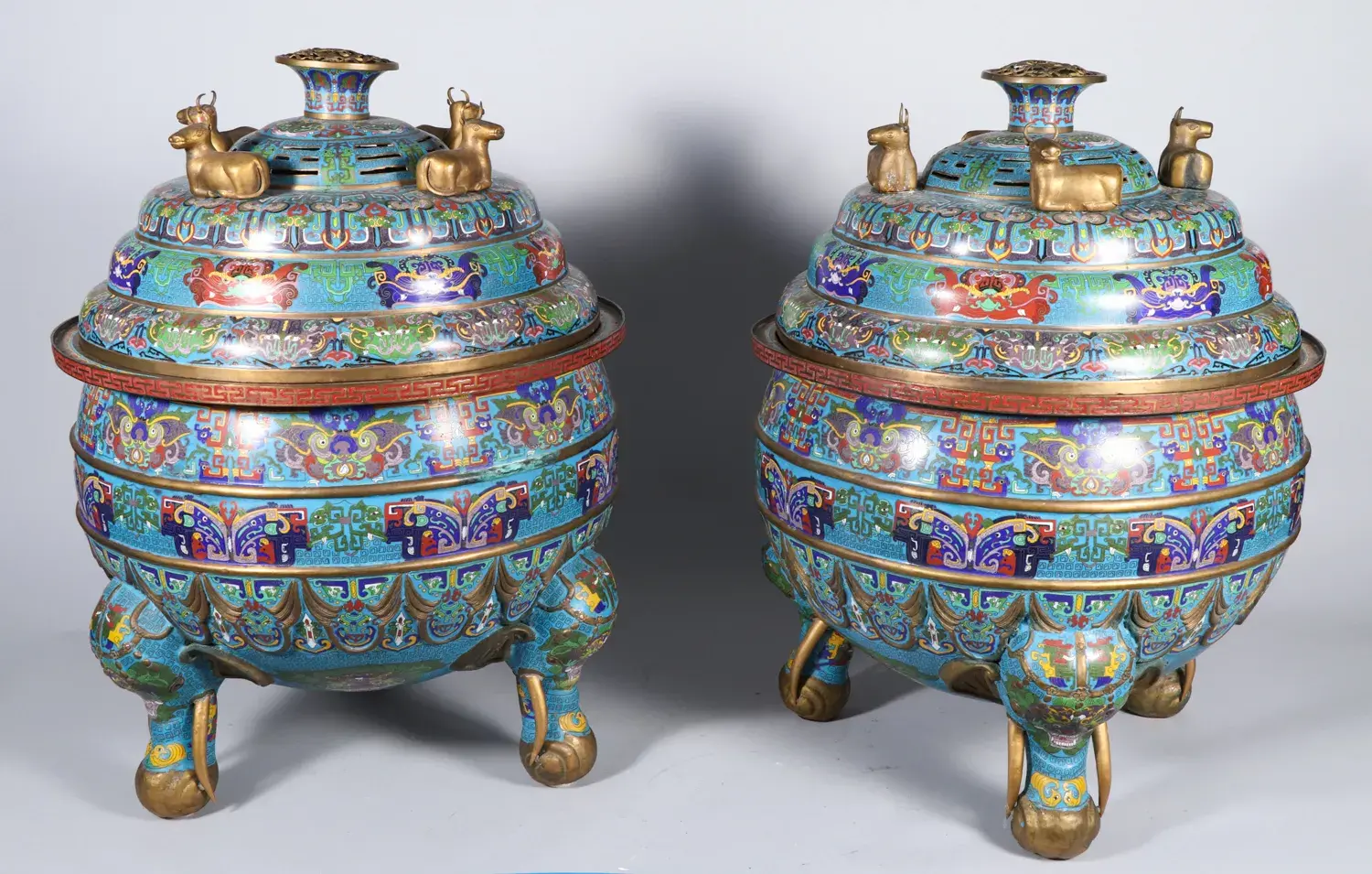
A Large Pair of 20th century Chinese Cloisonné Censers (Estimate: $2,000-3,000)
New Braunfels, TX – Lark Mason Associates is delighted to announce their latest online auction featuring Asian, Native American, and other remarkable works of art from a prominent Oklahoma collector. Now open for bidding through January 14, 2025, on iGavelAuctions.com, this eclectic sale offers a veritable treasure chest of 547 lots at accessible price points.
This captivating collection showcases over 25 intricately woven rugs, an impressive selection of more than 108 Native American silver and turquoise jewelry pieces, belts and beadwork. The offerings extend to European and American art, Americana such as Staffordshire flow-blue historical plates, Chinese export porcelain, silver, and a wide range of Art Deco Rosenthal figures.
Lark Mason, founder of iGavelAuctions and Lark Mason Associates, states, “The incredible variety of works in this collection reflects the curiosity and diligence of a truly passionate collector. It’s a privilege to present this lifetime of discoveries, which embody such sophistication and taste.”
With estimates starting below $3,000 and reserves as low as $25, this auction provides something special for collectors of all interests and budget.
Featured Highlights:
Silver Coral and Leather Concha Belt, Stamped C MTZ Sterling (Estimate: $200-300)
A Large Pair of 20th Century Chinese Cloisonné Censers (Estimate: $2,000-3,000)
A 20th Century Persian Tree of Life Qum Rug, signed(Estimate: $1,500-2,500)
Pair of European Bronze Figural Candelabras, circa 1900 (Estimate: $1,500-2,500)
Four Chinese Pewter and BrassCensers (Estimate: $100-200)
A Pair of Gilt Bronze Ecclesiastical Candlesticks, circa 1910 (Estimate: $200-400)
A 20th Century Bonallen Metal-studded Tooled Leather Saddle (Estimate: $500-800)
A 19th Century French Gilt Bronze Mantle Clock (Estimate: $700-1,000)
Rare, immaculate Star Wars figures share spotlight with ‘Joes,’ Transformers, Teenage Mutant Ninja Turtles and Masters of the Universe figures, most AFA-graded, some highest-graded in global census
Star Wars (1978) – Ben (Obi-wan) Kenobi 12 Back-a Afa 85 Nm+ (Double-telescoping/Sku On Footer, Pop 2/Highest Graded Example).
YORK, Pa. – Colorado custom homebuilder Jeff Jacob’s multimillion-dollar collection of Star Wars figures, GI Joes and rarities from other popular toy lines is expected to commandeer The Force when it makes its auction debut on January 22 at Hake’s. The initial offering of 435 lots from Jacob’s 33-year collection will introduce a multi-part series of online sales slated for 2025. Bidding on Part I will open on January 6, the same day the fully-illustrated catalog publishes on Hake’s website. All lots will close on January 22.
Acknowledged as one of the world’s largest and finest collections of its type, Jacob’s pop-culture trove includes more than 3,000 pieces that traverse the action-figure universe, starting with 1970s Star Wars characters and progressing into the 1980s with premier GI Joes, Transformers, Teenage Mutant Ninja Turtles, Masters of the Universe, and other productions. Nearly all figures, playsets, vehicles and other items in the collection are AFA-graded and reflect Jacob’s decades-long mission to upgrade his holdings until the finest available examples had been acquired. Most pieces are high grade, and some are the highest-graded specimens of their type, per the AFA Population Report. In this opening sale of the series, 47 pieces are identified as being in the single highest grade known, with none graded higher.
“Jeff’s collection also adds a whole new meaning to the term ‘fresh to the market.’ Many of his toys have never appeared at any auction before. They’ve always been privately owned,” said Alex Winter, president of Hake’s Auctions. “In addition to extremely rare action figures, Jeff’s collection includes playsets, vehicles and other highly desirable Star Wars kits and collectibles, as well as some of the most elusive GI Joe, Transformers, Teenage Mutant Ninja Turtles and Masters of the Universe productions.” Winter added that the Jacob collection stands apart because of its complete or near-complete runs, extraordinarily rare variations, and items that are either sole survivors or one of few known to exist.
Based on social-media chatter and enquiries from potential bidders, a likely contender for top lot is a Star Wars (1978) Double-Telescoping Ben (Obi-Wan) Kenobi 12 Back-A action figure, AFA-graded 85 NM+, with a SKU on the footer. Only two carded Double-Telescoping specimens of this figure are known to exist in such a high grade, and of those two, the one offered by Hake’s will make history as the first to appear at auction. To date, Hake’s has sold three Double-Telescoping Ben Kenobi figures, although of different grades to the one in the January 22 auction. One of them sold in November 2022 for $79,000. The current record stands at $125,000, and that record may very well be broken by Jeff Jacob’s example, which has a starting bid of $50,000 and an open-ended estimate.
A Star Wars: The Empire Strikes Back (1982) 4-LOM 48 Back-A action figure on its blister card, AFA-graded 60 Y-EX, took Jacob 20 years to acquire. The rarest production figure of all Kenner’s Star Wars toylines, it is notable for being on a 48 Back-A with no pre-figure offer sticker, as opposed to the more-typical type on a 48 Back-C card with an Admiral Ackbar offer. Only four examples of the 48 Back-A type have been graded by AFA, and this one is the first ever to come to Hake’s. Estimate: $20,000-$35,000
There’s great excitement over a boxed Star Wars (1978) Cantina Adventure Set, a toy every collector wants. The set contains bagged action figures of a very hard-to-find blue-version Snaggletooth, Greedo, Hammerhead, and Walrus Man, as well as mailer boxes for the figures, a sealed bag of pegs, a cardboard backdrop, cardboard inserts, in-package catalogs and assembly instructions. The auction example is one of only five known with the AFA grade 85 NM+, according to the AFA Population Report, and no others have been documented in a higher grade. The estimate is $10,000-$20,000.
Rarity is front and center yet again with a Stars Wars (1978) Boba Fett action figure from Kenner’s 12-inch series. It is one of only four examples graded AFA 85 NM+, according to the AFA Population Report, with no others known in a higher grade. Of all 12-inch figures, Boba Fett is the most highly valued and will cross the auction block with a $10,000-$20,000 estimate.
Other than a few collections in Mexico, few can rival Jacob’s assortment of Mexican-made Lili Ledy Star Wars figures on cards with Spanish-language text. “Lili Ledy was one of Jeff’s obsessions, and he managed to acquire some exceptionally rare productions. One of them is a Star Wars: El Regreso Del Jedi/Return Of The Jedi (1983) 3.75-inch Luke Skywalker action figure dressed in Bepsin fatigues. On a 30 Back and AFA-graded 80 NM, it’s one of only three or four known to exist and is the first of its type to appear in one of our sales,” Winter said. It is estimated at $10,000-$20,000.
In a collection as refined as Jacob’s, one would expect to see a coveted Star Wars (1978) Early Bird Mail-Away Kit. Bidders will not be disappointed. The auction includes a beautiful AFA 85 NM+ kit with figures that include a Double-Telescoping Luke Skywalker, Princess Leia, Chewbacca, and R2-D2. The encapsulated case also contains the original white mailer box, vacuform plastic tray, a baggie with plastic pegs for posing figures, mini-catalog advertising the Star Wars Action Figure line and vehicles, and a mail-away offer for the corresponding stand. Only three such kits are known to have received a higher grade than the one to be auctioned. Estimate: $20,000-$35,000
A Star Wars (1978) department store catalog multi-pack mailers display, graded AFA Uncirculated U85NM+, is absolutely one of a kind. It includes four different multi-pack mailers (one Sears and three JC Penney), each with a different selection of figures. This grouping of four mailers is the only one of its type ever to be graded by AFA as a single entity, and its auction estimate is $10,000-$20,000.
Another specialty Jacob enthusiastically pursued was Star Wars character coins, including the ultimate acquisition in this category: a complete Star Wars: The Power Of The Force (1984) base set. It contains 62 pressed aluminum coins, each measuring 1.5 inches in diameter. Kenner initially offered such coins in a Star Wars mail-away offer and later issued them in a carded format with their Power Of The Force action figures. Each of the set’s coins is graded AFA 85 NM+ and originally came directly from a former Kenner employee. Hake’s experts believe the January 22 auction may be the first time a complete AFA-graded collection of this type has been sold as a whole. Set estimate: $20,000-$35,000
An extremely rare Australian issue is Jacob’s Star Wars: The Power Of The Force (1985) Nikto 92 (Warok Coin) Back, AFA-graded 85 Y-NM+. The blister card contains a 3.75-inch Kenner action figure of a Nikto – a sentient humanoid species from the planet Kintan – paired with a mismatched Warok aluminum collectors coin. Only eight examples of this exact figure/coin type and grade appear in the current AFA Population Report, with none graded higher. It comes to auction with a $10,000-$20,000 estimate.
Fans of shape-shifting Transformers are sure to be laser-focused on a mint/boxed/sealed Hasbro Transformers (1984) Series 1 Megatron (Decepticon Leader), AFA-graded 80 NM. It is among the most desirable Series 1 Transformers toys, with only two examples known in an AFA 80 grade according to the current AFA Population Report. The example to be auctioned is the first such toy of its type with intact tape seals that Hake’s has ever offered. Estimate: $10,000-$20,000
From the GI Joe portion of Jeff Jacob’s collection, a top prize is the rare Hasbro G.I. Joe (1984) Hovercraft (KILLER W.H.A.L.E.) Series 3 vehicle, AFA-graded 75 Ex+/NM. The profusely graphic box contains a G.I. Joe figure, a full complement of accessories, an instruction sheet, and much more. This iconic toy would have been an extravagance for most families of the 1980s, which explains why it did not sell in large numbers and is so hard to find today. One of only 10 sealed examples graded by AFA, it carries a $5,000-$10,000 estimate.
Also not to be missed is the first offering from Jacob’s specialty selection of Star Wars proof cards, i.e., production samples printed prior to the finalization of card designs to back action figures. Very few proof cards have survived. Those created for the Star Wars: Revenge of the Jedi title are the most popular with collectors. A Boba Fett proof card produced by Kenner prior to the film’s name change to Star Wars: Return Of The Jedi, graded AFA 85 NM+, represents one of 50 different characters appearing on the initial Revenge Of The Jedi proof cards. In an archival case, it is estimated at $5,000-$10,000.
Hake’s January 22, 2025 online auction exclusively featuring Part I of the Jeff Jacob collection of Star Wars, GI Joe, Transformers, Teenage Mutant Ninja Turtles, Masters of the Universe and other vintage toys will open for bidding on January 6. For a free printed catalog or additional information on any item in the sale, call +1 866-404-9800 (toll-free) or +1 717-434-1600; or email [email protected]. View the fully illustrated catalog online and sign up to bid at https://hakes.com/.
Top lots included very rare Tiffany ‘Venetian’ art-glass lamp with Macklowe Gallery provenance, $114K; and a grand gilt-bronze mermaid-theme centerpiece by Francois-Raoul Larche, $69K
DENVER, Pa. – Morphy’s December 17-19 Fine & Decorative Arts Auction made the holiday season merry and bright for discerning gift-buyers and collectors with its opulent selection of luxury goods that totaled $2.6 million, inclusive of buyer’s premium. The 2024 edition of the Pennsylvania company’s popular pre-Christmas sale featured a stunning array of jewels and watches, silver, European art pottery and antiques; and more than 40 outstanding Tiffany Studios lamps.
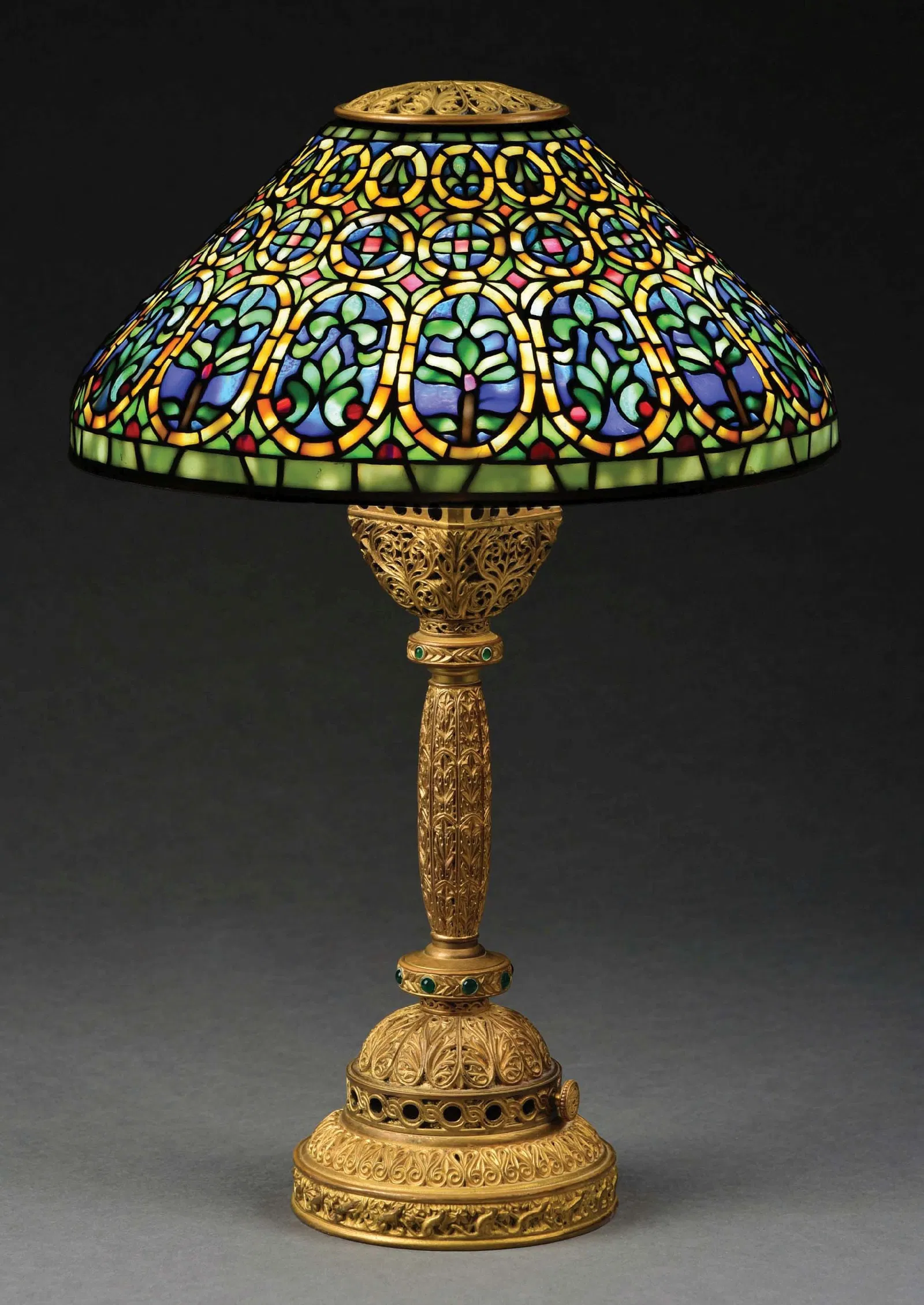
One of the most desirable of Louis Comfort Tiffany’s creations, a rare and extraordinarily beautiful Venetian table lamp claimed top-lot honors at the upscale gallery event. Although diminutive by comparison to other Tiffany lighting, the 19-inch-tall lamp was one of the New York firm’s most expensive productions in the early 20th century. This was due to the time and painstaking effort it took to create the breathtaking Venetian pattern from a profusion of small, delicate pieces of glass. Both the shade, which retained its attractive original “gold” heat cap, and its correct filigreed and jeweled “gold” base were signed. In excellent condition and with provenance that included a 2003 purchase from the prestigious Macklowe Gallery, it sold for $114,000 against an estimate of $60,000-$80,000.
A fine example of a Tiffany Studios Turtleback desk lamp consisted of a bronze base encircled with gleaming Favrile glass balls and a single-socket shade with two stunning iridescent-green Turtleback tiles. Signed beneath the base with Tiffany Studios New York 9949 and the number 408, this excellent example showing no cracks or dents was bid to $19,680 against an estimate of $9,000-$12,000. Another lovely Tiffany Studios desk lamp that swept past its estimate was a harp-style model in the Pine Needle pattern. Eye-catching with its streaked green leaded glass panels and patinated bronze overlay of bronze “pine needles,” the lamp was signed Tiffany Studios New York 4019 on its underside and graded “excellent” by Morphy’s experts. Against an estimate of $2,000-$4,000, it lit up the gallery at $15,000.
In addition to lamps, Tiffany produced some of the most exquisite glass objets d’art and decorative pieces of the late 19th and early 20th centuries. Drawing many admirers at the preview, a rare circa-1898 Favrile-glass plaque displayed an intricate design melding blues and greens, with an incised serpentine accent at the center well. Measuring 13¾ inches, signed L.C. Tiffany and further incised
o-10125, this mint-condition piece sold for $23,370 against an estimate of $4,000-$8,000.
A gilt-bronze centerpiece created by Francois-Raoul Larche (French, 1860-1912) exemplified the highest standard of Art Nouveau artistry and Continental manufacture. A grand design that would have been worthy of a royal table in its day, it depicted mermaids holding oysters and frolicking in the sea, with a nude on a shell as its pinnacle. Bearing the artist’s signature, it was also stamped for the Paris foundry Siot-Deccauville and impressed P45. A mint-condition piece from a bygone era of extravagance and lavish hospitality, the centerpiece appears in multiple reference books. Against an estimate of $25,000-$35,000, it was pursued to $69,000.
Historically important, a unique pair of massive bronze exterior lanterns had come from a mansion in Highland Park, Michigan, a village-like suburb of Detroit that became popular with executives of the automotive industry. Many of Highland Park’s stately mansions were adorned with attractive exterior appointments, like the pair of lanterns offered by Morphy’s. Measuring 6ft high (each) and having an unusual fantasy motif, these fixtures would have made quite an architectural statement a century ago. The striking duo reached $52,800 against an estimate of $10,000-$30,000.
Several noteworthy Rolex men’s watches were among the top-selling timepieces. An 18K gold Rolex Daytona Ref #116528, circa 2111-2013 with a white MOP dial with diamonds, was accompanied by its box and papers. It ticked to $33,600 against an estimate of $18,000-$28,000. A circa-1968 18K gold Rolex GMT Master 40mm men’s wristwatch, Ref. #16758, was set with rubies and diamonds on its original serti dial. With its original Rolex box and papers, it sold above high estimate for $24,000.
The ultimate stocking stuffer for ladies was a platinum and diamond line necklace consisting of 66 natural, near-colorless emerald-cut diamonds with a total weight of 21.50 carats. The gems were graded H color, VS clarity; and the gross weight of the 16-inch necklace was 56.0 grams. New and in unworn condition, it gracefully settled within its estimate range for $28,800.
Although bears typically hibernate for the winter, there was no shortage of handsome Bavarian bruins at Morphy’s opening session. A monumental circa-1925 Hans Winterhalder (Neustadt, Germany) Black Forest two-panel tall-case clock, 78½ inches tall, was masterfully carved with three bears and grapevine embellishments. The interior was fitted with mirrors and a movement striking on eight rods. In excellent condition, this impressive timekeeper sold at the midpoint of its estimate for $23,040.
Bidders were charmed by a Black Forest bear depicted on all fours, with glass eyes and mouth agape, and sporting a leather collar with a suspended brass bell. A sizable 52 inches long, the intricately-detailed bear was a quintessential example of German turn-of-the-century carving. It commanded nearly five times the high estimate, retiring at $19,680.
Bears came to entertain, as well, in the form of a carved linden wood bench. Across the back of the bench, the carver created an incredibly well-detailed scene of bas-relief bears playing various musical instruments. At both ends of the bench, three-dimensional carved-wood bears with open mouths revealing red tongues and sharp white teeth served as sturdy supports. The appealing 54-inch-wide furnishing sold within estimate for $11,400.
Holding its own amongst the bevy of bears was a magnificently-detailed fox-head humidor designed with a hinge behind the head for opening the vessel to access tobacco. A gorgeous production, the quality of this piece was also reflected by the materials used to create it: bronze with silver plating on the interior, and large Russian cabochon garnets for its eyes. In excellent condition, it realized $10,240 against an estimate of $3,000-$8,000.
Amphora collectors worldwide always look forward to Morphy’s December Fine & Decorative Arts sale because it never fails to include a first-rate selection of the coveted European wares. The top Amphora lot in this year’s offering was a Berry Bat glazed and gilded porcelain vase with applied bats and water lilies. Its markings included RSTK and the impressed numbers 669 and 41. Similar to examples illustrated in Monsters and Maidens: Collector’s Edition (Vreeland, pg 361) and The House of Amphora (Scott, pg 127), the sought-after fantasy vessel soared to an above-estimate price of $17,640.
Another popular entry was a circa-1901 Amphora Owl vase, grey with blue and green glazes and applied gilt, and bearing an Amphora oval mark and the impressed numbers 4108 and 52. Comparable to examples seen in the aforementioned Vreeland and Scot reference books, the 12½-inch vase in mint condition sold for an astonishing $12,300 against an estimate of $1,000-$1,500.
To discuss consigning a collection or single item to a future Fine & Decorative Arts auction at Morphy’s, please call 877-968-8880 or email [email protected]. All enquiries are kept strictly confidential, and there is never an obligation to consign. Visit Morphy’s online at www.morphyauctions.com.
Featured: Regimental swallowtail standarte for Third Reich pageantry, massive Japanese flag from Battleship Nagato, Hitler’s standarte photo-matched to Nuremberg, ID’d Knight’s Cross of the Iron Cross
WWII US 1St Combat Cargo Patched A-2 Flight Jacket
WILLOUGHBY, Ohio – Milestone Auctions will ring in the New Year with a January 18 Premier Military Sale that commands collector attention throughout its 705 high-quality, well-provenanced lots. The 250-year timeline starts in the 18th century with coveted Revolutionary War items and progresses to the modern-war era. Significant sections are devoted to Civil War (Confederate and Union) and World War II/Nazi relics, including important uniform groupings, helmets, flags, medals and insignia; photographs, and a comprehensive array of military swords, knives, daggers and katanas. All forms of bidding, in-person and remote, will be available for this auction, which will be webcast live from Milestone’s gallery.
Leading the exceptional selection of World War II Axis artifacts is a massive handsewn Imperial Japanese flag ID’d to the Battleship Nagato. It was recovered from the Nagato captain’s quarters during the Occupation of Japan by US Navy veteran Neil Huntington, who served on the USS Texas. The frayed edge on one side suggests the flag may well have been flown on the Nagato, but it also stands apart from other Japanese flags because it bears the signatures of several American POWs who signed it aboard the USS Texas en route home to the States. Accompanied by Huntington’s photo album and documents pertaining to his military service, the lot will be offered with a $30,000-$60,000 estimate.
Parades and pageantry were part of the Nazi propaganda campaign, and no expense was spared when it came to the creation of standartes (flags or banners) used at significant events. The January 18 auction includes a true rarity: a double-sided World War II Nazi regimental swallowtail standarte (flag/banner) reflecting the highest level of artistry of its day. The standarte is intricately hand-embroidered with eagles in relief, silver bullion wire oak and laurel leaves; and hand-applied silver wire edging. The silk fabric is of a particular shade of red that denotes the artillery branch of the German army. In excellent-plus condition and one of very few known survivors of its type, it is expected to sell for $25,000-$35,000.
Another standarte is known to have been used by Adolf Hitler during major public appearances. The double-sided wool banner is a full 10 feet square and was hand-painted by artists at its place of manufacture. It displays pristine condition with a bright red border stamped Fuhrer, gold wreath and eagle imagery, and a tab marked FIB, Pola (Fuhrer Political Flag). This estate piece is accompanied by two different photos of the flag as displayed in Nuremberg at the KongressHalle, a coliseum where Nazis held huge rallies. Possibly the largest official Hitler flag in existence, it is estimated at $15,000-$25,000.
Nazi weapons include a World War II German Luftwaffe general’s sword made by “Carl Eickhorn” and commissioned by Reichsmarschall and Luftwaffe Commander-in-Chief Hermann Göring, who was known for his flashy appearance and extravagant tastes. The sword has an excellent 29½-inch nickel-plated blade, and the ornate, acid-etched panels on both the blade and spine are crisp and bright. The presentation inscription translates to “The National Minister of Aeronautics/Hermann Göring” and “In Grateful Recognition.” The auction estimate is set at $15,000-$20,000.
A World War II Nazi German medal grouping belonging to Rudolf Heynsen, Commander of the 27th Minesweeper Flotilla, includes a highly important Knight’s Cross of the Iron Cross, Steinhauer & Lück B-type (unmarked). This type of medal, as discussed in a 2007 reference book by Dietrich Maerz, was awarded in recognition of extreme battlefield bravery or successful military leadership. The lot also includes a photo-postcard of Heynsen in uniform. Estimate: $12,000-$15,000
A trunk grouping consisting of property that belonged to Nazi German Panzer General and Knight’s Cross with Oak Leaves recipient Fridolin von Senger und Etterlin includes a tailored wool uniform made in Italy. The military ensemble consists of a tunic, trousers and cap; and is accompanied by leather marching boots, a buckled belt, a dagger, and more. This grouping comes with provenance from the highly-regarded and now-closed AAF Tank Museum in Danville, Virginia. Estimate: $6,000-$10,000
From the “right” side of World War II, Milestone is pleased to offer a stellar US Naval grouping directly linked to Rear Admiral William Clayton Butler Jr., recipient of the Navy Cross for “extraordinary heroism and distinguished service.” Both the jacket (with medal bar) and trousers are name-identified to the admiral. Accompanied by a framed array of medals, a photo of Admiral Butler, photocopies of his service records, and a signed affidavit stating the medals are the ones he wore during the war, this lot has been assigned a $3,000-$5,000 estimate.
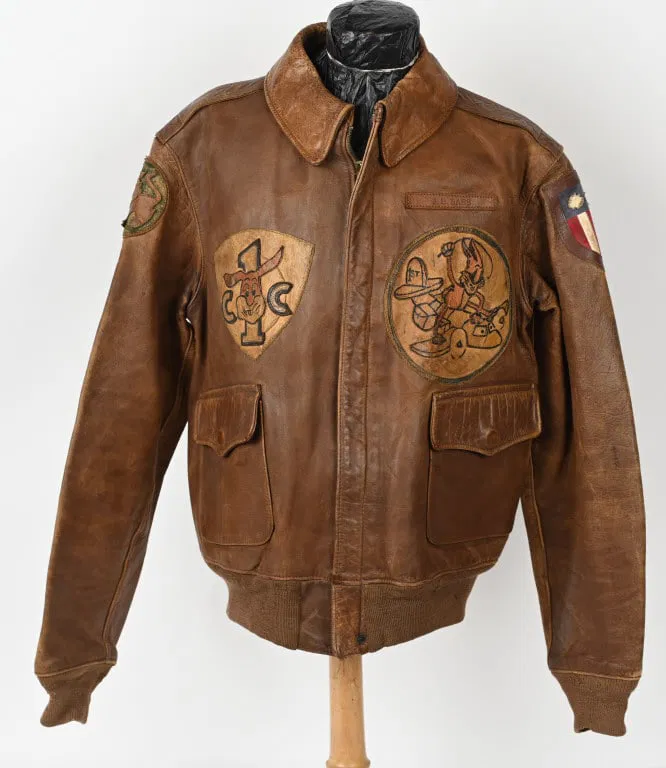
The many collectors of wartime flight jackets will find a rare treasure in this sale: a World War II A-2-patched flight jacket for US 1st Combat Cargo Group, 1st Squadron, worn by aviator J.B. Bass. The US 1st CCG was particularly well known for flying dangerous supply missions within Asian combat zones. Bass’s jacket is impressively decorated with several fantastic China-Burma-India Theater leather insignias, including a large American Flag and blood chit on the back. It was made in 1936, suggesting Bass may have been an early member of the Army Air Corps. Estimate: $3,000-$5,000
Vietnam veteran and US Army Lieutenant Colonel Danny Cecil Miller (1942-2017) was a highly decorated career officer who received a Purple Heart, four Bronze Stars, the Vietnam Service Medal with five Service Stars, and many other medals and commendations. A group lot associated with Miller includes a weapon known to have been the first choice for Americans in Vietnam combat roles: a heavy-duty, nearly indestructible full-tang Randall fighting knife Model 14 4th. Along with its correct leather scabbard, the knife joins Miller’s dog tags and a photo of the colonel in uniform in a lot that is estimated at $3,000-$5,000.
Approximately one dozen lots represent rare and coveted Civil War Confederate weapons and other antiques. A rare and well-preserved original Confederate sword made by Thomas Leech, Memphis, Tennessee, is of a type that was known as a “floating CS” staff and field officer’s sword. Its 30-inch blade is identified with the engraved name Lieut. W. B. Spencer 31st, Regt. Tenn. Vols. Fresh-to-the-market, this desirable, recent discovery comes to auction with a $10,000-$15,000 estimate.
Other Confederate entries of note include foot soldier, cavalry and “short” swords; a writing desk named to Captain Julius H Norton with assorted documents from the 4th Arkansas Cavalry, $2,000-$4,000; a snare drum painted with the National Flags of the Confederacy, $1,000-$5,000; a key-wind engineer’s pocket watch, $500-$1,000; and a 2nd Mississippi ID’d snuff box, $300-$500.
Milestone’s Saturday, January 18, 2025 Premier Military Auction will be held at Milestone’s gallery located at 38198 Willoughby Parkway, Willoughby (suburban Cleveland), OH 44094, and will be webcast live through Milestone’s website. Start time: 10 a.m. ET. All forms of remote bidding will be available, including live via the Internet through Milestone’s own bidding platform, LiveAuctioneers, or Invaluable. For additional information on any item in the auction or to reserve a phone line for auction-day bidding, call 440-527-8060 or email [email protected]. Online: www.milestoneauctions.com
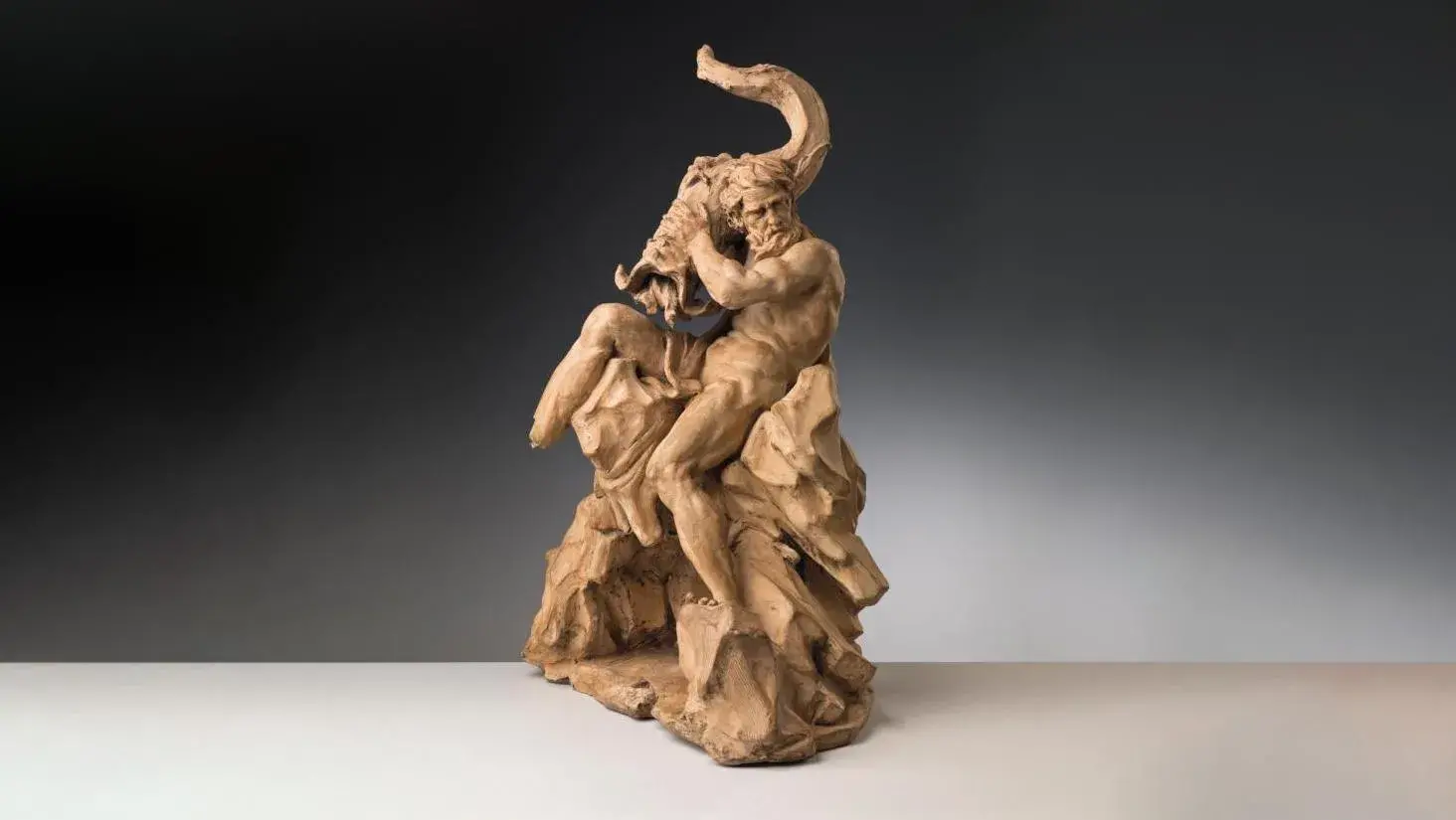
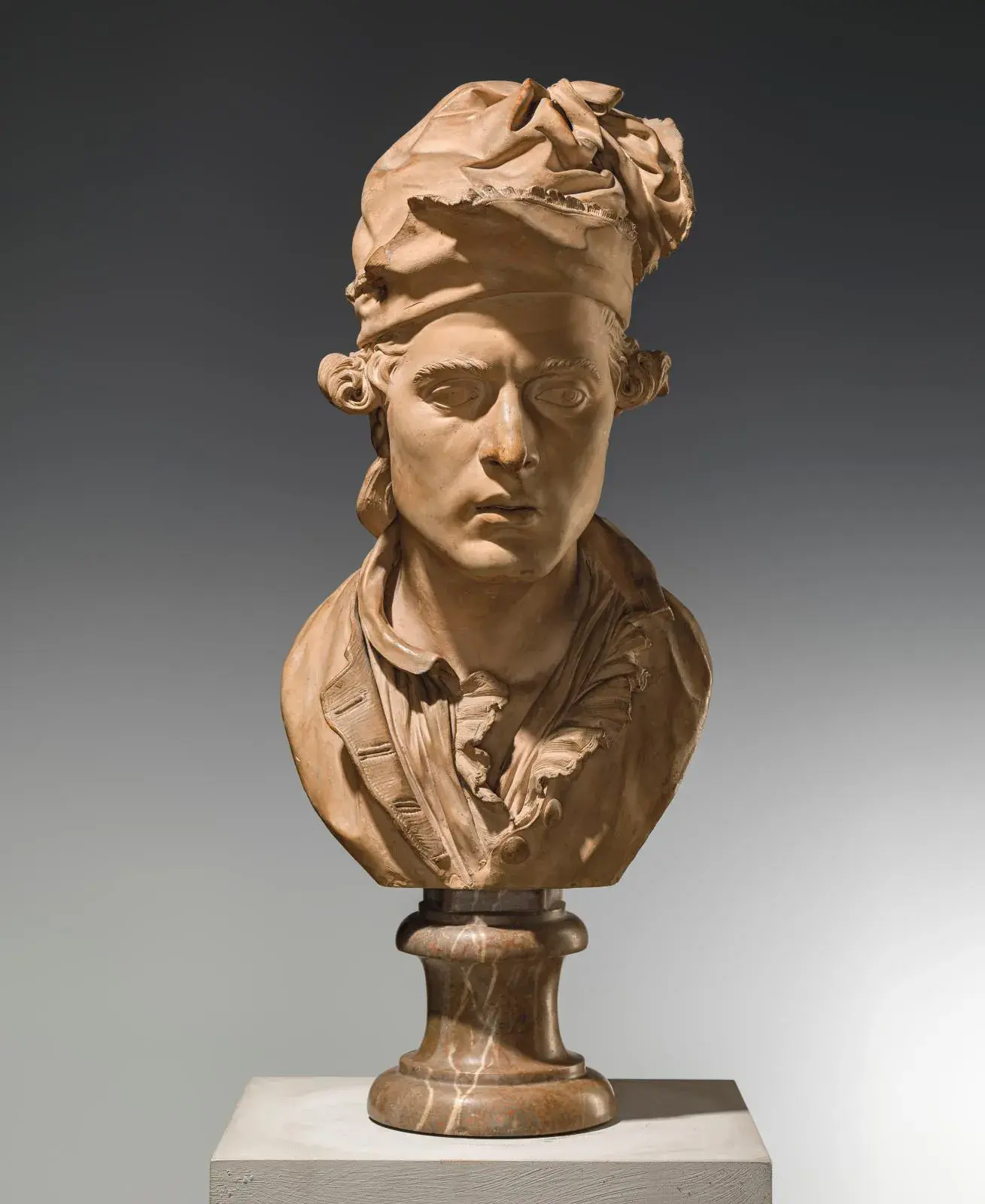
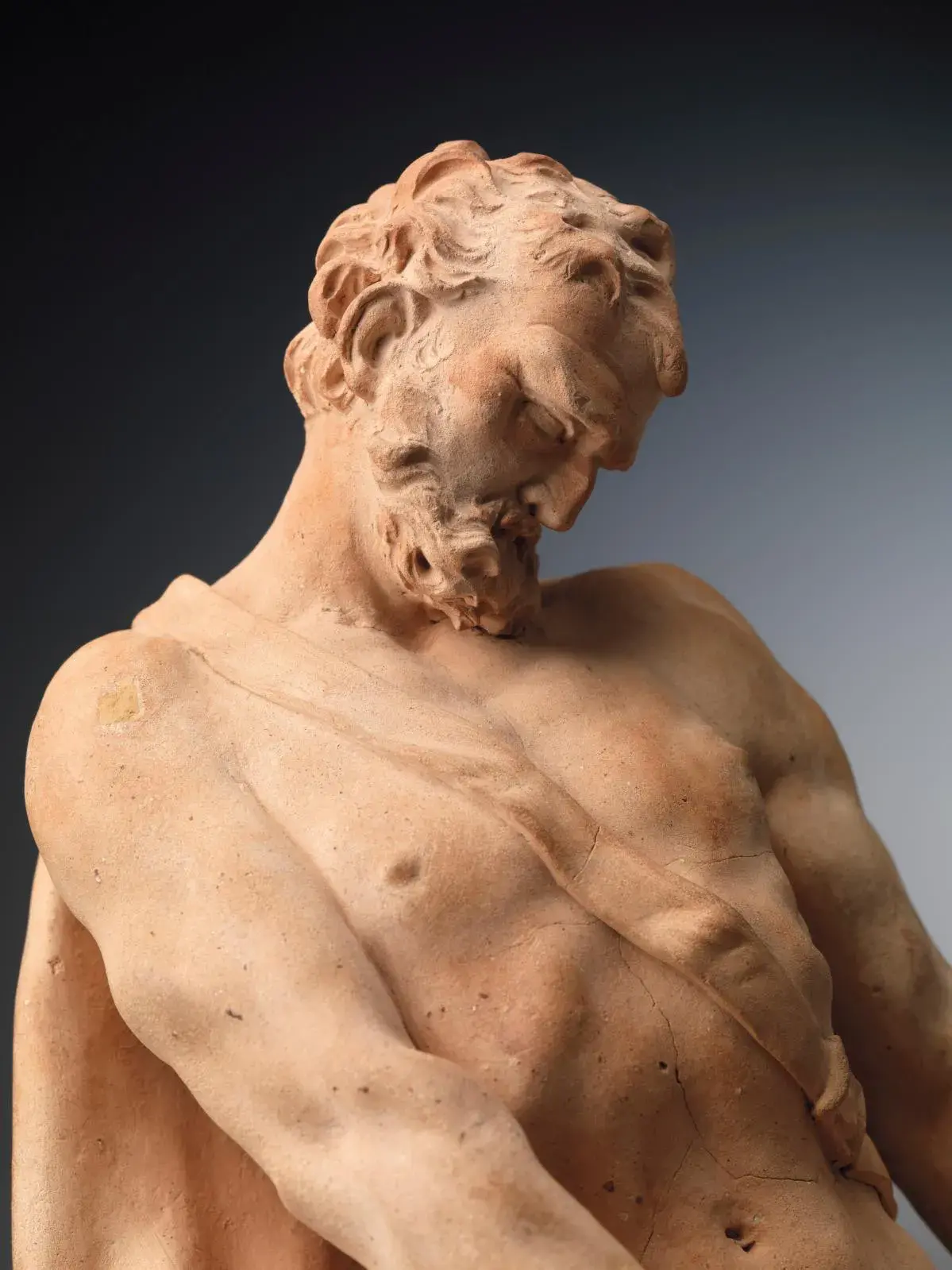
Etro: these four letters, sounding like an acronym, shine out in the windows of Italy’s major shopping streets. Gerolamo Etro is well-known for the fashion house he founded in 1968 and his work as a designer. But less so for the passion he nurtures with his wife Roberta, a former Old Masters gallery owner. Though their discretion is matched only by the quality of the works they have acquired over the decades, they are nonetheless highly prominent in Italy as husband-and-wife collectors, firstly of Italian masters of modern and contemporary art (including Giorgio Morandi, Giorgio De Chirico, Antonio Donghi and Alberto Burri), then of Old Masters, particularly Baroque sculpture. Their collection of 17th and 18th-century Italian bronzes and marbles would be the pride of many major museums today. The same is true of their terracotta collection. Over the past 30 years, the Etros have combed through the catalogs of European auction houses, visited galleries in Paris, London and New York, and paced the aisles of the Biennial of Antiques in Florence and TEFAF in Maastricht. The result of these peregrinations is one of the most important private collections of terracotta, with 70-odd masterpieces ranging from the Renaissance to the 20th century, from Alessandro Vittoria to Arturo Martini. A few non-Italian artists feature prominently — like the Frenchman Jean-Jacques Caffieri and the Flemish artists Peter Anton von Verschaffelt and Josse le Court — but their quest for the finest pieces has focused on the Italian Baroque. Sculptors from all the transalpine schools — Rome, Venice, Genoa, Florence and Naples — are represented, like Antonio Raggi, Filippo Parodi, Massimiliano Soldani Benz and Giuseppe Sanmartinos. With allegories, portraits, reliefs, modellos, sketches and finished works designed for the market, every theme and typology found in terracotta features in this collection, now inventoried for the first time.
A rich catalog produced by a team under Andrea Bacchi has just been published. “This collection of terracottas rivals those of the Hermitage Museum in St. Petersburg or the Ca’ d’Oro in Venice,” says the art historian and Italian Baroque specialist. “We need only mention pieces like Angelo de Rossi’s Saint John the Baptist, signed and dated, which is exceptionally rare for the period, or the portraits of Giulia Albani by Camillo Rusconi, and of Giovan Luca Durazzo by Filippo Parodi. Although the core of the collection consists of sculptures from the 17th and 18th centuries, one of its particularities is its huge chronological scope, ranging from the 15th century to 1932, with Arturo Martini’s Allegory of Greek Tragedy. Pieces by the most illustrious artists rub shoulders with others still awaiting attribution. Like all true collectors, the Etro couple are not looking simply for a name, but above all for quality.” One does not exclude the other. Coincidentally, the publication of the catalog follows a very recent acquisition, Latona Transforming the Peasants of Lycia into Frogs, a relief created in around 1675-1680 by Giuseppe Mazzuoli. A symbolic work, since it belonged to Flavio Chigi, nephew of Pope Alexander VII, who was one of the first collectors of terracotta. At the end of the 17th century, these sculptures began to attract increasing interest from aesthetes. They were no longer only preparatory sketches for larger works in bronze or marble, or models used by artists to present their projects to patrons. Firing techniques, which were haphazard until the 18th century, were by now increasingly well-mastered. These objects, until then found in studio contents, were now sought after by collectors for their cabinets of curiosities, or for educational purposes, as the Venetian Academy did to show young sculptors the great Roman models. “However, little attention was paid to them until the 20th century,” says expert Alexandre Lacroix. But true sculpture enthusiasts and collectors are very drawn to terracottas. They are to sculpture what drawing is to painting. Expressed by artists’ hands with no intermediaries like the brush or burin, they immerse us in their creative process and the very heart of their work. It can be very moving to sometimes spot their fingerprints, and fascinating to see early versions of an artist’s creative impulse, with their trials, errors and explorations. The terracotta models used by 17th-century French sculptors, for example, have almost all disappeared. They were very fragile, and many were destroyed. They constitute a very dynamic niche market, with rare pieces fetching high prices when they come up for sale.” On June 18, 2023, the Louvre preempted a sculpture by François Anguier for €2.5 M at a sale staged by Osenat.
Le Terre cotte. Collezione G&R Etro: A Landmark Publication
“Until the end of the 19th century, very little terracotta was collected,” says Andrea Bacchi. “Interest revived in the 20th century, with the rediscovery of Baroque art in the 1930s-1940s, and even more strongly in the 1970s and1980s. Baroque Italy was the epicenter of terracotta. All the artists of the time worked in or were inspired by it. In the Germanic world and in the Middle Ages, preparatory sketches were most often made in wood, while sculptors in Florence began to use terracotta in the 15th century. Since the early 2000s, prestigious museums have devoted major exhibitions to terracotta works.” Like the Louvre in 2003-2004 with “The Creative Spirit From Pigalle to Canova. European Terracottas, 1740-1840”: a major step towards getting them known and appreciated by the general public. In 2013, the Metropolitan Museum of Art inaugurated “Bernini. Sculpting in Clay”, bringing together for the first time some 50 sketches and models of the sculptures that made Bernini famous, from the fountains in the Piazza Navona to the angels on the Ponte San Angelo in Rome. More recently, in 2023-2024, the National Gallery in Washington and the Art Institute of Chicago presented “Canova. Sketching in Clay”, the first exhibition in over 50 years devoted to terracotta sketches from the plaster casts in the collection of the Canova Museum in Possagno: a tour designed to offer a revealing glimpse into the creative and technical process of the neoclassical sculptural genius. “The publication of the Etro Collection catalog will be a milestone,” says Andrea Bacchi. “It will become an indispensable tool for art lovers and professionals in the terracotta market.” Leafing through it, one can only agree with what the collector and engraver Jean-Pierre Mariette wrote in 1750: “The excellence of terracotta models cannot be overstated. A fine, enlightened eye discovers in them all the master’s spirit; that creative spirit, that dazzling, all-divine fire that emanates from the soul, and which is so very nearly extinguished and destroyed by the instant of reflection”.
Worth Reading Edited by Andrea Bacchi Le Terre cotte. Collezione G&R Etro Rome, Officina Libraria, 2024 416 pages, 425 illustrations, €75
The order of values was respected, with the goddess Diana towering over the pretty nymph Callisto.
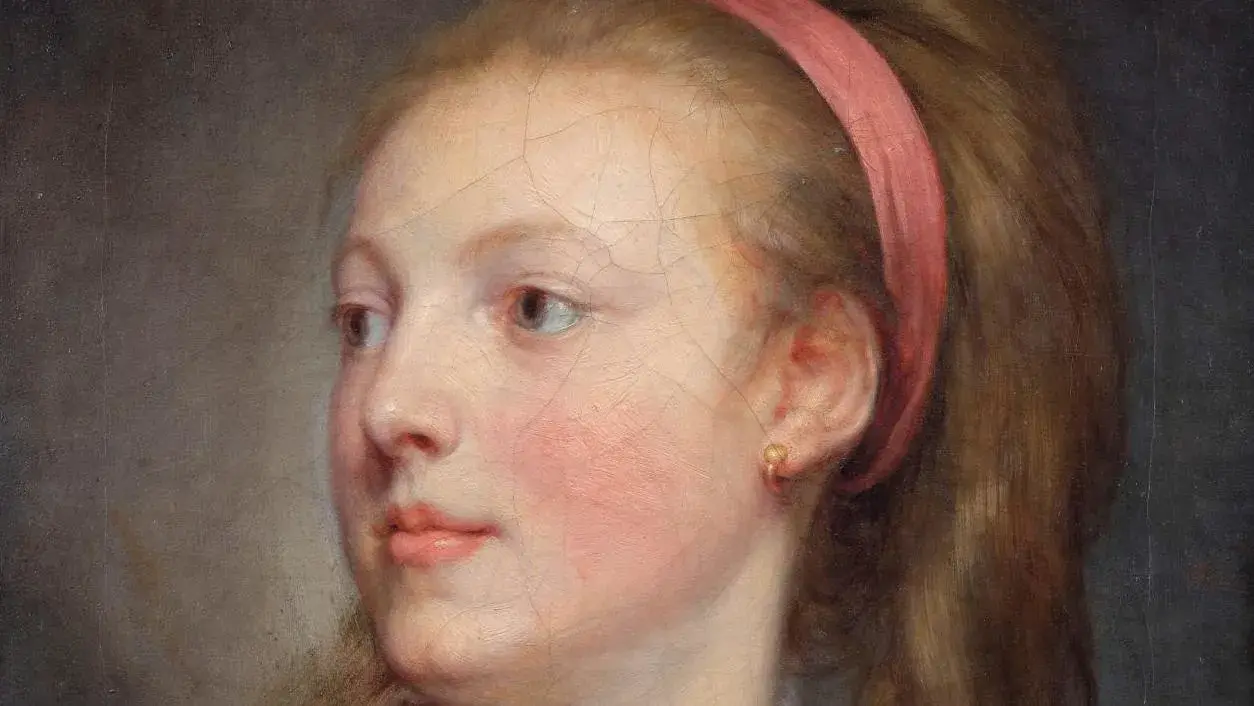
Jean-Baptiste Greuze (1725-1805), Diane, 1761, oil on canvas, 46.5 x 38.5 cm/18.30 x 15.15 in. Result: €520,000
Jean-Baptiste Greuze certainly wasn’t expected in this field. Nevertheless, the painter whose work reflects a certain return to morality has given his expressive heads a noble reputation, which has been appreciated in their time and is now being rediscovered after a long period of obscurity. The results obtained by Diana and Callisto (46.5 x 38.5 cm/18.30 x 15.15 in), the subject of an article in La Gazette no. 43, attest to this. The goddess, adorned with a delicate red ribbon and displaying none of the attributes usually associated with her, fetched €520,000, while the pretty nymph, dressed in animal skin, fetched a trophy of €208,000. The two canvases had already been sold at Drouot on July 11, 1978 — which were never presented in the public since — the first fetching around €116,800 in updated value, the second €102,000. Since then, the gap has widened… the goddess dominated the nymph! This type of representation was initiated by Charles Le Brun in the 17th century, as part of an academic tradition. The expert’s enthusiasm for these beautiful, well-formed heads, the result of a change in Greuze’s style in the early 1760s, was amply justified. The 1760s were indeed the years of consecration for the Tournus-born painter. In 1764, he presented L’Accordée de village at the Salon and triumphed. The Goncourt brothers went on to write: “The success of L’Accordée de village confirmed Greuze in his path, in his vocation, the depiction of bourgeois and popular mores, to which the curiosity and interest of the great world, weary of mythological gallantries, saucy nudity and gallant tableautins, were taking a liking. The painter went in search of materials, ideas, models and inspirations in the Paris where Mercier gleaned his observations, seeking, like this painter with a pen, his notes and sketches in the streets and suburbs, in the markets, on the quays, in the midst of the people, the crowds.”
The fascination with space exploration and the possibility of life outside of our solar system has captured the imagination of humans since the Greek era or earlier. It is no surprise that vintage toys representing interplanetary transport or space-related fictional characters and their stories have timeless appeal with collectors. Landry Pop Auctions of Lambertville, NJ presented its Space Toys sale featuring Star Wars and the Collection of Jane & Jack Pillar on December 3, 2024. This 316-lot sale featured a fine collection of midcentury-onward robots, tin litho vehicles, figurines, and other cosmic playthings. Here are some eye-popping highlights from this early winter event.
Lot #110, a Japanese TET B-17 South Pole Explorer tin wind-up robot, was estimated at $1,000 to $2,000 and sold for $4,750. Image courtesy of Landry Pop Auctions.
Japanese Tin Wind-Up Robot
The top lot in this out-of-this-world sale was #110, a Japanese TET B-17 South Pole Explorer tin wind-up robot. Estimated at USD 1,000 to $2,000, it traded hands at $4,750. This original example from around 1955 was in working condition and in the form of an arm- and leg-jointed human in winter wear including a green helmet, yellow parka, green mittens, orange pants, and black boots. He wore gray metal skis and held matching ski poles. The parka was printed with the words “South Pole Explorer” and B-17, as well as a patch with a penguin on it, a wide belt with a buckle, and a black camera suspended from a strap.
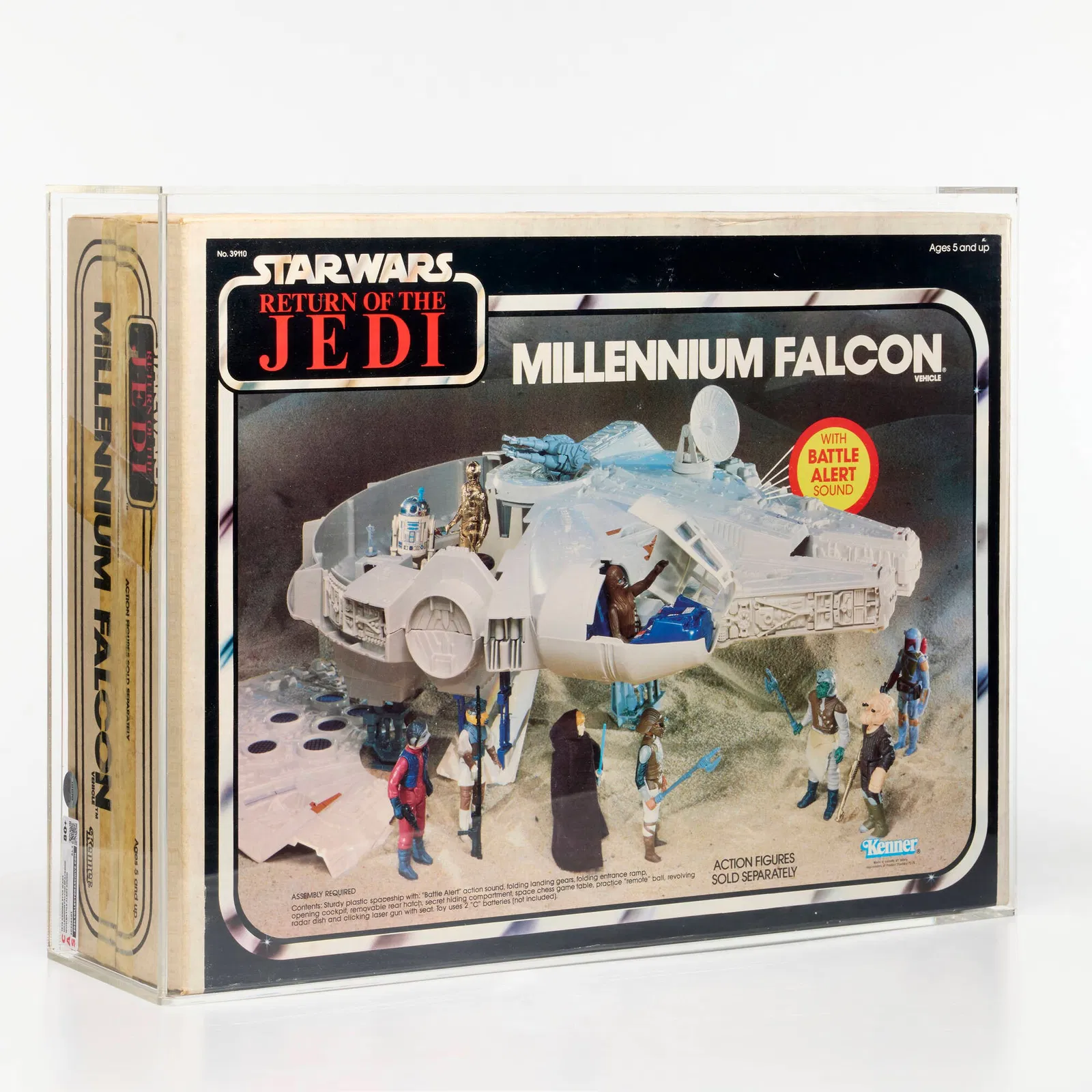
Lot #263, a Star Wars Millennium Falcon toy, was estimated at $2,000 to $3,000 and sold for $3,840. Image courtesy of Landry Pop Auctions.
Star Wars Millennium Falcon Toy
This auction featured many premier boxed Star Wars toys from Kenner. Lot #263, a Star Wars Millennium Falcon toy, was estimated at $2,000 to $3,000 and landed at $3,840. The toy was produced in 1983 and included a perfectly to-scale spacecraft with a battery-powered alert sound, landing gears, an entrance ramp, a cockpit, a rear hatch, a secret hiding compartment, a space chess game table, a radar dish, and a laser gun, among other vehicle apparatus. The box, as well as its contents, were in exceptional condition.
This superstar toy was the flagship vehicle of Kenner’s Star Wars production series and probably the one most associated with the movie franchise. Director and design/ special effects expert Joe Johnston created it. Johnston is best associated with movies featuring over-the-top special effects. Over time, Kenner presented this Millennium Falcon toy in four differently illustrated boxes, with this example being the final and most desirable version produced.
Lot #131, a collection of five American and Japanese tin friction space patrol car rocket toys, was estimated at $200 to $400 and sold for $3,750. Image courtesy of Landry Pop Auctions.
Space Patrol Car Rocket Toys
Midcentury tin friction space toys were a key category in this early winter sale. Lot #131, a collection of five American and Japanese tin friction space patrol car rocket toys, was estimated at $200 to $400 and realized $3,750. The quintet included a red and yellow Courtland Mfg. Co. Space Rocket Patrol car, a white and blue Masudaya Modern Toys Space Sightseeing Bus with a driver under a clear half-bubble, a green and red X-2 Rocket with three passenger windows on each side, a round red Yonezawa S-2 Satellite with its astronaut pictured waving from two windows, and a blue and red Space Patrol car with a light blue robot driver.
Friction mechanisms are relatively simple, inexpensive ways to add action or movement to a toy, especially those with wheels. Although this technology has its origins as far back as the 1850s, it was implemented on a large scale in the 1950s by toy companies around the world looking to fill their catalogs and export orders quickly and efficiently. This movement was ideal for items including rockets and exploration vehicles, which were all the rage with their ties to the launch of the Space Race in 1955.
Lot #218, a Boba Fett figurine from the Star Wars franchise, was estimated at $1,000 to $1,500 and sold for $2,250. Image courtesy of Landry Pop Auctions.
Boba Fett Figurine
Also grabbing the spotlight with Landry Pop Auctions were bubble-packed individual characters from now-legendary science fiction movies. Lot #218, a Boba Fett figurine from the Star Wars franchise, was estimated at $1,000 to $1,500 and delivered $2,250. This 3.5-inch tall action figure was made in 1980 in Hong Kong and was one of 41 produced as part of a series based on the movie The Empire Strikes Back. Interestingly, the Millennium Falcon lot noted above was pictured on the back of this item’s packaging.
The character of Boba Fett was invented in 1978 by George Lucas and was inspired in part by Clint Eastwood’s performance of the Man With No Name from a mid-1960s series of movies by Italian filmmaker Sergio Leone. Intended as a villainous bounty hunter, Boba Fett had screen time in four Star Wars films from 1978 through 2012. The character also appeared in other Star Wars-related media including The Mandalorian, The Book of Boba Fett, and various television shows and video games. Like the design for the Millennium Falcon noted above, Fett’s final presentation and appearance are credited to Joe Johnston.
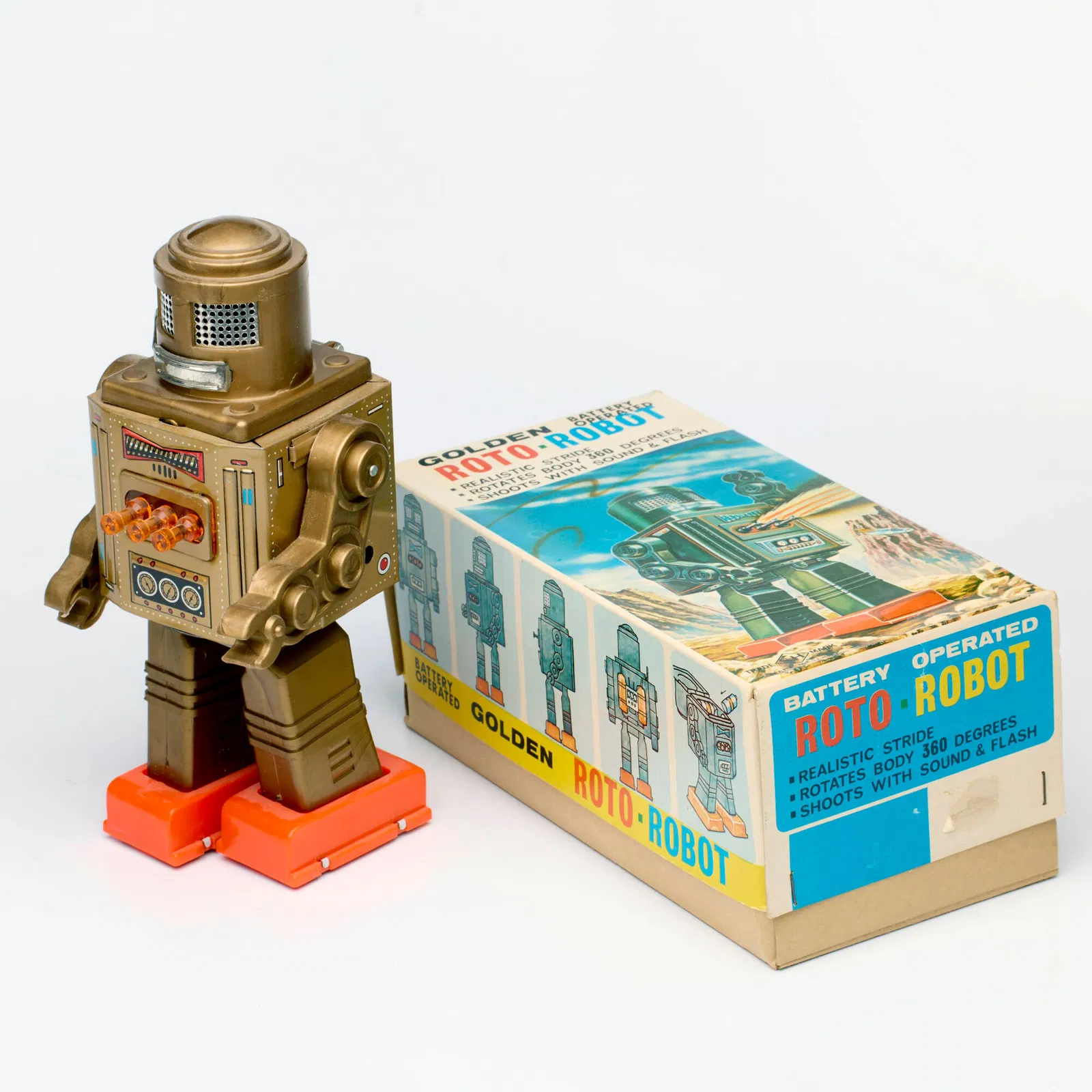
Lot #153, a Japanese S. H. Horikawa battery-operated Golden Roto-Robot, was estimated at $200 to $400 and sold for $1,800. Image courtesy of Landry Pop Auctions.
Space-Themed Toys
This sale rounded out with space-themed character displays, ray guns, stuffed toys, novelties, and robots. Lot #153, a Japanese S. H. Horikawa battery-operated Golden Roto-Robot, was estimated at $200 to $400 and scored $1,800. This rarity from circa 1968 was in working condition and featured jointed arms and legs and prominent, rectangular orange feet. It retained its original box in very nice condition, which most certainly increased the toy’s overall desirability, as well as its impressive auction-busting sale price.