Commercial Success: Coin-Op & Advertising at Gehman Auctions

Antique coin-operated machines and advertising continue to capture the imagination of collectors worldwide. Their period graphics and construction, history, cross-category appeal, and ability to transport us back to simpler times all contribute to their popularity. Gehman Auctions of Ephrata, PA presented its 349-lot Coin-Op & Advertising Auction on January 18, 2025. The sale featured a robust collection of vintage to antique entertainment posters, cigar-related advertising specialties, tabletop vending machines, and other materials promoting brands of yesteryear. 

Here are some highlights from this event. All prices noted include the company’s 23% buyer’s fees.
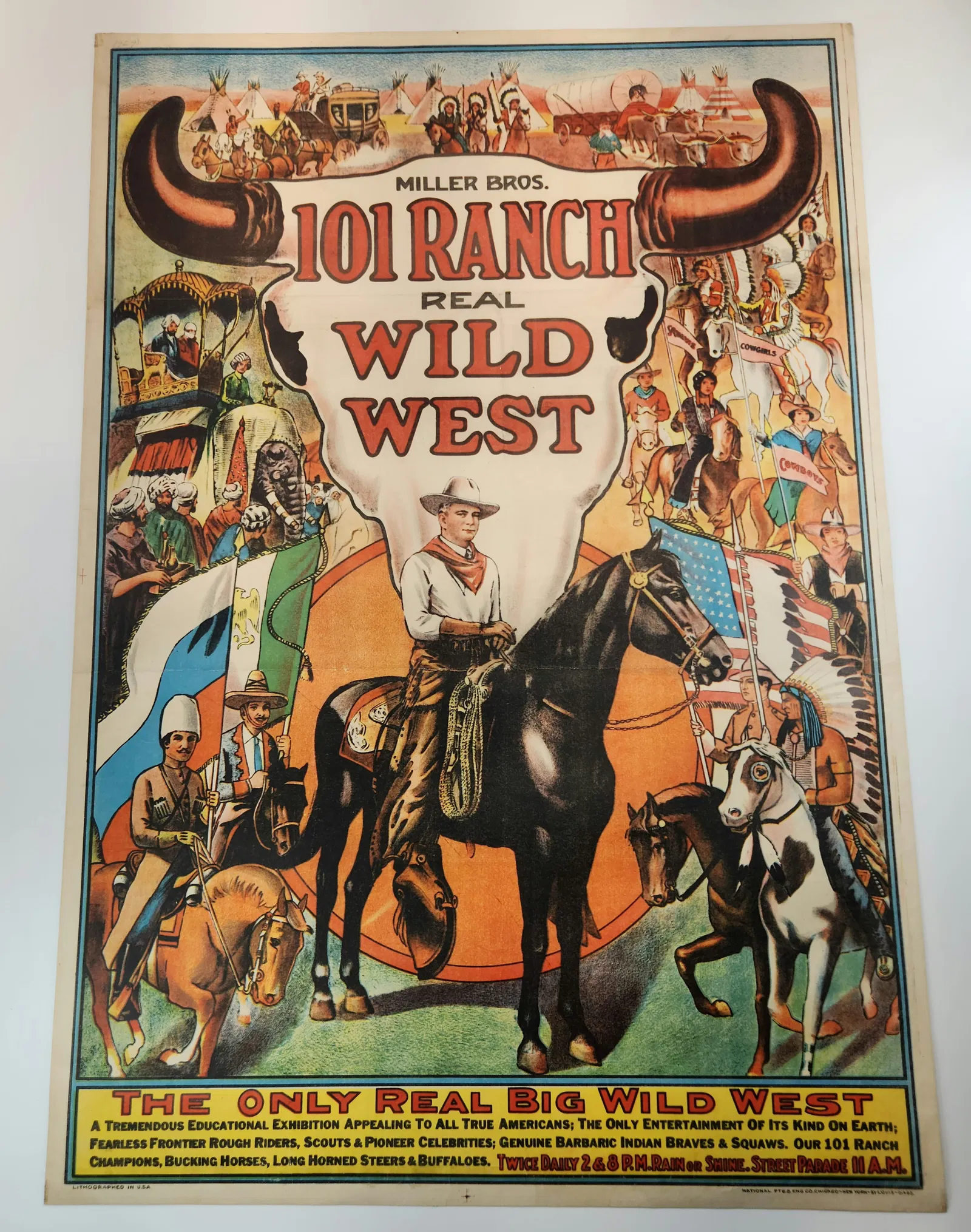
Lot #339, Miller Bros. 101 Ranch Real Wild West, was estimated at $150 to $250 and sold for $1,968. Image courtesy of Gehman Auctions.
Lot #339, Miller Bros. 101 Ranch Real Wild West, was estimated at $150 to $250 and sold for $1,968. Image courtesy of Gehman Auctions. 

The top lot in this midwinter sale was #339, Miller Bros. 101 Ranch Real Wild West, which was estimated at USD 150 to $250 and sold for $1,968. This linen-backed poster was printed in the United States in 1929. It was vividly and colorfully illustrated with a cowboy on a horse in the center, surrounded by Western and Middle Eastern vignettes of people and animals.

Although many are familiar with Buffalo Bill’s Wild West shows, the Miller Brothers of Oklahoma also had a traveling Wild West show which was in business from 1908 to 1932. It was called 101 Ranch after the family’s farm and ranch, which came under their ownership in 1893. In 1905, the brothers produced a large fair on their property to promote their business, especially in the areas of equestrian and western services. The event proved so popular that it pivoted to a traveling Wild West act starting in 1907.
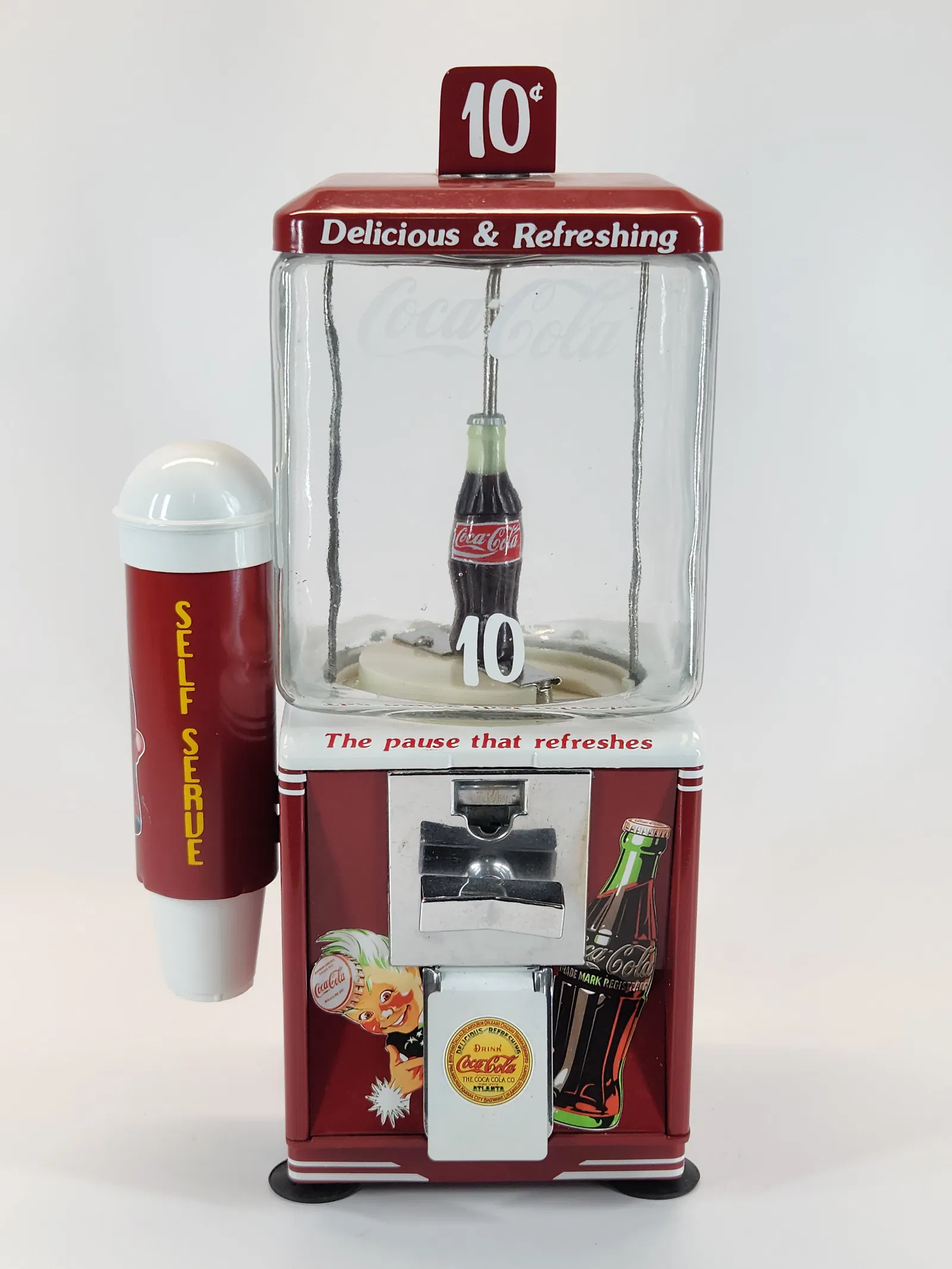
Lot #61, a Coca-Cola gumball machine, was estimated at $100 to $200 and made $1,353. Image courtesy of Gehman Auctions.

This sale presented a fine collection of century-spanning gumball machines, with 14 different models on offer. Lot #61, a custom example decorated with Coca-Cola themed images, branding, and a drink cup mount, was estimated at $100 to $200 and made $1,353. This 18-inch tall, square-shaped machine had a clear glass top chamber, a red and white metal lid and matching base, a small bottle of Coca-Cola in the center of its chamber, and a ten-cent tab on the top. It opened and closed with a key.

One interesting detail of this machine is that it included the company’s little-known Sprite Boy mascot. Sprite Boy was created in 1942 by artist Haddon Sundblom. Sprite Boy had blushed cheeks, dramatic white hair, and matching eyebrows. He wore either a soda jerk’s hat or a bottle cap on his head. Sprite Boy appeared in many Coca-Cola advertising programs through 1953 and was entirely retired by 1958. As such, it appears that the Coca-Cola gumball machine highlight from this sale was probably made in the 1940s to 50s timeframe.
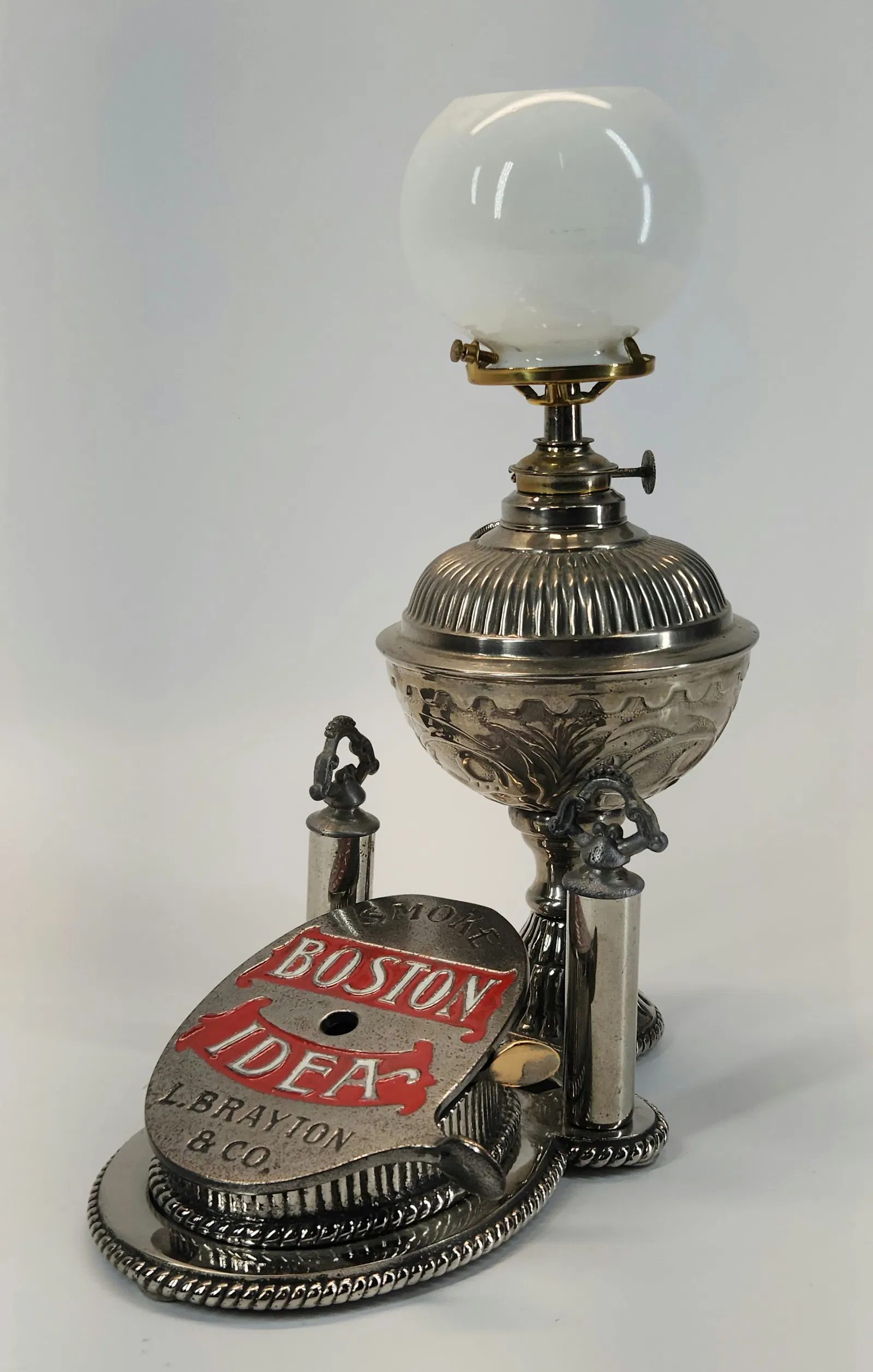
Lot #130, a Boston Idea cigar cutter table lamp, was estimated at $200 to $400 and sold for $923. Image courtesy of Gehman Auctions.

Cigar cutters were also well represented in this coin-op and advertising sale, with 55 lots available. Lot #130, an antique restored Boston Idea cigar cutter table lamp, was estimated at $200 to $400 and realized $923. It was in the form of a silver-colored lamp base with a white glass globe, two pillars, and an oval-shaped platform with the words Smoke Boston Idea L. Brayton & Co. on it.

L. Brayton & Company was located at 217 State Street and 114 Central Street in Boston at the turn of the last century. It was known as an importer and jobber of teas, coffees, molasses, and cigars– all products produced overseas. Given Boston’s seaside location, this merchandise mix and business venue makes perfect sense. It is possible that Boston Idea was the trade name of one of the company’s higher-end cigar products, as reflected in this elegant advertising specialty.
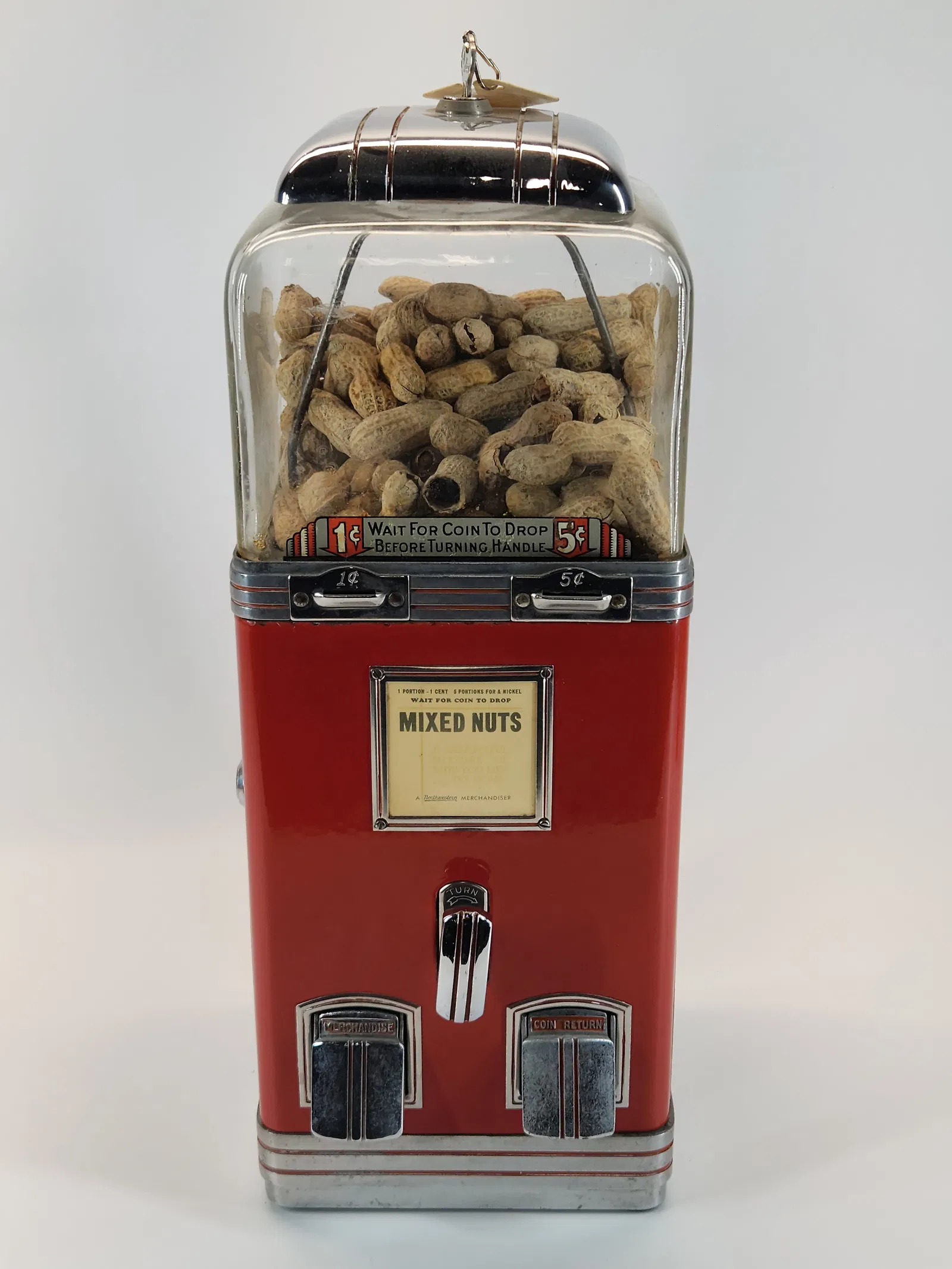
Lot #51, a mixed nuts vending machine, was estimated at $100 to $200 and delivered $400. Image courtesy of Gehman Auctions.
Lot #51, a mixed nuts vending machine, was estimated at $100 to $200 and delivered $400. Image courtesy of Gehman Auctions. 

Unusual vintage vending machines also took the spotlight in this coin-op and advertising sale. Lot #51, an Art Deco one- and fine-cent mixed nuts vending machine, was estimated at $100 to $200 and delivered $400. This 17-inch tall machine had a clear glass globe, red body, merchandise door, coin return door, and chrome lid. It had two coin slots, one for a penny and one for a nickel. Its square front signage, which was flush to the body, noted, “1 portion 1 cent, 5 portions for a nickel /  Wait for coin to drop, MIXED NUTS.”

The Art Deco design of this machine suggests that it may have been made in the 1920s or 30s. Peanut vending machines debuted in the 1880s as fixtures in New York City mass transit stations. The Columbus Vending Co. of Columbus, Ohio was responsible for many of the earliest nut vending machines. One business development strategy the company used was to have the machine ring a bell and offer a free portion of nuts with every ninth penny purchase made.
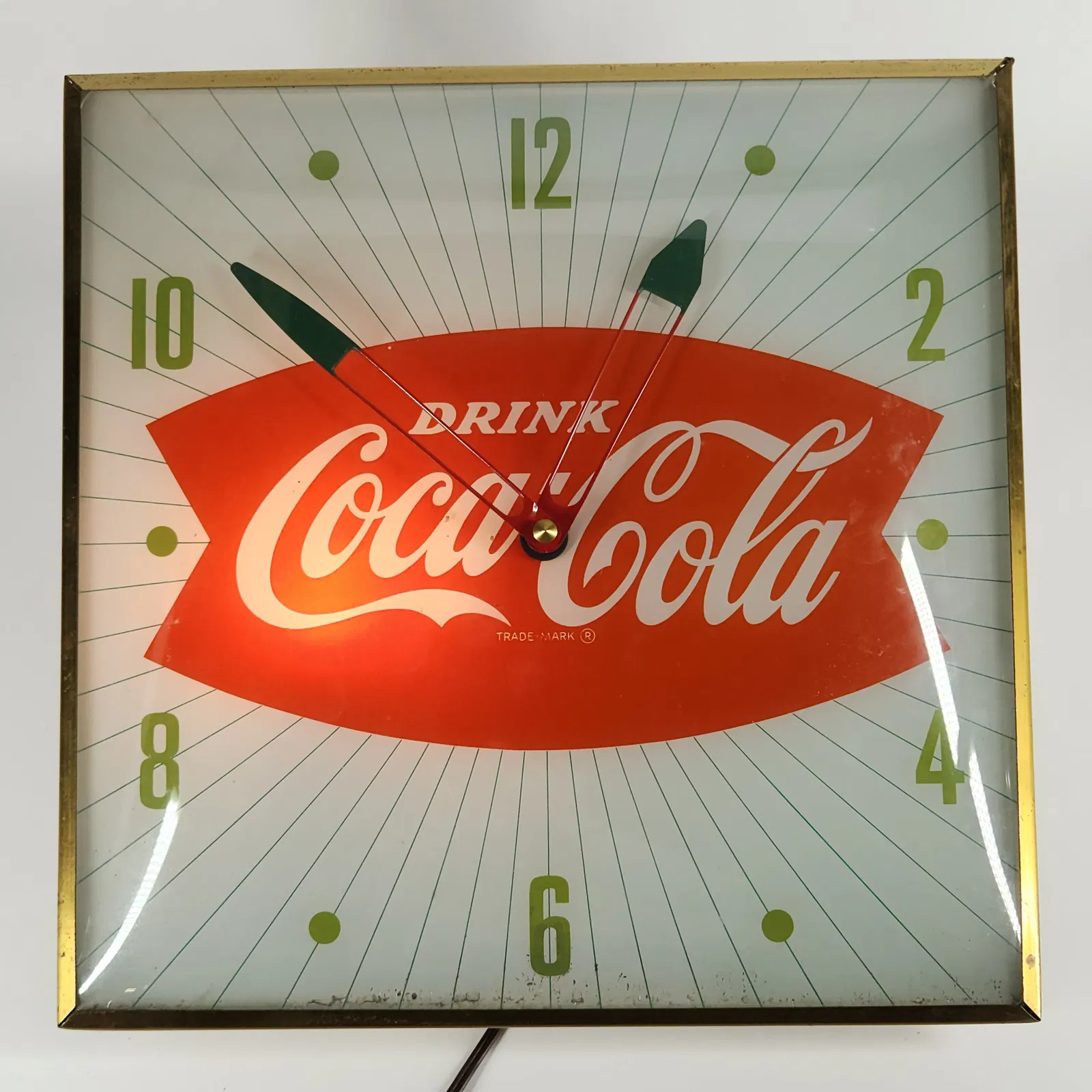
Lot #197, a Coca-Cola advertising clock, was estimated at $100 to $200 and traded hands at $215. Image courtesy of Gehman Auctions.

Clocks, trade stimulators, product signage and packaging, and Coca-Cola-related advertising merchandise rounded out this nostalgic sale. Lot #197, a 15-inch square Coca-Cola bowtie square advertising clock, was estimated at $100 to $200 and traded hands at $215. This illuminated, distinctly mid-century style clock featured even-numbered hour markers, dots for odd-numbered hour markers, a starburst-style background, and the company’s legacy “Drink Coca-Cola” logo in red.

For more information on Gehman Auctions’ January 18, 2025 Coin-Op & Advertising Auction, visit LiveAuctioneers

Looking for more auction results and previews? Visit Auction Daily for the latest. 
Where Design + Flavor Meet: Fine Spirits Available at Brunk Auctions This January

For as long as humans have been distilling liquors, manufacturers have faced the accompanying challenge of how to store and distribute them. Bottles need to be functional, allowing various levels of fermentation and oxygen to be present. Storage, transportation, and ease of pouring are concerns as well. While many wine producers have settled on standardized shapes, spirit makers enjoy greater latitude in the shape, size, and style of their packaging. 

Brunk Auctions’ upcoming Wine & Spirits Auction on January 30, 2025 includes a fine selection of liquors that embrace this spirit of thoughtful, creative design without compromising on taste. Here are some of the most notable bottles in the catalog. 

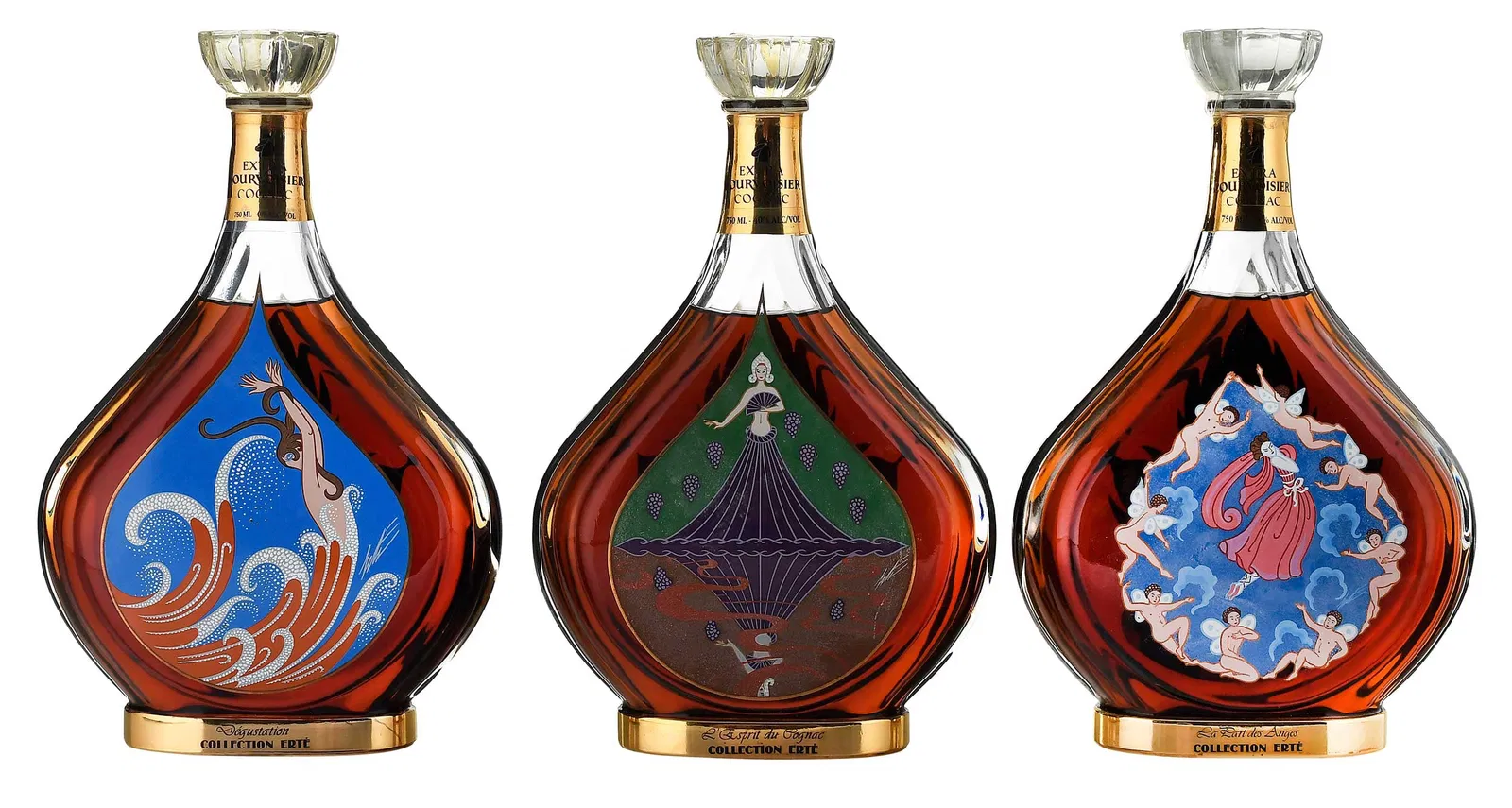
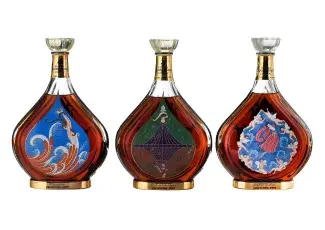
Courvoisier Erté Collection No. 1 - 7 Image courtesy of Brunk Auctions.
Courvoisier Erté Collection No. 1 – 7. Image courtesy of Brunk Auctions.

Courvoisier Cognac

Seven bottles of cognac from French house Courvoisier is among the top lots in this sale (lot #655; estimate: USD 3,000 – $5,000). Produced between 1989 and 1995, these 750 ml bottles come to auction with individual presentation cases. Colorful labels designed by Russian-French Art Deco artist Erté adorn each round, curved bottle. The designs offer an artistic interpretation of the cognac-making process (vines, harvest, distillation, age, tasting, spirit of cognac, the angel’s share). Gold-colored details accent the bottles. 

Considered one of the “big four” cognac producers in the world, Courvoisier is based in Jarnac, France. It is recognized for being favored by Napoleon Bonaparte, its distinctly-curved bottles, and its partnerships with notable creatives such as Erté and Vivienne Westwood. Courvoisier’s famed Erté collection includes a mix of flavors and aromas, ranging from an apricot and spice flavor in Erté N°1 to coffee, chocolate, and dried fruit flavors in Erté N°5. Some bottles contain well-aged cognac dating back to the 19th century. 

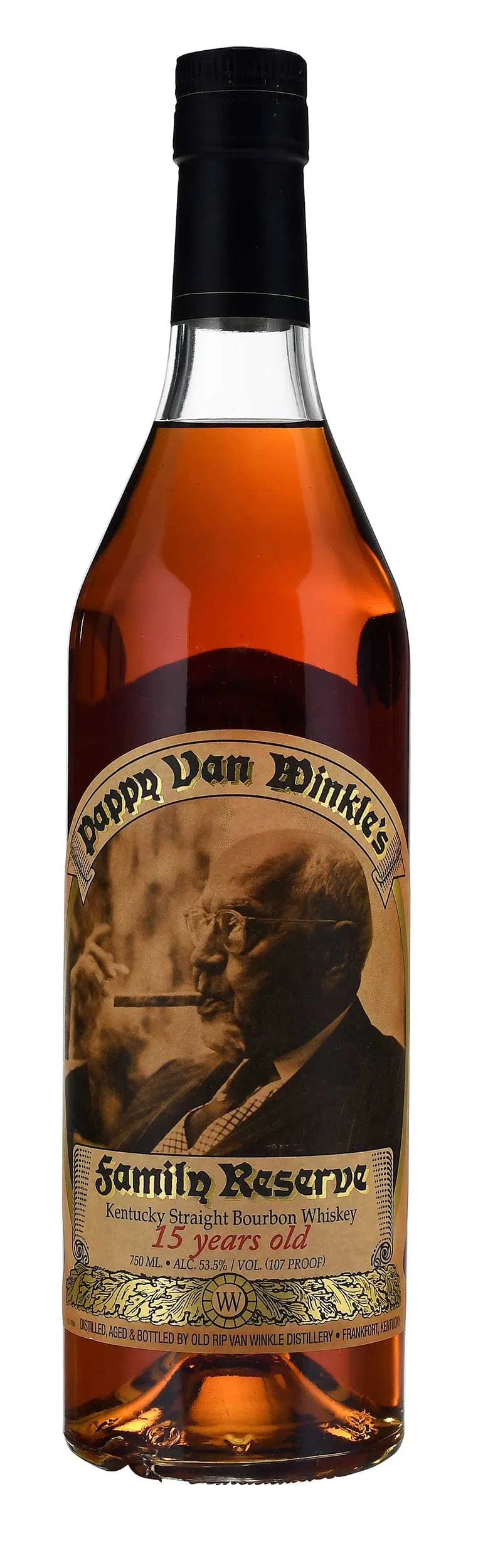
Pappy Van Winkle 15 Year Old Family Reserve 2019. Image courtesy of Brunk Auctions.
Pappy Van Winkle 15 Year Old Family Reserve 2019. Image courtesy of Brunk Auctions. 

Pappy Van Winkle Bourbon 

Also available in this wine and spirits sale is a bottle of Pappy Van Winkle bourbon. This 15-year-old family reserve was bottled in circa 2019 (lot #647; estimate: $1,000 – $2,000). The 107-proof bourbon offers a bloom of sweet, fruity flavors and a caramel corn aroma. It is presented in a 750 ml bottle that offers a personal touch; the back label is inscribed with words from brand president Julian P. Van Winkle, III. He notes that this bourbon is a “younger expression of our famous 20 year old Pappy Van Winkle’s Family Reserve.” The style of this bottle embraces the old-fashioned with a black-and-white photo of Julian “Pappy” Van Winkle on the front label, smoking a cigar. Clean lines frame the portrait. 

Based in Kentucky, Pappy Van Winkle’s Family Reserve produces quality bourbon whiskey in small, limited batches. The relative rarity of Pappy Van Winkle bottles have made them especially valuable in the secondary market. Pappy bourbon is also known for its quality and complexity– the brand ages its bourbon longer than many of its competitors and utilizes a secret family recipe based on a higher-than-usual portion of wheat. 

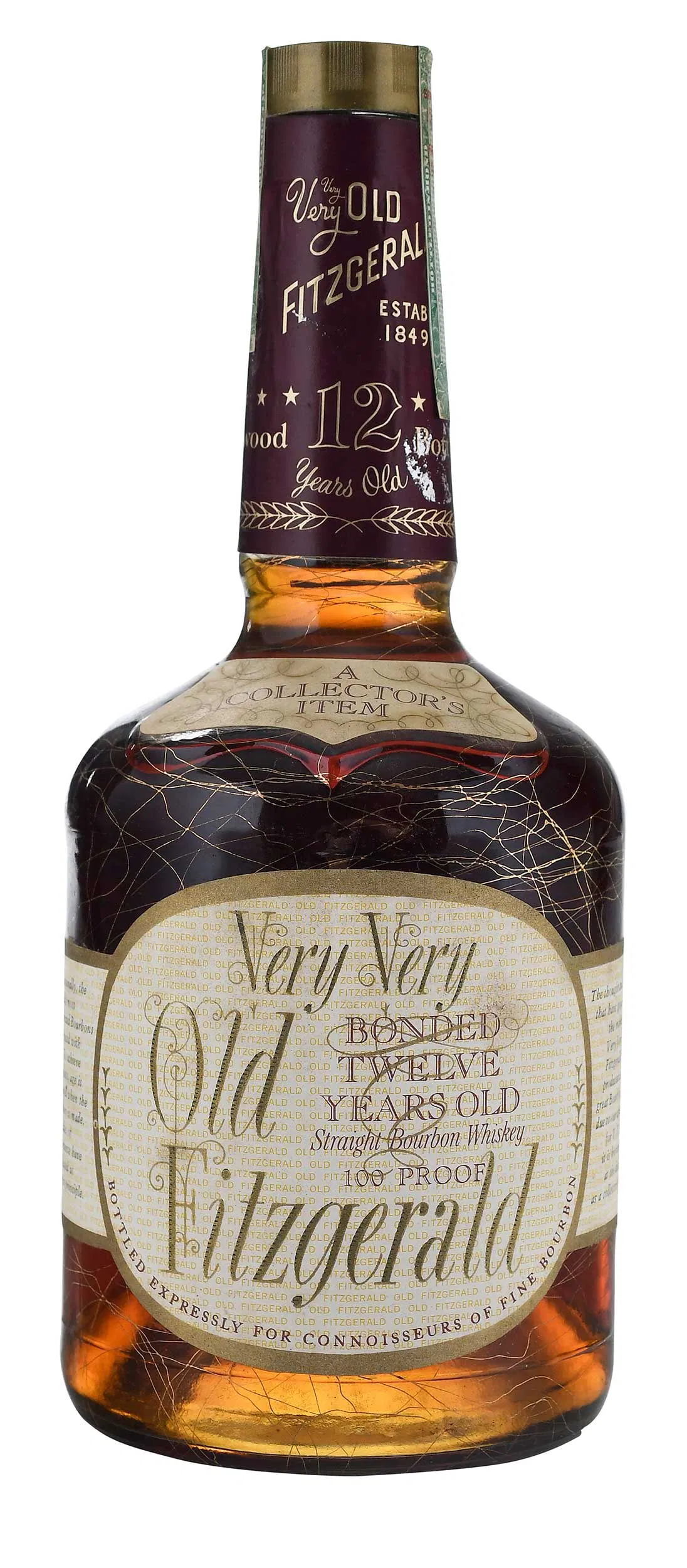
Very Very Old Fitzgerald 12 Year Old Bottled in Bond 100 Proof 1979. Image courtesy of Brunk Auctions.
Very Very Old Fitzgerald 12 Year Old Bottled in Bond 100 Proof 1979. Image courtesy of Brunk Auctions. 

Very Very Old Fitzgerald Bourbon 

A bottle of 1979 Very Very Old Fitzgerald bourbon will also cross the auction block this January (lot #650; estimate: $1,500 – $2,500). This 100-proof bonded 12-year-old whiskey was distilled, aged, and bottled in Louisville, Kentucky. Laced with thin yellow lines, the bottle design evokes age and craftsmanship. In accordance with the domestic tax laws of the period, the bottle is capped with a green label noting the year it was made (1967) and bottled (fall 1979).

Considered a collector’s item by both the brand and the market, this bottle of Very Very Old Fitzgerald belongs to a rare batch of whiskey made by Stizel Weller under the tutelage of Julian P. Van Winkle Sr. The Pappy Van Winkle brand, which purchased Old Fitzgerald during the Prohibition era, left a lingering mark on the latter brand’s bourbon recipe. Old Fitzgerald’s “whisper of wheat” gives the resulting bourbon a softer, sweeter taste. 

Rounding out the fine spirits offering in this sale are bottles of the Macallan whisky, George T. Stagg bourbon, and assorted whiskies presented in collectible bottles. 

Brunk Auctions’ Wine & Spirits Auction will begin live on January 30, 2025 at 10:00 AM EST. Visit Bidsquare to browse the complete catalog and register to bid. Find additional coverage of this sale on Auction Daily

The Saga of the Senns, Collectors from Le Havre

The father, Olivier, collected Impressionists. His son Edouard and granddaughter Hélène nurtured links with contemporary artists. Meanwhile, his daughter Alice acquired works by artists of the Great American West. Between them, they created one of the finest modern collections.

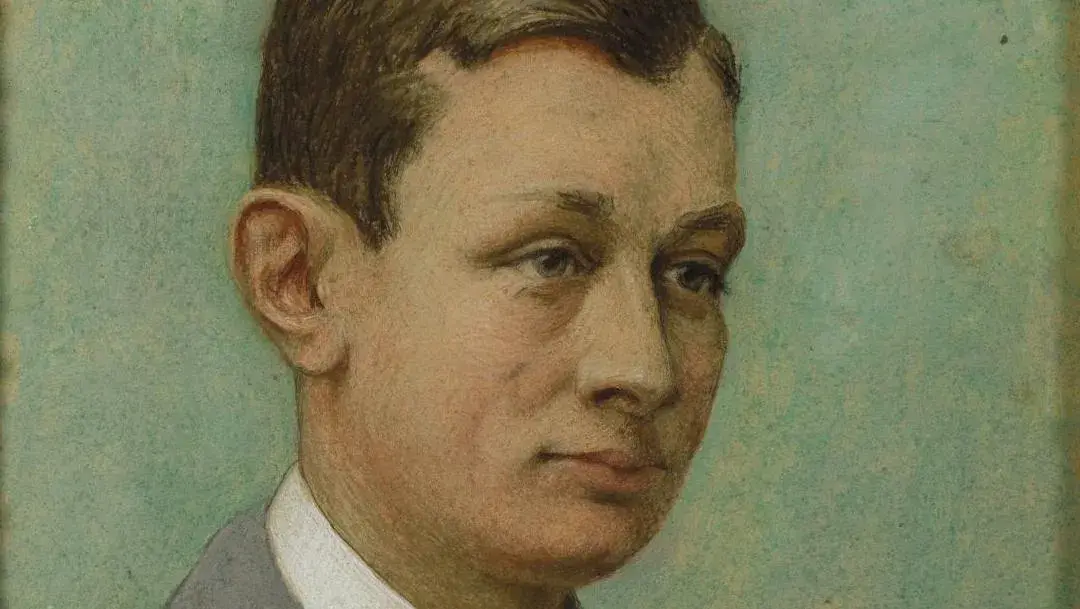
Leslie Cauldwell (1861-1941), Portrait of Édouard Senn, 1915, pencil and pastel on paper, 53.5 x 36.5 cm/20.9 x 14.8 in, private collection.
© François Dugué
Leslie Cauldwell (1861-1941), Portrait of Édouard Senn, 1915, pencil and pastel on paper, 53.5 x 36.5 cm/20.9 x 14.8 in, private collection. © François Dugué

Twenty years ago, Hélène Senn-Foulds (b. 1934) donated 205 works to MuMA, mostly from the collection of her grandfather, Olivier Senn (1864-1959). At the time, this major donation made the Le Havre museum’s Impressionist collection one of the foremost in the region. Since then, it has extensively studied and documented this group, and for this anniversary has endeavored to reconstitute Olivier Senn’s original collection. Upon his death, the collection, comprising over 500 mostly Impressionist works, was divided equally between his two surviving children: Alice (1898-1988) and Édouard (1901-1992), Hélène’s father. The result of long and patient research, the exhibition presents the missing part of the collection, which passed into the hands of Alice and her descendants. In the catalog, it also traces the history of a family of dignitaries and art lovers who rose to prominence in Le Havre in the second half of the 19th century. A major finance and trade center, the city was far from being a provincial sleeping beauty. Its commercial and transatlantic port and its stock exchange, comparable to those of New York or Frankfurt today, made it a business hub and an ideal environment for entrepreneurs. When the Olivier Senn, a Doctor of Law, married Hélène Siegfried, he became part of an economically and politically powerful family. He soon joined the cotton company founded by his father-in-law, and developed it successfully, building up a considerable fortune. As well as his involvement with business, in 1896, at 32, he became a member of the Société des Amis des Arts. His interest in art had already led him to buy several works, notably by Eugène Boudin. An active collector until the eve of the Second World War, Olivier Senn was mainly drawn to Impressionism, with a penchant for landscapes. Monet, Pissarro, Renoir, Degas, Guillaumin and the like figured prominently in his collection, which featured some outstanding works. His love of Impressionism led him to mix with other art lovers of his time in Le Havre, including Georges Dusseuil, Charles-Auguste Marande, Pieter Van der Velde and Édouard Choupay. Highly keen to champion art, they founded the Cercle de l’Art Moderne in 1906. They all bought numerous works at Paris auctions of the older generation’s great Impressionist collections: the Tavernier sale on March 6, 1900; the Blot sale on May 9-10, 1900; the Weiller sale on December 2, 1901; the Alexandre Blanc sale in December 1906; and the Rouart sale on December 9 and 18, 1912. Olivier Senn also bought from galleries including Georges Petit, Bernheim Jeune and Eugène Druet, and called on brokers like Paul Durand-Ruel. He personally attended major auctions and studio content sales, and met the artists, from whom he bought directly, as with Giorgio De Chirico’s The Red Tower, now in the Peggy Guggenheim collection in Venice.

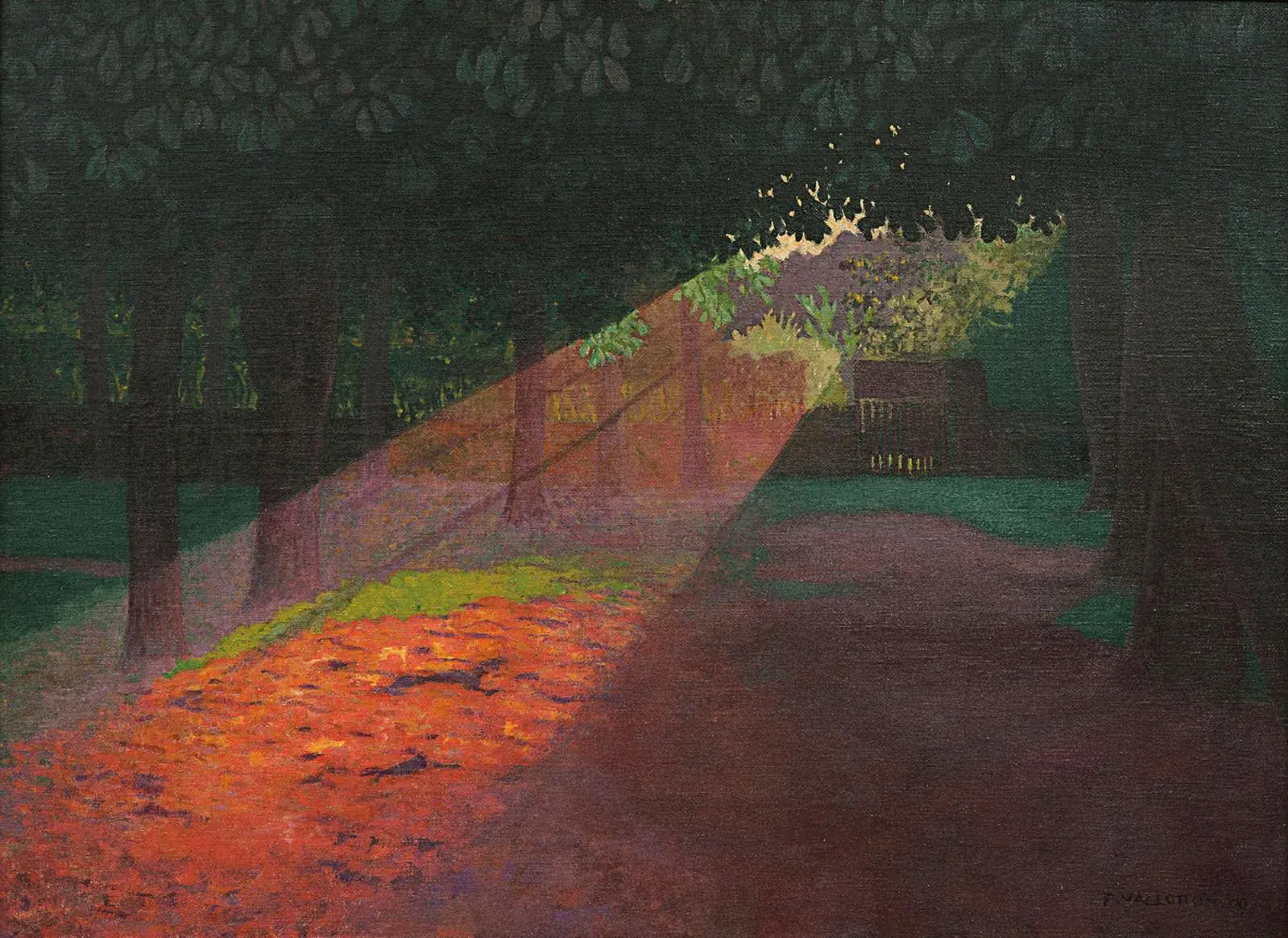
Félix Vallotton (1865-1925), Le Rayon (The Ray of Light), 1909, oil on canvas, 73 x 100 cm/28.7 x 39.4 in, private collection.
© André Longchamp
Félix Vallotton (1865-1925), Le Rayon (The Ray of Light), 1909, oil on canvas, 73 x 100 cm/28.7 x 39.4 in, private collection.
© André Longchamp

Some 80 Drawings by Edgar Degas

While a great admirer of Impressionism, collecting a sizable number of works, Olivier Senn also built up a personal collection, in which works he fell in love with had a prominent place. His pronounced taste for drawing resulted in a group of almost 80 works by Edgar Degas and as many watercolors by Edmond Cross. Senn made confident choices, regardless of market considerations: for instance, he bought six paintings by Paul Sérusier in 1916 and 1917, despite the artist’s low price index. He took an unfailing interest in Félix Vallotton, acquiring at least eight paintings from different periods, and supported artists like Charles Lacoste and Charles Cottet. His loyalty to Albert Marquet (whom he followed throughout his career) was reflected in a group of 17 paintings and over 100 drawings. A true art lover, Olivier Senn lived surrounded by his collection, which hung in his apartment in Avenue d’Iéna in Paris. Several photographs of it have survived. He was regularly approached for exhibitions and made generous loans. He was also a major donor to the Musée du Havre and the Musée du Luxembourg in Paris.

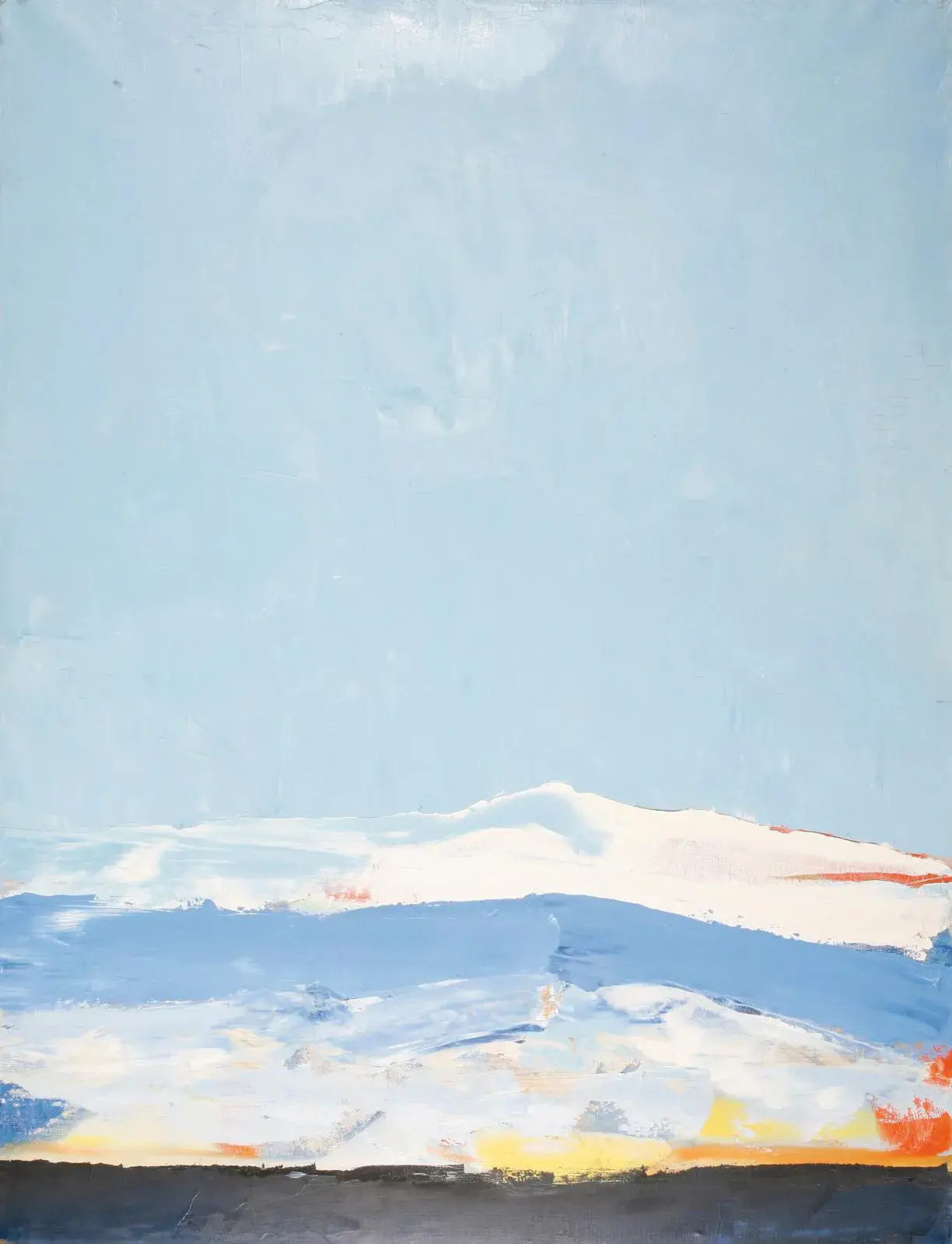
Nicolas de Staël (1913-1955), Landscape, Antibes, 1955, oil on canvas, 116 x 89 cm/45.7 x 35 in, Le Havre, Musée d'Art Moderne André-Malraux, Édouard Senn collection, donated by Hélène Senn-Foulds, 2009.
© MuMa/Charles Maslard © ADAGP, Paris 2024
Nicolas de Staël (1913-1955), Landscape, Antibes, 1955, oil on canvas, 116 x 89 cm/45.7 x 35 in, Le Havre, Musée d’Art Moderne André-Malraux, Édouard Senn collection, donated by Hélène Senn-Foulds, 2009.
© MuMa/Charles Maslard © ADAGP, Paris 2024

Artists of the Great American West

After his death, Olivier Senn’s collection was preserved essentially intact by his two heirs. Édouard Senn, a cotton merchant like his father, had five children including Hélène Senn-Foulds, who donated her grandfather’s share of the collection to the Musée du Havre in 2004, and then her father’s share in 2009. Hélène began collecting around the same time that her father stopped. For his part, he set out to collect works by artists who were his contemporaries, maintaining direct links with some of them, like Endre Rozsda and Étienne Hajdu. The major pieces he acquired included The Beggar (1904), a watercolor from Pablo Picasso’s blue period, and Landscape, Antibes (1955), a painting by Nicolas de Staël. Hélène Senn-Foulds, in turn, was keen to collect living artists such as Zoran Music, Geneviève Asse and Philippe Cognée. Hélène’s adopted son Christophe Karvelis-Senn (b. 1962), married to a Mexican wife, Teresa, is also a collector, who focuses on the South American scene and artists like Gabriel Orozco, Pia Camil, Juan Soriano, Enrique Ramirez, Artur Lescher and Oscar Muñoz. As regards the family branch embodied by Alice Senn, the story continued on the other side of the Atlantic. As the Second World War approached, Alice and her husband Rodolphe Rufenacht decided to emigrate to the United States, and moved to New York in 1940, where they raised their five children. When Rodolphe died in 1949, Alice moved to Tucson, Arizona, where the climate was more beneficial for her health. Drawn to the arid landscape and the beauty of wide-open spaces, she began collecting works by artists of the American West. They included John Edward Borein, Edith Hamlin and Ross Stefan, all represented at the Tucson Museum of Art, to which Alice often made loans. She also bought several pieces by California-based ceramicists Otto and Gertrud Natzler. And it was in her Tucson home that she installed the collection inherited from her father in 1959. Prior to reconstructing Olivier Senn’s collection, the Musée du Havre focused its research on the section that had crossed the Atlantic. Thanks to the generosity of Alice’s descendants, the project has been successfully completed, and the story of a major family of collectors brought to light, to the joy of art lovers.

Worth Seeing
“Les Senn, collectionneurs et mécènes”
(“The Senn Family: Collectors and Patrons”)
Musée d’Art Moderne André-Malraux (MuMA)
Until February 23, 2025
muma-lehavre.fr

Brunk Auctions Brings Fine & Rare Wines to the Auction Block

Two major fine wines from Château Cos d’Estournel are set to enter the auction market this month with Brunk Auctions. The auction house’s upcoming Wine & Spirits Auction | January 30, 2025 | Online Only will begin at 10:00 AM EST on January 30, 2025. The sale will offer a wide selection of wines and liquors, including red wines from Burgundy and Bordeaux, Cabernet Sauvignon from Napa Valley, champagne, ports, and whiskey. The starting bids for this wine auction range from USD 50 to $1,500.

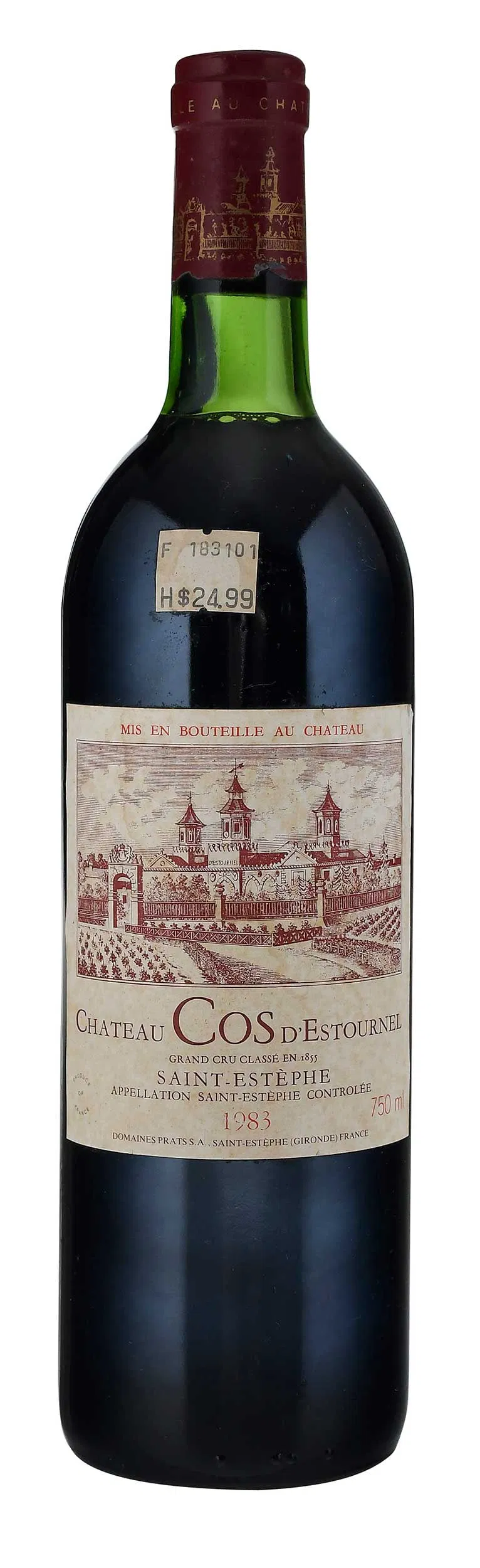
1983 Chateau Cos d'Estournel
1983 Chateau Cos d’Estournel

Leading the collection is a bottle of 1983 Château Cos d’Estournel from the esteemed wine estate in the Bordeaux appellation Saint-Estèphe (lot #525; estimate: $100 – $300). This wine has a ruby color with garnet undertones, indicating maturity and age-worthiness. An integrated tannin structure and a harmony of flavors are displayed on the palate. It has a rich and complex profile that develops with each sip, complimented by notes of blackcurrants, cedar, leather, and spices. The wine has an expressive nose, offering a pleasing bouquet of flavors, including hints of tobacco, earthiness, and black fruit. A lasting impression of finesse and elegance is left on the palate. For wine lovers and collectors, this wine captures the essence of Cos d’Estournel’s art of winemaking.

1990 Chateau Cos d'Estournel
1990 Chateau Cos d’Estournel

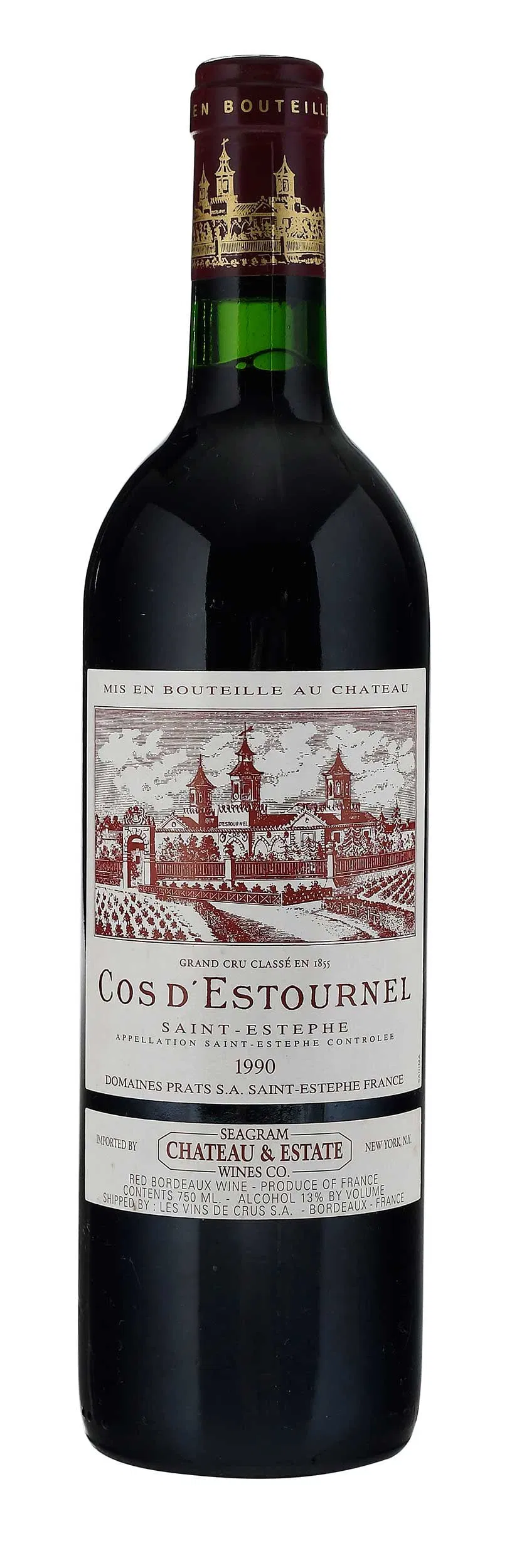
A bottle of 1990 Château Cos d’Estournel is another highlight of the sale (lot #530; estimate: $200 – $400). This blend from the St. Estèphe sub-region of Bordeaux has impressive depth and maturity. With an alcohol content of 13.0%, this red wine from Cos d’Estournel has a cork closure. Château Cos d’Estournel made an exceptional wine of poise in 1990, a vintage marked by generous climatic conditions in Bordeaux. Cos d’Estournel 1990 offers a harmonious balance between fruit, tannin, and oak maturity. In every glass, the bouquet unfolds with a cigar box, blackcurrant, and truffle notes.

1973 Chateau Mouton Rothschild

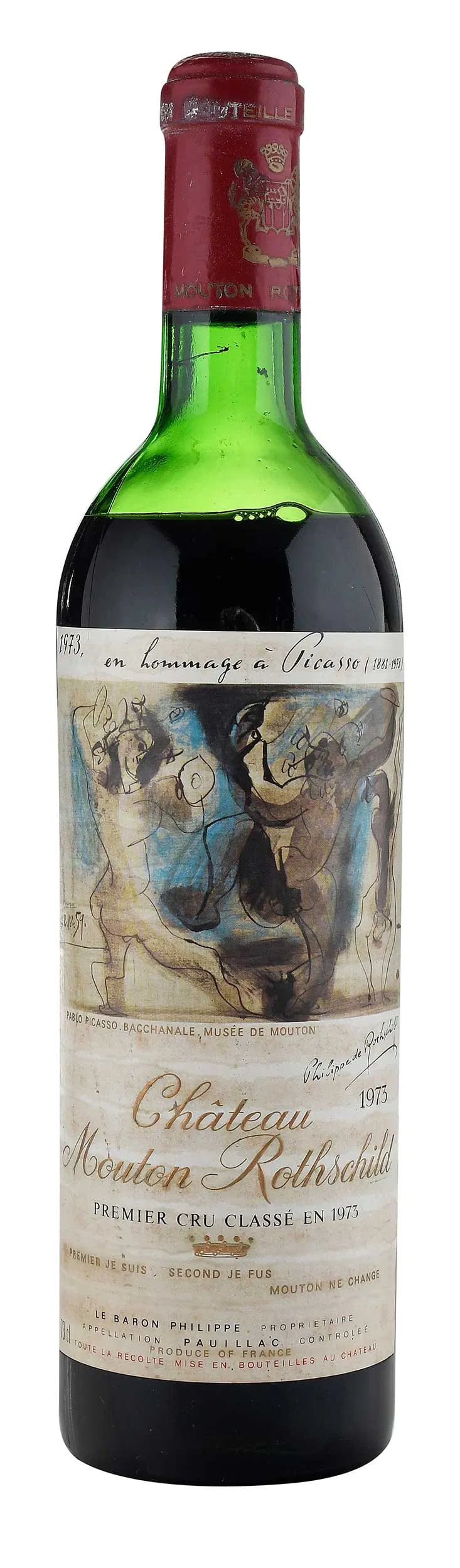
Another variety from Bordeaux in the auction is a 1973 Château Mouton Rothschild, produced by the finest vines on the Mouton plateau (lot #535; estimate: $200 – $400). This blend consists mostly of Cabernet Sauvignon, being from Pauillac. Cabernet Franc, Merlot, and Petit Verdot complete the blend based on the vintage. Each year, a famous artist designs the labels for Mouton’s bottles.

Additional lots of interest in this sale include:  

  • A 2003 Château La Mission Haut-Brion, red Bordeaux, Pessac-Leognan, France, 750 ml, 13% alcohol (lot #521; estimate: $100 – $300) 
  • A 1986 Château Lafite Rothschild, red Bordeaux, Pauillac, France, 750 ml, 12.5% alcohol (lot #539; estimate: $600 – $900) 
  • Three bottles of 1988 Château Pichon-Longueville Baron, red Bordeaux, Pauillac, France, 750 ml, 12.5% alcohol (lot #547; estimate: $300 – $500) 
  • Six bottles of 1988 Château Margaux (lot #544; estimate: $1,000 – $2,000)
  • The Dalmore King Alexander III, Highlands, Scotland, single malt Scotch whiskey, 750 ml, 40% alcohol (lot #666; estimate: $100 – $300)

Private auction house Brunk Auctions sells fine art, jewelry, antique furniture, Asian art, coins, and more in Asheville, North Carolina. Established by Robert Brunk in 1983, this auction house is renowned for its integrity and professionalism. Brunk specializes in the sale of fine art, jewelry, Asian art, antique furniture, coins, and a wide variety of other items, ranging from antiquities to contemporary art. The specialist staff are renowned for their expertise in the art of connoisseurship. Throughout its 40 years of business, the auction house has been committed to providing consistent and thoughtful client service.

This Wine & Spirits Auction from Brunk Auctions will begin at 10:00 AM EST on January 30, 2025. Visit Bidsquare to browse the complete catalog and register to bid. 

Chillin’ With Dylan: Julien’s Bob Dylan Sale Brings Stellar Results

Bob Dylan (b. Robert Allen Zimmerman, 1941-) has sold more than 125 million records over his six-decade career. Considered by many as one of the most important and talented songwriters ever, his many awards include ten Grammy Awards, an Academy Award, a Golden Globe Award, and the Nobel Prize in Literature. On January 18, 2025, Julien’s presented the Celebrating Bob Dylan The Aronowitz Archive & More sale in Nashville, TN. This 60-lot event included materials from rock and roll journalist Al Aronowitz (1928 – 2005), who was a personal and professional acquaintance of the songwriter. Prices noted include the auction house’s buyer’s premium and fees.

Lot #19, three drafts of Mr. Tambourine Man, was estimated at $400,000 to $600,000 and sold for $508,000. Image courtesy of Julien’s.

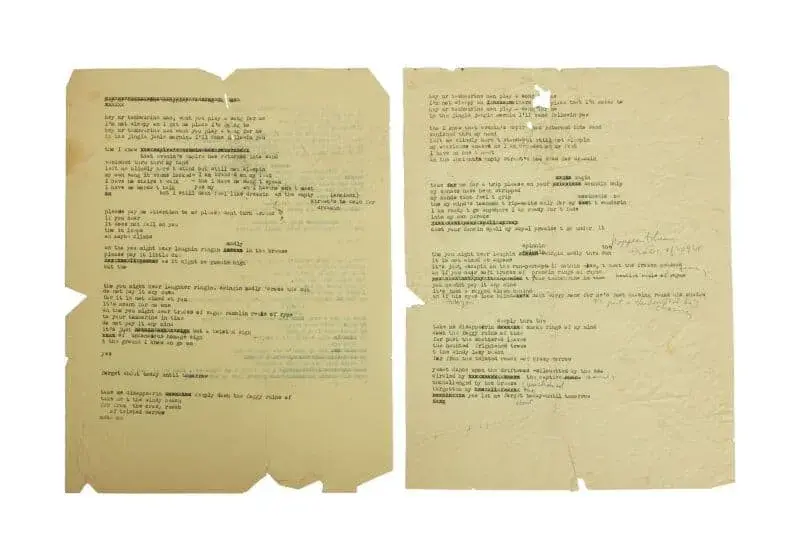
The top lot in this Bob Dylan sale was #19, three progressive drafts of Mr. Tambourine Man working lyrics. They were estimated at USD 400,000 to $600,000 and sold for $508,000. This grouping included two sheets of yellow paper and three pages of typescript lyrics, representing three progressive drafts of one of Dylan’s signature songs. The third draft of the song included annotations in Bob Dylan’s hand. The pages reflected significant edits version over version. The third version was the closest version of the song that we are all familiar with– but still had noticeable differences from the final released version.

Dylan penned Mr. Tambourine Man in 1964 and recorded and released it in 1965. He wrote the song after attending Mardi Gras in New Orleans. Some of the background music and themed lyrics of the song reflect the upbeat and fanciful nature of this annual festival. This song was recorded by several premier artists over time, including the Byrds, Judy Collins, Stevie Wonder, and Odetta; Dylan’s version is included on Rolling Stone’s list of the 500 best songs ever and has received a Grammy Hall of Fame award.

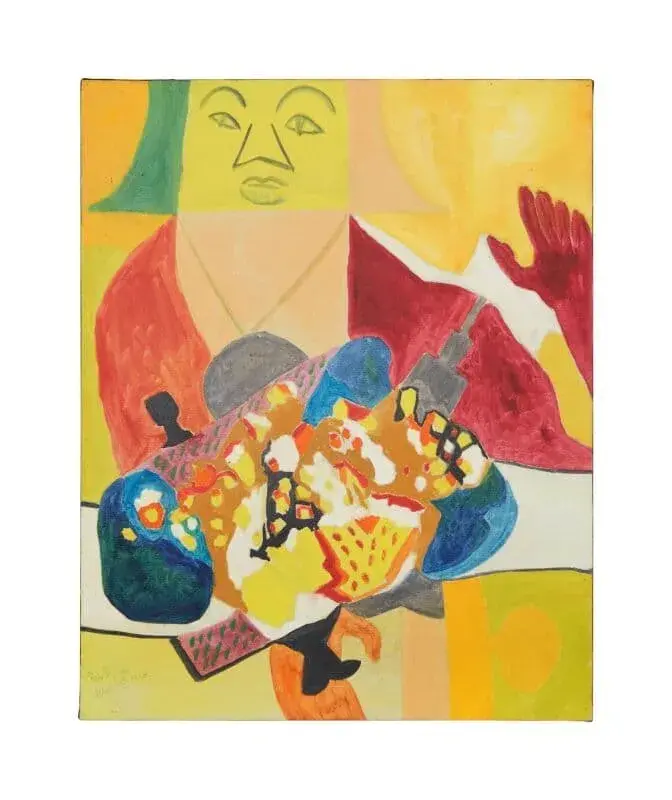
Lot #27, an original 1968 oil on canvas painting by Bob Dylan, was estimated at $200,000 - $300,000 and sold for $260,000. Image courtesy of Julien’s.
Lot #27, an original 1968 oil on canvas painting by Bob Dylan, was estimated at $200,000 – $300,000 and sold for $260,000. Image courtesy of Julien’s.

Paintings and sketches by Dylan were a key category in this rockstar sale. Two generated breathtaking results.

The first, lot #27, was an original 1968 oil on canvas painting. Estimated at $200,000 to $300,000, it traded hands at $260,000. This untitled, unframed 30 by 24-inch oil on canvas painting, inspired by Marc Chagall, was signed and dated by the artist in pen on its lower left. This figural and abstract work was produced by Dylan at the beginning of his interest in painting as a hobby; his wife Sara gave him a painting kit for his 27th birthday in May of 1968.

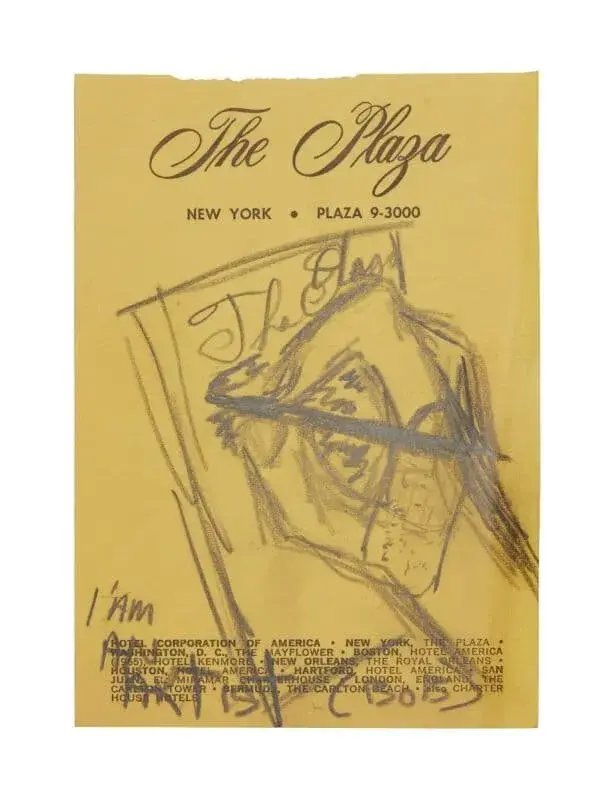
The second, lot #28, was an original pencil sketch of a hand on a Plaza Hotel memo pad. Estimated at $1,500 to $2,500, it realized a whopping $88,900. This early to mid-1960s pencil on paper work illustrated a hand drawing something on a memo page from a Plaza memo pad.  Interesting details of the image include the fact that the hand had a Band-Aid near the wrist and was captioned, “I AM / An Artist / (Bob).”

Lot #28, an original pencil sketch of a hand on a Plaza Hotel memo pad, was estimated at $1,500 to $2,500 and sold for $88,900. Image courtesy of Julien’s.

In addition to being a songwriter and performer, Dylan is also a prolific visual artist– and has been since the 1960s. His mediums have included oil on canvas, watercolors, gouaches, large-scale acrylic paintings, pastel portraits, and even metalwork and statues. Most recently, a collection of 250 of his various works has toured the world as part of his aptly named Retrospectrum exhibit. And, over the past three decades, nine tomes featuring the performer’s drawings and paintings have been published.

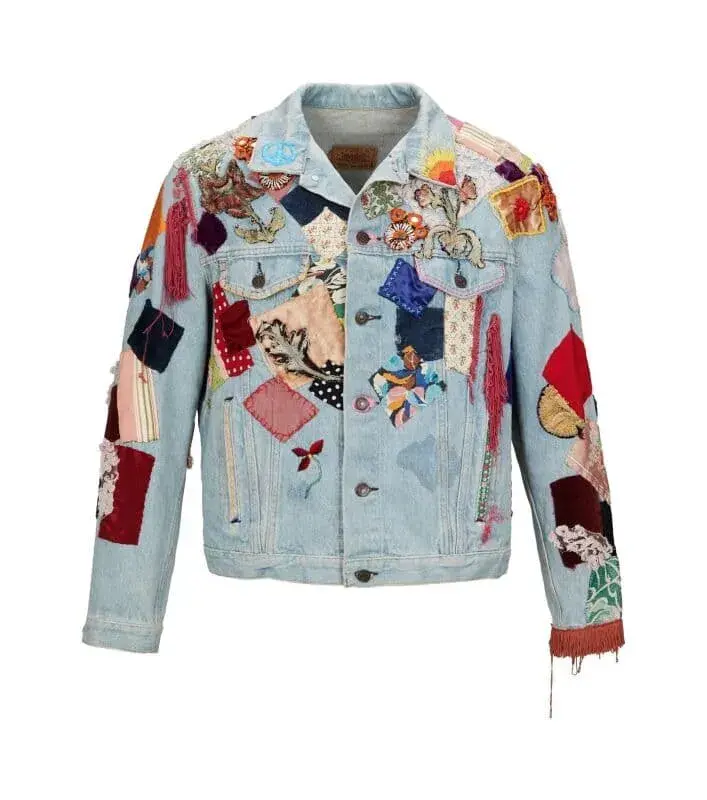
Lot #55, a screen-worn denim jacket from the film Hearts of Fire, was estimated at $20,000 to $30,000 and sold for $25,400. Image courtesy of Julien’s.

Bidders and collectors at this Bob Dylan sale were also interested in the artist’s personal effects. Lot #55, a screen-worn denim jacket from the 1987 feature film Hearts of Fire, was estimated at $20,000 to $30,000 and sold for $25,400. This XL jacket, made by Levi’s, was decorated with velvet, lace, fringe, embroidery, and other fabric patches. It was featured in the 1987 Lorimar film at a key moment in the plot where Dylan’s character punches Rupert Everett’s character.

This rock and roll drama from 1987 was created to show off the star power and talent of Dylan as a singer and performer. He contributed two original tracks and one cover tune to the soundtrack, which was produced by Columbia Records.  

Lot #39, a Nat Finkelstein signed photograph of one of Dylan's visits to Warhol's Factory, was estimated at $800 to $1,200 and sold for $12,700. Image courtesy of Julien’s.
Lot #39, a Nat Finkelstein signed photograph of one of Dylan’s visits to Warhol’s Factory, was estimated at $800 to $1,200 and sold for $12,700. Image courtesy of Julien’s.

Photographs of Dylan throughout his career featured prominently in this event. Lot #39, a large Nat Finkelstein (1933 – 2009) signed photograph of one of Dylan’s visits to Andy Warhol’s Factory, was estimated at $800 to $1,200 and delivered $12,700. This 11 by 14-inch black-and-white silver gelatin photograph was signed on its lower right corner in blue ballpoint by Finkelstein, who was the Warhol Factory photographer in the late 1960s.

Andy Warhol’s (1928 – 1987) Factory was the visual artist, film director, and producer’s creative studio located in Manhattan. The Factory was also known as The Silver Factory. There, Warhol and his minions would design and produce his now legacy silkscreened and lithographed images. The Factory was located in four different locations from 1963 through 1987. These included 231 East 47th Street from 1963 – 67; 33 Union Square West from 1968 – 73; 860 Broadway from 1973 – 84; and 158 Madison Ave (22 East 33rd Street) from 1984 – 87. The Factory was the premier place to party and be seen. It was frequented by the celebrities, rock stars, and artists of its era. It closed after Warhol’s death in 1987.

Lot #52, a 1983 butterscotch blonde Fender Telecaster electric guitar owned and played by Dylan, was estimated at $80,000 to $120,000 and sold for $222,250. Image courtesy of Julien’s.

Musical instruments, posters and broadsides, correspondence, and other ephemera with ties to Dylan brought this sale full circle. Lot #52, a 1983 butterscotch blonde Fender Telecaster electric guitar owned and played by Dylan, was estimated at $80,000 to $120,000 and delivered $222,250. This instrument was made as a special order for Dylan, who favored this design in the 1970 to 1990 timeframe. Its letter of provenance indicated that it was gifted to fellow musician Cesar Diaz (1951 – 2002).

For more information on the Celebrating Bob Dylan The Aronowitz Archive & More sale, visit Julien’s.

BRAFA: Brussels’ Oldest Art Fair Celebrates its 70th Edition

An anniversary is always an occasion to take stock, and it’s obvious when you look back at the history of BRAFA: the Belgian Antiques Fair has become a must-attend international fair whose strength lies in its eclecticism.

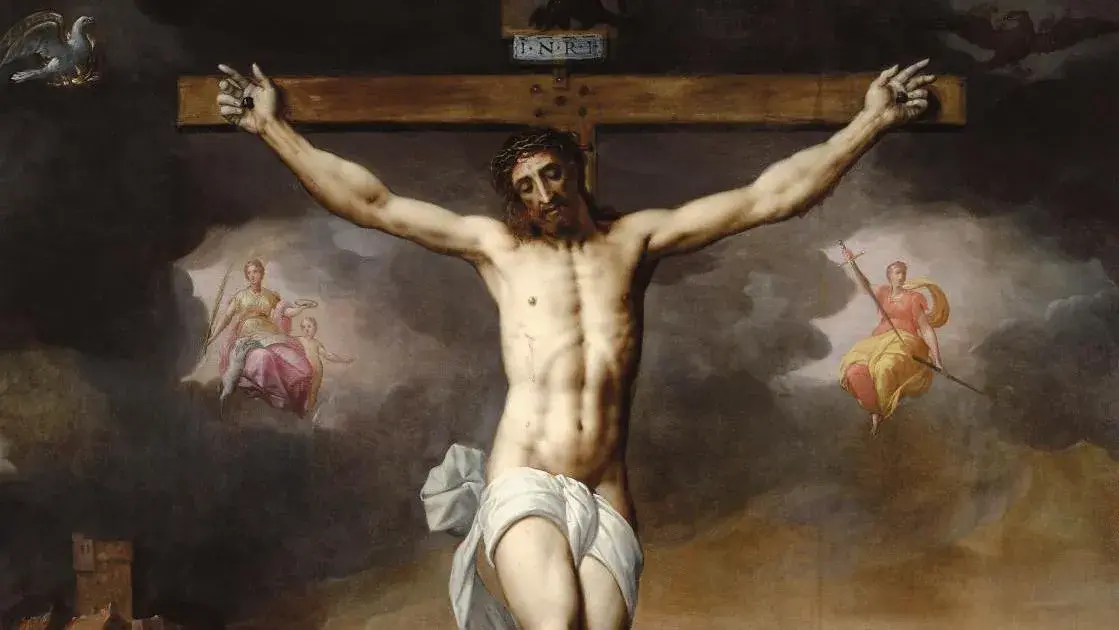
Willem Adriaensz Key (1515/16-1568), Crucifixion, c. 1550, oil on wood panel, 102 x 74 cm/40.15 x 29.13 in. Galerie Colnaghi, London, New York, Madrid, Brussels.
© Courtesy of the Colnaghi Gallery
Willem Adriaensz Key (1515/16-1568), Crucifixion, c. 1550, oil on wood panel, 102 x 74 cm/40.15 x 29.13 in. Galerie Colnaghi, London, New York, Madrid, Brussels.
© Courtesy of the Colnaghi Gallery

To celebrate its 70th edition, the BRAFA has “given” itself a new president. The torch was passed in June from Harold t’Kint de Roodenbeke — who had served four consecutive terms — to Klaas Muller. But there’s no question Klaas Muller will shake things up. But the fair’s format works — it attracted 67,000 visitors in 2024 — and the two axes he is championing are maintaining the balance between the twenty or so specialties and internationalizing what is now Europe’s oldest fair. The BRAFA Board of Directors has selected sixteen new galleries from a total of one hundred and thirty, including Hoffmans Antiques (Stockholm), specializing in Gustavian furniture; J. Baptista (Lisbon), for jewelry and silver; Stone Gallery (Netherlands), for crystals, fossils and meteorites; Valerio Tirchi (Rome), for Greek and Roman archaeology; and DYS44 Lampronti (London), for Italian masters of the 17th and 18th centuries. There’s also Colnaghi (London): founded in 1760, the latter made news last year when Caravaggio’s Ecce Homo — which it sold for over €30 M to a private collector in Madrid — went on loan to the Prado Museum. The gallery’s stand will also feature a Crucifixion by Willem Adriaensz Key (1515 or 1520-1568), “one of the few religious works for private devotion that the artist painted in Antwerp before the iconoclastic fury, known as the ‘Beeldenstorm’, which struck Antwerp in 1566,” explains Philippe Henricot, head of the gallery’s Brussels office. Many of his paintings were destroyed at that time”.

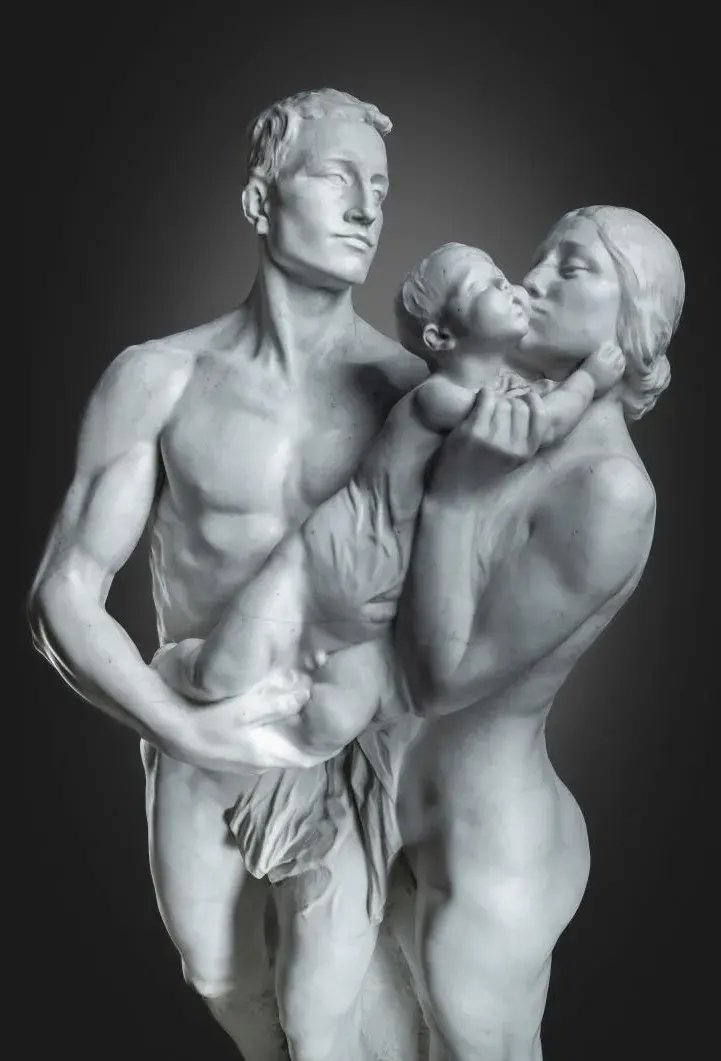
Pieter Jan Braecke (1858-1938), L’Humanité, before 1906, marble, h. 220 cm. Galerie Thomas Deprez Fine Arts, Brussels.
© Photo Cedric Verhelst
Pieter Jan Braecke (1858-1938), L’Humanité, before 1906, marble, h. 220 cm. Galerie Thomas Deprez Fine Arts, Brussels.
© Photo Cedric Verhelst

The Generalist Advantage

Back in 1956, when the first fair was held, the idea was to bring together Brussels antique dealers specializing in furniture and objets d’art. Times have changed, and today’s positioning is that of eclecticism: a strength and an asset. Indeed, generalist fairs are becoming rare and are the ideal terrain for reaching new collectors, who are more inclined to open up to new horizons through random discoveries among the different stands. This includes the cabinets of curiosities so well organized by Finch & Co, which unfortunately won’t be returning this year. The double stand of the AB & BA gallery run by the Aittouarès sisters, Agnès and Odile, comes close, with post-war art represented by Marfaing, Degottex and Hans Hartung on one side and, on the other, as Odile Aittouarès explains, “a wall devoted to the Georges Goldfayn Collection. At the age of 17, he met André Breton, becoming his assistant and friend. He rubbed shoulders with the Surrealist artists of the group, forming close friendships with Toyen, Konrad Klapheck, Wolfgang Paalen and the poet Annie Le Brun. His collection, organized around Surrealist, Outsider and Traditional Non-western art, echoes that of André Breton. Interdisciplinarity, which has become something of a mantra, was avant-garde when Axel Vervoordt made it his artistic trademark from his very first participation in 1976. Combining contemporary art with archaeology (as he will do again this year) or non-European art with furniture from the 1950s has become fashionable. This is what attracted Parisian Nathalie Obadia to join this edition, even though she opened her Brussels branch in 2008. “I’ve been visiting the fair every year for the last seven or eight years, and I appreciate the warm atmosphere and the mix of modern art, furniture and fine art. I’ve also been taking part in TEFAF in Maastricht for the past four years, and I realize that I’ve succeeded in bringing collectors of Old Masters into contemporary art, whereas they might have had a rather elitist image of it. At BRAFA, I hope to meet some collectors I haven’t yet met in Brussels, even though I’ve been there for fifteen years”. The gateway to creating this bridge is the work of artists “who bring us back to the universal, who can evoke the ancient arts like the sculptures of Wang Keping, or refer to more traditional techniques like the tapestries of Laure Prouvost, the expressionist paintings of Joris Van De Moortel, the more classical ones of Carole Benzaken or the abstract ones of Shirley Jaffe and Fiona Rae”. Prices will range from €20,000 for Carole Benzaken to €300,000 for Shirley Jaffe or Wang Keping. Galerie Templon has also taken the plunge, as its general manager, Anne-Claudie Coric, explains: “We’ve wanted to take part in BRAFA for a long time, as we’ve been based in Brussels for over ten years. Today, we feel it’s an unmissable event: all our Belgian collectors go there”. They will discover a solo show by François Rouan, notably with braided painted works (around €125,000/135,000).

Read more
Joana Vasconcelos (Born in 1951)

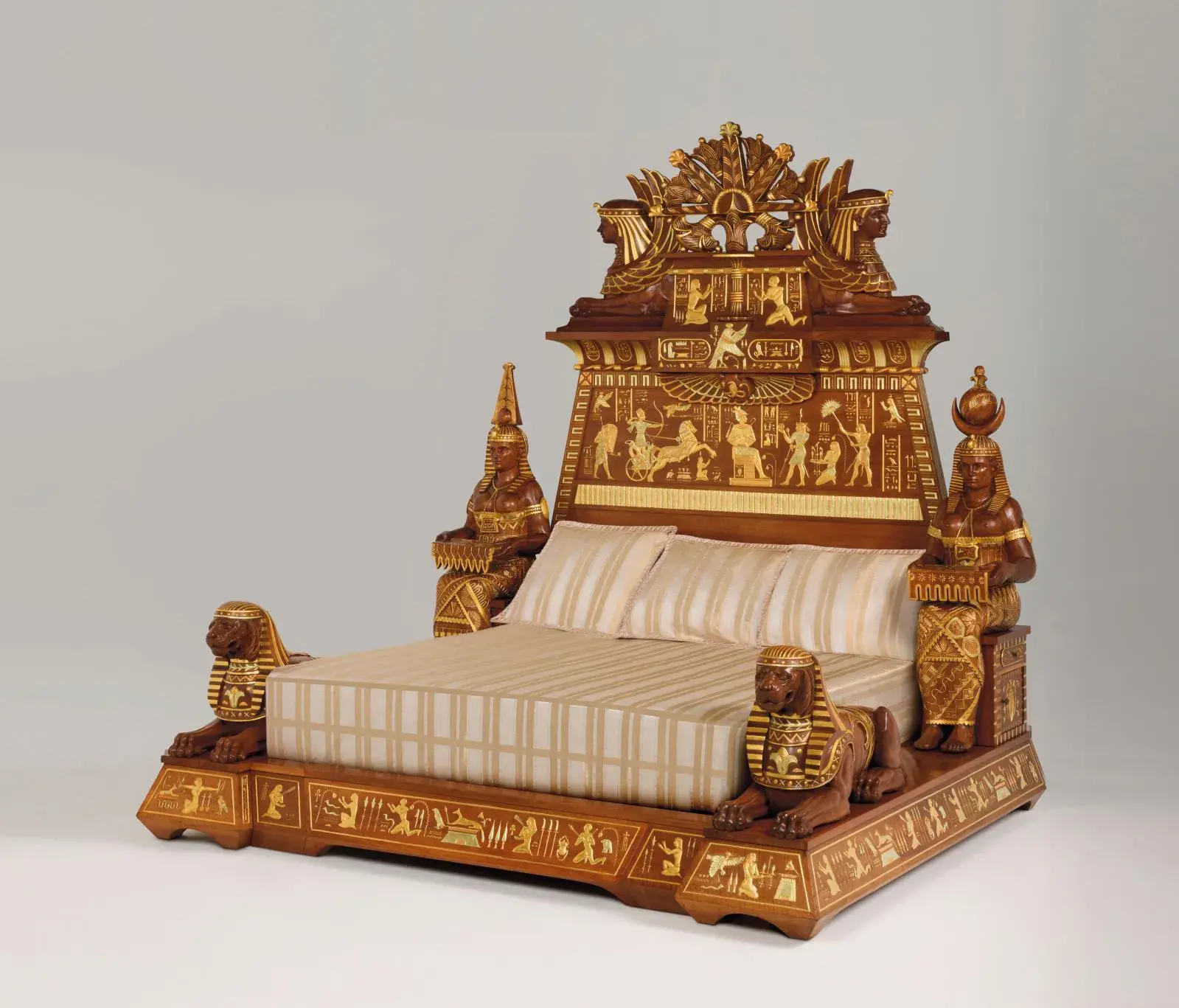
Louis Malard, 19th century, monumental bed in the « Egyptomania » style, walnut with polychromy, 271 x 232 x 260 cm/106.69 x 91.33 x 102.36 in.
© Galerie Marc Maison, Saint-Ouen.
Louis Malard, 19th century, monumental bed in the « Egyptomania » style, walnut with polychromy, 271 x 232 x 260 cm/106.69 x 91.33 x 102.36 in.
© Galerie Marc Maison, Saint-Ouen.

From Persian Embroidery to Hubert Le Gall

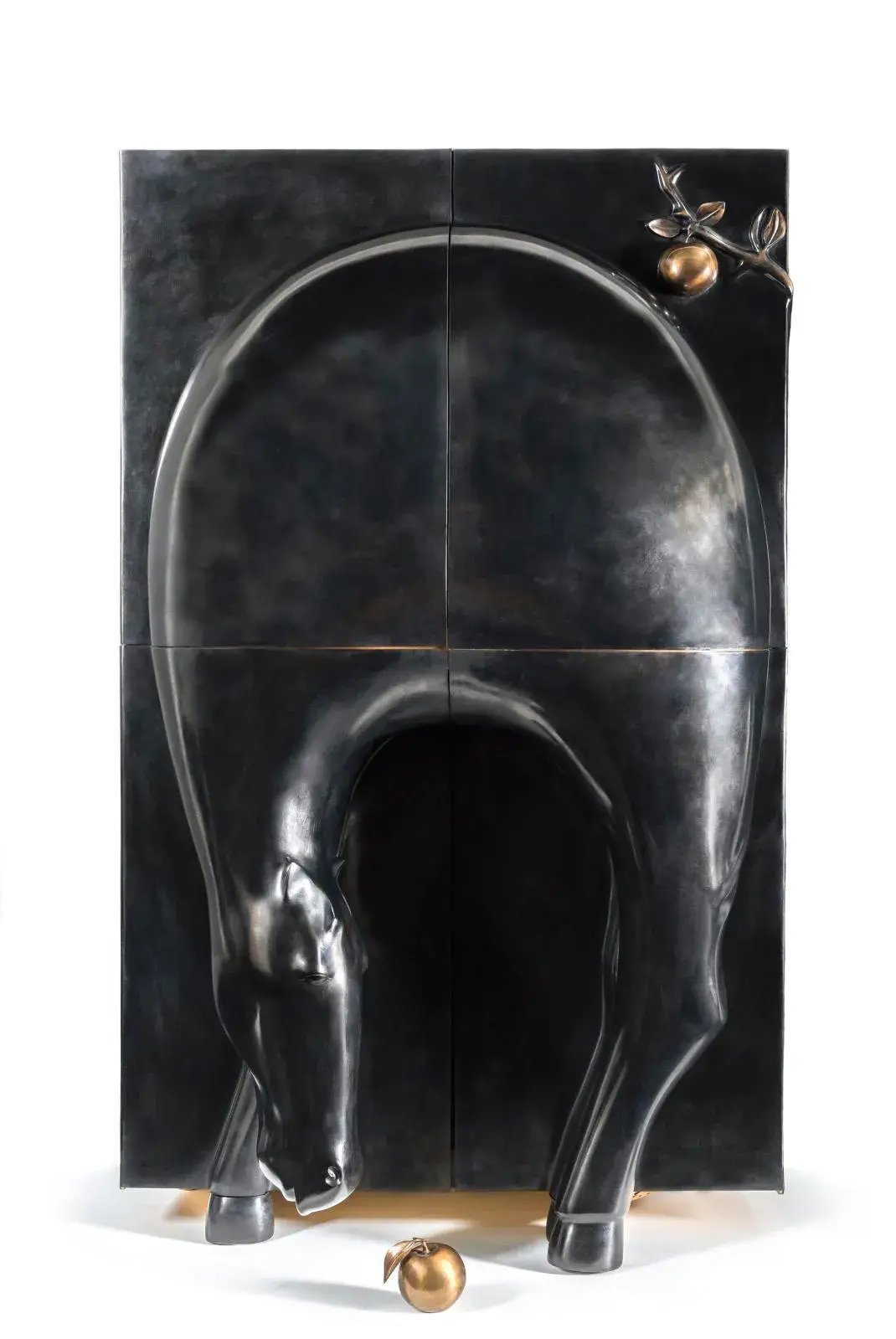
Openness is the hallmark of Belgian collectors so praised by gallery owners, as Michel Poletti, co-founder of Univers du Bronze, a gallery that has been present in Belgium for some thirty years, shares. “Over time, we’ve seen them open up to more modern works and, as everywhere, contemporary trends, sometimes with a daring avant-gardism. We sell everything from Barye, Carpeaux and Rodin to Bugatti, Pompon and Laurens, as well as contemporary works by Umberto, Hubert Le Gall and Jivko. This is reflected in his stand, which will surprise many with one of the eight editions of Hubert Le Gall’s L’Éternel Printemps cabinet. Baroque and refined. Dialogue will also be the watchword of Naïry Vrouyr, who represents the fourth generation of this Antwerp-based gallery that has been a regular exhibitor since 1957. “This year, we’re presenting a very fine embroidery from Resht, over 3 m (9.84+ ft) long, which testifies to the remarkable needlework produced by this ancient capital of Persia during the Qadjar era. In contrast, we’re offering a rug by Dutch artist Ysbrant, which we’re producing as a one-off from a design created for the gallery in 2005. Dei Bardi Art continues its exploration of early tapestry, particularly Flemish tapestry, with Le Martyre de sainte Barbara (The Martyrdom of Saint Barbara), still in vibrant colors. “Around 1500, Bruges was a major weaving center. However, very few tapestries have survived, making this work particularly rare,” explains the gallery owner. The depiction of the executioner brandishing a curved sword recalls the historical context of the period, reflecting the Ottoman incursions into Central Europe. This detail makes it possible to date the tapestry to the second quarter of the 16th century”. Don’t leave the fair without stopping by the stand of Marc Maison (Saint-Ouen), which is playing the Egyptomania card with a bed by cabinetmaker Louis Malard, presented at the 1889 Universal Exhibition in Paris. Auctioned by Brissonneau at Hôtel Drouot on April 5, 2019, it has since been restored to its former glory. From this “princess” bed, it’s only a short step to dreaming with the tiara created in 1909 by Chaumet for the marriage of the daughter of the Count and Countess of Heeren at Epoque Fine Jewels (Courtrai) or to imagining oneself taking tea in the Art Deco service signed Puiforcat at Galerie Mathivet (Paris). A journey from the intimate to the masterly, from the historic to the eclectic, from art to the art of living.

Hubert Le Gall (born 1961), L’Éternel Printemps cabinet, 2024, patinated and polished bronze, 161 x 100 x 54 cm/63.38 x 39.37 x 21.25 in. L’Univers du Bronze, Paris.
© Photo Bruno Simon
Hubert Le Gall (born 1961), L’Éternel Printemps cabinet, 2024, patinated and polished bronze, 161 x 100 x 54 cm/63.38 x 39.37 x 21.25 in. L’Univers du Bronze, Paris.
© Photo Bruno Simon

Worth Seeing
BRAFA Art Fair
Brussels Expo
Place de Belgique, Brussels
From January 26 to February 2, 2025
brafa.art

A California Artist Redefines the Legacy of Watercolor Painting: Timothy J. Clark: Going Places Now on View at the Hilbert Museum of California Art

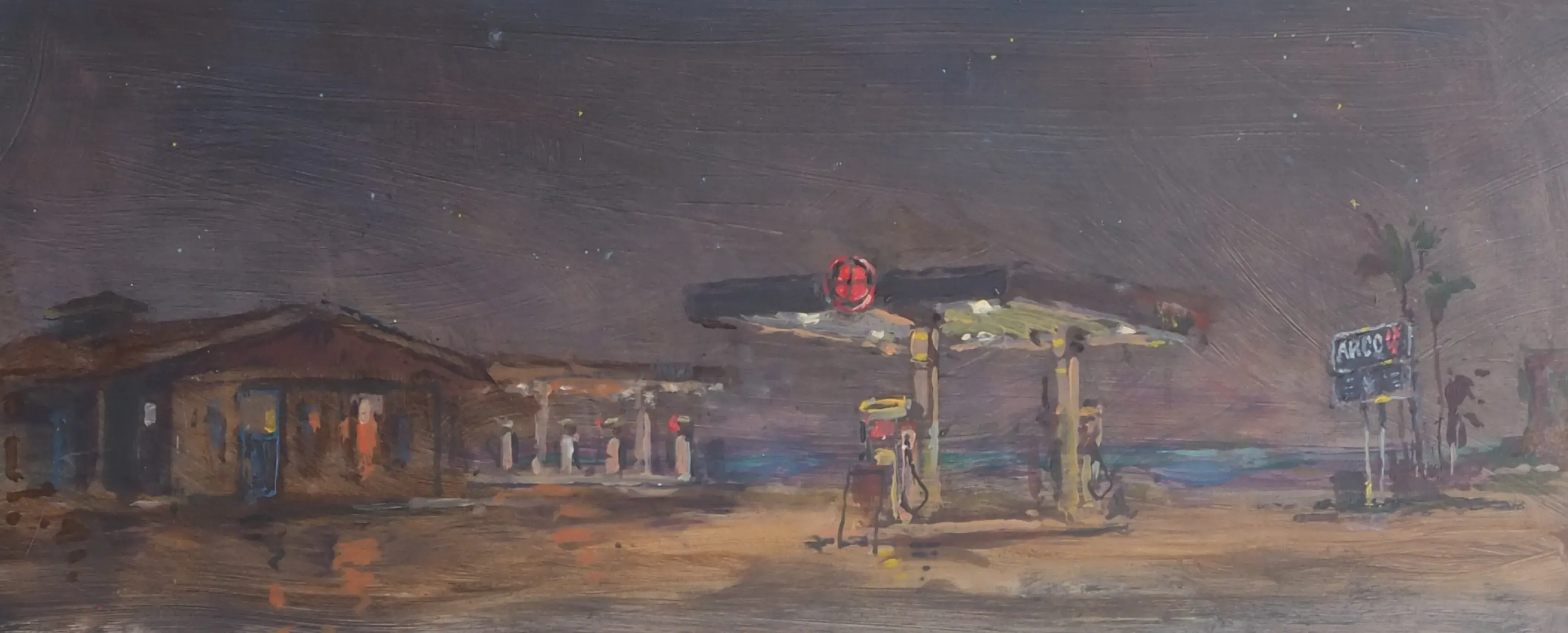
Timothy J. Clark, Poche Richfield Station, Oil, 2023-2024, 12 1/4" x 23 3/4"
Timothy J. Clark, Poche Richfield Station, Oil, 2023-2024, 12 1/4″ x 23 3/4″

Orange, California– The Hilbert Museum of California Art invites art lovers to discover the extraordinary world of acclaimed artist Timothy J. Clark through the exhibition, Timothy J. Clark: Going Places, now on view through March 8, 2025. Clark, celebrated for redefining watercolor, merges tradition and innovation to create works that transform everyday scenes into visual symphonies of color and light. From the quiet dignity of a Mexican church to the bustling energy of European life, each painting provides a window into our shared humanity.  This exhibition offers visitors an immersive experience into the world of an artist who honors tradition while pushing boundaries

Clark’s work exemplifies technical brilliance and emotional depth. His pieces—created using hand-ground pigments, archival-quality paper, and unconventional tools such as feather quills and Buddhist candles—echo the mastery of Turner and Sargent yet his style remains distinctly his own —a blend of technical precision and emotional depth. His urban nightscapes and interior scenes pulse with energy, capturing fleeting moments with breathtaking clarity. One critic from El País described his nightscape of Guadalupe as “a watercolor that breathes in the sunset.”

Every artist has a moment that ignites their passion. For Clark, it happened in 1961 on a train trip to Chicago when he encountered the grandeur of Los Angeles’ Union Station. The station’s soaring ceilings and ambient light captivated him, seeding an obsession with how architecture can evoke both awe and intimacy. This fascination with space and light has informed his work for decades, especially in his depictions of churches and civic spaces. Art historian Leo O’Donovan, S.J., likens Clark’s manipulation of light to the metaphysical vision of Abbot Suger, the 12th-century architect credited with pioneering Gothic architecture.

His journeys across Europe, Mexico, and Asia have further expanded his vision. His notable exhibitions include Bellosguardo at the Bowers Museum and, most recently, American Travelers at the Hispanic Society Museum in New York City, where his work hung alongside masterpieces by El Greco and Goya—an experience both humbling and affirming.

Clark’s portraits are equally celebrated, capturing not only the likeness of his subjects but also their spirit and narratives. From African American jazz legends like Jack McVea and Teddy Buckner to trailblazing artist Faith Ringgold, his work resonates across cultural and generational lines, emphasizing the human story behind each subject.

With over sixty works housed in esteemed collections such as the Smithsonian’s National Portrait Gallery and the Library of Congress, Clark’s artistic legacy is firmly established. Describing his artistic philosophy, he explains: “I have endeavored to paint with enough modernism to unsettle the unadventurous yet keep enough of the figurative to annoy the avant-garde.” His watercolors are a testament to the meticulous craft and spontaneous inspiration that define great art.

Exhibition Details:
Dates: Now through March 8, 2025
Location: Hilbert Museum of California Art, 167 North Atchison Street, Orange, California
Hours: Tuesday – Saturday, 10 AM to 5 PM
Admission: Free

For more information or to request high-resolution images, contact [email protected]

Nye & Co. to Auction Fine Art by Guy Carleton Wiggins, Peter Hujar, and More

The latest two-day sale from Nye & Co. brings to market a wide array of American fine art from the 19th and 20th centuries. Ranging from sumptuous still lifes to striking Modernism, the 275-lot catalog includes paintings, prints, multiples, and sculptures from such notable artists as Guy Carleton Wiggins, Peter Hujar, and others. 

Live bidding on day one of the sale will begin on January 22, 2025 at 10:00 AM EST. Learn more about the top lots before placing a bid. 

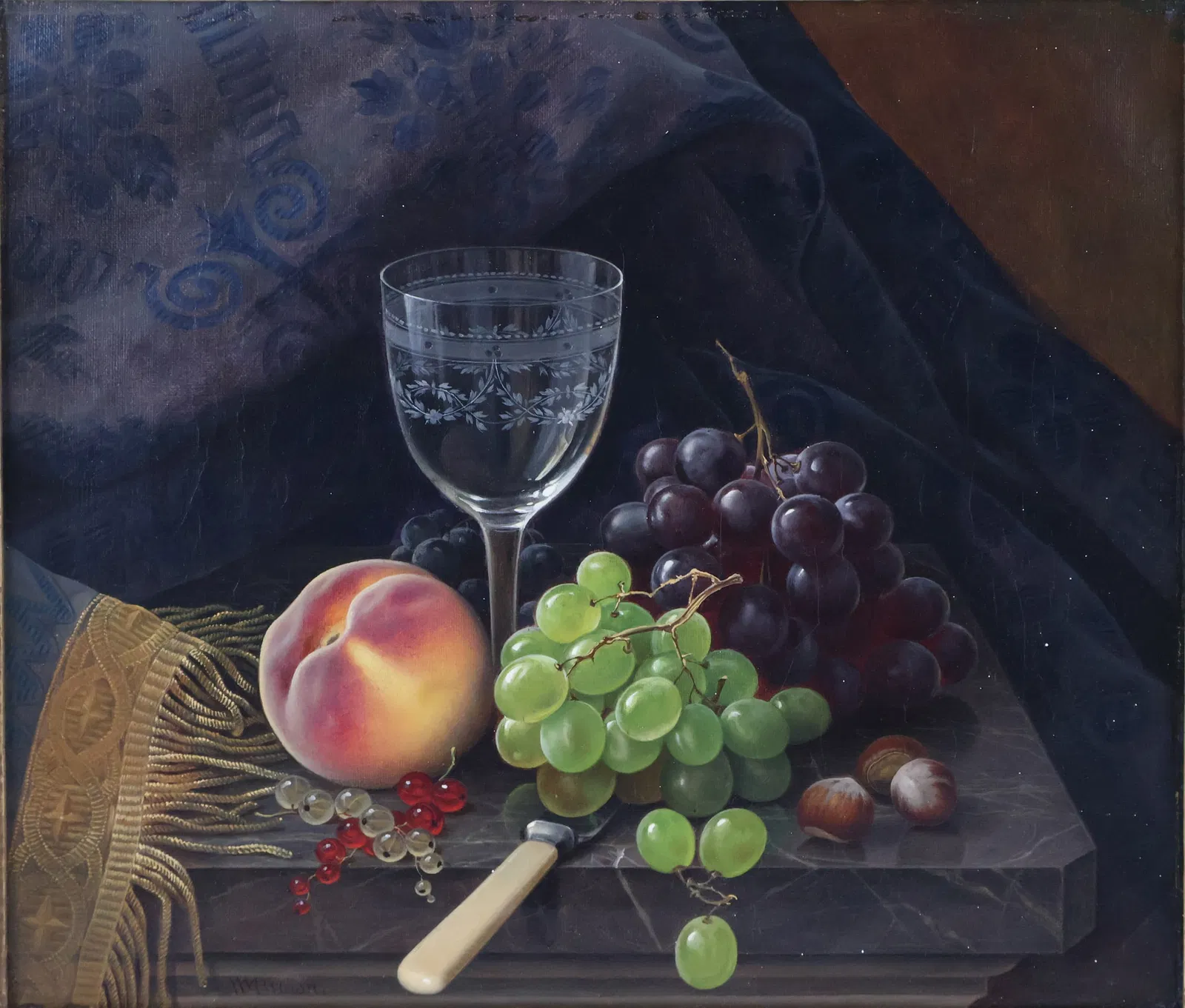
William Mason Brown, Still Life of Fruit and Goblet. Image courtesy of Nye & Co.
William Mason Brown, Still Life of Fruit and Goblet. Image courtesy of Nye & Co. 

William Mason Brown

Among the top lots of this Nye & Co. sale is a still life painting by William Mason Brown (lot #214; estimate: USD 3,000 – $5,000). This oil on canvas painting depicts an arrangement of fruit on a pedestal. Amid the grapes, peach, and chestnuts is a delicate glass goblet, engraved with twisting vines and scrolls. A serving knife juts out from the shining fruit. In the background is an indigo tapestry edged with gold fringe. 

American artist William Mason Brown was born in Troy, New York, a town near the state’s eastern border. He followed in the artistic footsteps of Hudson River School painters such as Thomas Cole, favoring Romantic landscapes and detailed still lifes. Brown enjoyed success during his lifetime, in part due to the chromolithograph, which allowed replicas of his paintings to be broadly distributed to the American public. His work is associated with lifelike detail, particularly when depicting fruit. 

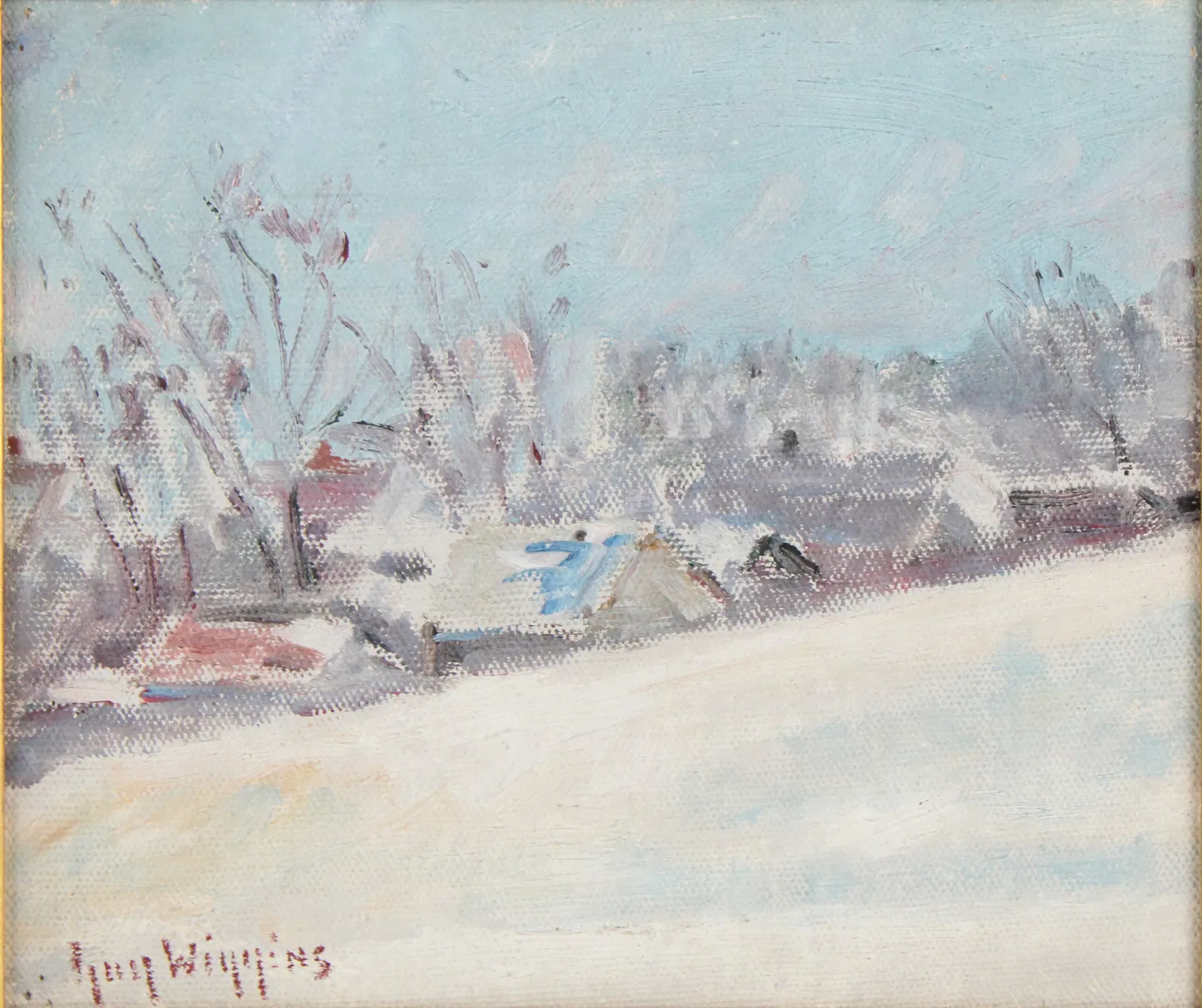
Guy Carleton Wiggins, Winter Scene. Image courtesy of Nye & Co.
Guy Carleton Wiggins, Winter Scene. Image courtesy of Nye & Co. 

Guy Carleton Wiggins

Another key artist with work in the catalog is Guy Carleton Wiggins. Winter Scene comes to auction framed and with a presale estimate of $1,800 to $2,400 (lot #146). This small oil on canvas work is signed in the lower left and depicts a string of houses under a layer of snow. Icy blue undertones peek through in parts, lending shadow and depth to the ground and sky. 

The son of a renowned landscape painter, Guy Carleton Wiggins grew up around art. He learned to paint at his father’s feet before formally studying at the Brooklyn Polytechnic Institute and the National Academy of Design in the early 1900s. Wiggins specialized in landscapes, which helped support him financially during the Great Depression. The artist is best-known for his extensive series of winter city paintings, alternately showing New York City bustling despite the frigid weather or temporarily quieted by it. The offered work is a more pastoral variation on this theme. 

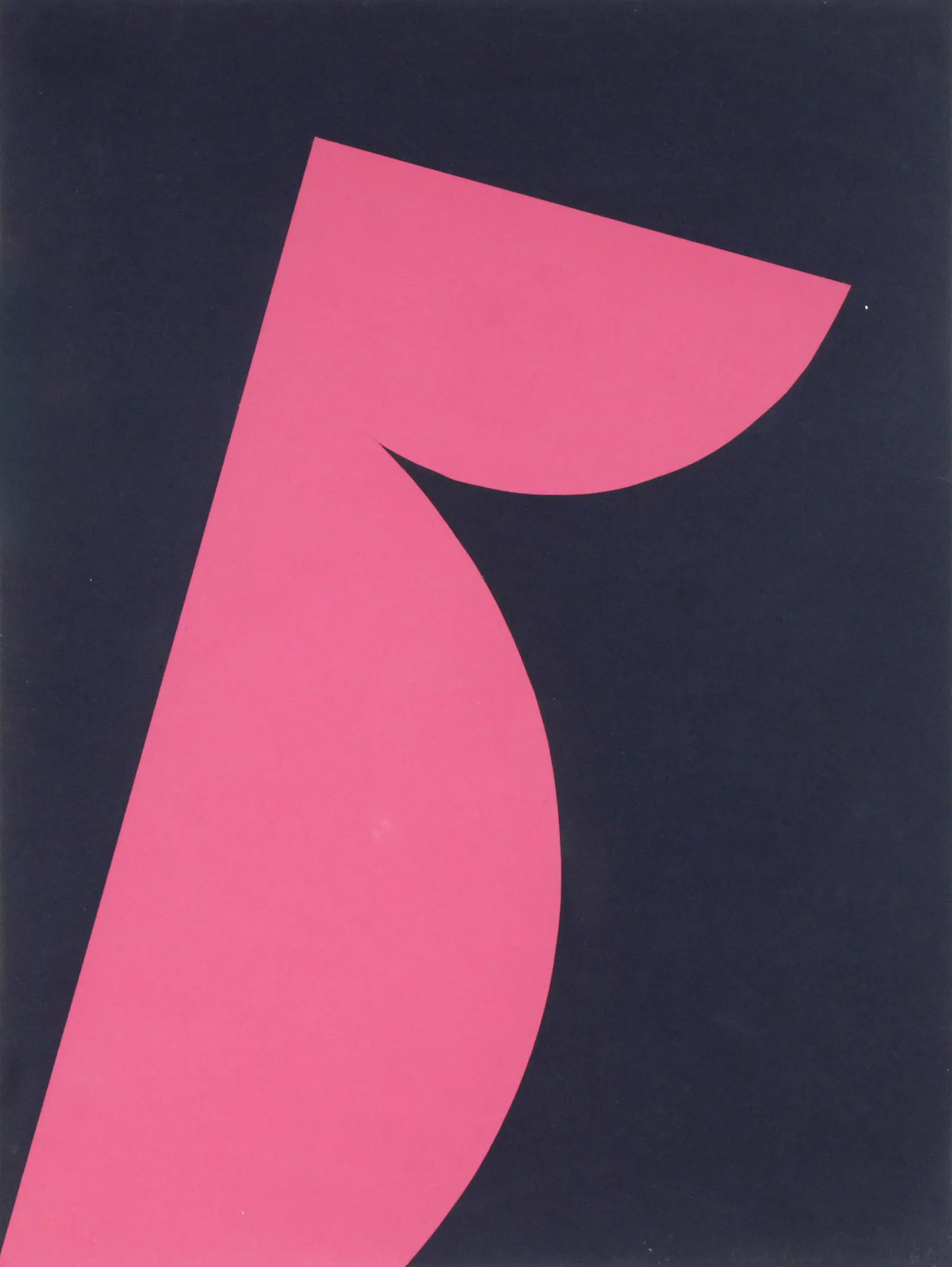
Leon Polk Smith, Untitled, 1960. Image courtesy of Nye & Co.
Leon Polk Smith, Untitled, 1960. Image courtesy of Nye & Co. 

Leon Polk Smith 

Leon Polk Smith belonged to a new generation of American artists, one unafraid to depart from familiar landscape scenes and still lifes. Smith was born in rural Oklahoma before it became a state. The artist, of Cherokee descent, encountered art for the first time in college. He turned to Columbia University and encountered the work of Piet Mondrian and other De Stijl artists. This influenced Smith’s own work, which is defined by bold colors, clean lines, and curved elements. 

An untitled work by Leon Polk Smith is a highlight of Nye & Co.’s upcoming sale (lot #92; estimate: $2,000 – $3,000). This paper collage dates back to 1960. Bubblegum pink shapes stand out against a navy blue background; further contrast is introduced by straight edges that meet well-defined curves.

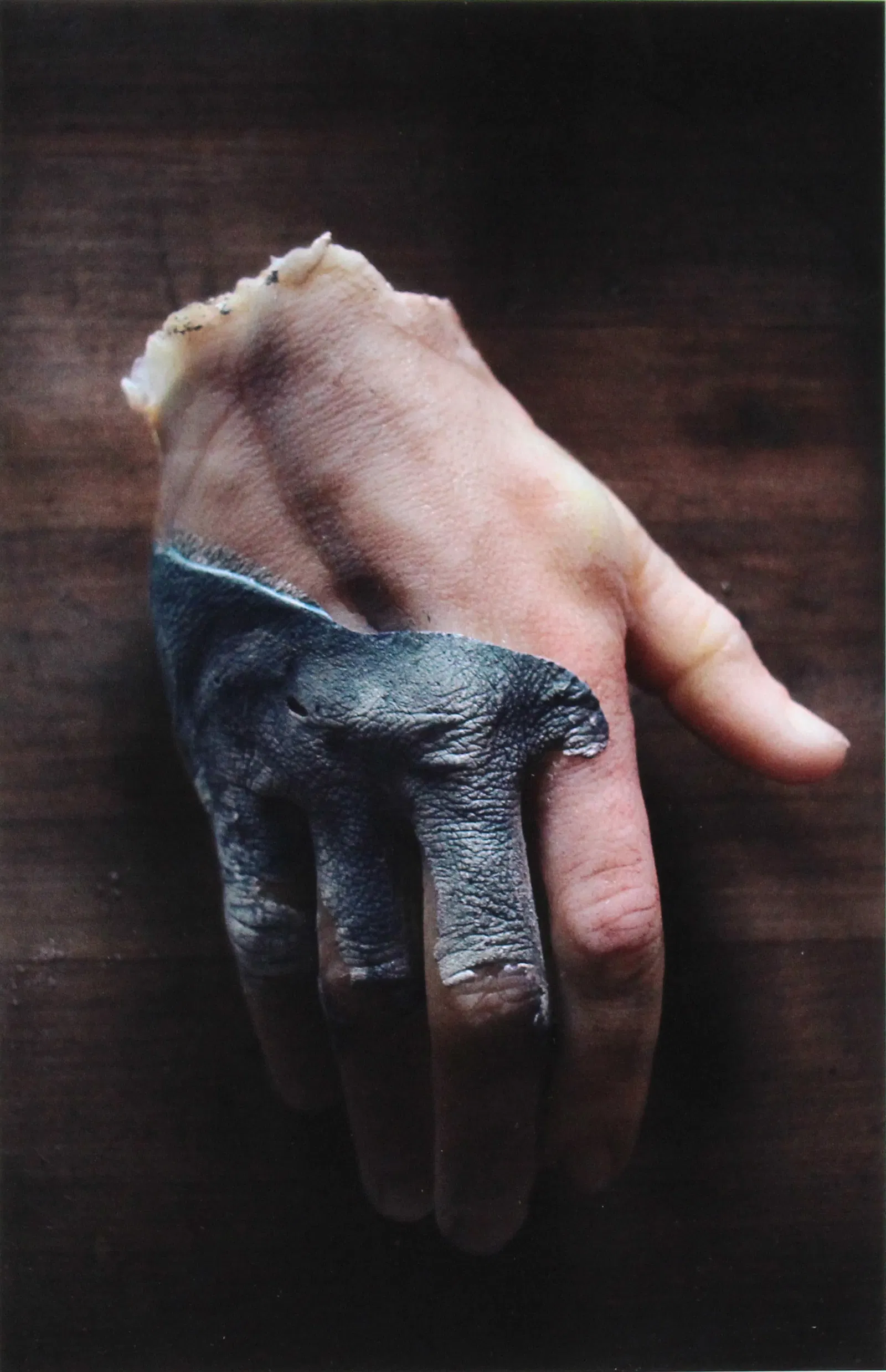
Peter Hujar, Hand Sculpture from the Tomb, 1967/2010. Image courtesy of Nye & Co.
Peter Hujar, Hand Sculpture from the Tomb, 1967/2010. Image courtesy of Nye & Co. 

Peter Hujar 

Available from Peter Hujar is Hand Sculpture from the Tomb, a pigmented ink print dated from 1967 (lot #77; estimate: $1,000 – $2,000). This particular edition, one of 10, was executed in 2010. The work references Paul Thek’s The Tomb, a renowned sculpture installation that made headlines in 1967. Thek, a sculptor and installation artist, had created a life-sized effigy of himself and placed it inside a pink tomb. Peter Hujar, Thek’s lover at the time, captured a series of photographs of Thek working on the sculpture. This photo belongs to that series. 

Peter Hujar was a major artist of the 1970s and 80s in his own right. His favored medium was photography, which he mastered under the tutelage of Richard Avedon, Alexey Brodovitch, and Diane Arbus. He documented queer life during his career, specializing in intimate and revealing portraits. 

Nye & Co.’s Chic & Antique Auction will begin at 10:00 AM EST on January 22, 2025. To browse the complete catalog and register to bid, visit Bidsquare

Find the latest auction world news articles and previews on Auction Daily

Art, antiques and fine jewelry from Northern Virginia estates add quality and elegance to Quinn’s Jan. 24 Fine & Decorative Arts Auction

Featured: Philadelphia Federal tall-case clock, Lyon & Heily 17-pedal harp, Nepalese gilt copper figures of Vajrapani, Rolex 41mm Oyster Perpetual Datejust wristwatch, emerald, diamond & gold necklace

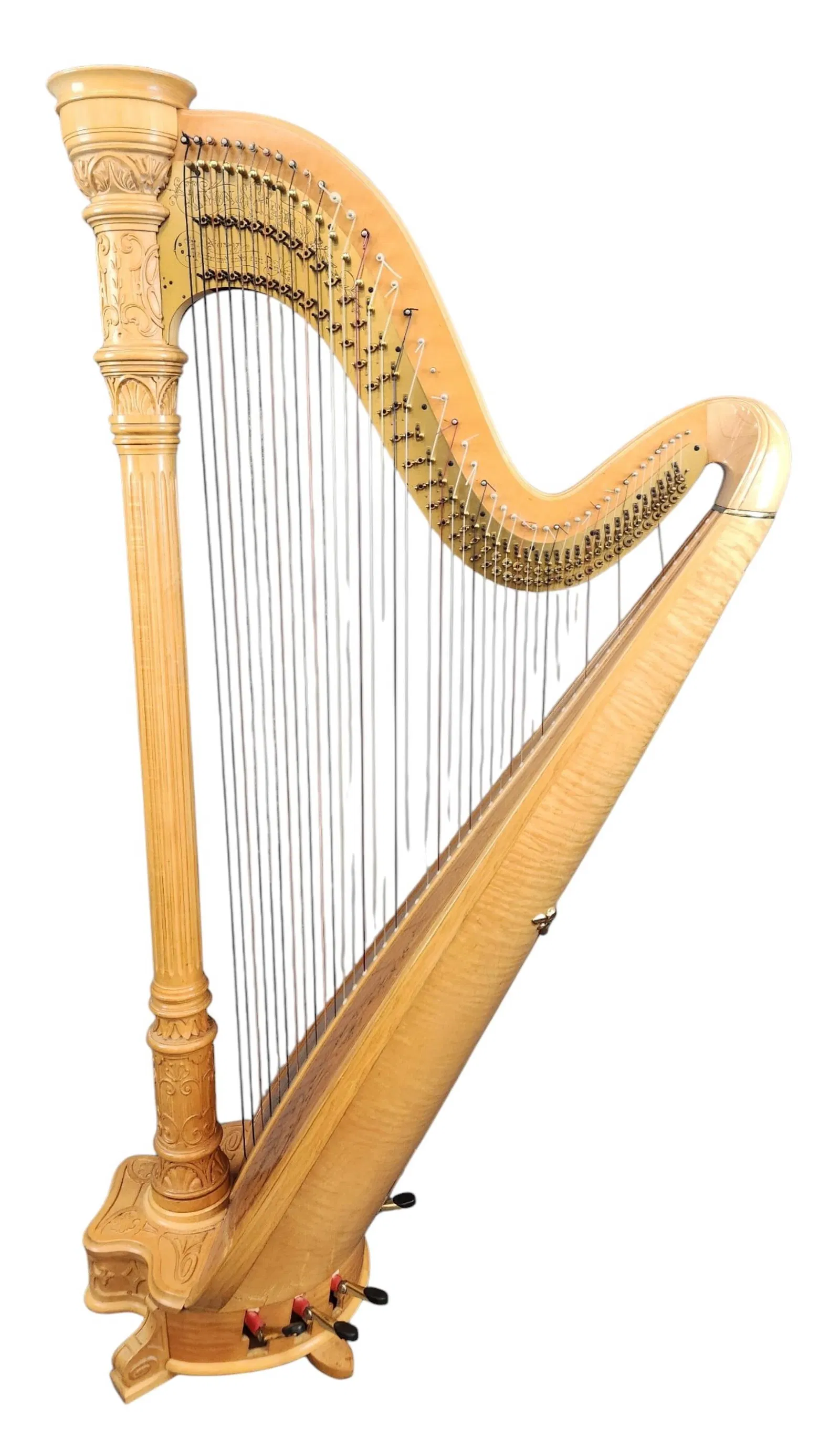
Vintage Lyon & Heily Professional 17 pedal harp.

FALLS CHURCH, Va. – In its own way, each of the 294 lots in Quinn’s January 24th Fine and Decorative Arts Auction reflects the gracious interior décor of homes in Northern Virginia and the Mid-Atlantic region, as well as their owners’ refined taste in luxury goods. The online, phone and absentee-only event offers a diverse selection from upscale estates and residences that includes American, European and Asian artworks; antique furniture, fine jewelry, watches and silver.

Jewelry is, in fact, one of the featured categories of the sale and is led by a coveted Rolex 41mm Oyster Perpetual Datejust wristwatch M126300-0006. It has a white dial, silver luminous hands and markers; and a sapphire crystal with the date appearing at the 3 o’clock position. Additional features include a cyclops lens, screw-down crown and case-back, polished stainless-steel bezel, 31-jewel self-winding automatic movement, and fold-over Oyster clasp. The Swiss-made treasure is COSC Superlative Chronograph Certified and Rolex Caliber 3235. Accompanied by its Rolex box, tags, and original sales receipt, it comes to auction with an $8,000-$8,500 estimate.

Capturing the very essence of luxury, a 14K yellow gold, emerald and diamond necklace is designed with approximately 247 carats of cabochon emeralds graduated from 4.5mm to 7.5mm in three strands measuring approximately 16.0 inches long. The clasp consists of 25 prong-set round and seven baguette diamonds with a center prong-set oval sized approximately 6.0mm by 4.0mm, plus nine mixed-cut emeralds. The total diamond weight is approximately 4.57cttw, and the diamonds have been graded F-G color and VS clarity per an independent third-party appraisal. The necklace’s total weight is approximately 37.55dwt. Backed by a third-party appraisal, its estimate is $2,500-$3,000.

One can only imagine the stately home in which a Ritter and Sullivan, Baltimore, 5-piece sterling silver tea set might have first served guests. It was made sometime between 1900 and 1915 and was retailed by J S Macdonald Co. The monogrammed (“N”) set is ornately worked in repousse style and consists of a coffee pot, teapot, lidded sugar, creamer, and waste bin (no lid). The ensemble’s total weight is 106.65 ozt, and the pre-sale estimate is $3,000-$4,000.

The comforting sound of an early American tall-case clock emanates from an Abraham Patton and Samuel G. Jones, Philadelphia, Federal model made circa 1798-1814. Crafted primarily of oak with pine secondary woods, the impressive 95-inch-tall timekeeper has an unmarked hand-painted face with Arabic numerals, a seconds hand, and calendar dial. Its brass works are stamped on verso Patton and Jones, Philadelphia. The case features a broken-arch-type pediment hood with three finials having an inlaid pinwheel on scrolls and a central inlaid eagle after the Great Seal of the United States. Its glass door is flanked by two columns, and its waist has cove molding and string inlay of interlocking arcs over a tombstone door with inlaid shell decoration and canted corners. The turned feet support a raised, stepped base. On the inside of the backboard, it is double-stamped T.S. Brightwell, with an additional handwritten marking that says Joe Day/ Pennsville/ Fayette Co. PA/ June 1st, 1871. With its included pendulum and two weights, the clock is offered with a $2,000-$4,000 estimate.

The array of antique furnishings continues with a 19th-century English secretaire bookcase made of mahogany with pine as its secondary wood. Its design elements include a classical open pediment with finial over two astragal glazed doors, and in the lower portion, a drop-front desk over three drawers with lion’s head pulls. Raised on turned feet, this 85-inch library essential is estimated at $800-$1,200.

A wonderful circa-1960 Lyon & Heily Professional Concertino-style 17-pedal harp is of carved pine with French Renaissance decoration, gilding and stenciling. Measuring 71¾in x 39½in, it comes with its original case and will cross the auction block gracefully with a $4,000-$6,000 estimate.

A broad variety of fine art is available to collectors or interior designers seeking interesting works by noted artists. An 1870 oil-on-board painting by Ernest van den Kerckhove (Belgian, 1840-1879) is a classical scholar scene depicting the controversial Greek philosopher Diogenes in an inebriated state. Signed and dated at its lower right, the painting measures 18in by 27in (sight); 27in by 36in (framed) and is estimated at $2,000-$3,000. 

A midcentury aquatint on Japon paper by Salvador Dali (Spanish, 1904-1989) is titled Gluttony and is pencil-signed at its lower right with the additional notation Edition VI/CCV. Executed in 1966, it comes with provenance in the form of papers from Nathan Daniel Isen and Salvador Dali Archives Ltd, which are attached to the frame on verso. Framed and matted, its plate size is 5 3/8in x 7¼in, with a sheet size of 12 1/8in x 17½in. Framed, it measures 30in x 34in. Estimate: $800-$1,200

At the forefront of nearly four dozen Asian art pieces is a pair of large 20th-century Nepalese gilt copper figures of Vajrapani, Buddhist deities or “Buddhas-to-be” whose responsibility is to protect the Buddha and those who practice his teachings. The figures in this duo assume identical poses and wear elaborate headpieces and body adornments. Sized 35in x 27½in x 8½in, they are entered in the sale with a lot estimate of $2,000-$4,000.

The chic Palm Beach set is famously fond of table settings and decorative porcelain wares replicating vegetal forms. A master of this genre is Cliff Lee (b. 1951-), an Austrian-born Taiwanese artist who prodigiously became a neurosurgeon in the United States but later left medicine to pursue his passion for ceramics. His glazed-porcelain works have won many prestigious awards, and most recently, Lee has shown his original creations at the renowned Palm Beach Show. Quinn’s January 24 auction includes a Cliff Lee “Cabbage” porcelain vase with a celadon glaze, presented on a matching cabbage-leaf pedestal. It is signed and dated 1994 on its base. A winning bid in the $1,000-$2,000 range is anticipated.

Quinn’s Friday, January 24, 2025 Fine and Decorative Arts Auction is a remote-bidding event and will start at 10am EST. No live gallery bidding. Bid absentee or live online through LiveAuctioneers or Invaluable, as well as absentee through HiBid (via Quinn’s website). To reserve a phone line for bidding on auction day, please complete and submit a phone bidding form at least 24 hours prior to the sale’s start. The form is available on Quinn’s website or via email request from [email protected]. Quinn’s helpful client-support team will be on hand at an open gallery preview, Monday, Jan. 20 through and including Thursday, Jan. 23, from 11am- 4pm each day. Quinn’s is located at 360 South Washington St., Falls Church, VA 22046. For additional information about any item in the auction or to discuss consigning to a future Quinn’s auction, contact Quinn’s Director of Fine & Decorative Arts, Corrie Brady, by calling 703-532-5632 ext. 572, or emailing [email protected]. Online: www.quinnsauction.com.

Works of Le Pho, Thomas Nast, and More at Nye & Co. Auction

Over 500 lots of fine art, decorative art, furniture, and collectibles will soon be offered with Nye & Co. in the January 22nd, 2025 Chic & Antique Auction. The sale includes work by Nicholas Maes, Le Pho, and Edward Corbett, along with a unique collection of traditional Americana items.

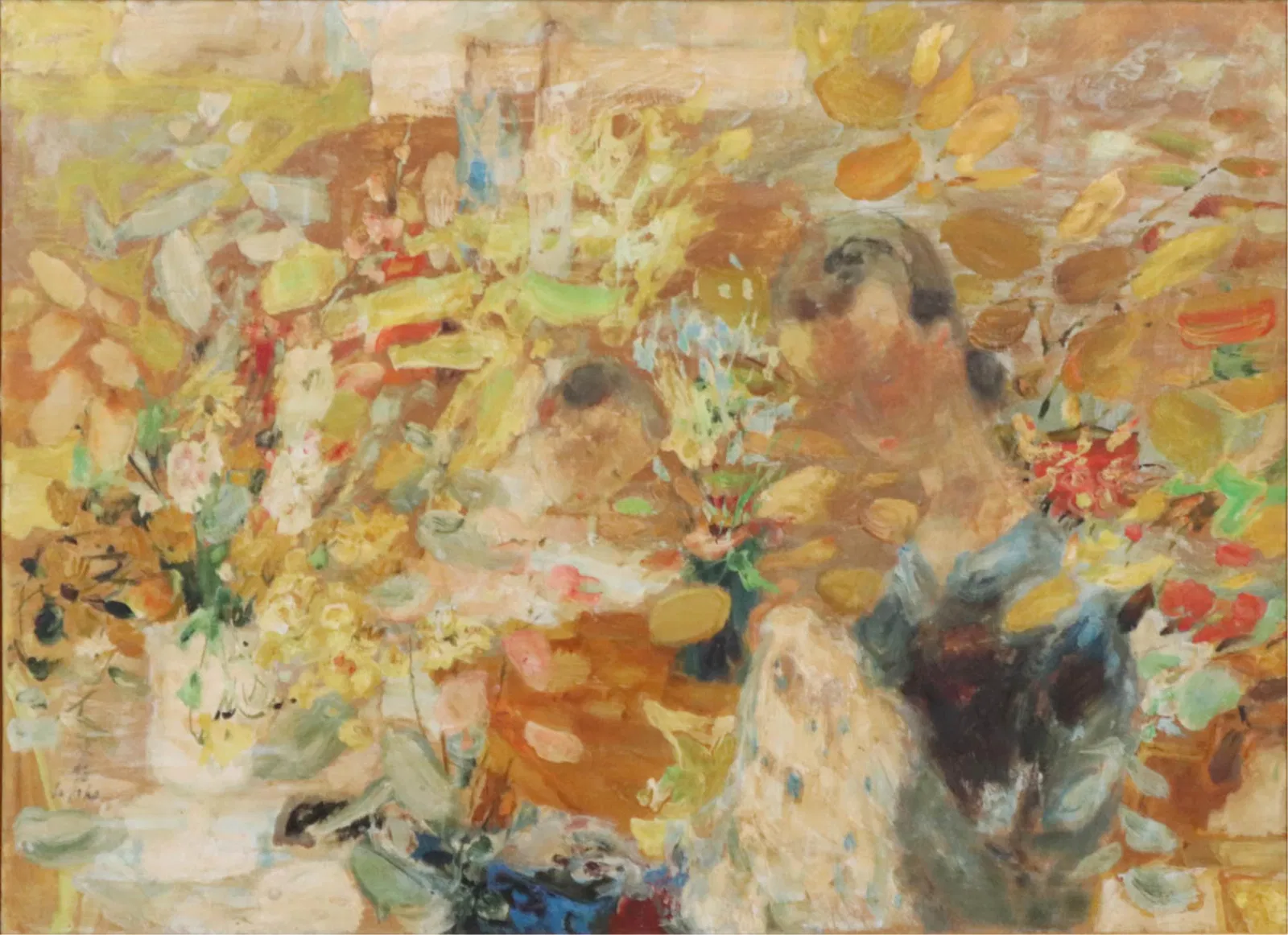
Le Pho, French/Vietnamese 1907-2001, Mother and Child, Le Couture, Oil on Silk, Laid on Board

Among the top lots of this event is Le Pho’s Mother and Child, Le Couture, oil on silk, and board work. In his paintings, Le Pho often depicted scenes from his native Vietnam in a Romantic and Impressionism style. A master of silk painting techniques, Pho’s work conveys translucency and radiance in color and texture. Le Couture reflects his Romanet period, all infused with Vietnamese spirit. The artist used oil in his mixed media paintings rather than gouache, even though ink also remained popular.

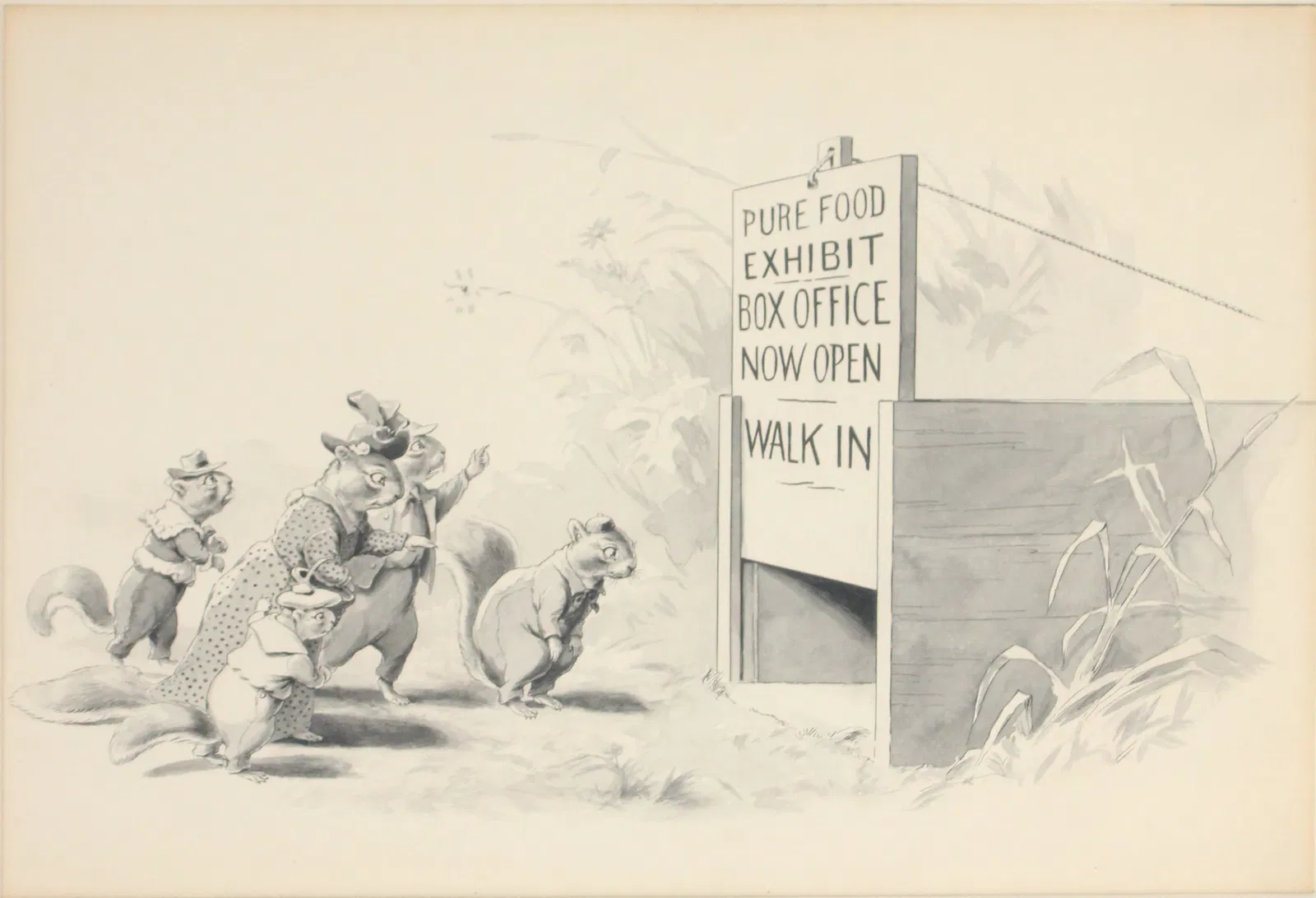
Thomas Nast, 1840-1902, Pure Food Exhibit, Ink and Watercolor on Paper

Another notable work in the catalog is a Thomas Nast ink and watercolor on paperwork titled Pure Food Exhibit (lot #309; estimate: $1,000 – $2,000). Thomas Nast dominated American political cartooning in the decades following World War I. Through Harper’s Weekly magazine, Nast used satire and caricatures to hold politicians responsible for the political corruption, economic concerns, immigration issues, and civil rights of the day. Nast’s detailed pictures often included symbolism, allegory, and literary references to make political issues more accessible to Harper’s readers. Among his illustrations are the Republican elephant, Democratic Donkey, Uncle Sam, and Pure Food Exhibit

Purvis Young, American 1943-2010, Untitled, Mixed Media

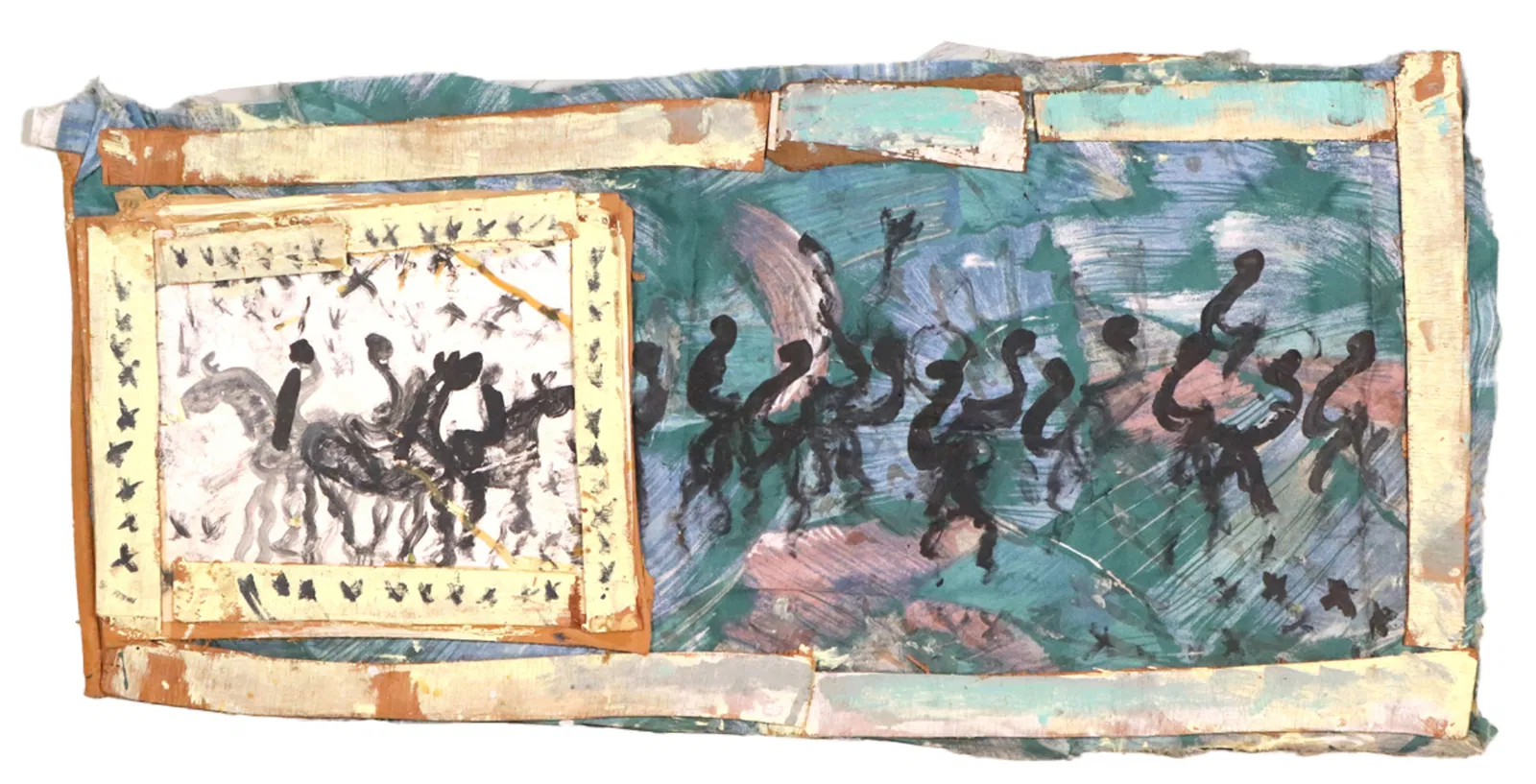
Several pieces by American artist Purvis Young are on offer in this sale, including a mixed-media piece featuring figures on horseback (lot #69; estimate: $300 – $500). Purvis Young portrayed the lives and historical experiences of Black Americans in dreamy, brushy paintings. A prolific artist, Young created collages using broken furniture, old rugs, and mirrors to create his unique style.

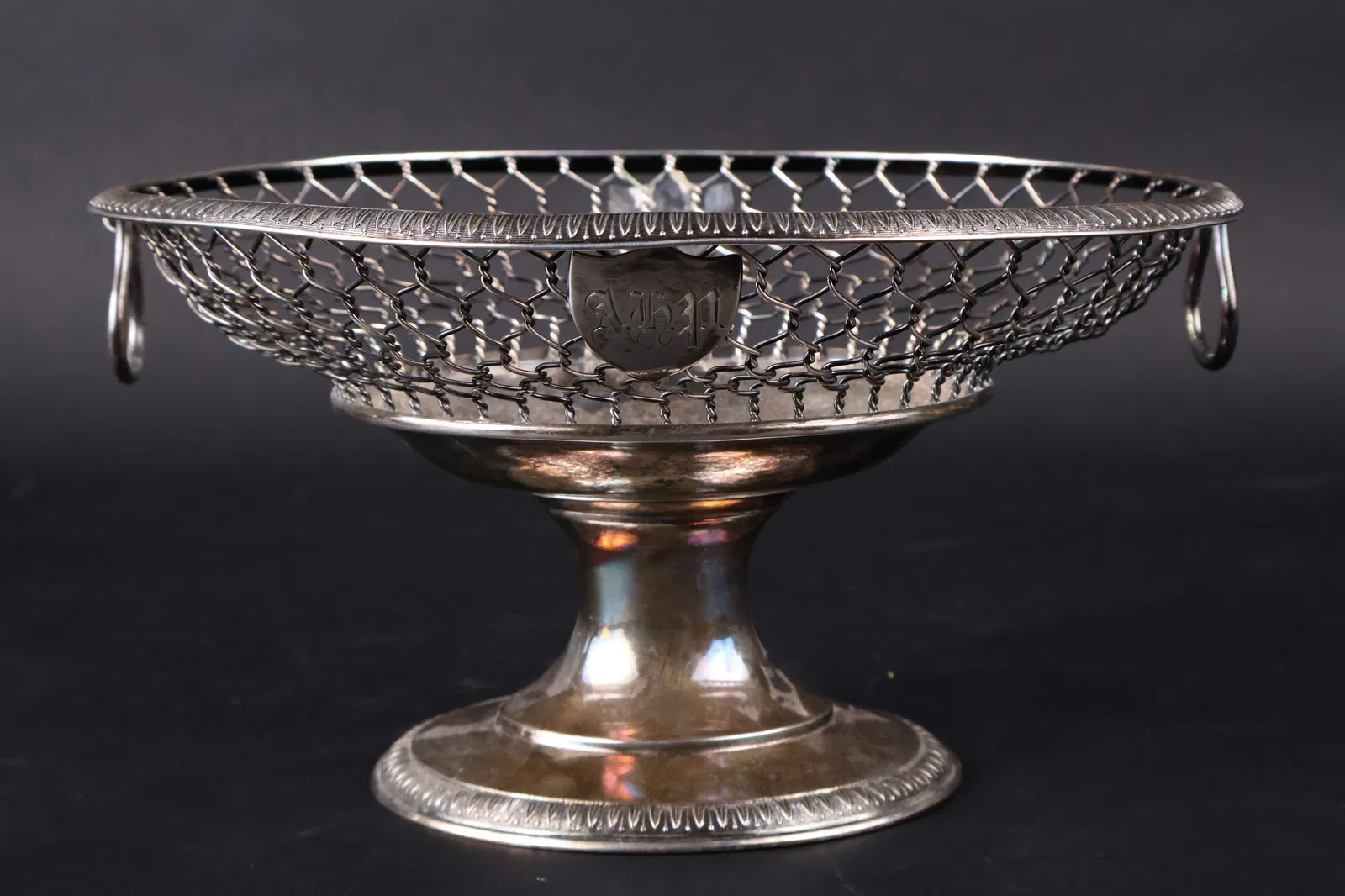
William Gale New York Silver Wirework Centerpiece / Fruit Bowl

Beyond fine art, this sale will feature a centerpiece fruit bowl crafted from New York silver wirework by William Gale (lot #3; estimate: $600 – $800). Gale was one of the most innovative silversmiths in the 19th century, working with sterling silver and coin silver. This mid-19th-century oval bowl exhibits rows of intertwining, twisting wire rising from its interior. The top rim features a die-rolled leaf design on a loop handle-lined background. Silver shields are engraved on both sides of the bowl, ornamenting the oval pedestal base. 

Additional lots of interest in this sale include: 

  • A 1980 .999 yellow gold Canadian $50 maple leaf coin (lot #22; estimate: $1,500 – $2,500) 
  • The Artist’s Daughter, a 1965 aquatint by Karl Schrag (lot #93; estimate: $300 – $500) 
  • A Federal brass-mounted inlaid mahogany tall-case clock (lot #291; estimate: $10,000 – $20,000) 
  • A 2000 bronze figure with a solar system head (lot #169; estimate: $7,500 – $15,000) 
  • A high chest of drawers carved in the Chippendale style (lot #414; estimate: $5,000 – $10,000) 

Nye & Company Auctioneers is an auction house in Bloomfield, New Jersey that specializes in fine art, jewelry, furniture, and more.  The specialists have earned their reputations by working for prestigious auction houses around the world. The company also performs appraisals for insurance coverage, donations, estates, and equitable distribution. The appraisal, consignment, or auction process of clients is handled with ease by the knowledgeable and friendly specialists of the auction house. Luther Vandross, Naomi Sims, Dizzy Gillespie, and others have had their estates represented by Nye & Company. Nye’s Auction offers appraisers who perform appraisals as part of their auction sales a fee reduction, subject to auction size and composition. The USPAP-compliant appraisal team includes appraisers with experience in each of the major valuation categories, including jewelry, collectibles, fine art, and silver. As members of the Appraisers Association of America, Nye appraisers uphold the highest standards.

The January 22nd, 2025 Chic & Antique Auction at Nye & Co. will begin on Jan 22, 2025, at 10:00 AM EST. To view the complete catalog and register to bid, visit Bidsquare.