1989 Jeep Grand Wagoneer

1989 Jeep Grand Wagoneer

1989 Jeep Grand Wagoneer:

1989 Jeep Grand Wagoneer, only 82,434 miles All-original American classic woody, previously owned by a couple living in Sullivan’s Island, South Carolina, and recently of a San Antonio, Texas couple that have decided to downsize and retire to San Miguel de Allende, Mexico 4-door SUV 5.9L V8 2BL gasoline engine, rear wheel drive with optional 4×4 Comfortable maroon leather seating, silver metallic and faux wood panel exterior Fog lamps Rear hitch receiver In good mechanical order, in surprisingly good cosmetic condition given its age, with no apparent cosmetic issues of any concern Clean Carfax (no accidents or damage reported), clean Texas title Sold where-is, as-is, without reserve price VIN# 1J4GS5874KP104468

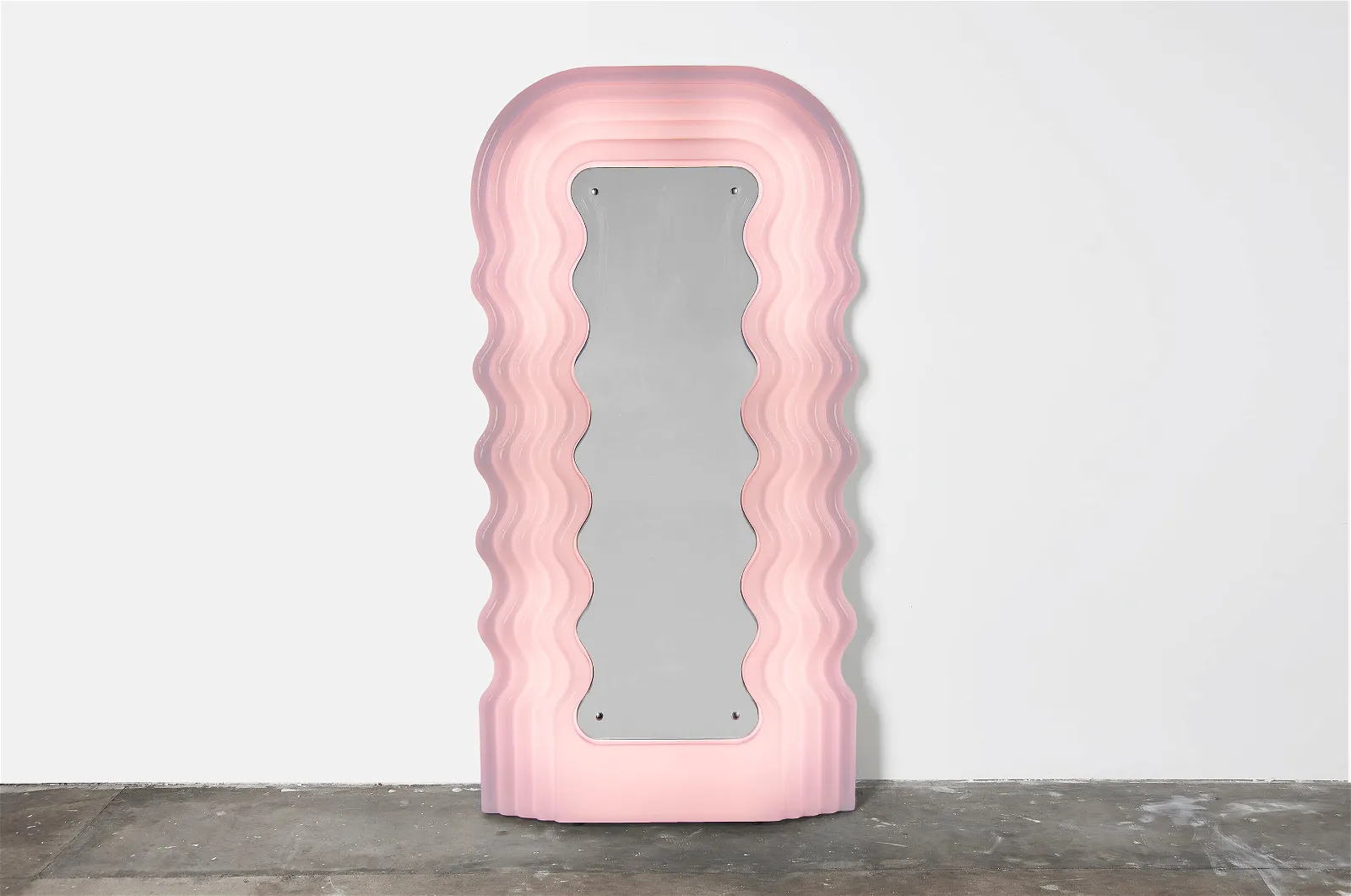
Ettore Sottsass Jr., ‘Ultrafragola’ Mirror

Ettore Sottsass Jr., 'Ultrafragola' Mirror

Ettore Sottsass Jr., ‘Ultrafragola’ Mirror:

ETTORE SOTTSASS JR.
‘Ultrafragola’ mirror, designed 1970
ABS, painted wood, neon light. Manufactured by Poltronova, Italy.
Underside with manufacturer’s label and back impressed with “1913141.”

78″ H x 40″ W x 5″ D

Provenance: Urban Architecture, New York, 2019

Condition
Frame and mirror in excellent condition. Right side of the mirror’s lights are slightly dimmer than the left.

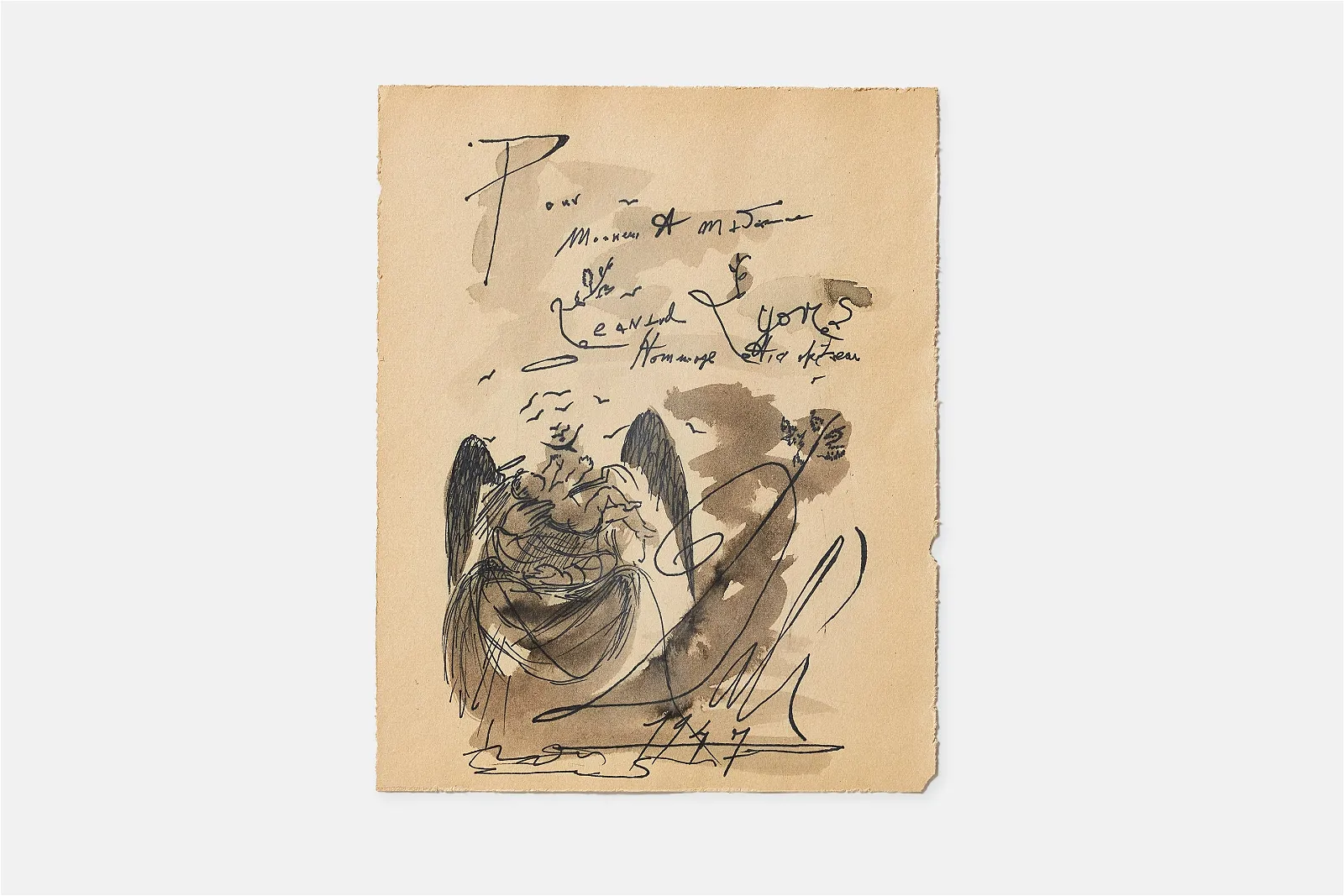
Salvador Dali, Untitled (Angel with Child) Drawing

Salvador Dali, Untitled (Angel with Child) Drawing

Salvador Dali, Untitled (Angel with Child) Drawing:

SALVADOR DALI (Spanish, 1904-1989)
Untitled (Angel with Child), 1947
Ink and ink wash on wove paper.
Signed and dated lower right. Illegible dedication on top portion, in French.
This piece has been authenticated by Bernard Ewell.

121.5″ H x 9.75″ W

Condition
Overall very good condition. Four small tears along the edges and one corner.

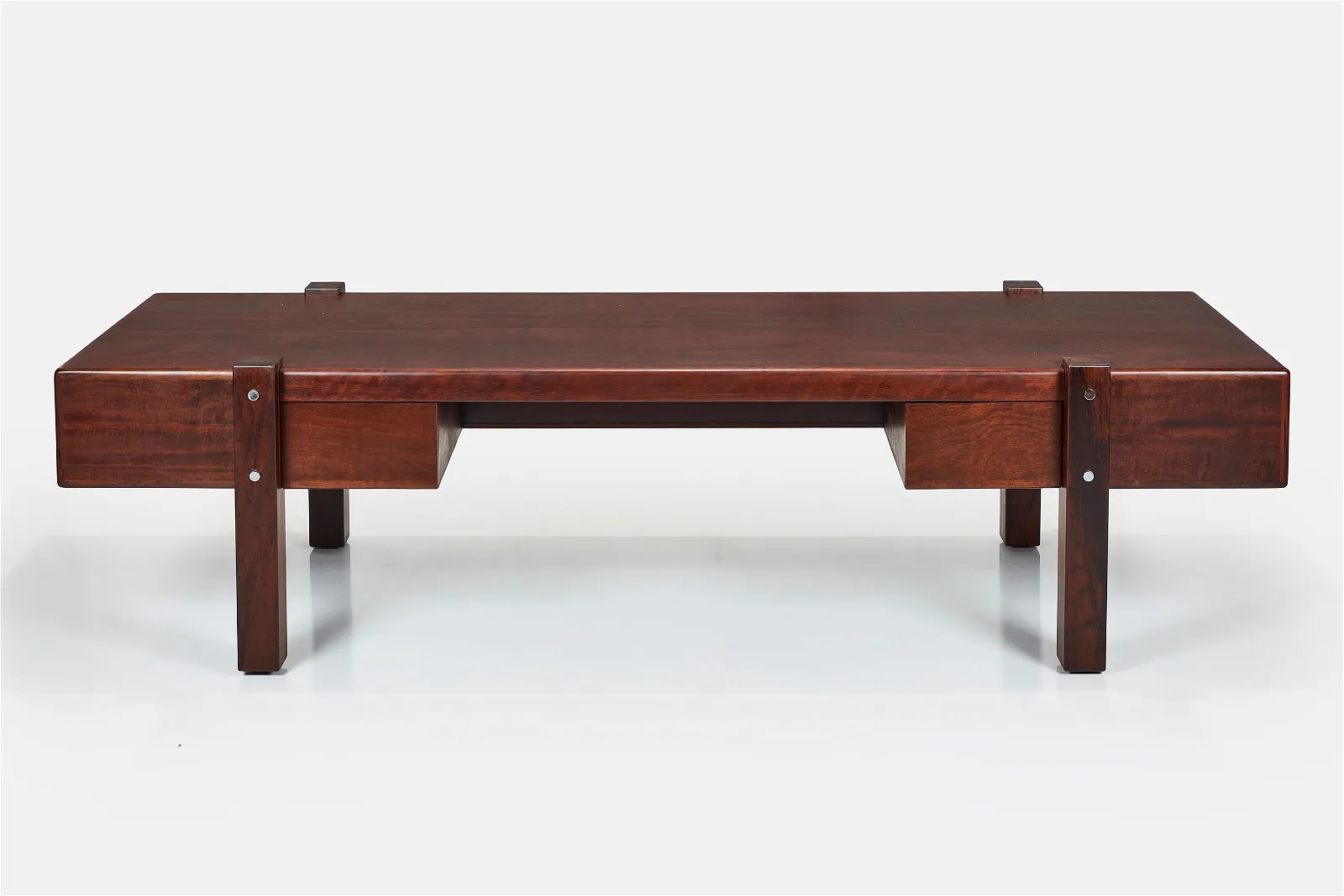
Sergio Rodrigues, Monumental ‘Eleh’ Desk

Sergio Rodrigues, Monumental 'Eleh' Desk

Sergio Rodrigues, Monumental ‘Eleh’ Desk:

SERGIO RODRIGUES
Monumental ‘Eleh’ desk, from Candido Mendes University, 1990s
Imbuia-veneer, imbuia, chrome-plated metal. Manufactured by LinBrasil, Brazil.

30.5″ H x 118.25″ W x 41″ W

Provenance: Candido Mendes University, Rio de Janeiro, Brazil

Condition
Very good restored condition with little wear or evidence of use. Occasional minor surface abrasions.

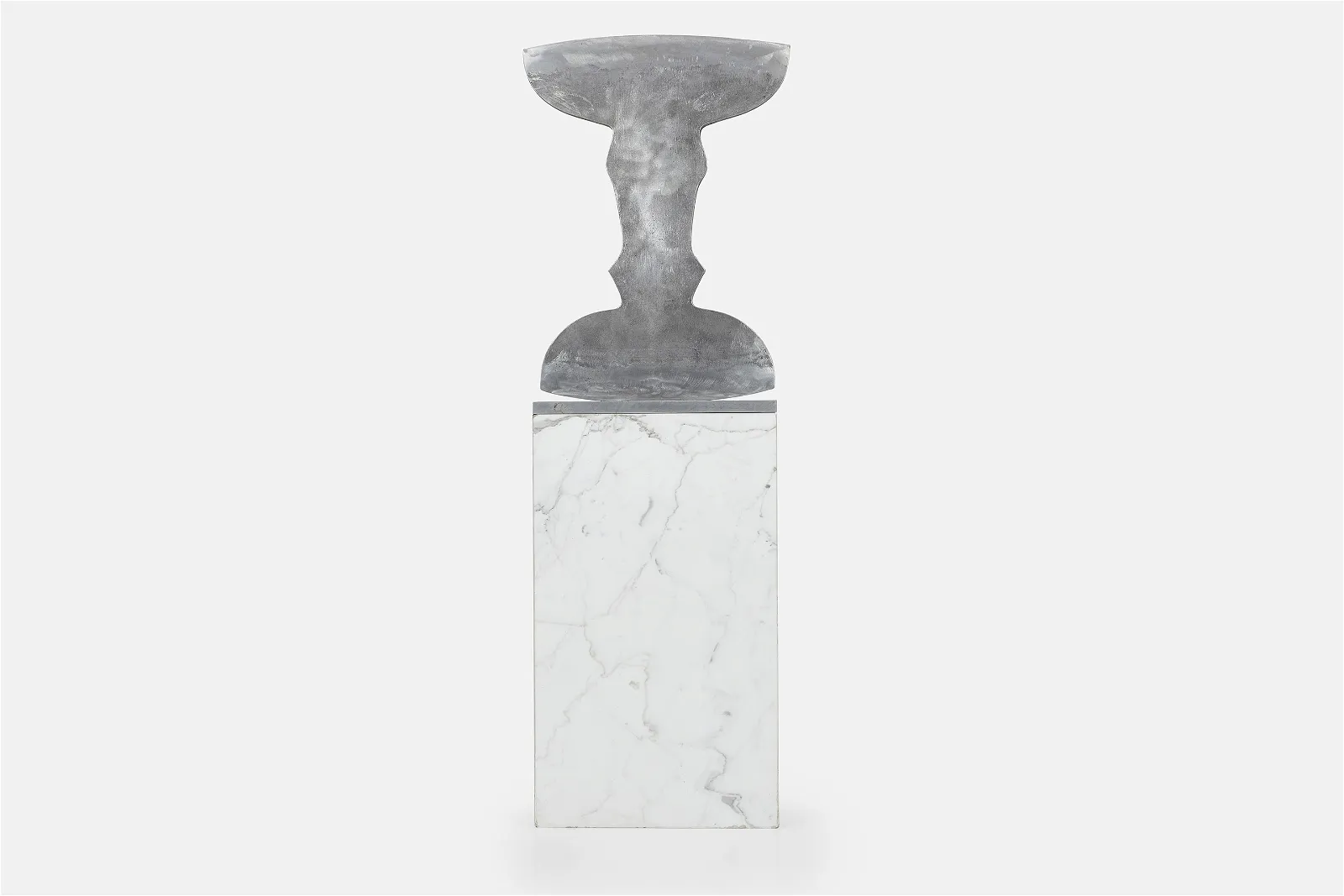
Beverly Pepper, Untitled Sculpture

Beverly Pepper, Untitled Sculpture

Beverly Pepper, Untitled Sculpture:

BEVERLY PEPPER (American, 1922–2020)
Untitled sculpture
Cast aluminum, marble.
Base impressed with “BP.”

Overall: 76″ H x 23.75″ W x 7.25″ D
Sculpture only: 36″ H x 23.75″ W x 7.25″ D

Condition
Sculpture in excellent condition with no damage or issues to report. Marble base with minor chipping along the edges.

Damien Hirst ‘H13-1 Deadman’s Cove -2023’ Signed & numbered

Damien Hirst 'H13-1 Deadman’s Cove -2023' Signed & numbered

Damien Hirst ‘H13-1 Deadman’s Cove -2023’ Signed & numbered:

Artsist: Damien Hirst
Title: ‘H13-1 Deadman’s Cove”
Year: 2023
Medium: Laminated Giclee print on aluminium composite panel
Size: 47.2 x 35.4 Inches
Edition: Edition of 346
Numbered and hand-signed on the label by the artist.
Publisher: Heni Publishing
Conition: In mint condition
A certificate of Authenticity is included

Contemporary artist, Damien Hirst, had released 12 unique prints after works from his latest series ‘Coast Paintings’, ‘Sea Paintings’ and ’Seascapes’. The editions are laminated Gicl?e prints on aluminium composite panel, in sizes ranging from 90 x 90 cm to 135 x 90 cm. The prints are numbered and hand-signed on the label by the artist.

H13-1 Deadman’s Cove by Damien Hirst

Damien Hirst was born in 1965 in Bristol and grew up in Leeds. In 1984 he moved to London, where he worked in construction before studying for a BA in Fine Art at Goldsmiths college from 1986 to 1989. He was awarded the Turner Prize in 1995

Since the late 1980’s, Hirst has used a varied practise of installation, sculpture, painting and drawing to explore the complex relationship between art, life and death. Explaining: “Art’s about life and it can’t really be about anything else … there isn’t anything else, Hirst’s work investigates and challenges contemporary belief systems, and dissects the tensions and uncertainties at the heart of human experience. At Goldsmiths, Hirst’s understanding of the distinction between painting and sculpture changed significantly, and he began work on some of his most important series. The ‘Medicine Cabinets’ created in his second year combined the aesthetics of minimalism with Hirst’s observation that, “science is the new religion for many people. It’s as simple and as complicated as that really.” This is one of his most enduring themes, and was most powerfully manifested in the installation work, ‘Pharmacy’ (1992).

Whilst in his second year, Hirst conceived and curated ‘Freeze’ – a group exhibition in three phases. The exhibition of Goldsmiths students is commonly acknowledged to have been the launching point not only for Hirst, but for a generation of British artists. For its final phase he painted two series of coloured spots on to the warehouse walls. Hirst describes the spot paintings as a means of “pinning down the joy of colour”, and explains they provided a solution to all problems he’d previously had with colour. It has become one of the artist’s most prolific and recognisable series, and in January 2012 the works were exhibited in a show of unprecedented scale across eleven Gagosian Gallery locations worldwide. In 1991 Hirst began work on ‘Natural History’, arguably his most famous series. Through preserving creatures in minimalist steel and glass tanks filled with formaldehyde solution, he intended to create a “zoo of dead animals”. In 1992, the shark piece, ‘The Physical Impossibility of Death in the Mind of Someone Living’ (1991) was unveiled at the Saatchi Gallery’s ‘Young British Artists I’ exhibition. The shark, described by the artist as a “thing to describe a feeling”, remains one of the most iconic symbols of modern British art and popular culture in the 90’s. The series typifies Hirst’s interest in display mechanisms. The glass boxes he employs both in ‘Natural History’ works and in vitrines, such as ‘The Acquired Inability to Escape’ (1991), act to define the artwork’s space, whilst simultaneously commenting on the “fragility of existence”.
Condition

Excellent

Mario Bellini, ‘Camaleonda’ Sectional Sofa (9)

Mario Bellini, 'Camaleonda' Sectional Sofa (9)

Mario Bellini, ‘Camaleonda’ Sectional Sofa (9):

MARIO BELLINI
Nine-part ‘Camaleonda’ sectional sofa, ca. 1970
Leather, stained wood, chrome, nylon cording. Manufactured by C&B Italia, Italy.
Undersides with manufacturer’s marks.

Each section: 27″ H x 36″ W x 36″ D
Seat height: 15″
Ottoman: 15″ H x 36″ W x 36″ D


Condition
Excellent restored condition. Newer leather is soft and is developing a nice patina. Light scuffing throughout, consistent with this fine leather. Undersides with scratches and scuffing.

Carole A Feuerman ‘Serena Suite 2012’ Hand Signed – Framed

Carole A Feuerman 'Serena Suite 2012' Hand Signed - Framed

Carole A Feuerman ‘Serena Suite 2012’ Hand Signed – Framed:

CAROLE A FEUERMAN
“SERENA SUITE”
ARCHIVAL MIXED MEDIA PRINT
SIZE: 24 X 33.5 INCHES (EACH)
MATCHING EDITION: TP OF 5
YEAR: 2012
SIGNATURE: EACH SIGNED, DATED AND NUMBERED BY THE ARTIST
CERTIFICATE OF AUTHENTICITY INCLUDED
ARTWORK IS IN EXCELLENT CONDITION
ConditionExcellent

Robert Indiana, Heal – Silver variation, 2014, edition of 5, Silkscreen

Robert Indiana, Heal - Silver variation, 2014, edition of 5, Silkscreen

Robert Indiana, Heal – Silver variation, 2014, edition of 5, Silkscreen:

Artist ROBERT INDIANA
Heal
Year: 2014
Medium: Silkscreen, 2-Ply Museum Board
Edition: 3/5
Signed & numbered in pencil
Dimensions: 40.5H x 39.5W in (image size)
Framed approx: 48 x 47.5 in.
Condition: In mint condition
Gallery certificate of Authenticity is included.
ConditionExcellent

Roy Lichtenstein “American Indian Theme V (C. 164)” 1980 Woodcut on Handmade Suzuki Paper, signed an

Roy Lichtenstein "American Indian Theme V (C. 164)" 1980 Woodcut on Handmade Suzuki Paper, signed an

Roy Lichtenstein “American Indian Theme V (C. 164)” 1980 Woodcut on Handmade Suzuki Paper, signed an:

American Indian Theme V (C. 164)
By
Roy Lichtenstein – American (1923–1997)
Portfolio: American Indian Theme Series
Date: 1980
Woodcut on Handmade Suzuki Paper, signed and numbered in pencil
Edition of 50, AP 14 (of 18)
Edition number: 13/50
Image Size: 23.25 x 33.5 inches
Size: 31.75 x 41.5 in. (80.65 x 105.41 cm)
Printer: Tyler Graphics Ltd., Bedford Village, New York
Publisher: Tyler Graphics Ltd., Bedford Village, New York
Reference: Corlett 164
Provenance: Tower Gallery, Inc. Southampton, Long Island, NY, Bonhams – Los Angeles CA, United States.
In Excellent condition
Comes with Letter of authenticity

American Indian Theme V (C 164) by Roy Lichtenstein

Roy Lichtenstein takes a modernist perspective of the picture plane by utilizing a method of commercial design through comic strips and advertisement. Lichtenstein integrates the readymade quality of screen prints and integrates a painterly gesture with the use of thick lines, flat surface planes, and obscured perspective.

Roy Lichtenstein’s early appropriation of the aesthetics of American popular culture made him integral to the development of Pop art. Roy Lichtenstein was a student of the work of Pablo Picasso, Joan Mir?, and Paul Klee, Roy Lichtenstein incorporated elements of contemporary art theory and popular print media into his painting. In 1961 Roy Lichtenstein began to replicate the Benday dot system used in mass-circulation printed sources such as comics, newspapers, and billboards; this would become a signature element of Roy Lichtensteins painting and sculpture. By mimicking this industrial method and appropriating images from high and low culture, Roy Lichtenstein’s work realized a broader accessibility that had not yet been achieved in contemporary art. Roy Lichtenstein’s most recognizable series evolved from imagery drawn from popular culture: advertising images, war-time comics, and pin-up portraits, as well as traditional painting genres.

About Roy Lichtenstein:

Roy Lichtenstein was a pop art painter whose works, in a style derived from comic strips, portray the trivialization of culture endemic in contemporary American life. Using bright, strident colors and techniques borrowed from the printing industry, he ironically incorporates mass-produced emotions and objects into highly sophisticated references to art history.He was one of the first American Pop artists to achieve widespread renown, and he became a lightning rod for criticism of the movement.

Primary colors–red, yellow and blue, heavily outlined in black–became his favorites. Occasionally he used green. Instead of shades of color, he used the benday dot, a method by which an image is created, and its density of tone modulated in printing. Sometimes he selected a comic-strip scene, recomposed it, projected it onto his canvas and stenciled in the dots. “I want my painting to look as if it had been programmed,” Lichtenstein explained.
ConditionExcellent