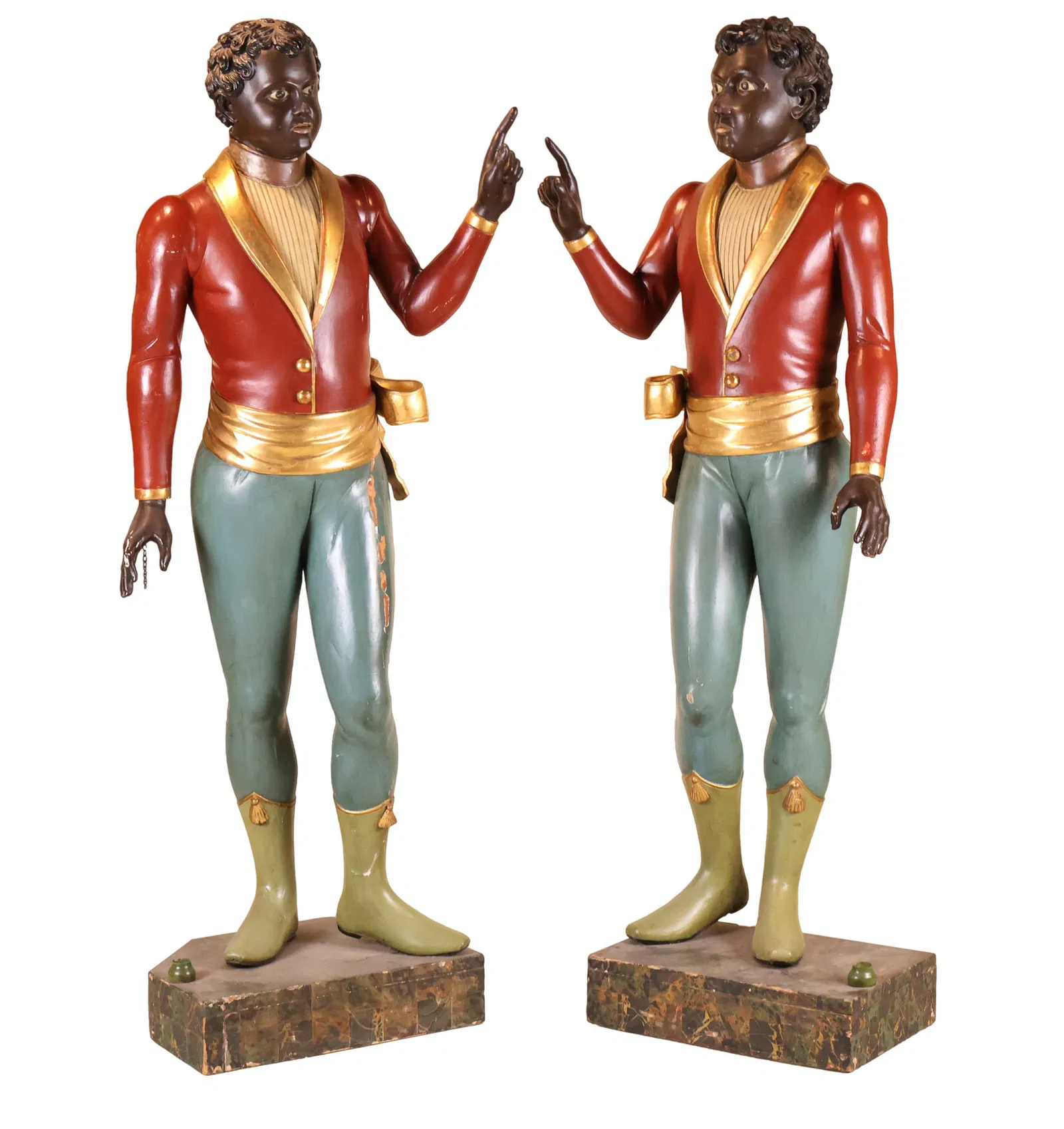
Two American Carved & Painted Wood Black Figures, Dressed as Footman

Two American Carved & Painted Wood Black Figures, Dressed as Footman:

Two American Carved & Painted Wood Black Figures, Dressed as Footman
American, mid-19th C., On faux marbleized bases.
These rare surviving artifacts offer a powerful yet painful documentation of a seldom-mentioned aspect of slavery in early America. The carved wooden figures, created in the mid-19th century, were commissioned by wealthy enslavers to stand in entrance halls and doorways as silent sentinels.

As noted in the collection of Colonial Williamsburg, slave-holders with vast holdings often dressed those who worked at the house or with the horses and carriage in traditional livery outfits as a conspicuous sign of their wealth.

Standing approximately 5’9″ tall, the figures were carved from pine and painted to depict enslaved men wearing elaborate livery coats, like those found in the collections of the Bullock Museum of Texas and The Maryland Center for History and Culture (MCHC)

The detailed workmanship seen in these figures – from the tight curls of their hair to the brass buttons on their coats – represents the height of the wood-carvers skills. However, this technical skill cannot be separated from the figures’ disturbing purpose: to celebrate and normalize the institution of slavery while literally objectifying enslaved people. The figures’ frozen poses and painted-on smiles present a sanitized fiction that masked the true horrors of bondage.

The silver slave collar, dating to around 1850, provides stark physical evidence of slavery’s inhumanity. Made of heavy gauge silver, the collar’s high-quality material – silver rather than iron – perversely reflected the enslaved person’s monetary value to their enslaver rather than their human dignity.

These objects can now serve a vital role in collections – not just as the decorative pieces they were originally intended to be, but as powerful teaching tools that help demonstrate slavery’s physical and psychological violence.

Their preservation allows us to confront uncomfortable truths about America’s past and the ways that enslaved people were dehumanized through both physical restraints and decorative representations.

Repairs, losses to paint.
69 x 22 x 15 in. (175.3 x 55.9 x 38.1 cm.)

Condition

Condition reports are not provided in catalog descriptions. The absence of a condition report does not guarantee that the lot is in good condition or free from damage and wear. We encourage you to requisite a condition report and/or additional photos prior to bidding on any lot. We also recommended asking for a shipping quote before bidding as well. CASH, CASHIER CHECK, MONEY ORDER, AND WIRE TRANSFER ARE ONLY METHODS OF PAYMENT ACCEPTED FOR JEWELRY.
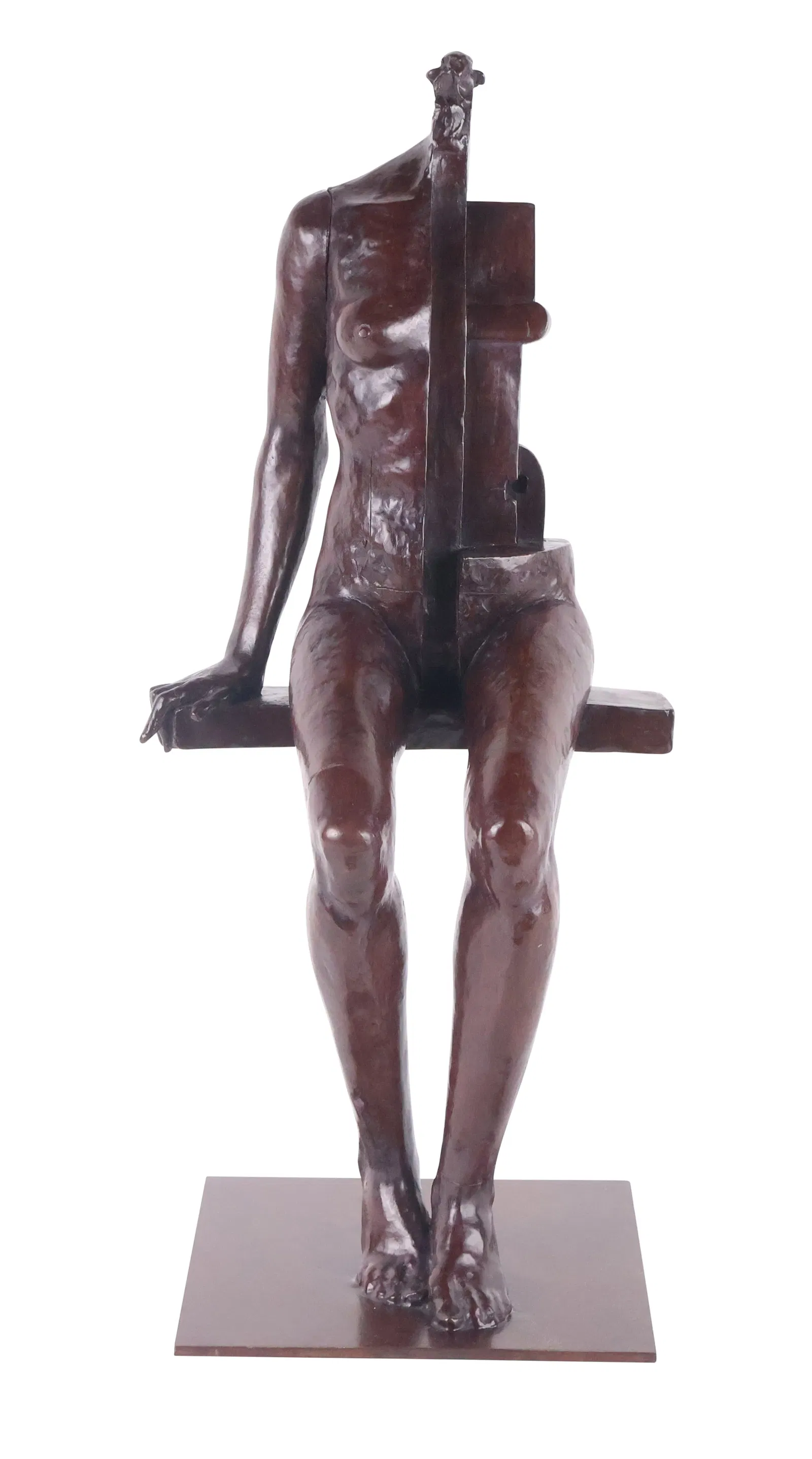
Mauro Corda, French 1960-, Standing Female Figure, Bronze Sculpture

Mauro Corda, French 1960-, Standing Female Figure, Bronze Sculpture:

Mauro Corda
French, 1960-

Standing Female Figure
Bronze Sculpture
Signed, stamped and numbered 6/8, back of seat.
Provenance: Property from the NAMITS Collection
26 x 10 x 10 in. (66 x 25.4 x 25.4 cm.)

Condition

Condition reports are not provided in catalog descriptions. The absence of a condition report does not guarantee that the lot is in good condition or free from damage and wear. We encourage you to requisite a condition report and/or additional photos prior to bidding on any lot. We also recommended asking for a shipping quote before bidding as well. CASH, CASHIER CHECK, MONEY ORDER, AND WIRE TRANSFER ARE ONLY METHODS OF PAYMENT ACCEPTED FOR JEWELRY.
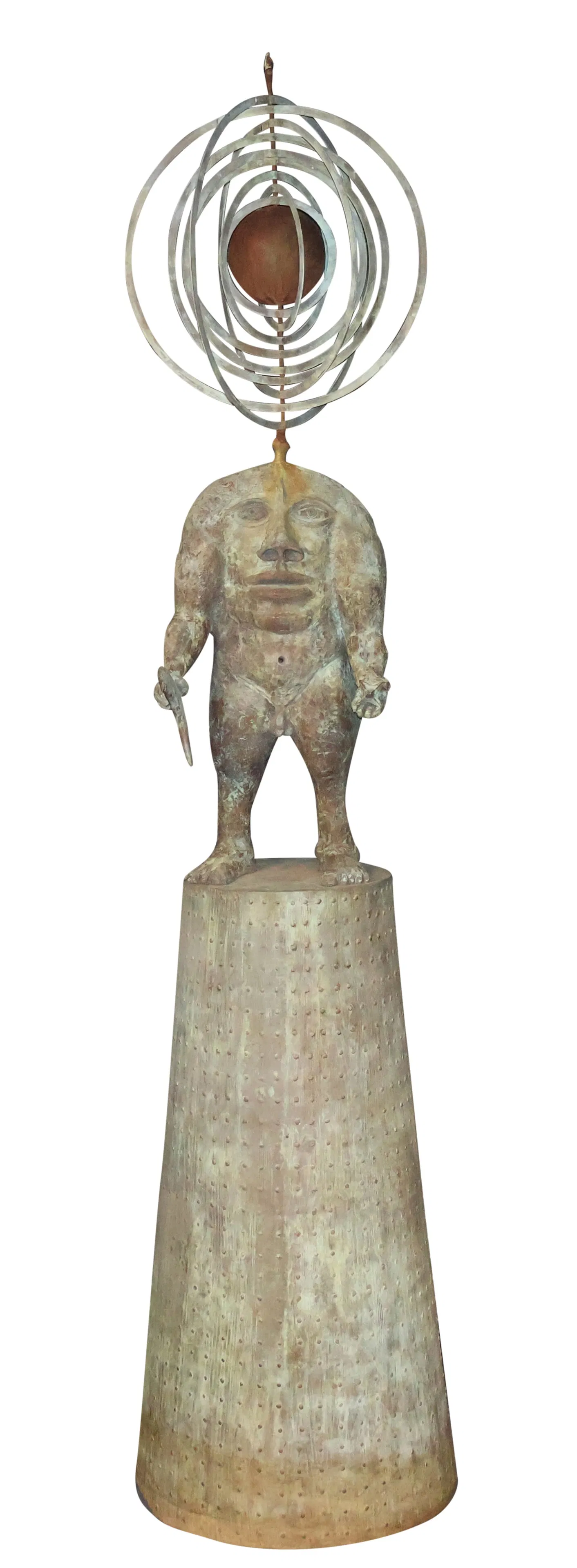
Richard Texier, French 1955-, Homo Mundo, Cast Bronze

Richard Texier, French 1955-, Homo Mundo, Cast Bronze:

Richard Texier
French, 1955-

Homo Mundo
Cast Bronze
Figure with solar system head. 2000. Bronze proof with brown-green patina signed, numbered 2/8, foundry “France Bronze”, dated 2000.
Provenance: Property from the NAMITS Collection
7’8″h x 21″ dia.

Condition
Condition reports are not provided in catalog descriptions. The absence of a condition report does not guarantee that the lot is in good condition or free from damage and wear. We encourage you to requisite a condition report and/or additional photos prior to bidding on any lot. We also recommended asking for a shipping quote before bidding as well. CASH, CASHIER CHECK, MONEY ORDER, AND WIRE TRANSFER ARE ONLY METHODS OF PAYMENT ACCEPTED FOR JEWELRY.

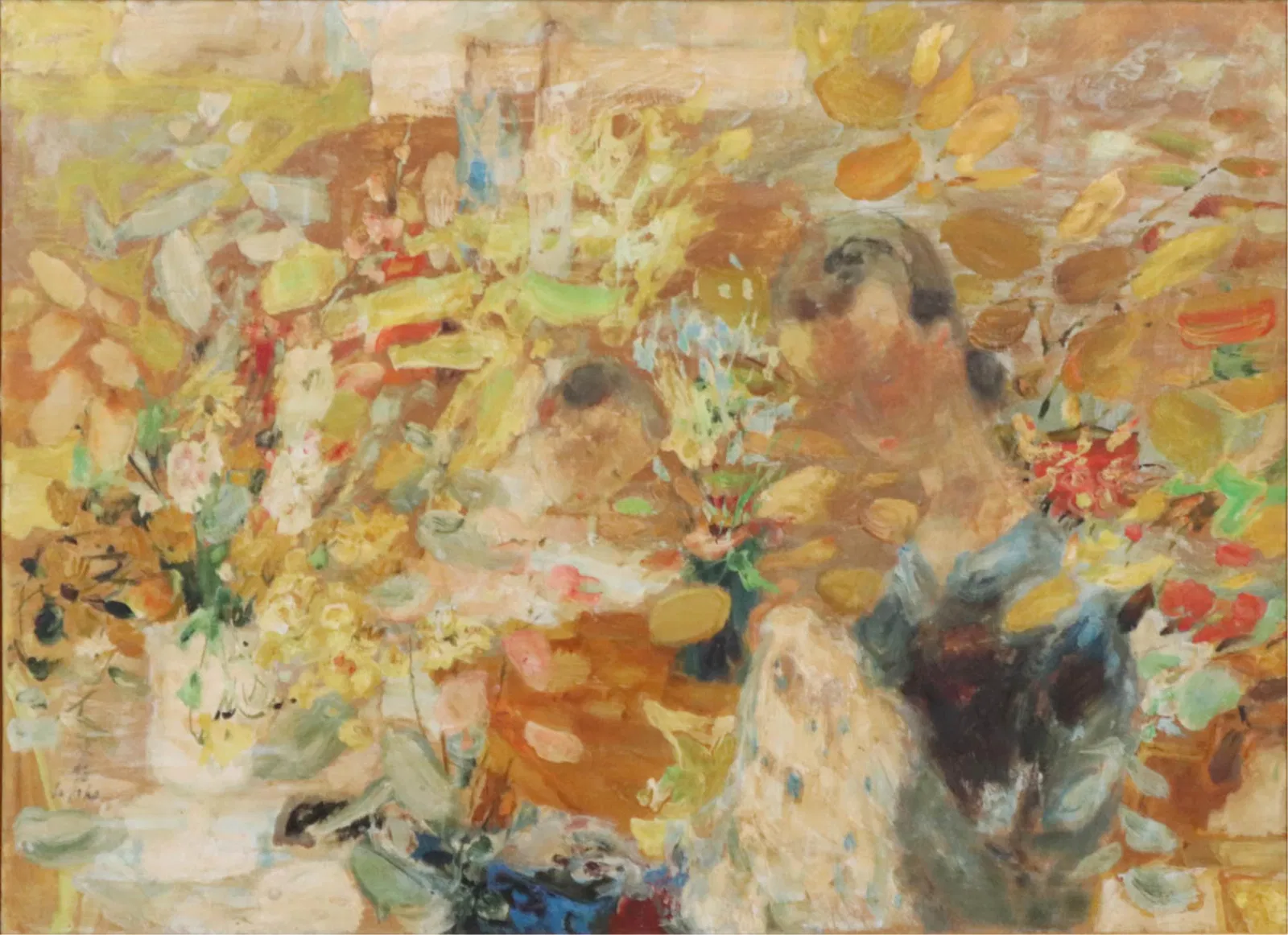
Le Pho, French/Vietnamese 1907-2001, Mother and Child, Le Couture, Oil on Silk, Laid on Board

Le Pho, French/Vietnamese 1907-2001, Mother and Child, Le Couture, Oil on Silk, Laid on Board:

Le Pho
French/Vietnamese, 1907-2001

Mother and Child, Le Couture
Oil on Silk, Laid on Board
Signed center left. C 1946-1962 in the Romanet period. Stamped and labeled, “Galerie Romanet” on the verso. The work also bears an exportation stamp and written in script “No. 516 40P and Le Couture”.
Provenance: Galerie Romanet, Paris, France
Property from a Private Princeton, NJ Collection.
According to the lot essay in Christie’s 25 May 2014, lot 354 catalogue entry, “If we consider Le Pho’s work over his life (1907-2001), three periods appear, each with a distinct history and style. The first period from the late 1920s until 1945 is qualified as Le Pho’s early works. The second period, 1946-1962, is named the Romanet period after his representing gallery, Galerie Romanet; and finally, the Findlay period from 1963 to his death in 2001, again named for his gallery, Wally Findlay Galleries from the USA. Each of these three periods represent very distinct styles, and their respective monikers also indicate aesthetic and medium differences, not only in terms of gallery representation or chronology. During the first period, we can see the emancipation of a very young and brilliant talent: already his work created at the “Ecole des Beaux-Arts” in Hanoi under the supervision of Victor Tardieu (1870-1937), was successful and recognized by collectors and institutions. Not to mention his iconic silks, subtle in both composition and tones, made after his first visit to Europe including Paris (1931-1932). Or his few lacquers, technically beautiful, though which he had to abandon due to an allergy to lacquer. Regretfully this period of enthusiasm, creativity, discovery of new techniques and new countries was frozen during the Second World War. The Romanet period is charged with the loss of stability in human and international events: Le Pho’s silk employed the same techniques as before but his colors shifted as if, through more intensity, the work needed to narrate instead of being just descriptive; the painter became more conflicted; the Confucian softness gave way to the harshness of the times. The memory of the war years, Nazibarbarism, combined with the state of civil war in Vietnam, the decolonization and its aftermath: so many questions troubled the painter who finally migrated to Paris for good in 1937. Romanet was the name of the French gallerist who always advised Le Pho and helped him exhibit his work for many years. In 1963, Le Pho (with his friend Vu Cao Dam) signed a near-exclusive contract with the well known North American gallerist, Wally Findlay. Findlay re-orientated the style of the painter, first, in encouraging him towards certain trends which he developed in the early 50s and, secondly, by modernizing his oeuvre.”
Sight: 28 1/2 x 39 in. (72.4 x 99.1 cm.), Frame: 38 x 48 3/4 in. (96.5 x 123.8 cm.)

Condition
Request Condition Report
Condition reports are not provided in catalog descriptions. The absence of a condition report does not guarantee that the lot is in good condition or free from damage and wear. We encourage you to requisite a condition report and/or additional photos prior to bidding on any lot. We also recommended asking for a shipping quote before bidding as well. CASH, CASHIER CHECK, MONEY ORDER, AND WIRE TRANSFER ARE ONLY METHODS OF PAYMENT ACCEPTED FOR JEWELRY.

Royal Doulton Art Deco Figurine, Sunshine Girl Unique color variation.

Royal Doulton Art Deco Figurine, Sunshine Girl Unique color variation.:

Lovely glossy figure modeled as a young woman wearing a 1920s swim suit and bathing cap, holding a parasol in a dark red and green coloration. Royal Doulton backstamp.

Artist: Leslie Harradine
Issued: 1929-1938
Dimensions: 5″L x 3.5″W x 5″H
Manufacturer: Royal Doulton
Country of Origin: England
Condition
Age related wear.

Moorcroft for Spaulding & Co. Double-Handle Vase, Claremont

Moorcroft for Spaulding & Co. Double-Handle Vase, Claremont:

Green glazed with blue shading double-handle vase, featuring Moorcroft popular toadstool pattern. Spaulding & Co. marked. Artist signed.

Artist: William Moorcroft
Issued: 20th century
Dimensions: 8″W x 7.75″H
Manufacturer: Spaulding & Co.
Condition
Age related wear.

Royal Doulton Prototype Figure, Lawrence of Arabia HN4695

Royal Doulton Prototype Figure, Lawrence of Arabia HN4695:

Very rare outstanding hand painted large figure of Lawrence seated atop a camel with gun in hand. Green, white and brown coloration. It was specially commissioned in 2005 for the 70th anniversary of his death in 1935. Royal Doulton backstamp. Marked: This Item Is The Property Of Royal Doulton (UK) LTD, And Title To This Property Remains With The Company At All Times.

Artist: Alan Maslankowski
Dimensions: 14.5″L x 7.25″W x 17.25″H
Manufacturer: Royal Doulton
Country of Origin: England
Condition
Age related wear.

Genevieve – HN1962 – Royal Doulton Figurine

Genevieve – HN1962 – Royal Doulton Figurine:

From the Royal Doulton Pretty Ladies collection. Features a girl wearing a vibrant red dress and a blue hat, holding a white and black flower decorated muff . Royal Doulton backstamp.

Artist: Leslie Harradine
Issued: 1941 – 1975
Dimensions: 7″H
Manufacturer: Royal Doulton
Country of Origin: England
Condition
Age related wear

Dulcinea – HN1419 – Royal Doulton Figurine

Dulcinea – HN1419 – Royal Doulton Figurine:

Features a woman seated on a colorful sofa, fashioned in pink, holding a tambourine. Her green shoes match the masquerade mask on the sofa. Royal Doulton backstamp.

Artist: L. Harradine
Issued: 1931
Dimensions: 6.5″L x 3.5″W x 5.75″H
Manufacturer: Royal Doulton
Country of Origin: England
Condition
Age related wear.

Royal Doulton Figurine, Glad Tidings HN5130

Royal Doulton Figurine, Glad Tidings HN5130:

Limited edition sculpture is part of the Tableaux series and a step back to a Victorian Holiday scene. Colored in brown, black, orange and white. Royal Doulton backstamp. This item has its original box: 24″L x 14″W x 12″H.

Artist: Amanda Hughes
Issued: 2007
Dimensions: 15.5″L x 6″W x 9.5″H
Edition Number: 98 of 250
Manufacturer: Royal Doulton
Country of Origin: England
Condition
Age related wear.