Sculpture, Civil War Items and Estate Jewels Highlight Case’s Jan. 26 Auction

Pair of Federal Period Girandole Mirrors

A William Edmondson sculpture, a coveted collection of Civil War material, and a large selection of jewelry – fresh from Southern estates – are expected to heat up the Winter Case Antiques Auction, set for Saturday, January 26th at the company’s headquarters in Knoxville.

The 860-lot cataloged auction also features an exhibited collection of Southern pottery, paintings by listed American and European artists, and Chinese antiques, along with select pieces of art and porcelain deaccessioned by two Southern museums.
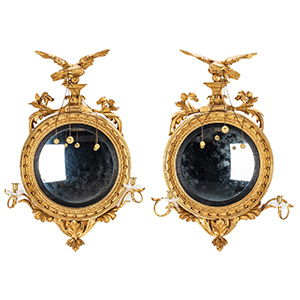
Lot 130: Pair of Federal Period Girandole Mirrors

Lot 130: Pair of Federal Period Girandole Mirrors

Sculpture figures prominently in the auction’s fine art category. Most notable is Miss Lucy, a carved limestone depiction of a woman by William Edmondson, an outsider artist who in 1937 became the first African American to have a solo exhibit at the Museum of Modern Art. The figure comes from the estate of a Nashville woman whose co-worker at Peabody College, Sidney Hirsch, is credited with helping introduce Edmondson to the New York art scene. Sharing the sculpture spotlight in this sale are three bronze figures of ballet dancers including Rudolph Nureyev, all by Richard MacDonald (a former artist in residence with London’s Royal Ballet), and a surrealist bust by Sergio Bustamante. The auction also features works from the estate of award-winning Tennessee sculptor, Olen Bryant. About a half dozen figures in wood and ceramic will be offered, along with part of the art collection amassed by Bryant and his partner, late Vanderbilt University art professor Thomas Brumbaugh, including a Jacob Epstein bronze sculpture of dancer Pola Nerenska, a small John Piper abstract, and several Spanish Colonial paintings. From the estate of Delle Brown, a longtime Nashville art and antiques dealer, comes an exhibited Gilbert Gaul oil landscape titled Tennessee Farmyard, a Thomas Hill still life, and a China Trade oil. The auction also features an exhibited view of Cape Ann by Charles Woodbury, a Hayley Lever dock scene, a large Louisiana bayou painting by Knute Heldner, 3 landscapes in oil and watercolor by Wolf Kahn, a collection of Texas landscapes including a bluebonnet scene by William Thrasher, and an Alaskan mountain landscape by Magnus Heurlin. Other artists represented include David Driskell, George Elmer Browne, Charles Edwin Lewis Green, Walter Farndon, Anna Brewster, and Benjamin Stahl. Three large and vibrantly colored abstract works by Stephen Sacklarian, deaccessioned by the Mississippi Museum of Art, are also available.
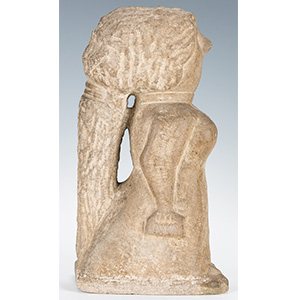
Lot 110: William Edmondson Sculpture, "Miss Lucy"

Lot 110: William Edmondson Sculpture, “Miss Lucy”

Visitors to the gallery can’t miss the life-sized painting stationed at Case’s entry depicting General Andrew Jackson on the battlefield, attributed to Emmanuel Leutze (after the 1820 portrait by John Vanderlyn). Other portraits in the auction include an 18th century oil of Tamar Boardman Taylor attributed to Ralph Earl; two cabinet sized portraits of young men from the Barnewalle family attributed to Francis Wheatley; a portrait of a British officer by Norman Macbeth; 19th century Southern folk art portraits; and a handful of 17th century portraits attributed to the circles of Daniel Mytens, Jonathan Richardson and Sir Peter Lely.
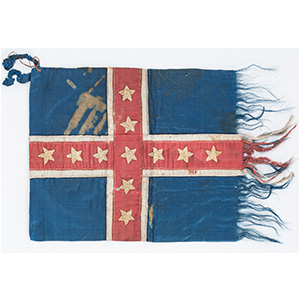
Lot 265: Battle of Shiloh Polk Pattern Bible Flag, S.D.J. Lewis

Lot 265: Battle of Shiloh Polk Pattern Bible Flag, S.D.J. Lewis

Works on paper include a graphite mural study by Diego Rivera; 20th century signed limited edition lithographs by Marc Chagall (The Red Bouquet, David & Absalom) and Jean Miro (Homentage a Joan Prats); two Gustav Baumann woodcuts (Salt Creek, Pine and Aspen); and etchings by Alfred Hutty (Southern Villa No. 1) and Frank Benson (Winter Wild Fowling). There are also six August Sander photographs from his visual study of the people of Germany, People of the Twentieth Century, printed by his son, Gunther Sander, and seven photographs by Bert Stern of Marilyn Monroe from the so-called “Last Sitting,” — a Vogue photo shoot at the Bel-Air Hotel, six weeks before the actress was found dead of a drug overdose.
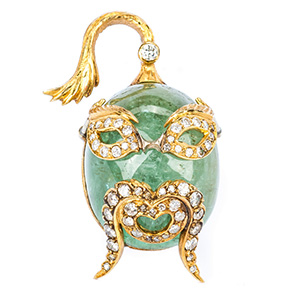
Lot 33: Guilio Nardi 73 ct Emerald & Dia. Pendant / Pin


Lot 33: Guilio Nardi 73 ct Emerald & Dia. Pendant / Pin


Civil War buffs are already buzzing about a large cache of Confederate weapons and accessories, including a rare Battle of Shiloh personal or “Bible” flag that originally belonged to S. Duff Lewis of Tennessee. Military historian Greg Biggs, who assisted with the seven-page catalog entry for the flag, writes it is the first Polks Corp Pattern flag he has seen in 28 years of research. There are also several valuable weapons from the estate of Jim Maconkey of Landrum, South Carolina, including an early Confederate Griswold .36 caliber revolver (serial number 133); a Morse breech loading .52 caliber Carbine rifle; a Confederate blockade run 1862 Enfield Tower Rifled Musket; a cased Hyde & Goodrich marked Tranter Revolver; a D. Kernaghan (New Orleans) marked Tranter with Vicksburg marked holster; a cased pair of Schneider & Co. Memphis derringers, and a scarce C. Suter, Selma, AL, marked derringer.
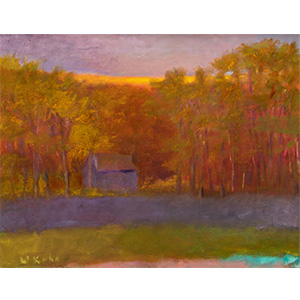
Lot 523: Wolf Kahn Oil on Canvas Landscape, Glow on the Ridge

Lot 523: Wolf Kahn Oil on Canvas Landscape, Glow on the Ridge

Also from the Maconkey estate are belt buckles and plates, holsters, and more than a dozen cartridge and cap boxes (some identified to particular soldiers), and multiple Charleston slave tags. The category is further fortified by the weapons and ephemera collection of Benjamin Dysart III of Brentwood, TN, comprised of several Colt, Nimschke and Tranter revolvers, and ephemera including a CDV album containing images of multiple Confederate generals. Six autographed letters, signed by John Mosby (the Confederate “Gray Ghost”) are also offered, along with oil portraits of Confederate generals and bladed weapons such as a Griswold saber bayonet and a Nashville Plow Works sword.

Bidders interested in gold, diamonds, and other gemstones have more than 100 lots of fine jewelry from Tennessee estates from which to choose. Among the highlights are a 27-carat diamond line bracelet (comprised of 27 diamonds, each approximately 1 carat); a 44-carat H. Stern Brazilian aquamarine and diamond ring; a 29-carat heart shaped aquamarine and diamond pendant, gold jewelry by Cartier, Tiffany and Signoretti, and a 73-carat emerald and diamond “Chinaman” brooch, circa 1960, by mid-20th century designer Giulio Nardi of Venice. There are also nearly 100 lots of sterling and coin silver in the auction, including a Japanese .950 silver tea service and a heavy Mexican silver tea service; Baltimore repousse hollowware and flatware (Schultz, Kirk, Steiff); a Hamilton & Co. Edwardian sterling epergne; a Rebecca Emes and Edward Barnard cake basket; a scarce Edwardian sterling egg cruet; sets of sterling julep cups; a Bier sterling menorah; flatware sets by Gorham, Whiting, and Reed & Barton; coin silver hollowware by John and James Cox and Nehemiah Bassett and Joseph Warford; and Sheffield plated entrée dishes, a meat dome, and candlesticks by Matthew Boulton.

Southern pottery is a staple at Case, and company president John Case says this auction features the most significant group of it the company has ever offered. Leading the lineup is a copper oxide and lead glazed earthenware double-handled jar made by Christopher Alexander Haun (1821-1861), a Union-sympathizing potter who was ultimately hung by the Confederate army for his role in burning a Railroad bridge. The clearly signed jar, with elaborate tread stamp designs at each handle, is in remarkably good condition. Also featured is the only known extant Haun jug, and several pieces of East Tennessee and Southwest Virginia pottery, all from the collection of the late Brad Swanson of Abingdon, Virginia. A number of Swanson’s pots are illustrated in reference books on Southeastern pottery. Several were exhibited in the 2005 “Legacy in Clay” exhibit at the William King Regional Arts Center in Virginia, including several pieces of cobalt decorated stoneware, and interesting earthenware forms from the Cain, Mort, Vestal and Magee potteries of Virginia and Tennessee.

The ceramics category also includes a collection of Vienna hand decorated porcelain portrait plates deaccessioned by the Hunter Museum of Art to benefit the acquisitions fund; Meissen figures; Sevres; and a large selection of Herend, including Rothschild Bird dinnerware with blue borders.

A rare pair of American Federal girandole mirrors with eagle crests stands out among the furniture offerings, along with a pair of signed French Empire fauteuils, a Federal desk attributed to Michael Allison of New York, a Federal desk signed by Joseph Lyndall of Philadelphia and dated 1812, and a near pair of inlaid Federal chests attributed to Norfolk, VA or Britain. Other regional furniture includes a rare Southwest Virginia pie safe sideboard with urn tins; 2 Tennessee sugar chests, a Pennsylvania Gothic Revival secretary, an exuberantly inlaid tiger maple chest (possibly Ohio); and a tiger maple server and miniature chest from the Cheney Plantation, Marietta, GA. 20th century furniture includes a signed Philip and Kelvin Laverne “Eternal Forest” coffee table; an Eames lounge chair and ottoman by Herman Miller, a Knoll stool, and an Edward Wormley for Dunbar bar cart and coffee table.

There are a number of Asian antiques available, among them a scroll signed Wang Hui after Shen Mo; a pair of Guangxu Imperial lemon yellow saucer dishes; several lots of jade – including a Ruyi scepter and arm rest; bronze censers and gilt bronze figures; snuff bottle collections, and four framed Daoist scrolls depicting characters in Diyu (courts of the afterlife).

Other standouts in the sale include a clock by Mallet, France, with bust of George Washington; a Tiffany Studios bronze “Lily Pad” mirror; a vibrant Gees Bend quilt; a prize winning Cherokee basket by Eva Wolfe; a signed Loetz Phanomen art glass vase; rare maps; coins and currency; and a hand painted Haviland fish plate from the Rutherford B. Hayes White House dinner service.

The complete catalog for the auction, with full descriptions, price estimates, and photographs for items, in the order in which they will be sold, can be viewed online at www.caseantiques.com.

Case’s gallery is located at 4310 Papermill Drive in Knoxville. The auction begins Saturday, January 26th at 9:00 AM EST. Online, absentee and phone bids will also be accepted. Persons wishing to preview the auction may do so on Friday, January 25 from noon to 6PM EST or by appointment. For more information or to consign objects for a future auction, call the gallery in Knoxville at (865) 558-3033 or the company’s Nashville office at (615) 812-6096 or email [email protected].

Captions:

The Jan. 26 auction features lot 130 a rare pair of American Federal Girandole mirrors (est. $18,000-22,000)

Lot 110: Miss Lucy, a 15 ½” carved limestone sculpture of a woman carrying purse and book, by William Edmondson (American/Tennessee, 1874-1951), is estimated at $70,000-75,000.

Lot 265: Small personal or “Bible” flags were often made by women for their menfolk to carry during the Civil War. This Shiloh-related flag is the only known example of the rare Polk’s Corps pattern. It belonged to Private Duff Lewis of Tennessee. Est. $3,400-3,800.

There are more than 100 lots of jewelry, including this “China Man” pendant/brooch lot 33 with 73-carat cabochon emerald and 55 diamonds, made by Venetian jeweler Guilio Nardi circa 1960. Est. $4,000-$5,000.

There are three paintings by Wolf Kahn (German-American, b. 1927), including lot 523 oil on canvas landscape titled, “Glow on the Ridge,” est. $10,000-$12,000.
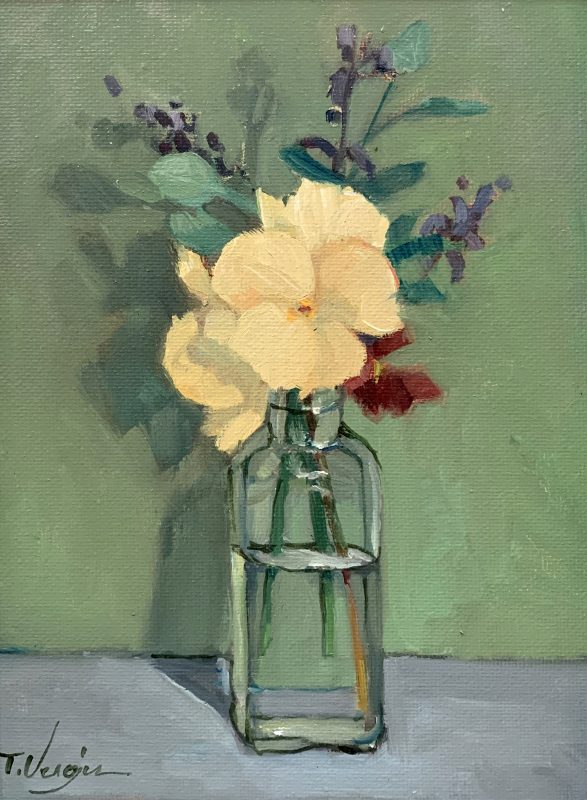
Trisha Vergis Exhibit at Gratz Gallery

“PANSIES”: Works by local artist Trisha Vergis are now on view at the Gratz Gallery and Conservation Studio in Doylestown, Pa. The exhibit runs through the end of the year.

Gratz Gallery and Conservation Studio in Doylestown, Pa., now presents a special summer exhibition of works by local artist Trisha Vergis.

Vergis, born in 1962, is an American painter, master woodcarver, and conservator based in Hunterdon County and Bucks County, Pa.

Having studied her craftsmanship and painting skills at institutions including Ursinus College, PAFA, Moore College of Art, and Philadelphia College of Art, as well as in her apprenticeships with master carvers, painters, and conservators, her talent was awarded with the 2017 Best of Show at Ellarslie, Trenton City Museum; Best of Show and First Place awards at Tinicum Arts Festival; and numerous inclusions at Phillips Mill Exhibitions. In addition, she has exhibited in solo shows throughout her career.

As a realist painter, she paints her surroundings; local landscapes; activities; people; and seasonal fruits, flowers, and vegetables. This realist approach to painting ranges from Fauvism, heightened colors with aggressive brush work, to trompe-l’oeil (trick of the eye), realistic imagery creating the optical illusion of three dimensions.

“I feel my job as an artist is to bring joy,” said Vergis. “I try to become very close with my subject, creating an intimate and parallel presence for the viewer. Painting, like dreaming, becomes about making personal connections to observations, memories, and impressions. My intention is to engage the viewer to experience the nuances of the subject.”

To create color harmony in her paintings, Vergis paints with a very limited palette and sculptural brushstrokes.  As a plein air and studio painter, she prefers to paint alla prima (wet on wet).

Trisha Vergis’ special exhibition will be on view through the remainder of the year at Gratz Gallery & Conservation Studio, 5230 Silo Hill Road, Doylestown, Pa.  Gallery hours are Wednesday through Saturday, 10 a.m. to 6 p.m., Sunday 12 – 6 p.m., and by appointment.

2018, Shopping Feature, Robb Report, Ultimate Gift Guide

2018, Shopping Feature, Robb Report, Ultimate Gift Guide
Robb Report 2018 Ultimate Gift Guide, Turkish website

Robb Report
“Ultimate Gift Guide”
December 2018

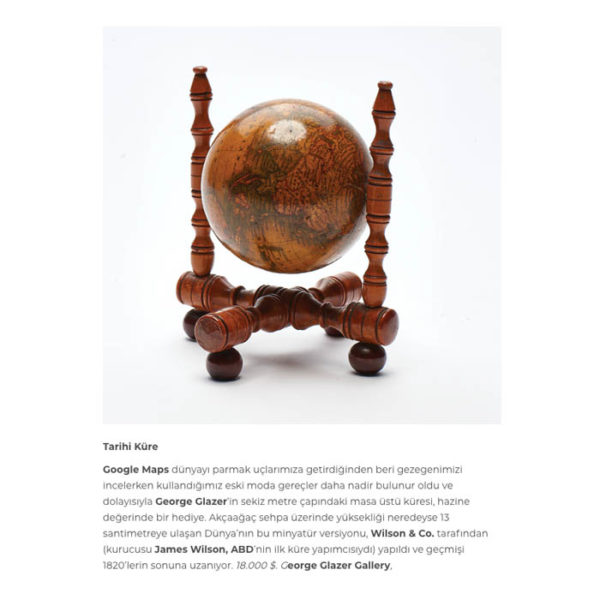
The Robb Report, a magazine devoted to luxury goods and experiences, with 18 international editions, included our James Wilson 3-inch terrestrial globe in its 2018 Ultimate Gift Guide. The globe was published on their Turkish website and to their Swedish Instagram account. Both are pictured here. The globe was produced by Wilson’s Albany, New York, company around the late 1820s and measures 5.25 inches tall overall including the turned wood stand.

Posted to Robb Report, Turkish edition, December 28, 2018 as “Kültür Kurtları İçin Hediye Önerileri” by Bahar Aslan:

Historical Sphere

Since Google Maps has brought the world to our fingertips, the old-fashioned tools we use to explore our planet have become more rare, so the eight-centimeter-wide desk sphere by George Glazer is a treasure worth gift. This miniature version of the Earth, whose height reaches almost 13 centimeters on the maple stand, is made by Wilson & Co. (the founder, James Wilson, the first globe producer of the United States ), and dates back to the end of the 1820s.

Posted to Robb Report, Swedish Instagram account, December 30, 2018:The ultimate gift guide, no. 31: Historical globe from the end of the 1820s, made by Wilson & Co – America’s first globe maker.

2018, Prop Rental, Ralph Lauren Holiday Store Windows, New York City

2018, Prop Rental, Ralph Lauren Holiday Store Windows, New York City
Ralph Lauren Children's Store Holiday Window
Ralph Lauren Children’s Store Holiday Window

Ralph Lauren Children’s Store Holiday Windows
December 2018

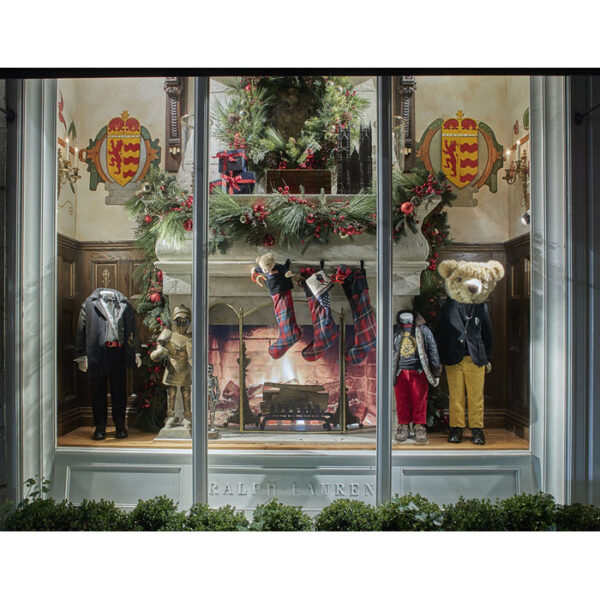
Ralph Lauren’s children’s store at 72nd and Madison Avenue in New York borrowed items from the George Glazer Gallery for its holiday window displays, which lent them a traditional Old New York look, enhanced by piles of old books surrounding the mannequins. Items from the gallery included a handsome wood and brass hourglass, miniature models of knights in armor, an architectural model of Westminster Abbey cast out of composition material to resemble carved wood, two library ladders, and a large magnifying glass.

18th Century Antiques Find New Life At Cordier’s Fall Fine And Decorative Arts Auction

UPLOADING 1 / 1 – Simon Willard rocking ship clock detail_0.jpg ATTACHMENT DETAILS Simon Willard rocking ship clock
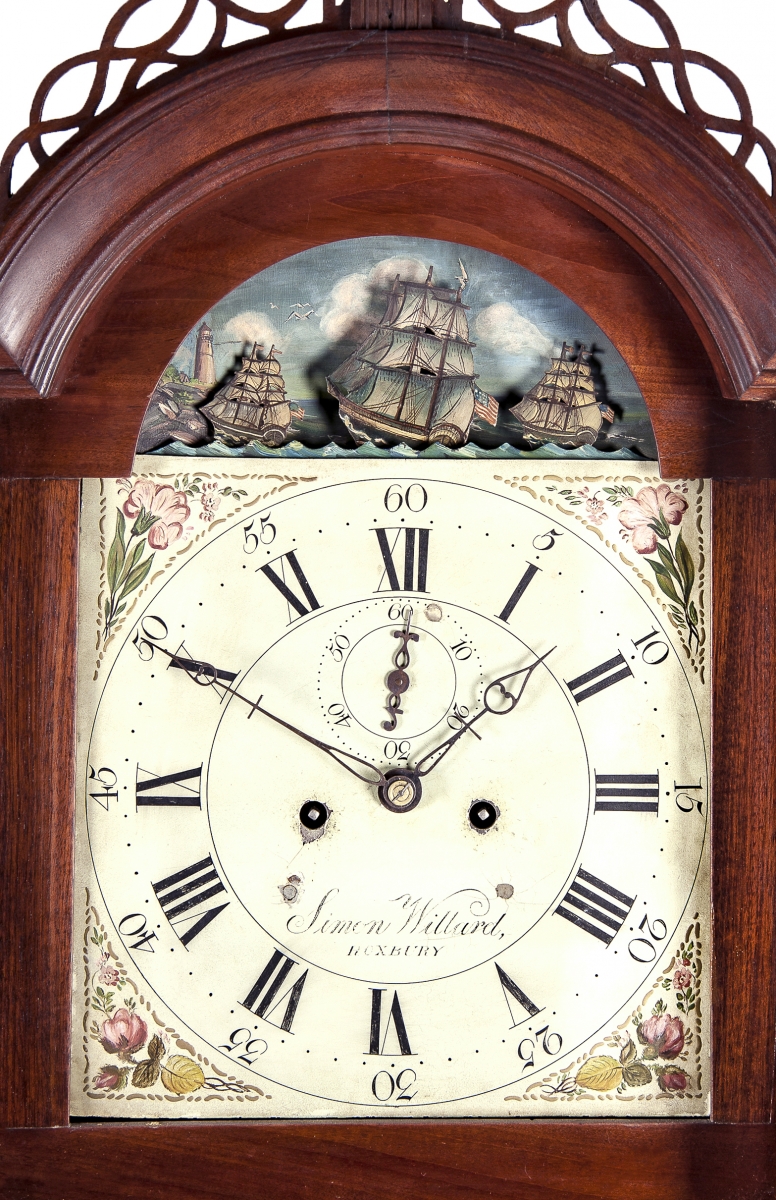
Simon Willard Rocking Ship Clock

Cordier Auctions, located in Harrisburg, PA, held their fall Antique and Fine Art Auction on November 10 and 11. The sale featured rare antiques and luxury goods from all collecting categories, drawing bidders from around the globe.

Early examples of American craftsmanship and artistry were particularly well-received by bidders. An intricately decorated tall case clock by Massachusetts master clockmaker Simon Willard, featuring a rocking ship-automaton to the arch, sold to a bidder online for $9,000, while an 18th century PA Windsor settee brought $5,000.

The settee was one of several pieces consigned by the Rutherford House in Harrisburg, PA. Built in 1858, the mansion now known as the Rutherford House was the Rutherford family’s home until 1920, when it was sold to Dauphin County. Today, the mansion is used as a senior center.

The home and the Rutherford family played a significant role in the Underground Railroad during the mid-1800s. Dr. William Wilson Rutherford was vice president of the Harrisburg Antislavery Society in 1847 and provided a station for escaped slaves at his home on South Front Street in Harrisburg. From there, he conveyed them to what is now the Rutherford House, where they were hidden in a barn that once stood nearby. Other antiques offered from this historic home included an English tall case clock with horses, and an early 19th century needlepoint sampler.

Jewelry, both antique and modern, remains a popular category at these quarterly auctions, and Cordier’s fall installment featured a fine selection. Top lots included a 14K 1.60 carat diamond solitaire ring ($4,200) and an antique gemstone lizard brooch ($3,300). A model 3417 dress wristwatch by renowned Swiss manufacturer Patek Phillipe inspired competitive bidding before hammering down at $24,000 to an online bidder.

Although the market for porcelain and glassware has softened over the past decade, a handsome range of porcelain found heavy interest throughout the second day of the sale, including seven large Lladro figures from a private collection. Of those, the late 1970’s sculpture “Jockey and Lady” sold for $475. A large Chinese Baluster form lidded vase dated to the 18th or 19th century brought $1,600.

French artists including Charles Francois Daubigny ($4,200) and Antoine Blanchard ($3,600) saw marked popularity, but sculptures by American muralist Robert Wyland also performed well, with one painted cast bronze grouping of marlin hammering to a floor bidder for $3,900.

Mid-century modern furniture has been one of the best-selling categories at auction for the past several years, and Cordier’s auction house has offered designer pieces in all of their 2018 quarterly sales. Stand-outs in their November auction included a mirror and wall shelf set by Paul Evans ($1,300) and a Herman Miller credenza by designer George Nelson ($1,200), among others.

In total, the auction spanned close to 600 lots over the course of two days. Prices quoted above are hammer prices.

Rare Copy of Edgar Allan Poe’s Tales Auctioned for $315,000 at Skinner

BOSTON, MA – November 18, 2018  – An attic discovery of the rare 1845 first edition of Poe’s Tales (Lot 224, Estimate: $60,000-80,000) in paper wrappers surpassed all expectations to sell for $315,000 after fierce competition from internet and telephone bidders. Based on the context of the discovery of this copy of Poe’s Tales, the original owner presumably bought this and other similar contemporaneous books to be read for amusement in the 1840s. Once read, the Poe and its companions were bundled and stored away in a trunk in the attic until they were found during an in-home auction evaluation by Skinner specialists. In the rare book trade, it was thought that all copies of Poe’s Tales in wrappers were known. 


Poe, Edgar Allan (1809-1849) Tales, First Edition, in Paper Wrappers, New York: Wiley & Putnam, 1845 (sold for: $315,000 on November 18, 2018)

Department director, Devon Eastland notes that the annual November Fine Books & Manuscripts Auction is timed to coincide with the long-running Boston International Antiquarian Book Fair, a venue that guarantees that serious American and international collectors and dealers are in Boston and able to view sale material in person. She notes “Bidders appreciated that the copy of Poe’s Tales was a previously unknown copy fresh to the market, having been in a private collection for some time which garnered excitement in the market.”

The 350 lot auction included works from New England estates;  printed books, documents, literary first editions, natural history prints, and maps. Books & Manuscripts are offered twice-yearly at Skinner and consignments are being accepted for spring 2019 auction.

Highlights include:

The Book of Mormon, 1830, First Edition (Lot 264, Auctioned for $55,350)

Benjamin Lincoln’s Oath of Allegiance witnessed and signed by George Washington (Lot 53, Auctioned for $33,210).

Satan’s Malice Asserted in a Sermon Delivered at Salem-Village. Boston: Printed by B. Harris, & Sold by Nicholas Buttolph, next to Guttridg’s Coffee-House, 1693. First edition, no copies offered at auction since 1918, Lawson was minister of Salem Village from 1684 to 1688. When the witchcraft scare broke out in Salem in 1692, he returned to observe and report. Fearful of demonic possession, Lawson believed that he had lost family members to the devil. In his sermon, he tries to offer Christian support (Lot 181, Auctioned for $33,210)

Blanchard, Joseph (1704-1758) and Samuel Langdon (1723-1797) An Accurate Map of His Majesty’s Province of New-Hampshire in New England. London: Thomas Jefferys, 1761 (Lot 335, Auctioned for $31,980)

Audubon, John James (1785-1851) Virginian PartridgePlate 76. [from] Birds of America. London: R. Havell, 1826-1838 (Lot 309,  Auctioned for $20,910)

Marilyn Monroe’s 1956 Raven Black Ford Thunderbird Heads To The Auction Block For The First Time At Julien’s Auctions Estimate $300,000–$500,000

marilyn monroe
Marilyn Monroe's Black Ford Thunderbird

SATURDAY, NOVEMBER 17, 2018

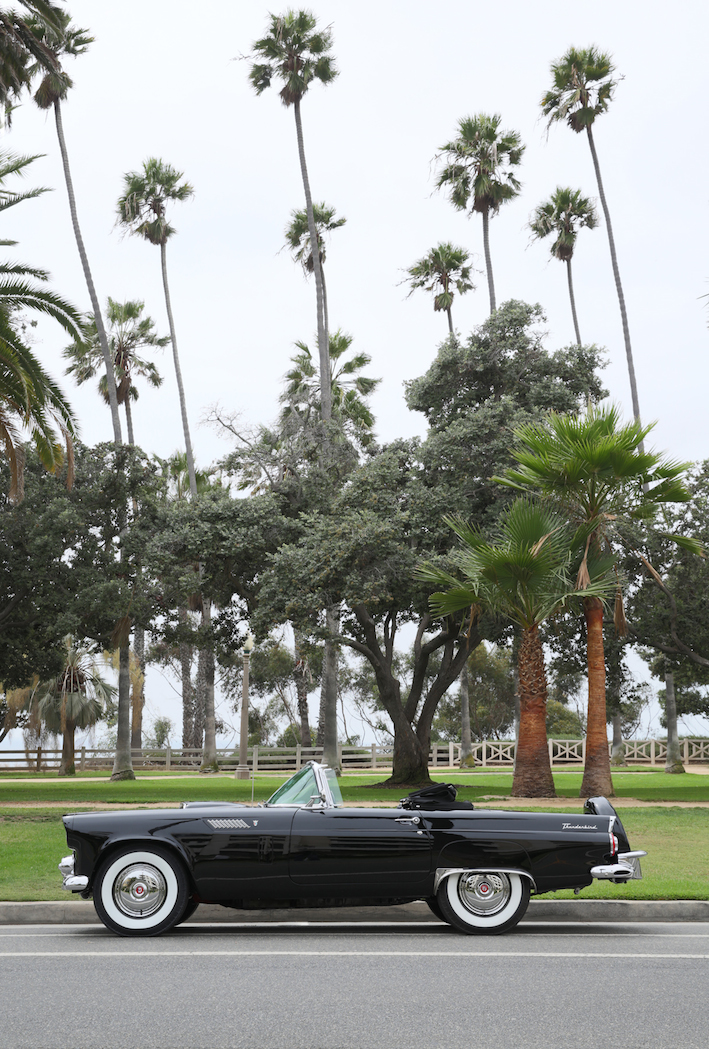
Los Angeles, California – (September 25, 2018) – This stunning Ford Thunderbird owned by Marilyn Monroe from 1955 to 1962 will be sold by Julien’s Auctions, the world–record breaking auction house, as part of their annual blockbuster event ICONS & IDOLS: HOLLYWOOD to take place on November 17, 2018 live in Los Angeles and online at juliensauctions.com. It is estimated that it will sell for $300,000–$500,000.

One of the most desired women in the world, Monroe’s life was deeply troubled, but during the time that she owned this car she was enjoying some of the happiest days of her life.

Soon after buying the Thunderbird, Monroe married the celebrated playwright Arthur Miller. A published report at the time suggests that Monroe and Miller drove this vehicle to their civil wedding ceremony on June 28, 1956 and likely their private wedding on June 30, 1956.

The Marilyn Monroe Thunderbird was purchased on December 20, 1955, from Westport Motors, Westport, Connecticut in the name of her corporation, Marilyn Monroe Productions. Most accounts suggest it was a Christmas gift from her business partner and photographer, Milton Greene.

Amy Greene, Milton Greene’s wife, speaking about this car, said: “Marilyn liked to drive. We’d take the convertible and with the top down, we’d go sailing along the highway. We both liked to feel the wind in our faces and the warmth of the heater on our legs.”

It was a powerful car for its time with a 225 horsepower V–8 engine and a top speed of 113 MPH. This car features its complete dual, through the bumper exhaust system and gives a deep throaty roar at speed––adding to its “va–va voom” personality.

The vehicle has a roadster body with two–doors and was designed to be Ford’s answer to the two seater Chevrolet Corvette. However, the Thunderbird emphasized driver comfort and amenities as well as performance. By dubbing it a “Personal Luxury Car” Ford created a whole new niche in the American automobile market. The 1956 model had the spare wheel mounted in a flashy exterior “continental kit” to allow for more trunk space.

Marilyn Monroe’s 1956 Thunderbird came from the factory with both its canvas convertible top and a detachable hard top with distinctive “porthole” windows. A truly iconic look for a Hollywood legend.

Monroe owned this gorgeous vehicle for six years until generously giving it as an 18th birthday gift to John Strasberg, the son of director and acting coach, Lee Strasberg and his wife, Paula. Legal transfer likely took place only a few short months before Monroe’s tragic death on August 5, 1962.

Darren Julien, President/Chief Executive Officer of the leading American auction house that bears his name, says: “Once in a while something comes along that has a powerful magic about it, a charisma, because of everything and everyone associated with it. This wonderful black Ford Thunderbird is not only part of automotive history but comes with an aura of glamour, romance and tragedy of a true Hollywood legend. It will make the centerpiece of any classic car collection and be an object of fascination to millions.”

Marilyn Monroe's Black Ford Thunderbird

The Marilyn Monroe Thunderbird was traced and purchased by the current owner with the assistance of the accompanying documents, which were among those received by Lee Strasberg when he inherited the majority of the Marilyn Monroe estate.

The current owner says: “I found the vehicle in lovely show condition. Nevertheless, the car has received a frame–off restoration to its exact original appearance by Prestige Thunderbird, Inc., of Santa Fe Springs, CA. Prestige is the premier west coast firm specializing only in classic 1955, 1956, and 1957 Ford Thunderbirds.” In recognition of the car’s important provenance, special heed was given to the retention of original parts, with most driver and passenger touch surfaces left undisturbed.”

Marilyn Monroe's Black Ford Thunderbird

“Finding this car, a classic two–seater model, after 56 plus years of its unknown whereabouts, was a singular event. No other car has been located and documented as owned by the incomparable Marilyn Monroe.”

This 1956 Ford Thunderbird owned by Marilyn Monroe has the serial number P6FH151382. The vehicle is accompanied by documents relating to Monroe and her ownership of the vehicle including: a Declaration of Ownership of a Motor Vehicle issued by the State of Connecticut; a letter from the insurance company Kalvin, Miller, Meyer and Sachs; and a letter from the City of New York Department of Finance Bureau of Collections. These documents were purchased at a Julien’s Auctions sale held on November 18, 2016 and came from files of the Estate of Lee Strasberg. Strasberg became the owner of the documentation when Monroe died. The lot is additionally accompanied by a detailed history of the vehicle compiled by the current owner and consignor.

The car features a Raven Black exterior with an elegant black and white interior. It has a 312 cubic–inch V–8 engine with Holley 4 bbl. Carburetor generating 225 horsepower, Ford–O–Matic automatic transmission, power steering, power brakes, power windows, and power seats. It comes equipped with a black canvas convertible top and a “porthole” windowed hardtop, rear fender shields (skirts) and American Classic 670R15 radial tires. The odometer reads 30,399 miles following an engine re–build.

Marilyn Monroe's Black Ford Thunderbird

In the early 1950s, North American manufacturers began to worry that they didn’t have anything to sell to someone who wanted a two–seater sporting machine. GM was the first out of the gate, with the Chevrolet Corvette appearing as a ’53 model. Ford’s entry, the Thunderbird, was unveiled in 1554 and first produced for the 1955 model year. The “T–bird” created a sensation when it appeared. Actress Jane Wyman was the very first person to take delivery of a new Thunderbird and drove it right into the middle of a party she was giving to celebrate the event.

Art of Latin America in our auction room

The context, both geographical, historical and cultural, of an artist is crucial in the development of his creative proposal, his processes and language are a reflection of the land that has seen him born or develop professionally. In Latin America we have the great fortune of having a wealth without equal and our Latin American Art Auction next Thursday, November 15, shares that same diversity, the selection includes works from creators from Mexico to Chile, through Guatemala, Cuba, Puerto Rico , Nicaragua, Venezuela, Colombia, Peru and Argentina, whose cosmogony and culture we put at your disposal.

Mexico is represented by emblematic authors such as Diego Rivera, Dr. Atl, and José María Velasco, but also by important artists who made our country, their homeland, including an impressive oil painting by Leonora Carrington; from the Chilean end, a drawing of the mysterious Roberto Matta.

In Latin America, countries with a mystical tradition can not be absent, Cuba has permeated its ideology and landscape in its artists: mystics like José Bedia, Wifredo Lam and Manuel Mendive, transport us through their images of magic to the realities that inhabited , but we can also get lost in its beautiful landscapes through the brushes of René Martín and Carlos Ríos.

Colombian art has been in vogue in the international market thanks to the relevance acquired by the work of Fernando Botero, author who adorns the cover with a splendid oil, but of which we also have a preparatory drawing finely worked on both sides of the paper . In contrast, the sculptures by Edgar Negret, speak of the interest of the artists of this country for the abstraction and an art that speaks of the industrial age that we live.

Argentina cosmopolitan, in the eyes of comedians and critics Antonio Berni and Antonio Seguí, but also the abstract Argentina of the paintings of Kazuya Sakai and Juan Melé.

It would be difficult to continue listing the works that we consider the best in this auction, so we invite you to consult the  catalog  that is already available on our website and for sale at our facilities; In it you will find a careful selection that we hope you enjoy.

Evelyn And Eric Newman Cartographic Collection Realizes $742,000

newman collection

The November 12 single-owner auction of The Fine Cartographic and Printed Americana Collection of Evelyn and Eric Newman contributed to Leslie Hindman Auctioneers’ Fine Books and Manuscripts’ highest-grossing year in department history. The collection of the notable St. Louis philanthropists offered premier examples of iconic maps and atlases. The auction closed at a 98% sell-through rate, with competitive bidding throughout the sale in the Chicago saleroom and on the phone. Combined, the 117 lots that sold realized just under $742,000.

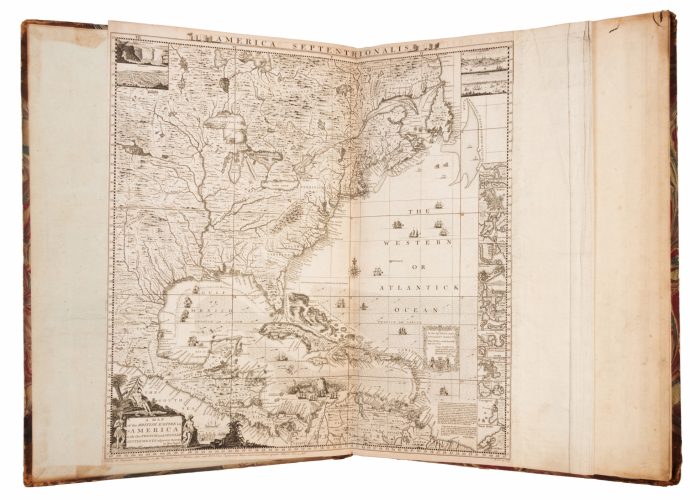
The top selling lot of the auction, Henry Popple’s A Map of the British Empire in America with the French and Spanish settlements adjacent thereto sold for over double the high estimate, realizing $81,250 against a presale estimate of $30,000 – 40,000. It is the first printed map to show the thirteen colonies, making it a monument of North American cartography.

Fine Books and Manuscripts

Two editions of John Melish’s Map of the United States from Thomas W. Streeter’s Two editions of John Melish’s Map of the United States from Thomas W. Streeter’s collection also led the sale. The 1820 edition of the Melish map, one of only three copies of the map to come to auction in the last forty years,sold for $68,750, exceeding the presale estimate of $30,000 – 40,000. The 1818 edition of Melish’s Map of the United State sold for $40,000 against a presale estimate of $25,000 – 35,000.

Additional highlights which far surpassed their presale estimates include: Atlas Amériquain Septentrional contenant les details des differentes provinces, de ce vaste continent by Georges-Louis Le Rouge, which sold for $47,500 (presale estimate: $25,000 – 35,000), and John Senex’s A New General Atlas, Containing a Geographical and Historical Account of All the Empires, Kingdoms and other Dominions of the World, which realized $32,500 (presale estimate: $12,000 – 18,000). A rare Revolutionary War-era broadside map of New York harbor, The Country Twenty Five Miles Round New York, Drawn by a Gentleman from that City, published in London on 21 November 1776, was met with enthusiastic bidding and realized $20,000 against a presale estimate of $5,000-7,000.

Fine Books and Manuscripts

Gretchen Hause, Director of Fine Books and Manuscripts, commented: “We are thrilled with the strong result for the sale of Evelyn and Eric Newman’s exceptional collection of maps, atlases, and Americana.  We saw active participation across all channels of bidding, and as a result, a number of rarities from this fine collection sold for prices well above their pre-sale estimates. The exceptional sell-through rate is a testament to the fine examples in the collection, many with notable provenance, and speaks to the strength of the market for similar material at auction.”

Bridget Foley’s Diary: Salon Style

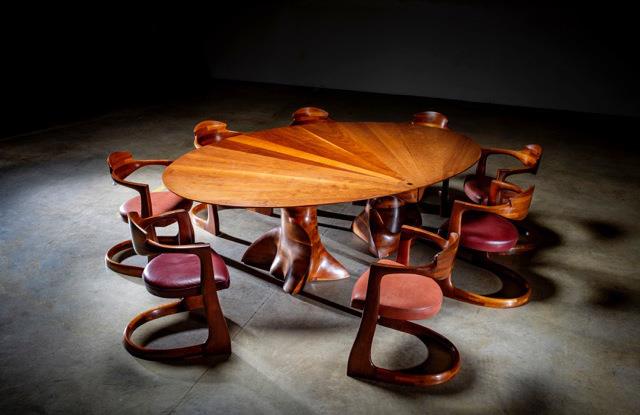
The Wendell Castle dining set at Wexler Gallery

It seems there’s barely a topic in American life that can’t wend in short order toward Donald Trump. But the presence of glass exhibitors at The Salon: Art + Design, which opened Thursday night at the Park Avenue Armory? Yes, even that. Jill Bokor is the executive director of the show, which typically opens on the Thursday after Election Day. (Thursday’s opening benefited the Dia Art Foundation.) Over a recent coffee at the Americano, Bokor recounted what she calls “the misery of two years ago,” when the shock of Trump’s presidential win was still very new and, for many, very raw. On that opening evening, attendees found their focus diverted from shopping. “They wanted to look, they wanted to see each other and they wanted to sob,” Bokor recalled, though she added a quick inclusivity caveat: “I mean, there were probably people there who’d voted for Trump.”

The following Saturday, typically the event’s biggest day, traffic woes generated by anti-Trump demonstrations caused a dip in show traffic, which caused a dip in sales, and crappy sales led some vendors to drop out. That left Bokor challenged “to make lemonade out of lemons.” Or at least to procure highfalutin vessels for lemonade, because at that point, the show was lacking in impressive glassware, and she sought out that category to fill the vacancies. So in a way, anyone smitten by the midcentury Italian glass at Glass Past or contemporary pieces at Heller Gallery has Trump to thank.

Achieving a compelling exhibitor mix is essential to a successful show. While proud that 21 vendors have stayed with the event since its inception, Bokor noted that healthy movement around that core makes for an interesting, ever-evolving event. Once all gallerists are confirmed, she arranges the floor plan to afford each maximum impact, a task she considers one of the most difficult aspects of staging a show of this scale. To illustrate, she ran through the order of a few stations: Enter and turn right to come upon antiquities next to Seventies-and-Eighties French next to contemporary German, and across from French ceramics. “There is such great stuff. It can only be freshly seen if what’s next to it makes them look differently,” she said. In addition to the basic gallery set-ups, this year’s event features numerous special installations, and they swing diverse, including one by interior designer Ryan Korban in collaboration with Lalique crystal and another by Eileen Fisher, taking her message of sustainability to the Salon with a collection of wall hangings made from recycled textiles.

The Eileen Fisher DesignWork installation features wall hangings made from recycled textiles by artist Sigi Ahi.

The show’s 57 gallerists (in 55 booths) hail from 11 countries and specialize mostly in work from 1900 on. Among the few golden oldies: antiquities galleries Ariadne Galleries and Phoenix Ancient Art, the inclusion of which Bokor deems essential. “I have such strong feelings that everything that has come since begins with ancient art, that we have two ancient art galleries in the fair. And they do very well there,” she said.

Still, the primary thrust is modern and contemporary, which makes for a very different scenario than in the late Eighties, when Bokor was publisher and editorial director of Art + Auction magazine, a time when major antiques were all the rage. “We saw people amassing the most extraordinary collections of Louis Quinze, of 18th-century French paintings, of Old Master paintings, of silver. They collected deeply. It was not unusual to walk into a house that was entirely Arts & Crafts. And these people who collected really and rightfully had enormous pride in what they were doing.”

Given the long-running obsession with 20th and 21st-century everything, it’s clear that focus changes, as tastes do. Yet Bokor attributes the shift to more than a zeitgeist-y evolution of aesthetic preferences. True, the sophisticated collector’s eye shifted its communal gaze, from fusty-musty toward newer and often, more avant-garde. But it got encouragement from that omni-powerful overseer of discretionary spending: money.

“I tie all of this to the world of economics,” Bokor said, noting that the “financial mini-crisis” of the late Eighties, though not as disastrous as 2008, resonated significantly. If it didn’t formally sound the death knell for Nouvelle Society (a term coined by WWD’s late editorial director John B. Fairchild), it certainly symbolized that era’s waning. Enough for suddenly downgraded 1-percenters to reevaluate all of their assets. “People who thought they wouldn’t part with things found that they could,” Bokor noted.

Neolithic European Idol in marble, fifth to fourth millennium B.C., at Phoenix Ancient Art.

Yet once they’d unloaded the Old Masters, they weren’t ready to live like monks, and began turning their “extraordinary taste and eyes” toward new periods and ways of collecting. For example, an item such as Shiro Kuramata’s now-iconic acrylic chair embedded with red roses might have replaced a Louiswhatever treasure. Another Kuramata chair, sans flowers, is featured in the Salon’s Callidus Guild installation.

Along the way, the psychology of collecting evolved as well, and with it, the ways in which people integrate design into their lives. Today’s collectors tend to be more open to suggestion and eclectic in their tastes; they acquire “more horizontally and less deeply,” allowing them to integrate collecting into their lives in a more relaxed, comfortable way.

Then there’s the impact of technology. Given the show’s contemporary current, one might expect to find overt instances of tech-driven design. Bokor name-checked some younger designers, including Misha Kahn and Jonathan Trayte, whose work has “what would be fun to call a new industrial feel,” though she’s unsure if gallerists would agree with that characterization. As for pieces created using 3-D printing, she said there’s still relatively little at this level of the design world, though she expects swift changes will come.

The Shiro Kuramata chair, in the Callidus Guild installation.

But she identified the impact of technology elsewhere. One significant piece that was supposed to be at the show sold early, via Instagram. Bigger picture, the Salon addresses how people live at home, which is changing. Just like in the Fifties (but not like the Fifties at all) television plays a major part. “Entertainment is so accessible at home now. That’s probably the major factor,” Bokor said. As television’s current golden age has muscled in on movie-going, people spend more time at home. At the same time, there’s been an uptick in at-home entertaining. And the more time people spend at home, the more important home design becomes.

The Salon is decidedly high-end, featuring the work of major design- and art-world names such as Calder and Fontana. While the Wendell Castle dining table and chairs at Wexler Gallery “would have been extraordinary in any circumstance,” his death in January has likely heightened the interest, and Bokor predicts an early sale.

A Riccardo Licata Doppio Incalmo Venini Vase, circa 1955, at Glass Past.

Given such attractions, the show draws a mostly tony, serious crowd, including designers shopping for and with increasingly hands-on clients who peruse pieces that in a rare case might top seven figures. Yet Bokor stressed that it is not a rich-people-only affair, and she is focused on attracting a younger audience. “One of the myths about [design] fairs that we need to deconstruct is that there is nothing affordable,” she said. Aspiring collectors who may be priced out of furniture might find a decorative piece of glass or ceramic, and that first purchase can trigger lifelong curiosity and desire. “They start to think about things, and maybe the next year, they come back and they say, ‘My goal is to have a piece of the Haas Brothers. I love Brazilian rosewood, that’s what I want.’ So the idea, the seed of a collection, is formed,” Bokor said.

She mused, too, that as Millennials buy first homes, they start to think about design differently, often taking an approach that we in fashion talk about all the time — high-low, perhaps putting a piece of midcentury glass on a table from Ikea.

At the same time, even the most traditional shoppers (read: the highly knowledgeable, really rich ones) want to be charmed. As Bokor put it, “The best collectors — even if their collections look a little serious — know how to do something that makes your eyes twinkle.”