Nikola Tesla Painting by Giovanni DeCunto

Nikola Tesla Painting by Giovanni DeCunto

Nikola Tesla Painting by Giovanni DeCunto:

Acrylic and phosphorescent paint with gold leaf on canvas, 75″ x 80″.

Nikola Tesla once said: ‘If you only knew the magnificence of 3, 6 and 9, then you would have a key to the universe.’ Giovanni DeCunto was inspired to create this piece to combine Tesla and the philosophy he deeply lived by. You will notice everything is connected in this piece between Tesla, 3,6, 9, Aristotle, and allowing the diversity of light reflection between natural light and UV light symbolizing the energy together in the universe.

DeCunto’s artist statement: ‘My paintings are my palette for chaos and order to collide. I take the high art and the low art, which is commonplace, and let them battle it out on the canvas. The contemporary issues confronted in the work provoke a response, both emotional and intellectual, and symbolize the struggle towards birth that our society now faces. We are at the beginning. Painting, to me, is the great equalizer. I paint for humanity. I call to arms; the eternal spirit of man, the builder, the organizer and the evolutionary spirit that creates civilizations. I am speaking of that common, human thread that the great thinkers of the past continue to teach to us; the common link which triumphs over adversity, poverty and injustice.’

Steve Jobs Signed 1982 Apple Contract for Macintosh Word Processor

Steve Jobs Signed 1982 Apple Contract for Macintosh Word Processor

Steve Jobs Signed 1982 Apple Contract for Macintosh Word Processor:

DS, signed “steven jobs, chairman,” twelve pages, 8.5 x 11, July 12, 1982. Significant “Computer Software Development Agreement” between Apple Computer, Inc., and Randy Wigginton, as a semi-independent developer for a “MacIntosh Word Processor” and core editing routines. The contract provides the terms of the deal, including equipment to be loaned to Wigginton by Apple (“2 MacIntosh computer, 1 Lisa computer, 1 ProFile Disk Drive”), milestones to be met, and compensation/royalties to be paid. Signed at the conclusion in blue ballpoint by Steve Jobs as chairman of Apple Computer (“steven jobs, chairman”), and countersigned in black felt tip by Wigginton as the developer (“K. R. Wigginton, Member, Technical Staff”). In fine condition.

This significant document set the stage for the desktop publishing revolution—led by the Macintosh computer and MacWrite software—introduced two years later in 1984. Randy Wigginton was originally hired in 1976 as Apple Computer employee #6, making several key contributions to the company’s early, cutting-edge work in hardware and software: he collaborated Steve Wozniak on the circuit design and ROM software for the Apple II in 1977, contributed to the RWTS (read/write track-sector) routines for the Disk II floppy system, developed an early spreadsheet program, and was a member of the original Apple Macintosh design team. Wigginton left Apple in September 1981 to work independently, but was soon contracted by Apple to help work on MacWrite on a semi-formal basis—the project outlined in the present document.

During this period, Apple was developing the Macintosh—an accessible personal computer which offered a radically new approach, featuring a graphical user interface (GUI), built-in screen, and mouse. All of these revolutionized the user’s experience, marking the transition from command-line computing to a point-and-click model. In order for the Macintosh to be a success, it had to ship with ‘killer applications’ that demonstrated the new interface to the fullest extent. These would become MacWrite and MacPaint—a WYSIWYG word processor and a raster graphics editor, both of which introduced consumers to the possibilities of the GUI and propelled the broad adoption of the Macintosh.

In its preamble, this document acknowledges the importance of MacWrite in the Macintosh rollout: “Wigginton is in the business of developing computer products and has developed a computer software program described below that Apple recognizes is of value to its product marketing plans.” Per the agreement, Wigginton shall own “the Product (including source code and object code)” while granting Apple “the exclusive license to market the Product for the MacIntosh family of computers only.” However, Wigginton agrees that “as of the time that Apple first distributes copies of the core editing routines as part of a system sold to the public, then the license of the core editing routines hereunder is hereby converted to a transfer of ownership to Apple of all rights, title and interest in the core editing routines for use on any computer.” The core editing routines—representing the ability to manipulate elements like font styles, fractional character width, leading, and full justification—were critical to the WYSIWYG process and were necessary to deliver a professional layout on a personal computer.

A remarkable, early Macintosh document signed by Steve Jobs as Apple’s chairman, representing a pioneering product in the field of personal computing.

Steve Jobs and Steve Wozniak Signed 1976 Apple Computer Check No. 2 to PCB Maker

Steve Jobs and Steve Wozniak Signed 1976 Apple Computer Check No. 2 to PCB Maker

Steve Jobs and Steve Wozniak Signed 1976 Apple Computer Check No. 2 to PCB Maker:

Historic Wells Fargo bank check, 7.5 x 3, filled out and signed by Steve Jobs, “steven jobs,” and countersigned by Steve Wozniak, “Steve Wozniak,” payable to Ramlor, Inc. for $116.97, March 19, 1976. This temporary check, issued upon opening Apple’s first bank account, bears the same routing and account numbers as other early Apple Computer Company checks we have offered—those, however, date to July 1976 and are imprinted with Apple’s first official address at ‘770 Welch Rd., Ste. 154, Palo Alto’—the location of an answering service and mail drop that they used while still operating out of the famous Jobs family garage. In very fine condition.

Marked as check “No. 2,” this ultra-early check pre-dates the official founding of Apple Computer, Inc.—some thirteen days later, on April 1, 1976, co-founders Steve Jobs, Steve Wozniak, and Ronald Wayne would sign the partnership agreement that officially brought Apple Computer into existence. The agreement assigned 45% of the company to each of the Steves, and 10% to Wayne. It also required any expenditure over $100 to be approved by two of the partners—perhaps the reason that both Jobs and Woz signed this check.

Based on the early date, this check for $116.97 to Ramlor, Inc.—a Palo Alto-area printed circuit board maker—likely represents payment for boards affiliated with the first Apple-1 Computers. The product was originally conceived as a PCB kit to be soldered together by the end user, a standard practice for hobbyist computer kits of the period. However, the scope of the project broadened when they approached Paul Terrell, owner of The Byte Shop in Mountain View, California, one of the first personal computer stores in the world.

Terrell offered to buy 50 of the computers-at a wholesale price of $500 a piece, to retail at $666.66—but only if they came fully assembled. With this request, Terrell aimed to elevate the computer from the domain of the enthusiast to the realm of the mainstream consumer. Wozniak later placed Terrell’s purchase order in perspective: ‘That was the biggest single episode in all of the company’s history. Nothing in subsequent years was so great and so unexpected.’

Between the exceptionally early date of this check, the payee as a PCB maker, and the fact that it is signed by the two figures that drove Apple’s initial success, this is an extraordinary, museum-quality piece of tech history.

Steve Jobs Handwritten Advertisement for the Apple-1 Computer

Steve Jobs Handwritten Advertisement for the Apple-1 Computer

Steve Jobs Handwritten Advertisement for the Apple-1 Computer:

Original handwritten advertisement for the Apple-1 Computer penned entirely in the hand of Steve Jobs, who incorporates his full signature in lowercase print, “steven jobs,” into contact information at the bottom of the sheet, which also lists his parents’ home address and phone number, “11161 Crist dr., Los Altos, Ca 94022, (415) 968-3596,” the original headquarters of the Apple Computer Company. Penned neatly in black ink on an off-white 8.5 x 11 binder sheet, the advertisement, which essentially serves as a rough draft specification sheet for the Apple-1, was given to the consignor during a visit to Jobs’ garage in 1976. Jobs heads the sheet “Apple Computer-1” and states that it uses either a 6800, 6501, or 6502 microprocessor, noting in parentheses that the 6501 or 6502 are “recommended because we have basic.” He continues with an “on board” breakdown: “All Power Supplies, 8K bytes of RAM (16 pin 4K dynamic), full crt terminal—input: ASC11 Keybd, output: composite vidio, fully expandable to 65K via edge connector, 58 ic’s which includes 16 for 8K ram!! Monitor software (for 2 proms on board (256 bytes)) included.” Curiously, Jobs affirms “basic on the way (ROM),” which never materialized for the Apple-1, but did the following year for the Apple II. He then concludes by quoting a $75 price for “board only + manual, a real deal.” According to Apple historian Corey Cohen, the technical specifications of this handwritten advertising draft match neatly with the original two-page promotional flyer for the Apple-1, a copy of which is included.

Includes two original color glossy 3.5 x 4.25 Polaroid photos taken at The Byte Shop in Mountain View, California, which depicts an Apple-1 computer board fully assembled with an accompanying keyboard and monitor, and an Apple-1 computer screen displaying an Apple Basic program, counting incrementally from line 1 to line 7, which states at the bottom: “This is the Apple System from Apple Computer Co., 11161 Crist Dr. Los Altos, CA 940, (415 968-3596, Steven.” The lower border of the latter photo is annotated in pencil by Jobs, who writes: “fuzzy because camera wiggled.” In very good to fine condition, with slightly irregular toning, partial separation along one of the intersecting folds, and small areas of paper loss, not affecting any readability.

Accompanied by a letter of provenance from the original recipient: “I met Steve Jobs in the 8th grade in 1968. He being new to the school, Jobs was looking for someone to hang out with for the summer, and so he and I became fast friends, riding bicycles all around the Sunnyvale and Los Altos area and even biking from his house over the Santa Cruz Mountains to the beach. We hung out together in the Jobs’ family garage where Steve’s dad worked on cars and other projects. One of the projects was a ski boat that Steve’s dad used to take us water skiing at Calero Reservoir in South Santa Clara County. I was also invited to and went on a week-long summer vacation with the Jobs family at Camanche Lake near Sacramento.

In the summer of 1972, my sister, her friend, Steve, and I went camping and backpacking for a few days in Yosemite, a trip that may have sparked Steve’s love of Half Dome as we hiked to the back side and climbed the cable trail to the top. The transportation to and from Yosemite was my 1964 VW bus that I own to this day. After that adventure, Steve and I went our separate ways, me to college in Southern California and Steve to Oregon and other travels.

I made a point to stop in to see Steve periodically when I visited my family in Sunnyvale. One visit was at Apple’s first office in Palo Alto and another time at NEXT Computer. The last time Steve and I met was in June 2011. Sadly, Steve passed away the following October and I attended his service at Stanford University.

During the time that the Apple 1 was in progress, I visited Steve several times (Christmas of 1975, spring break 1976, and summer of 1976) and saw computers being tested in boxes in the garage. It was during one of these visits that Steve gave me a Polaroid photo of the computer, a Polaroid screenshot of Apple 1 Basic, and a handwritten offer of bare boards for $75 each.”

Apple-1 Computer Signed by Steve Wozniak

Apple-1 Computer Signed by Steve Wozniak

Apple-1 Computer Signed by Steve Wozniak:

A sought-after fully operational Apple-1 computer (also commonly known as the Apple I, or Apple Computer 1), complete with its period custom-built case, keyboard, and power supply. This Apple-1 is easily identifiable by two small holes which have been used to secure the keyboard cable when mounted in the case, and by Steve Wozniak’s signature, “Woz,” in the prototype area, signed during a 2017 event at Bryant University.

This Apple-1 was acquired by the current owner in 1980 at the Computer Hobbyist Show in Framingham, Massachusetts, and the computer was in use throughout the 1980s. It was brought to an operational state by Corey Cohen at the myapplecomputer labs in May/June 2023, and a video of it running and functioning is available upon request. A comprehensive, technical condition report prepared by Cohen is available to qualified bidders.

The set includes:

• original Apple-1 ‘NTI’ board

• original Apple Cassette Interface (ACI)

• period aluminum and laminate paneling case featuring a built-in keyboard, with Triad and Stancor transformers

• modern replicas of the Apple-1 Operation Manual and Apple Basic User Manual

• period Xerox copy of the Apple-1 Operation Manual

• compatible RCA video monitor (circa 1987) with Apple-1 video cable

• photograph of Steve Wozniak signing the board in 2017

This Apple-1 has the original rare white MOS MCS6502 microprocessor dated the 15th week of 1976 in good condition, and a replacement Motorola MC6820P dated the 24th week of 1977. The Apple-1 memory and IO jumpers have been wired to support executing Apple Basic on an 8K memory system. The wiring and pads are consistent with systems sold with 8k of system memory at purchase time with the Apple Cassette Interface (ACI) and Apple-1 Basic (Integer Basic). There is an additional IO Jumper to enable an unknown accessory at memory bank A000. All memory configuration solder pads are intact and un-damaged. This Apple-1 board has had some repairs, including the replacement of two power regulators and the MC6820P, and a few corrected circuit traces.

The Apple-1 was originally conceived by Steve Jobs and Steve ‘Woz’ Wozniak as a bare circuit board to be sold as a kit and completed by electronics hobbyists, their initial market being Palo Alto’s Homebrew Computer Club. Seeking a larger audience, Jobs approached Paul Terrell, owner of The Byte Shop in Mountain View, California, one of the first personal computer stores in the world. Aiming to elevate the computer beyond the realm of the hobbyist, Terrell agreed to purchase 50 Apple-1 computers, but only if they were fully assembled. The Apple-1 thus became one of the first ‘personal’ computers which did not require soldering by the end user—however, they did not come with a power supply, case, keyboard, or monitor, leaving these up to the end user. Thus, homemade hobbyist cases like this are both individually unique and integral to the story of the Apple-1. This case is designed to have the Apple-1 board mounted beneath the keyboard area, with the power supply housed in the rear; the rear of the case has provisions for connection to the Apple Cassette Interface in/out. Although the keyboard has three broken key stems, it remains fully functional.

All together, over a span of about ten months from 1976-77, Steve Jobs and Steve Wozniak produced about 200 Apple-1 computers, selling 175 of them. Building on that success, they introduced the Apple II in June 1977, which became one of the world’s first highly successful mass-produced microcomputer products. The Apple-1 is not only a marvel of early computing ingenuity, but the product that launched what is today one of the most valuable and successful companies in the world.

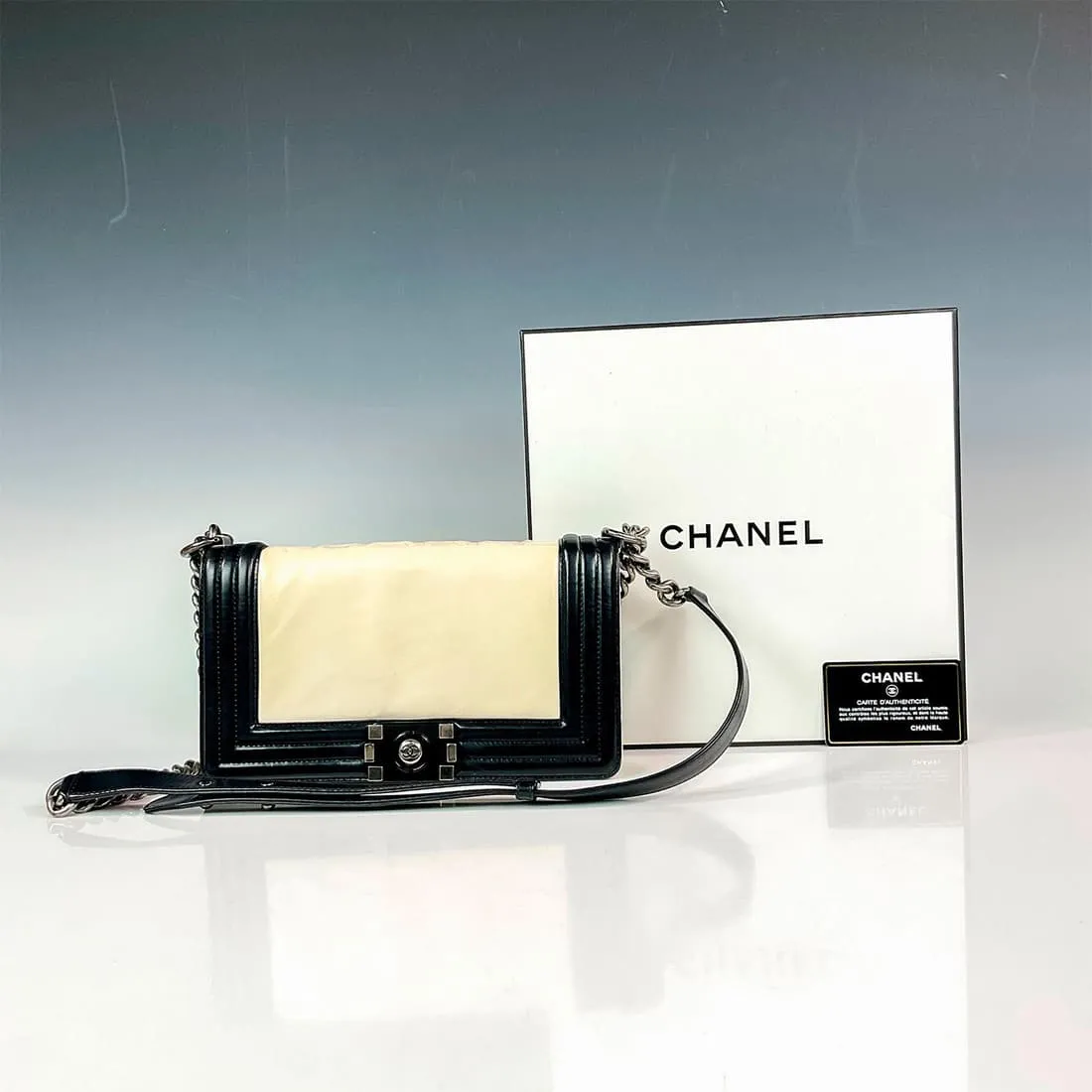
Chanel Calfskin Large Boy Handbag

Chanel Calfskin Large Boy Handbag

Chanel Calfskin Large Boy Handbag:

Boasting smooth black and ivory colored leather bag with ruthenium finish metal chain strap. Feature embossed Chanel logo design stitched on the spine and fabric lined interior. Adjustable single or double strap. Includes dust bag. Chanel Made in Italy factory label on interior. This item has its original box. Box measures: 11″L x 11″W x 4.75″H. Certificate of Authenticity included. Single strap drop measures: 19″L. Double Strap drop length measures: 12″L.

Issued: 2013
Dimensions: 10″L x 2.5″W x 7″H
Manufacturer: Chanel
Country of Origin: Italy
Condition
Good. Age related wear.

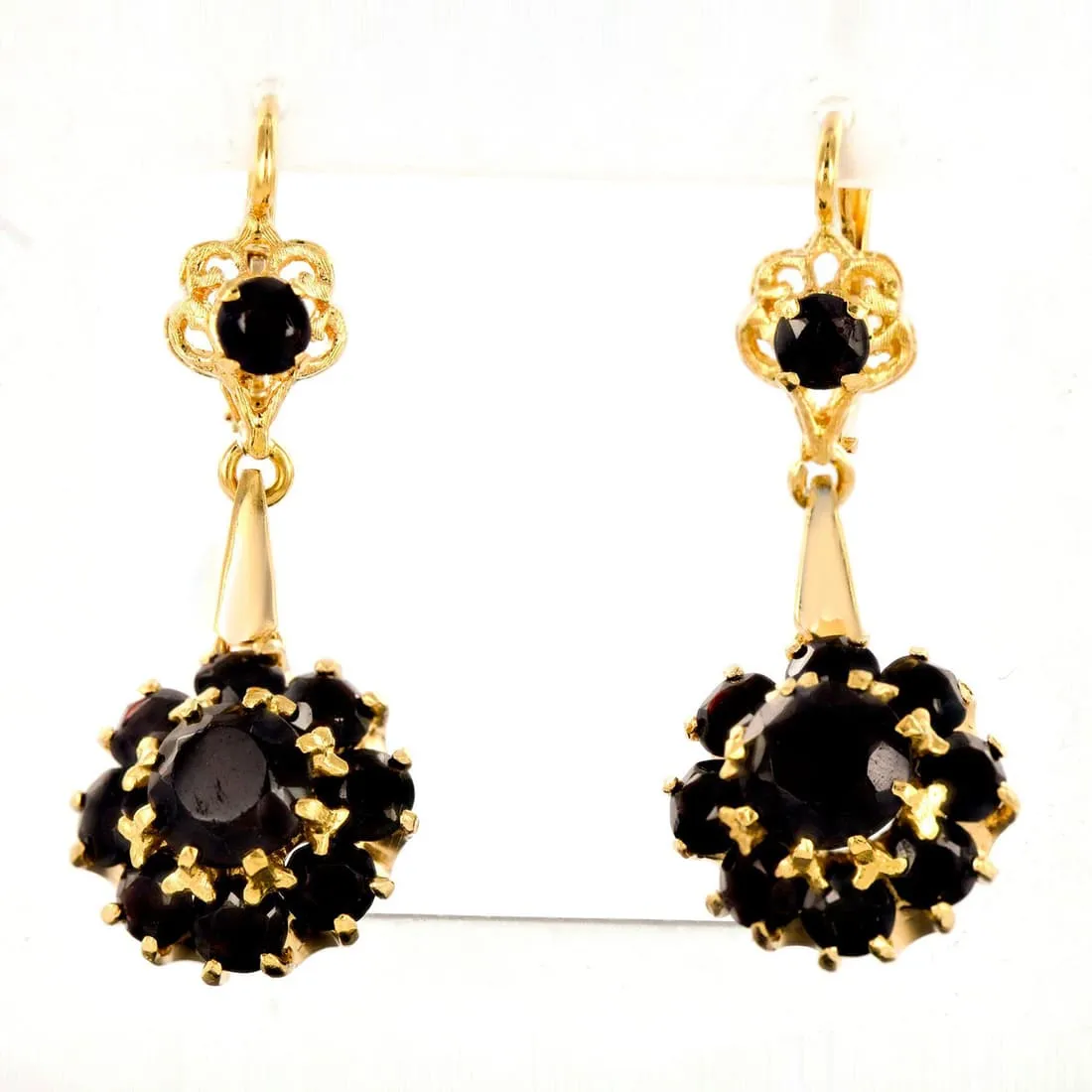
Charming 22K Gold and Garnet Handmade Period Drop Earrings

Charming 22K Gold and Garnet Handmade Period Drop Earrings

Charming 22K Gold and Garnet Handmade Period Drop Earrings:

10ctw garnets clustered in a floral pattern with prong settings. Finely detailed yellow gold tested 22k and weighs 12.78g. Stamped 750. 1.5″L total with lever backs.

Condition
Good, minor age related wear.

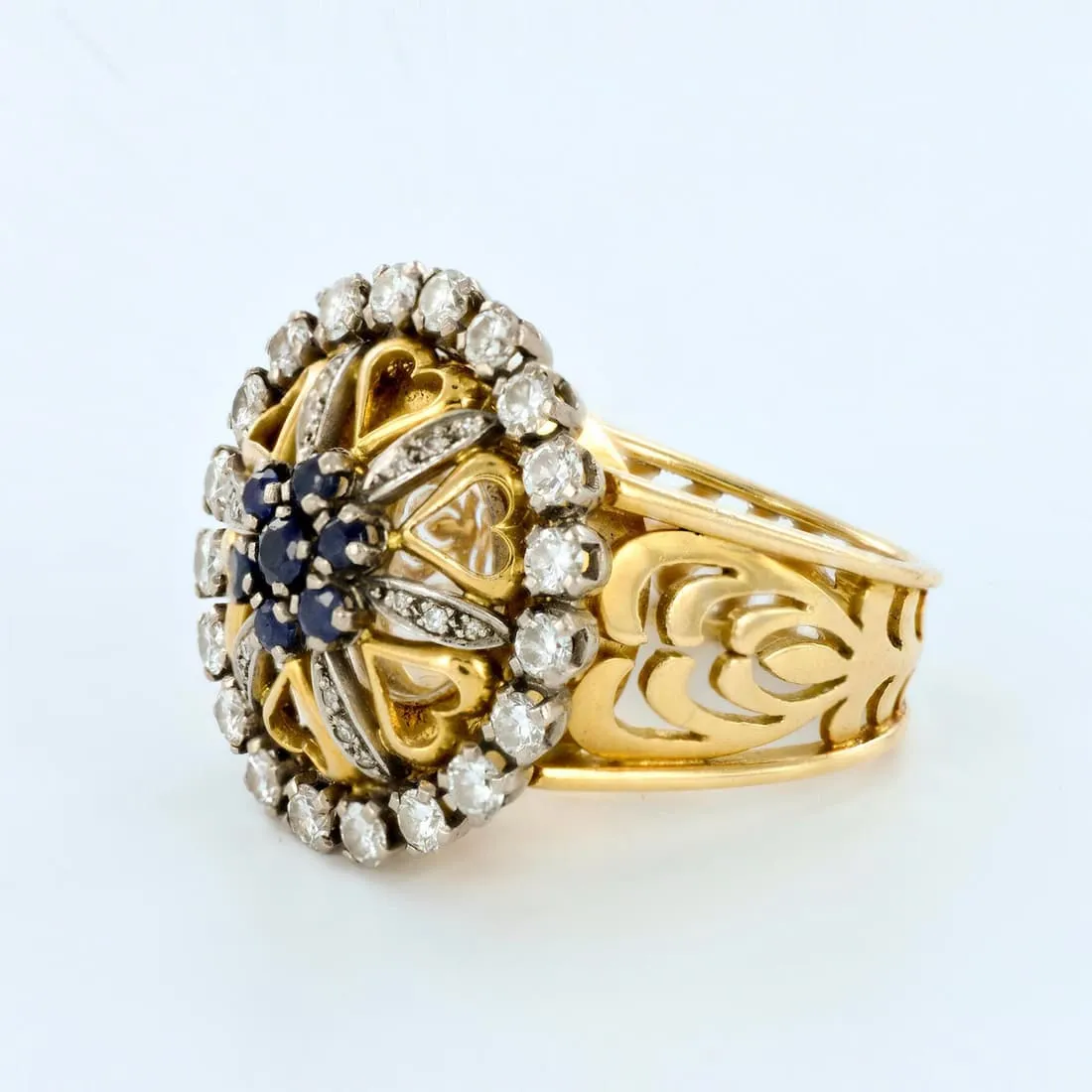
18K Yellow Gold Diamonds and Sapphires Statement Ring

18K Yellow Gold Diamonds and Sapphires Statement Ring

18K Yellow Gold Diamonds and Sapphires Statement Ring:

Impressive unique design ladies ring with heart shaped details and sapphire flower in the center with diamonds around. Weight 16.9 grams. Size 8. Marked 750.

Condition
Good, minor age related wear.

10 Ounce .999 Fine Gold Bar By Valcombi Suisse

10 Ounce .999 Fine Gold Bar By Valcombi Suisse

10 Ounce .999 Fine Gold Bar By Valcombi Suisse:

Available here for your consideration is a 10 ounce .999 fine gold bar by Valcombi Suisse. Valcombi Suisse is a precious metals refining company located in Balerna, Switzerland Their reputation is built on their commitment to their employees, clients, and to the industry which they serve. This lot features a fine pure gold 10 ounce bar encased in an original Valcombi case. Please note, this lot must be paid for using certified funds (cashiers check, money order, wire transfer, etc.).
MAKER: Valcombi Suisse.
APPROX AGE: Modern.
SIZE: Standard 10 ounce bar size.
CONDITION: Good, minimal wear expected. Please look closely at the pictures as they are an important part of our description and are hereby incorporated into the description, specifically with regards to condition.
HANDLING: There will be a $5 handling / packaging fee for shipping this lot.
SHIPPING: The actual cost of postage will be added on top of the handling charges.
BUY IT NOW: If you would like to buy this item now, without waiting for the auction day to bid on it, we do offer this option (which is available up to 48 hours before the actual auction starts). The “Buy it Now” price is the high estimate of this lot (plus applicable fees and the Buyer’s premium you pay is discounted to only 10% when using the Buy it Now option). If you would like to exercise this option, you must contact us by email (or phone as long as you talk to someone live). Reference this lot number and your intention to “Buy it Now.”Physical gold and silver of high purity that is often kept in the form of bars, ingots, or coins. Bullion can sometimes be considered legal tender, and is often held as reserves by central banks or held by institutional investors.
QUANTITY
1

10 Ounce .999 Fine Gold Bar By Pamp Suisse

10 Ounce .999 Fine Gold Bar By Pamp Suisse

10 Ounce .999 Fine Gold Bar By Pamp Suisse:

Available here for your consideration is a 10 ounce .999 fine gold bar by Pamp Suisse.Pamp Suisse is the world’s largest independently owned precious metal refinery, and is located in Ticino, Switzerland. They have a reputation for purity and the highest quality. The Lady Fortuna design on the reverse side of the bar is the most recognized and prestigious bullion bar design in the world. This lot features a fine pure gold 10 ounce bar Please note, this lot must be paid for using certified funds (cashiers check, money order, wire transfer, etc.).
MAKER: Pamp Suisse.
APPROX AGE: Modern.
SIZE: Standard 10 ounce bar size.
CONDITION: Good, minimal wear expected. Please look closely at the pictures as they are an important part of our description and are hereby incorporated into the description, specifically with regards to condition.
HANDLING: There will be a $5 handling / packaging fee for shipping this lot.
SHIPPING: The actual cost of postage will be added on top of the handling charges.
BUY IT NOW: If you would like to buy this item now, without waiting for the auction day to bid on it, we do offer this option (which is available up to 48 hours before the actual auction starts). The “Buy it Now” price is the high estimate of this lot (plus applicable fees and the Buyer’s premium you pay is discounted to only 10% when using the Buy it Now option). If you would like to exercise this option, you must contact us by email (or phone as long as you talk to someone live). Reference this lot number and your intention to “Buy it Now.”Physical gold and silver of high purity that is often kept in the form of bars, ingots, or coins. Bullion can sometimes be considered legal tender, and is often held as reserves by central banks or held by institutional investors.