Ger Luijten’s Open-Air Paintings at the Fondation Custodia in Paris

John Constable (1776-1837), View of Gardens at Hampstead, with an Elder Tree, c. 1821-1822, oil on cardboard, 17.6 x 14 cm/6.92 x 5.51 in, Fondation Custodia, Frits Lugt Collection, Paris.

The Fondation Custodia presents a selection of the many works that the late Ger Luijten (1956-2022) added to its collections.
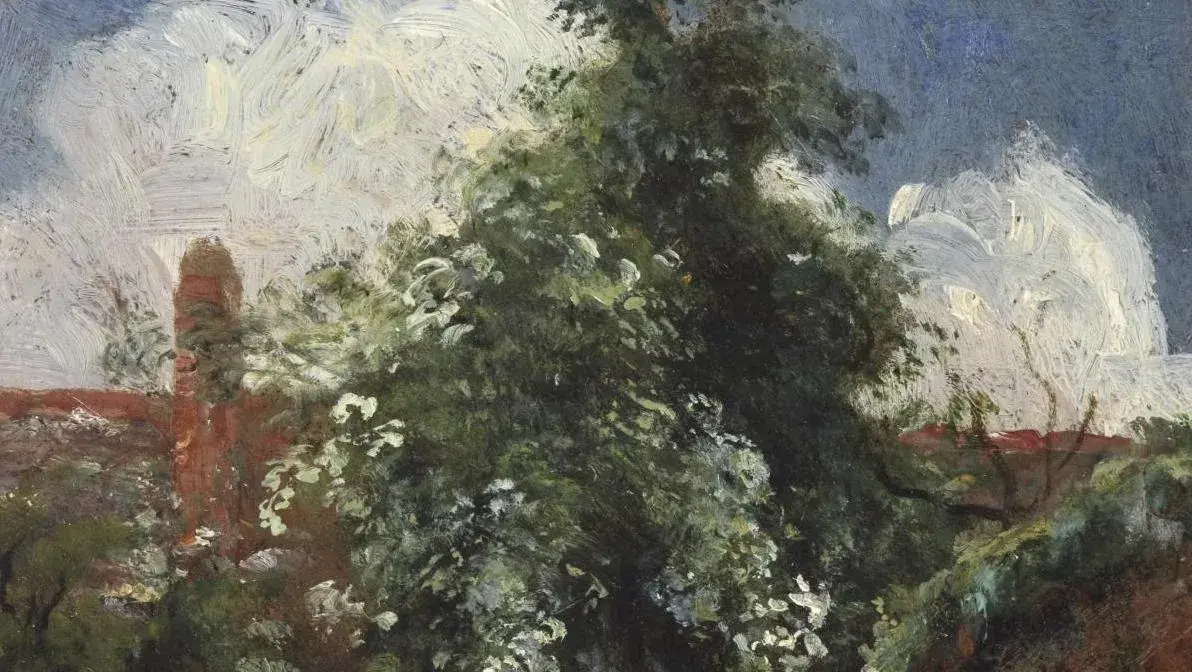
John Constable (1776-1837), View of Gardens at Hampstead, with an Elder Tree, c. 1821-1822, oil on cardboard, 17.6 x 14 cm/6.92 x 5.51 in, Fondation Custodia, Frits Lugt Collection, Paris.
John Constable (1776-1837), View of Gardens at Hampstead, with an Elder Tree, c. 1821-1822, oil on cardboard, 17.6 x 14 cm/6.92 x 5.51 in, Fondation Custodia, Frits Lugt Collection, Paris.

“I try to imagine how Frits Lugt would have responded to a work and how it could fit into the collection,” said Ger Luijten, who added 10,000 pieces to the Fondation Custodia in Paris, mostly through acquisitions, but also donations. This detail, rare for a well-endowed institution, speaks volumes about how highly he regarded he was among the art-lovers and dealers who gladly gave. Luijten was a very persuasive man. The former head of the Rijksmuseum’s Graphic Arts Department had a keen eye, a wide breadth of knowledge and loved nothing more than to invite visitors to relish details, from old Parisian paving stones gathered up almost one by one for the Hôtel Turgot’s courtyard, slightly spaced apart to let vegetation peep up through the gaps between them, to a touch of color added by an artist a few centimeters from his signature. Luijten possessed the gift of sharing and drawing people’s attention. During the “True to Nature. Open-air Painting 1780-1870” exhibition, he asked visitors to consider the parasol, “an indispensable accessory of open-air painting that offered protection from the burning sun” but “could also, blown away by the wind, lead to awkward, comical situations.”

Simon Denis (1755-1813), The Waterfall of Tivoli, with Élisabeth Vigée Le Brun Drawing, 1790, oil on panel, 48.3 x 62.1 cm/19.01 x 24.44 in, Fondation Custodia, Frits Lugt Collection.
Simon Denis (1755-1813), The Waterfall of Tivoli, with Élisabeth Vigée Le Brun Drawing, 1790, oil on panel, 48.3 x 62.1 cm/19.01 x 24.44 in, Fondation Custodia, Frits Lugt Collection.

A Transversal and Transnational Vision

Plein-air painting is one of art history’s least-studied fields. While the expression “plein air” (open air) first appeared in 1891, art historians have only recently taken an interest in the genre. The Metropolitan Museum of Art’s 2003 acquisition of the Wheelock Whitney Collection, followed in 2009 by the donation of the Eugene V. Thaw Collection to the same institution as well as to the Morgan Library and Museum, played a pivotal role, as did additions to the National Gallery of Art in Washington, the Fitzwilliam Museum in Cambridge and the Kunstpalast in Düsseldorf at the same time. While some private holdings, such as the Valsecchi and John Gere Collections, devoted to French Prix de Rome laureates and on view at Oxford’s Ashmolean Museum until June 23 (“Bruegel to Rubens”), offer researchers a wealth of material, the Fondation Custodia, which has a permanent exhibition, encourages a transversal and transnational vision of the subject. Luijten, who held dealers’ knowledge in high regard, put great stock in the opinions of Marcus Marschall, the Knoells, Bertrand Gautier, Nicolas Schwed, Florian Illies and Alice Goldet. Ms. Goldet recalls that, spurred on by a set of oil sketches donated by the foundation’s former director Carlos Van Hasselt and his companion Andrzej Nieweglowski, Luijten thought of the collection in a “European” way. He did not limit himself to the art of Italy or the early 19th century. “Ger’s background certainly had a lot to do with his original approach and open-mindedness,” says Ms. Goldet. “He was interested in the much-appreciated and well-documented artists of the Danish Golden Age, of course, but also in the second generation, purchasing works by Vilhelm Kyhn and Janus La Cour. As a graphic arts specialist, he was fascinated by the medium’s spontaneity and immediacy and even had a flair for finding spectacular works by famous artists such as Achille-Etna Michallon, John Constable, Camille Corot and Edgar Degas as well as lesser-known painters like Leopold Egg. In a few years, and well before these oil paintings were fetching high prices on the market, the contacts Ger established in France, Germany, England and Scandinavia made him a veritable ‘magnet’ for the most captivating works.”

Two Hours for a Sketch

A welcoming home inspires reciprocity, increasing the number of encounters and loan requests. The collection of open-air sketches on rue de Lille not only continues to travel, but also serves as a focal point for exchanges on the subject, especially since the “True to Nature” exhibition. However, the very status of these oil sketches has considerably changed thanks to Luijten. What Pierre-Henri de Valenciennes wrote in his treatise on the topic no longer holds true: “They must be completed in no more than two hours. The artist must be carefully focused on light and atmospheric conditions and ready to put down a sketch and start again when those conditions change.” Artists like Louise-Joséphine Sarazin de Belmont, whose works were called “advanced sketches” when they were sold, certainly began their paintings outdoors before finishing them in the studio, as her views of the Pyrenees exhibited at the fondation in 2021-2022 suggest. When the 86 views of Italy painted by Auguste Jean-Baptiste Vinchon between 1816 and 1817 reappeared, it was fair to wonder what their commercial purpose might have been. Their slick finish ran counter to the accepted idea of completing sketches “in no more than two hours”. People like Ann Hoenigswald, former restorer and head curator of the National Gallery of Art, are conducting groundbreaking analyses of the painters’ materials, but we still have to settle for hunches. In the years to come, when these painters’ bodies of work will be studied or re-studied, it will be possible to consider this artistic phenomenon in its totality, undoubtedly breathing new life into 19th-century art history.

French or Italian artist, 17th century, Portrait of François Langlois, called Chartres, c. 1630-1635, oil on canvas, 91.5 x 68.5 cm/36.02 x 26.96 in, detail. Fondation Custodia, Frits Lugt Collection.
French or Italian artist, 17th century, Portrait of François Langlois, called Chartres, c. 1630-1635, oil on canvas, 91.5 x 68.5 cm/36.02 x 26.96 in, detail. Fondation Custodia, Frits Lugt Collection.

Over-Idealized Nature

The contribution of environmental studies to art history is also changing how the role these works played in the 19th century is seen, which could help to raise environmental awareness. Anna Lea Albright and Peter Huybers, two meteorology researchers, have recently shifted the focus to Impressionist paintings. New research like this is revolutionizing art history. Take, for example, Lisa Beaven’s article in the catalog of the Claude Lorrain show at the Château de Chantilly, where the New Zealander suggests considering his works as documenting changes in Rome’s natural environment and the banks of the Tiber. From Vélasquez’s views of the Villa Medici gardens to the earliest photographs of the Italian countryside, landscapes, especially the rich output produced in the early 19th century, could be considered an effective tool to revise our romanticized view of nature. Its hostility to artists, plaguing them with bad weather and diseases spread by stagnant water, should only increase our esteem for these precious testimonies of their impressions.

Worth Seeing
“A Passionate Eye. Twelve Years of Acquisitions by Ger Luijten”, Fondation Custodia, Paris 7.
From April 27 to July 7, 2024.
www.fondationcustodia.fr
Beaulieu, The Charm of a Provençal Château Perfected by Pierre Guénant

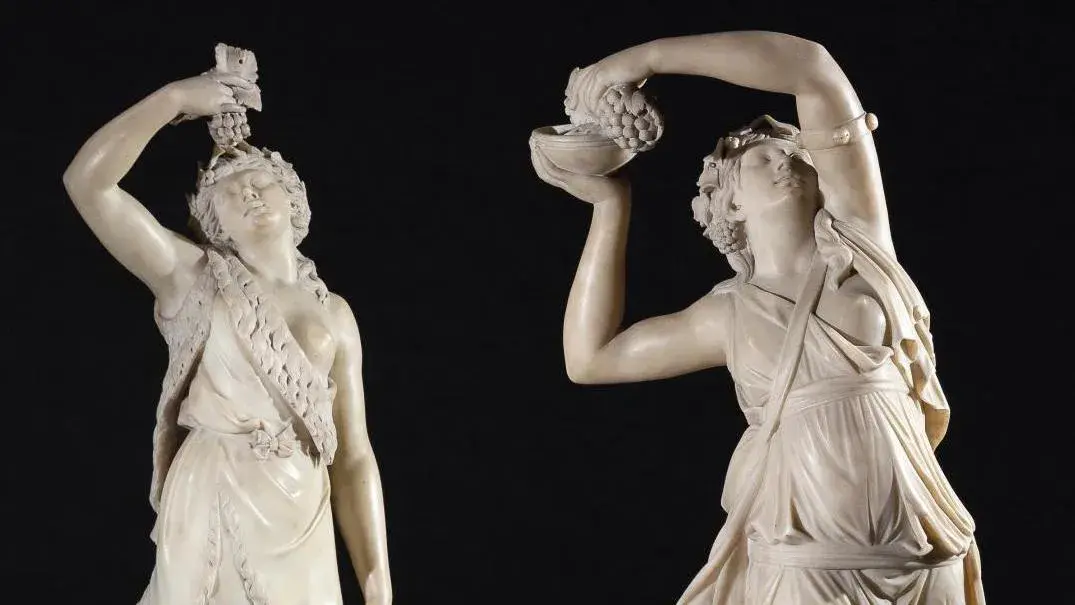
Attributed to Jean Joseph Foucou (1739-1815), two large marble bacchantes figures, late 18th- early-19th century, h. 97 and 99 cm/3.18 x 3.24 ft. Estimate: €15,000/20,000

Cherished by its aesthete owner, Pierre Guénant, the Château de Beaulieu plays on its Provençal charm while cultivating the air of a Venetian palace.

Attributed to Jean Joseph Foucou (1739-1815), two large marble bacchantes figures, late 18th- early-19th century, h. 97 and 99 cm/3.18 x 3.24 ft.
Estimate: €15,000/20,000
Attributed to Jean Joseph Foucou (1739-1815), two large marble bacchantes figures, late 18th- early-19th century, h. 97 and 99 cm/3.18 x 3.24 ft.
Estimate: €15,000/20,000

Twenty minutes from Aix-en-Provence, Château de Beaulieu has seen many prestigious families pass through its walls and its lands. Established as a fief by Henri III in 1576, the estate long remained in the hands of the Counts of Provence. Nestled in the crater of an ancient volcano now dotted with lavender, vineyards and olive groves, the building proudly displays its Mediterranean air, with influences from both the region and the Alps. Pierre Guénant (1950-2022) took possession of the estate in 2001. The industrialist from the Charente Limousine region, who was President of the MEDEF (French employers’ federation) from 2004 to 2010, had made his fortune in the automotive industry, starting with Heuliez and then Citroën, before becoming France’s and Europe’s leading automotive distributor. In 2000, he sold control of his group— which had sales of up to €3 billion—to the Porsche family, and was probably already thinking about a career in wine. Château de Beaulieu, on the slopes of Aix-en-Provence, in the village of Rognes, offered him an unhoped-for opportunity to turn this dream into reality. Pierre Guénant has transformed the 17th-century Renaissance-style building into a high-end wine tourism venue with eleven guest rooms. He brings together furniture specially chosen for the site, in a “gilded wood” design that could be described as Italian-Provençal, dominated by Baroque and rococo lines. Today, nearly one hundred lots are up for auction, for a total estimate of €400,000/500,000.

Italy, Venice, mid-18th century. Pair of large gilded wood mirrors, h. 250, l. 135 cm/8.20 x 4.42 ft approx. (one reproduced). Estimate: €30,000/50,000

Spirit of the South

Cultured and compassionate, Pierre Guénant was a regular visitor to auction rooms. His neighbor from Aix-en-Provence, Pierre Vasarely, head of the Foundation that safeguards his grandfather’s work, says it best in the preface to the sale catalog: “An enlightened connoisseur and visionary, Pierre left us prematurely, leaving behind him a legacy rich in history and beauty. The furniture and objects that once adorned his estate, a choice of a lifetime, bear witness to his taste and appreciation for beautiful things. I remember the passion with which Pierre presented his objects to me, with his in-depth knowledge of the 18th century.” Preserving the uniqueness and rich heritage of the premises, he arranged the works of art and collectors’ items from the grand salon to the music salon—which housed an exceptional harpsichord bearing the arms of the Florentine Orlandini and Corsini families (see box below)­—as well as the grand staircase, the formal garden with its large pool, the dining room, the library, the orangery and the chapel. In 2008, for the staircase, he acquired two marble bacchante figures (€15,000/20,000, reproduced here), nearly a meter high, attributed to Jean Joseph Foucou. According to the catalog of the 1992 Clodion exhibition at the Musée du Louvre, the one depicting Erigone contemplating a bunch of grapes could be the figure presented by Jean-JosephFoucou (1739-1821) at the Salon of 1806. A nod to grapes and vineyards is also to be found in a gilded wood console table from the Louis XV period (€5,000/8,000), decorated with vine tendrils under a Sarrancolin marble top. While French furniture found its place through famous hallmarks, including that of Pierre Roussel on a Louis XV flat desk in rose and violet wood (€15,000/20,000), our art lover’s favorites remained largely dominated by the Italian spirit.

Louis XV period. Rosewood and violetwood flat desk, gilded bronzes, stamped by Pierre Roussel and JME, 79 x 133 x 76.5 cm/2.59 x 4.36 x 2.50 ft. Estimate: €15,000/20,000

Serenissima…

As you entered the grand salon, on either side of the fireplace, two large Provençal consoles from the Louis XV period, one with a gray Breche marble top, the other in Sarrancolin marble (€5,000/8,000 each), topped by two spectacular Venetian mirrors, set the tone for the room. The latter, from the 18th century and teeming with detail, concealing birds and animals beneath stone archways and greenery, recall the heyday of furniture in the vast Italian mansions and Venetian palaces. In 2009, Pierre Guénant acquired a whole series of furniture and objects from the Palazzo Contarini-Corfù, a stone’s throw from Saint Mark’s Square on the prestigious Grand Canal, built in the 15th century by Venetian architect Vincenzo Scamozzi (1548-1616). The room housed four 17th-century Tuscan chairs decorated with Italian comedy characters (€2,000/3,000), four walnut armchairs from early 18th-century Venice (€5,000/7,000), a pair of 19th-century andirons in the Italian 16th-century style (€300/500) and a steel halberd, again from Venice, but 17th-century (€1,500/2,000). Several similar halberds are now housed in the Correr Museum in Venice. In the music salon, transalpine prestige was displayed by the harpsichord already mentioned, elegantly combined with French furniture: a marquetry table decorated with a vase of flowers, partly from the Louis XV period (€8,000/12,000), as well as a carpet in the style of the Manufacture Royale de la Savonnerie, in the Louis XV style, bordered with fleur-de-lis (€3,000/5,000). A refined ensemble that strongly expresses Pierre Guénant’s good taste.

ITALIAN CONCERTO FOR HARPSICHORD

Dating from the late 17th or early 18th century, this richly decorated instrument bears the arms of two eminent Florentine families: the Orlandini and the Corsini.

In the Château de Beaulieu collection of furniture and objets d’art, a remarkable Italian harpsichord, possibly made in Florence between the late 17th and early 18th centuries, is eye catching. Although it had already been auctioned by Baron Ribeyre in November 2006, with a Bordeaux château as its provenance, the coat of arms on the reverse of the flap refers to two illustrious Florentine families: the Orlandini and the Corsini. The coat of arms can be described as follows: per pale, first, azure on a label gules, three mountain goats displayed in pale proper, the two in chief facing each other; second, eight silver bendlets and gules, on an azure fess, an azure escutcheon, three fleurs-de-lis or, bordered by the same. Filippo Corsini added the three lilies to his family coat of arms in 1405, after obtaining privileges from Charles VI, King of France. The Orlandini family died out in 1664 with the death of its last member, Fabio di Giovanni. Giovanbattista di Girolamo Corsini (1659-1717) then took the Orlandini name and coat of arms by fideicommissum, a testamentary provision preserving the family patrimony. A patron of the arts and husband of Olimpia di Patrizio Patrizi, Giovanbattista had the Palazzo Orlandini in Florence decorated by renowned Florentine painters such as Alessandro Gherardini and Anton Domenico Gabbiani. We can therefore assume that this instrument belonged to him.

Italy, probably Florence, late 17th-early 18th century. Five-legged harpsichord in painted and gilded wood, the reverse of the flap with the coats of arms of the Orlandini and Corsini families, the boxwood and amourette keyboard with four octaves, the cypress inner case with double bridge and double nut, the parchment rosette probably brought back at a later date; a score drawer under the keyboard, instrument restored in the 1980s by Anthony Sidey, 93 x 197 x 84 cm/3.05 x 6.46 x 2.75 ft. M. Dayot, expert. Estimate: €40,000/60,000

In addition to its noble origins, our harpsichord was restored in the 1980s by Anthony Sidey and Frédéric Bal, two renowned instrument makers. Sidey has collaborated with the Musée de la Musique in Paris, as well as with Baroque music icons such as Nikolaus Harnoncourt. This painted and gilded wooden harpsichord features a four-octave boxwood and amourette keyboard, whose range has been extended by the addition of a note in the basses (also known as “ravalement”). Underneath, a score drawer is integrated into a frieze of gilded scrolls. The cypress inner case houses a double bridge and saddle, as well as a parchment rosette (some of these elements were probably made at a later date). The whole rests on a five-legged double baluster base, whose ornamentation appears to be more recent. Despite a few minor accidents, this instrument radiates in all its splendor, thanks in particular to its sumptuous decorations, and is still playable. The historiated scenes that embellish it probably allude to the figure of Apollo, god of music and protector of flocks. On the front of the instrument, we see Apollo seated next to his bow and arrows, his head encircled by a laurel wreath, and in the presence of an angel reminiscent of Cupid. The nine women on the cover and flap (perhaps the Muses) seem to reinforce this hypothesis. Imbued with gentleness and calm, these scenes are brought to life by the sound of music emanating from various instruments (harp, trumpet, violin, guitar, portable organ, etc.). This harmony continues in the representation of flowers, fruits and birds in shimmering colors, including a beautiful pair of parrots. Grotesques, whimsical figures that are sometimes extravagant, sometimes threatening, nevertheless are on the margins of these peaceful images. These “monstrous deformities”, described by Giorgio Vasari and represented by Bernardino Poccetti (also known as Bernardino delle Grottesche) in the Palazzo Orlandini, are embodied, for example, by half-human, half-plant figures. While the most imposing is depicted on the reverse of the lid, near the “grotto” that is the resonance box, the two faces with long moustaches on the tip of the instrument are striking for their watchful, even worried gaze. The harpsichord’s quest for balance between the rational and the irrational, the harmonious and the deformed: in other words, the Apollonian and the Dionysian. Pietro Milli

PIERRE GUÉNANT
IN 5 DATES

1950
Born in Saint-Christophe, Charente-Maritime

1976
Begins automotive career with Heuliez

2001
Moves to Château de Beaulieu

2003
Finances the Louvre’s purchase of an Oudry décor

2004
Becomes head of MEDEF of Poitou-Charentes

CHÂTEAU DE BEAULIEU – FURNITURE & OBJETS D’ART

Wednesday 29 May 2024 – 18:00 (CEST) – Live

5, rue Vincent Courdouan – 13006 Marseille

De Baecque et Associés

Info and sales conditions

Catalogue

Auction Results: The Private Collection of Secretary Madeleine K. Albright at Freeman’s | Hindman

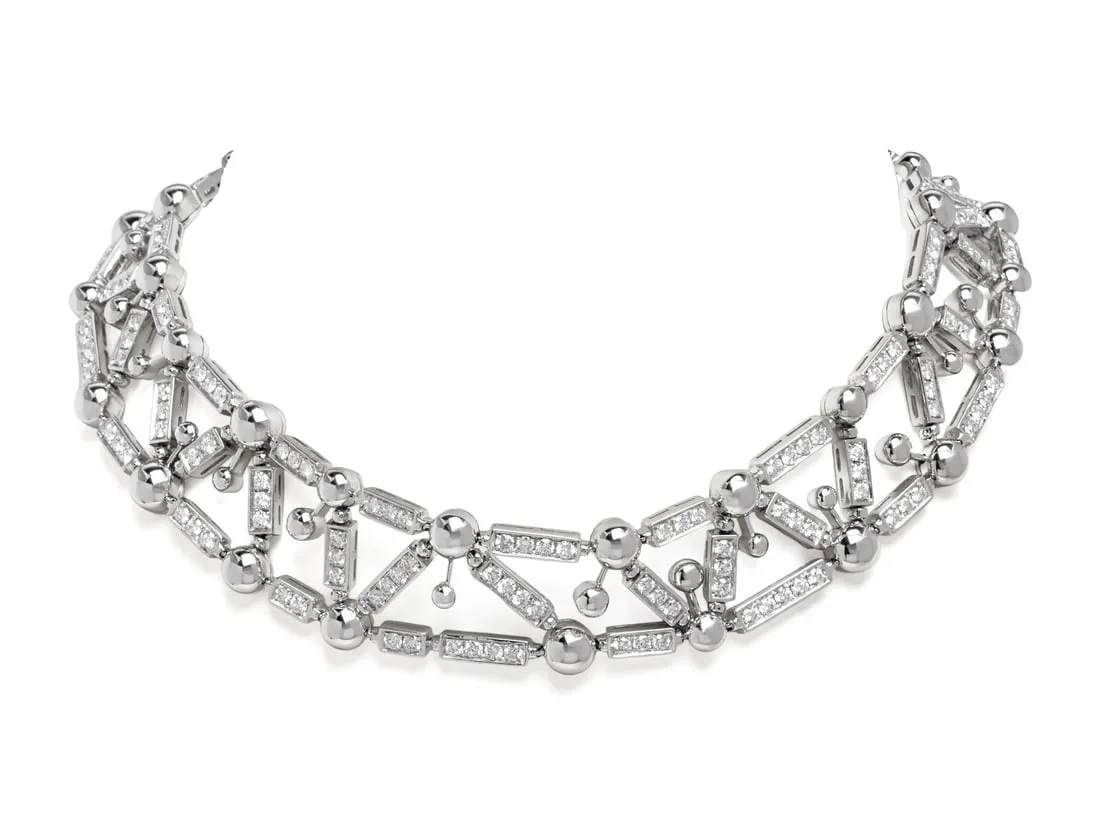
Lot #17, a Bulgari Fireworks necklace, was estimated at $12,000 to $18,000 and sold for $24,890. Image courtesy of Freeman’s | Hindman.

The Private Collection of Secretary Madeleine K. Albright was auctioned by Freeman’s | Hindman from May 7 to 8, 2024 in New York and Chicago. This 300+ lot sale included a finely curated collection of jewelry and watches, handbags and accessories, decorative items, political ephemera and souvenirs, and other estate items from the collection of former Secretary of State Madeleine Jana Korbel Albright (1937 – 2022). Albright served in the Bill Clinton administration from 1997 to 2001 and was the first woman to hold that executive-level office. In addition to her intelligence, humor, and resolve, Albright was known for her exceptional jewelry collection, which had roles in many of her diplomatic encounters and meetings. Here are some auction highlights from the recent sale of her collection. 

Lot #17, a Bulgari Fireworks necklace, was estimated at $12,000 to $18,000 and sold for $24,890. Image courtesy of Freeman’s | Hindman.

Madeleine K. Albright had a legendary collection of necklaces, bracelets, rings, earrings, pins, and watches from the world’s top brands. Many of these precious metal and gemstone items sold extremely well in this event. The top lot overall was #17, a Bulgari white gold and diamond Fireworks choker. Estimated at USD 12,000 to $18,000, it made $24,890. This adjustable stunner measured 12 inches to 14.5 inches long and featured 185 round diamonds together weighing 9.25 carats; the stones were mounted in 18-karat white gold. The piece was marked BVLGARI MADE IN ITALY 750, had a gross weight of 73.00 dwt, and was sold with a Bulgari box.

The Bulgari brand was founded in Rome in 1884 by Greek jeweler Sotirio Bulgari. Its name is sometimes spelled BVLGARI, with a V in the place of the U, to align itself with its traditional Latin roots. The Fireworks line is part of the company’s Astrale collection and resembles joyful Roman candles igniting. Rings, bracelets, necklaces, and earrings were produced as part of the Fireworks series. Albright’s jewelry collection also included the company’s Fireworks ring, which was lot #15 in this sale; it realized $7,205 against its $2,000 to $4,000 estimate.

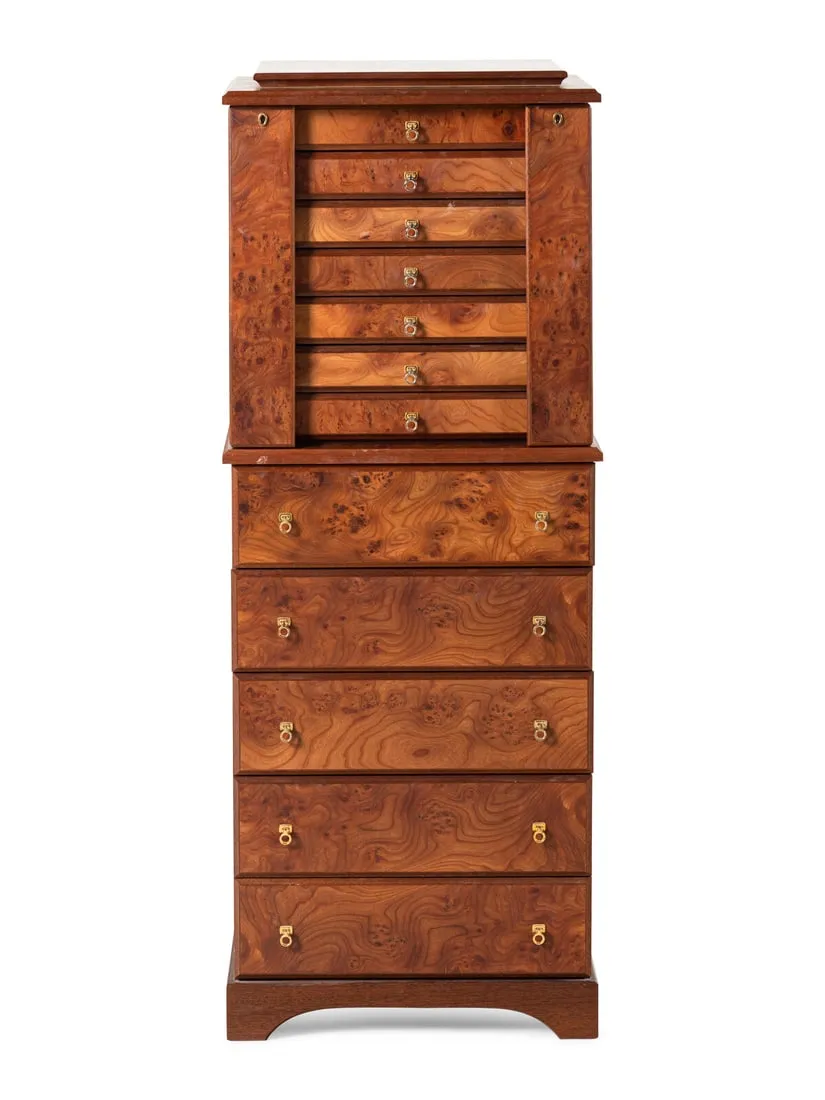
Lot #49, Madeleine K. Albright's jewelry box, was estimated at $400 to $600 and sold for $9,170. Image courtesy of Freeman’s | Hindman.
Lot #49, Madeleine K. Albright’s jewelry box, was estimated at $400 to $600 and sold for $9,170. Image courtesy of Freeman’s | Hindman.

The sale also included functional and decorative items from the Albright household. Lot #49, Albright’s burl wood standing jewelry box, was estimated at $400 to $600 and sold for a whopping $9,170. The case had five larger lower drawers and seven smaller top drawers. Each was detailed with gold hardware pulls. The interior was finely constructed with lined and divided compartments, a mirror, and chain hooks. It locked with two side cabinet door locks.

This jewelry case was very important to Albright and housed what she referred to as her diplomatic arsenal. She used pins as an important element of her executive management and negotiation processes. She was so well known for this distinctive way of doing things that she published a book about her collection in 2009. It was titled Read My Pins: Stories from a Diplomat’s Jewel Box. This book featured images of her brooches and the history, background, and roles they played in her personal and professional life.

Lot #55, a set of nesting dolls of Soviet leaders, was estimated at $100 to $200 and sold for $5,568. Image courtesy of Freeman’s | Hindman.
Lot #55, a set of nesting dolls of Soviet leaders, was estimated at $100 to $200 and sold for $5,568. Image courtesy of Freeman’s | Hindman. 

Souvenirs and materials related to Albright’s political career were another key category in this sale. Lot #55, a set of painted nesting dolls of Soviet political leaders, was estimated at $100 to $200 and realized $5,568. This collection included 11 dolls in total and was comprised of two sets of nesting dolls and one individual doll. The first set had six dolls and the second one had four dolls. The largest doll measured 7.75 inches tall; all were made from wood and finely painted.

These dolls, called Matryoshka dolls, are a legacy form of Russian art. Given Albright’s role in American international affairs, it is no surprise that she would own a set of these distinctly Soviet collectibles. Matryoshka dolls were introduced in 1890 and were originally designed as toys for children, not the collectibles they are today. The sets are usually themed, with popular designs including storybook characters, political leaders, seasons, and religious figures. The world record for the largest set of Matryoshka dolls belongs to Youlia Bereznitskaia of Russia, who made a 51-piece set in 2003.

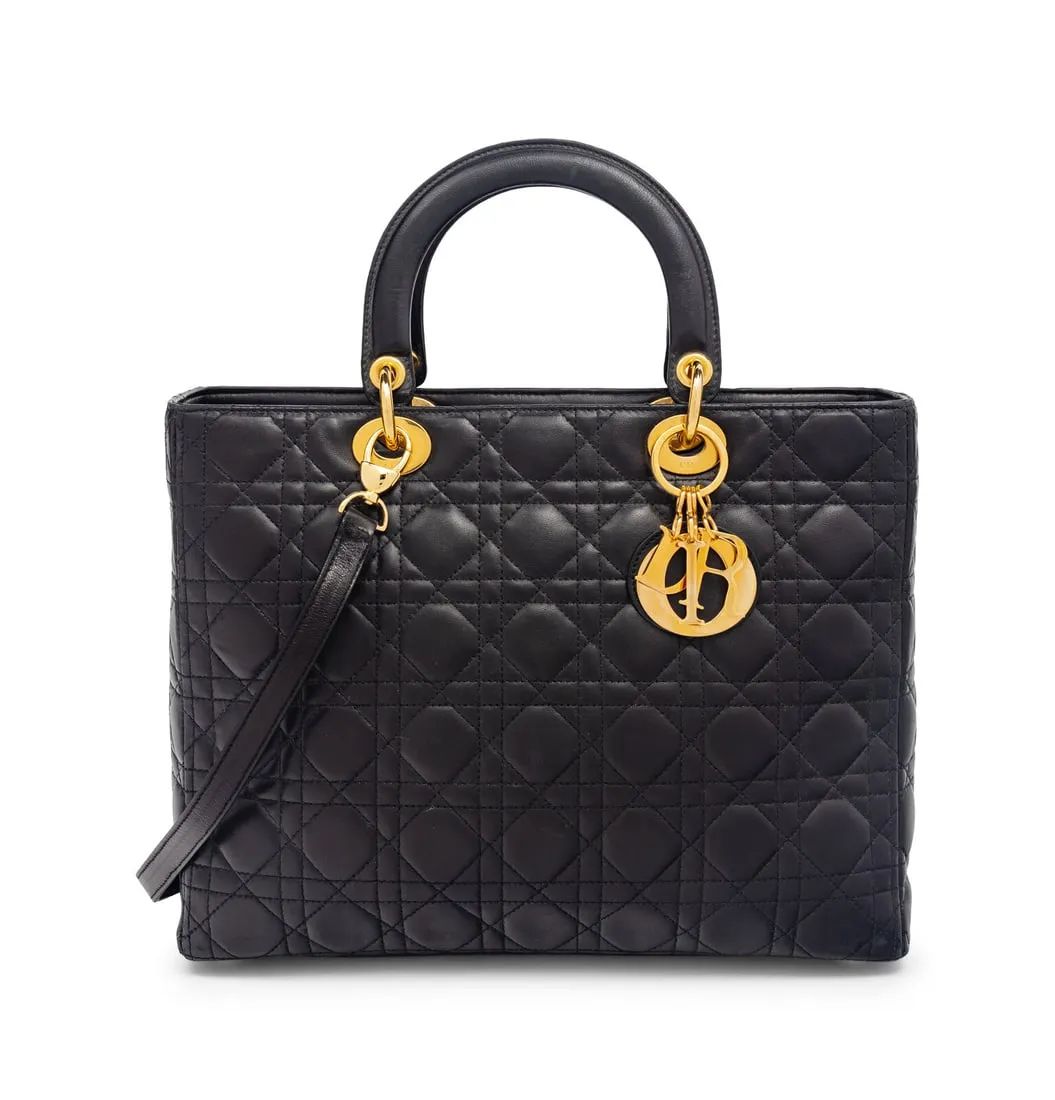
Lot #94, a Lady Dior bag, was estimated at $800 to $1,000 and sold for $5,240. Image courtesy of Freeman’s | Hindman.
Lot #94, a Lady Dior bag, was estimated at $800 to $1,000 and sold for $5,240. Image courtesy of Freeman’s | Hindman. 

This auction included several designer handbags and business cases owned and used by Madeleine K. Albright. Lot #94, a Christian Dior bag, was estimated at $800 to $1,000 and made $5,240. This quilted black lambskin leather purse had golden hardware and was made in Italy in 1997. The bag was detailed with a zipper closure, jacquard lining, and an interior pocket. It was sold with its matching detachable shoulder strap and bag charm.

Dior debuted this now legacy purse design in the mid-1990s. It was originally named Chouchou. The name was updated to Princesse, and later to Lady Dior. This eye-catching handbag design has ties to Diana, Princess of Wales. Diana loved this bag and was gifted one by former French First Lady Bernadette Chirac when she visited France in 1995. “Lady Dior” is a play on Diana’s nickname, “Lady Di.” Lady Dior bags are known for their boxy, quilted leather form and golden D-I-O-R charms.

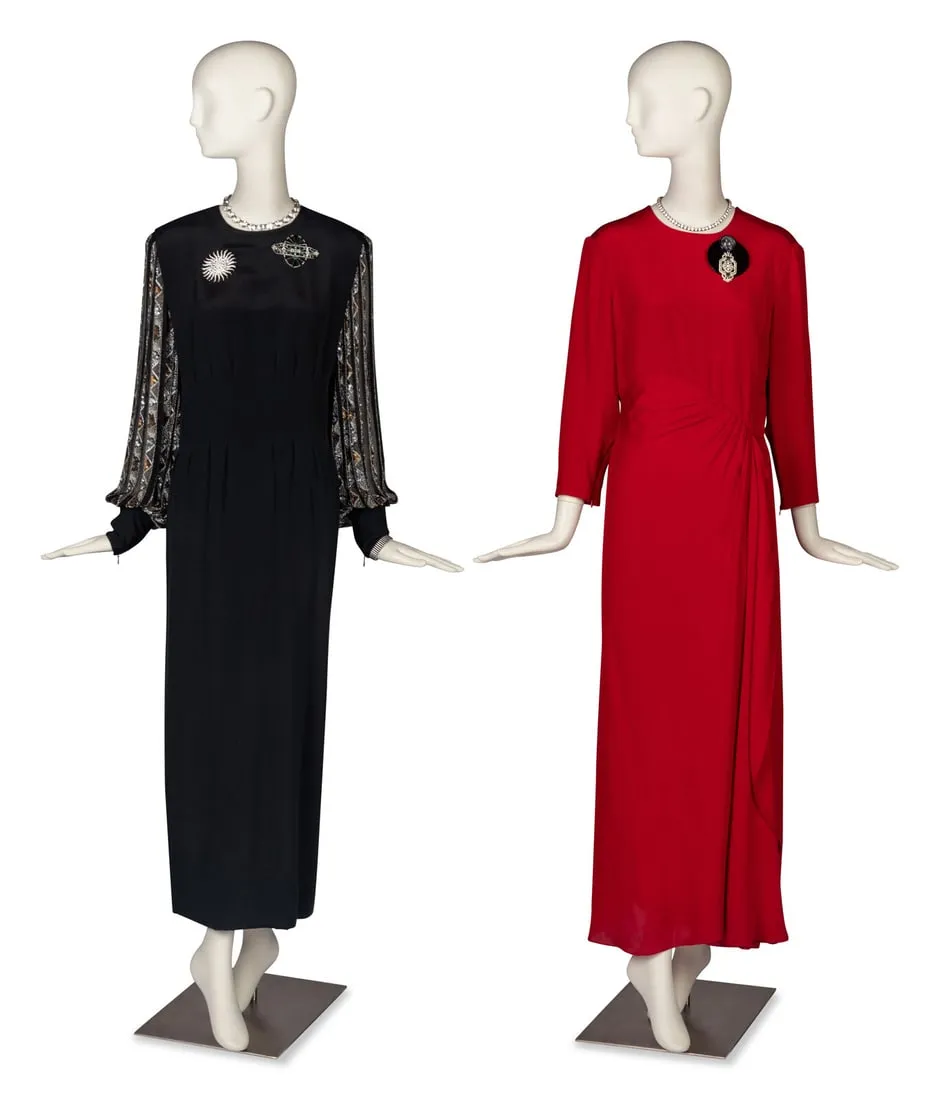
Lot #91, two dresses sold with three pieces of costume jewelry, was estimated at $300 to $500 and sold for $4,258. Image courtesy of Freeman’s | Hindman.

The sale rounded out with ephemera, books, scarves, clothing, and other items from Albright’s estate. Lot #91, a set of two dresses with three pieces of costume jewelry, was estimated at $300 to $500 and realized $4,258. One dress was a black silk blend made by Richilene/Rizik Brothers, and the other was a red silk example by Carolina Herrera/Rizik Brothers. Both were made in the USA in the 1990s. The jewelry collection consisted of two pins and one necklace.

For more information on Freeman’s | Hindman’s May 2024 sale of Secretary Madeleine K. Albright’s private collection, visit LiveAuctioneers

Looking for more notable auction results? Check out Auction Daily’s coverage of Tony Bennett’s personal collection, sold at Julien’s in April 2024. 

Nadeau’s Auction Gallery of Windsor, CT to Present ItsAnnual Outdoor Mid-Century Auction on Saturday, May 18, 2024

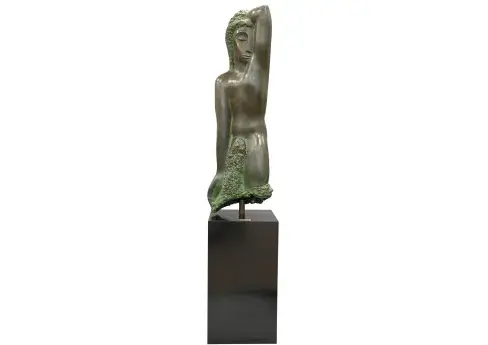
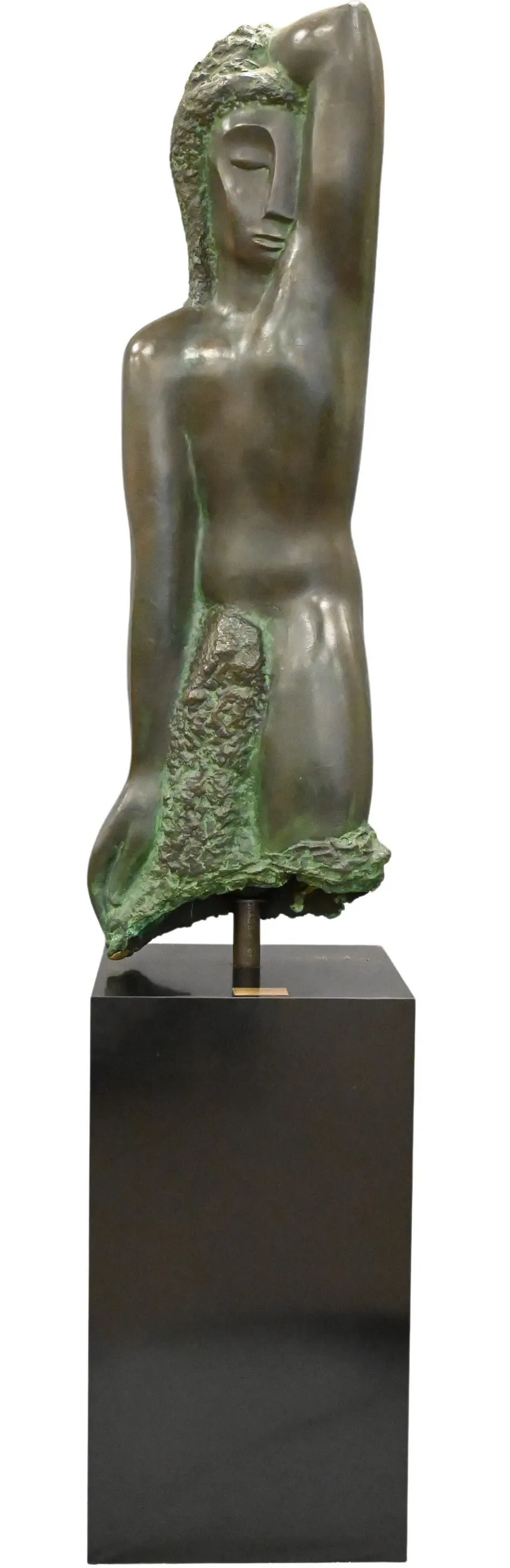
Jose De Creeft's Figure (New Being), is estimated at $15,000-25,000

This sale features 580+ lots of important 1950s-era furnishings and fine and decorative artwork, patio and garden items, as well as Asian art, silver and jewelry, and other fine antiques. 

Jose De Creeft's Figure (New Being), is estimated at $15,000-25,000
Jose De Creeft’s Figure (New Being), is estimated at $15,000-25,000

Windsor, CT, May 9, 2024 – Nadeau’s Auction Gallery is excited to announce this signature spring event starting at 10am. All lots are available for preview at www.nadeausauction.com now or live in the gallery on Thursday, May 16th from 12pm-6:30pm, Friday, May 17th from 12pm-5pm, and Saturday, May 18th from 9am-10am. For bidders who wish to participate in the sale remotely, they may do so via phone, absentee bids, or online through Invaluable, Bidsquare, or Liveauctioneers. Contact Nadeau’s directly for more information. 

All eyes will be on lot #50, one of the top lots in this sale. This is Jose De Creeft’s (Spanish American, 1884-1982) Figure (New Being), estimated at $15,000-25,000. This 55″ tall patinated bronze depicts a standing individual from the thighs upward, with one arm at their side and the other behind their head. Their eyes are closed and their expression is pensive, as if they are dreaming or praying. It is signed by the artist on verso and is mounted on a complementary rectangular base. Perhaps De Creeft’s best known work is his Alice in Wonderland climbing sculpture located in Central Park in New York City.

Other premier lots in this sale include:

  • Lot #300, Harry Davis’ (British 1885-1970) polar bear double handled porcelain vase, is estimated at $10,000-20,000. Produced for Royal Worcester, this magnificent example is decorated with a continuous scene featuring two polar bears on icebergs, two peach and gilt colored griffin handles, and a gilt flame finial topping its lid. It measures 16″ tall, is model number 240969, and is signed H. Davis on the lower left. The vessel’s marks include 1764 and a purple Worcester stamp on the underside of its base. This is one of three Royal Worcester polar bear vases on offer through this sale, with the others being lot #301 and #302; the trio are from a private NJ collection. 

Davis created a series of polar bear themed porcelain decorative item for Royal  Worcester at the turn of last century. Each was decorated with the animals in different poses against a background of icebergs, glaciers, and a clear blue sky. Items from this polar bear line still captivate enthusiasts more than a century onward; in 2023 a premier example sold for nearly $30,000 at public auction in Australia. 

  • Lot #420, eight labeled Walter Lamb for Brown Jordan bronze rope chairs, is estimated at $6,000-12,000. The octet includes four armchairs and four side chairs. They are manufactured from repurposed bronze tubing and cotton rope and measure 32″ high by 21″ wide by 22″ deep. 

These midcentury seats were designed by Walter Lamb, an artist who created furniture and art from materials salvaged from the sunken ships in Pearl Harbor. Robert Brown, founder of Brown Jordan, went to Hawaii to recruit Lamb as a designer for his company. Lamb would go on to create the company’s signature bronze rope line, which today is considered a gold standard of midcentury modern design.

  •  Lot #3, a Buccellati pendant Rolo lariat necklace, is estimated at $8,000-12,000. This stunner is made from 18K white and yellow gold and features two pear shaped 15.5mm South Sea pearls mounted in diamond encrusted, acorn shaped bezels. The chain is punctuated with diamond stations and has a diamond decorated clasp.  It measures 17″ with an additional 5″ tier drop; the overall weight of its diamonds is 2.54 carats. 

This necklace has provenance to The Orianne Collins Collection and recently traded hands at Kodner Auctions’ 12/19/2023 sale for  $13,000. Orianne is the former wife of musician Phil Collins; they were married from 1999 to 2006.  

  • Lot #400, a woven tapestry after Pablo Picasso (Spanish 1881-1973), is estimated at $4,000-8,000. Titled “Jacqueline”, this circa 1960 primarily blue and cream wall hanging measures 71″ x 87″ and is signed “Picasso” on verso. It depicts a face in profile, a standing figure, and a chair, table, and plant vignette. This intriguing example was created by a talented craftsman based on an original work by the prolific and popular Spanish artist. 
  • Lot #1, a 1930 Ford Model A Coupe, is estimated at $5,000-10,000. This iconic red and black automobile has was last registered in 2004, has 52,500 miles on its odometer, and has VIN 3822457. This model replaced the company’s debut Model T and was in production from 1927 through 1932. Company records document that they ranged in cost from $385 for a roadster (equivalent to about $6,911 in 2024 dollars) to $1,400 (equivalent to about $25,130 in 2024 dollars) for the town car model.

According to Eddie Nadeau, President of Nadeau’s Auction Gallery, “The arrival of spring also heralds our annual sale featuring patio and garden furnishings, planters and statuaries, and other decorative items. Many are from premier regional CT, RI, NJ, and NY estates. Now is the perfect time to give your outdoor living spaces a glow up with these eye-catching temptations!”

About Nadeau’s Auction Gallery Inc.: 

Nadeau’s Auction Gallery is a full-service auction house providing a complete range of estate offerings, nonprofit deaccession management, and fine art and personal property appraisals. The company presents about a dozen premier sales annually, with a focus on art, furniture, accessories, and important antiques.  A third-generation family company, Nadeau’s enjoys a well-deserved reputation for outstanding merchandise, top-tier personalized service, and helping sellers realize the maximum value for their collections.  The auction company has been in business since 1985 – with the family starting in the furniture antique business in 1945 – and today is one of the largest and fastest growing auction houses in New England. Its state of the art auction facility is conveniently located right off Route 91 and easily accessible from all points in the mid-Atlantic and northeast. 

Nadeau’s Auction Gallery is located 25 Meadow Road, Windsor, CT 06095 and can be reached by telephone at 860-246-2444, fax at 860-524-8735, or email at [email protected].  For more information on this sale and Nadeau’s Auction Gallery, please see www.nadeausauction.com.   

Media Contact:

Edwin J. Nadeau, III, President 

Nadeau’s Auction Gallery

860-246-2444 or [email protected]

BILLINGS Auction House Presents: LATIN ART + DESIGN AUCTION

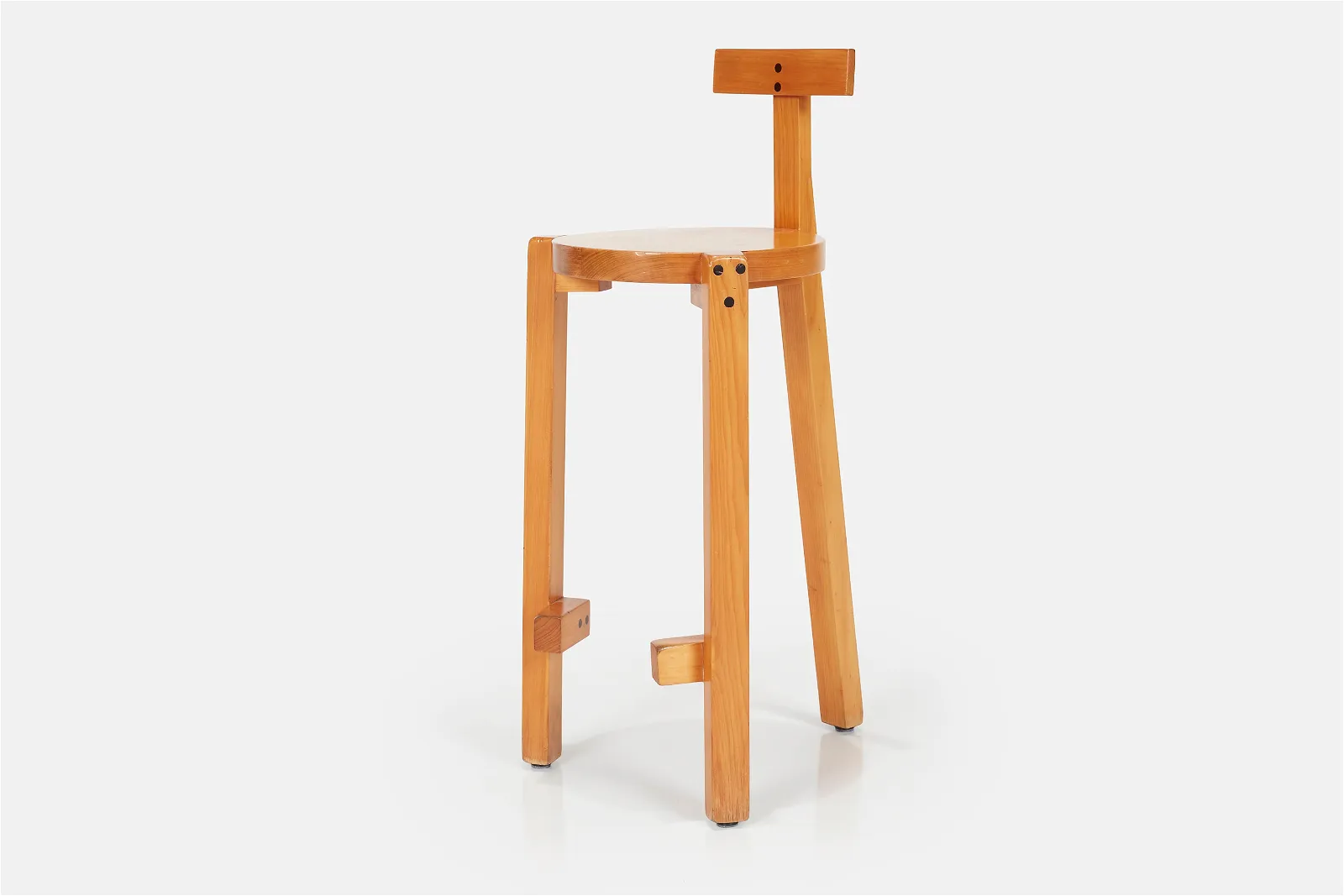
A-rare-‘Girafa-chair-designed-by-Lino-Bo-Bardi-Marcelo-Ferraz-and-Marcelo-Suzuki-in-1986-for-Casa-do-Benin-Salvador-de-Bahia-1

BILLINGS is thrilled to showcase Latin Art + Design on May 18th, 2024 at 10AM PDT. This sale compiles unique and desirable modern and contemporary art, twentieth-century design furniture and decorative arts, as well as rustic and colonial items from Brazil, Cuba, Argentina and Mexico. View the catalog, register and pre-bid now at www.billingsauction.com.

A-rare-‘Girafa-chair-designed-by-Lino-Bo-Bardi-Marcelo-Ferraz-and-Marcelo-Suzuki-in-1986-for-Casa-do-Benin-Salvador-de-Bahia-1

Highlights of this sale include:

Take advantage of this incredible opportunity to acquire unique examples of fine Latin American design that rarely come to market. Preview all items in person during the week before the sale, or at the preview party the night before the auction at the BILLINGS Art District warehouse in Downtown Los Angeles. Bidding is available live online, in person, via phone, or absentee.


BILLINGS Latin Art & Design Auction
2124 Sacramento Street, Los Angeles, CA 90021

Auction
May 18, 10am

Preview
May 11: 9am – 2pm
May 13-17: 10am – 4pm

Preview Party
May 17: 6pm – 9pm


About BILLINGS

Founded in 2015 to address an absence of curated channels in Los Angeles’ design market, BILLINGS offers a platform for the sale of quality modern design, furniture, art, and decorative objects.

BILLINGS’ quarterly auctions feature 300-400+ lots spanning from the pedigreed to anonymous, classic to unusual, and rare to noteworthy. Heavily weighted in mid-century modern selections from the 1960s to the early 2000s, BILLINGS’ catalogs represent a wide range of American and international art and design.

BILLINGS’ in-house live auctions are accessible online, with options to bid in-person, online, as an absentee or by phone. Registration and pre-bidding begin three weeks before each sale.For more information and press inquiries, contact Rich Carmichael at [email protected] or by phone at 213-584-2240.

Sales at World’s Top Three Auction Houses Fell 18.3% in 2024’s First Quarter

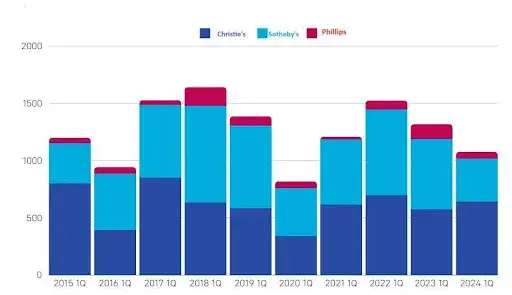
Total bid amount of the top three global auctioneers in 2015-24 (unit: USD 1 million). Image courtesy of KAAAI.

In 2024’s first quarter, sales at the three major global auction houses (Christie’s, Sotheby’s, and Phillips) fell 18.3% from the same period last year to USD 1.08 billion. The figure is also down 29.4% compared to 2022, a decrease attributed to falling sales in New York and London. However, Christie’s sales increased 11.2% in the first quarter compared to the same period last year thanks to a sharp increase in Paris sales.

Total bid amount of the top three global auctioneers in 2015-24 (unit: USD 1 million). Image courtesy of KAAAI.
Total bid amount of the top three global auctioneers in 2015-24 (unit: USD 1 million). Image courtesy of KAAAI.

According to the “Art Market Report 1Q 2024” released by Korea Art Authentication & Appraisal Inc. (KAAAI), the global auction market is steadily establishing online trading methods amid a decrease in the number of auctions and the number of works compared to the same period last year.

The number of auctions was 151 in 2024’s first quarter, down from 166 in 2023, and the total number of lots sold was 17,905, down from 19,846 in 2023. Despite the easing of the pandemic, the decline in offline auctions (down 16.6 percent) was noticeable. The average item price at auction was $60,113, the lowest level since 2017, down from $66,350 last year.

The online sales of the three major auction houses amounted to about $142 million in 2024’s first quarter, down 3.4% from about $147 million in the same period last year, making no significant difference. In particular, the number of artworks sold through online-only channels accounted for 59.8% of all auctions in the first quarter, up from 56.6% in the same period last year. In terms of total auction sales, online sales accounted for 13.2% (compared to 11.2% last year). “We can confirm that online transaction methods are stably established,” KAAAI said.

By region, sales in New York and London fell, but Paris saw a notable increase in sales ($117 million). This was attributed to the Barbier-Mueller Collection, which Christie’s held in Paris in March. The auction of the collection represented 62.3% ($73 million) of the total sales achieved in the first quarter of the year in Paris. On the other hand, sales in New York and London fell 23.5% and 16.7%, respectively, from the same period last year. “The biggest characteristic of the art market’s sales structure is that high-quality collections can achieve an absolute share of total sales when they flow into the market,” KAAAI said.

By sector, sales of post-war and contemporary art plunged about 48.3% from last year, leading to an overall decline in auction sales. Printmaking (including prints and editions) failed to continue last year’s sales surge and fell 8.9% from the same period last year. Despite a 9.9% increase in the number of auction entries, the decline in sales means that the price of prints was traded at a lower level. KAAAI said, “The light-priced works favored by the newly emerged collectors also reflected the overall economy.”

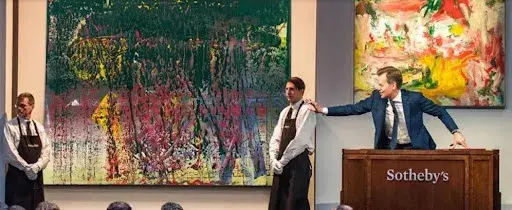
Sotheby’s auction scene. Image courtesy of Sotheby’s.

At the same time, the Korean auction market recovered slightly in 2024’s first quarter compared to the same period in 2023. However, the primary and distribution markets have shrunk to the extent that there was little movement in trading. Korea’s major auction houses (K Auction, Seoul Auction, and My Art Auction) sold about $21.6 million in total through seven auctions. This figure rose about 6.81% year-on-year. The number of artworks sold was 500, up 12.10% from the same period last year, and the winning bid rate was 65.19%, down 2.18 percentage points.

A total of two works were sold for over $730,000. The highest price was Kim Whan-ki‘s 3-V-71 #203 (1971), which recorded a successful bid of about $3.67 million, followed by independence activist Ahn Jung-geun‘s handwriting, which sold for about $1 million.

However, the atmosphere of recovery is also slowing down in the second quarter. Works by painters Lee Ufan and Henri Matisse recently failed at auction, and two Kim Whan-ki artworks were withdrawn. “It is a time of chaos when falling prices of artworks are becoming a reality,” KAAAI said. “As the level of economic tightening, including high interest rates, high inflation, and uncertain prospects, is expected to be maintained for a while, the art market is also expected to remain on the lookout.”

Erik Desmazières, Director of the Musée Marmottan-Monet

©-Studio-Christian-Baraja-SLB

An engraver, member of the Académie des Beaux-Arts and director of the Musée Marmottan Monet since October 2020, Desmazières is preparing the transformation of an institution that celebrates its 90th anniversary this year. We take a look at his work in detail.

© Studio Christian Baraja SLB

The Musée Marmottan Monet is celebrating its 90th anniversary. Is it still the same museum as when it was founded?
No, it looks completely different now, and has a very different purpose as well, which is very unusual in in the museum world. The two generations of founders, Jules and Paul Marmottan, were prominent landowners. The father collected medieval and early 16th-century art, and the son was a leading specialist in the Empire. In founding a museum with his 1932 bequest, he wanted to present an era by recreating an Empire décor and atmosphere in a typical 19th-century residence. Meanwhile, the Marmottan Library in Boulogne-Billancourt was his country house. Although Julie Manet’s signature appears in the inaugural visitors’ book, nothing suggested that this museum would become a key venue for Impressionism. Victorine Donop de Monchy’s donation in 1940 changed all that. A loyal visitor to the Ranelagh gardens from childhood, she gifted eleven Impressionist paintings by Monet, Sisley, Guillaumin, Renoir and Morisot, which had been hidden from the dangers of war in the museum.

Does this explain why Michel Monet, the artist’s son, decided to bequeath around 100 works by his father and from the painter’s collection in 1966?
Yes, this initial move was consolidated by this bequest, which profoundly changed the face of the museum. Michel Monet expressed his displeasure at the State’s indifference to the exhibiting the Water Lilies at the Orangerie, which had been put in the reserve for some time. In choosing the Académie des Beaux-Arts, he made sure these works could be viewed by the public independently of the State. From then on, Impressionist donations continued, with gifts from Nelly Sergeant-Duhem in 1985 and the Rouart family starting in 1993. At the same time, Daniel Wildenstein donated over 300 pieces from the Middle Ages and Renaissance, reflecting the spirit of Jules Marmottan.

Berthe Morisot (1841-1895), after François Boucher (1703-1770), Apollo Revealing his Divinity to the Shepherdess Isse, 1892, oil on canvas, 64.2 x 79.4 cm/25.2 x 31 in.
© Musée Marmottan Monet Studio Christian Baraja SLB
Berthe Morisot (1841-1895), after François Boucher (1703-1770), Apollo Revealing his Divinity to the Shepherdess Isse, 1892, oil on canvas, 64.2 x 79.4 cm/25.2 x 31 in.
© Musée Marmottan Monet Studio Christian Baraja SLB

How do you create a museum today with a coherent blend of old and avant-garde art?
It’s true that the Impressionists have taken over in recent years, and I’d like to restore harmony between these two great pillars by giving the older art collections the place they deserve. While the latest acquisition is a Berthe Morisot, it is a work with a distinct connection with older art, as it harks back to Francçois Boucher. Our dynamic Friends’ Society, which helped to buy it, is also helping us restore paintings from the 1500s. The work scheduled to start in 2027 will give more importance to the museum’s older art collections. In the meantime, I’m working on a program that is less focused on avant-garde retrospectives. Monographs are more appealing to audiences but tend to keep coming back to the same subjects. I’m keen on more cross-disciplinary themes, so we’ll be staging the exhibitions  “Trompe-l’œil” this fall, “Sleep” in 2025, and “Modern Landscapes from Monet to Hockney” in 2026. I think it’s interesting to step sideways in terms of the museum’s identity, and emphasise the breadth of its collections. This is the case with the representation of sports in painting at the meeting point of the 19th and 20th centuries: a show I had planned ages ago, without realizing that 2024 was the year of the Olympics in Paris!

You have appointed Sylvie Carlier as the first heritage curator to join the museum. What made you take on a curator?
First of all, we wanted to obtain the “Musée de France” label, for which the presence of a heritage curator is mandatory. This means that the diversity of our museum will be more fully respected. At a time when the commercial side of the “Monet effect” has come to dominate, a curator is less constrained by economic injunctions and appeal. In addition, the forthcoming renovation will also involve a huge project to restore our collections, which only a curator can carry out successfully.

What awaits the museum after the two-year renovation campaign scheduled for 2027?
The museum’s closure has been postponed to 2027 so we can celebrate the centenary of Monet’s death in 2026. The institution has never closed during the past century, and has only undergone minor renovations. This campaign—whose winners will be announced at the end of the year—is needed to provide services worthy of a museum with 300,000 visitors a year. The second floor is inaccessible to the disabled; energy standards require us to connect to the district heating system; the garden is terribly neglected, the storerooms are too cramped, and the list goes on. We are also planning to open a café, probably in the garden pavilion. Meanwhile, moving the museum’s entrance to the garden on Avenue Raphaël seems a promising move to me.

Will the work give rise to a new museum pathway?
Under Sylvie Carlier’s supervision, the pathway will reflect the museum’s historical character. The dining room will return to its layout as a study, as it was in the Marmottans’ time. The aim is to restore harmony and bring out the ambience of an Empire-style house while shedding new light on the Wildenstein collection, at present somewhat overshadowed. The pathway also needs rationalizing. At the moment, Monet and Morisot are completely separated. While this choice makes sense in regards to the collections’ history, since they came from two different legacies, it doesn’t really in historical terms. The two painters knew each other. So the temporary exhibition gallery will move to the basement, to avoid having to go through the bookshop and see the pathway backwards while exhibitions are being set up. This will give full due to Impression soleil levant—our version of the Mona Lisa—on the first floor.

The dining room on the first floor.
© Christian Baraja SLB

When you arrived, the Marmottan Library in Boulogne was separate from the museum and its management given to another member of the Académie des Beaux-Arts, Adrien Goetz. Is this separation important?
Yes, very much so. My predecessor was director of the Library, but it was managed by the Boulogne city council. With the end of the public service delegation, the Académie wanted to take back control and invest in the venue. To be reborn, it needed a person solely dedicated to it. The two institutions have very different purposes—for instance, the library hosts artists’ residencies. But we still have a strong bond. Close links have been established with their auditorium, and while we are closed, they’ll be very happy to accommodate our works.

You’re an engraver by profession. How does this artistic technique change your understanding of the museum and its management?
Well, I always saw things as a visitor before. Now I’m learning to look ahead to projects: I’m researching exhibitions in depth, rigorously immersing myself in Claude Monet’s career and becoming thoroughly familiar with every stage and development. It’s absolutely fascinating—but now I have very little time for engraving!

WORTH SEEING
“En jeu! Artists and Sport (1870-1930)”, Musée Marmottan Monet, Paris 16.
Until September 1, 2024.
www.marmottan.fr

Unfettered Art From Chu Teh-chun to Eduardo Chillida

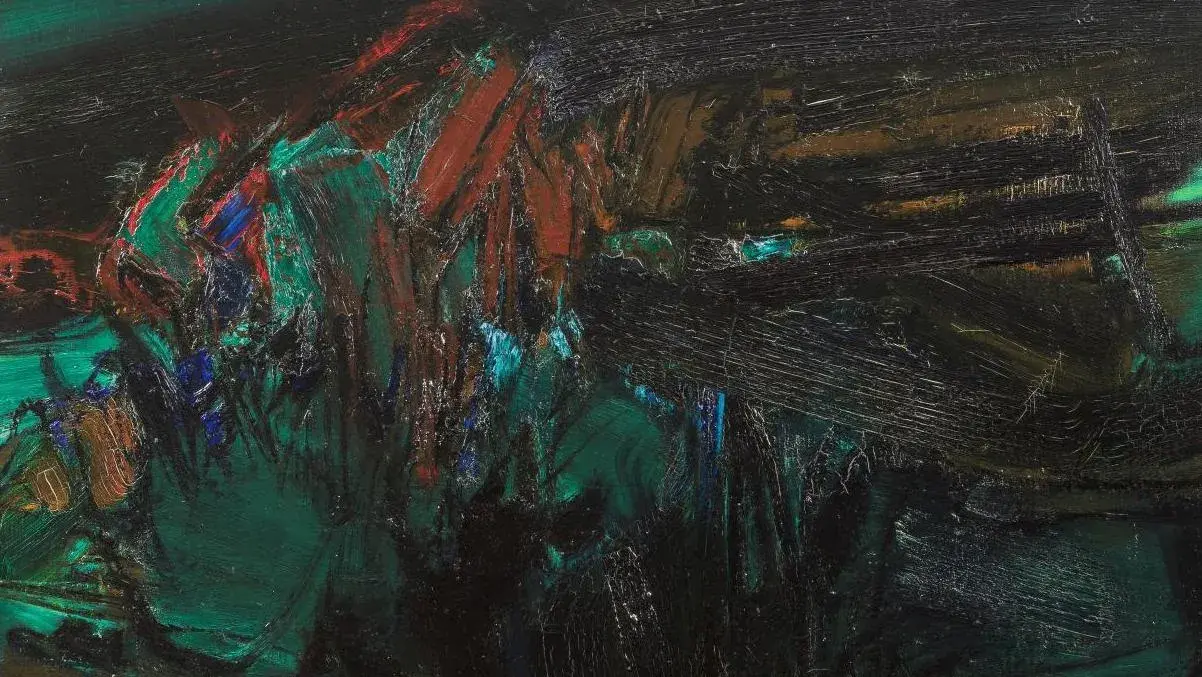
Chu Teh-Chun (1920-2014), N°142, oil on canvas signed, dated "1963 and numbered, 146 x 114 cm/4.79 x 3.74 ft. Estimate: €500,000/800,000

The post-war artists featured in this auction catalog sought to transcend matter.

Chu Teh-Chun (1920-2014), N°142, oil on canvas signed, dated "1963 and numbered, 146 x 114 cm/4.79 x 3.74 ft. Estimate: €500,000/800,000
Chu Teh-Chun (1920-2014), N°142, oil on canvas signed, dated “1963 and numbered, 146 x 114 cm/4.79 x 3.74 ft. Estimate: €500,000/800,000

Preserved in the estate of contemporary art enthusiast Gaston Diehl, the first lots in this sale will set the tone for the afternoon. They include a torso with drapery and quasi-abstract volumes, cast in bronze by Baltasar Lobo Casuero in 1972 (35 x 22 x 13 cm, 13.77 x 8.66 x 5.11 in, €10,000/15,000), and a kinetic painting by Jesús-Rafael Soto, Tes todo negro, created four years later and featuring optical effects between lacquered metal rods and the acrylic panel from which they emerge (60 x 60 x 12.5 cm/23.62 x 23.62 4.92 in, €60,000/80,000).

Although he continued to work in the traditional medium of oil, Chu Teh-chun soon sought freedom of expression. He began to free himself from traditional forms two or three years before arriving in France, inspired by the effects of mists and clouds in Chinese ink landscapes. An affinity with Nicolas de Staël‘s work, which he described as insightful, led him to pursue his own balancing act between abstraction and the spiritual representation of nature. Dated “1963”, the canvas reproduced here (€500,000/800,000) seems to give birth to mountains from a stratigraphy of dark, dense colors—ink black, brown, purplish blue and red—treated with visible brushstrokes and curved gestures, whose materiality contrasts with the fluidity and translucence of a luminous turquoise wash underneath.

Back to the tangible with Eduardo Chillida’s grog (chamotte) clay, fashioned into a stele inscribed with enigmatic lines in copper oxide, in 1980 (€120,000/150,000). While the work of Auguste Herbin is highlighted by an exhibition at the Musée de Montmartre (Paris), until September 15, you should expect to pay between €50,000 and €60,000 for his Geometric Cloud in bold colors (89 x 116 cm/2.9 x 3.80 ft).

POST-WAR AND CONTEMPORARY ART – PRESTIGE

Friday 17 May 2024 – 14:00 (CEST) – Live

Salle 5-6 – Hôtel Drouot – 75009 Paris

Ader

2024 Korea Art Festival Will Be Held This September, Connecting Gwangju, Busan, and Seoul

Joint-Declaration-of-2024-Korea-Art-Festival-Connecting-Gwangju-Busan-and-Seoul.-Image-courtesy-of-MCST

A large-scale art festival in Korea will be held this fall. The 2024 Korea Art Festival is expected to serve as an opportunity to expand the growing interest in art and to promote K-art to the global market.

The 2024 Korea Art Festival, which integrates various art events in Gwangju, Busan, and Seoul, will be held in September. Accordingly, the Art Week (September 1 – 11, 2024) of the Ministries of Culture, Sports and Tourism (MCST) links together the Gwangju Biennale (September 7 – December 1, 2024), the Busan Biennale (August 17 – October 20, 2024), the global art fairs Frieze Seoul and Kiaf Seoul (September 4 – 8, 2024), and Seoul Art Week (September 2 – 8, 2024). 

To this end, MCST, Gwangju City, Busan Metropolitan City, and Seoul Metropolitan Government announced a joint declaration that they will promote the festival as a representative Korean art event by linking various exhibitions, events, and schedules, including close cooperation. In addition to them, the Galleries Association of Korea, Frieze Seoul, Korea Arts Management Service (KAMS), and Korea Tourism Organization (KTO) will participate.

Joint Declaration of 2024 Korea Art Festival Connecting Gwangju, Busan, and Seoul. Image courtesy of MCST.
Joint Declaration of 2024 Korea Art Festival Connecting Gwangju, Busan, and Seoul. Image courtesy of MCST.

Until last year, Art Week was limited to integrated promotions and exhibition discounts for local governments and public and private art events. This year, the focus is on organically linking art events across the country.

During the 2024 Korea Art Festival, a number of high-quality exhibitions of national, public, and private museums and galleries will also be held in addition to events led by local governments. The goal is to meet the standards of not only Koreans but also foreign art lovers visiting Korea. Representatively, the National Museum of Modern and Contemporary Art (MMCA), Seoul, will hold various participatory events and artist exchange events, including “Connecting Body: Asian Women’s Artists” (opening on September 4) and opening at night.

K-art will also be actively promoted to overseas art markets. To this end, Kiaf Seoul, Frieze Seoul, and KAMS will co-host the “Korean Art Discussion Conference” (September 5 – 7) at COEX Studio 159. “We will mobilize all relevant agencies and overseas branches to promote our art to the global market,” Minister Yu In-chon said. “We will create a market where young and senior artists can be recognized not only in Korea but also abroad.”

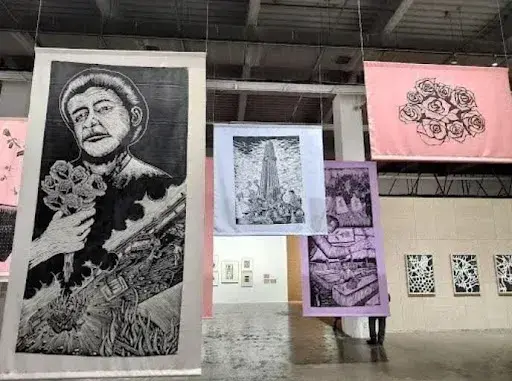
Exhibition at last year's Gwangju Biennale. Image Ⓒ Auction Daily.
Exhibition at last year’s Gwangju Biennale. Image Ⓒ Auction Daily.

In addition, tourism and transportation convenience for visitors will be provided for the successful hosting and operation of the 2024 Korea Art Festival. The integrated ticket linking the Gwangju Biennale and the Busan Biennale will be sold at about USD 17, a 30% discount compared to the flat rate. The ticket holder will receive discounts and free admission to major art museums such as the Seoul Arts Center and the Leeum Museum of Art.

The Korea Railroad Corporation will sell high-speed rail (KTX) tour packages that connect tickets to the Biennale. KTO will guide tour courses that map art facilities in each region and promote the sale of walking art tour products as well as tourism products linked to art festivals.

MCST will promote this festival through its website, social networking services, outdoor electronic billboards owned by the government and local governments, and airport and train stations. It plans to actively provide information to overseas markets by utilizing the Korean Cultural Center and KTO’s overseas branches. The plan is aimed at promoting fine art and K-art. K-culture is currently in the spotlight overseas, at home, and abroad. The 2024 Korea Art Festival contains the will to unite local art festivals and foster them as representative brands of Korean art.

For more information on Korean art events, check out Auction Daily’s coverage of spring 2024 Korean art fairs

Bertoia’s May 18 Signature Auction reserved exclusively for John and Adrianne Haley’s private collection of antique toys and banks

For 50+ years, the respected Yorkshire couple has been known to American toy collectors as the foremost source for European rarities

VINELAND, N.J. – On May 18, Bertoia’s will auction the antique toy and bank collection of John and Adrienne Haley. Within the toy hobby, the Haley name is both immediately recognizable and respected by US buyers who, for decades, relied on the Yorkshire couple as their go-between in sourcing rare, high-quality European toys. Thanks to the Haleys’ 50+ years of networking efforts around Britain and on the Continent, untold numbers of German, French and British antique toys and banks have made their way across the Atlantic to become prized holdings in high-profile collections. Now it is John and Adrianne’s turn to share their own private collection with the world in a 340-lot auction whose collective quality and condition will dazzle even the most advanced toy enthusiasts.

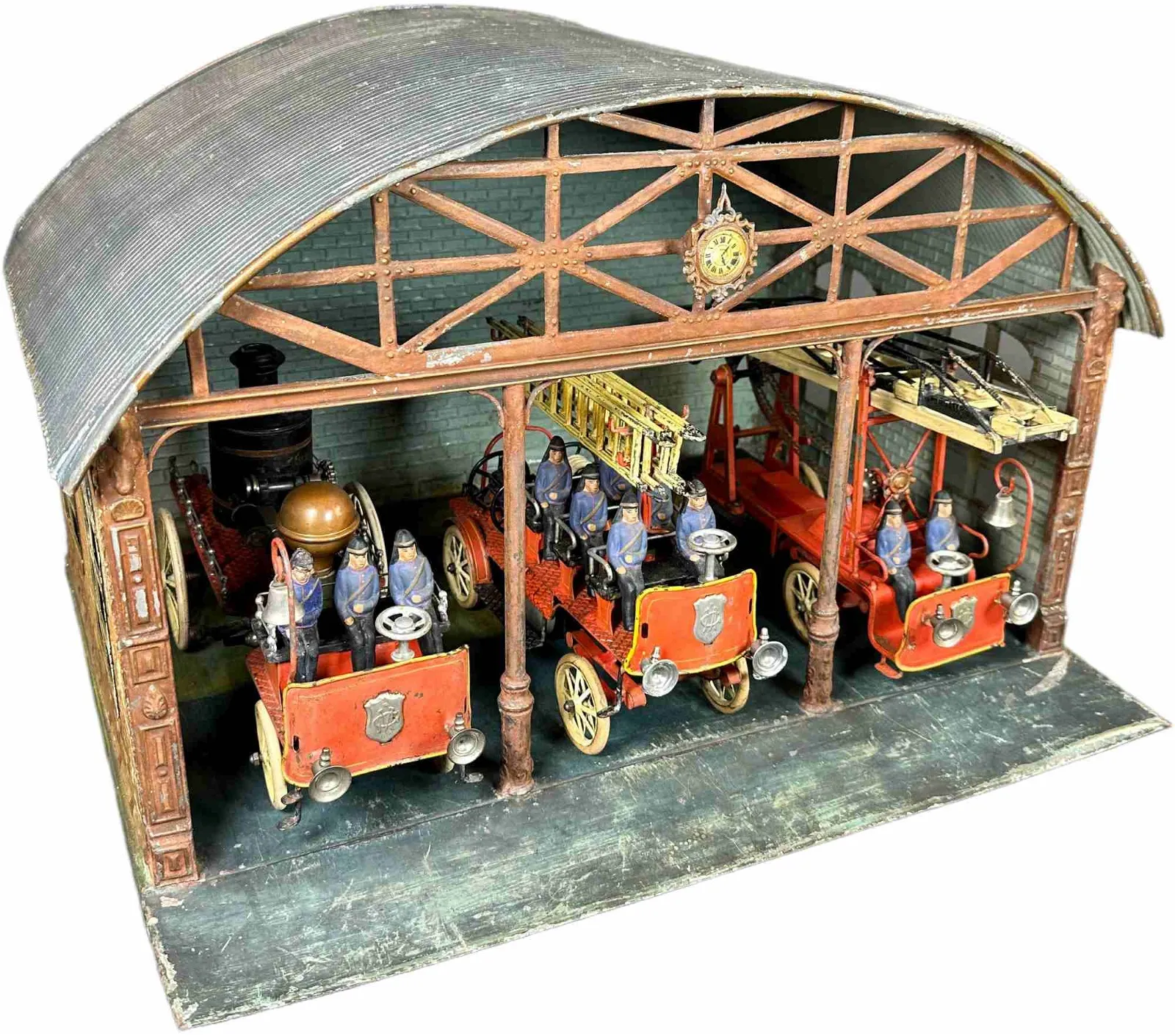
Marklin (Germany) Fire House with three hand-painted clockwork fire engines. Highly detailed. When activated, levers on side of building release trucks so they can speed away to an emergency call. Book example featured on Page 155 of David Pressland’s ‘Great Book of Tin Toys.’ Excellent condition. One of very few known. Estimate: $80,000-$120,000

The Haleys’ mechanical banks are mainly of cast iron and, over the years, were upgraded whenever the opportunity arose to do so. Some of the top mechanicals include the Germania Exchange (estimate $40,000-$60,000), Jonah on the Pedestal ($80,000-$120,000), and a Starkie cast-iron Robot bank ($10,000-$15,000). It is the only one known in cast iron; others of its type were made of aluminum. Other favorites include a Roller Skating bank $25,000-$45,000), Bow-ery bank ($20,000-$40,000), John Bull’s Money Box ($25,000-$40,000), Mikado ($60,000-$90,000), Chinaman in a Boat ($40,000-$70,000), and a fantastic Shepard Hardware Uncle Sam ($20,000-$30,000). The latter, a book example, is likely the finest of its type known to exist. A John Harper Hoopla bank, whose action involves a small dog jumping through a hoop held up by a clown, is scarcer than US variations, which are known as “Trick Dog.” In near-mint condition, it is estimated at $7,000-$10,000. 

A John Harper (English) “Tommy” mechanical bank ($8,000-$12,000), made circa 1914, is a book example and believed to be the best of all that have survived. It depicts a World War I British soldier – known as a “Tommy” – in a prone position, shooting at a tree. Its design was inspired by the Creedmore bank made by the American company Stevens and has a similar action. “The Creedmore inspired a few other John Harper banks that are represented in the collection, the Volunteer and Grenadier. It was not uncommon for English companies to copy the action of American banks,” John Haley noted.

“A composition mechanical bank that is very rare, and which was made in Germany for the UK market, is designed as a post box with a suffragette theme,” Haley noted. “When a penny is inserted, the figure of a suffragette pops up. It’s dated ‘Xmas 1913’ and also says ‘Militant souvenier (sic.)’ and ‘Votes for Women’ (imprinted on the flag held by the figure).” The pre-sale estimate is $3,000-$5,000. 

John Haley’s favorite tin bank is known as “The World’s Banker” and was made sometime between 1910-1930 by an unknown German manufacturer. It depicts John Bull on a platform emblazoned with the Union Jack and topped by a globe that spins when a coin is dropped into the figure’s belly. A book example in pristine condition, it is estimated at $5,000-$7,500. 

Many of the transportation toys are in astonishingly fine condition, especially the German tin luxury autos. There are many pre-1920 pieces by Bing, Carette, Marklin and Gunthermann, as well as early double-decker tin buses with advertising on their sides. The piece de resistance in the motoring section is a highly-detailed Marklin (Germany) Fire House with three hand-painted clockwork fire engines. This complete set, distinguished by its all-important third fire truck, appears in David Pressland’s Great Book of Tin Toys. Presenting in excellent condition, it is expected to attract a winning bid of $80,000-$120,000. Also featured in the same Pressland book, a Marklin clockwork four-seat tourer, hand-painted with a figure of a chauffeur wearing driving goggles, could cruise to a $30,000-$50,000 finish on auction day.

Early European clockwork boats always held pride of place in the Haley collection. As John explained, “I always went for quality and insisted on unrestored examples. The finest and probably rarest Marklin boats in the collection have their original wooden boxes, including the ‘Battleship France’ ($60,000-$90,000) and the ‘Battleship HMS Terrible’ ($50,000-$75,000) – that’s a beautiful boat. There are also some fine examples of Bing boats, including a rare paddlewheeler.” Also, a boxed Marklin yacht Jolanda is entered with a $20,000-$30,000 estimate.

Non-automotive offerings are predominantly European tin, in particular German tinplate, with the addition of a few German horse-drawn pieces. A circa 1880-1890 Buchner horse-drawn phaeton, a substantial 20 inches long, retains its original composition figures and carved wooden horses. In excellent condition, this elegant toy will cross the auction block with a $5,000-$7,500 estimate.

The small but choice selection of trains is highlighted by early German Marklin and Bing productions. A Marklin hand-painted gauge 3 GNR passenger car, coveted for its impressive 17½-inch length, boasts excellent condition and estimated at $8,000-$12,000. A wonderfully primitive German floor train, made circa 1860s, is hand-painted, un-powered and approximately gauge O in size. John Haley surmises that it may have been made by Rock & Graner of Wurttemberg or Buchner of Nuremberg. In excellent condition, it could sell in the vicinity of $6,000-$8,000. 

Bertoia’s May 18, 2024 auction of the John and Adrianne Haley private collection of antique toys and banks will start at 10am US Eastern Time. Bertoia’s gallery is located at 2141 DeMarco Drive, Vineland, NJ 08360. Preview the week before the auction or at other times by appointment only. Bid absentee, by phone, or live online through Bertoia Live or LiveAuctioneers. For additional information, to reserve a telephone line for bidding, or to make a private-preview appointment, call 856-692-1881 or email [email protected]. View additional details about Bertoia’s May 18 sale online at www.bertoiaauctions.com.